欢迎访问作物学报,今天是
作物学报 ›› 2026, Vol. 52 ›› Issue (10): 3006-3022.doi: 10.3724/SP.J.1006.2026.64032
雷鹏1( ), 李丽2, 袁剑龙1, 夏露露1, 周小成1, 张峰1,*()
Lei Peng1(), Li Li2, Yuan Jian-Long1, Xia Lu-Lu1, Zhou Xiao-Cheng1, Zhang Feng1,*()
摘要:
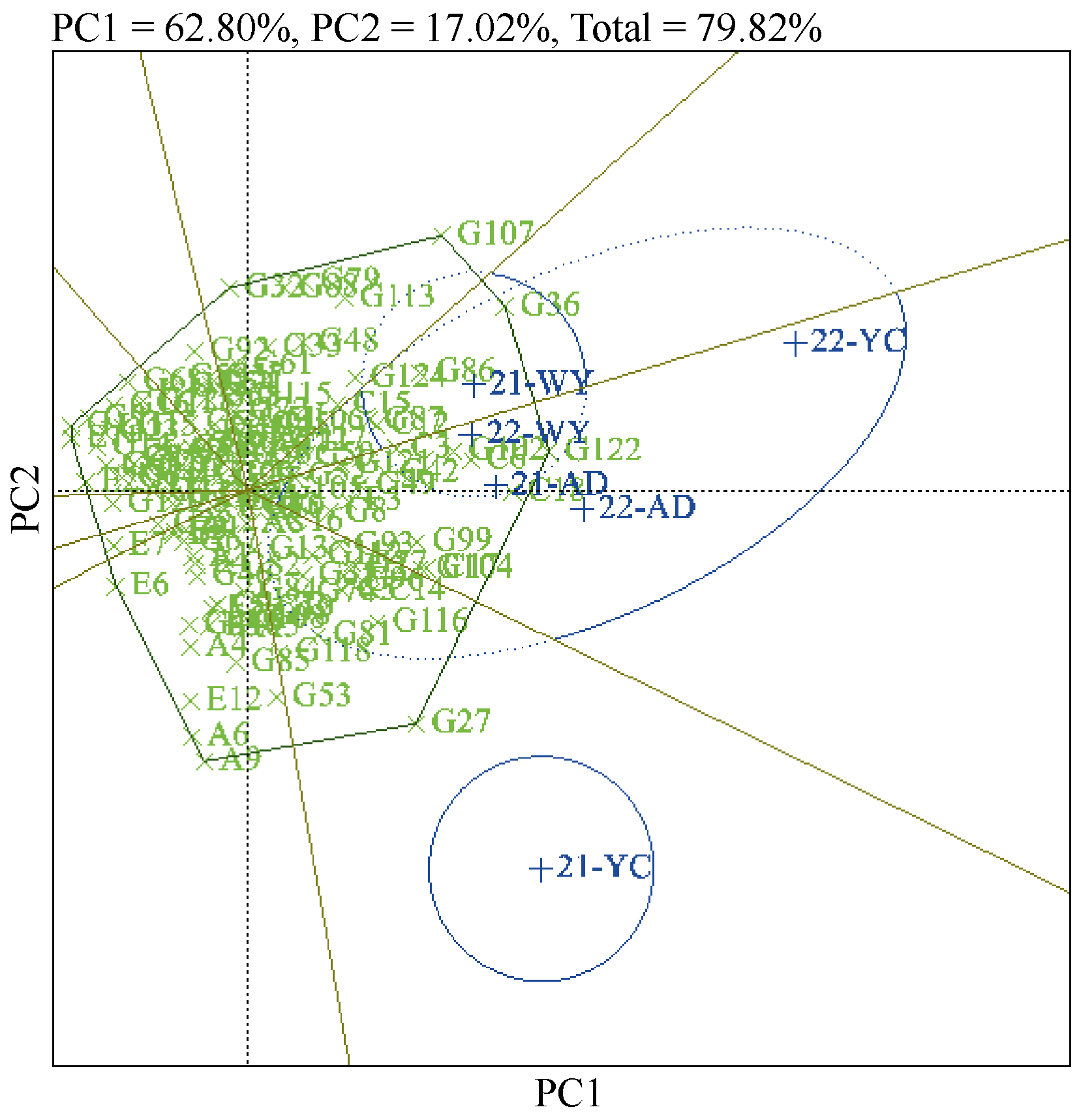
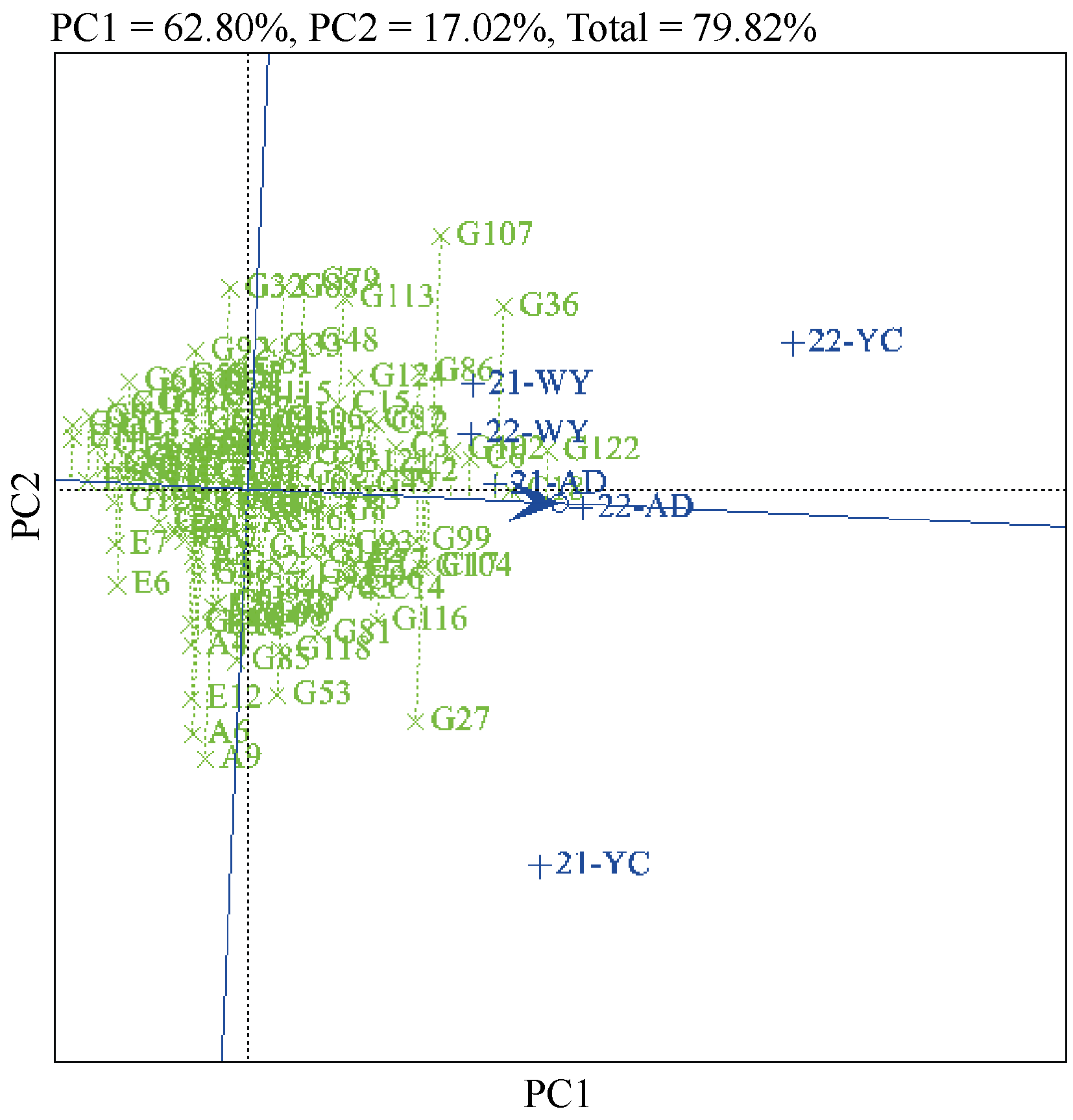
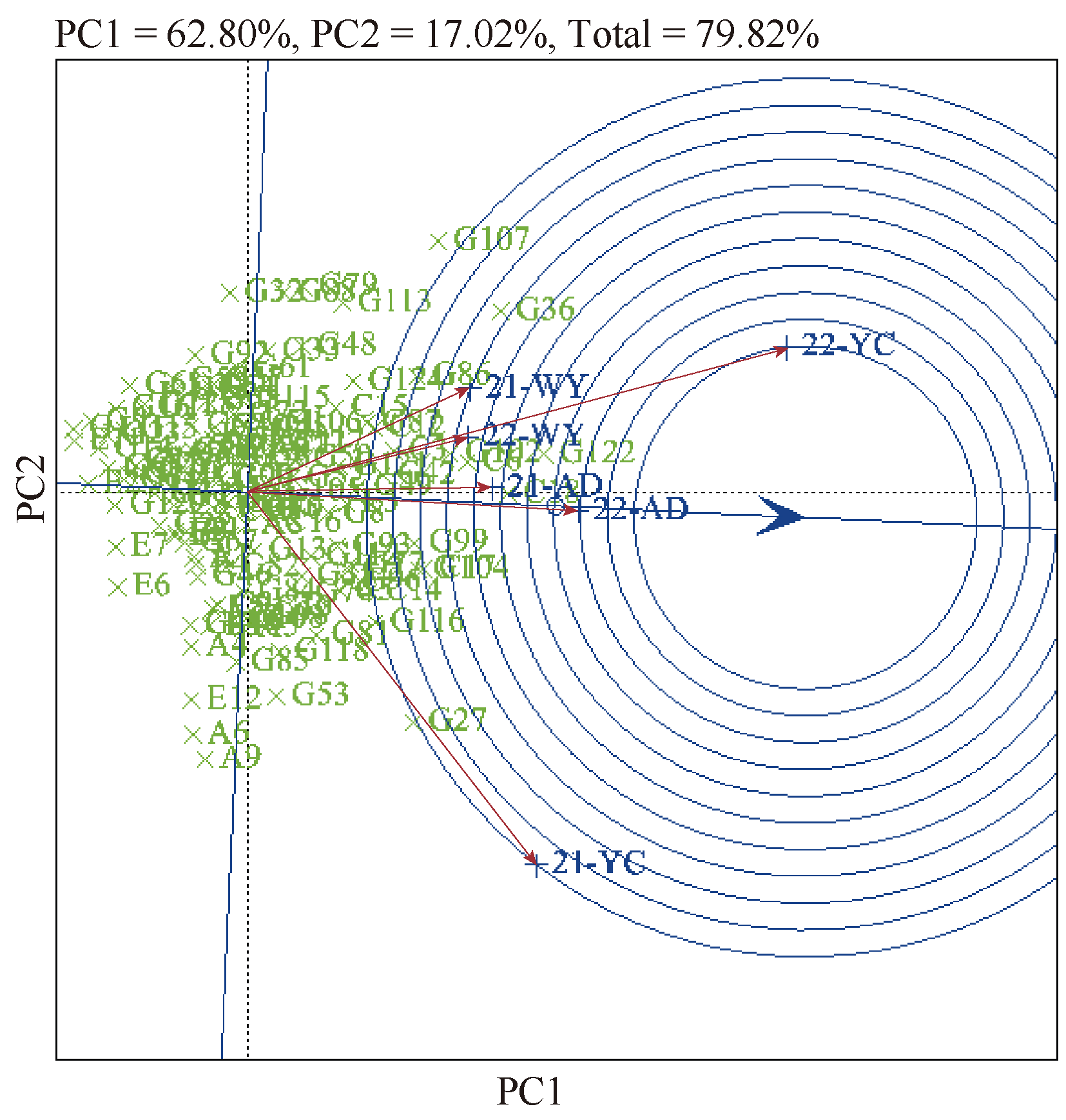
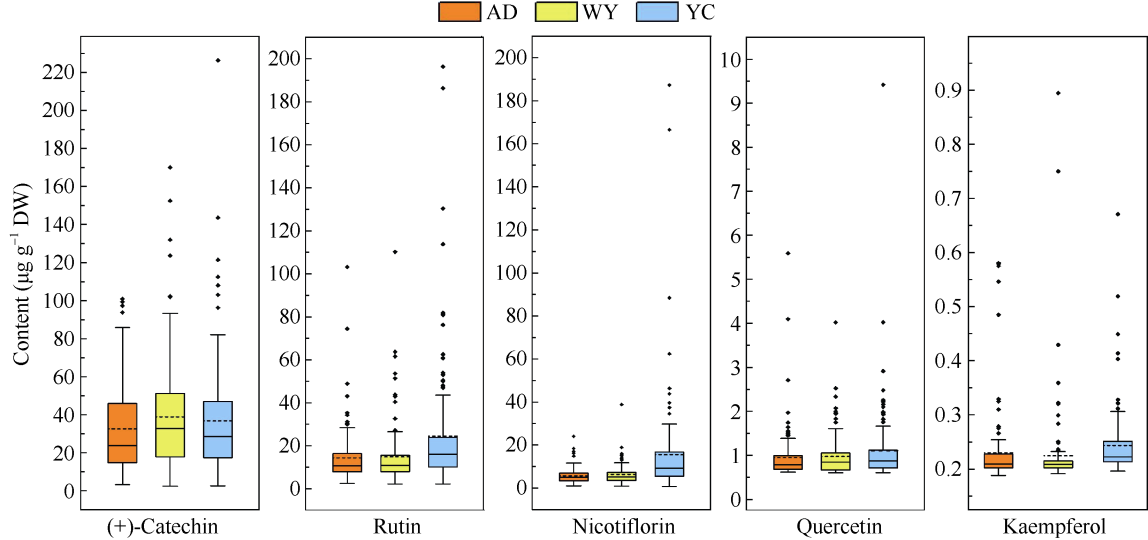
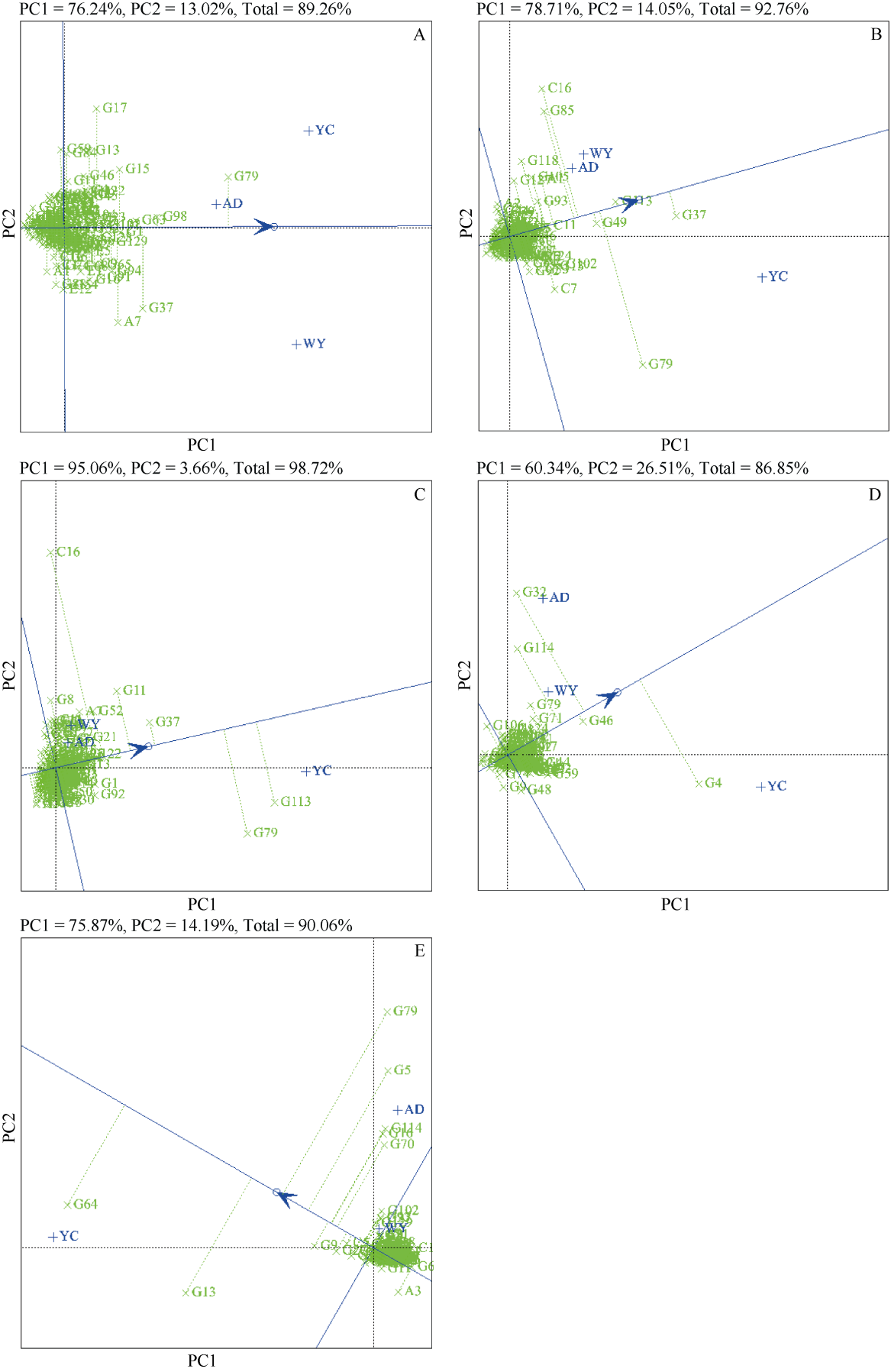
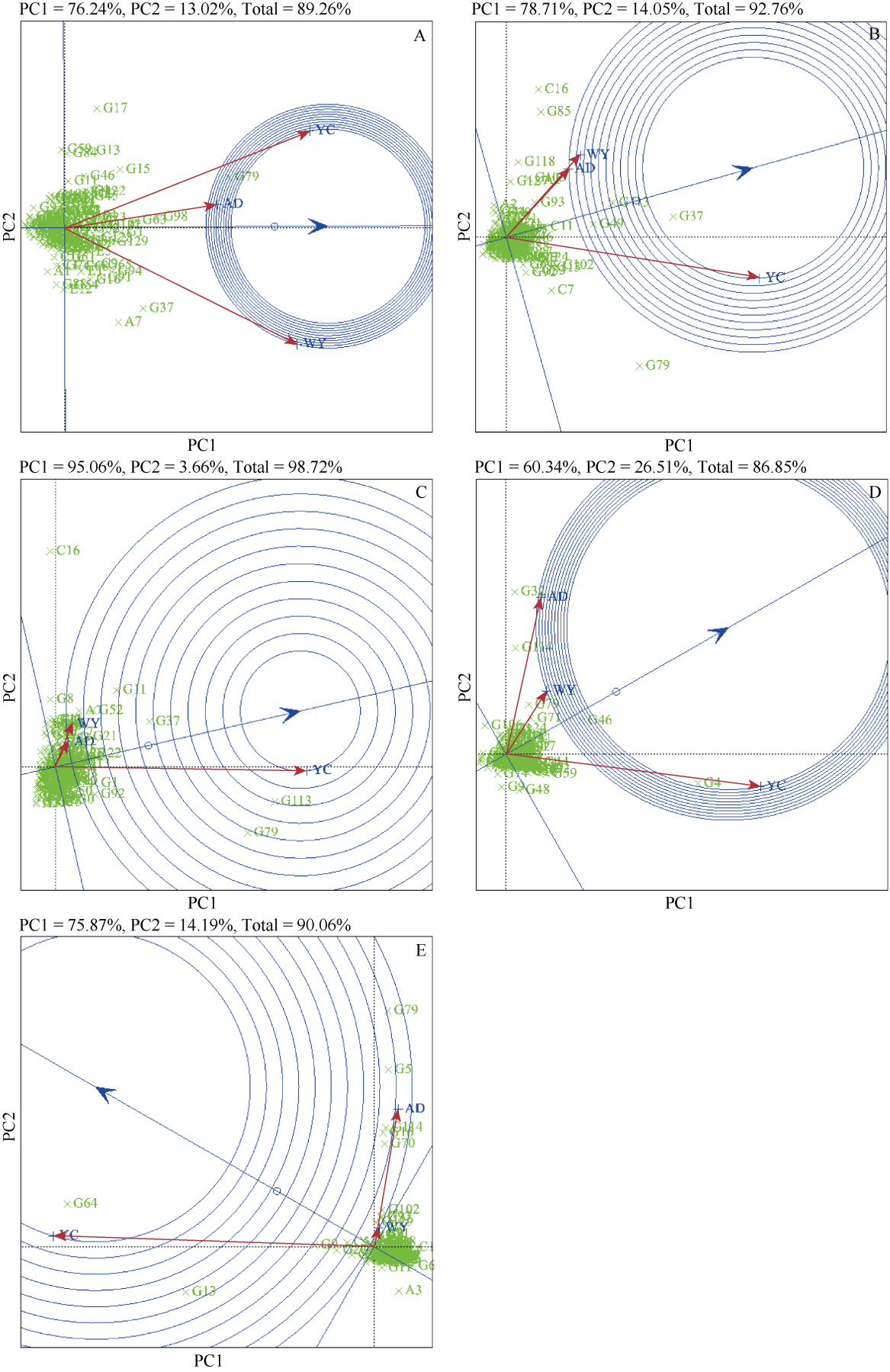
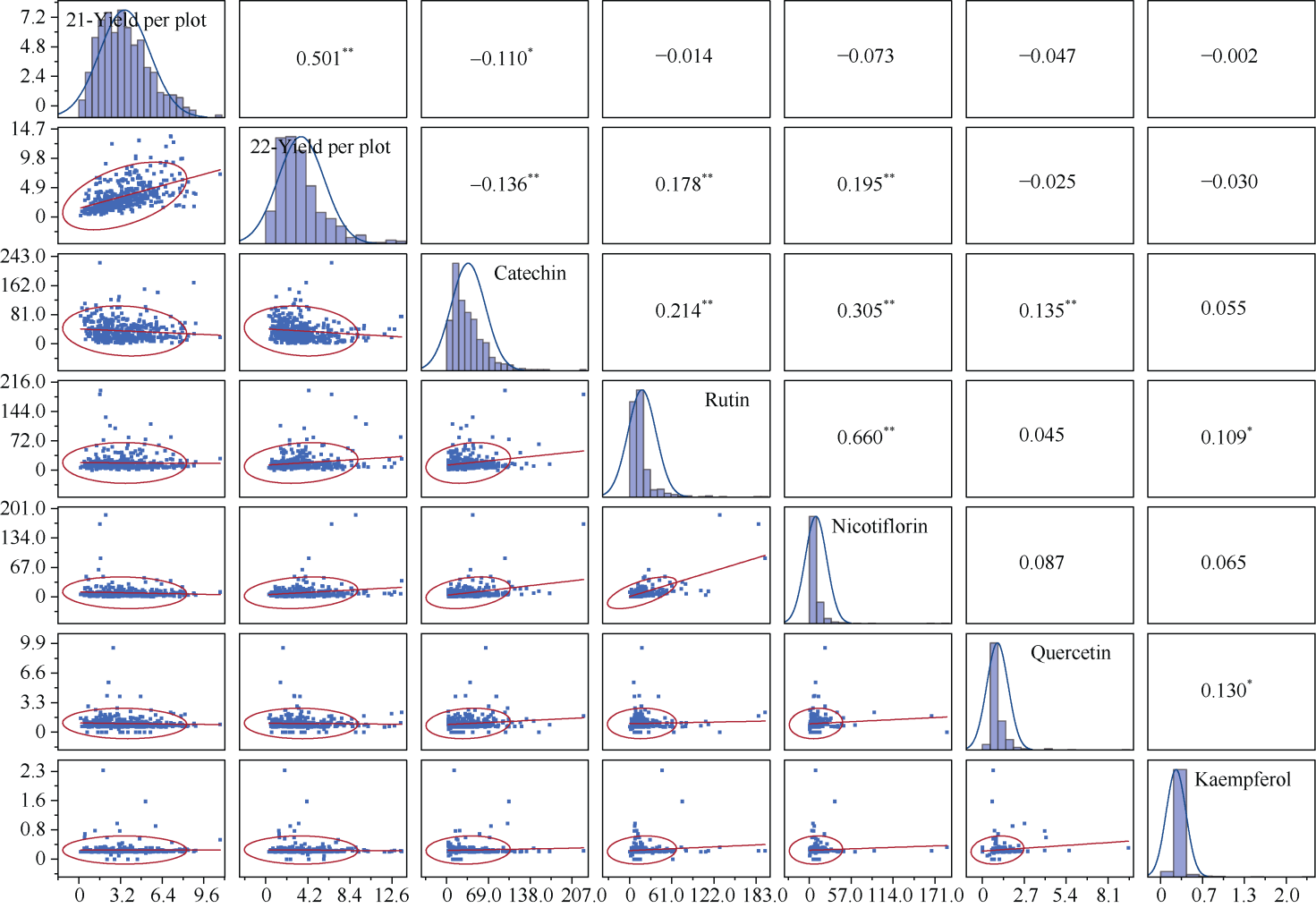
为实现产量与营养品质的协同改良, 本研究通过基因型和基因型与环境互作(GGE)双标图方法, 系统解析不同生态类型区马铃薯产量与类黄酮含量的遗传差异、环境适应性与性状稳定性。以筛选适宜特定生态区高产、高类黄酮含量且稳定的优良基因型为核心, 为营养强化型马铃薯新品种选育提供理论支撑。试验共选取130份马铃薯品种(系), 于2021—2022年在甘肃省渭源县、安定区及永昌县3个生态区开展2年3点试验。收获后测定小区产量及儿茶素、芦丁、烟花苷、槲皮素和山奈酚含量, 并采用联合方差分析与GGE双标图对产量和品质性状进行基因型与环境互作分析。方差分析显示, 除小区产量在年份效应中无显著差异外, 各性状的基因型效应、环境效应及基因型与环境互作效应均达极显著水平(P < 0.01)。其中, 小区产量、儿茶素和芦丁含量主要受基因型效应影响, 而烟花苷、槲皮素和山奈酚含量以基因型与环境互作效应为主。小区产量GGE分析结果表明, G122在2021年安定、2022年安定、2022年渭源和2022年永昌试点产量最高; G27在2021年永昌试点产量最高; G36在2021年渭源试点产量最高; C18、G122、C6、G102、G42、G49、C3、G9高产且稳定; 试点区分力强弱依次为永昌、安定、渭源试点, 以安定试点代表性最强。类黄酮含量GGE分析结果表明, G79在3个试点儿茶素含量均最高, 在安定、渭源试点山奈酚含量最高, 在永昌试点烟花苷含量最高; C16在安定、渭源试点芦丁与烟花苷含量均最高; G37、G4、G46分别在永昌试点中芦丁、槲皮素、山奈酚含量最高; G32在安定、渭源试点槲皮素含量最高; G98、G63、G1、G129、G102儿茶素含量高且稳定; G37、G113、G49、C11、G93芦丁含量高且稳定; G37、G122、G13、G21烟花苷含量高且稳定; G46、G71、G124、G79槲皮素含量高且稳定; G9、C5、G27山奈酚含量高且稳定; 试点区分力强弱依次为永昌、渭源、安定, 以永昌试点代表性最强。结合小区产量和类黄酮含量的GGE模型, 筛选出G122、G102、G49和G93高产、高类黄酮含量且稳定的优良品系。综合试点区分力和代表性, 安定试点可作为产量评价的理想环境, 永昌试点则更适于特定环境下产量和类黄酮含量品种(系)的筛选。
| [1] |
Dawson I K, Powell W, Hendre P, et al. The role of genetics in mainstreaming the production of new and orphan crops to diversify food systems and support human nutrition. New Phytol, 2019, 224: 37-54.
doi: 10.1111/nph.15895 pmid: 31063598 |
| [2] |
Singh B, Goutam U, Kukreja S, et al. Potato biofortification: an effective way to fight global hidden hunger. Physiol Mol Biol Plants, 2021, 27: 2297-2313.
doi: 10.1007/s12298-021-01081-4 |
| [3] |
Tatarowska B E, Plich J, Milczarek D, et al. Genotype by environment interaction (GEI) effect for potato tuber yield and their quality traits in organic multi-environment domains in Poland. Agriculture, 2024, 14: 1591.
doi: 10.3390/agriculture14091591 |
| [4] |
Pour-Aboughadareh A, Khalili M, Poczai P, et al. Stability indices to deciphering the genotype-by-environment interaction (GEI) effect: an applicable review for use in plant breeding programs. Plants, 2022, 11: 414.
doi: 10.3390/plants11030414 |
| [5] | Bustos-Korts D, Romagosa I, Borràs-Gelonch G, et al. Genotype by environment interaction and adaptation. In: MeyersR,eds. Encyclopedia of Sustainability Science and Technology. New York: Springer, 2018. pp 1-44. |
| [6] | Maulana H, Nafi’Ah H H, Solihin E, et al. Combined stability analysis to select stable and high yielding sweet potato genotypes in multi-environmental trials in West Java, Indonesia. Agric Nat Resour, 2022, 56: 761-772. |
| [7] | Maulana H, Solihin E, Trimo L, et al. Genotype-by-environment interactions (GEIs) and evaluate superior sweet potato (Ipomoea batatas [L.] Lam) using combined analysis and GGE biplot. Heliyon, 2023, 9: e20203. |
| [8] |
叶夕苗, 程鑫, 安聪聪, 等. 马铃薯产量组分的基因型与环境互作及稳定性. 作物学报, 2020, 46: 354-364.
doi: 10.3724/SP.J.1006.2020.94089 |
|
Ye X M, Cheng X, An C C, et al. Genotype×environment interaction and stability of yield components for potato lines. Acta Agron Sin, 2020, 46: 354-364 (in Chinese with English abstract).
doi: 10.3724/SP.J.1006.2020.94089 |
|
| [9] |
Gauch H G Jr. Statistical analysis of yield trials by AMMI and GGE. Crop Sci, 2006, 46: 1488-1500.
doi: 10.2135/cropsci2005.07-0193 |
| [10] |
Yan W K, Fetch J M, Frégeau-Reid J, et al. Genotype×location interaction patterns and testing strategies for oat in the Canadian prairies. Crop Sci, 2011, 51: 1903-1914.
doi: 10.2135/cropsci2010.09.0548 |
| [11] |
Getahun B B, Tiruneh M A, Aliche E, et al. Genotype-by- environment interaction for quantitative trait loci affecting nitrogen use efficiency and associated traits in potato. Potato Res, 2022, 65: 777-807.
doi: 10.1007/s11540-022-09548-x |
| [12] |
Scavo A, Mauromicale G, Ierna A. Genotype×environment interactions of potato tuber quality characteristics by AMMI and GGE biplot analysis. Sci Hortic, 2023, 310: 111750.
doi: 10.1016/j.scienta.2022.111750 |
| [13] | Manrique K, Hermann M. Effect of G×E interaction on root yield and betacarotene content of selected sweet potato (Ipomoea batatas (L.) Lam.) varieties and breeding clones. In:CIP Program Report 1999-2000. Lima: International Potato Center, 2000. pp 281-287. |
| [14] | Gurmu F, Hussein S, Laing M. Genotype-by-environment interaction and stability of sweetpotato genotypes for root dry matter, β-carotene and fresh root yield. Open Agric, 2017, 2: 473-485. |
| [15] | Sood S, Bhardwaj V, Kumar V, et al. BLUP and stability analysis of multi-environment trials of potato varieties in sub-tropical Indian conditions. Heliyon, 2020, 6: e05525. |
| [16] |
Shen N, Wang T F, Gan Q, et al. Plant flavonoids: classification, distribution, biosynthesis, and antioxidant activity. Food Chem, 2022, 383: 132531.
doi: 10.1016/j.foodchem.2022.132531 |
| [17] |
Liu R H. Health-promoting components of fruits and vegetables in the diet. Adv Nutr, 2013, 4: 384S-392S.
doi: 10.3945/an.112.003517 pmid: 23674808 |
| [18] |
Watkins B A, Mitchell A E, Shin A C, et al. Dietary flavonoid actions on senescence, aging, and applications for health. J Nutr Biochem, 2025, 139: 109862.
doi: 10.1016/j.jnutbio.2025.109862 |
| [19] |
Martiniakova M, Babikova M, Mondockova V, et al. The role of macronutrients, micronutrients and flavonoid polyphenols in the prevention and treatment of osteoporosis. Nutrients, 2022, 14: 523.
doi: 10.3390/nu14030523 |
| [20] | 程军, 任一平, 张英, 等. 黄酮醇抑制丙烯酰胺在美拉德反应中的形成及与抗氧化间的相关性. 浙江大学学报(农业与生命科学版), 2013, 39: 178-184. |
| Cheng J, Ren Y P, Zhang Y, et al. Effect of flavonol on reduction of acrylamide in Maillard reaction and its correlation with antioxidant capacity. J Zhejiang Univ (Agric Life Sci), 2013, 39: 178-184 (in Chinese with English abstract). | |
| [21] |
Ghorbani A. Mechanisms of antidiabetic effects of flavonoid rutin. Biomed Pharmacother, 2017, 96: 305-312.
doi: S0753-3322(17)34342-1 pmid: 29017142 |
| [22] |
Agati G, Tattini M. Multiple functional roles of flavonoids in photoprotection. New Phytol, 2010, 186: 786-793.
doi: 10.1111/nph.2010.186.issue-4 |
| [23] |
Wan X Z, Jia W, Wang Q, et al. Metabolomics strategy comprehensively unveils the effect of catechins intervention on the biomarkers of exposure to acrylamide and biomarkers of cardiometabolic risk. Environ Int, 2022, 169: 107517.
doi: 10.1016/j.envint.2022.107517 |
| [24] |
Pozo-Bayón M Á, Monagas M, Bartolomé B, et al. Wine features related to safety and consumer health: an integrated perspective. Crit Rev Food Sci Nutr, 2012, 52: 31-54.
doi: 10.1080/10408398.2010.489398 pmid: 21991989 |
| [25] | Zhu S M, Fu R, Martin C, et al. Recent advances in biosynthesis, regulation, and metabolic engineering of flavonoids. Plant Physiol, 2025, 199: kiaf356. |
| [26] | 张永成, 田丰. 马铃薯试验研究方法. 北京: 中国农业科学技术出版社, 2007. pp 117-118. |
| Zhang Y C, Tian F. Research Methods of Potato Experiment. Beijing: China Agricultural Science and Technology Press, 2007. pp 117-118 (in Chinese). | |
| [27] |
Deußer H, Guignard C, Hoffmann L, et al. Polyphenol and glycoalkaloid contents in potato cultivars grown in Luxembourg. Food Chem, 2012, 135: 2814-2824.
doi: 10.1016/j.foodchem.2012.07.028 pmid: 22980877 |
| [28] | VSN International. Genstat Reference Manual (Release 20). Hemel Hempstead, UK: VSN International, 2019. |
| [29] |
严威凯. 双标图分析在农作物品种多点试验中的应用. 作物学报, 2010, 36: 1805-1819.
doi: 10.3724/SP.J.1006.2010.01805 |
| Yan W K. Optimal use of biplots in analysis of multi-location variety test data. Acta Agron Sin, 2010, 36: 1805-1819 (in Chinese with English abstract). | |
| [30] | 袁剑龙. 马铃薯重要农艺和品质性状全基因组关联分析及候选基因的功能验证. 甘肃农业大学博士学位论文, 甘肃兰州, 2024. |
| Yuan J L. Genome-wide Association Studies and Functional Identification of Candidate Genes for Key Agronomic and Quality Traits in Potato (Solanum tuberosum L.). PhD Dissertation of Gansu Agricultural University, Lanzhou, Gansu, China, 2024 (in Chinese with English abstract). | |
| [31] |
Zhou B Y, Yuan J L, Liang L J, et al. Genotype×environment interactions for potato yield and quality traits: identification of ideotypes adapted in different ecological regions of Northwest China. BMC Plant Biol, 2025, 25: 737.
doi: 10.1186/s12870-025-06741-1 |
| [32] |
Tan W Y, Wong S P. On the probabilities of obtaining negative estimates of genetic variance components. Biometrical J, 1978, 20: 69-79.
doi: 10.1002/bimj.v20:1 |
| [33] | 单保山. 遗传力的概念及其发展I. 关于传统遗传力的几个问题. 河北农业大学学报, 1988, 11(1): 39-44. |
| Shan B S. The concept of heritability and its development I. Some views on heritability. J Hebei Agric Univ, 1988, 11(1): 39-44 (in Chinese with English abstract). | |
| [34] |
周丙月, 袁剑龙, 张玉梅, 等. 马铃薯品种(系)农艺性状的适应性和稳定性分析. 核农学报, 2023, 37: 274-289.
doi: 10.11869/j.issn.1000-8551.2023.02.0274 |
|
Zhou B Y, Yuan J L, Zhang Y M, et al. Analysis of genotype and environment interaction, adaptability and stability of agronomic traits of potato varieties (lines). J Nucl Agric Sci, 2023, 37: 274-289 (in Chinese with English abstract).
doi: 10.11869/j.issn.1000-8551.2023.02.0274 |
|
| [35] |
Rommens C M, Richael C M, Yan H, et al. Engineered native pathways for high kaempferol and caffeoylquinate production in potato. Plant Biotechnol J, 2008, 6: 870-886.
doi: 10.1111/j.1467-7652.2008.00362.x pmid: 18662373 |
| [36] |
Zhang Z, Tan W, Liu J T, et al. Metabolomic remodeling and genetic regulation in potato tubers during domestication. Mol Plant, 2026, 19: 328-345.
doi: 10.1016/j.molp.2025.12.005 |
| [37] |
Petridis A, Döll S, Nichelmann L, et al. Arabidopsis thaliana G2-LIKE FLAVONOID REGULATOR and BRASSINOSTEROID ENHANCED EXPRESSION1 are low-temperature regulators of flavonoid accumulation. New Phytol, 2016, 211: 912-925.
doi: 10.1111/nph.2016.211.issue-3 |
| [38] |
Liu Y H, Li Y M, Liu Z, et al. Integrated transcriptomic and metabolomic analysis revealed altitude-related regulatory mechanisms on flavonoid accumulation in potato tubers. Food Res Int, 2023, 170: 112997.
doi: 10.1016/j.foodres.2023.112997 |
| [39] |
Kui L W, Micheletti D, Palmer J, et al. High temperature reduces apple fruit colour via modulation of the anthocyanin regulatory complex. Plant Cell Environ, 2011, 34: 1176-1190.
doi: 10.1111/pce.2011.34.issue-7 |
| [40] |
Shi T C, Su Y, Lan Y B, et al. The molecular basis of flavonoid biosynthesis response to water, light, and temperature in grape berries. Front Plant Sci, 2024, 15: 1441893.
doi: 10.3389/fpls.2024.1441893 |
| [41] | 夏露露. 马铃薯酚酸类物质的全基因组关联分析及候选基因挖掘. 甘肃农业大学硕士学位论文, 甘肃兰州, 2023. |
| Xia L L. Genome-wide Association Study and Candidate Genes Mining of Phenolic Acids in Potato. MS Thesis of Gansu Agricultural University, Lanzhou, Gansu, China, 2023 (in Chinese with English abstract). | |
| [42] |
Huot B, Yao J, Montgomery B L, et al. Growth-defense tradeoffs in plants: a balancing act to optimize fitness. Mol Plant, 2014, 7: 1267-1287.
doi: S1674-2052(14)60932-1 pmid: 24777989 |
| [43] |
Dixon R A, Paiva N L. Stress-induced phenylpropanoid metabolism. Plant Cell, 1995, 7: 1085-1097.
doi: 10.2307/3870059 |
| [1] | 黄迎, 刘沛琦, 解森, 许洛, 任元, 刘旭洋, 何冠华, 李永祥, 王天宇, 黎裕, 周涛, 廖江林, 李春辉, 张登峰. 玉米氮利用效率全基因组关联分析及候选基因挖掘[J]. 作物学报, 2026, 52(9): 2558-2572. |
| [2] | 杨璐瑶, 崔茹莹, 董学瑞, 闫鹏, 张娟, 张彩霞, 王永军, 董志强, 卢霖. 聚天冬氨酸钾和甜菜碱复配剂对灌浆期高温胁迫下小麦同化物积累、转运及产量的缓解效应[J]. 作物学报, 2026, 52(9): 2760-2774. |
| [3] | 赵岩, 张文姣, 杨琦文, 魏佳智, 俞晓雪, 李丹丹, 魏楚, 冯誉誉, 彭佳泺, 王彩香, 马雄风, 宿俊吉. 陆地棉产量相关性状QTL的Meta分析及候选基因鉴定[J]. 作物学报, 2026, 52(9): 2584-2597. |
| [4] | 崔雯杰, 闫喆林, 任强, 樊志龙, 殷文, 孙亚丽, 范虹, 何蔚, 王凤, 胡发龙, 柴强. 氮肥后移提高麦玉间作系统玉米产量的光合生理机制[J]. 作物学报, 2026, 52(9): 2700-2712. |
| [5] | 李宗, 叶荣柒, 孙会军, 郭威宏, 罗子恒, 刘硕, 任永峰, 张雯, 宫香伟, 姜英. 间作绿肥对东北春玉米产量及农田土壤质量的影响[J]. 作物学报, 2026, 52(9): 2775-2791. |
| [6] | 王嘉豪, 王小玲, 范震, 郭光旭, 冯文静, 张新博, 罗璇, 任小龙, 陈小莉. 液态地膜与微垄沟种植集成对旱区夏玉米光能利用及产量的提升效应[J]. 作物学报, 2026, 52(9): 2713-2724. |
| [7] | 唐海江, 郭富城, 肖东浩, 杨九菊, 苏晶, 廖婷璐, 王艳旗, 罗成科. 外源硝普钠喷施对盐碱地水稻碳氮代谢调控机制及增产效应研究[J]. 作物学报, 2026, 52(9): 2744-2759. |
| [8] | 王碧胜, 孙筱璐, 崔玉莎, 赵中情, 马青敏, 丁鹤洋, 房全孝. 冬小麦产量形成对播种密度及行距的响应模拟改进与验证[J]. 作物学报, 2026, 52(8): 2438-2453. |
| [9] | 高旺南, 孟天琪, 孙兆鑫, 尚旭阁, 武军, 刘玉秀. 小麦茎秆实心性状研究进展及育种应用[J]. 作物学报, 2026, 52(8): 2233-2243. |
| [10] | 黄周详, 李乙弘, 刘笑言, 刘伟, 孟玉山, 唐道彬, 张凯, 杜康, 王季春, 吕长文. 6-BA与烯效唑对前旱后湿胁迫下甘薯光合性能、抗逆生理及产量品质的影响[J]. 作物学报, 2026, 52(8): 2521-2532. |
| [11] | 谢可盈, 李巧龙, 李国风, 赵明慧, 高瑞蔓, 凌英华, 赵芳明. 基于水稻CSSL-Z815构建SSSLs的产量相关QTL鉴定与qGL8精细定位[J]. 作物学报, 2026, 52(8): 2350-2365. |
| [12] | 向钰鑫, 张捷语, 李贵珍, 王琳, 刘涵, 秦宇星, 马根, 向达兵. 氮密互作对苦荞冠层光环境、产量及品质的影响[J]. 作物学报, 2026, 52(8): 2480-2495. |
| [13] | 张瑞连, 商晓敏, 李婧, 董开林, 谢玉勤, 刘阳, 俞书琴, 曹梦圆, 李文阳. 不同时期高温胁迫对玉米籽粒产量与淀粉理化特性的影响[J]. 作物学报, 2026, 52(8): 2424-2437. |
| [14] | 肖红, 李炳霖, 廖博, 肖国滨, 吕伟生, 任涛, 陆志峰, 鲁剑巍. 终花期外源喷镁对油菜籽粒产量和角果生长发育的影响[J]. 作物学报, 2026, 52(7): 2084-2094. |
| [15] | 刘峰, 董宏伟, 张越, 李冉, 孙若男, 刘佳城, 孙树杰, 张旭东, 韩清芳. 玉豆间作减氮稳产的光合机制: 光合产物转化效率提升[J]. 作物学报, 2026, 52(7): 2095-2108. |
|
||