欢迎访问作物学报,今天是
作物学报 ›› 2023, Vol. 49 ›› Issue (9): 2446-2461.doi: 10.3724/SP.J.1006.2023.24186
王菲菲1( ), 张胜忠1, 胡晓辉1, 崔凤高1, 钟文3, 赵立波4, 张天雨3, 郭进涛5, 于豪谅6, 苗华荣1,*(), 陈静1,*()
WANG Fei-Fei1(), ZHANG Sheng-Zhong1, HU Xiao-Hui1, CHU Ye2, CUI Feng-Gao1, ZHONG Wen3, ZHAO Li-Bo4, ZHANG Tian-Yu3, GUO Jin-Tao5, YU Hao-Liang6, MIAO Hua-Rong1,*(), CHEN Jing1,*()
摘要:
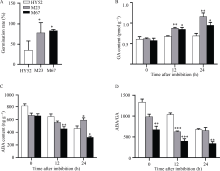
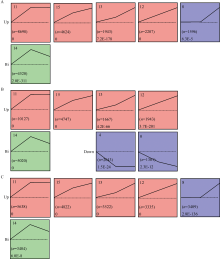
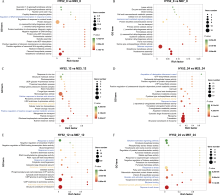
种子休眠性是花生重要且复杂的农艺性状, 对花生(Arachis hypogaea L.)的产量和品质影响巨大。为深入揭示花生种子休眠维持和解除的分子调控网络, 本研究以强休眠品种花育52号(HY52)和弱休眠突变株系M23、M67为试材, 种子吸胀处理(0 h、12 h、24 h)后测定其激素ABA和GA含量并进行转录组测序。吸胀12 h时M23和M67中GA含量显著高于HY52, ABA含量和ABA/GA比值则低于HY52。测序共得到31,373个差异表达基因(DEGs), 其中ABA和GA生物合成和信号转导相关的基因在种子休眠维持和解除过程中发生显著变化, 挖掘到50个ABA相关基因、8个GA相关基因、49个乙烯相关基因和13个生长素相关基因。此外, 还鉴定到许多参与碳水化合物和脂质代谢、氨基酸代谢途径相关的DEG, 挖掘到糖代谢相关基因5个、脂质代谢相关基因4个; 昼夜节律调控也可能参与花生种子休眠解除。这表明, 花生种子休眠维持和解除的调控是一个复杂网络, 植物激素平衡调控可能只是其中一个重要部分。
| [1] |
Hilhorst H W. Standardizing seed dormancy research. Methods Mol Biol, 2011, 773: 43-52.
doi: 10.1007/978-1-61779-231-1_3 pmid: 21898248 |
| [2] |
Baskin J M, Baskin C C. A classification system for seed dormancy. Seed Sci Res, 2007, 14: 1-16.
doi: 10.1079/SSR2003150 |
| [3] | Fenner M, Thompson K, The Ecology of Seeds. New York: Cambridge University Press, 2005. pp 99-104. |
| [4] |
Wang M L, Wang H, Zhao C, Tonnis B, Tallury S, Wang X, Clevenger J, Guo B. Identification of QTLs for seed dormancy in cultivated peanut using a recombinant inbred line mapping population. Plant Mol Biol Rep, 2021, 40: 208-217.
doi: 10.1007/s11105-021-01315-5 |
| [5] | 胡晓辉, 崔凤高, 张胜忠, 苗华荣, 张智猛, 陈静. 花生种子休眠特异突变材料的创制及理化因素研究. 花生学报, 2018, 47(1): 33-37. |
| Hu X H, Cui F G, Zhang S Z, Miao H R, Zhang Z M, Chen J. Study on the creation and physicochemical factors of peanut seed dormancy mutant. J Peanut Sci, 2018, 47(1): 33-37. (in Chinese with English abstract) | |
| [6] |
Shi J, Shi J, Liang W, Zhang D. Integrating GWAS and transcriptomics to identify genes involved in seed dormancy in rice. Theor Appl Genet, 2021, 134: 3553-3562.
doi: 10.1007/s00122-021-03911-1 pmid: 34312681 |
| [7] |
Finkelstein R, Reeves W, Ariizumi T, Steber C. Molecular aspects of seed dormancy. Annu Rev Plant Biol, 2008, 59: 387-415.
doi: 10.1146/annurev.arplant.59.032607.092740 pmid: 18257711 |
| [8] |
Sondheimer E, Tzou D S, GalsonE C. Abscisic acid levels and seed dormancy. Plant Physiol, 1968, 43: 1443-1447.
doi: 10.1104/pp.43.9.1443 pmid: 16656935 |
| [9] |
Kallio P, Piiroinen P. Effect of gibberellin on the termination of dormancy in some seeds. Nature, 1959, 183: 1830-1831.
doi: 10.1038/1831830a0 |
| [10] |
Nee G, Xiang Y, Soppe W J. The release of dormancy, a wake-up call for seeds to germinate. Curr Opin Plant Biol, 2017, 35: 8-14.
doi: S1369-5266(16)30133-9 pmid: 27710774 |
| [11] |
Kucera B, Cohn M A, Leubner-Metzger G. Plant hormone interactions during seed dormancy release and germination. Seed Sci Res, 2007, 15: 281-307.
doi: 10.1079/SSR2005218 |
| [12] |
Zhang M, Zeng Q, Liu H, Qi F, Sun Z, Miao L, Li X, Li C, Liu D, Guo J, Zhang M, Xu J, Shi L, Tian M, Dong W, Huang B, Zhang X. Identification of a stable major QTL for fresh-seed germination on chromosome Arahy. 04 in cultivated peanut (Arachis hypogaea L.). Crop J, 2022, 10: 1767-1773.
doi: 10.1016/j.cj.2022.03.012 |
| [13] | 郝西, 张俊, 刘娟, 臧秀旺, 董文召, 汤丰收. 不同花生品种种子休眠性鉴定. 种子, 2018, 37(8): 1-3. |
| Hao X, Zhang J, Liu J, Zang X W, Dong W Z, Tang F S. Identification of seed dormancy of diffident varieties. Seed, 2018, 37(8): 1-3. (in Chinese with English abstract) | |
| [14] | 任明刚, 何大智, 冯明友, 李婵, 杨如英, 张超, 穆航. 贵州78份地方花生品种的休眠性及相关分析. 种子, 2020, 39(11): 55-58. |
| Ren M G, He D Z, Feng M Y, Li C, Yang R Y, Zhang C, Mu H. Dormancy and correlation analysis of 78 local peanut varieties in Guizhou. Seed, 2020, 39(11): 55-58 (in Chinese with English abstract). | |
| [15] |
Xie K, Bai J, Yang Y Y, Duan N B, Ma Y M, Guo T, Yao F Y, Ding H F. The RNA-seq transcriptome analysis identified genes related to rice seed dormancy. Biol Plant, 2019, 63: 308-313.
doi: 10.32615/bp.2019.035 |
| [16] | Han Z, Wang B, Tian L, Wang S, Zhang J, Guo S, Zhang H, Xu L, Chen Y. Comprehensive dynamic transcriptome analysis at two seed germination stages in maize (Zea mays L.). Physiol Plant, 2020, 168: 205-217. |
| [17] |
Li X, Qiao H, Wang Z, Han B, Xing Y, Yang Y. A Comparative transcriptome analysis reveals new insights into pre-harvest sprouting (PHS) in wheat. Res Square, 2021, DOI: 10.21203/rs.3.rs-910461/v1.
doi: 10.21203/rs.3.rs-910461/v1 |
| [18] |
Park M, Choi W, Shin S Y, Moon H, Lee D, Gho Y S, Jung K H, Jeon J S, Shin C. Identification of genes and microRNAs affecting pre-harvest sprouting in rice(Oryza sativa L.)by transcriptome and small RNAome analyses. Front Plant Sci, 2021, 12: 727302.
doi: 10.3389/fpls.2021.727302 |
| [19] | Xu P, Tang G, Cui W, Chen G, Ma C L, Zhu J, Li P, Shan L, Liu Z, Wan S. Transcriptional differences in peanut (Arachis hypogaea L.)seeds at the freshly harvested, after-ripening and newly germinated seed stages: insights into the regulatory networks of seed dormancy release and germination. PLoS One, 2020, 15: e0219413. |
| [20] |
Zhang J, Qian J Y, Bian Y H, Liu X, Wang C L. Transcriptome and metabolite conjoint analysis reveals the seed dormancy release process in Callery Pear. Int J Mol Sci, 2022, 23: 2186.
doi: 10.3390/ijms23042186 |
| [21] |
Tai L, Wang H J, Xu X J, Sun W H, Ju L, Liu W T, Li W Q, Sun J, Chen K M. Pre-harvest sprouting in cereals: genetic and biochemical mechanisms. J Exp Bot, 2021, 72: 2857-2876.
doi: 10.1093/jxb/erab024 pmid: 33471899 |
| [22] |
Bertioli D J, Jenkins J, Clevenger J, Dudchenko O, Gao D, Seijo G, Leal-Bertioli S C M, Ren L, Farmer A D, Pandey M K, Samoluk S S, Abernathy B, Agarwal G, Ballen-Taborda C, Cameron C, Campbell J, Chavarro C, Chitikineni A, Chu Y, Dash S, El Baidouri M, Guo B, Huang W, Kim K D, Korani W, Lanciano S, Lui C G, Mirouze M, Moretzsohn M C, Pham M, Shin J H, Shirasawa K, Sinharoy S, Sreedasyam A, Weeks N T, Zhang X, Zheng Z, Sun Z, Froenicke L, Aiden E L, Michelmore R, Varshney R K, Holbrook C C, Cannon E K S, Scheffler B E, Grimwood J, Ozias-Akins P, Cannon S B, Jackson S A, Schmutz J. The genome sequence of segmental allotetraploid peanut Arachis hypogaea. Nat Genet, 2019, 51: 877-884.
doi: 10.1038/s41588-019-0405-z pmid: 31043755 |
| [23] |
Ernst J, Bar-Joseph Z. STEM: a tool for the analysis of short time series gene expression data. BMC Bioinformatics, 2006, 7: 191.
pmid: 16597342 |
| [24] |
Liu D, Yu H L, Li F L, Guo H H. An analysis of dormancy and dormancy release in Taxus chinensis var. mairei seeds. Seed Sci Technol, 2011, 39: 29-43.
doi: 10.15258/sst |
| [25] |
Graeber K, Nakabayashi K, Miatton E, Leubner-Metzger G, Soppe W J. Molecular mechanisms of seed dormancy. Plant Cell Environ, 2012, 35: 1769-1786.
doi: 10.1111/pce.2012.35.issue-10 |
| [26] |
Ali-Rachedi S, Bouinot D, Wagner M H, Bonnet M, Sotta B, Grappin P, Jullien M. Changes in endogenous abscisic acid levels during dormancy release and maintenance of mature seeds: studies with the Cape Verde Islands ecotype, the dormant model of Arabidopsis thaliana. Planta, 2004, 219: 479-488.
doi: 10.1007/s00425-004-1251-4 pmid: 15060827 |
| [27] |
Cadman C S, Toorop P E, Hilhorst H W, Finch-Savage W E. Gene expression profiles of Arabidopsis Cvi seeds during dormancy cycling indicate a common underlying dormancy control mechanism. Plant J, 2006, 46: 805-822.
doi: 10.1111/tpj.2006.46.issue-5 |
| [28] |
Finch-Savage W E, Leubner-Metzger G. Seed dormancy and the control of germination. New Phytol, 2006, 171: 501-523.
doi: 10.1111/j.1469-8137.2006.01787.x pmid: 16866955 |
| [29] | 崔维佩, 唐桂英, 徐平丽, 李鹏祥, 朱洁琼, 单雷. 花生种子萌发过程中内源激素含量的变化. 中国油料作物学报, 2020, 42: 869-877. |
| Cui W P, Tang G Y, Xu P L, Li P X, Zhu J Q, Shan L. Changes of endogenous hormone content in peanut seeds during germination. Chin J Oil Crop Sci, 2020, 42: 869-877. (in Chinese with English abstract) | |
| [30] |
Grappin P, Bouinot D, Sotta B, Miginiac E, Jullien M. Control of seed dormancy in Nicotiana plumbaginifolia: post-imbibition abscisic acid synthesis imposes dormancy maintenance. Planta, 2000, 210: 279-285.
doi: 10.1007/PL00008135 pmid: 10664134 |
| [31] |
Shu K, Liu X D, Xie Q, He Z H. Two faces of one seed: hormonal regulation of dormancy and germination. Mol Plant, 2016, 9: 34-45.
doi: S1674-2052(15)00356-1 pmid: 26343970 |
| [32] |
Yang B, Cheng J, Wang J, Cheng Y, He Y, Zhang H, Wang Z. Physiological characteristics of cold stratification on seed dormancy release in rice. Plant Growth Regul, 2019, 89: 131-141.
doi: 10.1007/s10725-019-00516-z |
| [33] |
Merlot S, Gosti F, Guerrier D, Vavasseur A, Giraudat J. The ABI1 and ABI2 protein phosphatases 2C act in a negative feedback regulatory loop of the abscisic acid signalling pathway. Plant J, 2001, 25: 295-303.
pmid: 11208021 |
| [34] |
Lee S, Cheng H, King K E, Wang W, He Y, Hussain A, Lo J, Harberd N P, Peng J. Gibberellin regulates Arabidopsis seed germination via RGL2, a GAI/RGA-like gene whose expression is up-regulated following imbibition. Genes Dev, 2002, 16: 646-658.
doi: 10.1101/gad.969002 |
| [35] |
Ramaih S, Guedira M, Paulsen G M. Relationship of indoleacetic acid and tryptophan to dormancy and preharvest sprouting of wheat. Funct Plant Biol, 2003, 30: 939-945.
doi: 10.1071/FP03113 pmid: 32689078 |
| [36] |
Bai B, Novak O, Ljung K, Hanson J, Bentsink L. Combined transcriptome and translatome analyses reveal a role for tryptophan-dependent auxin biosynthesis in the control of DOG1-dependent seed dormancy. New Phytol, 2018, 217: 1077-1085.
doi: 10.1111/nph.14885 pmid: 29139127 |
| [37] |
Pellizzaro A, Neveu M, Lalanne D, Vu B L, Kanno Y, Seo M, Leprince O, Buitink J. A role for auxin signaling in the acquisition of longevity during seed maturation. New Phytol, 2020, 225: 284-296.
doi: 10.1111/nph.16150 pmid: 31461534 |
| [38] |
Preston J, Tatematsu K, Kanno Y, Hobo T, Kimura M, Jikumaru Y, Yano R, Kamiya Y, Nambara E. Temporal expression patterns of hormone metabolism genes during imbibition of Arabidopsis thaliana seeds: a comparative study on dormant and non-dormant accessions. Plant Cell Physiol, 2009, 50: 1786-1800.
doi: 10.1093/pcp/pcp121 pmid: 19713425 |
| [39] |
Ayele B T, Ozga J A, Wickramarathna A D, Reinecke D M. Gibberellin metabolism and transport during germination and young seedling growth of pea (Pisum sativum L.). J Plant Growth Regul, 2011, 31: 235-252.
doi: 10.1007/s00344-011-9234-8 |
| [40] |
Liu A, Gao F, Kanno Y, Jordan M C, Kamiya Y, Seo M, Ayele B T. Regulation of wheat seed dormancy by after-ripening is mediated by specific transcriptional switches that induce changes in seed hormone metabolism and signaling. PLoS One, 2013, 8: e56570.
doi: 10.1371/journal.pone.0056570 |
| [41] |
Fait A, Angelovici R, Less H, Ohad I, Urbanczyk-Wochniak E, Fernie A R, Galili G. Arabidopsis seed development and germination is associated with temporally distinct metabolic switches. Plant Physiol, 2006, 142: 839-854.
doi: 10.1104/pp.106.086694 |
| [42] |
Rosental L, Nonogaki H, Fait A. Activation and regulation of primary metabolism during seed germination. Seed Sci Res, 2014, 24: 1-15.
doi: 10.1017/S0960258513000391 |
| [43] |
Pandey M K, Pandey A K, Kumar R, Nwosu C V, Guo B, Wright G C, Bhat R S, Chen X, Bera S K, Yuan M, Jiang H, Faye I, Radhakrishnan T, Wang X, Liang X, Liao B, Zhang X, Varshney R K, Zhuang W. Translational genomics for achieving higher genetic gains in groundnut. Theor Appl Genet, 2020, 133: 1679-1702.
doi: 10.1007/s00122-020-03592-2 pmid: 32328677 |
| [44] | Ullrich S E. Barley: Production, Improvement, and Uses. Chichester: John Wiley & Sons, 2010. p 137. |
| [45] |
Bryan A, Joseph L, Bennett J A, Jacobson H I, Andersen T T. Design and synthesis of biologically active peptides: a ‘tail’ of amino acids can modulate activity of synthetic cyclic peptides. Peptides, 2011, 32: 2504-2510.
doi: 10.1016/j.peptides.2011.10.007 |
| [46] |
Sato K, Yamane M, Yamaji N, Kanamori H, Tagiri A, Schwerdt J G, Fincher G B, Matsumoto T, Takeda K, Komatsuda T. Alanine aminotransferase controls seed dormancy in barley. Nat Commun, 2016, 7: 11625.
doi: 10.1038/ncomms11625 pmid: 27188711 |
| [47] |
McClung C R. Plant circadian rhythms. Plant Cell, 2006, 18: 792-803.
doi: 10.1105/tpc.106.040980 pmid: 16595397 |
| [48] |
Penfield S, Hall A. A role for multiple circadian clock genes in the response to signals that break seed dormancy in Arabidopsis. Plant Cell, 2009, 21: 1722-1732.
doi: 10.1105/tpc.108.064022 pmid: 19542296 |
| [1] | 王亚, 赵宜婷, 王宙, 杨俊芳, 张宏斌, 曹越. 转录组-代谢组联合分析蓖麻蜡质合成相关基因[J]. 作物学报, 2026, 52(6): 1774-1787. |
| [2] | 陈雪燕, 何华川, 李政嘉, 董新盼, 李藕琪, 刘小云, 李丹萍, 陈志伟, 刘国霞, 吕胜源, 吴印莹, 赵振东, 曹新有, 万何平. 水培盐碱复合胁迫下‘济麦60’苗期根系有机酸分泌动态变化及其转录调控机制[J]. 作物学报, 2026, 52(6): 1859-1875. |
| [3] | 郑玉珍, 齐飞艳, 孙子淇, 刘华, 秦利, 石磊, 王娟, 汪蒙蒙, 韩锁义, 徐静, 苗利娟, 黄冰艳, 董文召, 郑峥, 张新友. 花生籽仁总超长链脂肪酸和7种脂肪酸组分的QTL定位[J]. 作物学报, 2026, 52(6): 1646-1657. |
| [4] | 邹仪妹, 徐敏, 汪海洋, 姚辉, 王加峰, 刘浩, 任代胜. 两系不育系水稻幼苗根系响应盐胁迫的转录因子调控网络鉴定[J]. 作物学报, 2026, 52(6): 1728-1742. |
| [5] | 陆一楚, 李振影, 买春海, 赵晓蕊, 王利祥. 夜间复合体关键基因AhLUX1正向调控花生结瘤的功能研究[J]. 作物学报, 2026, 52(6): 1658-1668. |
| [6] | 张曦, 王广恩, 李邵琦, 刘祎, 李俊兰, 钱玉源. 基于转录组测序解析陆海杂交姊妹系马克隆值差异的形成机制[J]. 作物学报, 2026, 52(5): 1442-1458. |
| [7] | 韩亚鑫, 何冠华, 张小琼, 张登峰, 李永祥, 刘旭洋, 王天宇, 黎裕, 邹华文, 李春辉. 基于RNA-Seq和BSA-Seq联合分析挖掘玉米侧根密度基因资源[J]. 作物学报, 2026, 52(5): 1341-1352. |
| [8] | 谷春苗, 王润风, 黄璐, 刘浩, 鲁清, 李海芬, 李少雄, 何双呈, 洪彦彬, 陈小平, 谭斌, 余倩霞. 花生WOX基因家族的全基因组分析及不定芽再生候选基因的鉴定[J]. 作物学报, 2026, 52(5): 1326-1340. |
| [9] | 蔡兆琴, 何观咏, 何文, 阮丽霞, 梁振华, 李永珍, 李恒锐, 陈会鲜. 木薯分枝发育过程的动态转录组分析与关键基因发掘[J]. 作物学报, 2026, 52(5): 1430-1441. |
| [10] | 杨亚莉, 徐明睿, 马越飞, 海艺蕊, 刘凯栋, 刘万茂, 孙颖. 玉米根尖及整根响应缺铁的转录组比较研究[J]. 作物学报, 2026, 52(4): 1006-1021. |
| [11] | 马亮, 马璐, 张舒钰, 章慧敏, 王仁明, 宋旭东, 张振良, 冒宇翔, 陆虎华, 陈国清, 郝德荣, 周广飞. 玉米苞叶数目转录组分析及候选基因鉴定[J]. 作物学报, 2026, 52(3): 790-801. |
| [12] | 杨宗桃, 杨婷, 王禹童, 艾静, 李燕烨, 刘家勇, 邓军, 赵勇, 张跃彬. 甘蔗CLC基因家族鉴定与表达分析[J]. 作物学报, 2026, 52(3): 722-734. |
| [13] | 张宇, 刘芳, 蔡诚诚, 杨小华, 吉阿么石扎, 杨元军, 王西瑶. 溴乙烷与赤霉素协同处理破除马铃薯块茎休眠的机理初探[J]. 作物学报, 2026, 52(3): 825-838. |
| [14] | 于永超, 刘明, 靳容, 赵鹏, 张强强, 王静, 朱晓亚, 唐忠厚. 甘薯高氮徒长的生理机制和转录组分析研究[J]. 作物学报, 2026, 52(3): 813-824. |
| [15] | 于天一, 王春晓, 肖丽, 钟召迪, 王宣仓, 赵勇, 路亚, 吴月, 吴正锋. 不同结瘤特性花生品种氮素累积、产量及品质特性对氮肥用量的响应[J]. 作物学报, 2026, 52(3): 881-894. |
|
||