欢迎访问作物学报,今天是
作物学报 ›› 2022, Vol. 48 ›› Issue (11): 2920-2933.doi: 10.3724/SP.J.1006.2022.11109
所属专题: 小麦:耕作栽培·生理生化
郑云普1( ), 常志杰1, 韩怡1, 卢云泽2, 陈文娜2, 田银帅2, 殷嘉伟2, 郝立华1,3,*()
ZHENG Yun-Pu1(), CHANG Zhi-Jie1, HAN Yi1, LU Yun-Ze2, CHEN Wen-Na2, TIAN Yin-Shuai2, YIN Jia-Wei2, HAO Li-Hua1,3,*()
摘要:
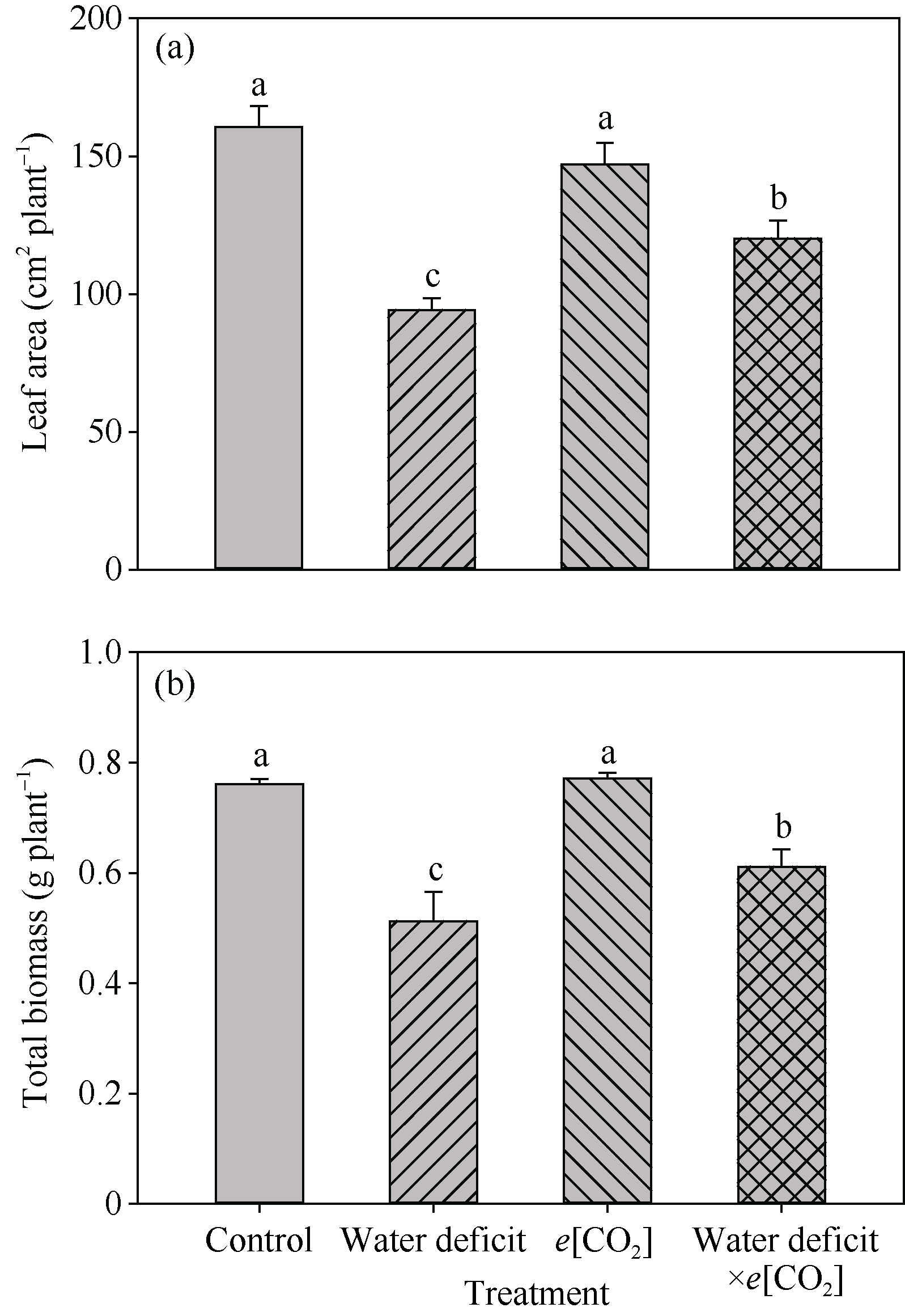
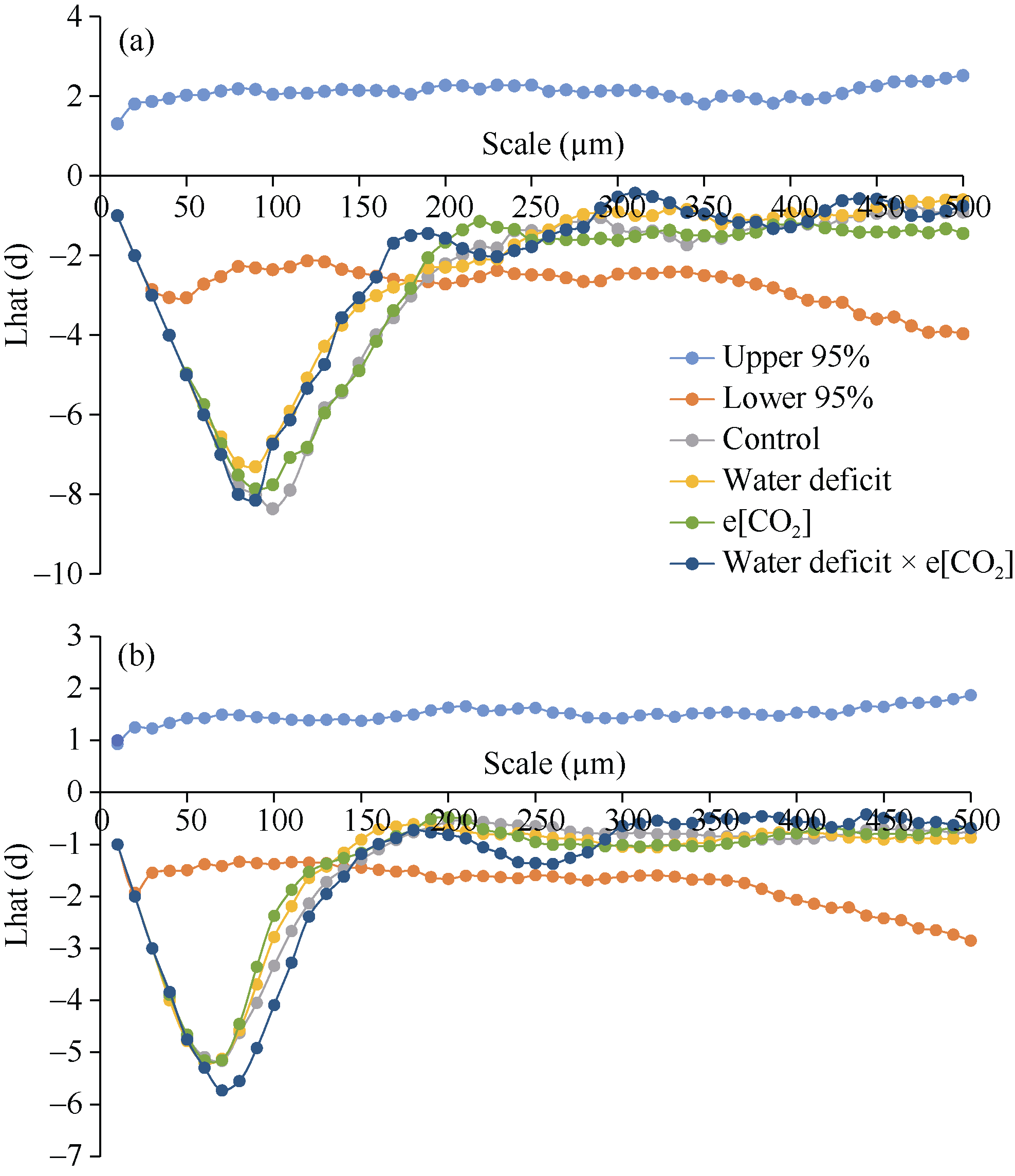
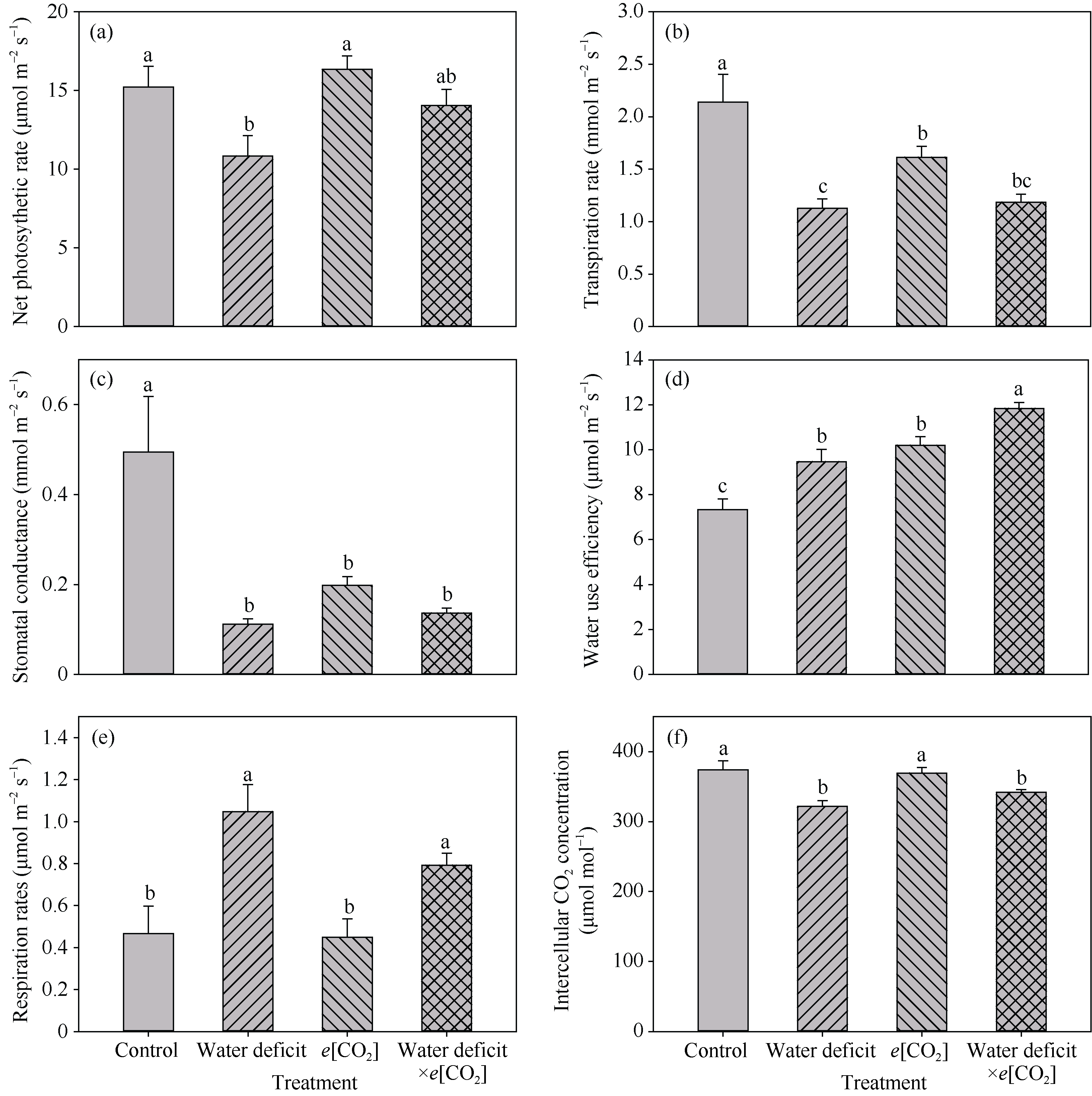
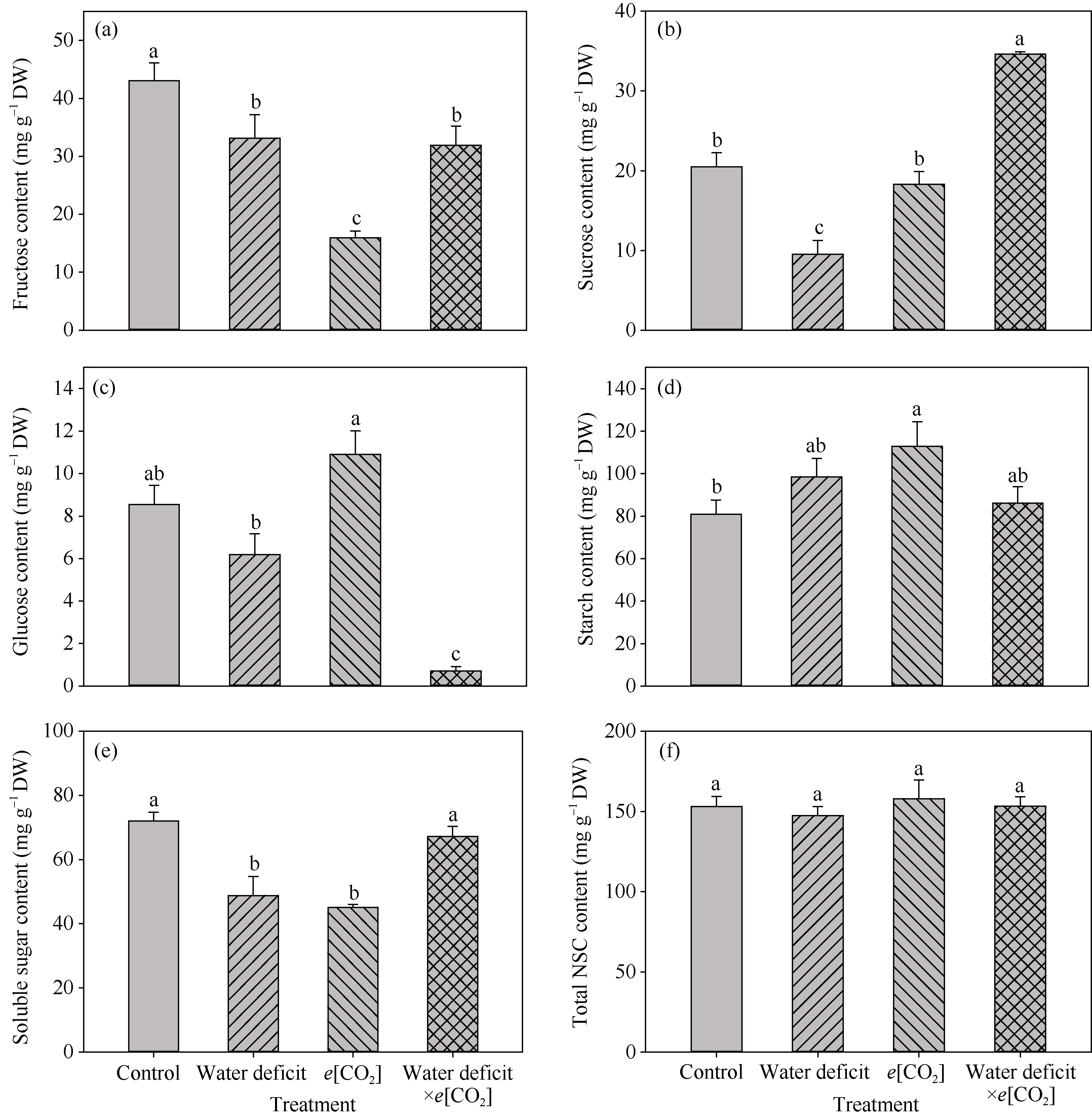
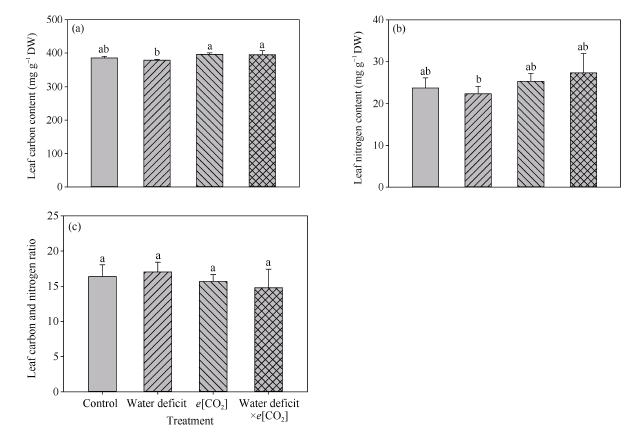
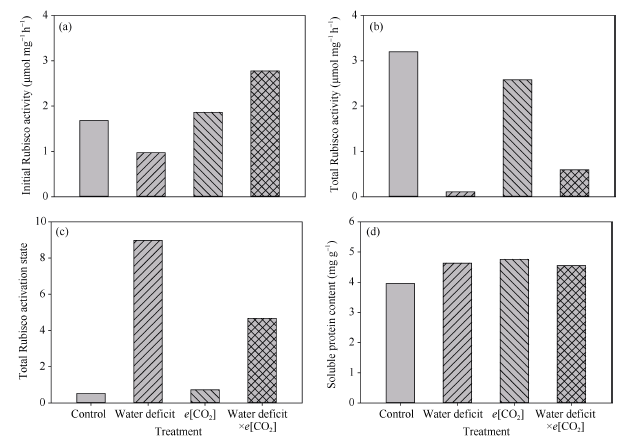
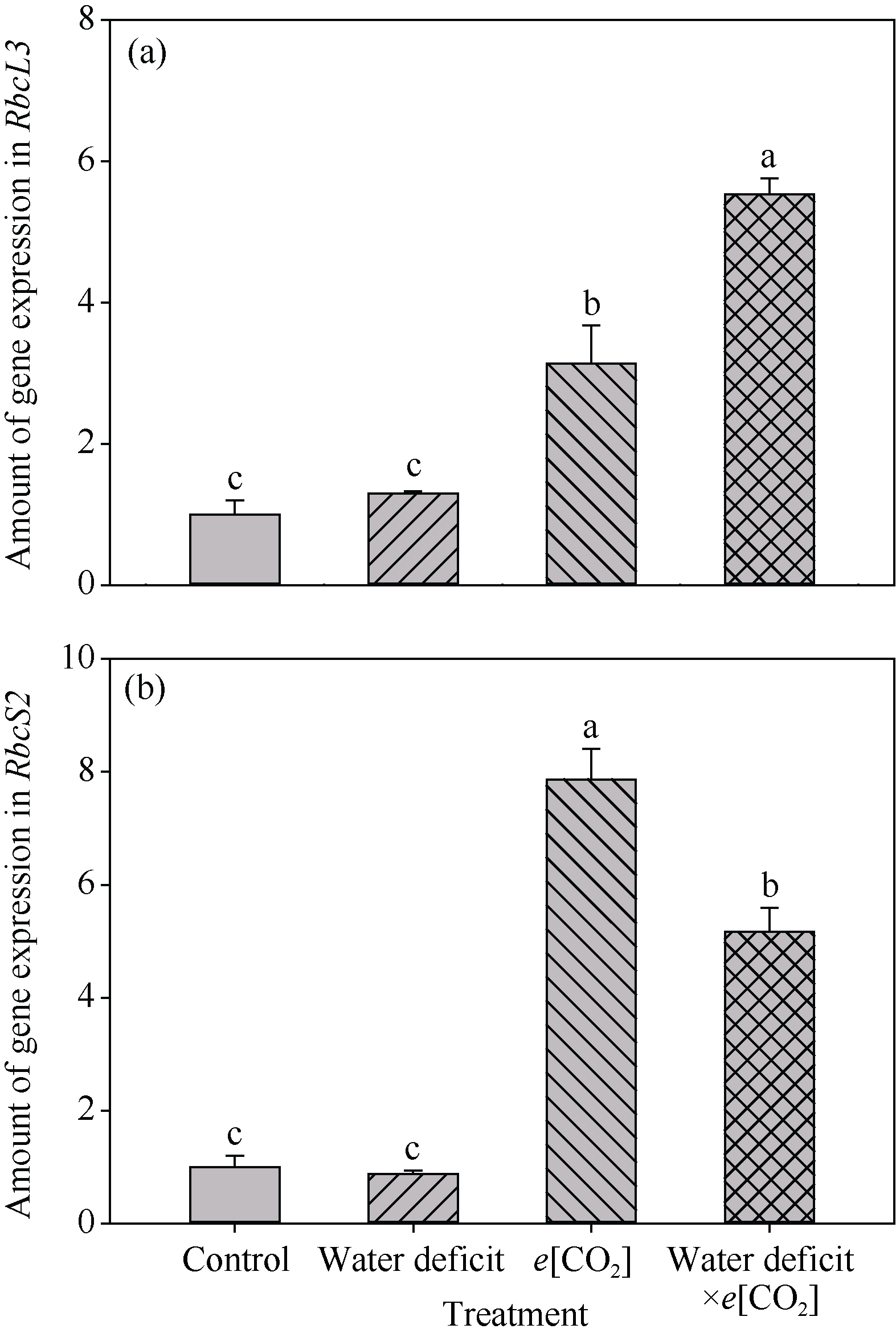
为深入理解未来大气CO2浓度([CO2])升高背景下农田生态系统结构与功能对土壤水分亏缺的响应机制, 利用可精准控制[CO2]的大型环境生长箱, 研究了土壤水分亏缺和大气[CO2]升高对冬小麦气孔特征、净光合速率、水分利用效率、叶片碳氮含量、非结构性碳水化合物含量、核酮糖-1,5-二磷酸羧化酶/加氧酶(Rubisco)活性及其基因表达量的影响。本研究结果表明, 水分亏缺导致冬小麦的总生物量和净光合速率(Pn)分别相比对照降低33%和29%, 而[CO2]升高可以在一定程度上缓解水分亏缺对冬小麦生长及生理过程造成的不利影响。同时, 水分亏缺还使冬小麦气孔开度及其空间分布格局规则性的降低, 但高[CO2]可以通过增加气孔密度和提高气孔分布的规则程度, 进一步优化冬小麦叶片的气体交换效率。另外, [CO2]升高增加水分亏缺条件下冬小麦的Pn, 但同时却导致蒸腾速率(Tr)降低25%, 从而提高叶片的瞬时水分利用效率(WUEI)61%。此外, 水分亏缺条件下[CO2]升高不仅导致Rubisco酶初始活性、活化率以及可溶性蛋白含量分别增加66%、38%和15%, 而且还分别提高Rubisco酶编码基因RbcL3和RbcS2的表达水平453%和417%。上述结果表明, 水分亏缺条件下, [CO2]升高可以通过调整气孔特征和Rubisco酶活性及其编码基因表达水平, 进一步优化冬小麦的气体交换效率, 从而提高植株生物量、净光合速率以及水分利用效率。研究结果将为深入理解未来气候变化背景下冬小麦响应[CO2]升高和水分亏缺的生理及分子机制提供理论依据。
| [1] | Hessini K, Martinez J P, Gandour M, Albouchi A, Soltani A, Abdelly C. Effect of water stress on growth, osmotic adjustment, cell wall elasticity and water-use efficiency in Spartina alterniflora. Environ Exp Bot, 2009, 67: 312-319. |
| [2] |
Ashraf M, Harris P J C. Photosynthesis under stressful environments: an overview. Photosynthetica, 2013, 51: 163-190.
doi: 10.1007/s11099-013-0021-6 |
| [3] |
Bijanzadeh E, Emam Y. Effect on defoliation and drought stress on yield components and chlorophyll content of wheat. Pak J Biol Sci, 2010, 13: 699-705.
doi: 10.3923/pjbs.2010.699.705 |
| [4] |
Bencze S, Bamberger Z, Janda T, Balla K, Varga B. Physiological response of wheat varieties to elevated atmospheric CO2 and low water supply levels. Photosynthetica, 2014, 52: 71-82.
doi: 10.1007/s11099-014-0008-y |
| [5] |
Liu B B, Li M, Li Q M, Cui Q Q, Zhang W D, Ai X Z, Bi H G. Combined effects of elevated CO2 concentration and drought stress on photosynthetic performance and leaf structure of cucumber (Cucumis sativus L.) seedlings. Photosynthetica, 2018, 56: 942-952.
doi: 10.1007/s11099-017-0753-9 |
| [6] |
Wang J, Wang E L, Yang X G, Zhang F S, Yin H. Increased yield potential of wheat-maize cropping system in the North China Plain by climate change adaptation. Climatic Change, 2012, 113: 825-840.
doi: 10.1007/s10584-011-0385-1 |
| [7] |
Ciais P, Reichstein M, Viovy N, Granier A, Ogée J, Allard V, Aubinet M, Buchmann N, Bernhofer C, Carrara A, Chevallier F, De Noblet N, Friend A D, Friedlingstein P, Grünwald T, Heinesch B, Keronen P, Knohl A, Krinner G, Loustau D, Manca G, Matteucci G, Miglietta F, Ourcival J M, Papale D, Pilegaard K, Rambal S, Seufert G, Soussana J F, Sanz M J, Schulze E D, Vesala T, Valentini R. Europe-wide reduction in primary productivity caused by the heat and drought in 2003. Nature, 2005, 437: 529-533.
doi: 10.1038/nature03972 |
| [8] |
McDowell N G, Sevanto S. The mechanisms of carbon starvation: how, when, or does it even occur at all? New Phytol, 2010, 186: 264-266.
doi: 10.1111/j.1469-8137.2010.03232.x pmid: 20409181 |
| [9] |
Oury F X, Godin C, Mailliard A, Chassin A, Gardet O, Giraud A, Heumez E, Morlais J Y, Rolland B, Rousset M. A study of genetic progress due to selection reveals a negative effect of climate change on bread wheat yield in France. Eur J Agron, 2012, 40: 28-38.
doi: 10.1016/j.eja.2012.02.007 |
| [10] |
Yang Q P, Zhang W D, Li R, Xu M, Wang S L. Different responses of non-structural carbohydrates in above-ground tissues/organs and root to extreme drought and re-watering in Chinese fir (Cunninghamia lanceolata) saplings. Trees, 2016, 30: 1863-1871.
doi: 10.1007/s00468-016-1419-0 |
| [11] |
Suter D, Frehner M, Fischer B U. Elevated CO2 increases carbon allocation to the roots of Lolium perenne under free-air CO2 enhancement but not in a controlled environment. New Phytol, 2002, 154: 65-75.
doi: 10.1046/j.1469-8137.2002.00368.x |
| [12] |
Xu M. The optimal atmospheric CO2 concentration for the growth of winter wheat (Triticum aestivum). J Plant Physiol, 2015, 184: 89-97.
doi: 10.1016/j.jplph.2015.07.003 |
| [13] |
Zheng Y P, He C L, Guo L L, Hao L H, Cheng D J, Li F, Peng Z P, Xu M. Soil water status triggers CO2 fertilization effect on the growth of winter wheat (Triticum aestivum). Agric Forest Meteorol, 2020, 291: 108097.
doi: 10.1016/j.agrformet.2020.108097 |
| [14] |
Fan X D, Cao X, Zhou H, Hao L H, Dong W, He C L, Xu M, Wu H X, Wang L S, Chang Z J, Zheng Y P. Carbon dioxide fertilization effect on plant growth under soil water stress associates with changes in stomatal traits, leaf photosynthesis, and foliar nitrogen of bell pepper (Capsicum annuum L.). Environ Exp Bot, 2020, 179: 104203.
doi: 10.1016/j.envexpbot.2020.104203 |
| [15] |
Yu J J, Chen L H, Xu M, Huang B R. Effects of elevated CO2 on physiological responses of tall fescue to elevated temperature drought stress, and the combined stresses. Crop Sci, 2012, 52: 1848-1858.
doi: 10.2135/cropsci2012.01.0030 |
| [16] |
Aranda X, Agustí C, Joffre R, Fleck I. Photosynthesis, growth and structural characteristics of holm oak resprouts originated from plants grown under elevated CO2. Physiol Plant, 2006, 128: 302-312.
doi: 10.1111/j.1399-3054.2006.00745.x |
| [17] | Nebauer S G, Renau-Morata B, Guardiola J L, Rosa-Victoria M. Photosynthesis down-regulation precedes carbohydrate accumulation under sink limitation in Citrus. Tree Physiol, 2010, 31: 169c177. |
| [18] |
Pooter H, Knopf O, Wright I J, Temme A A, Hogewoning S W, Graf A, Cernusak L A, Pons T L. A meta-analysis of responses of C3 plants to atmospheric CO2: dose-response curves for 85 traits ranging from the molecular to the whole-plant level. New Phytol, 2021, 233: 1560-1596.
doi: 10.1111/nph.17802 |
| [19] |
Li F, Guo D G, Gao X D, Zhao X N. Water deficit modulates the CO2 fertilization effect on plant gas exchange and leaf-level water use efficiency: a meta-analysis. Front Plant Sci, 2021, 12: 775477.
doi: 10.3389/fpls.2021.775477 |
| [20] | 张存杰, 王胜, 宋艳玲, 蔡雯悦. 我国北方地区冬小麦干旱灾害风险评估. 干旱气象, 2014, 32: 883-893. |
| Zhang C J, Wang S, Song Y L, Cai W Y. Risk assessment of winter wheat drought disaster in north China. Arid Meteorol, 2014, 32: 883-893. (in Chinese with English abstract) | |
| [21] | 唐星林, 曹永慧, 顾连宏, 周本智. 基于FvCB模型的叶片光合生理对环境因子的响应研究进展. 生态学报, 2017, 37: 6633-6645. |
| Tang X L, Cao Y H, Gu L H, Zhou B Z. Progress in leaf photosynthetic physiology response to environmental factors based on FvCB model. Acta Ecol Sin, 2017, 37: 6633-6645. (in Chinese with English abstract) | |
| [22] |
Wall G W, Garcia R L, Kimball B A, Hunsaker D J, Pinter Jr P J, Long S P, Osborne C P, Hendrix D L, Wechsung F, Wechsung G, Leavitt S W, LaMorte R L, Idso S B. Interactive effects of elevated carbon dioxide and drought on wheat. Agron J, 2006, 98: 354-381.
doi: 10.2134/agronj2004.0089 |
| [23] |
Li F S, Kang S Z, Zhang J H. Interactive effects of elevated CO2, nitrogen and drought on leaf area, stomatal conductance, and evapotranspiration of wheat. Agric Water Manage, 2004, 67: 221-233.
doi: 10.1016/j.agwat.2004.01.005 |
| [24] |
Wu D X, Wang G X, Bai Y F, Liao J X. Effects of elevated CO2 concentration on growth, water use, yield and grain quality of wheat under two soil water levels. Agric Ecosyst Environ, 2004, 104: 493-507.
doi: 10.1016/j.agee.2004.01.018 |
| [25] |
Nicotra A B, Atkin O K, Bonser S P, Davidson A M, Finnegan E J, Mathesius U, Poot P, Purugganan M D, Richards C L, ValladaresV F, van Kleunen M. Plant pheno-typic plasticity in a changing climate. Trends Plant Sci, 2010, 15: 684-692.
doi: 10.1016/j.tplants.2010.09.008 pmid: 20970368 |
| [26] |
Merewitz E B, Belanger F C, Warnke S E, Huang B R. Identification of quantitative trait loci linked to drought tolerance in a colonial × creeping bent grass hybrid population. Crop Sci, 2012, 52: 1891-1901.
doi: 10.2135/cropsci2012.01.0037 |
| [27] |
郑云普, 徐明, 王建书, 邱帅, 王贺新. 玉米叶片气孔特征及气体交换过程对气候变暖的响应. 作物学报, 2015, 41: 601-612.
doi: 10.3724/SP.J.1006.2015.00601 |
|
Zheng Y P, Xu M, Wang J S, Qiu S, Wang H X. Stomatal characteristics of maize leaves and response of gas exchange process to climate warming. Acta Agron Sin, 2015, 41: 601-612. (in Chinese with English abstract)
doi: 10.3724/SP.J.1006.2015.00601 |
|
| [28] |
Hendrix D L. Rapid extraction and analysis of nonstructural carbohydrates in plant tissues. Crop Sci, 1993, 33: 1306-1311.
doi: 10.2135/cropsci1993.0011183X003300060037x |
| [29] |
Way D A, Sage R F. Elevated growth temperatures reduce the carbon gain of black spruce [Picea mariana (Mill.) B. S. P.]. Global Change Biol, 2008, 14: 624-636.
doi: 10.1111/j.1365-2486.2007.01513.x |
| [30] | Jiang Y P, Cheng F, Zhou Y H, Xia X J, Mao W H, Shi K, Chen Z X, Yu J Q.Cellular glutathione redox homeostasis plays an important role in the brassinosteroid-induced increase in CO2 assimilation in Cucumis sativus. New Phytol, 2012, 194: 932-943. |
| [31] |
Livak K J, Schmittgen T D. Analysis of relative gene expression data using real-time quantitative PCR and the 2(-Dwlta Delta C (T)) method. Methods, 2002, 25: 402-408.
doi: 10.1006/meth.2001.1262 |
| [32] | 何冰清, 芮蒙蒙, 马越, 王一州. 植物气孔计算生物学模型及其应用. 科学通报, 2021, 66: 994-1001. |
|
He B Q, Rui M M, Ma Y, Wang Y Z. The computational biological model of plant stomata and its application. Chin Sci Bull, 2021, 66: 994-1001. (in Chinese with English abstract)
doi: 10.1360/TB-2020-0843 |
|
| [33] | 李菲.大气CO2浓度升高对大豆叶片结构、光合性能及水分利用效率的影响研究. 河北工程大学硕士学位论文, 河北邯郸, 2019. |
| Li F. Effects of Elevated Atmospheric CO2 Concentration on Leaf Structure, Photosynthetic Performance and Water Use Efficiency of Soybean. MS Thesis of Hebei University of Engineering, Handan, Hebei, China, 2019. (in Chinese with English abstract) | |
| [34] |
Hetherington A M, Woodward F I. The role of stomata in sensing and driving environmental change. Nature, 2003, 424: 901-908.
doi: 10.1038/nature01843 |
| [35] | 张放, 陈丹, 张士良, 吴荣兰. 高浓度CO2对不同水分条件下枇杷生理的影响. 园艺学报, 2003, 30: 647-652. |
| Zhang F, Chen D, Zhang S L, Wu R L. Effects of high concentration of CO2 on the physiology of loquat under different water conditions. Acta Hortic Sin, 2003, 30: 647-652. (in Chinese with English abstract) | |
| [36] |
Rachel F, Niju I, Behaeghe T. Elevated CO2 and temperature have different effects on leaf anatomy of perennial ryegrass in spring and summer. Ann Bot, 1996, 78: 489-497.
doi: 10.1006/anbo.1996.0146 |
| [37] |
Hugh J E. Stomatal and non-stomatal restrictions to carbon assimilation in soybean (Glycine max) lines differing in water use efficiency. Environ Exp Bot, 2002, 48: 237-246.
doi: 10.1016/S0098-8472(02)00041-2 |
| [38] | 景立权, 赵新勇, 周宁, 钱晓晴, 王云霞, 朱建国, 王余龙, 杨连新. 高CO2浓度对杂交水稻光合作用日变化的影响: FACE研究. 生态学报, 2017, 37: 2033-2044. |
| Jing L Q, Zhao X Y, Zhou N, Qian X Q, Wang Y X, Zhu J G, Wang Y L, Yang L X. Effect of high CO2 concentration on diurnal variation of photosynthesis in hybrid rice: FACE study. Acta Ecol Sin, 2017, 37: 2033-2044. (in Chinese with English abstract) | |
| [39] |
Moore B, Palmquist D E, Seemann J R. Influence of plant growth at high CO2 concentrations on leaf content of ribulose-1,5-bisphosphate carboxylase/oxygenase and intracellular distribution of soluble carbohydrates in tobacco, snapdragon, and parsley. Plant Physiol, 1997, 115: 241-248.
pmid: 12223804 |
| [40] |
Zong Y, Shangguan Z P. Increased sink capacity enhances C and N assimilation under drought and elevated CO2 conditions in maize. J Integr Agric, 2016, 15: 2775-2785.
doi: 10.1016/S2095-3119(16)61428-4 |
| [41] |
Wu D X, Wang G X, Bai Y F, Liao J X. Effects of elevated CO2 concentration on growth, water use, yield and grain quality of wheat under two soil water levels. Agric Ecosyst Environ, 2004, 104: 493-507.
doi: 10.1016/j.agee.2004.01.018 |
| [42] | 王润佳, 高世铭, 张绪成. 高大气CO2浓度下C3植物叶片水分利用效率升高的研究进展. 干旱地区农业研究, 2010, 28(6): 190-195. |
| Wang R J, Gao S M, Zhang X C. Research progress on the increase of water use efficiency of C3 plant leaves under high atmospheric CO2 concentration. Agric Res Arid Areas, 2010, 28(6): 190-195. (in Chinese with English abstract) | |
| [43] |
Robredo A, Pérez-López U, Hector S D M, Begoña G M, Maite L, Amaia M P, Alberto M R. Elevated CO2 alleviates the impact of drought on barley improving water status by lowering stomatal conductance and delaying its effects on photosynthesis. Environ Exp Bot, 2007, 59: 252-263.
doi: 10.1016/j.envexpbot.2006.01.001 |
| [44] | 刘亮, 郝立华, 李菲, 郭丽丽, 张茜茜, 何春霖, 郑云普. CO2浓度和温度对玉米光合性能及水分利用效率的影响. 农业工程学报, 2020, 36(5): 122-129. |
| Liu L, Hao L H, Li F, Guo L L, Zhang X X, He C L, Zheng Y P. Effects of CO2 concentration and temperature on leaf photosynthesis and water use efficiency in maize. Trans CSAE, 2020, 36(5): 122-129 (in Chinese with English abstract) | |
| [45] | Kimball B A, 朱建国, 程磊, Kobayashi K, Bindi M. 开放系统中农作物对空气CO2浓度增加的响应. 应用生态学报, 2002, 13: 1323-1338. |
| Kimball B A, Zhu J G, Cheng L, Kobayashi K, Bindi M. Crop response to increased air CO2 concentration in an open system. J Appl Ecol, 2002, 13: 1323-1338 (in Chinese with English abstract). | |
| [46] | Reddy A R, Chaitanya K V, Vivekanandan M. Drought-induced responses of photosynthesis and antioxidant metabolism in higher plants. J Plant Physiol, 2004, 161: 1189-1202. |
| [47] | Henderson J N, Haxr A S, Dunkle A M, Salvucci M E, Wachter R M. Biophysical characterization of higher plant Rubisco activase. Biochim Biophys Acta, 2012, 1834: 87-97. |
| [48] |
Carmo-silva A E, Salvucci M E. The activity of Rubisco’s molecular chaperone, rubisco activase, in leaf extracts. Photosyn Res, 2011, 108: 143-155
doi: 10.1007/s11120-011-9667-8 |
| [49] |
Tian X, Lei Y. Nitric oxide treatment alleviates drought stress in wheat seedlings. Biol Plant, 2006, 50: 775-778.
doi: 10.1007/s10535-006-0129-7 |
| [50] | 杜兴良, 兰盼龙, 张皓帆, 赵光伟, 李华, 汪月霞, 赵会杰. 一氧化氮对高温与干旱复合胁迫下小麦叶片Rca基因表达及Rubisco活性的影响. 河南农业大学学报, 2018, 52: 868-873. |
| Du X L, Lan P L, Zhang H F, Zhao G W, Li H, Wang Y X, Zhao H J. Effects of nitric oxide on Rca gene expression and Rubisco activity in wheat leaves under combined stress of high temperature and drought. J Henan Agric Univ, 2018, 52: 868-873. (in Chinese with English abstract) | |
| [51] |
Deridder B P, Salvucci M E. Modulation of rubisco activase gene expression during heat stress in cotton (Gossypium hirsutum L.) involves post-transcriptional mechanism. Plant Sci, 2007, 172: 246-254.
doi: 10.1016/j.plantsci.2006.08.014 |
| [52] | 张国, 李滨, 邹琦. 小麦Rubisco活化酶基因的克隆和表达特性. 植物学通报, 2005, 22: 313-319. |
| Zhang G, Li B, Zou Q. Cloning and expression characteristics of wheat rubisco activase gene. Chin Bull Bot, 2005, 22: 313-319. (in Chinese with English abstract) |
| [1] | 王壮壮, 武紫君, 张永新, 张芯源, 袁丽雪, 陈如雪, 刘世举, 段剑钊, 冯伟, 王同朝, 王永华. 豫东南黏壤潮土区水氮优化协同提高冬小麦产量和氮素利用效率[J]. 作物学报, 2026, 52(5): 1501-1521. |
| [2] | 李坤, 籍亚腾, 田银帅, 胡民航, 刘亮, 李菲, 李国强, 郝立华, 郑云普. CO2和NaCl对大豆气孔特征、光合性能及抗氧化系统的影响[J]. 作物学报, 2026, 52(4): 1251-1267. |
| [3] | 乔宇馨, 李程越, 康晓玉, 张鑫琪, 贾绍辉, 刘倩, 曹亚丽, 史鑫蕊, 郝兴宇, 李萍. 基于APSIM模型的长期免耕秸秆覆盖对旱地小麦增产效应研究[J]. 作物学报, 2026, 52(4): 1181-1192. |
| [4] | 陈如雪, 孙丽芳, 张芯源, 牟海萌, 张永新, 袁丽雪, 彭仕乐, 王壮壮, 王永华. 秸秆还田与微生物菌剂配施对冬小麦旗叶碳氮代谢及产量形成的影响[J]. 作物学报, 2025, 51(7): 1901-1913. |
| [5] | 吴柳格, 陈坚, 张鑫, 邓艾兴, 宋振伟, 郑成岩, 张卫建. 近二十年国审冬小麦品种的产量与品质性状变化趋势研究[J]. 作物学报, 2025, 51(7): 1814-1826. |
| [6] | 赵刚, 张建军, 党翼, 樊廷录, 王磊, 周刚, 王淑英, 李兴茂, 倪胜利, 米文博, 周旭姣, 程万莉, 李尚中. 黄土旱塬区秸秆覆盖量对不同降雨年型土壤水温效应和冬小麦产量的影响[J]. 作物学报, 2025, 51(6): 1643-1653. |
| [7] | 王东, 王森, 尚丽, 冯浩伟, 张永巧, 崔佳鸣, 李爽, 章佳聪, 车欢. 补灌对黄土高原半湿润区冬小麦产量和水分利用效率的影响[J]. 作物学报, 2025, 51(5): 1312-1325. |
| [8] | 李雪婷, 任昊, 王洪章, 张吉旺, 赵斌, 任佰朝, 刘莹, 姚海燕, 刘鹏. 盐胁迫对不同耐盐型玉米品种叶片光合性能和干物质积累与分配的影响[J]. 作物学报, 2025, 51(4): 1091-1101. |
| [9] | 王娇, 白海霞, 韩语燕, 梁惠, 冯雅楠, 张东升, 李萍, 宗毓铮, 史鑫蕊, 郝兴宇. CO2浓度升高、升温及其交互作用对良星99冬小麦叶片碳氮代谢的影响[J]. 作物学报, 2025, 51(4): 1061-1076. |
| [10] | 张妍妍, 李迎, 刘栩辰, 黄超, 吕佳宁, 周海佳, 马守田, 秦安振, 高子乐, 吴光辉, 陈丹, 姬夏楠, 刘战东. 深松耕作条件下滴灌对冬小麦花后干物质积累及灌浆特性的影响[J]. 作物学报, 2025, 51(11): 3065-3079. |
| [11] | 张军, 胡川, 周起晖, 任开明, 董誓言, 刘傲寒, 吴金芝, 黄明, 李友军. 减氮及有机肥替代对旱地冬小麦干物质积累、转运、分配和产量的影响[J]. 作物学报, 2025, 51(1): 207-220. |
| [12] | 孙照华, 任昊, 王洪章, 王子强, 姚海燕, 辛爱美, 赵斌, 张吉旺, 任佰朝, 刘鹏. 叶面喷施硅制剂对滨海盐碱地夏玉米叶片光合性能及籽粒产量的影响[J]. 作物学报, 2024, 50(9): 2383-2395. |
| [13] | 马艳明, 娄鸿耀, 王威, 孙娜, 颜国荣, 张胜军, 刘杰, 倪中福, 徐麟. 新疆冬小麦籽粒品质性状遗传差异与关联分析[J]. 作物学报, 2024, 50(6): 1394-1405. |
| [14] | 黄宏胜, 张馨月, 居辉, 韩雪. 大气CO2浓度升高背景下冬小麦冠层光谱特征和地上生物量估算[J]. 作物学报, 2024, 50(4): 991-1003. |
| [15] | 赵荣荣, 丛楠, 赵闯. 基于Landsat 8影像提取豫中地区冬小麦和夏玉米分布信息的最佳时相选择[J]. 作物学报, 2024, 50(3): 721-733. |
|
||