Welcome to Acta Agronomica Sinica,

Acta Agronomica Sinica ›› 2026, Vol. 52 ›› Issue (5): 1326-1340.doi: 10.3724/SP.J.1006.2026.55065

• CROP GENETICS & BREEDING·GERMPLASM RESOURCES·MOLECULAR GENETICS • Previous Articles     Next Articles

Genome-wide analysis of the WOX gene family and identification of candidate genes for adventitious shoot regeneration in peanut

Gu Chun-Miao1,2(), Wang Run-Feng1, Huang Lu1, Liu Hao1, Lu Qing1, Li Hai-Fen1, Li Shao-Xiong1, He Shuang-Cheng1, Hong Yan-Bin1, Chen Xiao-Ping1, Tan Bin2,*(), Yu Qian-Xia1,*()   

  1. 1 Crops Research Institute, Guangdong Academy of Agricultural Sciences / Guangdong Provincial Key Laboratory of Crop Genetic Improvement / South China Peanut Sub-Centre of National Centre of Oilseed Crops Improvement, Guangzhou 510640, Guangdong, China
    2 College of Agriculture, South China Agricultural University, Guangzhou 510640, Guangdong, China
  • Received:2025-10-20 Accepted:2026-02-27 Online:2026-05-12 Published:2026-03-04
  • Contact: *Yu Qian-Xia, E-mail: yuqianxia@gdaas.cn; Tan Bin, E-mail: tanbin@scau.edu.cn
  • Supported by:
    Project of Collaborative Innovation Center of GDAAS(XTXM202203);National Natural Science Foundation of China(32401893);Guangdong Basic and Applied Basic Research Foundation(2024A1515010511);Foundation of Director of Crop Research Institute of Guangdong Academy of Agriculture Sciences/Open Fund of Guangdong Provincial Key Laboratory of Crop Genetic Improvement(202505);Foundation of Director of Crop Research Institute of Guangdong Academy of Agriculture Sciences/Open Fund of Guangdong Provincial Key Laboratory of Crop Genetic Improvement(202604);Special Fund Project for the Introduction of Scientific and Technological Talents of the Guangdong Academy of Agricultural Sciences(R2024YJ-YB1002);Modern Seed Industry Innovation Capability Enhancement Project of Guangdong Academy of Agricultural Sciences.

Abstract:

The WUSCHEL-related homeobox (WOX) transcription factor family plays central roles in maintaining stem cell homeostasis and regulating organogenesis in plants. Genetic transformation of peanut (Arachis hypogaea L.), a globally important oilseed crop, remains severely limited by low regeneration efficiency. Here, we conducted a genome-wide identification and characterization of WOX genes in the peanut cultivar ‘Fuhuasheng’ to pinpoint candidates potentially involved in organ regeneration and to provide a basis for overcoming regeneration-related constraints in peanut transformation. We identified 20 WOX genes and systematically analyzed their phylogenetic relationships, conserved domains, collinearity, and promoter features, and then profiled their expression across tissues and during adventitious shoot regeneration using transcriptome data. Phylogenetic analysis clustered the AhWOX genes into three clades (ancient, intermediate, and WUS). All AhWOX proteins contained a conserved homeodomain (HD), and several WUS-clade members also carried the WUS-box and EAR motifs. Collinearity analysis indicated that AhWOX7, AhWOX12, and AhWOX14 are orthologs of Arabidopsis thaliana WUS and WOX5 and of the soybean regeneration-related gene GmWOX18, respectively. However, these orthologs showed only low expression, whereas the ancient-clade genes AhWOX13 and AhWOX20 were consistently highly expressed across all stages of adventitious shoot regeneration. Promoter analysis revealed enrichment of cis-elements associated with meristem activity, and phylogenetic evidence suggested that AhWOX13 and AhWOX20 are orthologous to AtWOX14, a reported positive regulator of shoot regeneration. Collectively, our results highlight AhWOX13 and AhWOX20 as promising candidates for improving regeneration capacity in peanut, providing a framework to enhance peanut transformation and accelerate functional genomics and trait engineering in oilseed crops.

Key words: Arachis hypogaea L., WOX transcription factors, whole-genome analyses, organ regeneration, AhWOX13, AhWOX20

Table 1

Information on AhWOX genes"

基因名称
Gene name
基因ID
Gene ID
长度
Length (aa)
染色体
Chromosome
开始位置
Star position
终止位置
End position
AhWOX1 Ahy_A03g011488 401 A03 14,491,191 14,492,590
AhWOX2 Ahy_A03g016753 200 A03 142,512,908 142,513,594
AhWOX3 Ahy_A04g020136 323 A04 78,189,782 78,192,818
AhWOX4 Ahy_A04g019792 215 A04 55,238,247 55,240,007
AhWOX5 Ahy_A05g022810 347 A05 14,046,129 14,048,423
AhWOX6 Ahy_B05g075392 439 B05 19,841,969 19,844,638
AhWOX7 Ahy_B05g079209 318 B05 148,228,908 148,230,519
AhWOX8 Ahy_A06g028998 300 A06 89,670,321 89,672,632
AhWOX9 Ahy_A06g030929 266 A06 118,036,844 118,039,951
AhWOX10 Ahy_B06g083919 300 B06 117,635,639 117,637,889
AhWOX11 Ahy_B06g086001 266 B06 148,960,091 148,962,906
AhWOX12 Ahy_A07g031977 185 A07 11,112,362 11,113,803
AhWOX13 Ahy_A07g034885 209 A07 62,388,478 62,390,165
AhWOX14 Ahy_B07g087876 179 B07 45,201,513 45,203,128
AhWOX15 Ahy_A08g039190 219 A08 25,686,795 25,687,605
AhWOX16 Ahy_A09g041836 284 A09 5,327,753 5,330,289
AhWOX17 Ahy_B09g099603 284 B09 157,166,629 157,169,190
AhWOX18 Ahy_A10g049711 215 A10 89,597,798 89,599,459
AhWOX19 Ahy_A10g051148 376 A10 114,531,481 114,532,699
AhWOX20 Ahy_B10g102300 274 B10 26,023,581 26,027,881
基因名称
Gene name
基因ID
Gene ID
链
Strand
相对分子量
RMW (Da)
等电点
pI
不稳定指数
Instabily index
AhWOX1 Ahy_A03g011488 + 44,316.56 6.80 60.50
AhWOX2 Ahy_A03g016753 - 23,159.70 6.66 56.99
AhWOX3 Ahy_A04g020136 - 36,596.33 7.76 62.52
AhWOX4 Ahy_A04g019792 + 24,591.58 9.03 73.38
AhWOX5 Ahy_A05g022810 - 39,262.28 6.34 63.17
AhWOX6 Ahy_B05g075392 + 49,850.69 6.76 57.23
AhWOX7 Ahy_B05g079209 + 35,298.14 6.05 61.66
AhWOX8 Ahy_A06g028998 - 32,587.91 6.22 67.01
AhWOX9 Ahy_A06g030929 + 29,704.75 9.00 70.92
AhWOX10 Ahy_B06g083919 - 32,436.79 6.22 65.73
AhWOX11 Ahy_B06g086001 + 29,623.76 9.02 70.20
AhWOX12 Ahy_A07g031977 + 21,596.91 6.42 57.42
AhWOX13 Ahy_A07g034885 + 23,794.98 5.60 57.22
AhWOX14 Ahy_B07g087876 - 20,855.13 6.52 58.05
AhWOX15 Ahy_A08g039190 - 25,238.48 9.33 74.57
AhWOX16 Ahy_A09g041836 - 32,661.66 7.10 52.06
AhWOX17 Ahy_B09g099603 - 32,621.68 7.73 49.95
AhWOX18 Ahy_A10g049711 - 24,522.13 7.15 59.23
AhWOX19 Ahy_A10g051148 - 41,392.34 8.90 57.03
AhWOX20 Ahy_B10g102300 + 30,993.53 5.91 58.09

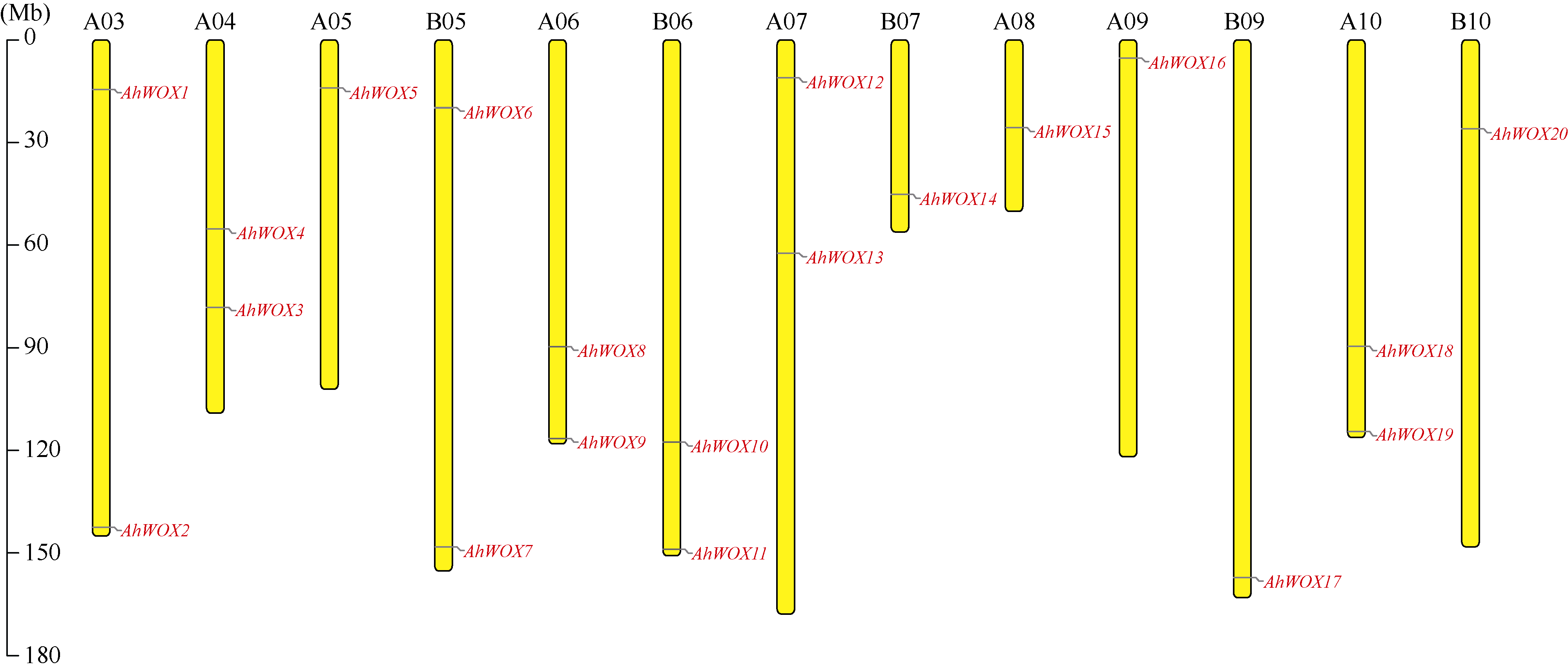
Fig. 1

Chromosomal locations of AhWOX genes"

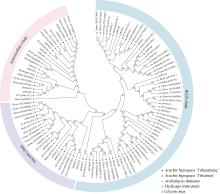
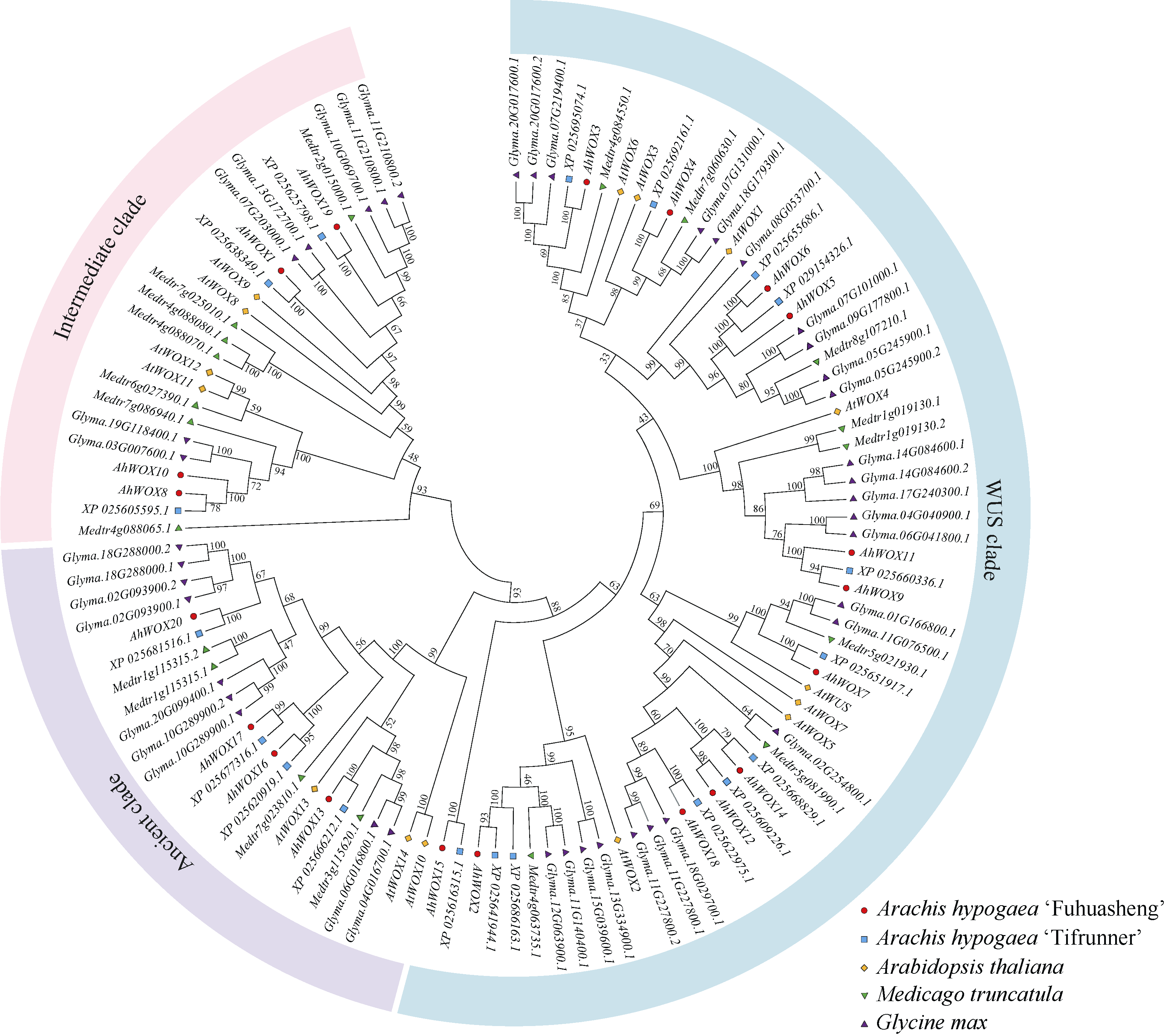
Fig. 2

Phylogenetic analysis of WOX gene family members in Arachis hypogaea, Arabidopsis thaliana, Glycine max, and Medicago trancatula"

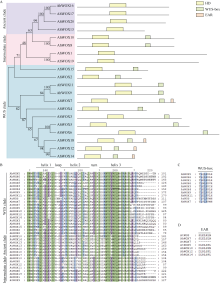
Fig. 3

Conserved domains and motif analysis of AhWOX gene family proteins A: schematic representation of conserved domain architectures of peanut WOX transcription factors; B: multiple sequence alignment of the homeodomain (HD) of WOX proteins from peanut and A. thaliana, green boxes indicate fully conserved (100%) amino acid residues, purple boxes indicate > 80% conservation, and blue boxes indicate > 60% conservation; C: sequence alignment of the WUS-box motif; D: sequence alignment of the EAR repression motif."

Table 2

Predicted secondary structure, subcellular localization, and signal peptides of AhWOX proteins"

蛋白名称
Protein name
α-螺旋
Alpha helix (%)
延伸链
Extended strand (%)
β-转角
Beta turn (%)
无规则卷曲
Random coil (%)
亚细胞定位
Subcellular location
信号肽
Signal peptide (%)
AhWOX1 10.22 9.23 2.99 77.56 Nucleus 0
AhWOX2 16.50 8.00 4.50 71.00 Nucleus 0
AhWOX3 16.10 3.10 1.55 79.26 Nucleus 0
AhWOX4 20.47 3.72 2.33 73.49 Nucleus 0
AhWOX5 15.56 6.05 1.15 77.23 Nucleus 0
AhWOX6 13.44 4.10 1.37 81.09 Nucleus 0
AhWOX7 11.32 2.83 1.89 83.96 Nucleus 0
AhWOX8 11.67 9.00 4.00 75.33 Nucleus 0
AhWOX9 16.17 2.63 2.63 78.57 Nucleus 0
AhWOX10 13.33 10.33 4.67 71.67 Nucleus 0
AhWOX11 15.41 3.01 2.63 78.95 Nucleus 0
AhWOX12 24.32 3.24 2.70 69.73 Nucleus 0
AhWOX13 31.10 2.39 2.87 63.64 Nucleus 0
AhWOX14 26.26 2.79 2.79 68.16 Nucleus 0
AhWOX15 17.35 4.11 2.74 75.80 Nucleus 0
AhWOX16 20.42 4.23 1.76 73.59 Nucleus 0
AhWOX17 31.34 2.46 1.76 64.44 Nucleus 0
AhWOX18 30.70 3.26 2.33 63.72 Nucleus 0
AhWOX19 10.64 8.78 2.39 78.19 Nucleus 0.0008
AhWOX20 25.18 2.19 1.82 70.80 Nucleus 0

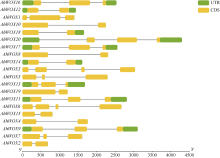
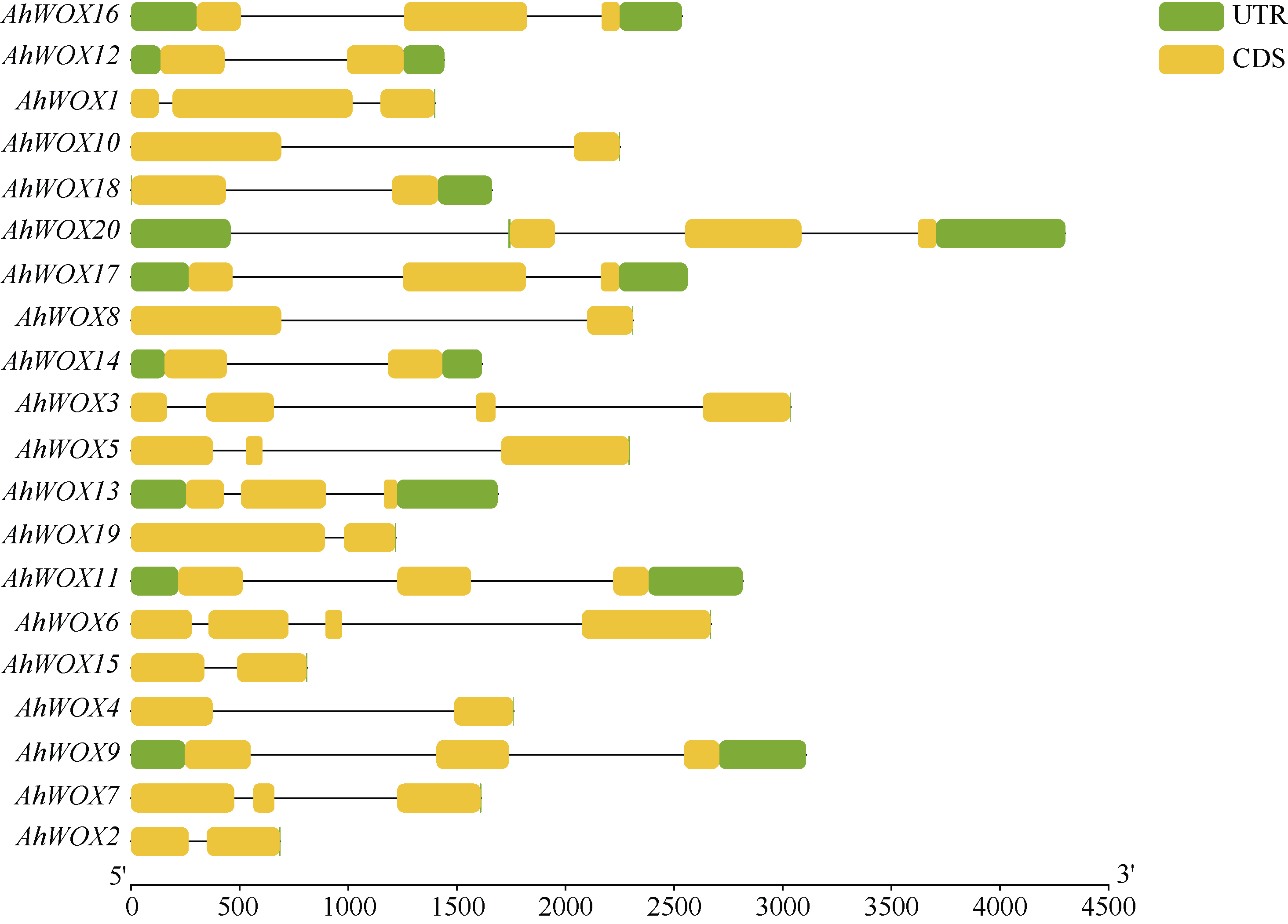
Fig. 4

Gene structure analysis of AhWOX genes"

Fig. 5

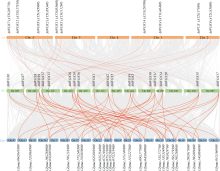
Genomic synteny analysis of WOX gene families in peanut, Arabidopsis, and soybean"

Table 3

Collinearity analysis of AhWOX genes with WOX genes in soybean and Arabidopsis"

花生
Arachis hypogaea
大豆
Glycine max
拟南芥
Arabidopsis thaliana
AhWOX1 Glyma.07G203000, Glyma.13G172700 AtWOX8 (AT5G45980), AtWOX9 (AT2G33880)
AhWOX2
Glyma.11G140400, Glyma.12G063900, Glyma.13G334900, Glyma.15G039600 AtWOX2 (AT5G59340)
AhWOX3 Glyma.07G219400, Glyma.20G017600 —
AhWOX4 Glyma.07G131000, Glyma.18G179300 —
AhWOX5 Glyma.09G177800 —
AhWOX6 Glyma.07G101000, Glyma.09G177800 —
AhWOX7 Glyma.01G166800, Glyma.11G076500 AtWUS (AT2G17950)
AhWOX8 Glyma.03G007600, Glyma.19G118400 AtWOX11 (AT3G03660), AtWOX12 (AT5G17810)
AhWOX9
Glyma.06G041800, Glyma.04G040900, Glyma.14G084600, Glyma.17G240300 AtWOX4 (AT1G46480)
AhWOX10 Glyma.03G007600.1, Glyma.19G118400.1 AtWOX11 (AT3G03660), AtWOX12 (AT5G17810)
AhWOX11
Glyma.06G041800, Glyma.04G040900, Glyma.14G084600, Glyma.17G240300 —
AhWOX12 Glyma.02G254800, Glyma.11G227800, Glyma.18G029700 AtWOX5 (AT3G11260), AtWOX7 (AT5G05770)
AhWOX13 Glyma.04G016700 AtWOX14 (AT1G20700)
AhWOX14 Glyma.02G254800, Glyma.11G227800, Glyma.18G029700 AtWOX5 (AT3G11260), AtWOX7 (AT5G05770)
AhWOX15
Glyma.11G140400, Glyma.12G063900, Glyma.13G334900, Glyma.15G039600 AtWOX2 (AT5G59340)
AhWOX16
Glyma.10G289900, Glyma.02G093900, Glyma.18G288000, Glyma.20G099400 —
AhWOX17
Glyma.10G289900, Glyma.02G093900, Glyma.18G288000, Glyma.20G099400 —
AhWOX18 Glyma.02G254800, Glyma.11G227800, Glyma.18G029700 AtWOX7 (AT5G05770)
AhWOX19 Glyma.07G203000, Glyma.13G172700 AtWOX8 (AT5G45980), AtWOX9 (AT2G33880)
AhWOX20 — —

Fig. 6

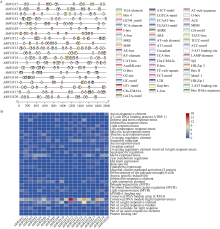
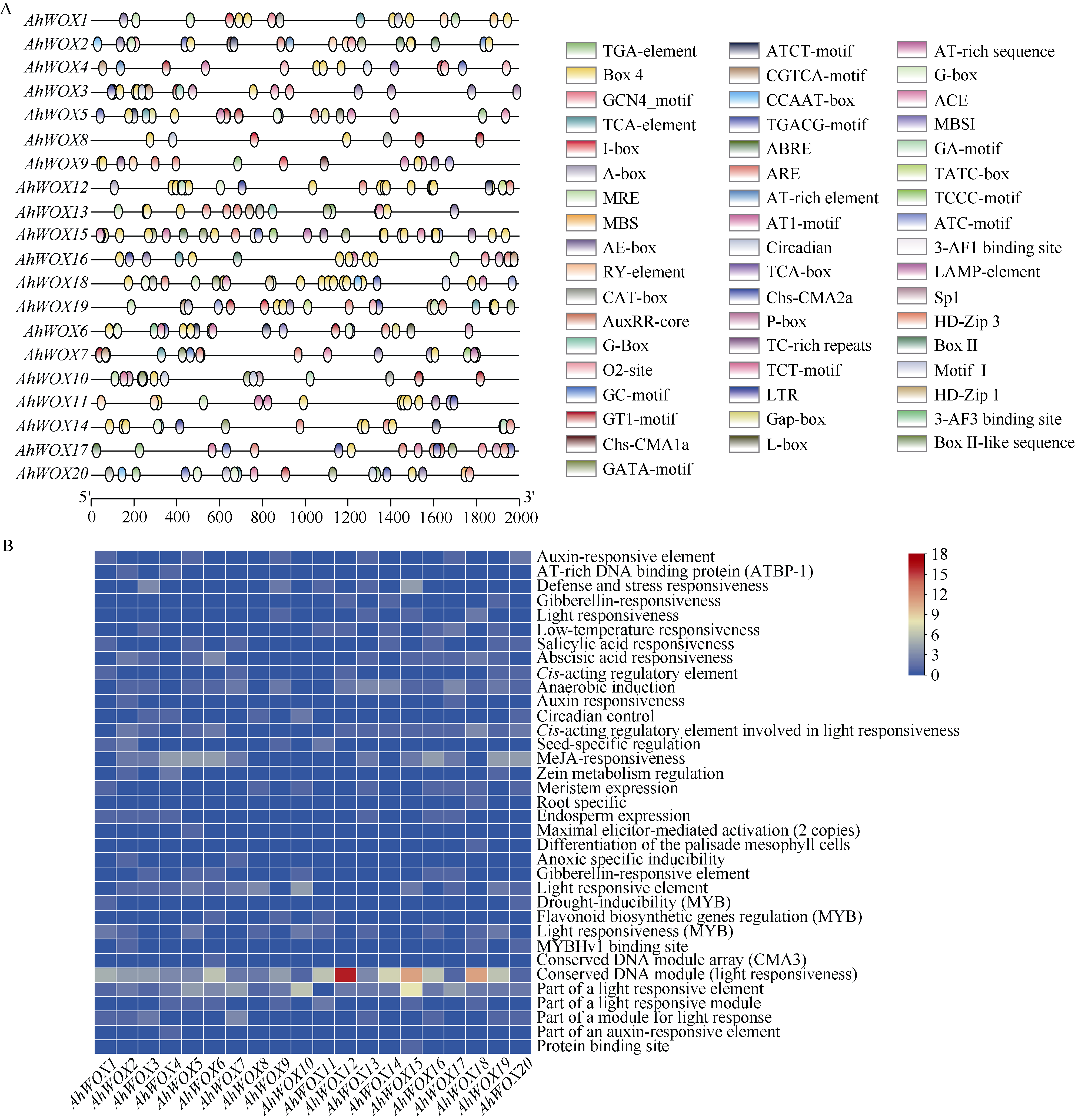
Cis-regulatory element analysis of AhWOX gene promoters A: schematic distribution of cis-regulatory elements in the promoter regions of AhWOX genes; B: heatmap showing the counts of different cis-element types in AhWOX promoters."

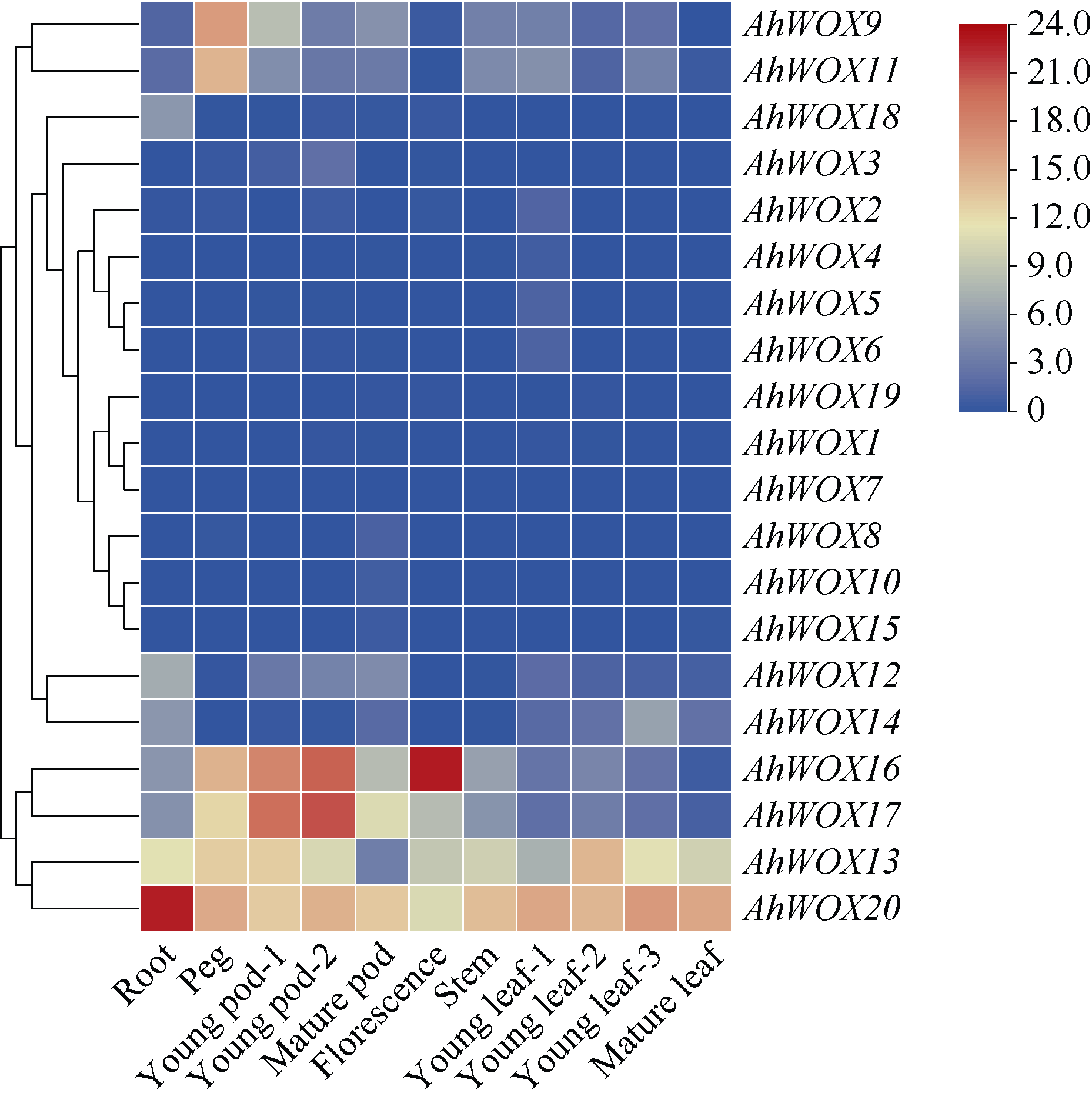
Fig. 7

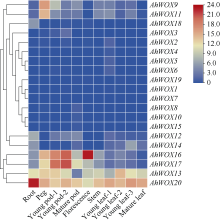
Expression heatmap of AhWOX gene family members across tissues and organs of A. hypogaea Pods were classified as young or mature, and leaves as young or mature. Young pod-1 and Young pod-2 represent two developmental stages of young pods (10 d and 30 d after flowering); Young leaf-1, Young leaf-2, and Young leaf-3 represent three developmental stages of young leaves (leaf lengths of 1.5, 2.0, and 3.0 cm)."

Fig. 8

Expression patterns of AhWOX genes during adventitious bud regeneration A: three stages of adventitious shoot regeneration from peanut mesocotyl explants: bud induction (S1), bud regeneration (S2), and bud elongation (S3); scale bar = 1 mm. B: heatmap of AhWOX expression across regeneration stages, each stage includes three biological replicates."

[1] Nardmann J, Reisewitz P, Werr W. Discrete shoot and root stem cell-promoting WUS/WOX5 functions are an evolutionary innovation of angiosperms. Mol Biol Evol, 2009, 26: 1745-1755.
doi: 10.1093/molbev/msp084 pmid: 19387013
[2] Haecker A, Groβ-Hardt R, Geiges B, et al. Expression dynamics of WOX genes mark cell fate decisions during early embryonic patterning in Arabidopsis thaliana. Development, 2004, 131: 657-668.
doi: 10.1242/dev.00963 pmid: 14711878
[3] Laux T, Mayer K F X, Berger J, et al. The WUSCHEL gene is required for shoot and floral meristem integrity in Arabidopsis. Development, 1996, 122: 87-96.
doi: 10.1242/dev.122.1.87 pmid: 8565856
[4] van der Graaff E, Laux T, Rensing S A. The WUS homeobox-containing (WOX) protein family. Genome Biol, 2009, 10: 248.
doi: 10.1186/gb-2009-10-12-248 pmid: 20067590
[5] Zhang X, Zong J, Liu J H, et al. Genome-wide analysis of WOX gene family in rice, sorghum, maize, Arabidopsis and poplar. J Integr Plant Biol, 2010, 52: 1016-1026.
doi: 10.1111/j.1744-7909.2010.00982.x
[6] Dolzblasz A, Nardmann J, Clerici E, et al. Stem cell regulation by Arabidopsis WOX genes. Mol Plant, 2016, 9: 1028-1039.
doi: 10.1016/j.molp.2016.04.007 pmid: 27109605
[7] Jiang Y L, Liu S Y, An X L. Functional mechanisms and the application of developmental regulators for improving genetic transformation in plants. Plants, 2024, 13: 2841.
doi: 10.3390/plants13202841
[8] Lowe K, Wu E, Wang N, et al. Morphogenic regulators Baby boom and Wuschel improve monocot transformation. Plant Cell, 2016, 28: 1998-2015.
doi: 10.1105/tpc.16.00124
[9] Mookkan M, Nelson-Vasilchik K, Hague J, et al. Selectable marker independent transformation of recalcitrant maize inbred B73 and sorghum P898012 mediated by morphogenic regulators BABY BOOM and WUSCHEL2. Plant Cell Rep, 2017, 36: 1477-1491.
doi: 10.1007/s00299-017-2169-1
[10] Wang N, Ryan L, Sardesai N, et al. Leaf transformation for efficient random integration and targeted genome modification in maize and sorghum. Nat Plants, 2023, 9: 255-270.
doi: 10.1038/s41477-022-01338-0 pmid: 36759580
[11] Wang K, Shi L, Liang X N, et al. The gene TaWOX5 overcomes genotype dependency in wheat genetic transformation. Nat Plants, 2022, 8: 110-117.
doi: 10.1038/s41477-021-01085-8 pmid: 35027699
[12] Hao Q N, Zhang L, Yang Y Y, et al. Genome-wide analysis of the WOX gene family and function exploration of GmWOX18 in soybean. Plants, 2019, 8: 215.
doi: 10.3390/plants8070215
[13] Liu L, Qu J H, Wang C Y, et al. An efficient genetic transformation system mediated by Rhizobium rhizogenes in fruit trees based on the transgenic hairy root to shoot conversion. Plant Biotechnol J, 2024, 22: 2093-2103.
doi: 10.1111/pbi.v22.8
[14] 李希陶, 刘耀光. 基因组编辑技术在水稻功能基因组和遗传改良中的应用. 生命科学, 2016, 28: 1243-1249.
Li X T, Liu Y G. Genome editing technology for functional genomics and genetic improvement in rice. Chin Bull Life Sci, 2016, 28: 1243-1249 (in Chinese with English abstract).
[15] 张茂林, 王娟, 严佳丽, 等. 利用CRISPR/Cas9基因编辑片段敲除技术创制玉米多样化等位变异. 山东农业科学, 2024, 56(9): 1-5.
Zhang M L, Wang J, Yan J L, et al. Engineering diversified allelic variation in maize by fragment knockout using CRISPR/Cas 9 genome editing. Shandong Agric Sci, 2024, 56(9): 1-5 (in Chinese with English abstract).
[16] Kumar S, Stecher G, Li M, et al. MEGA X: molecular evolutionary genetics analysis across computing platforms. Mol Biol Evol, 2018, 35: 1547-1549.
doi: 10.1093/molbev/msy096 pmid: 29722887
[17] Letunic I, Bork P. Interactive Tree Of Life (iTOL) v4: recent updates and new developments. Nucleic Acids Res, 2019, 47: W256-W259.
doi: 10.1093/nar/gkz239
[18] Chen C J, Chen H, Zhang Y, et al. TBtools: an integrative toolkit developed for interactive analyses of big biological data. Mol Plant, 2020, 13: 1194-1202.
doi: S1674-2052(20)30187-8 pmid: 32585190
[19] Bailey T L, Boden M, Buske F A, et al. MEME Suite: tools for motif discovery and searching. Nucleic Acids Res, 2009, 37: W202-W208.
doi: 10.1093/nar/gkp335
[20] 唐桂英, 彭振英, 徐平丽, 等. 花生AhARF基因家族鉴定与表达分析. 中国油料作物学报, 2020, 42: 1100-1110.
Tang G Y, Peng Z Y, Xu P L, et al. Genome-wide identification and expression analysis of auxin response factor gene family in Arachis hypogaea L. Chin J Oil Crop Sci, 2020, 42: 1100-1110 (in Chinese with English abstract).
[21] Lescot M, Déhais P, Thijs G, et al. PlantCARE, a database of plant cis-acting regulatory elements and a portal to tools for in silico analysis of promoter sequences. Nucleic Acids Res, 2002, 30: 325-327.
[22] Gehring W J, Müller M, Affolter M, et al. The structure of the homeodomain and its functional implications. Trends Genet, 1990, 6: 323-329.
pmid: 1980756
[23] 冯珊珊, 王璐, 周益, 等. WOX家族基因调控植物生长发育和非生物胁迫响应的研究进展. 生物技术通报, 2023, 39(5): 1-13.
doi: 10.13560/j.cnki.biotech.bull.1985.2022-1098
Feng S S, Wang L, Zhou Y, et al. Research progresses on WOX family genes in regulating plant development and abiotic stress response. Biotechnol Bull, 2023, 39(5): 1-13 (in Chinese with English abstract).
[24] 王迪, 张晓宇, 宋宇鑫, 等. 细胞全能性转录因子调控植物组培再生的分子机制研究进展. 生物技术通报, 2024, 40(6): 23-33.
doi: 10.13560/j.cnki.biotech.bull.1985.2023-1164
Wang D, Zhang X Y, Song Y X, et al. Advances in the molecular mechanisms of plant tissue culture and regeneration regulated by totipotency-related transcription factors. Biotechnol Bull, 2024, 40(6): 23-33 (in Chinese with English abstract).
[25] Wang W F, Li G, Zhao J, et al. DWARF TILLER1, a WUSCHEL-related homeobox transcription factor, is required for tiller growth in rice. PLoS Genet, 2014, 10: e1004154.
[26] Liu B B, Wang L, Zhang J, et al. WUSCHEL-related Homeobox genes in Populus tomentosa: diversified expression patterns and a functional similarity in adventitious root formation. BMC Genom, 2014, 15: 296.
doi: 10.1186/1471-2164-15-296
[27] Oshchepkova E A, Omelyanchuk N A, Savina M S, et al. Systems biology analysis of the WOX5 gene and its functions in the root stem cell niche. Russ J Genet Appl Res, 2017, 7: 404-420.
doi: 10.1134/S2079059717040086
[28] 郑玲, 冯梦园, 韩建明. 玉米WOX家族基因的鉴定与分析. 玉米科学, 2019, 27(3): 16-22.
Zheng L, Feng M Y, Han J M. Identification and analysis of WOX family genes in maize. J Maize Sci, 2019, 27(3): 16-22 (in Chinese with English abstract).
[29] Ge X Y, Xu J T, Yang Z E, et al. Efficient genotype-independent cotton genetic transformation and genome editing. J Integr Plant Biol, 2023, 65: 907-917.
doi: 10.1111/jipb.13427
[30] Zhong H, Li C B, Yu W J, et al. A fast and genotype-independent in planta Agrobacterium-mediated transformation method for soybean. Plant Commun, 2024, 5: 101063.
doi: 10.1016/j.xplc.2024.101063
[31] Chen X P, Lu Q, Liu H, et al. Sequencing of cultivated peanut, Arachis hypogaea, yields insights into genome evolution and oil improvement. Mol Plant, 2019, 12: 920-934.
doi: 10.1016/j.molp.2019.03.005
[32] Wang D B, Qiu Z M, Xu T, et al. Identification and expression patterns of WOX transcription factors under abiotic stresses in Pinus massoniana. Int J Mol Sci, 2024, 25: 1627.
doi: 10.3390/ijms25031627
[33] Eulgem T, Rushton P J, Robatzek S, et al. The WRKY superfamily of plant transcription factors. Trends Plant Sci, 2000, 5: 199-206.
doi: 10.1016/s1360-1385(00)01600-9 pmid: 10785665
[34] Jakoby M, Weisshaar B, Dröge-Laser W, et al. bZIP transcription factors in Arabidopsis. Trends Plant Sci, 2002, 7: 106-111.
doi: 10.1016/s1360-1385(01)02223-3 pmid: 11906833
[35] Licausi F, Giorgi F M, Zenoni S, et al. Genomic and transcriptomic analysis of the AP2/ERF superfamily in Vitis vinifera. BMC Genom, 2010, 11: 719.
doi: 10.1186/1471-2164-11-719
[36] Wang J, Tan M F, Wang X N, et al. WUS-RELATED HOMEOBOX 14 boosts de novo plant shoot regeneration. Plant Physiol, 2023, 192: 748-752.
doi: 10.1093/plphys/kiad125
[37] Jiang G X, Li Z W, Ding X C, et al. WUSCHEL-related homeobox transcription factor SlWOX13 regulates tomato fruit ripening. Plant Physiol, 2024, 194: 2322-2337.
doi: 10.1093/plphys/kiad623
[1] LU Qing, LIU Hao, LI Hai-Fen, WANG Run-Feng, HUANG Lu, LIANG Xuan-Qiang, CHEN Xiao-Ping, HONG Yan-Bin, LIU Hai-Yan, LI Shao-Xiong. Research on oil content screen with genomic selection and near infrared ray in peanut (Arachis hypogaea L.) [J]. Acta Agronomica Sinica, 2024, 50(4): 969-980.
[2] XU Yang, ZHANG Zhi-Meng, DING Hong, QIN Fei-Fei, ZHANG Guan-Chu, DAI Liang-Xiang. Regulation of peanut seed germination and spermosphere microbial community structure by calcium fertilizer in acidic red soil [J]. Acta Agronomica Sinica, 2022, 48(8): 2088-2099.
[3] LIU Xing, SU Liang-Chen, LI Li-Mei, LI Ling. Downstream target gene network regulated by AhGLK1 and AhHDA1 using ChIP-seq in peanut [J]. Acta Agronomica Sinica, 2022, 48(11): 2765-2773.
[4] SHI Lei, MIAO Li-Juan, HUANG Bing-Yan, GAO Wei, ZHANG Zong-Xin, QI Fei-Yan, LIU Juan, DONG Wen-Zhao, ZHANG Xin-You. Characterization of the promoter and 5'-UTR intron in AhFAD2-1 genes from peanut and their responses to cold stress [J]. Acta Agronomica Sinica, 2021, 47(9): 1703-1711.
[5] HUANG Bing-Yan,QI Fei-Yan,SUN Zi-Qi,MIAO Li-Juan,FANG Yuan-Jin,ZHENG Zheng,SHI Lei,ZHANG Zhong-Xin,LIU Hua,DONG Wen-Zhao,TANG Feng-Shou,ZHANG Xin-You. Improvement of oleic acid content in peanut (Arachis hypogaea L.) by marker assisted successive backcross and agronomic evaluation of derived lines [J]. Acta Agronomica Sinica, 2019, 45(4): 546-555.
Viewed
Full text


Abstract

Cited

  Shared   
  Discussed   
No Suggested Reading articles found!