欢迎访问作物学报,今天是
作物学报 ›› 2026, Vol. 52 ›› Issue (10): 2864-2874.doi: 10.3724/SP.J.1006.2026.62010
叶俊华1( ), 谢玲娟1, 闫影1, 王凯1, 杨航1, 张丽霞1, 时振英1, 胡泽军1, 曹黎明1, 周锋利2,*(), 吴书俊1,*()
Ye Jun-Hua1(), Xie Ling-Juan1, Yan Ying1, Wang Kai1, Yang Hang1, Zhang Li-Xia1, Shi Zhen-Ying1, Hu Ze-Jun1, Cao Li-Ming1, Zhou Feng-Li2,*(), Wu Shu-Jun1,*()
摘要:
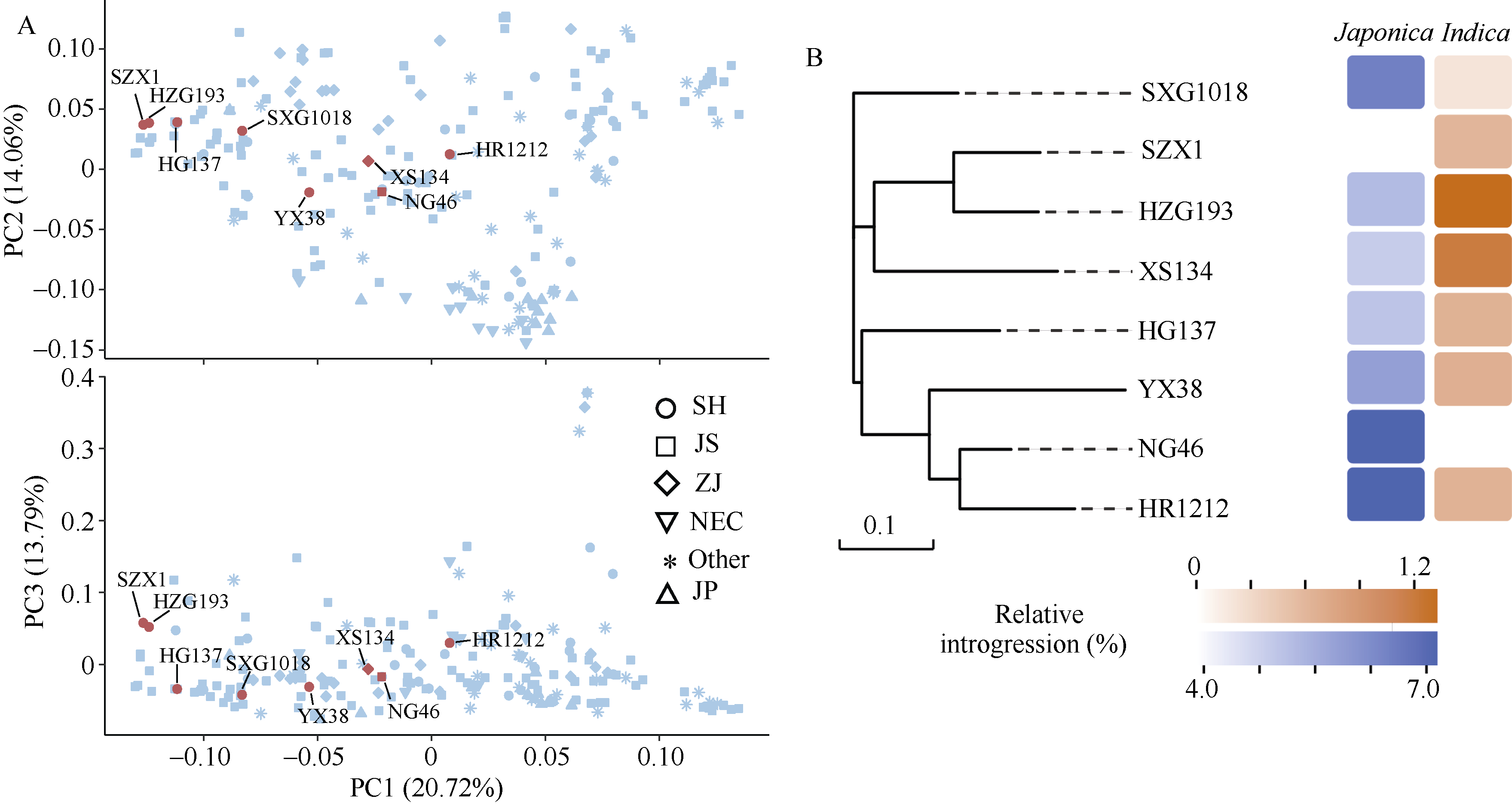
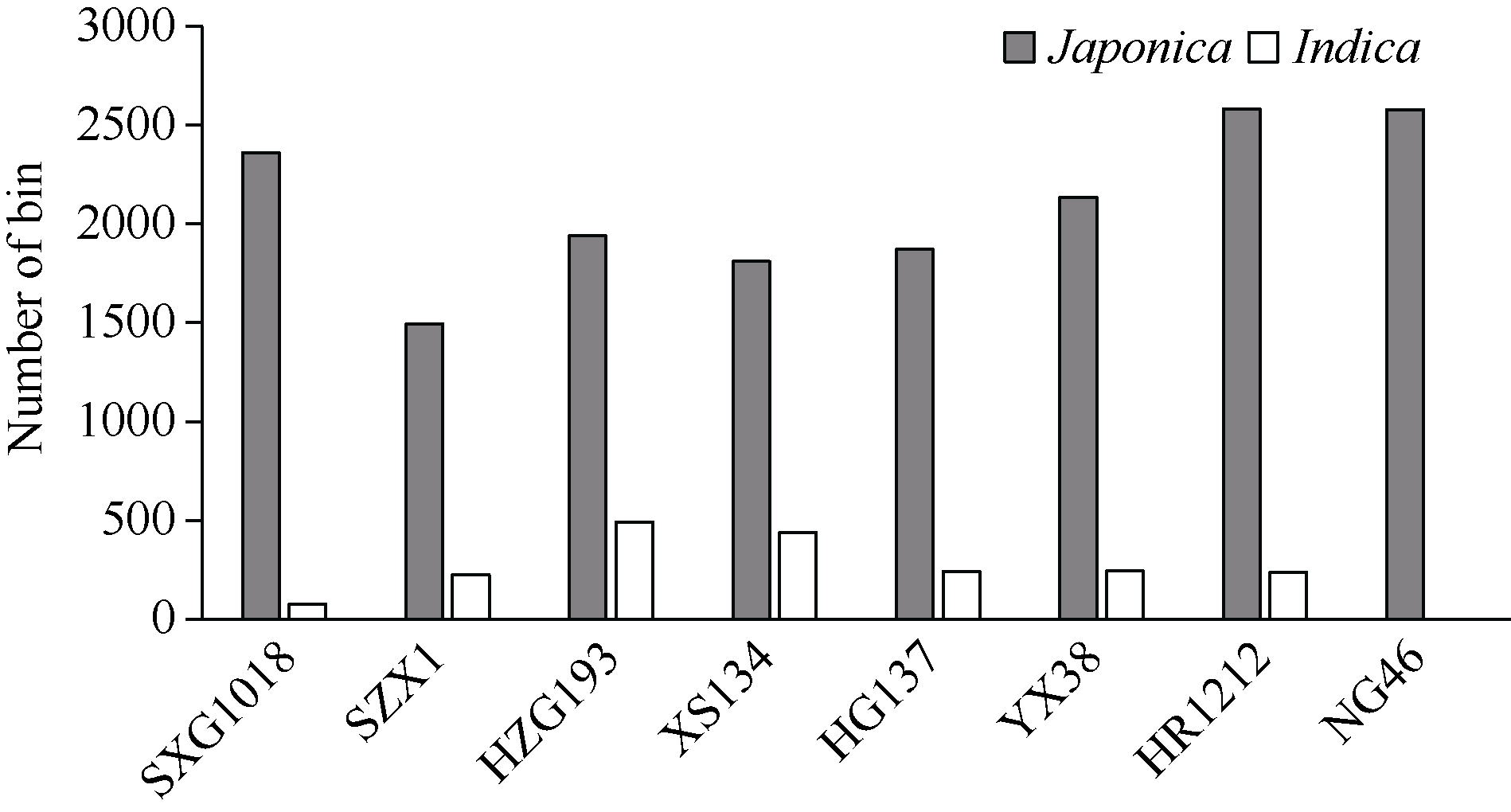
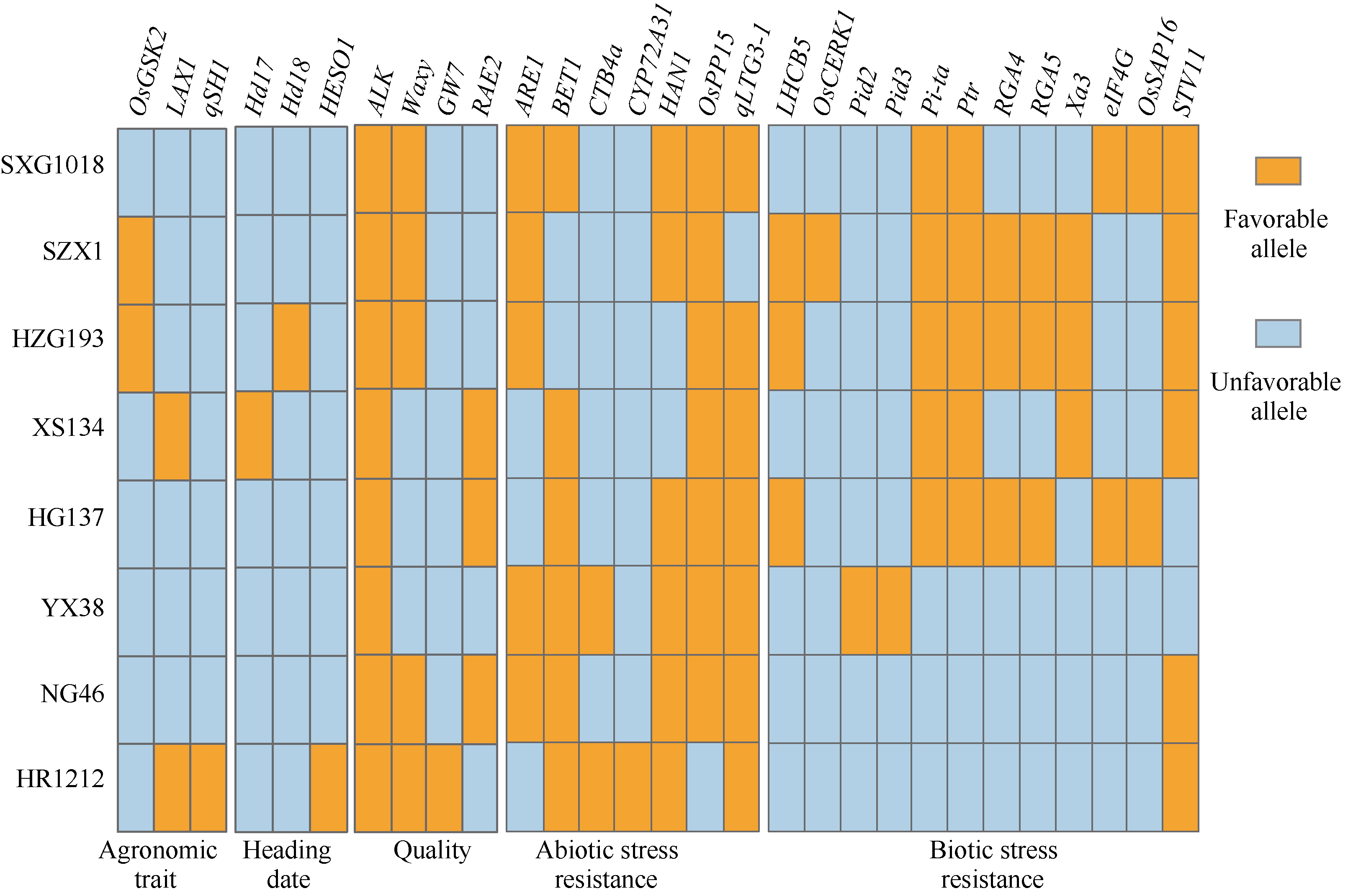
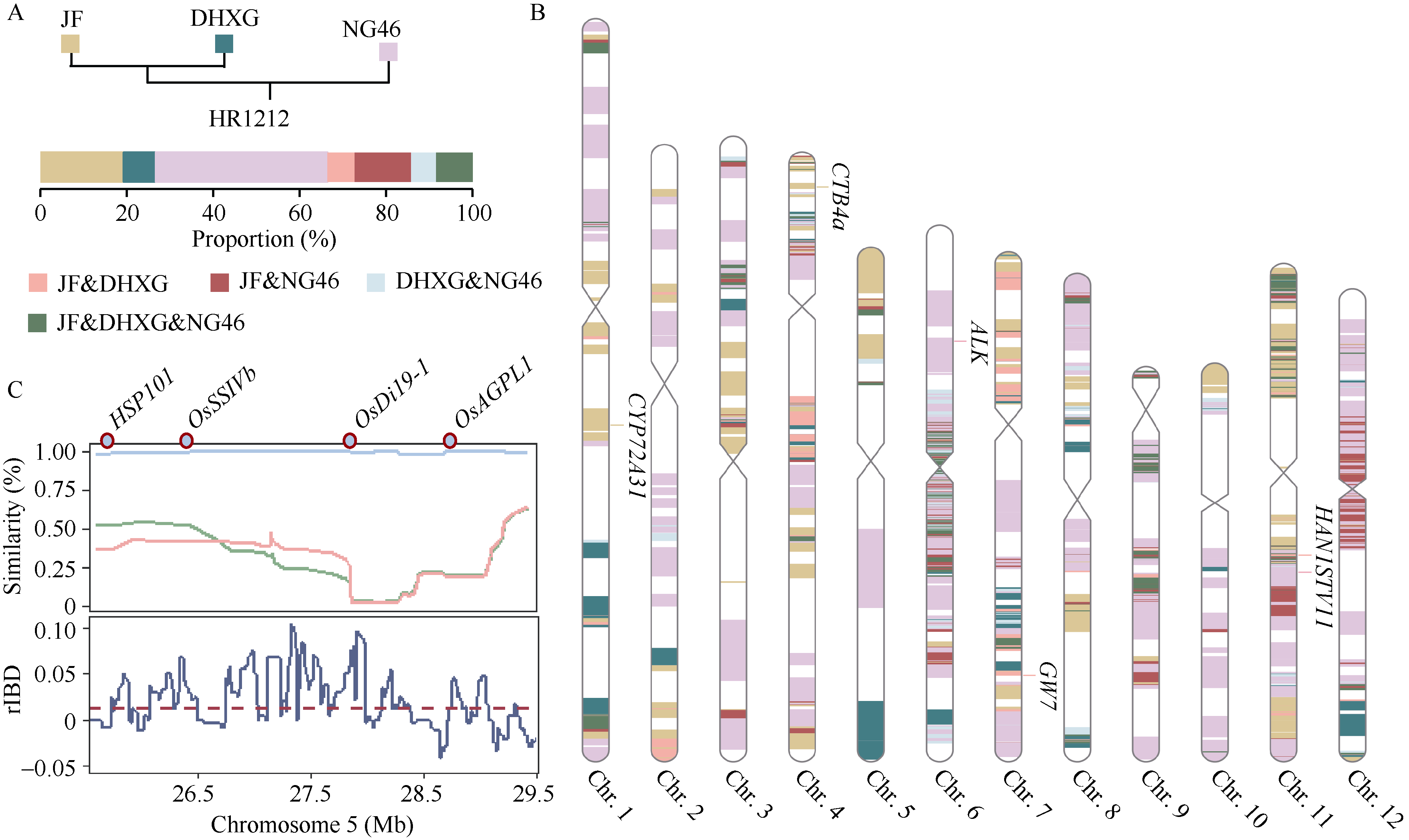
长江下游地区是我国重要的粳稻产区, 解析该区域主导品种的遗传背景、籼型血缘渗入特征及重要性状的基因型构成, 对于优异种质资源的高效利用与分子设计育种具有重要意义。本研究对长江下游8份代表性常规粳稻主导品种进行了全基因组测序(平均测序深度为19.8×), 系统开展了亲缘关系评估、基因组籼型渗入片段鉴定及重要功能基因的基因型剖析, 并对优质高产品种沪软1212进行了系谱溯源分析。结果表明, 8份供试品种在粳稻群体中具有较好的遗传多样性和代表性。全基因组解析表明, 籼型渗入片段在供试品种的粳稻遗传背景中呈不规则的碎片化分布, 片段总长在品种间变幅较大(0~4.9 Mb), 其中沪早粳193和秀水134的籼型片段渗入量最多; 这些籼稻来源片段中注释到的基因显著富集于抗病、耐逆及生物量积累等通路。基因型分析表明, 主导品种在品质(ALK和Waxy)、耐逆(HAN1、OsPP15、qLTG3-1)及抗条纹叶枯病(STV11)基因上已基本实现优异等位基因的高度聚合, 但在抗稻瘟病及病毒性、细菌性病害上还存在进一步遗传改良潜力; 在主要农艺性状方面, 供试品种携带的优异等位基因分布频率整体较低。系谱溯源表明, 优质品种沪软1212的遗传背景主要源自亲本南粳46 (39.71%), 还整合了来自亲本金丰的多个产量相关优异基因型, 以及大华香粳的籼型渗入片段。本研究在基因组水平上揭示了长江下游8份代表性粳稻主导品种的籼型片段渗入特征与重要性状优异等位基因的分布, 为今后高产优质粳稻的分子设计育种及种质资源的高效利用提供了重要的遗传信息。
| [1] | 孙宗修, 鄂志国, 王磊, 等. 对中国水稻骨干亲本评定方法的探索. 作物学报, 2014, 40: 973-983. |
|
Sun Z X, E Z G, Wang L, et al. Exploring assessment method of Chinese rice backbone parents. Acta Agron Sin, 2014, 40: 973-983 (in Chinese with English abstract).
doi: 10.3724/SP.J.1006.2014.00973 |
|
| [2] |
Xiao N, Pan C H, Li Y H, et al. Genomic insight into balancing high yield, good quality, and blast resistance of japonica rice. Genome Biol, 2021, 22: 283.
doi: 10.1186/s13059-021-02488-8 |
| [3] |
Ye J H, Zhang M C, Yuan X P, et al. Genomic insight into genetic changes and shaping of major inbred rice cultivars in China. New Phytol, 2022, 236: 2311-2326.
doi: 10.1111/nph.18500 pmid: 36114658 |
| [4] |
Wang T Y, He W C, Li X X, et al. A rice variation map derived from 10,548 rice accessions reveals the importance of rare variants. Nucleic Acids Res, 2023, 51: 10924-10933.
doi: 10.1093/nar/gkad840 |
| [5] |
Ge J Y, Wang J R, Pang H B, et al. Genome-wide selection and introgression of Chinese rice varieties during breeding. J Genet Genom, 2022, 49: 492-501.
doi: 10.1016/j.jgg.2022.02.025 |
| [6] |
Ma X D, Wang H, Yan S, et al. Large-scale genomic and phenomic analyses of modern cultivars empower future rice breeding design. Mol Plant, 2025, 18: 651-668.
doi: 10.1016/j.molp.2025.03.007 pmid: 40083159 |
| [7] |
Hao C Y, Jiao C Z, Hou J, et al. Resequencing of 145 landmark cultivars reveals asymmetric sub-genome selection and strong founder genotype effects on wheat breeding in China. Mol Plant, 2020, 13: 1733-1751.
doi: 10.1016/j.molp.2020.09.001 pmid: 32896642 |
| [8] |
Chen J Y, Zhang H L, Deng S H, et al. A backbone parent contributes core genomic architecture to pedigree breeding of early-season indica rice. J Genet Genom, 2021, 48: 1040-1043.
doi: 10.1016/j.jgg.2021.07.011 |
| [9] |
Ye J H, Yan Y, Zhang L X, et al. Genetic dissection of two elite japonica varieties reveals founder transmission and selection in breeding. Genomics, 2025, 117: 111096.
doi: 10.1016/j.ygeno.2025.111096 |
| [10] | Chen Z, Bu Q Y, Liu G F, et al. Genomic decoding of breeding history to guide breeding-by-design in rice. Natl Sci Rev, 2023, 10: nwad029. |
| [11] | 余汉勇, 魏兴华. 水稻新品种测试原理与方法. 杭州: 浙江科学技术出版社, 2010. |
| Yu H Y, Wei X H. Principle and Method of Testing New Rice Varieties. Hangzhou: Zhejiang Science & Technology Press, 2010 (in Chinese). | |
| [12] | American Association of Cereal Chemists, Approved Methods Committee. Approved Methods of the American Association of Cereal Chemists, 10th edn. St. Paul, Minnesota, USA: AACC, 2000. |
| [13] |
Bolger A M, Lohse M, Usadel B. Trimmomatic: a flexible trimmer for Illumina sequence data. Bioinformatics, 2014, 30: 2114-2120.
doi: 10.1093/bioinformatics/btu170 pmid: 24695404 |
| [14] |
Li H, Durbin R. Fast and accurate short read alignment with Burrows-Wheeler transform. Bioinformatics, 2009, 25: 1754-1760.
doi: 10.1093/bioinformatics/btp324 |
| [15] |
McKenna A, Hanna M, Banks E, et al. The genome analysis toolkit: a MapReduce framework for analyzing next-generation DNA sequencing data. Genome Res, 2010, 20: 1297-1303.
doi: 10.1101/gr.107524.110 pmid: 20644199 |
| [16] |
Purcell S, Neale B, Todd-Brown K, et al. PLINK: a tool set for whole-genome association and population-based linkage analyses. Am J Hum Genet, 2007, 81: 559-575.
doi: 10.1086/519795 pmid: 17701901 |
| [17] |
Guo X, Wang Z C, Wang S, et al. Genetic signature of hybridization between Chinese spot-billed ducks and domesticated ducks. Anim Genet, 2020, 51: 866-875.
doi: 10.1111/age.13002 pmid: 33020910 |
| [18] |
Gu Z G, Gu L, Eils R, et al. Circlize implements and enhances circular visualization in R. Bioinformatics, 2014, 30: 2811-2812.
doi: 10.1093/bioinformatics/btu393 |
| [19] | 岳红亮, 张梦龙, 程新杰, 等. RVA谱特征值的影响因素及其与稻米食味品质的关系综述. 江苏农业科学, 2023, 51(1): 16-22. |
| Yue H L, Zhang M L, Cheng X J, et al. Factors influencing characteristic values of RVA spectrum and their relationship with rice taste quality: a review. Jiangsu Agric Sci, 2023, 51(1): 16-22 (in Chinese with English abstract). | |
| [20] |
Wei X, Qiu J, Yong K C, et al. A quantitative genomics map of rice provides genetic insights and guides breeding. Nat Genet, 2021, 53: 243-253.
doi: 10.1038/s41588-020-00769-9 pmid: 33526925 |
| [21] |
Sun S Y, Wang T, Wang L L, et al. Natural selection of a GSK3 determines rice mesocotyl domestication by coordinating strigolactone and brassinosteroid signaling. Nat Commun, 2018, 9: 2523.
doi: 10.1038/s41467-018-04952-9 |
| [22] |
Oikawa T, Kyozuka J. Two-step regulation of LAX PANICLE1 protein accumulation in axillary meristem formation in rice. Plant Cell, 2009, 21: 1095-1108.
doi: 10.1105/tpc.108.065425 |
| [23] |
Konishi S, Izawa T, Lin S Y, et al. An SNP caused loss of seed shattering during rice domestication. Science, 2006, 312: 1392-1396.
doi: 10.1126/science.1126410 pmid: 16614172 |
| [24] |
Wang S K, Li S, Liu Q, et al. The OsSPL16-GW7 regulatory module determines grain shape and simultaneously improves rice yield and grain quality. Nat Genet, 2015, 47: 949-954.
doi: 10.1038/ng.3352 |
| [25] |
Jin J, Hua L, Zhu Z F, et al. GAD1 encodes a secreted peptide that regulates grain number, grain length, and awn development in rice domestication. Plant Cell, 2016, 28: 2453-2463.
doi: 10.1105/tpc.16.00379 |
| [26] |
Shibaya T, Hori K, Ogiso-Tanaka E, et al. Hd18, encoding histone acetylase related to Arabidopsis FLOWERING LOCUS D, is involved in the control of flowering time in rice. Plant Cell Physiol, 2016, 57: 1828-1838.
doi: 10.1093/pcp/pcw105 pmid: 27318280 |
| [27] |
Yano K, Yamamoto E, Aya K, et al. Genome-wide association study using whole-genome sequencing rapidly identifies new genes influencing agronomic traits in rice. Nat Genet, 2016, 48: 927-934.
doi: 10.1038/ng.3596 pmid: 27322545 |
| [28] |
Matsubara K, Ogiso-Tanaka E, Hori K, et al. Natural variation in Hd17, a homolog of Arabidopsis ELF3 that is involved in rice photoperiodic flowering. Plant Cell Physiol, 2012, 53: 709-716.
doi: 10.1093/pcp/pcs028 pmid: 22399582 |
| [29] |
Tian Z X, Qian Q, Liu Q Q, et al. Allelic diversities in rice starch biosynthesis lead to a diverse array of rice eating and cooking qualities. Proc Natl Acad Sci USA, 2009, 106: 21760-21765.
doi: 10.1073/pnas.0912396106 pmid: 20018713 |
| [30] |
Zhang C Q, Zhu J H, Chen S J, et al. Wxlv, the ancestral allele of rice Waxy gene. Mol Plant, 2019, 12: 1157-1166.
doi: 10.1016/j.molp.2019.05.011 |
| [31] |
Wang L L, Yu C C, Chen C, et al. Identification of rice Di 19 family reveals OsDi19-4 involved in drought resistance. Plant Cell Rep, 2014, 33: 2047-2062.
doi: 10.1007/s00299-014-1679-3 |
| [32] |
Dian W M, Jiang H W, Wu P. Evolution and expression analysis of starch synthase III and IV in rice. J Exp Bot, 2005, 56: 623-632.
pmid: 15642712 |
| [33] |
Meng Q, Zhang W Q, Hu X, et al. Two ADP-glucose pyrophosphorylase subunits, OsAGPL1 and OsAGPS1, modulate phosphorus homeostasis in rice. Plant J, 2020, 104: 1269-1284.
doi: 10.1111/tpj.v104.5 |
| [34] |
Zhao H, Tu Z, Liu Y M, et al. PlantDeepSEA, a deep learning- based web service to predict the regulatory effects of genomic variants in plants. Nucleic Acids Res, 2021, 49: W523-W529.
doi: 10.1093/nar/gkab383 |
| [35] |
张学勇, 郝晨阳, 焦成智, 等. 种质资源学与基因组学相结合-破解基因发掘与育种利用的难题. 植物遗传资源学报, 2023, 24: 11-21.
doi: 10.13430/j.cnki.jpgr.20230104001 |
| Zhang X Y, Hao C Y, Jiao C Z, et al. Integration of germplasmics and genomics: bridging up crop gene discovery and breeding. J Plant Genet Resour, 2023, 24: 11-21 (in Chinese with English abstract). | |
| [36] |
李永祥, 王天宇, 黎裕. 主要农作物骨干亲本形成与研究利用. 植物遗传资源学报, 2019, 20: 1093-1102.
doi: 10.13430/j.cnki.jpgr.20190505003 |
|
Li Y X, Wang T Y, Li Y. Formation, research and utilization of founder parents in major crops. J Plant Genet Resour, 2019, 20: 1093-1102 (in Chinese with English abstract).
doi: 10.13430/j.cnki.jpgr.20190505003 |
|
| [37] |
Liu X, Li Z, Zhang H, et al. Evaluating blast resistance of Huang-Huai geng/japonica varieties using intragenic markers. Rice, 2026, 19: 19.
doi: 10.1186/s12284-026-00891-y |
| [38] | 李刚, 袁彩勇, 曹奎荣, 等. 544份水稻种质稻瘟病抗性鉴定及抗性基因的分布研究. 中国农业大学学报, 2018, 23(5): 22-28. |
| Li G, Yuan C Y, Cao K R, et al. Evaluation and distribution of the blast resistance genes of 544 rice materials. J China Agric Univ, 2018, 23(5): 22-28 (in Chinese with English abstract). | |
| [39] | 浙江科技成果库. 高产优质多抗晚粳稻秀水134的选育与推广. (2026-03-01). https://www.sme-gov.cn/zhejiang-chengguo-76428.html. |
| Zhejiang Science and Technology Achievement Database. Cultivation and promotion of high-yield, high-quality, disease-resistant late-season japonica rice Xiushui 134. (2026-03-01). https://www.sme-gov.cn/zhejiang-chengguo-76428.html (in Chinese). | |
| [40] | 广东省农业科学院. 30个品种榜上有名!第二届全国优质稻品种金奖出炉. (2019-04-15). https://www.gdaas.cn/mtjjn/content/post_998536.html. |
| Guangdong Academy of Agricultural Sciences. Thirty varieties made the list! The second national high-quality rice variety gold award has been announced. (2019-04-15). https://www.gdaas.cn/mtjjn/content/post_998536.html (in Chinese). | |
| [41] | 上海市农业科学院. “沪软1212”喜获首届全国优质稻(粳稻)品种食味品质鉴评金奖. (2018-05-07). https://www.saas.sh.cn/xwzx/mtjj/content_18575. |
| Shanghai Academy of Agricultural Sciences. ‘Huruan 1212’ won the gold award for eating quality evaluation in the first national high-quality rice (japonica) variety competition. (2018-05-07). https://www.saas.sh.cn/xwzx/mtjj/content_18575 (in Chinese). | |
| [42] | 陆家安, 万常照, 侯根宝, 等. 优质、高产晚粳良种“金丰”的选育及其特性. 上海农业学报, 2004, 20(2): 31-35. |
| Lu J A, Wan C Z, Hou G B, et al. Breeding of higher and better yield late japonica rice variety “Jinfeng” and study on its characteristics. Acta Agric Shanghai, 2004, 20(2): 31-35 (in Chinese with English abstract). | |
| [43] |
Jia J Z, Zhao G Y, Li D P, et al. Genome resources for the elite bread wheat cultivar Aikang 58 and mining of elite homeologous haplotypes for accelerating wheat improvement. Mol Plant, 2023, 16: 1893-1910.
doi: 10.1016/j.molp.2023.10.015 pmid: 37897037 |
| [44] |
Guan R X, Zhang L Y, Gao H W, et al. Genetic changes in soybean cultivars derived from Heihe 54. Crop J, 2025, 13: 1137-1144.
doi: 10.1016/j.cj.2025.05.009 |
| [45] |
Li Q L, Feng Q, Wang H Q, et al. Genome-wide dissection of Quan 9311A breeding process and application advantages. Rice Sci, 2023, 30: 552-566.
doi: 10.1016/j.rsci.2023.06.004 |
| [1] | 张舒钰, 马璐, 马亮, 朱宏, 章慧敏, 宋旭东, 周广飞, 冒宇翔, 陆虎华, 陈国清, 郝德荣, 张振良. 基于近红外光谱和基因组信息的糯玉米赖氨酸含量精准估计[J]. 作物学报, 2026, 52(9): 2822-2838. |
| [2] | 黄迎, 刘沛琦, 解森, 许洛, 任元, 刘旭洋, 何冠华, 李永祥, 王天宇, 黎裕, 周涛, 廖江林, 李春辉, 张登峰. 玉米氮利用效率全基因组关联分析及候选基因挖掘[J]. 作物学报, 2026, 52(9): 2558-2572. |
| [3] | 张为为, 任姣姣, 魏略, 吴若彤, 陶庭余, 吴传鹏, 阿布力克木·阿布力米提, 徐晓明, 吴鹏昊. 干旱胁迫下玉米雄穗结构性状的GWAS及全基因组选择[J]. 作物学报, 2026, 52(9): 2641-2659. |
| [4] | 刘海岚. Haseman-Elston回归与QR分解结合的全基因组选择新方法[J]. 作物学报, 2026, 52(8): 2317-2326. |
| [5] | 朱国忠, 朱呈滨, 姬晨晖, 谭勇琳, 成政, 张大勇, 尚小光, 郭旺珍. 棉花全基因组核心SNP位点筛选与评价[J]. 作物学报, 2026, 52(7): 1954-1965. |
| [6] | 赵辉, 黄义文, 买春艳, 景鹏飞, 孙海艳, 吴培培, 于立强, 李辉利, 周阳, 郭宪瑞, 张宏军. 小麦抗倒伏相关性状全基因组关联分析[J]. 作物学报, 2026, 52(7): 1943-1953. |
| [7] | 习千辉, 徐梓瑗, 刘梦梦, 王宏艺, 郎凯琳, 井震海, 陈锋, 赵磊. 小麦籽粒铜含量的全基因组关联分析及候选基因预测[J]. 作物学报, 2026, 52(6): 1604-1617. |
| [8] | 毛嘉琦, 黄朋雨, 赵佳佳, 郑兴卫, 武棒棒, 郝宇琼, 屈非, 刘成, 马朋涛, 郑军. 山西小麦品种白粉病抗性评价及抗病基因分子检测[J]. 作物学报, 2026, 52(6): 1669-1681. |
| [9] | 唐宽强, 李公允, 宋美毅, 赵雪, 常春玲. 大豆株高性状全基因组关联分析及预测模型构建[J]. 作物学报, 2026, 52(6): 1743-1756. |
| [10] | 杨欣雨, 崔文涛, 迪力尼格尔·阿力木, 汪凯翔, 吴鹏昊, 任姣姣. 玉米穗上叶片数全基因组关联分析和全基因组选择[J]. 作物学报, 2026, 52(5): 1573-1590. |
| [11] | 谷春苗, 王润风, 黄璐, 刘浩, 鲁清, 李海芬, 李少雄, 何双呈, 洪彦彬, 陈小平, 谭斌, 余倩霞. 花生WOX基因家族的全基因组分析及不定芽再生候选基因的鉴定[J]. 作物学报, 2026, 52(5): 1326-1340. |
| [12] | 闫安, 蒋昆炜, 王蓉圆, 田林, 张璐, 王韵, 徐建龙. 水稻剑叶小维管束数基因SVN7的鉴定与克隆[J]. 作物学报, 2026, 52(5): 1364-1372. |
| [13] | 田立涛, 丁宁, 王树林, 齐恩芳, 张荣, 王蕊蕊, 马利雯, 李建武, 杨江伟. 马铃薯Argonaute基因家族鉴定及晚疫病诱导表达分析[J]. 作物学报, 2026, 52(4): 1116-1126. |
| [14] | 鲁雅妮, 丁超杰, 张煜, 杜习军, 齐学礼, 胡琳, 许为钢. 河南省200份小麦品种苗期茎基腐病抗性鉴定与全基因组关联分析[J]. 作物学报, 2026, 52(2): 363-375. |
| [15] | 李诗晴, 王茜, 王素华, 张耀文, 王丽侠. 绿豆种质资源苗期耐盐性鉴定及相关基因发掘[J]. 作物学报, 2026, 52(2): 376-388. |
|
||