欢迎访问作物学报,今天是
作物学报 ›› 2026, Vol. 52 ›› Issue (3): 813-824.doi: 10.3724/SP.J.1006.2026.54109
于永超( ), 刘明, 靳容, 赵鹏, 张强强, 王静, 朱晓亚, 唐忠厚()
Yu Yong-Chao(), Liu Ming, Jin Rong, Zhao Peng, Zhang Qiang-Qiang, Wang Jing, Zhu Xiao-Ya, Tang Zhong-Hou()
摘要:
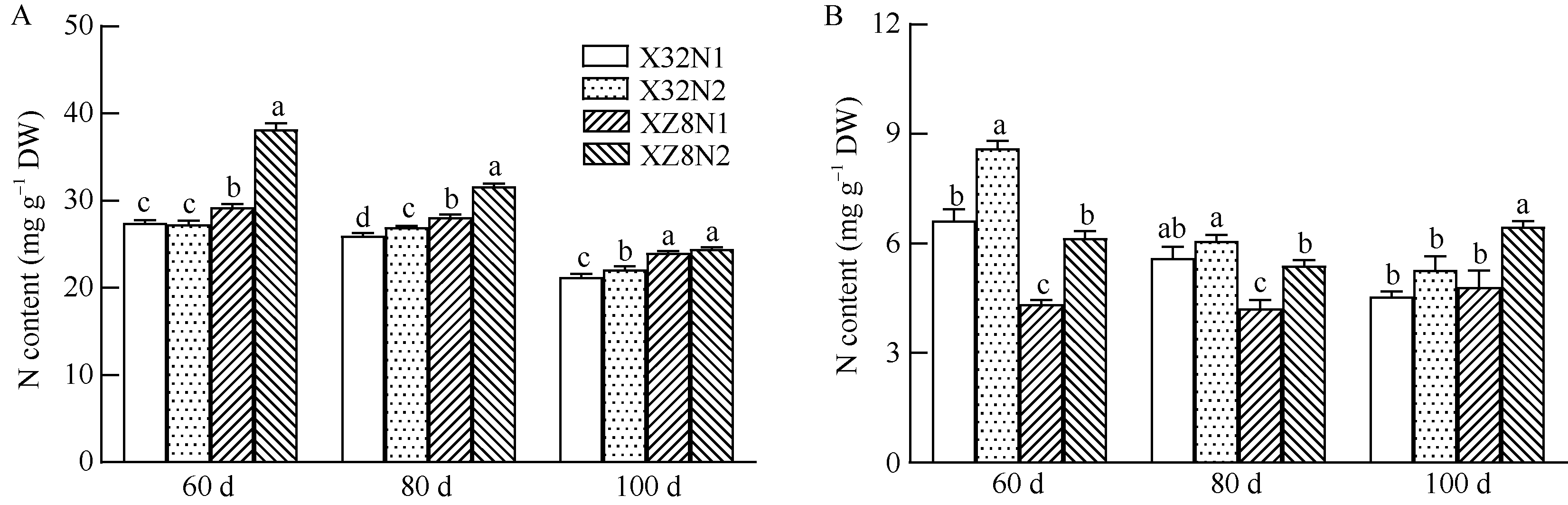
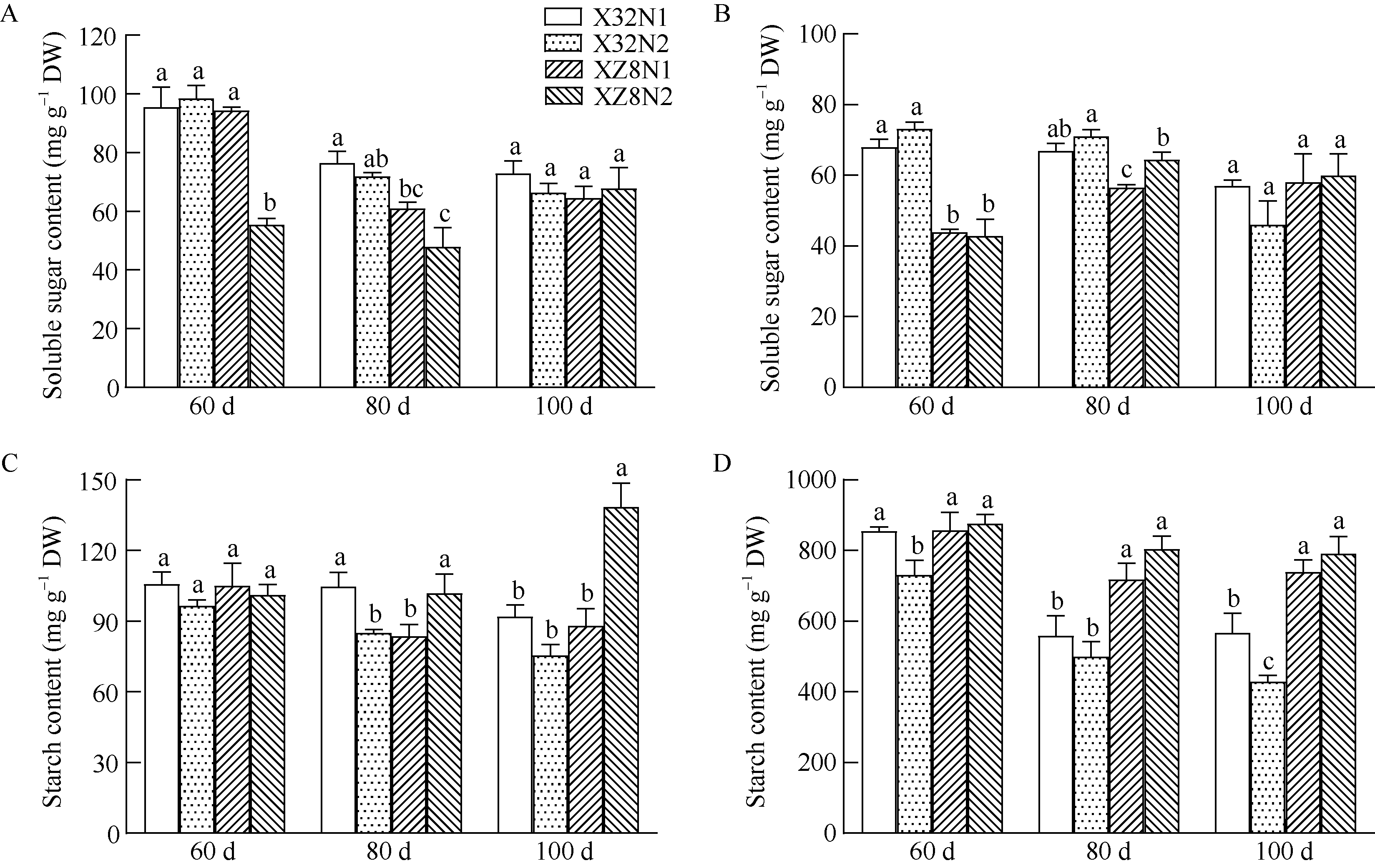
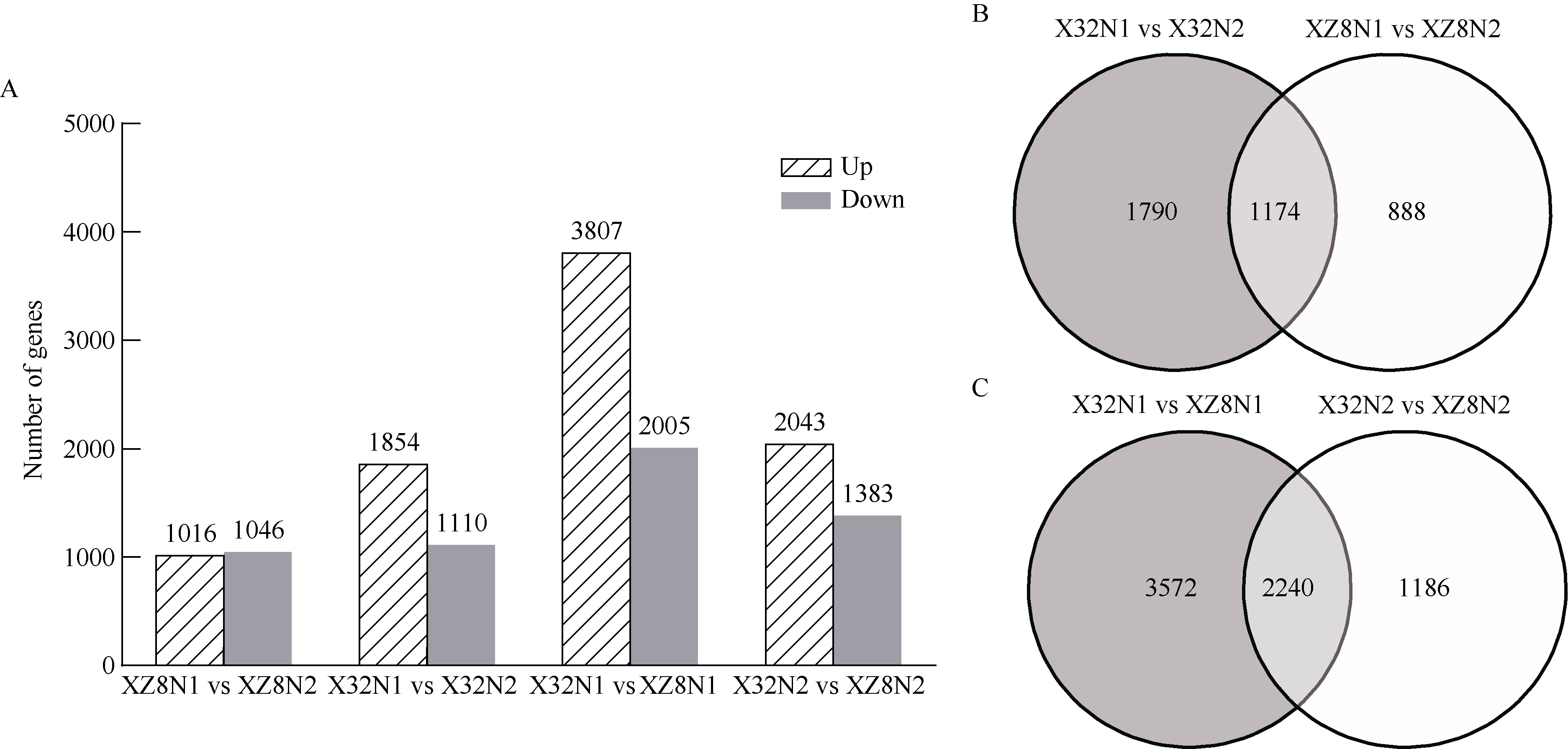
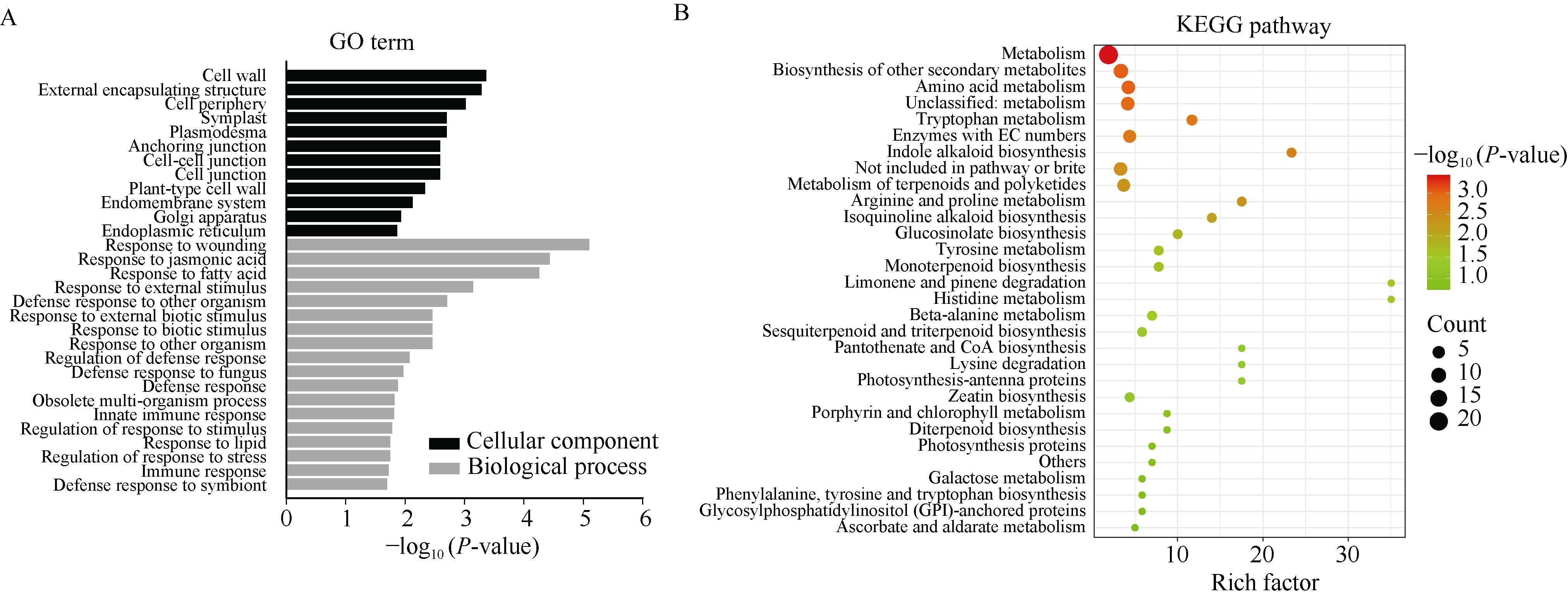
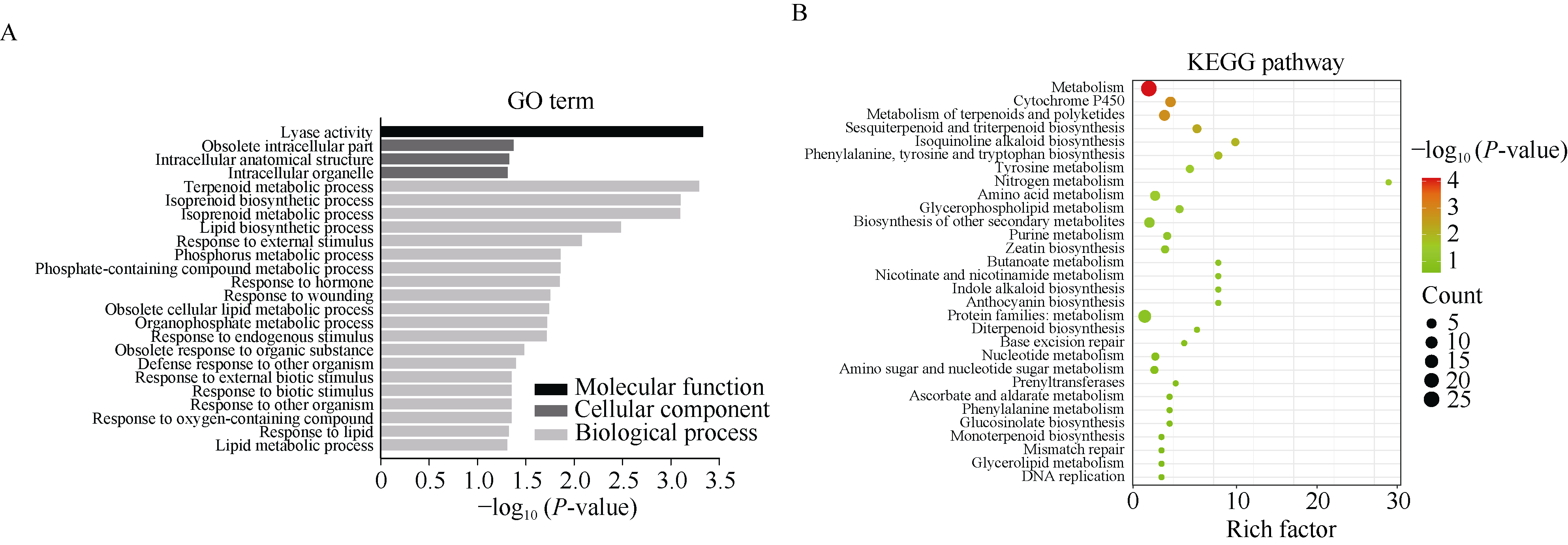
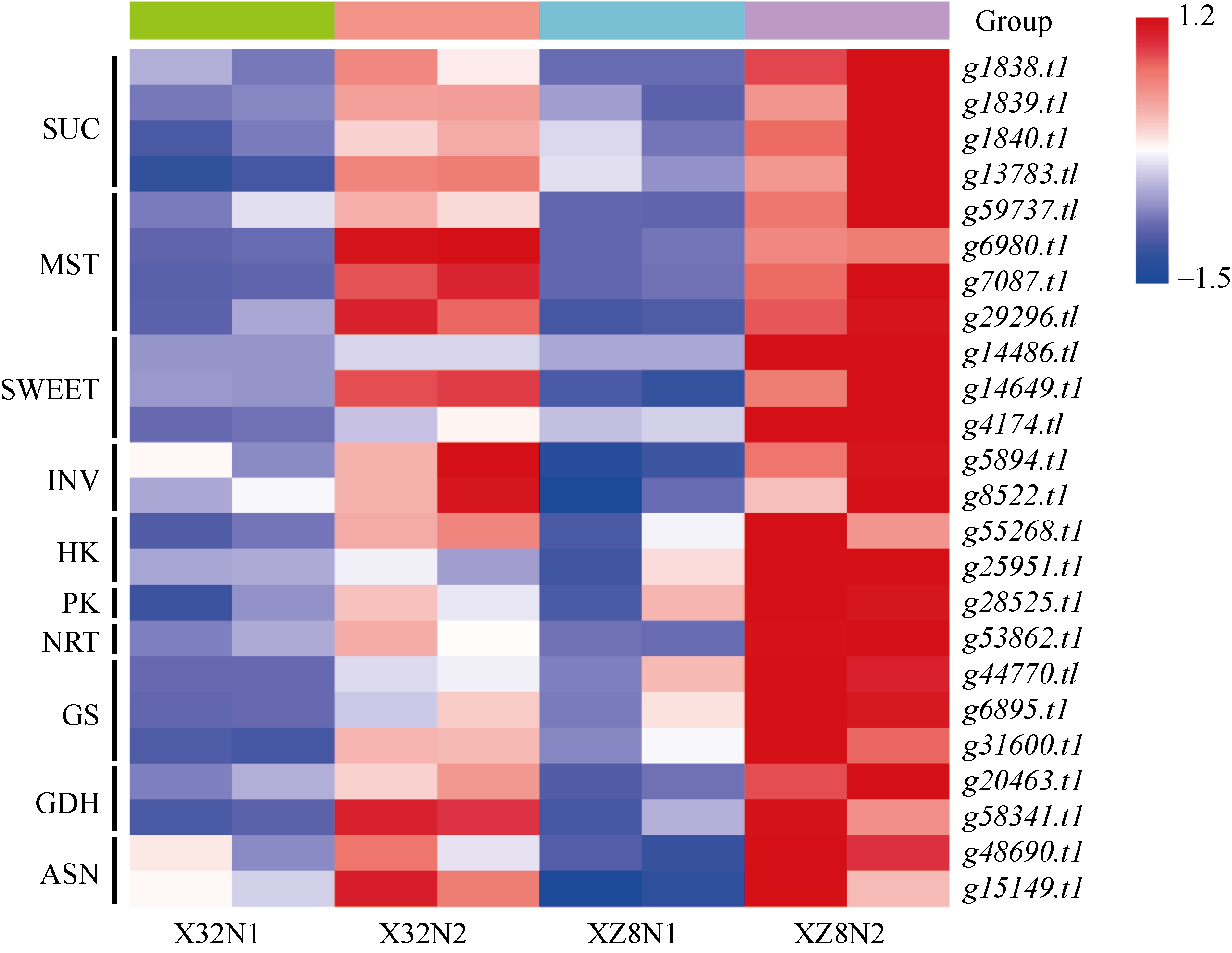
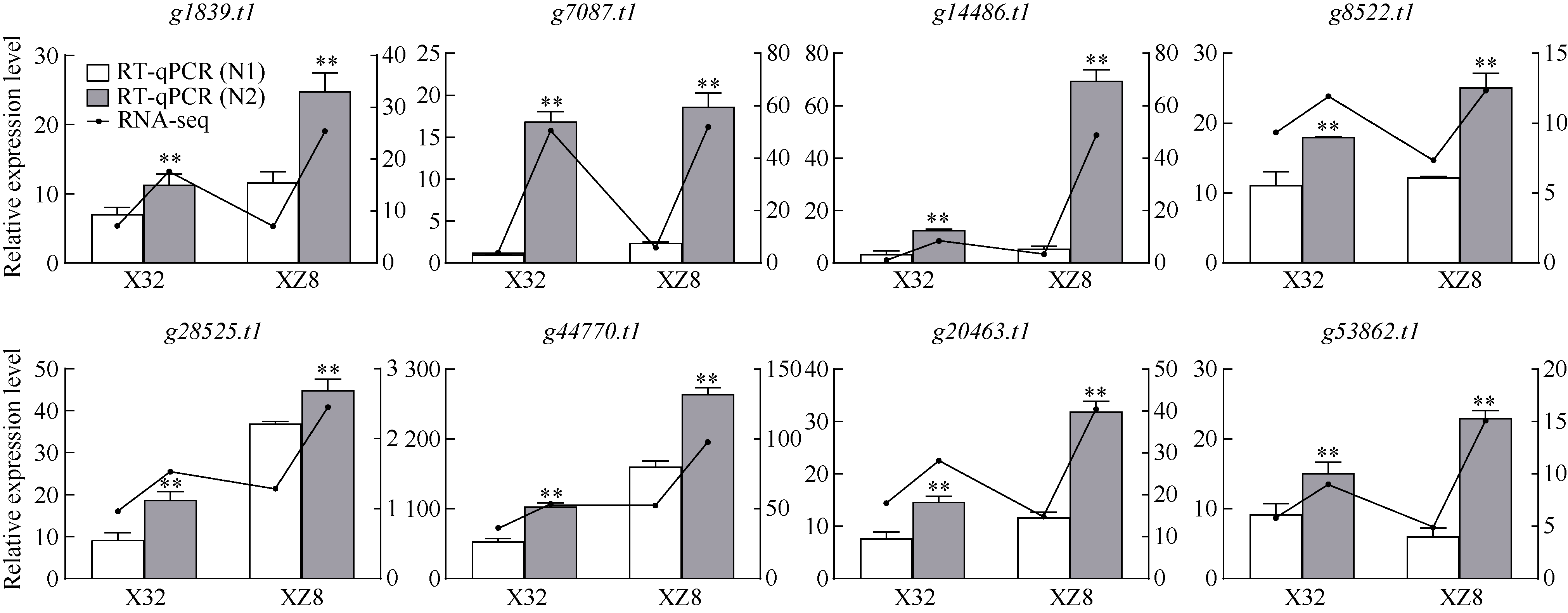
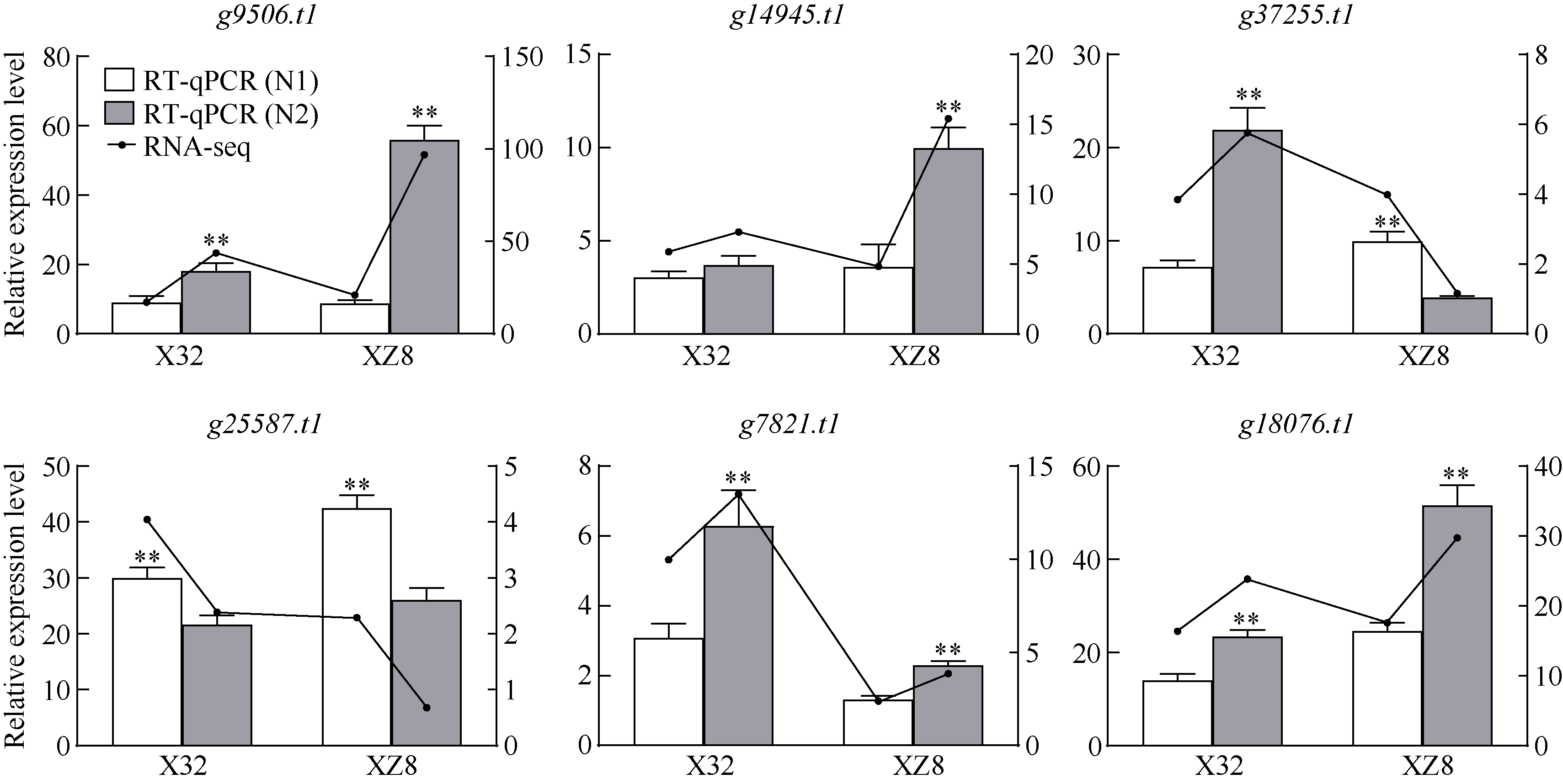
甘薯是我国重要的粮食与经济作物, 高氮环境下容易茎叶旺长而造成产量和品质的降低。本研究以不易徒长的品种徐薯32号和易徒长的品种徐紫薯8号为试验材料, 设置不同施氮肥水平(0、80和200 kg hm-2)处理, 测定甘薯徒长表型和碳氮含量变化, 通过转录组测序进行相关代谢途径和徒长候选基因挖掘分析, 并对测序结果进行RT-qPCR验证。结果表明, 与徐薯32号相比, 高氮处理下徐紫薯8号的地上部生长更加旺盛, 块根产量显著降低, 徒长情况严重。高氮处理使2个品种茎尖的氮含量增加而可溶性糖含量降低, 碳氮代谢途径的基因表达量显著提高, 徐紫薯8号茎尖的碳氮代谢变化更加显著, 地上部易受高氮影响。转录组测序表明, 正常施氮和高氮处理间存在差异表达基因3852个, 对2个品种共同筛选到的1174个差异表达基因进行GO与KEGG通路富集分析, 发现差异基因在损伤响应、茉莉酸响应、氨基酸代谢、玉米素生物合成等途径被显著富集, 不同甘薯品种对高氮可能存在共同的响应机制。相同处理下, 徐薯32号和徐紫薯8号间差异表达基因共6998个, 对高氮处理筛选到而正常施氮未筛选到的1186个差异表达基因进行GO与KEGG通路富集分析, 发现差异基因在类异戊二烯代谢、激素应答、细胞色素P450、氮代谢、玉米素生物合成等途径被显著富集, 进一步筛选到6个甘薯高氮徒长的候选基因(g9506.t1、g14945.t1、g37255.t1、g25587.t1、g7821.t1和g18076.t1)。本研究为解析甘薯高氮徒长的生理机制提供了理论支持, 也为选育耐高氮甘薯品种提供了基础。
| [1] |
Alam M K. A comprehensive review of sweet potato (Ipomoea batatas [L.] Lam): revisiting the associated health benefits. Trends Food Sci Technol, 2021, 115: 512-529.
doi: 10.1016/j.tifs.2021.07.001 |
| [2] | 李强, 赵海, 靳艳玲, 等. 中国甘薯产业助力国家粮食安全的分析与展望. 江苏农业学报, 2022, 38: 1484-1491. |
| Li Q, Zhao H, Jin Y L, et al. Analysis and perspectives of sweet potato industry contributing to national food security in China. Jiangsu J Agric Sci, 2022, 38: 1484-1491 (in Chinese with English abstract). | |
| [3] |
Zhang Y L, Tang Y Q, Wang Z H, et al. Optimizing nitrogen and irrigation application for drip irrigated sweet potato with plastic film mulching in Eastern China. Agric Water Manag, 2024, 302: 108997.
doi: 10.1016/j.agwat.2024.108997 |
| [4] |
Siqinbatu, Kitaya Y, Hirai H, et al. Effects of water contents and CO2 concentrations in soil on growth of sweet potato. Field Crops Res, 2013, 152: 36-43.
doi: 10.1016/j.fcr.2013.07.004 |
| [5] | 李韦柳, 唐秀桦, 韦民政, 等. 遮阴对淀粉型甘薯生长发育及生理特性的影响. 热带作物学报, 2017, 38: 258-263. |
| Li W L, Tang X H, Wei M Z, et al. Effects of shading on growth, development and physiological characteristics of starchy sweet potato. Chin J Trop Crops, 2017, 38: 258-263 (in Chinese with English abstract). | |
| [6] |
Zhang Z, Xu X M, Jin M H, et al. A new curve of critical leaf nitrogen concentration based on the maximum root dry matter for diagnosing nitrogen nutritional status of sweetpotato. Eur J Agron, 2024, 156: 127176.
doi: 10.1016/j.eja.2024.127176 |
| [7] |
Taranet P, Harper S, Kirchhof G, et al. Growth and yield response of glasshouse- and field-grown sweetpotato to nitrogen supply. Nutr Cycl Agroecosyst, 2017, 108: 309-321.
doi: 10.1007/s10705-017-9858-6 |
| [8] |
Shu X, Jin M H, Wang S Y, et al. The effect of nitrogen and potassium interaction on the leaf physiological characteristics, yield, and quality of sweet potato. Agronomy, 2024, 14: 2319.
doi: 10.3390/agronomy14102319 |
| [9] |
Duan W, Wang Q, Zhang H, et al. Comparative study on carbon-nitrogen metabolism and endogenous hormone contents in normal and overgrown sweetpotato. S Afr J Bot, 2018, 115: 199-207.
doi: 10.1016/j.sajb.2017.11.016 |
| [10] |
Duan W X, Zhang H Y, Wang Q M, et al. Regulation of root development in nitrogen-susceptible and nitrogen-tolerant sweet potato cultivars under different nitrogen and soil moisture conditions. BMC Plant Biol, 2023, 23: 454.
doi: 10.1186/s12870-023-04461-y pmid: 37759166 |
| [11] |
Duan W X, Zhang H Y, Xie B T, et al. Nitrogen utilization characteristics and early storage root development in nitrogen-tolerant and nitrogen-susceptible sweet potato. Physiol Plant, 2021, 173: 1090-1104.
doi: 10.1111/ppl.13504 pmid: 34287931 |
| [12] | 段文学, 张海燕, 解备涛, 等. 甘薯茎叶徒长对氮肥的响应及其表征指标研究. 山东农业科学, 2018, 50(2): 33-37. |
| Duan W X, Zhang H Y, Xie B T, et al. Response of vine overgrowth in sweet potato to nitrogen fertilizer and its characteristic indexes. Shandong Agric Sci, 2018, 50(2): 33-37 (in Chinese with English abstract). | |
| [13] |
Wu X L, Du A Q, Zhang Y F, et al. Potassium phosphite inhibits excessive growth of new shoots in peach trees by regulating the biosynthesis of lignin and gibberellin. Sci Hortic, 2025, 344: 114112.
doi: 10.1016/j.scienta.2025.114112 |
| [14] | 伍若彤.西双版纳黄瓜优异性状的分子标记辅助选择及CsSH1基因编辑应用. 南京农业大学硕士学位论文, 江苏南京, 2021. |
| Wu R T. Molecular Marker Assisted Selection for Excellent Traits and CsSH1 Gene Editing Application of Xishuangbanna Cucumber. MS Thesis of Nanjing Agricultural University, Nanjing, Jiangsu, China, 2021 (in Chinese with English abstract). | |
| [15] |
Zhang C L, Wu Y J, Liu X R, et al. Pivotal roles of ELONGATED HYPOCOTYL5 in regulation of plant development and fruit metabolism in tomato. Plant Physiol, 2022, 189: 527-540.
doi: 10.1093/plphys/kiac133 pmid: 35312008 |
| [16] |
Arisha M H, Ahmad M Q, Tang W, et al. RNA-sequencing analysis revealed genes associated drought stress responses of different durations in hexaploid sweet potato. Sci Rep, 2020, 10: 12573.
doi: 10.1038/s41598-020-69232-3 pmid: 32724138 |
| [17] |
Arisha M H, Aboelnasr H, Ahmad M Q, et al. Transcriptome sequencing and whole genome expression profiling of hexaploid sweetpotato under salt stress. BMC Genomics, 2020, 21: 197.
doi: 10.1186/s12864-020-6524-1 pmid: 32131729 |
| [18] |
Dong T T, Zhu M K, Yu J W, et al. RNA-Seq and iTRAQ reveal multiple pathways involved in storage root formation and development in sweet potato (Ipomoea batatas L.). BMC Plant Biol, 2019, 19: 136.
doi: 10.1186/s12870-019-1731-0 |
| [19] | 刘明, 靳容, 于永超, 等. 徐紫薯8号优选栽插密度与氮钾施肥方案研究. 中国土壤与肥料, 2025(2): 145-154. |
| Liu M, Jin R, Yu Y C, et al. Research on optimal planting density and nitrogen and potassium fertilization scheme of Xuzishu 8. Soil Fert Sci China, 2025(2):145-154 (in Chinese with English abstract). | |
| [20] | 付宇新, 胡燕, 王莉, 等. 植物和食品全氮含量测定方法的改进和优化. 安徽农业科学, 2021, 49(4): 198-200. |
| Fu Y X, Hu Y, Wang L, et al. Improvement and optimization of the determination method of total nitrogen in plants and food. J Anhui Agric Sci, 2021, 49(4): 198-200 (in Chinese with English abstract). | |
| [21] |
Livak K J, Schmittgen T D. Analysis of relative gene expression data using real-time quantitative PCR and the 2-ΔΔCT method. Methods, 2001, 25: 402-408.
doi: 10.1006/meth.2001.1262 pmid: 11846609 |
| [22] |
Chen C J, Wu Y, Li J W, et al. TBtools-II: a “one for all, all for one” bioinformatics platform for biological big-data mining. Mol Plant, 2023, 16: 1733-1742.
doi: 10.1016/j.molp.2023.09.010 |
| [23] |
Lyu Z F, He W C, Lin L Z, et al. Development of critical shoot and root N curves for diagnosing sweetpotato shoot and root N status. Field Crops Res, 2020, 257: 107927.
doi: 10.1016/j.fcr.2020.107927 |
| [24] | 徐聪, 李欢, 史衍玺. 不同施氮量对甘薯氮素吸收与分配的影响. 水土保持学报, 2014, 28(2): 149-153. |
| Xu C, Li H, Shi Y X. The effects of different nitrogen levels on nitrogen uptake and distribution of sweet potato. J Soil Water Conserv, 2014, 28(2): 149-153 (in Chinese with English abstract). | |
| [25] |
Smith M R, Rao I M, Merchant A. Source-sink relationships in crop plants and their influence on yield development and nutritional quality. Front Plant Sci, 2018, 9: 1889.
doi: 10.3389/fpls.2018.01889 pmid: 30619435 |
| [26] |
Golovko T K, Tabalenkova G N. Source-sink relationships in potato plants. Russ J Plant Physiol, 2019, 66: 664-671.
doi: 10.1134/S1021443719030051 |
| [27] | Duan W X, Wang Q M, Zhang H Y, et al. Differences between nitrogen-tolerant and nitrogen-susceptible sweetpotato cultivars in photosynthate distribution and transport under different nitrogen conditions. PLoS One, 2018, 13: e0194570. |
| [28] | 柴沙沙.甘薯不同品种碳氮代谢特性及与产量形成的关系. 山东农业大学硕士学位论文, 山东泰安, 2013. |
| Chai S S. The Carbon and Nitrogen Metabolism Characteristics and Their Relationships to Yield of Different Sweet Potato Cultivars. MS Thesis of Shandong Agricultural University, Tai’an, Shandong, China, 2013 (in Chinese with English abstract). | |
| [29] | Zhang Y J, Fernie A R. The role of TCA cycle enzymes in plants. Adv Biol, 2023, 7: e2200238. |
| [30] |
Araújo W L, Martins A O, Fernie A R, et al. 2-Oxoglutarate: linking TCA cycle function with amino acid, glucosinolate, flavonoid, alkaloid, and gibberellin biosynthesis. Front Plant Sci, 2014, 5: 552.
doi: 10.3389/fpls.2014.00552 pmid: 25360142 |
| [31] |
Wang B, Smith S M, Li J Y. Genetic regulation of shoot architecture. Annu Rev Plant Biol, 2018, 69: 437-468.
doi: 10.1146/annurev-arplant-042817-040422 pmid: 29553800 |
| [32] | 周鑫鹏.外源独脚金内酯调节弱光胁迫下黄瓜幼苗下胚轴徒长的作用机制. 南京农业大学硕士学位论文, 江苏南京, 2022. |
| Zhou X P. The Mechanism of Exogenous Strigolactone Regulating Cucumber Leggy Seedlings Under Low Light Stress. MS Thesis of Nanjing Agricultural University, Nanjing, Jiangsu, China, 2022 (in Chinese with English abstract). | |
| [33] |
Colebrook E H, Thomas S G, Phillips A L, et al. The role of gibberellin signalling in plant responses to abiotic stress. J Exp Biol, 2014, 217: 67-75.
doi: 10.1242/jeb.089938 |
| [34] |
Davière J M, Achard P. Gibberellin signaling in plants. Development, 2013, 140: 1147-1151.
doi: 10.1242/dev.087650 |
| [35] |
Illouz-Eliaz N, Ramon U, Shohat H, et al. Multiple gibberellin receptors contribute to phenotypic stability under changing environments. Plant Cell, 2019, 31: 1506-1519.
doi: 10.1105/tpc.19.00235 |
| [36] |
Ueguchi-Tanaka M, Nakajima M, Katoh E, et al. Molecular interactions of a soluble gibberellin receptor, GID1, with a rice DELLA protein, SLR1, and gibberellin. Plant Cell, 2007, 19: 2140-2155.
doi: 10.1105/tpc.106.043729 pmid: 17644730 |
| [37] |
Harris J C, Hrmova M, Lopato S, et al. Modulation of plant growth by HD-Zip class I and II transcription factors in response to environmental stimuli. New Phytol, 2011, 190: 823-837.
doi: 10.1111/j.1469-8137.2011.03733.x pmid: 21517872 |
| [38] |
Tan W R, Han Q, Li Y, et al. A HAT1-DELLA signaling module regulates trichome initiation and leaf growth by achieving gibberellin homeostasis. New Phytol, 2021, 231: 1220-1235.
doi: 10.1111/nph.v231.3 |
| [39] | Tan W R, Zhang D W, Zhou H P, et al. Transcription factor HAT1 is a substrate of SnRK2.3 kinase and negatively regulates ABA synthesis and signaling in Arabidopsis responding to drought. PLoS Genet, 2018, 14: e1007336. |
| [40] |
Zhang S P, Zheng D Y, Gao Y Q, et al. The TIFY transcription factor ZmJAZ13 enhances plant tolerance to drought and salt stress by interacting with ZmbHLH161 and ZmA0A1D6GLB9. Plant Sci, 2025, 352: 112388.
doi: 10.1016/j.plantsci.2025.112388 |
| [41] |
Li Y R, Zhang Q, Wang L M, et al. New insights into the TIFY gene family of Brassica napus and its involvement in the regulation of shoot branching. Int J Mol Sci, 2023, 24: 17114.
doi: 10.3390/ijms242317114 |
| [42] |
Osakabe Y, Yamaguchi-Shinozaki K, Shinozaki K, et al. Sensing the environment: key roles of membrane-localized kinases in plant perception and response to abiotic stress. J Exp Bot, 2013, 64: 445-458.
doi: 10.1093/jxb/ers354 pmid: 23307915 |
| [43] |
Zhou X G, Wang J, Peng C F, et al. Four receptor-like cytoplasmic kinases regulate development and immunity in rice. Plant Cell Environ, 2016, 39: 1381-1392.
doi: 10.1111/pce.v39.6 |
| [44] |
He Z, Wang Z Y, Li J, et al. Perception of brassinosteroids by the extracellular domain of the receptor kinase BRI1. Science, 2000, 288: 2360-2363.
doi: 10.1126/science.288.5475.2360 pmid: 10875920 |
| [45] |
Li J M, Chory J. A putative leucine-rich repeat receptor kinase involved in brassinosteroid signal transduction. Cell, 1997, 90: 929-938.
doi: 10.1016/s0092-8674(00)80357-8 pmid: 9298904 |
| [46] |
Bowles D, Lim E K, Poppenberger B, et al. Glycosyltransferases of lipophilic small molecules. Annu Rev Plant Biol, 2006, 57: 567-597.
pmid: 16669774 |
| [47] |
Sun Y F, Ji K, Liang B, et al. Suppressing ABA uridine diphosphate glucosyltransferase (SlUGT75C1) alters fruit ripening and the stress response in tomato. Plant J, 2017, 91: 574-589.
doi: 10.1111/tpj.2017.91.issue-4 |
| [48] |
Tezuka D, Matsuura H, Saburi W, et al. A ubiquitously expressed UDP-glucosyltransferase, UGT74J1, controls basal salicylic acid levels in rice. Plants, 2021, 10: 1875.
doi: 10.3390/plants10091875 |
| [49] |
Sauer M, Robert S, Kleine-Vehn J. Auxin: simply complicated. J Exp Bot, 2013, 64: 2565-2577.
doi: 10.1093/jxb/ert139 pmid: 23669571 |
| [50] |
Fukui K, Hayashi K I. Manipulation and sensing of auxin metabolism, transport and signaling. Plant Cell Physiol, 2018, 59: 1500-1510.
doi: 10.1093/pcp/pcy076 pmid: 29668988 |
| [51] |
Moreno-Piovano G S, Moreno J E, Cabello J V, et al. A role for LAX2 in regulating xylem development and lateral-vein symmetry in the leaf. Ann Bot, 2017, 120: 577-590.
doi: 10.1093/aob/mcx091 |
| [1] | 王亚, 赵宜婷, 王宙, 杨俊芳, 张宏斌, 曹越. 转录组-代谢组联合分析蓖麻蜡质合成相关基因[J]. 作物学报, 2026, 52(6): 1774-1787. |
| [2] | 陈雪燕, 何华川, 李政嘉, 董新盼, 李藕琪, 刘小云, 李丹萍, 陈志伟, 刘国霞, 吕胜源, 吴印莹, 赵振东, 曹新有, 万何平. 水培盐碱复合胁迫下‘济麦60’苗期根系有机酸分泌动态变化及其转录调控机制[J]. 作物学报, 2026, 52(6): 1859-1875. |
| [3] | 邹仪妹, 徐敏, 汪海洋, 姚辉, 王加峰, 刘浩, 任代胜. 两系不育系水稻幼苗根系响应盐胁迫的转录因子调控网络鉴定[J]. 作物学报, 2026, 52(6): 1728-1742. |
| [4] | 蔡兆琴, 何观咏, 何文, 阮丽霞, 梁振华, 李永珍, 李恒锐, 陈会鲜. 木薯分枝发育过程的动态转录组分析与关键基因发掘[J]. 作物学报, 2026, 52(5): 1430-1441. |
| [5] | 张曦, 王广恩, 李邵琦, 刘祎, 李俊兰, 钱玉源. 基于转录组测序解析陆海杂交姊妹系马克隆值差异的形成机制[J]. 作物学报, 2026, 52(5): 1442-1458. |
| [6] | 韩亚鑫, 何冠华, 张小琼, 张登峰, 李永祥, 刘旭洋, 王天宇, 黎裕, 邹华文, 李春辉. 基于RNA-Seq和BSA-Seq联合分析挖掘玉米侧根密度基因资源[J]. 作物学报, 2026, 52(5): 1341-1352. |
| [7] | 蒋嘉卉, 江炳志, 刘冠明, 王章英, 唐朝臣. 紫肉甘薯品质性状的近红外光谱预测模型构建与优化[J]. 作物学报, 2026, 52(4): 1088-1102. |
| [8] | 杨亚莉, 徐明睿, 马越飞, 海艺蕊, 刘凯栋, 刘万茂, 孙颖. 玉米根尖及整根响应缺铁的转录组比较研究[J]. 作物学报, 2026, 52(4): 1006-1021. |
| [9] | 王懿涵, 李富昌, 刘意, 朱国鹏. 甘薯IbOPR2基因启动子克隆及调控因子的筛选[J]. 作物学报, 2026, 52(4): 1268-1276. |
| [10] | 马亮, 马璐, 张舒钰, 章慧敏, 王仁明, 宋旭东, 张振良, 冒宇翔, 陆虎华, 陈国清, 郝德荣, 周广飞. 玉米苞叶数目转录组分析及候选基因鉴定[J]. 作物学报, 2026, 52(3): 790-801. |
| [11] | 杨宗桃, 杨婷, 王禹童, 艾静, 李燕烨, 刘家勇, 邓军, 赵勇, 张跃彬. 甘蔗CLC基因家族鉴定与表达分析[J]. 作物学报, 2026, 52(3): 722-734. |
| [12] | 张宇, 刘芳, 蔡诚诚, 杨小华, 吉阿么石扎, 杨元军, 王西瑶. 溴乙烷与赤霉素协同处理破除马铃薯块茎休眠的机理初探[J]. 作物学报, 2026, 52(3): 825-838. |
| [13] | 杨璇, 李健康, 何婉洁, 李友军, 程相涵, 侯文邦. 硒肥对甘薯鲜切后褐变的影响及其机理解析[J]. 作物学报, 2026, 52(2): 578-589. |
| [14] | 张力岚, 杨军, 王让剑. 基于WGCNA发掘茶树糖苷类香气前体含量性状相关的候选基因[J]. 作物学报, 2026, 52(2): 494-513. |
| [15] | 田甲春, 葛霞, 李守强, 李梅, 田世龙, 张亚倩, 程建新, 李玉梅. 低O2高CO2贮藏环境延缓马铃薯块茎衰老的作用机制[J]. 作物学报, 2026, 52(1): 262-278. |
|
||