欢迎访问作物学报,今天是
作物学报 ›› 2026, Vol. 52 ›› Issue (6): 1618-1630.doi: 10.3724/SP.J.1006.2026.54151
崔致远( ), 秦晨展, 刘星雨, 张海, 曾康, 黄国强, 徐景升*()
Cui Zhi-Yuan(), Qin Chen-Zhan, Liu Xing-Yu, Zhang Hai, Zeng Kang, Huang Guo-Qiang, Xu Jing-Sheng*()
摘要:
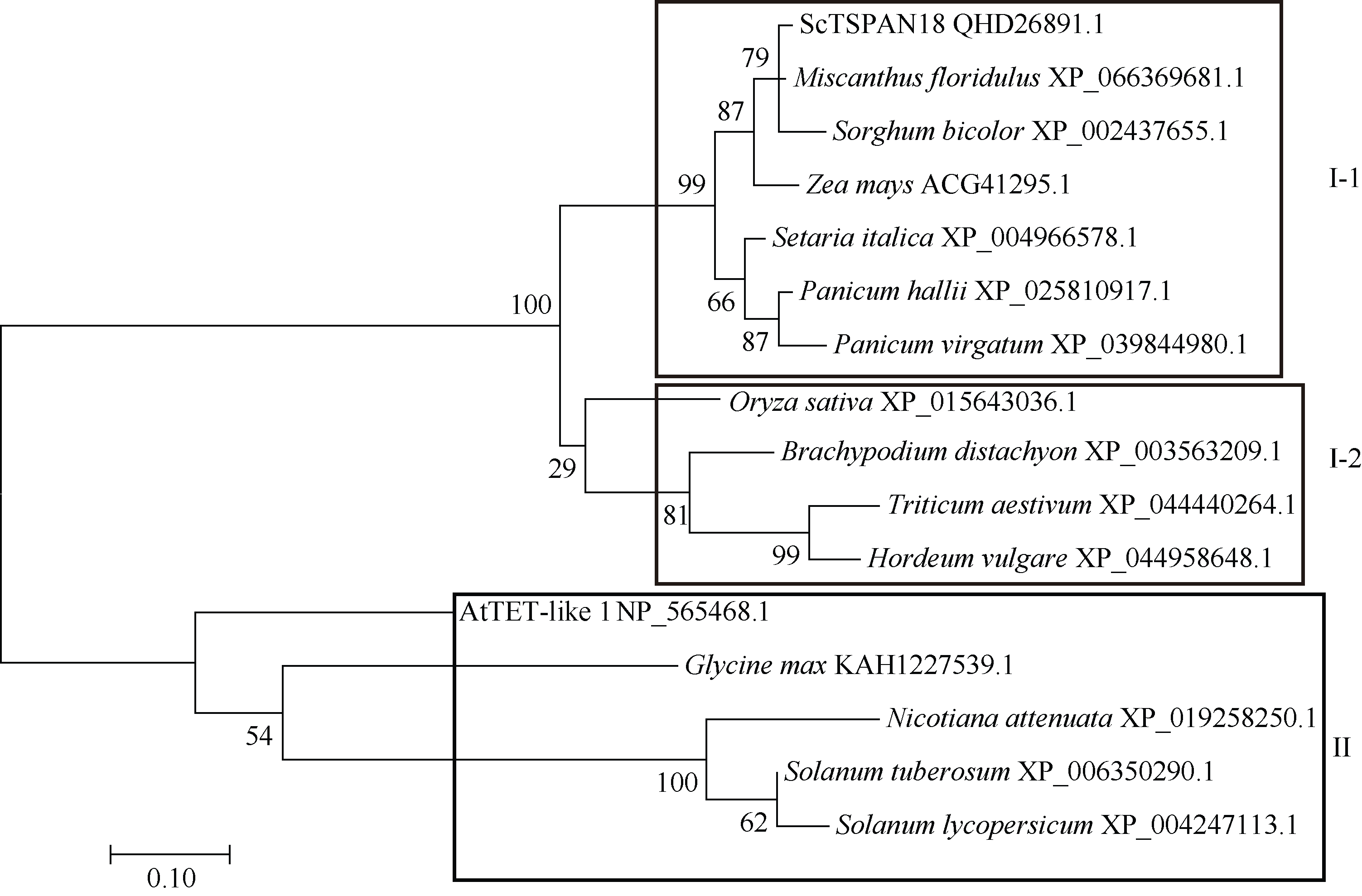
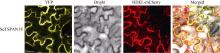
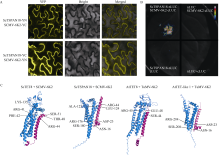
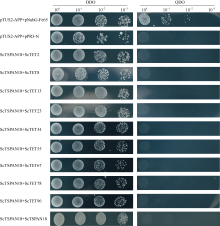
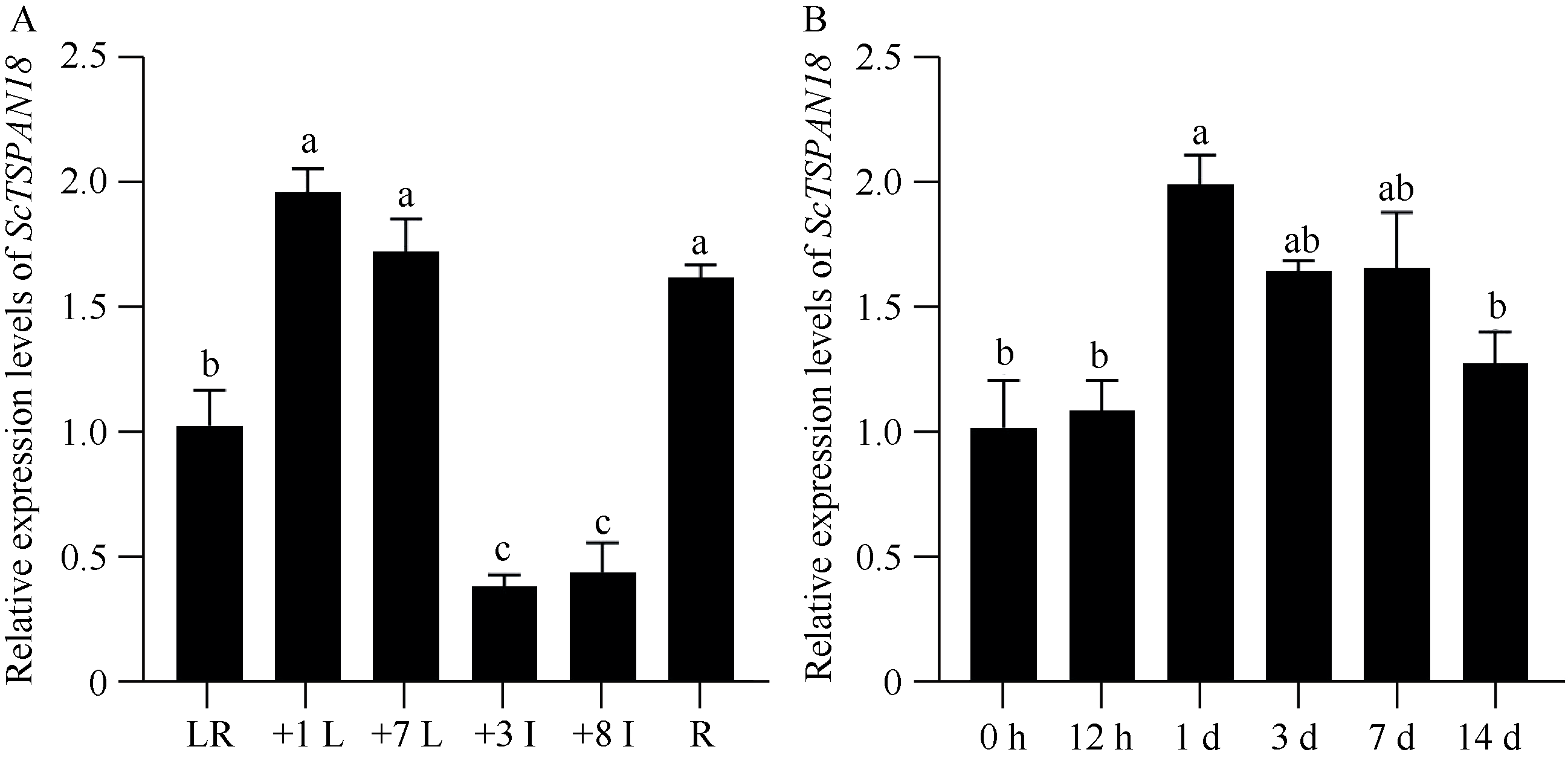
四跨膜蛋白(tetraspanin, TET)是一类保守的跨膜蛋白, 在细胞生物中普遍存在并具有重要功能。TET可以通过形成TET富集微域(tetraspanin enriched microdomain, TEM)的方式来执行功能。本课题组前期以甘蔗花叶病毒(sugarcane mosaic virus, SCMV)的6K2蛋白为诱饵, 从甘蔗栽培种(Saccharum spp. hybrid) cDNA酵母文库中分离并鉴定了1个与其互作的类TET蛋白(ScTSPAN18), 并鉴定了甘蔗品种新台糖22的TET家族基因。本研究通过双分子荧光互补(bimolecular fluorescence complementation, BiFC)和荧光素酶互补(luciferase complementation assay, LCA)试验进一步验证SCMV-6K2与ScTSPAN18的互作关系。生物信息学分析表明, ScTSPAN18长度为251 aa, 有4个跨膜结构域, 但在结构上与典型的TET存在差异, 且酵母双杂交(yeast two-hybrid, Y2H)试验表明, ScTSPAN18蛋白不能自互作, 也不与典型的TET蛋白互作。系统进化树分析表明, 类TET蛋白在单子叶和双子叶植物之间, 以及单子叶C3植物和C4植物之间存在明显分化。亚细胞定位试验表明, ScTSPAN18定位于内质网中。实时荧光定量PCR分析发现, ScTSPAN18基因的表达具有明显的组织特异性, 在叶片和根中相对表达量较高; 在完成形态建成且处于旺盛工作状态的正1叶的相对表达量显著高于第3节间和第8节间; 接种SCMV后, ScTSPAN18表达量在侵染早期显著上调, 随后持续高表达, 在第14天下调至初始水平。
| [1] | 周耀辉. 甘蔗属及其近缘植物的分类. 甘蔗糖业, 1991, 20(2): 19-26. |
| Zhou Y H. Classification of sugarcane and its related plants. Sugarcane Canesugar, 1991, 20(2): 19-26 (in Chinese). | |
| [2] |
Hoang N V, Furtado A, Botha F C, et al. Potential for genetic improvement of sugarcane as a source of biomass for biofuels. Front Bioeng Biotechnol, 2015, 3: 182.
doi: 10.3389/fbioe.2015.00182 pmid: 26636072 |
| [3] | 王明强, 李文凤, 黄应昆, 等. 我国大陆蔗区发生的甘蔗病毒病及防控对策. 中国糖料, 2010, 32(4): 55-58. |
| Wang M Q, Li W F, Huang Y K, et al. Occurrence and controlling strategies on sugarcane viral diseases in Chinese mainland. Sugar Crops China, 2010, 32(4): 55-58 (in Chinese with English abstract). | |
| [4] | 周国辉, 许东林. 甘蔗病毒病及其防治研究进展. 植物保护学报, 2005, 32: 324-328. |
| Zhou G H, Xu D L. On sugarcane viral diseases and their controlling. J Plant Prot, 2005, 32: 324-328 (in Chinese with English abstract). | |
| [5] | 李文凤, 单红丽, 张荣跃, 等. 我国新育成甘蔗品种(系)对甘蔗线条花叶病毒和高粱花叶病毒的抗性评价. 植物病理学报, 2018, 48: 389-394. |
| Li W F, Shan H L, Zhang R Y, et al. Screening for resistance to Sugarcane streak mosaic virus and Sorghum mosaic virus in new elite sugarcane varieties/clones from China. Acta Phytopathol Sin, 2018, 48: 389-394 (in Chinese with English abstract). | |
| [6] | 邹程, 商贺阳, 段真珍, 等. 甘蔗花叶病及其防控策略研究进展. 安徽农业科学, 2022, 50(5): 5-7. |
| Zou C, Shang H Y, Duan Z Z, et al. Research advance of sugarcane mosaic and its prevention strategy. J Anhui Agric Sci, 2022, 50(5): 5-7 (in Chinese). | |
| [7] |
沈林波, 潘继红, 王会敏, 等. 甘蔗抗花叶病育种研究进展. 热带作物学报, 2024, 45: 2320-2333.
doi: 10.3969/j.issn.1000-2561.2024.11.010 |
| Shen L B, Pan J H, Wang H M, et al. Advances in sugarcane breeding for resistance to sugarcane mosaic disease. Chin J Trop Crops, 2024, 45: 2320-2333 (in Chinese with English abstract). | |
| [8] |
玉泉馨, 杨宗桃, 张海, 等. 甘蔗VAMP相关蛋白ScPVA12与甘蔗花叶病毒P3N-PIPO的互作研究. 作物学报, 2023, 49: 2472-2484.
doi: 10.3724/SP.J.1006.2023.24244 |
|
Yu Q X, Yang Z T, Zhang H, et al. Interaction of sugarcane VAMP associated protein ScPVA12 with SCMV P3N-PIPO. Acta Agron Sin, 2023, 49: 2472-2484 (in Chinese with English abstract).
doi: 10.3724/SP.J.1006.2023.24244 |
|
| [9] | 王晓燕, 李文凤, 黄应昆, 等. 甘蔗花叶病研究进展. 中国糖料, 2009, 31(4): 61-64. |
| Wang X Y, Li W F, Huang Y K, et al. Research progress on sugarcane mosaic disease. Sugar Crops China, 2009, 31(4): 61-64 (in Chinese with English abstract). | |
| [10] |
Cheng G Y, Yang Z T, Zhang H, et al. Remorin interacting with PCaP1 impairs Turnip mosaic virus intercellular movement but is antagonised by VPg. New Phytol, 2020, 225: 2122-2139.
doi: 10.1111/nph.16285 pmid: 31657467 |
| [11] |
Cotton S, Grangeon R, Thivierge K, et al. Turnip mosaic virus RNA replication complex vesicles are mobile, align with microfilaments, and are each derived from a single viral genome. J Virol, 2009, 83: 10460-10471.
doi: 10.1128/JVI.00819-09 pmid: 19656892 |
| [12] |
Cui H G, Wang A M. The biological impact of the hypervariable N-terminal region of potyviral genomes. Annu Rev Virol, 2019, 6: 255-274.
doi: 10.1146/annurev-virology-092818-015843 pmid: 31299166 |
| [13] |
Jiang J, Patarroyo C, Garcia Cabanillas D, et al. The vesicle-forming 6K2 protein of turnip mosaic virus interacts with the COPII coatomer Sec24a for viral systemic infection. J Virol, 2015, 89: 6695-6710.
doi: 10.1128/JVI.00503-15 pmid: 25878114 |
| [14] |
Zhang H, Cheng G Y, Yang Z T, et al. Identification of sugarcane host factors interacting with the 6K2 protein of the sugarcane mosaic virus. Int J Mol Sci, 2019, 20: 3867.
doi: 10.3390/ijms20163867 |
| [15] |
Grangeon R, Agbeci M, Chen J, et al. Impact on the endoplasmic reticulum and Golgi apparatus of turnip mosaic virus infection. J Virol, 2012, 86: 9255-9265.
doi: 10.1128/JVI.01146-12 pmid: 22718813 |
| [16] |
Solovyev A G, Atabekova A K, Lezzhov A A, et al. Distinct mechanisms of endomembrane reorganization determine dissimilar transport pathways in plant RNA viruses. Plants, 2022, 11: 2403.
doi: 10.3390/plants11182403 |
| [17] |
Hemler M E. Tetraspanin proteins mediate cellular penetration, invasion, and fusion events and define a novel type of membrane microdomain. Annu Rev Cell Dev Biol, 2003, 19: 397-422.
pmid: 14570575 |
| [18] |
Reimann R, Kost B, Dettmer J. TETRASPANINs in plants. Front Plant Sci, 2017, 8: 545.
doi: 10.3389/fpls.2017.00545 pmid: 28458676 |
| [19] |
Umeda R, Satouh Y, Takemoto M, et al. Structural insights into tetraspanin CD9 function. Nat Commun, 2020, 11: 1606.
doi: 10.1038/s41467-020-15459-7 pmid: 32231207 |
| [20] |
Huang S F, Yuan S C, Dong M L, et al. The phylogenetic analysis of tetraspanins projects the evolution of cell-cell interactions from unicellular to multicellular organisms. Genomics, 2005, 86: 674-684.
doi: 10.1016/j.ygeno.2005.08.004 |
| [21] |
Mani B, Agarwal M, Katiyar-Agarwal S. Comprehensive expression profiling of rice tetraspanin genes reveals diverse roles during development and abiotic stress. Front Plant Sci, 2015, 6: 1088.
doi: 10.3389/fpls.2015.01088 pmid: 26697042 |
| [22] |
Charrin S le Naour F, Silvie O, et al. Lateral organization of membrane proteins: tetraspanins spin their web. Biochem J, 2009, 420: 133-154.
doi: 10.1042/BJ20082422 pmid: 19426143 |
| [23] |
Espenel C, Margeat E, Dosset P, et al. Single-molecule analysis of CD9 dynamics and partitioning reveals multiple modes of interaction in the tetraspanin web. J Cell Biol, 2008, 182: 765-776.
doi: 10.1083/jcb.200803010 pmid: 18710926 |
| [24] | Wang F, Muto A, Van de Velde J, et al. Functional analysis of the Arabidopsis TETRASPANIN gene family in plant growth and development. Plant Physiol, 2015, 169: 2200-2214. |
| [25] |
Levy S, Shoham T. Protein-protein interactions in the tetraspanin web. Physiology, 2005, 20: 218-224.
pmid: 16024509 |
| [26] |
Cnops G, Neyt P, Raes J, et al. The TORNADO1 and TORNADO2 genes function in several patterning processes during early leaf development in Arabidopsis thaliana. Plant Cell, 2006, 18: 852-866.
doi: 10.1105/tpc.105.040568 |
| [27] |
Qin S S, Li W, Zeng J Y, et al. Rice tetraspanins express in specific domains of diverse tissues and regulate plant architecture and root growth. Plant J, 2024, 117: 892-908.
doi: 10.1111/tpj.v117.3 |
| [28] |
Zimmerman J A, Verboonen B, Harrison Hanson A P, et al. Arabidopsis apoplast TET 8 positively correlates to leaf senescence, and tet3tet8 double mutants are delayed in leaf senescence. Plant Direct, 2024, 8: e70006.
doi: 10.1002/pld3.v8.9 |
| [29] |
He B Y, Wang H, Liu G S, et al. Fungal small RNAs ride in extracellular vesicles to enter plant cells through clathrin-mediated endocytosis. Nat Commun, 2023, 14: 4383.
doi: 10.1038/s41467-023-40093-4 |
| [30] |
Liu N J, Wang N, Bao J J, et al. Lipidomic analysis reveals the importance of GIPCs in Arabidopsis leaf extracellular vesicles. Mol Plant, 2020, 13: 1523-1532.
doi: 10.1016/j.molp.2020.07.016 |
| [31] |
He R R, Li Y Z, Bernards M A, et al. Manipulation of the cellular membrane-cytoskeleton network for RNA virus replication and movement in plants. Viruses, 2023, 15: 744.
doi: 10.3390/v15030744 |
| [32] |
Parra-Aguilar T J, Sarmiento-López L G, Santana O, et al. TETRASPANIN 8-1 from Phaseolus vulgaris plays a key role during mutualistic interactions. Front Plant Sci, 2023, 14: 1152493.
doi: 10.3389/fpls.2023.1152493 |
| [33] |
Chen H C, Newton C J, Diaz G, et al. Proteomic snapshot of pattern triggered immunity in the Arabidopsis leaf apoplast. Plant J, 2025, 123: e70498.
doi: 10.1111/tpj.v123.6 |
| [34] |
Mani B, Kaur I, Dhingra Y, et al. Tetraspanin 5 orchestrates resilience to salt stress through the regulation of ion and reactive oxygen species homeostasis in rice. Plant Biotechnol J, 2025, 23: 51-71.
doi: 10.1111/pbi.v23.1 |
| [35] | Guo L, Qi Y T, Mu Y, et al. Potato StLecRK-IV.1 negatively regulates late blight resistance by affecting the stability of a positive regulator StTET8. Hortic Res, 2022, 9: uhac010. |
| [36] |
Zhu J Y, Qiao Q, Sun Y J, et al. Divergent sequences of tetraspanins enable plants to specifically recognize microbe-derived extracellular vesicles. Nat Commun, 2023, 14: 4877.
doi: 10.1038/s41467-023-40623-0 pmid: 37573360 |
| [37] |
Cai Q, Qiao L L, Wang M, et al. Plants send small RNAs in extracellular vesicles to fungal pathogen to silence virulence genes. Science, 2018, 360: 1126-1129.
doi: 10.1126/science.aar4142 pmid: 29773668 |
| [38] |
New C, Lee Z Y, Tan K S, et al. Tetraspanins: host factors in viral infections. Int J Mol Sci, 2021, 22: 11609.
doi: 10.3390/ijms222111609 |
| [39] |
Zhu T Y, Sun Y B, Chen X. Arabidopsis Tetraspanins facilitate virus infection via membrane-recognition GCCK/RP motif and cysteine residues. Front Plant Sci, 2022, 13: 805633.
doi: 10.3389/fpls.2022.805633 |
| [40] |
Movahed N, Cabanillas D G, Wan J, et al. Turnip mosaic virus components are released into the extracellular space by vesicles in infected leaves. Plant Physiol, 2019, 180: 1375-1388.
doi: 10.1104/pp.19.00381 pmid: 31019004 |
| [41] |
Borges Naito F Y, Widana Gamage S M K, Mitter N, et al. Temporal expression of defence and susceptibility genes and tospovirus accumulation in Capsicum chlorosis virus-infected Capsicum. Arch Virol, 2022, 167: 1061-1074.
doi: 10.1007/s00705-022-05401-1 |
| [42] |
Cui Z Y, Li Y F, Zeng K, et al. Identification of the tetraspanin gene family in sugarcane and its response to sugarcane mosaic virus infection. Front Plant Sci, 2025, 16: 1684431.
doi: 10.3389/fpls.2025.1684431 |
| [43] |
邓宇晴, 杨永庆, 翟玉山, 等. 甘蔗花叶病毒福州分离物全基因组克隆及种群分析. 植物病理学报, 2016, 46: 775-782.
doi: 10.13926/j.cnki.apps.2016.06.007 |
| Deng Y Q, Yang Y Q, Zhai Y S, et al. Genome cloning of two Sugarcane mosaic virus isolates from Fuzhou and phylogenetic analysis of SCMV. Acta Phytopathol Sin, 2016, 46: 775-782 (in Chinese with English abstract). | |
| [44] |
张海, 刘淑娴, 杨宗桃, 等. 甘蔗PsbS亚基应答甘蔗花叶病毒侵染及其与6K2蛋白的互作研究. 作物学报, 2020, 46: 1722-1733.
doi: 10.3724/SP.J.1006.2020.04030 |
| Zhang H, Liu S X, Yang Z T, et al. Sugarcane PsbS subunit response to Sugarcane mosaic virus infection and its interaction with 6K 2 protein. Acta Agron Sin, 2020, 46: 1722-1733 (in Chinese with English abstract). | |
| [45] |
Wang F, Vandepoele K, Van Lijsebettens M. Tetraspanin genes in plants. Plant Sci, 2012, 190: 9-15.
doi: 10.1016/j.plantsci.2012.03.005 pmid: 22608515 |
| [46] |
Cheng G Y, Dong M, Xu Q, et al. Dissecting the molecular mechanism of the subcellular localization and cell-to-cell movement of the sugarcane mosaic virus P3N-PIPO. Sci Rep, 2017, 7: 9868.
doi: 10.1038/s41598-017-10497-6 pmid: 28852157 |
| [47] | 杨宗桃, 焦文迪, 张海, 等. 甘蔗谷胱甘肽硫转移酶ScGSTF1与P3N-PIPO互作应答甘蔗花叶病毒侵染的研究. 作物学报, 2023, 49: 2665-2676. |
|
Yang Z T, Jiao W D, Zhang H, et al. Interaction of sugarcane glutathione S-transferase ScGSTF1 with P3N-PIPO in response to SCMV infection. Acta Agron Sin, 2023, 49: 2665-2676 (in Chinese with English abstract).
doi: 10.3724/SP.J.1006.2023.34020 |
|
| [48] |
Livak K J, Schmittgen T D. Analysis of relative gene expression data using real-time quantitative PCR and the 2-ΔΔCT method. Methods, 2001, 25: 402-408.
doi: 10.1006/meth.2001.1262 pmid: 11846609 |
| [49] |
Kumar S, Stecher G, Li M, et al. MEGA X: molecular evolutionary genetics analysis across computing platforms. Mol Biol Evol, 2018, 35: 1547-1549.
doi: 10.1093/molbev/msy096 pmid: 29722887 |
| [50] |
Zhang H, Yang Z T, Cheng G Y, et al. Sugarcane mosaic virus employs 6K2 protein to impair ScPIP2;4 transport of H2O2 to facilitate virus infection. Plant Physiol, 2024, 194: 715-731.
doi: 10.1093/plphys/kiad567 |
| [51] |
Schaad M C, Jensen P E, Carrington J C. Formation of plant RNA virus replication complexes on membranes: role of an endoplasmic reticulum-targeted viral protein. EMBO J, 1997, 16: 4049-4059.
doi: 10.1093/emboj/16.13.4049 pmid: 9233814 |
| [52] |
Wei T Y, Wang A M. Biogenesis of cytoplasmic membranous vesicles for plant potyvirus replication occurs at endoplasmic reticulum exit sites in a COPI- and COPII-dependent manner. J Virol, 2008, 82: 12252-12264.
doi: 10.1128/JVI.01329-08 pmid: 18842721 |
| [53] |
Ghossoub R, Chéry M, Audebert S, et al. Tetraspanin-6 negatively regulates exosome production. Proc Natl Acad Sci USA, 2020, 117: 5913-5922.
doi: 10.1073/pnas.1922447117 pmid: 32108028 |
| [54] |
Mathieu M, Névo N, Jouve M, et al. Specificities of exosome versus small ectosome secretion revealed by live intracellular tracking of CD63 and CD9. Nat Commun, 2021, 12: 4389.
doi: 10.1038/s41467-021-24384-2 pmid: 34282141 |
| [55] |
Poveda E, Tabernilla A, Fitzgerald W, et al. Massive release of CD9+ microvesicles in human immunodeficiency virus infection, regardless of virologic control. J Infect Dis, 2022, 225: 1040-1049.
doi: 10.1093/infdis/jiaa375 |
| [56] |
Raaben M, Jae L T, Herbert A S, et al. NRP2 and CD63 are host factors for lujo virus cell entry. Cell Host Microbe, 2017, 22: 688-696.
doi: S1931-3128(17)30437-7 pmid: 29120745 |
| [57] |
Zhang Y Z, Pan C W, Wang S J, et al. Distinctive function of Tetraspanins: implication in viral infections. Virulence, 2025, 16: 2474188.
doi: 10.1080/21505594.2025.2474188 |
| [58] |
Zimmerman B, Kelly B, McMillan B J, et al. Crystal structure of a full-length human tetraspanin reveals a cholesterol-binding pocket. Cell, 2016, 167: 1041-1051.e11.
doi: S0092-8674(16)31380-0 pmid: 27881302 |
| [59] |
Florin L, Lang T. Tetraspanin assemblies in virus infection. Front Immunol, 2018, 9: 1140.
doi: 10.3389/fimmu.2018.01140 pmid: 29887866 |
| [60] |
Palor M, Stejskal L, Mandal P, et al. Cholesterol sensing by CD81 is important for hepatitis C virus entry. J Biol Chem, 2020, 295: 16931-16948.
doi: 10.1074/jbc.RA120.014761 |
| [61] |
Seigneuret M, Delaguillaumie A, Lagaudrière-Gesbert C, et al. Structure of the tetraspanin main extracellular domain: a partially conserved fold with a structurally variable domain insertion. J Biol Chem, 2001, 276: 40055-40064.
doi: 10.1074/jbc.M105557200 pmid: 11483611 |
| [62] |
Jung J W, Kim J E, Kim E, et al. Amino acid transporters as tetraspanin TM4SF5 binding partners. Exp Mol Med, 2020, 52: 7-14.
doi: 10.1038/s12276-019-0363-7 pmid: 31956272 |
| [63] |
Lin X Y, Kaul S, Rounsley S, et al. Sequence and analysis of chromosome 2 of the plant Arabidopsis thaliana. Nature, 1999, 402: 761-768.
doi: 10.1038/45471 |
| [64] |
Wang Y, Zhang W Z, Song L F, et al. Transcriptome analyses show changes in gene expression to accompany pollen germination and tube growth in Arabidopsis. Plant Physiol, 2008, 148: 1201-1211.
doi: 10.1104/pp.108.126375 pmid: 18775970 |
| [65] |
Thieme C J, Rojas-Triana M, Stecyk E, et al. Endogenous Arabidopsis messenger RNAs transported to distant tissues. Nat Plants, 2015, 1: 15025.
doi: 10.1038/nplants.2015.25 |
| [66] |
Fraile A, García-Arenal F. The coevolution of plants and viruses: resistance and pathogenicity. Adv Virus Res, 2010, 76: 1-32.
doi: 10.1016/S0065-3527(10)76001-2 pmid: 20965070 |
| [67] |
Wang A M. Dissecting the molecular network of virus-plant interactions: the complex roles of host factors. Annu Rev Phytopathol, 2015, 53: 45-66.
doi: 10.1146/annurev-phyto-080614-120001 pmid: 25938276 |
| [1] | 刘晓宁, 张颖, 蔡曼蕾, 马昊, 苗智博, 曹宁, 连荣芳, 徐全乐. LsSAT2与LsAAE3互作调控山黧豆ODAP水平[J]. 作物学报, 2025, 51(8): 2220-2227. |
| [2] | 周恩强, 缪亚梅, 周瑶, 姚梦楠, 赵娜, 王永强, 朱宇翔, 薛冬, 李宗迪, 石宇欣, 李波, 汪凯华, 顾春燕, 王学军, 魏利斌. 基于种子发育转录组的豌豆bZIP基因家族分析及种子发育候选基因的鉴定[J]. 作物学报, 2025, 51(4): 914-931. |
| [3] | 玉泉馨, 杨宗桃, 张海, 程光远, 焦文迪, 曾康, 罗廷绪, 黄国强, 王璐, 徐景升. 甘蔗类钙调素ScCML13与SCMV运动蛋白P3N-PIPO的互作研究[J]. 作物学报, 2024, 50(7): 1855-1866. |
| [4] | 王连南, 李远超, 余乃通, 麦伟涛, 李亚军, 陈新. MeTCP3a转录因子在木薯叶片发育中的功能鉴定[J]. 作物学报, 2024, 50(11): 2720-2730. |
| [5] | 玉泉馨, 杨宗桃, 张海, 程光远, 周营栓, 焦文迪, 曾康, 罗廷绪, 黄国强, 张木清, 徐景升. 甘蔗VAMP相关蛋白ScPVA12与甘蔗花叶病毒P3N-PIPO的互作研究[J]. 作物学报, 2023, 49(9): 2472-2484. |
| [6] | 柏成成, 姚小尧, 王雨璐, 王赛玉, 李金莹, 蒋有为, 靳舒荣, 陈春杰, 刘渔, 魏星玥, 徐新福, 李加纳, 倪郁. 甘蓝型油菜长链烷烃合成相关基因的克隆及其与BnCER1-2的互作[J]. 作物学报, 2023, 49(4): 1016-1027. |
| [7] | 杜鹃, 彭晓君, 侯娟, 刘腾飞, 刘增, 宋波涛. 马铃薯淀粉酶StBAM9互作蛋白的鉴定及其互作机制分析[J]. 作物学报, 2023, 49(10): 2643-2653. |
| [8] | 杨宗桃, 焦文迪, 张海, 张克闽, 程光远, 罗廷绪, 曾康, 周营栓, 徐景升. 甘蔗谷胱甘肽硫转移酶ScGSTF1与P3N-PIPO互作应答甘蔗花叶病毒侵染的研究[J]. 作物学报, 2023, 49(10): 2665-2676. |
| [9] | 杨宗桃, 刘淑娴, 程光远, 张海, 周营栓, 商贺阳, 黄国强, 徐景升. 甘蔗类泛素蛋白UBL5应答SCMV侵染及其与SCMV-6K2的互作[J]. 作物学报, 2022, 48(2): 332-341. |
| [10] | 刘淑娴, 杨宗桃, 程光远, 张海, 周营栓, 商贺阳, 黄国强, 徐景升. 甘蔗易化子家族蛋白ScZIFL1与6K2互作应答SCMV侵染[J]. 作物学报, 2022, 48(12): 3080-3090. |
| [11] | 许彬, 曹绍玉, 苏甜, 彭梦玲, 吕霞, 李振林, 张国平, 许俊强. 结球甘蓝类钙调蛋白CMLs与花粉萌发NPG1及NPGRs相互作用研究[J]. 作物学报, 2022, 48(11): 2934-2944. |
| [12] | 张海, 程光远, 杨宗桃, 刘淑娴, 商贺阳, 黄国强, 徐景升. 甘蔗PsbR亚基应答SCMV侵染及其与SCMV-6K2的互作[J]. 作物学报, 2021, 47(8): 1522-1530. |
| [13] | 李兰兰, 母丹, 严雪, 杨陆可, 林文雄, 方长旬. OsPAL2;3对水稻化感抑制稗草能力的调控作用[J]. 作物学报, 2021, 47(2): 197-209. |
| [14] | 孟钰玉, 魏春茹, 范润侨, 于秀梅, 王逍冬, 赵伟全, 魏新燕, 康振生, 刘大群. 小麦TaPP2-A13基因的表达响应逆境胁迫并与SCF复合体接头蛋白TaSKP1相互作用[J]. 作物学报, 2021, 47(2): 224-236. |
| [15] | 张海, 程光远, 杨宗桃, 王彤, 刘淑娴, 商贺阳, 赵贺, 徐景升. 甘蔗ScCRT1基因克隆及其应答SCMV侵染分子机制的研究[J]. 作物学报, 2021, 47(1): 94-103. |
|