欢迎访问作物学报,今天是
作物学报 ›› 2022, Vol. 48 ›› Issue (3): 635-643.doi: 10.3724/SP.J.1006.2022.14008
王娟1( ), 张彦威2, 焦铸锦1, 刘盼盼1, 常玮1,*()
WANG Juan1(), ZHANG Yan-Wei2, JIAO Zhu-Jin1, LIU Pan-Pan1, CHANG Wei1,*()
摘要:
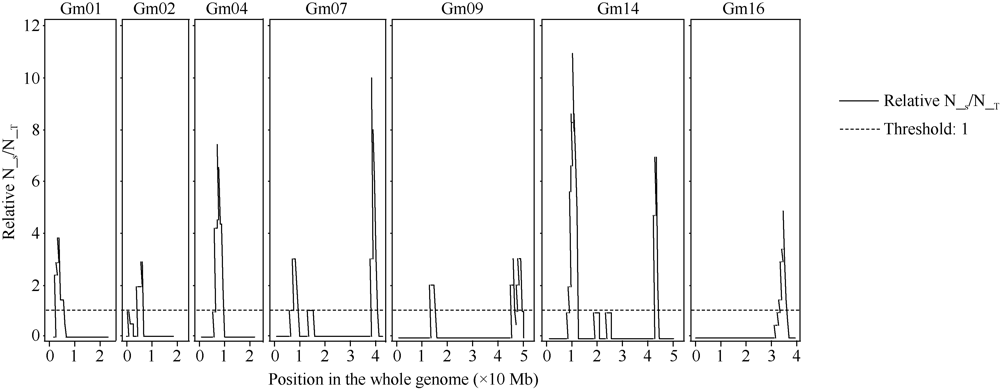
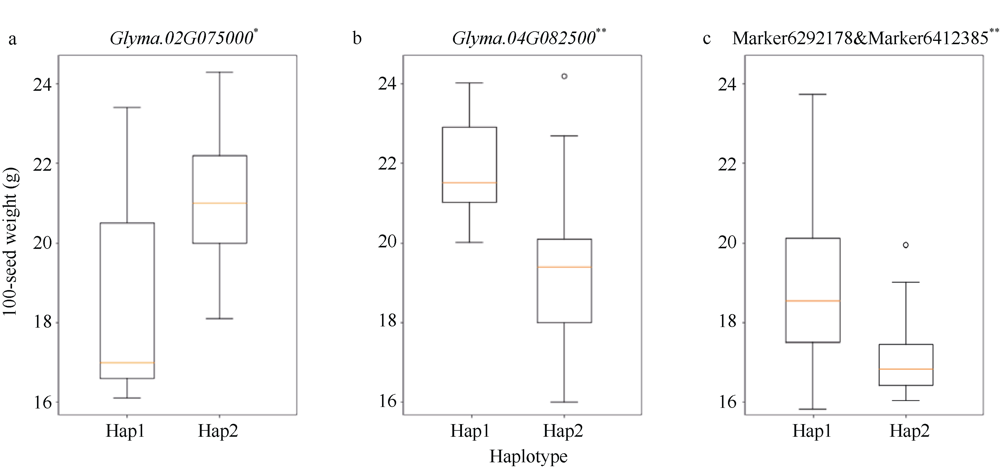
基于量化染色体区间上与目标性状相关多态性位点的富集程度这一原理开发的PyBSASeq算法, 被证实更适合进行基于BSA-seq技术的复杂数量性状遗传解析。本研究采用该算法, 以‘滑皮豆’和‘齐黄26’为亲本杂交所衍生的包含149个RILs为材料, 挖掘与大豆百粒重相关位点, 共获得11个与目标性状紧密关联的候选区域, 分别位于1号、2号、4号、7号、9号、14号和16号染色体, 其中qSW4-1、qSW9-1、qSW9-2和qSW7-1与已报道大豆百粒重QTL位置一致。候选区域共包含218个编码基因, 根据基因表达特性和单倍型分析结果, 最终获得2个与目标性状相关的候选基因Glyma.02G075000和Glyma.04G082500, 分别参与蔗糖的运输和维生素E的生物合成。研究结果将有助于大豆百粒重遗传机制的阐释, 并为基于BSA-Seq技术的数量性状研究提供参考。
| [1] |
Liu S L, Zhang M, Feng F, Tian Z X. Toward a “Green revolution” for soybean. Mol Plant, 2020, 5:688-697.
doi: 10.1093/mp/sss011 |
| [2] |
Liu Z X, Li H H, Fan X H, Huang W, Yang J Y, Wen Z X, Li Y H, Guan R X, Guo Y, Chang R Z, Wang D C, Chen P Y, Wang S M, Qiu L J. Phenotypic characterization and genetic dissection of nine agronomic traits in Tokachi nagaha and its derived cultivars in soybean (Glycine max (L.) Merr.). Plant Sci, 2017, 256:72-86.
doi: 10.1016/j.plantsci.2016.11.009 |
| [3] |
Keim P, Diers B W, Olson T C, Shoemaker R C. RFLP mapping in soybean: association between marker loci and variation in quantitative traits. Genetics, 1990, 126:735-742.
pmid: 1979039 |
| [4] |
Pathan S M, Vuong T, Clark K, Lee J D, Shannon J G, Roberts C A, Ellersieck M R, Burton J W, Cregan P B, Hyten D L, Nguyen H T, Sleper D A. Genetic mapping and confirmation of quantitative trait loci for seed protein and oil contents and seed weight in soybean. Crop Sci, 2013, 53:765-774.
doi: 10.2135/cropsci2012.03.0153 |
| [5] |
Ramamurthy R K, Jedlicka J, Graef G L, Waters B M. Identification of new QTLs for seed mineral, cysteine, and methionine concentrations in soybean [Glycine max(L.) Merr.]. Mol Breed, 2014, 34:431-445.
doi: 10.1007/s11032-014-0045-z |
| [6] |
Kulkarni K P, Asekova S, Lee D H, Bilyeu K, Song J T, Lee J D. Mapping QTLs for 100-seed weight in an interspecific soybean cross of Williams 82 (Glycine max) and PI 366121(Glycine soja). Crop Past Sci, 2017, 68:148-155.
doi: 10.1071/CP16246 |
| [7] | Zhou Z K, Jiang Y, Wang Z, Gou Z H, Lyu J, Li W Y, Yu Y J, Shu L P, Zhao Y J, Ma Y M, Fang C, Shen Y T, Liu T F, Li C C, Li Q, Wu M, Wang M, Wu Y S, Dong Y, Wan W T, Wang X, Ding Z L, Gao Y D, Xiang H, Zhu B G, Lee S H, Wang W, Tian Z X. Resequencing 302 wild and cultivated accessions identifies genes related to domestication and improvement in soybean. Nat Biotechnol, 2015, 33:U408-U125. |
| [8] |
Jeong N, Suh S J, Kim M H, Lee S, Moon J K, Kim H S, Lee S, Moon J K, Kim H S, Jeong S C. Ln is a key regulator of leaflet shape and number of seeds per pod in soybean. Plant Cell, 2012, 24:4807-4818.
doi: 10.1105/tpc.112.104968 |
| [9] |
Lu X, Xiong Q, Cheng T, Li Q T, Liu X L, Bi Y D, Li W, Zhang W K, Ma B, Lai Y C, Du W G, Man W Q, Chen S Y, Zhang J S. PP2C-1 allele underlying a quantitative trait locus enhances soybean l00-seed weight PP2C-1 allele underlying a quantitative trait locus enhances soybean l00-seed weight. Mol Plant, 2017, 10:670-684.
doi: 10.1016/j.molp.2017.03.006 |
| [10] |
Karikari B, Chen S X, Xiao Y T, Chang F G, Zhou Y L, Kong J J, Bhat J A, Zhao T J. Utilization of interspecific high density genetic map of RIL population for the QTL detection and candidate gene mining for 100-seed weight in soybean. Front Plant Sci, 2019, 10:1001.
doi: 10.3389/fpls.2019.01001 |
| [11] |
Hina A, Cao Y C, Song S Y, Li S G, Sharmin R A, Elattar M A, Bhat J A, Zhao T J. Glycine max L.) Glycine max L.). Int J Mol Sci, 2020, 21:1040.
doi: 10.3390/ijms21031040 |
| [12] |
Jing Y, Zhao X, Wang J Y, Teng W L, Qiu L J, Han Y P, Li W B. Glycine max L.) via high-throughput single-nucleotide polymorphisms and a genome-wide association study Glycine max L.) via high-throughput single-nucleotide polymorphisms and a genome-wide association study. Front Plant Sci, 2018, 9:1392.
doi: 10.3389/fpls.2018.01392 pmid: 30369935 |
| [13] |
Zhang Y W, Li W, Lin Y H, Zhang L F, Wang C J, Xu R. Glycine max) agronomic and seed quality traits by specific length amplified fragment sequencing Glycine max) agronomic and seed quality traits by specific length amplified fragment sequencing. BMC Genomics, 2018, 19:641.
doi: 10.1186/s12864-018-5035-9 |
| [14] |
Michelmore R W, Paran I, Kesseli R V. Identification of markers linked to disease resistance genes by bulked segregant analysis: a rapid method to detect markers in specific genomic regions by using segregating populations. Proc Natl Acad Sci USA, 1991, 88:9828-9832.
doi: 10.1073/pnas.88.21.9828 |
| [15] |
Zou C, Wang P X, Xu Y B. Bulked sample analysis in genetics, genomics and crop improvement. Plant Biotechnol J, 2016, 14:1941-1955.
doi: 10.1111/pbi.2016.14.issue-10 |
| [16] |
Yang Z M, Huang D Q, Tang W Q, Zheng Y, Liang K J, Cutler A J, Wu W R. Mapping of quantitative trait loci underlying cold tolerance in rice seedlings via high-throughput sequencing of pooled extremes. PLoS One, 2013, 8:e68433.
doi: 10.1371/journal.pone.0068433 |
| [17] |
Mansur L M, Orf J, Lark K G. Glycine max L. Merr) Glycine max L. Merr). Theor Appl Genet, 1993, 86:914-918.
doi: 10.1007/BF00211041 pmid: 24193997 |
| [18] |
Yi B, Chen Y N, Lei S L, Tu J X, Fu T D. Bnms1) in Brassica napus L Bnms1) in Brassica napus L. Theor Appl Genet, 2006, 113:643-650.
doi: 10.1007/s00122-006-0328-9 |
| [19] |
Watanabe S, Xia Z J, Hideshima R, Tsubokura Y, Sato S, Yamanaka N, Takahashi R, Anai T, Tabata S, Kitamura K, Harada K. GIGANTEA gene is involved in soybean maturity and flowering GIGANTEA gene is involved in soybean maturity and flowering. Genetics, 2011, 188:395-407.
doi: 10.1534/genetics.110.125062 pmid: 21406680 |
| [20] |
Whipple C J, Kebrom T, Weber A L, Yang F, Hall D, Meeley R, Schmidt R, Doebley J, Brutnell T P, Jackson D P. Grassy tillers1 promotes apical dominance in maize and responds to shade signals in the grasses. Proc Natl Acad Sci USA, 2011, 108:E506-E512.
doi: 10.1073/pnas.1102819108 |
| [21] |
Schneeberger K, Ossowski S, Lanz C, Juul T, Petersen A H, Nielsen K L, Jorgensen J E, Weigel D, Andersen S U. SHOREmap: simultaneous mapping and mutation identification by deep sequencing. Nat Methods, 2009, 6:550-551.
doi: 10.1038/nmeth0809-550 pmid: 19644454 |
| [22] |
Austin R S, Vidaurre D, Stamatiou G, Breit R, Provart N J, Bonetta D, Zhang J F, Fung P, Gong Y C, Wang P W. Arabidopsis genes Arabidopsis genes. Plant J, 2011, 67:715-725.
doi: 10.1111/tpj.2011.67.issue-4 |
| [23] |
Abe A, Kosugi S, Yoshida K, Natsume S, Takagi H, Kanzaki H, Matsumura H, Yoshida K, Mitsuoka C, Tamiru M, Innan H, Cano L, Kamoun S, Terauchi R. Genome sequencing reveals agronomically important loci in rice using MutMap. Nat Biotechnol, 2012, 30:174-178.
doi: 10.1038/nbt.2095 |
| [24] |
Takagi H, Uemura A, Yaegashi H, Tamiru M, Abe A, Mitsuoka C, Utsushi H, Natsume S, Kanzaki H, Matsumura H, Saitoh H, Yoshida K, Cano L M, Kamoun S, Terauchi R. MutMap-Gap: whole-genome resequencing of mutant F2 progeny bulk combined with de novo assembly of gap regions identifies the rice blast resistance gene Pii. New Phytol, 2013, 200:276-283.
doi: 10.1111/nph.2013.200.issue-1 |
| [25] |
Takagi H, Tamiru M, Abe A, Yoshida K, Uemura A, Yaegashi H, Obara T, Oikawa K, Utsushi H, Kanzaki E, Mitsuoka C, Natsume S, Kosugi S, Kanzaki H, Matsumura H, Urasaki N, Kamoun S, Terauchi R. MutMap accelerates breeding of a salt-tolerant rice cultivar. Nat Biotechnol, 2015, 33:445-449.
doi: 10.1038/nbt.3188 |
| [26] |
Zheng W J, Wang Y, Wang L L, Ma Z B, Zhao J M, Wang P, Zhang L X, Liu Z H, Lu X C. Pi65(t), a novel broad-spectrum resistance gene to rice blast using next-generation sequencing Pi65(t), a novel broad-spectrum resistance gene to rice blast using next-generation sequencing. Theor Appl Genet, 2016, 129:1035-1044.
doi: 10.1007/s00122-016-2681-7 |
| [27] |
Liu S Z, Yeh C T, Tang H M, Nettleton D, Schnable P S. Gene mapping via bulked segregant RNA-Seq (BSR-Seq). PLoS One, 2012, 7:e36406.
doi: 10.1371/journal.pone.0036406 |
| [28] | Haase N J, Beissinger T, Hirsch C N, Vaillancourt B, Deshpande S, Barry K, Buell C R, Kaeppler S M, de Leon N. Shared genomic regions between derivatives of a large segregating population of maize identified using bulked segregant analysis sequencing and traditional linkage analysis. G3: Genes Genom Genet, 2015, 5:1593-1602. |
| [29] |
Mascher M, Jost M, Kuon J E, Himmelbach A, Assfalg A, Beier S, Scholz U, Graner A, Stein N. Mapping-by-sequencing accelerates forward genetics in barley. Genome Biol, 2014, 15:R78.
doi: 10.1186/gb-2014-15-6-r78 |
| [30] |
Campbell B W, Hofstad A N, Sreekanta S, Fu F, Kono T J Y, O’Rourke J A, Vance C P, Muehlbauer G J, Stupar R M. Fast neutron-induced structural rearrangements at a soybean NAP1 locus result in gnarled trichomes. Theor Appl Genet, 2016, 129:1725-1738.
doi: 10.1007/s00122-016-2735-x |
| [31] | Dobbels A A, Michno J M, Campbell B W, Virdi K S, Stec A O, Muehlbauer G J, Naeve S L, Stupar R M. An induced chromosomal translocation in soybean disrupts a KASI ortholog and is associated with a high-sucrose and low-oil seed phenotype. G3: Genes Genom Genet, 2017, 7:1215-1223. |
| [32] |
Dong Z M, Chen L, Li Z, Liu N X, Zhang S C, Liu J, Liu B Q. sdf-1) in soybean by SLAF-seq method sdf-1) in soybean by SLAF-seq method. Euphytica, 2020, 216:103.
doi: 10.1007/s10681-020-02633-7 |
| [33] |
Takagi H, Abe A, Yoshida K, Kosugi S, Natsume S, Mitsuoka C, Uemura A, Utsushi H, Tamiru M, Takuno S, Innan H, Cano L M, Kamoun S, Terauchi R. QTL-seq: rapid mapping of quantitative trait loci in rice by whole genome resequencing of DNA from two bulked populations. Plant J, 2013, 74:174-183.
doi: 10.1111/tpj.2013.74.issue-1 |
| [34] |
Mansfeld B N, Grumet R. QTLseqr: an R package for bulk Segregant analysis with next-generation sequencing. Plant Genome, 2018, 11:180006.
doi: 10.3835/plantgenome2018.01.0006 |
| [35] |
Zhang J B, Panthee D R. PyBSASeq: a simple and effective algorithm for bulked segregant analysis with whole-genome sequencing data. BMC Bioinf, 2020, 21:99.
doi: 10.1186/s12859-020-3435-8 |
| [36] |
Pan Q C, Xu Y C, Li K, Peng Y, Zhang W, Li W Q, Li L, Yan J B. The genetic basis of plant architecture in 10 maize recombinant inbred line populations. Plant Physiol, 2017, 175:858-873.
doi: 10.1104/pp.17.00709 |
| [37] |
Zhao X, Teng W L, Li Y H, Liu D Y, Cao G L, Li D M, Qiu L J, Zheng H K, Han Y P, Li W B. Loci and candidate genes conferring resistance to soybean cyst nematode HG type 2.5.7. BMC Genomics, 2017, 18:462.
doi: 10.1186/s12864-017-3843-y pmid: 28615053 |
| [38] |
Severin A J, Woody J L, Bolon Y T, Joseph B, Diers B W, Farmer A D, Muehlbauer G J, Nelson R T, Grant D, Specht J E. Glycine max: a guide to the soybean transcriptome Glycine max: a guide to the soybean transcriptome. BMC Plant Biol, 2010, 10:160.
doi: 10.1186/1471-2229-10-160 pmid: 20687943 |
| [39] |
Copley T R, Duceppe M O, O’Donoughue L S. Identification of novel loci associated with maturity and yield traits in early maturity soybean plant introduction lines. BMC Genomics, 2018, 19:167.
doi: 10.1186/s12864-018-4558-4 pmid: 29490606 |
| [40] | Hacisalihoglu G, Burton A L, Gustin J L, Eker S, Asikli S, Heybet E H, Ozturk L, Cakmak I, Yazici A, Burkey K O, Orf J, Settles A M. Quantitative trait loci associated with soybean seed weight and composition under different phosphorus levels. J Integr Plant Biol, 2018, 60:46-55. |
| [41] |
Teng W, Han Y, Du Y, Sun D, Zhang Z, Qiu L, Sun G, Li W. Glycine max L. Merr.) Glycine max L. Merr.). Heredity, 2009, 102:372-380.
doi: 10.1038/hdy.2008.108 pmid: 18971958 |
| [42] |
Yan L, Li Y H, Yang C Y, Ren S X, Chang R Z, Zhang M C, Qiu L J. Glycine max × Glycine soja Glycine max × Glycine soja. Plant Breed, 2014, 133:632-637.
doi: 10.1111/pbr.2014.133.issue-5 |
| [43] |
Contreras-Soto R I, Mora F, de Oliveira M A R, Higashi W, Scapim C A, Schuster I. A Genome-wide association study for agronomic traits in soybean using SNP markers and SNP-based haplotype analysis. PLoS One, 2017, 12:e0171105.
doi: 10.1371/journal.pone.0171105 |
| [44] |
Hao D R, Cheng H, Yin Z T, Cui S Y, Zhang D, Wang H, Yu D Y. Glycine max) landraces across multiple environments Glycine max) landraces across multiple environments. Theor Appl Genet, 2012, 124:447-458.
doi: 10.1007/s00122-011-1719-0 |
| [45] |
Mian M A R, Bailey M A, Tamulonis J P, Shipe E R, Carter T E, Parrott W A, Ashley D A, Hussey R S, Boerma H R. Molecular markers associated with seed weight in two soybean populations. Theor Appl Genet, 1996, 93:1011-1016.
doi: 10.1007/BF00230118 pmid: 24162474 |
| [46] |
Vieira A, de Oliveira A, Soares T, Schuster I, Piovesan N, Martinez C, de Barros E, Moreira M. Use of the QTL approach to the study of soybean trait relationships in two populations of recombinant inbred lines at the F7 and F8 generations. Brazil J Plant Physiol, 2006, 18:281-290.
doi: 10.1590/S1677-04202006000200004 |
| [47] | 金彦龙, 李艳军, 张新宇, 孙杰, 薛飞. 利用SLAF-Seq结合BSA方法分子标记‘小白冬麦’抗白粉病基因mlxbd. 西北农业学报, 2019, 28:914-921. |
| Jin Y L, Li Y J, Zhang X Y, Sun J, Xue F. Genetic mapping of resistance gene to powdery mildew mlxbd in winter wheat ‘Xiao Bai’ using a combination of SLAF-seq and BSA. Acta Agric Boreali-Occident Sin, 2019, 28:914-921 (in Chinese with English abstract). | |
| [48] | 徐剑文, 刘剑光, 赵君, 王希睿, 肖松华. 利用BSA-seq发掘棉花适宜机采的果枝长度相关QTL. 棉花学报, 2019, 31:319-326. |
| Xu J W, Liu J G, Zhao J, Wang X R, Xiao S H. The identification of QTL associated with cotton fruit branch length suitable for mechanized harvest utilizing BSA-seq. Cotton Sci, 2019, 31:319-326 (in Chinese with English abstract). | |
| [49] | 王伟, 刘凡, 任莉, 徐理, 陈旺, 曾令益, 黄炳文, 方小平. 采用SLAF-seq技术开发甘蓝型油菜霜霉病抗性SNP位点. 中国油料作物学报, 2016, 38:555-562. |
| Wang W, Liu F, Ren L, Xu L, Chen W, Zeng L Y, Huang B W, Fang X P. Resistance SNP development to downy mildew in Brassica napus using SLAF-seq technique. Chin J Oil Crop Sci, 2016, 38:555-562 (in Chinese with English abstract). | |
| [50] | 贾秀苹, 卯旭辉, 岳云, 陈炳东, 梁根生, 王兴珍. 利用BSA-Seq方法鉴定向日葵耐盐候选基因. 中国油料作物学报, 2018, 40:777-784. |
| Jia X P, Mao X H, Yue Y, Chen B D, Liang G S, Wang X Z. Identification of major salt-tolerant genes via BSA-Seq method in sunflower. Chin J Oil Crop Sci, 2018, 40:777-784 (in Chinese with English abstract). | |
| [51] |
Wang G Y, Chen B, Du H S, Zhang F L, Zhang H Y, Wang Y Q, He H J, Geng S S, Zhang X F. Genetic mapping of anthocyanin accumulation-related genes in pepper fruits using a combination of SLAF-seq and BSA. PLoS One, 2018, 13:e0204690.
doi: 10.1371/journal.pone.0204690 |
| [52] |
Libault M, Farmer A, Brechenmacher L, Drnevich J, Langley R J, Bilgin D D, Radwan O, Neece D J, Clough S J, May G D, Stacey G. Bradyrhizobium japonicum infection Bradyrhizobium japonicum infection. Plant Physiol, 2010, 152:541-552.
doi: 10.1104/pp.109.148379 pmid: 19933387 |
| [53] |
Scofield G N, Hirose T, Gaudron J A, Upadhyaya N M, Ohsugi R, Furbank R T. OsSUT1, leads to impaired grain filling and germination but does not affect photosynthesis OsSUT1, leads to impaired grain filling and germination but does not affect photosynthesis. Funct Plant Biol, 2002, 29:815-826.
doi: 10.1071/PP01204 pmid: 32689529 |
| [54] |
Aldape M J, Elmer A M, Chao W S, Grimes H D. Identification and characterization of a sucrose transporter isolated from the developing cotyledons of soybean. Arch Biochem Biophys, 2003, 409:243-250.
pmid: 12504891 |
| [55] |
Seguin P, Turcotte P, Tremblay G, Pageau D, Liu W C. Tocopherols concentration and stability in early maturing soybean genotypes. Agron J, 2009, 101:1153-1159.
doi: 10.2134/agronj2009.0140 |
| [56] |
Shang X G, Zhu L J, Duan Y J, Guo W Z. A cotton alpha 1,3-/4-fucosyltransferase-encoding gene, FucT4, plays an important role in cell elongation and is significantly associated with fiber quality. Mol Genet Genomics, 2020, 295:1141-1153.
doi: 10.1007/s00438-020-01687-5 |
| [57] |
Harmoko R, Yoo J Y, Ko K S, Ramasamy N K, Hwang B Y, Lee E J, Kim H, Lee K J, Oh D B, Kim D Y, Lee S, Li Y, Lee S Y, Lee K O. Oryza sativa) Oryza sativa). New Phytol, 2016, 212:108-122.
doi: 10.1111/nph.14031 pmid: 27241276 |
| [58] |
Pedersen C T, Loke I, Lorentzen A, Wolf S, Kamble M, Kristensen S K, Munch D, Radutoiu S, Spillner E, Roepstorff P, Thaysen-Andersen M, Stougaard J, Dam S. Lotus japonicus for basic and applied glycoprotein research Lotus japonicus for basic and applied glycoprotein research. Plant J, 2017, 91:394-407.
doi: 10.1111/tpj.13570 |
| [59] | 路子显, 曲建波. 大豆热激蛋白与内源激素变化的研究. 大豆科学, 1998, 17:318-325. |
| Lu Z X, Qu J B. Study on variations of heat shock protein and endogenous hormone. Soybean Sci, 1998, 17:318-325 (in Chinese with English abstract). | |
| [60] |
Anurag D, Sweta D, Rishi S, Saurabh B, Singh A K, Pinky A, Parida S K, Tyagi A K. An efficient strategy combining SSR markers- and advanced QTL-Seq-driven QTL mapping unravels candidate genes regulating grain weight in rice. Front Plant Sci, 2016, 7:1535.
pmid: 27833617 |
| [61] |
Jiang P, Gao J S, Mu J, Duan L, Li X. Triticum timopheevi Triticum timopheevi. J Appl Genet, 2020, 61:151-162.
doi: 10.1007/s13353-020-00539-7 |
| [62] |
Minic Z, Do C T, Rihouey C, Morin H, Lerouge P, Jouanin L. Arabidopsis Arabidopsis. J Exp Bot, 2006, 57:2339-2351.
doi: 10.1093/jxb/erj205 |
| [63] |
Rehman H M, Nawaz M A, Bao L, Shah Z H, Lee J M, Ahmad M Q, Chung G, Yang S H. Genome-wide analysis of Family-1 UDP-glycosyltransferases in soybean confirms their abundance and varied expression during seed development. J Plant Physiol, 2016, 206:87-97.
doi: 10.1016/j.jplph.2016.08.017 |
| [1] | 金昱何, 王雪菲, 徐张一娃, 缪怡宁, 蒋云杰, 伊莹, 缪德麟, 朱静仪, 钟一帆, 陈铭亨, 方芳, 刘鹏. 外源激素对低温胁迫下大豆叶片叶绿素荧光参数及抗氧化酶系统的影响[J]. 作物学报, 2026, 52(6): 1817-1829. |
| [2] | 唐宽强, 李公允, 宋美毅, 赵雪, 常春玲. 大豆株高性状全基因组关联分析及预测模型构建[J]. 作物学报, 2026, 52(6): 1743-1756. |
| [3] | 姚术, 郭凯悦, 翟慧慧, 姚佳慧, 邓文琪, 闫玲, 黄驰, 高阳, 俞嫣然, 赵振邦, 李英慧, 王晓波, 李佳佳. 大豆苗期耐低铁综合评价及优异种质筛选[J]. 作物学报, 2026, 52(5): 1373-1387. |
| [4] | 张晴, 杨昱, 郭茜, 岳霈尧, 殷丛丛, 牛景萍, 赵晋忠, 杜维俊, 岳爱琴. 大豆GmARA6a的克隆及响应盐胁迫的功能分析[J]. 作物学报, 2026, 52(2): 480-493. |
| [5] | 王克晶, 李向华. 我国珍稀的大豆属多年生烟豆和短绒野大豆物种遗传资源濒危性评估分析[J]. 作物学报, 2025, 51(8): 2009-2019. |
| [6] | 孟然, 李赵嘉, 冯薇, 陈悦, 刘路平, 杨春燕, 鲁雪林, 王秀萍. 大豆不同生育时期耐盐性综合评价及耐盐种质筛选[J]. 作物学报, 2025, 51(8): 1991-2008. |
| [7] | 贺红利, 张雨涵, 杨静, 程云清, 赵杨, 李星诺, 司洪亮, 张兴政, 杨向东. 大豆e1-as基因突变体的创制及生理分析[J]. 作物学报, 2025, 51(8): 2228-2239. |
| [8] | 胡蒙, 沙丹, 张晟瑞, 谷勇哲, 张世碧, 李静, 孙君明, 邱丽娟, 李斌. 大豆分枝数QTL定位及候选基因筛选[J]. 作物学报, 2025, 51(7): 1747-1756. |
| [9] | 王琼, 邹丹霞, 陈兴运, 张威, 张红梅, 刘晓庆, 贾倩茹, 魏利斌, 崔晓艳, 陈新, 王学军, 陈华涛. 大豆开花时间和成熟期性状全基因组关联分析与候选基因预测[J]. 作物学报, 2025, 51(6): 1558-1568. |
| [10] | 殷丛丛, 李睿琦, 岳霈尧, 李晨, 牛景萍, 赵晋忠, 杜维俊, 岳爱琴. 基于闭合哑铃介导等温扩增可视化检测大豆花叶病毒SC15方法的建立及应用[J]. 作物学报, 2025, 51(5): 1248-1260. |
| [11] | 许睿, 何妙华, 王昊, 李卫, 任杰, 夏志强. 基于空间转录组技术解析大豆种胚对X射线辐射的响应机制[J]. 作物学报, 2025, 51(12): 3121-3132. |
| [12] | 林洋, 史晓蕾, 陈强, 刘兵强, 杨庆, 于慧娟, 闫龙, 武小霞, 杨春燕. 大豆蛋白质脂肪及脂肪酸组分相关QTL定位[J]. 作物学报, 2025, 51(11): 2899-2910. |
| [13] | 王浩辰, 王克晶, 韩娟, 李向华. 东南沿海短绒野大豆两种代表性生境自然种群的空间遗传结构特征:种群内取样策略研究[J]. 作物学报, 2025, 51(11): 2875-2885. |
| [14] | 李威, 朱玉鹏, 孙宾成, 温有祥, 吴宗声, 徐一帆, 宋雯雯, 徐彩龙, 吴存祥. 转基因大豆结合免耕平作实现东北地区大豆生产轻简化[J]. 作物学报, 2025, 51(10): 2738-2749. |
| [15] | 陈敏, 贾蓉, 张金传, 张辰煜, 褚俊聪, 姚伟, 葛军勇, 王星宇, 杨亚东, 曾昭海, 臧华栋. 半干旱区燕麦与豆科作物带状复合种植的产量优势及氮素利用特征研究[J]. 作物学报, 2025, 51(10): 2727-2737. |
|
||