欢迎访问作物学报,今天是
作物学报 ›› 2022, Vol. 48 ›› Issue (2): 353-366.doi: 10.3724/SP.J.1006.2022.14006
董衍坤1( ), 黄定全2, 高震2, 陈栩2,*()
DONG Yan-Kun1(), HUANG Ding-Quan2, GAO Zhen2, CHEN Xu2,*()
摘要:
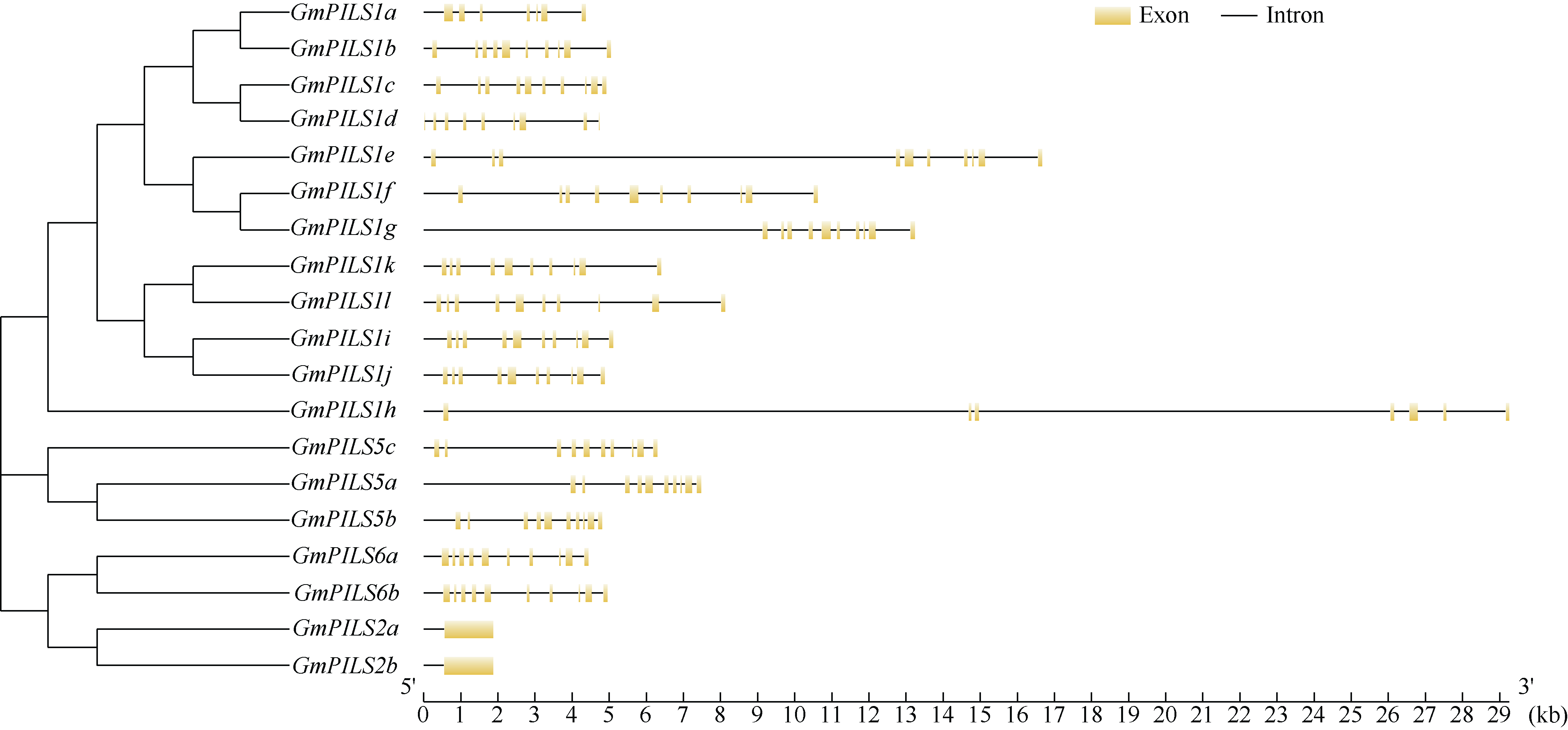
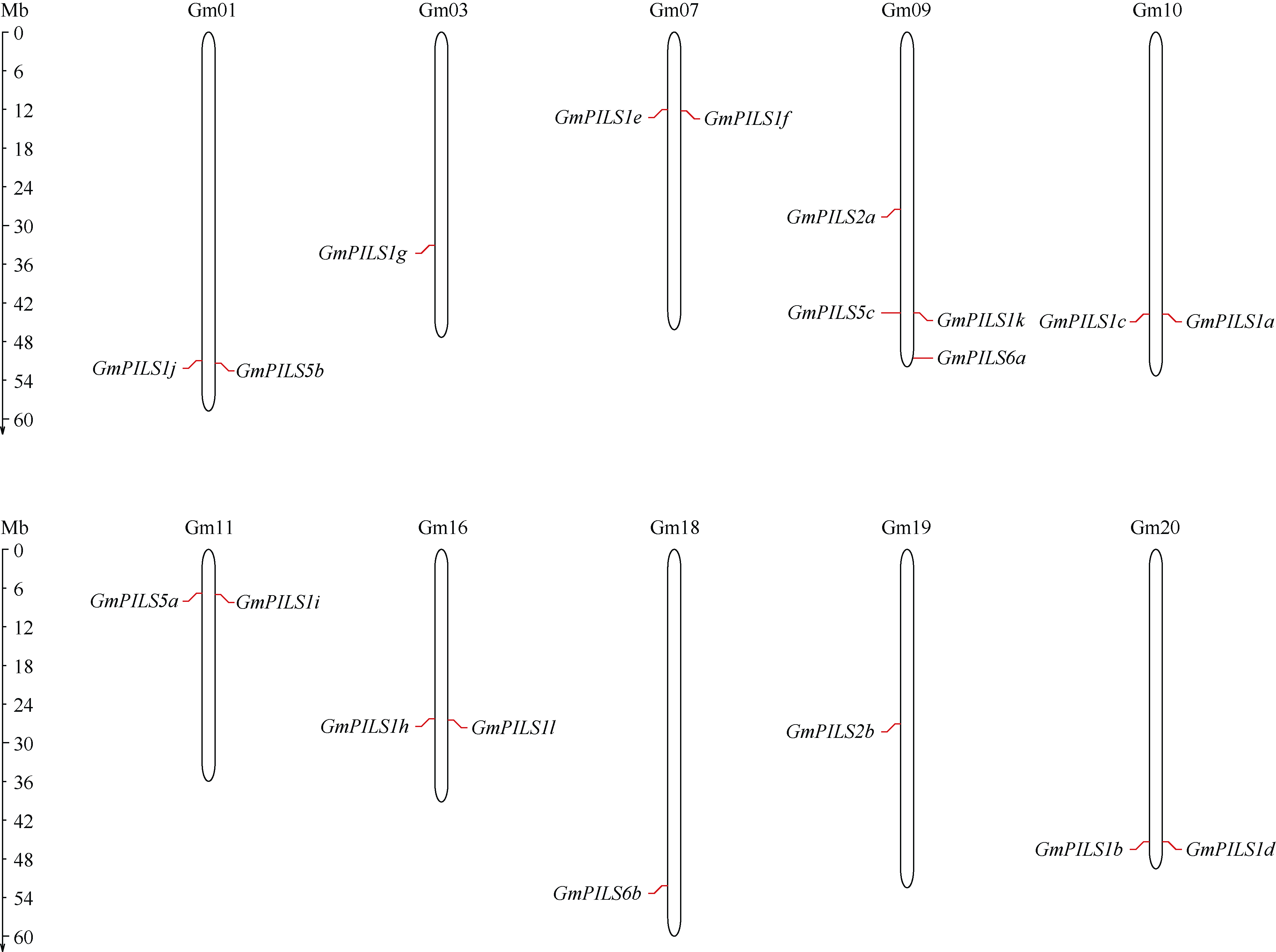
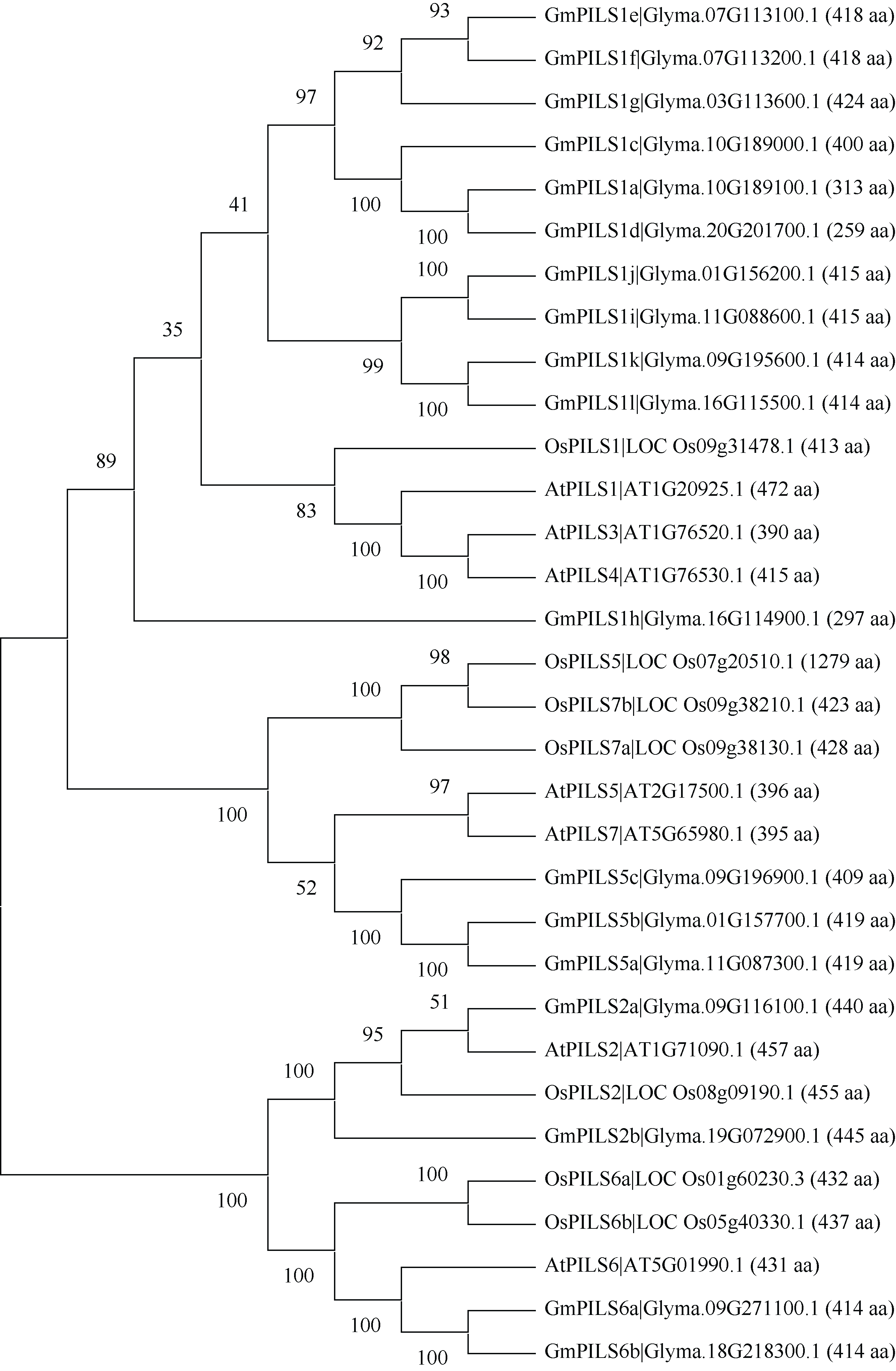
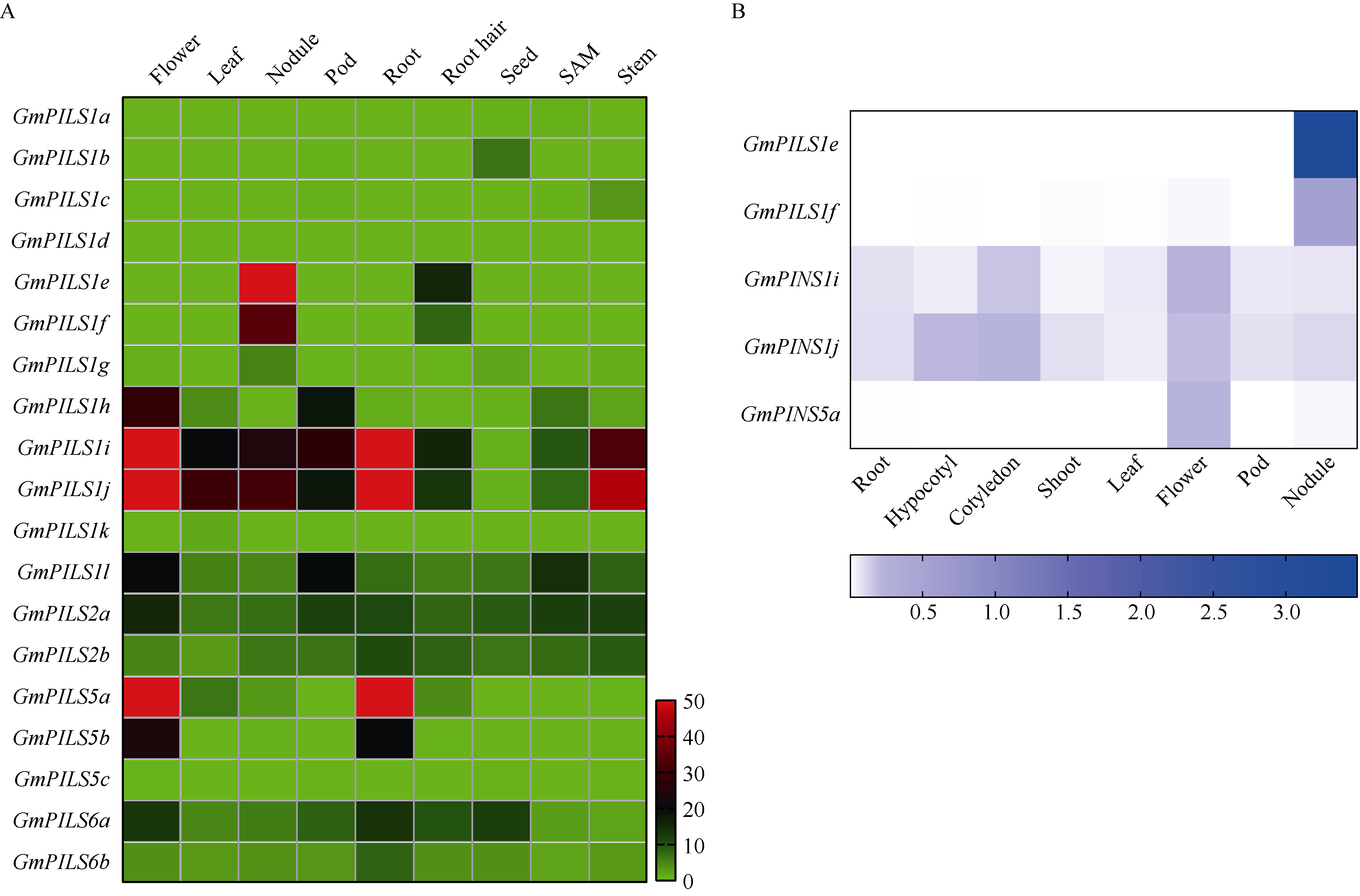
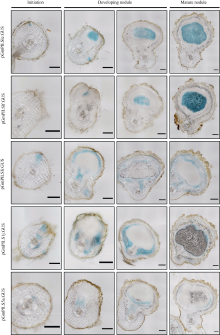
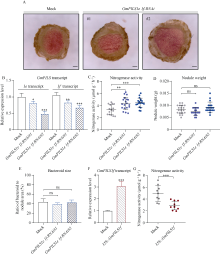
植物激素生长素在植物的生长发育过程中发挥了至关重要的作用, 它的稳态和浓度梯度建立控制了几乎所有器官的极性建成。生长素在特定细胞中合成、运输、感知以及代谢降解建立了符合器官发育的生长素浓度梯度。在豆科植物中, 根与土壤微生物互作形成了根瘤这一特殊的器官, 进行生物固氮。然而, 生长素稳态控制生物固氮的功能还未知。拟南芥中的研究表明, PIN-Like (PILS)蛋白协助调节的细胞内生长素稳态, 并介导下游细胞核内的生长素信号传递。本研究以大豆作为研究模型, 在大豆基因组中鉴定获得19个PILS家族基因(GmPILS), 不均匀分布于大豆10条染色体上。GmPILS在大豆9种组织部位中表现出多种表达模式, 且具有明显的组织表达特异性。GmPILS1e和GmPILS1f在根瘤菌体区域富集表达, 使用人工微RNA沉默(artificial microRNA interference, amiRNAi)下调GmPILS1e和GmPILS1f在根瘤的表达, 导致根瘤的固氮酶活性上升, 而过量表达GmPILS1f导致根瘤的固氮酶活性下降, 因此GmPILS1e和GmPILS1f可能参与大豆固氮酶活性的调节。这些结果为进一步解析大豆GmPILS家族基因的功能和作用机制奠定了基础, 同时也为结瘤固氮在农业育种中的应用提供了有价值的基因资源。
| [1] | Sauer M, Kleine-Vehn J. PIN-FORMED and PIN-LIKES auxin transport facilitators. Development, 2019, 146: dev168088. |
| [2] | Friml J, Palme K. Polar auxin transport—old questions and new concepts? Plant Mol Biol, 2002,49:273-284. |
| [3] | Benková E, Michniewicz M, Sauer M, Teichmann T, Seifertová D, Jürgens G, Friml J. Local, efflux-dependent auxin gradients as a common module for plant organ formation. Cell, 2003,115:591-602. |
| [4] | Bohn-Courseau I. Auxin: a major regulator of organogenesis. C R Biol, 2010,333:290-296. |
| [5] | Overvoorde P, Fukaki H, Beeckman T. Auxin control of root development. Cold Spring Harb Perspect Biol, 2010,2:a001537. |
| [6] | Olatunji D, Geelen D, Verstraeten I. Control of endogenous auxin levels in plant root development. Int J Mol Sci, 2017,18:2587. |
| [7] | Korasick D A, Enders T A, Strader L C. Auxin biosynthesis and storage forms. J Exp Bot, 2013,64:2541-2555. |
| [8] | Band L R, Wells D M, Fozard J A, Ghetiu T, French A P, Pound M P, Wilson M H, Yu L, Li W, Hijazi H I, Oh J, Pearce S P, Perez-Amador M A, Yun J, Kramer E, Alonso J M, Godin C, Vernoux T, Hodgman T C, Pridmore T P, Swarup R, King J R, Bennett M J. Systems analysis of auxin transport in the Arabidopsis root apex. Plant Cell, 2014,26:862-875. |
| [9] | Strader L C, Zhao Y. Auxin perception and downstream events. Curr Opin Plant Biol, 2016,33:8-14. |
| [10] | Du Y, Scheres B. Lateral root formation and the multiple roles of auxin. J Exp Bot, 2018,69:155-167. |
| [11] | Lareen A, Burton F, Schäfer P. Plant root-microbe communication in shaping root microbiomes. Plant Mol Biol, 2016,90:575-587. |
| [12] | Lagunas B, Schäfer P, Gifford M L. Housing helpful invaders: the evolutionary and molecular architecture underlying plant root-mutualist microbe interactions. J Exp Bot, 2015,66:2177-2186. |
| [13] | Nishida H, Suzaki T. Nitrate-mediated control of root nodule symbiosis. Curr Opin Plant Biol, 2018,44:129-136. |
| [14] | Oldroyd G E, Murray J D, Poole P S, Downie J A. The rules of engagement in the legume-rhizobial symbiosis. Annu Rev Genet, 2011,45:119-144. |
| [15] | Suzaki T, Yoro E, Kawaguchi M. Leguminous plants: inventors of root nodules to accommodate symbiotic bacteria. Int Rev Cell Mol Biol, 2015,316:111-158. |
| [16] | Salvagiotti F, Cassman K G, Specht J E, Walters D T, Weiss A, Dobermann A. Nitrogen uptake, fixation and response to fertilizer N in soybeans: a review. Field Crops Res, 2008,108:1-13. |
| [17] | Breakspear A, Liu C, Roy S, Stacey N, Rogers C, Trick M, Morieri G, Mysore K S, Wen J, Oldroyd G E, Downie J A, Murray J D. The root hair “infectome” of Medicago truncatula uncovers changes in cell cycle genes and reveals a requirement for auxin signaling in rhizobial infection. Plant Cell, 2014,26:4680-4701. |
| [18] | Van Noorden G E, Kerim T, Goffard N, Wiblin R, Pellerone F I, Rolfe B G, Mathesius U. Overlap of proteome changes in Medicago truncatula in response to auxin and Sinorhizobium meliloti. Plant Physiol, 2007,144:1115-1131. |
| [19] | Takanashi K, Sugiyama A, Yazaki K. Involvement of auxin distribution in root nodule development of Lotus japonicus. Planta, 2011,234:73-81. |
| [20] | Suzaki T, Yano K, Ito M, Umehara Y, Suganuma N, Kawaguchi M. Positive and negative regulation of cortical cell division during root nodule development in Lotus japonicus is accompanied by auxin response. Development, 2012,139:3997-4006. |
| [21] | Hirsch A M, Bhuvaneswari T V, Torrey J G, Bisseling T. Early nodulin genes are induced in alfalfa root outgrowths elicited by auxin transport inhibitors. Proc Natl Acad Sci USA, 1989,86:1244-1248. |
| [22] | Rightmyer A P, Long S R. Pseudonodule formation by wild-type and symbiotic mutant Medicago truncatula in response to auxin transport inhibitors. Mol Plant Microbe Interact, 2011,24:1372-1384. |
| [23] | Wang Y, Yang W, Zuo Y, Zhu L, Hastwell A H, Chen L, Tian Y, Su C, Ferguson B J, Li X. GmYUC2a mediates auxin biosynthesis during root development and nodulation in soybean. J Exp Bot, 2019,70:3165-3176. |
| [24] | Roy S, Robson F, Lilley J, Liu C W, Cheng X, Wen J, Walker S, Sun J, Cousins D, Bone C, Bennett M J, Downie J A, Swarup R, Oldroyd G, Murray J D. MtLAX2, a functional homologue of the Arabidopsis auxin influx transporter AUX1, is required for nodule organogenesis. Plant Physiol, 2017,174:326-338. |
| [25] | Kohlen W, Ng J L P, Deinum E E, Mathesius U. Auxin transport, metabolism, and signalling during nodule initiation: indeterminate and determinate nodules. J Exp Bot, 2018,69:229-244. |
| [26] | Liu H, Zhang C, Yang J, Yu N, Wang E. Hormone modulation of legume-rhizobial symbiosis. J Integr Plant Biol, 2018,60:632-648. |
| [27] | Heckmann A B, Sandal N, Bek A S, Madsen L H, Jurkiewicz A, Nielsen M W, Tirichine L, Stougaard J. Cytokinin induction of root nodule primordia in Lotus japonicus is regulated by a mechanism operating in the root cortex. Mol Plant Microbe Interact, 2011,24:1385-1395. |
| [28] | Peláez-Vico M A, Bernabéu-Roda L, Kohlen W, Soto M J, López-Ráez J A. Strigolactones in the Rhizobium-legume symbiosis: stimulatory effect on bacterial surface motility and down-regulation of their levels in nodulated plants. Plant Sci, 2016,245:119-127. |
| [29] | Buhian W P, Bensmihen S. Mini-review: nod factor regulation of phytohormone signaling and homeostasis during rhizobia-legume symbiosis. Front Plant Sci, 2018,9:1247. |
| [30] | Ferguson B J, Mathesius U. Phytohormone regulation of legume-rhizobia interactions. J Chem Ecol, 2014,40:770-790. |
| [31] | Friml J. Auxin transport—shaping the plant. Curr Opin Plant Biol, 2003,6:7-12. |
| [32] | Barbez E, Kubes M, Rolcik J, Beziat C, Pencik A, Wang B, Rosquete M R, Zhu J, Dobrev P I, Lee Y, Zazimalova E, Petrasek J, Geisler M, Friml J, Kleine-Vehn J. A novel putative auxin carrier family regulates intracellular auxin homeostasis in plants. Nature, 2012,485:119-122. |
| [33] | Feraru E, Feraru M I, Barbez E, Waidmann S, Sun L, Gaidora A, Kleine-Vehn J. PILS6 is a temperature-sensitive regulator of nuclear auxin input and organ growth in Arabidopsis thaliana. Proc Natl Acad Sci USA, 2019,116:3893-3898. |
| [34] | Beziat C, Barbez E, Feraru M I, Lucyshyn D, Kleine-Vehn J. Light triggers PILS-dependent reduction in nuclear auxin signalling for growth transition. Nat Plants, 2017,3:17105. |
| [35] | Feraru E, Vosolsobe S, Feraru M I, Petrasek J, Kleine-Vehn J. Evolution and structural diversification of PILS putative auxin carriers in plants. Front Plant Sci, 2012,3:227. |
| [36] | 叶梅霞, 刘军梅, 李昊, 崔东清, 王静澄, 张志毅, 安新民. amiRNAi-实现高效稳定的特异基因沉默新方法. 中国生物工程杂志, 2010,30(8):118-125. |
| Ye M X, Liu J M, Li H, Cui D Q, Wang J C, Zhang Z Y, An X M,. amiRNAi: a new approach for highly specific and stable gene silencing. China Biotechnol, 2010,30(8):118-25 (in Chinese with English abstract). | |
| [37] | Kereszt A, Li D, Indrasumunar A, Nguyen C D, Nontachaiyapoom S, Kinkema M, Gresshoff P M. Agrobacterium rhizogenes- mediated transformation of soybean to study root biology. Nat Protoc, 2007,2:948-952. |
| [38] | Huang D, Sun Y, Ma Z, Ke M, Cui Y, Chen Z, Chen C, Ji C, Tran T M, Yang L, Lam S M, Han Y, Shu G, Friml J, Miao Y, Jiang L, Chen X. Salicylic acid-mediated plasmodesmal closure via remorin-dependent lipid organization. Proc Natl Acad Sci USA, 2019,116:21274-21284. |
| [39] | David K A, Apte S K, Banerji A, Thomas J. Acetylene reduction assay for nitrogenase activity: gas chromatographic determination of ethylene per sample in less than one minute. Appl Environ Microbiol, 1980,39:1078-1080. |
| [40] | Li X, Zheng J, Yang Y, Liao H. INCREASING NODULE SIZE1 expression is required for normal rhizobial symbiosis and nodule development. Plant Physiol, 2018,178:1233-1248. |
| [41] | 王益军, 吕燕萍, 谢秦, 邓德祥, 卞云龙. 高粱全基因组生长素原初响应基因Aux/IAA的序列特征分析. 作物学报, 2010,36:688-694. |
| Wang Y J, Lyu Y P, Xie Q, Deng D X, Bian Y L. Whole-genome sequence characterization of primary auxin-responsive Aux/IAA gene family in Sorghum (Sorghum bicolor L.). Acta Agron Sin, 2010,36:688-694 (in Chinese with English abstract). | |
| [42] | Dubrovsky J G, Sauer M, Napsucialy-Mendivil S, Ivanchenko M G, Friml J, Shishkova S, Celenza J, Benková E. Auxin acts as a local morphogenetic trigger to specify lateral root founder cells. Proc Natl Acad Sci USA, 2008,105:8790-8794. |
| [43] | Krupinski P, Jönsson H. Modeling auxin-regulated development. Cold Spring Harb Perspect Biol, 2010,2:a001560. |
| [44] | Mohanta T K, Mohanta N, Bae H. Identification and expression analysis of PIN-Like (PILS) gene family of rice treated with auxin and cytokinin. Genes (Basel), 2015,6:622-640. |
| [45] | Laxmi A, Pan J, Morsy M, Chen R. Light plays an essential role in intracellular distribution of auxin efflux carrier PIN2 in Arabidopsis thaliana. PLoS One, 2008,3:e1510. |
| [46] | Halliday K J, Martínez-García J F, Josse E M. Integration of light and auxin signaling. Cold Spring Harb Perspect Biol, 2009,1:a001586. |
| [47] | Leyser O. Dynamic integration of auxin transport and signalling. Curr Biol, 2006,16:R424-433. |
| [48] | Muday G K, Murphy A S. An emerging model of auxin transport regulation. Plant Cell, 2002,14:293-299. |
| [49] | Zazímalová E, Murphy A S, Yang H, Hoyerová K, Hosek P. Auxin transporters—why so many? Cold Spring Harb Perspect Biol, 2010,2:a001552. |
| [50] | Petrásek J, Friml J. Auxin transport routes in plant development. Development, 2009,136:2675-2688. |
| [51] | Alemneh A A, Zhou Y, Ryder M H, Denton M D. Mechanisms in plant growth-promoting rhizobacteria that enhance legume- rhizobial symbioses. J Appl Microbiol, 2020,129:1133-1156. |
| [52] | Hasan S A, Hayat S, Ali B, Ahmad A. A comparative effect of IAA and 4-Cl-IAA on growth, nodulation and nitrogen fixation in Vigna radiate(L.) Wilczek. Acta Physiol Plant, 2008,30:35-41. |
| [53] | Kaneshiro T, Kwolek W F. Stimulated nodulation of soybeans by Rhizobium japonicum mutant (B-14075) that catabolizes the conversion of tryptophan to indol-3yl-acetic acid. Plant Sci, 1985,42:141-146. |
| [54] | Eli Y, Yaacov O, Amos D. Possible mode of action of Azospirillum brasilense strain Cd on the root morphology and nodule formation in burr medic(Medicago polymorpha). Can J Microbiol, 1990,36:10-14. |
| [55] | Chakrabarti J, Chatterjee S, Ghosh S, Chatterjee N C, Dutta S. Synergism of VAM and Rhizobium on production and metabolism of IAA in roots and root nodules of Vigna mungo. Curr Microbiol, 2010,61:203-209. |
| [56] | Ghosh P K, Saha P, Mayilraj S, Maiti T K. Role of IAA metabolizing enzymes on production of IAA in root, nodule of Cajanus cajan and its PGP Rhizobium sp. Biocatal Agric Biotechnol, 2013,2:234-239. |
| [57] | Hunter W J. Influence of 5-methyltryptophan-resistant Bradyrhizobium japonicum on soybean root nodule indole-3-acetic acid content. Appl Environ Microbiol, 1987,53:1051-1055. |
| [58] | Kretovich V L, Alekseeva I I, Tsivina N Z. Content of beta-indolylacetic in root nodules and roots of lupine. Sov Plant Physiol, 1972,19:421-424. |
| [59] | Hunter W J. Indole-3-acetic acid production by bacteroids from soybean root nodules. Physiol Plant, 2010,76:31-36. |
| [60] | Defez R, Andreozzi A, Dickinson M, Charlton A, Tadini L, Pesaresi P, Bianco C. Improved drought stress response in alfalfa plants nodulated by an IAA over-producing Rhizobium strain. Front Microbiol, 2017,8:2466. |
| [61] | Defez R, Andreozzi A, Romano S, Pocsfalvi G, Fiume I, Esposito R, Angelini C, Bianco C. Bacterial IAA-delivery into Medicago root nodules triggers a balanced stimulation of C and N metabolism leading to a biomass increase. Microorganisms, 2019,7:403. |
| [1] | 金昱何, 王雪菲, 徐张一娃, 缪怡宁, 蒋云杰, 伊莹, 缪德麟, 朱静仪, 钟一帆, 陈铭亨, 方芳, 刘鹏. 外源激素对低温胁迫下大豆叶片叶绿素荧光参数及抗氧化酶系统的影响[J]. 作物学报, 2026, 52(6): 1817-1829. |
| [2] | 唐宽强, 李公允, 宋美毅, 赵雪, 常春玲. 大豆株高性状全基因组关联分析及预测模型构建[J]. 作物学报, 2026, 52(6): 1743-1756. |
| [3] | 陆一楚, 李振影, 买春海, 赵晓蕊, 王利祥. 夜间复合体关键基因AhLUX1正向调控花生结瘤的功能研究[J]. 作物学报, 2026, 52(6): 1658-1668. |
| [4] | 姚术, 郭凯悦, 翟慧慧, 姚佳慧, 邓文琪, 闫玲, 黄驰, 高阳, 俞嫣然, 赵振邦, 李英慧, 王晓波, 李佳佳. 大豆苗期耐低铁综合评价及优异种质筛选[J]. 作物学报, 2026, 52(5): 1373-1387. |
| [5] | 张晴, 杨昱, 郭茜, 岳霈尧, 殷丛丛, 牛景萍, 赵晋忠, 杜维俊, 岳爱琴. 大豆GmARA6a的克隆及响应盐胁迫的功能分析[J]. 作物学报, 2026, 52(2): 480-493. |
| [6] | 王克晶, 李向华. 我国珍稀的大豆属多年生烟豆和短绒野大豆物种遗传资源濒危性评估分析[J]. 作物学报, 2025, 51(8): 2009-2019. |
| [7] | 孟然, 李赵嘉, 冯薇, 陈悦, 刘路平, 杨春燕, 鲁雪林, 王秀萍. 大豆不同生育时期耐盐性综合评价及耐盐种质筛选[J]. 作物学报, 2025, 51(8): 1991-2008. |
| [8] | 贺红利, 张雨涵, 杨静, 程云清, 赵杨, 李星诺, 司洪亮, 张兴政, 杨向东. 大豆e1-as基因突变体的创制及生理分析[J]. 作物学报, 2025, 51(8): 2228-2239. |
| [9] | 胡蒙, 沙丹, 张晟瑞, 谷勇哲, 张世碧, 李静, 孙君明, 邱丽娟, 李斌. 大豆分枝数QTL定位及候选基因筛选[J]. 作物学报, 2025, 51(7): 1747-1756. |
| [10] | 王琼, 邹丹霞, 陈兴运, 张威, 张红梅, 刘晓庆, 贾倩茹, 魏利斌, 崔晓艳, 陈新, 王学军, 陈华涛. 大豆开花时间和成熟期性状全基因组关联分析与候选基因预测[J]. 作物学报, 2025, 51(6): 1558-1568. |
| [11] | 殷丛丛, 李睿琦, 岳霈尧, 李晨, 牛景萍, 赵晋忠, 杜维俊, 岳爱琴. 基于闭合哑铃介导等温扩增可视化检测大豆花叶病毒SC15方法的建立及应用[J]. 作物学报, 2025, 51(5): 1248-1260. |
| [12] | 许睿, 何妙华, 王昊, 李卫, 任杰, 夏志强. 基于空间转录组技术解析大豆种胚对X射线辐射的响应机制[J]. 作物学报, 2025, 51(12): 3121-3132. |
| [13] | 林洋, 史晓蕾, 陈强, 刘兵强, 杨庆, 于慧娟, 闫龙, 武小霞, 杨春燕. 大豆蛋白质脂肪及脂肪酸组分相关QTL定位[J]. 作物学报, 2025, 51(11): 2899-2910. |
| [14] | 王浩辰, 王克晶, 韩娟, 李向华. 东南沿海短绒野大豆两种代表性生境自然种群的空间遗传结构特征:种群内取样策略研究[J]. 作物学报, 2025, 51(11): 2875-2885. |
| [15] | 李威, 朱玉鹏, 孙宾成, 温有祥, 吴宗声, 徐一帆, 宋雯雯, 徐彩龙, 吴存祥. 转基因大豆结合免耕平作实现东北地区大豆生产轻简化[J]. 作物学报, 2025, 51(10): 2738-2749. |
|
||