欢迎访问作物学报,今天是
作物学报 ›› 2020, Vol. 46 ›› Issue (3): 385-394.doi: 10.3724/SP.J.1006.2020.93021
马娟,曹言勇,王利锋,李晶晶,王浩,范艳萍,李会勇( )
)
Juan MA,Yan-Yong CAO,Li-Feng WANG,Jing-Jing LI,Hao WANG,Yan-Ping FAN,Hui-Yong LI()
摘要:
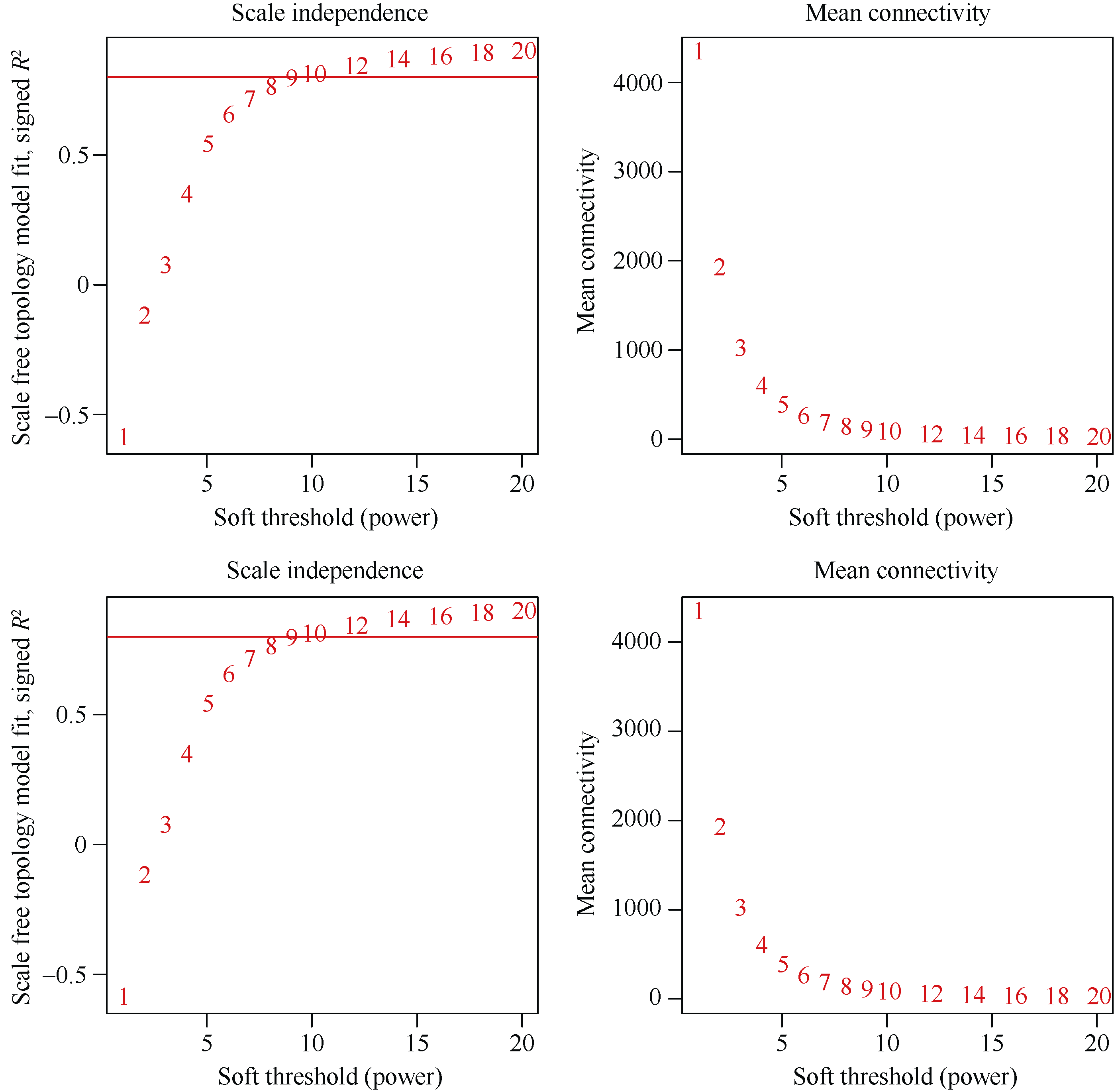
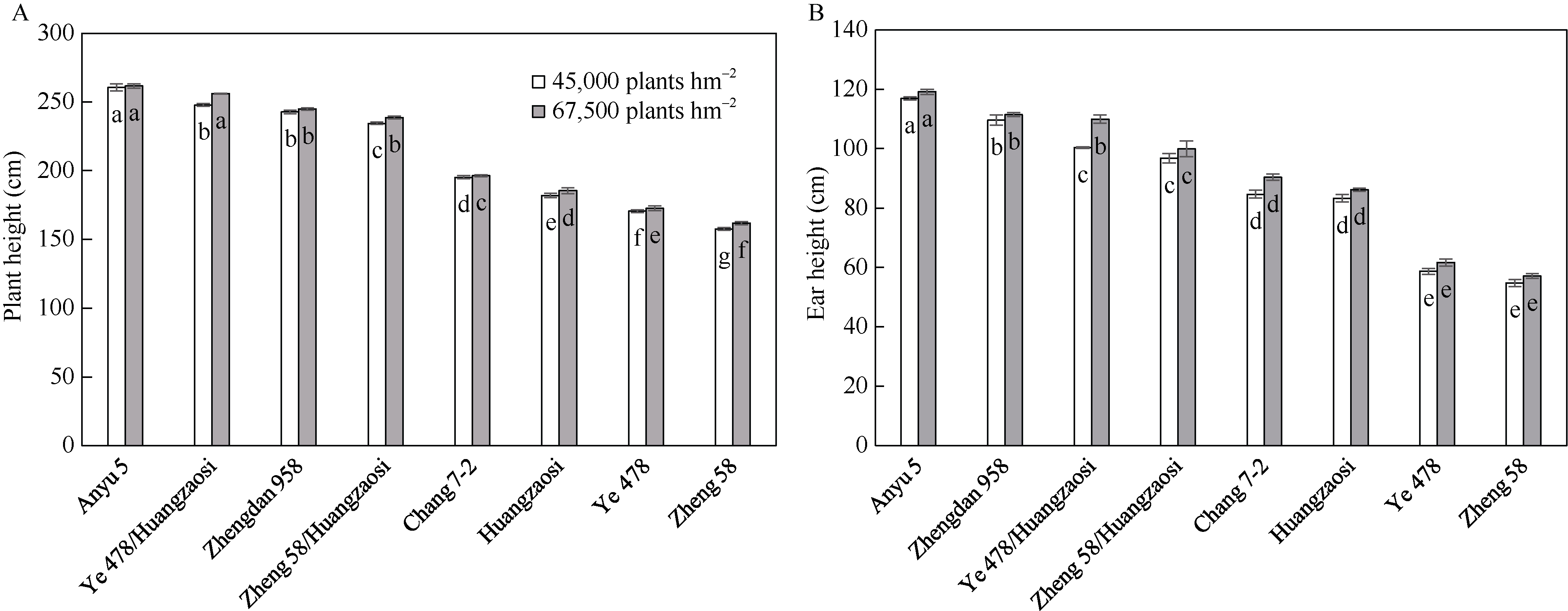
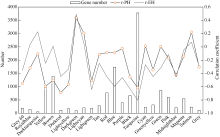
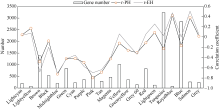
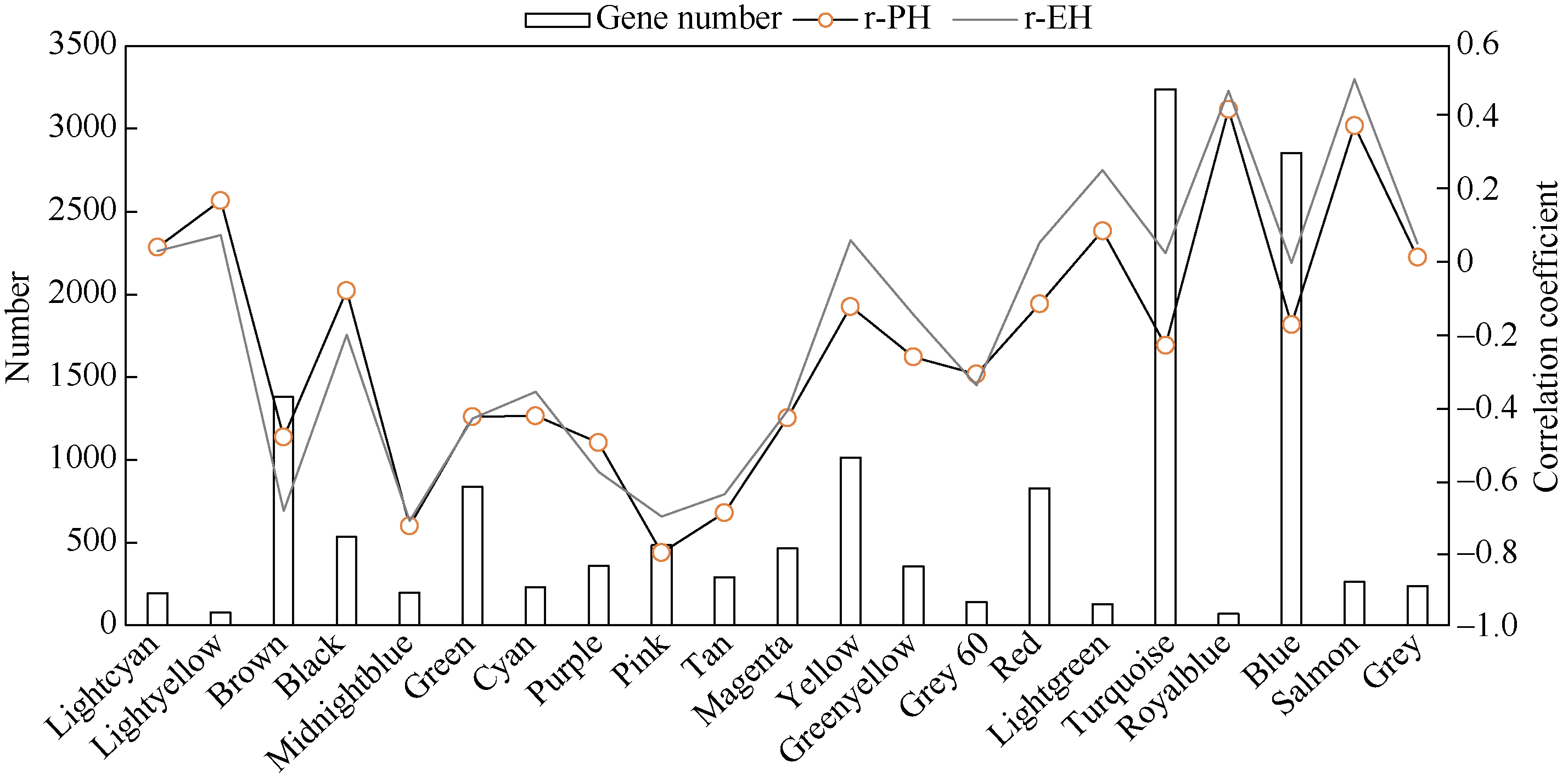
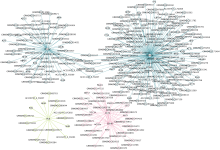
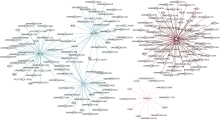
株高和穗位高是玉米株型的重要影响因子, 与产量性状紧密相关。加权基因共表达网络分析(weighted gene co-expression network analysis, WGCNA)是探索基因网络与特定性状间关联关系的重要方法, 为株高和穗位高相关基因的挖掘提供新途径。本研究利用郑58、掖478、昌7-2和黄早四及其组配的杂交种郑单958、安玉5号、郑58/黄早四和掖478/黄早四, 结合其在45,000株 hm -2和67,500株 hm -2条件下的转录组数据, 采用WGCNA构建了2种密度条件下的共表达网络, 分别得到24个和21个共表达模块, 并鉴定到与株高和穗位高显著且高度相关(相关系数的绝对值>0.50)的共表达模块15个, 其中两性状相同的模块共6个。基因功能富集分析结果表明, 株高和穗位高共表达模块主要参与生长发育、光合作用、响应光刺激、植物激素、碳水化合物合成/代谢等重要活动。根据模块内基因的连接度, 发现乙烯响应因子EREB14、硫胺素酶TENA2、磷酸甘油酸激酶PGK、谷胱甘肽转移酶GST2和琥珀酸脱氢酶SUDH7等是模块内的核心基因。通过构建其局部网络, 发现EREB14与已报道株高基因D8、DWF1和ZmGRF10以及C3H转录因子C3H35、C2C2-GATA转录因子GATA4和乙烯受体同源子ETR40等存在关联关系。此外, 已报道株高基因An1和GA20ox3也存在于共表达模块中。以这5个已报道株高基因为核心, 构建其基因网路, 发现生长素转录因子ARFTF7、ARFTF26、GST39、光合系统II氧进化多肽PspB2和光合系统I N亚基PasN1等与其存在关联。15个共表达模块和核心基因的挖掘以及基因生物学功能和互作网络的解析有助于揭示玉米株高和穗位高的遗传基础。
| [1] | 李清超, 李永祥, 杨钊钊, 刘成, 刘志斋, 李春辉, 彭勃, 张岩, 王迪, 谭巍巍, 孙宝成, 石云素, 宋燕春, 张志明, 潘光堂, 黎裕, 王天宇 . 基于多重相关RIL群体的玉米株高和穗位高QTL定位. 作物学报, 2013,39:1521-1529. |
| Li Q C, Li Y X, Yang Z Z, Liu C, Liu Z Z, Li C H, Peng B, Zhang Y, Wang D, Tan W W, Sun B C, Shi S Y, Song C Y, Zhang Z M, Pan G T, Li Y, Wang T Y . QTL mapping for plant height and ear height by using multiple related RIL populations in maize. Acta Agron Sin, 2013,39:1521-1529 (in Chinese with English abstract). | |
| [2] | 何坤辉, 常立国, 崔婷婷, 渠建洲, 郭东伟, 徐淑兔, 张兴华, 张仁和, 薛吉全, 刘建超 . 多环境下玉米株高和穗位高的QTL定位. 中国农业科学, 2016,49:1443-1452. |
| He K H, Chang L G, Cui T T, Qu J Z, Guo D W, Xu S T, Zhang X H, Zhang R H, Xue J Q, Liu J C . Mapping QTL for plant height and ear height in maize under multi-environments. Sci Agric Sin, 2016,49:1443-1452 (in Chinese with English abstract). | |
| [3] | 刘坤, 张雪海, 孙高阳, 闫鹏帅, 郭海平, 陈思远, 薛亚东, 郭战勇, 谢惠玲, 汤继华, 李卫华 . 玉米株型相关性状的全基因组关联分析. 中国农业科学, 2018,51:821-834. |
| Liu K, Zhang X H, Sun G Y, Yan P S, Guo H P, Chen S Y, Xue Y D, Guo Z Y, Xie H L, Tang J H, Li W H . Genome-wide association studies of plant type traits in maize. Sci Agric Sin, 2018,51:821-834 (in Chinese with English abstract). | |
| [4] | 李凯, 张晓祥, 管中荣, 沈亚欧, 潘光堂 . 玉米株高和穗位高的全基因组关联分析. 玉米科学, 2017,25(6):1-7. |
| Li K, Zhang X X, Guan Z R, Shen Y O, Pan G T . Genome-wide association analysis of plant height and ear height in maize. J Maize Sci, 2017,25(6):1-7 (in Chinese with English abstract). | |
| [5] | Li X, Zhou Z, Ding J, Wu Y, Zhou B, Wang R, Ma J, Wang S, Zhang X, Xia Z, Chen J, Wu J . Combined linkage and association mapping reveals QTL and candidate genes for plant and ear height in maize. Front Plant Sci, 2016,7:833. |
| [6] | Weng J, Xie C, Hao Z, Wang J, Liu C, Li M, Zhang D, Bai L, Zhang S, Li X . Genome-wide association study identifies candidate genes that affect plant height in Chinese elite maize (Zea mays L.) inbred lines. PLoS One, 2011,6:e29229. |
| [7] | Fujioka S, Yamane H, Spray C R, Gaskin P, Macmillan J, Phinney B O, Takahashi N . Qualitative and quantitative analyses of gibberellins in vegetative shoots of normal, dwarf-1, dwarf-2, dwarf-3, and dwarf-5 seedlings of Zea mays L. Plant Physiol, 1988,88:1367-1372. |
| [8] | Winkler R G, Helentjaris T . The maize Dwarf3 gene encodes acytochrome P450-mediated early step in gibberellin biosynthesis. Plant Cell, 1995,7:1307-1317. |
| [9] | Thornsberry J M, Goodman M M, Doebley J, Kresovich S, Nielsen D, Buckler E S . Dwarf8 polymorphisms associate with variation in flowering time. Nat Genet, 2001,28:286-289. |
| [10] | Lawit S J, Wych H M, Xu D, Kundu S, Tomes D T . Maize DELLA proteins dwarf plant8 and dwarf plant9 as modulators of plant development. Plant Cell Physiol, 2010,51:1854-1868. |
| [11] | Multani D S, Briggs S P, Chamberlin M A, Blakeslee J J, Murphy A S, Johal G S . Loss of an MDR transporter in compact stalks of maize br2 and sorghum dw3 mutants. Science, 2003,302:81-84. |
| [12] | Zhang B, Horvath S. A general framework for weighted gene co-expression network analysis. Stat Appl Genet Mol Biol, 2005, 4: Article 17. |
| [13] | Zhang X, Hirsch C N, Sekhon R S, De Leon N, Kaeppler S M . Evidence for maternal control of seed size in maize from phenotypic and transcriptional analysis. J Exp Bot, 2016,67:1907-1917. |
| [14] | Ma J, Zhang D, Cao Y, Wang L, Li J, Lübberstedt T, Wang T, Li Y, Li H . Heterosis-related genes under different planting densities in maize (Zea mays L.). J Exp Bot, 2018,69:5077-5087. |
| [15] | Zhan J, Thakare D, Ma C, Lloyd A, Nixon N M, Arakaki A M, Burnett W J, Logan K O, Wang D, Wang X, Drews G N, Yadegari R . RNA sequencing of laser-capture microdissected compartments of the maize kernel identifies regulatory modules associated with endosperm cell differentiation. Plant Cell, 2015,27:513-531. |
| [16] | 杨宇昕, 桑志勤, 许诚, 代文双, 邹枨 . 利用WGCNA进行玉米花期基因共表达模块鉴定. 作物学报, 2019,45:161-174. |
| Yang Y X, Sang Z Q, Xu C, Dai W S, Zou C . Identification of maize flowering gene co-expression modules by WGCNA. Acta Agron Sin, 2019,45:161-174 (in Chinese with English abstract). | |
| [17] | Peng H, He X, Gao J, Ma H, Zhang Z, Shen Y, Pan G, Lin H . Transcriptomic changes during maize roots development responsive to Cadmium (Cd) pollution using comparative RNA seq- based approach. Biochem Biophys Res Commun, 2015,464:1040-1047. |
| [18] | Thirunavukkarasu N, Hossain F, Mohan S, Shiriga K, Mittal S, Sharma R, Singh R K, Gupta H S . Genome-wide expression of transcriptomes and their co-expression pattern in subtropical maize (Zea mays L.) under waterlogging stress. PLoS One, 2013,8:e70433. |
| [19] | Lyu Y, Liang Z, Ge M, Qi W, Zhang T, Lin F, Peng Z, Zhao H . Genome-wide identification and functional prediction of nitrogen-responsive intergenic and intronic long non-coding RNAs in maize ( Zea mays L.). BMC Genomics, 2016,17:350. |
| [20] | Zhang S, Yang W, Zhao Q, Zhou X, Jiang L, Ma S, Liu X, Li Ye, Zhang C, Fan Y, Chen R . Analysis of weighted co-regulatory networks in maize provides insights into new genes and regulatory mechanisms related to inositol phosphate metabolism. BMC Genomics, 2016,17:129-146. |
| [21] | Tao Y, Zheng J, Xu Z, Zhang X, Zhang K, Wang G . Functional analysis of ZmDWF1, a maize homolog of the Arabidopsis brassinosteroids biosynthetic DWF1/DIM gene. Plant Sci, 2004,167:741-751. |
| [22] | Wu L, Zhang D, Xue M, Qian J, He Y, Wang S . Overexpression of the maize GRF10, an endogenous truncated growth regulating factor protein, leads to reduction in leaf size and plant height. J Integr Plant Biol, 2014,56:1053-1063. |
| [23] | Hartwig T, Chuck G S, Fujioka S, Klempien A, Weizbauer R, Potluri D P, Choe S, Johal G S, Schulz B . Brassinosteroid control of sex determination in maize. Proc Natl Acad Sci USA, 2011,108:19814-19819. |
| [24] | Tamotsu H, Rod W K, Chris A H, Masaji K . The involvement of gibberellin 20-oxidase genes in phytochrome-regulated petiole elongation of Arabidopsis. Plant Physiol, 2005,138:1106-1116. |
| [25] | Zhao W, Langfelder P, Fuller T, Dong J, Li A, Hovarth S . Weighted gene coexpression network analysis: state of the art. J Biopharm Stat, 2010,20:281-300. |
| [26] | Wang H, Gu L, Zhang X, Liu M, Jiang H, Cai R, Zhao Y, Cheng B . Global transcriptome and weighted gene co-expression network analyses reveal hybrid-specific modules and candidate genes related to plant height development in maize. Plant Mol Biol, 2018,98:187-203. |
| [27] | Mizoi J, Shinozaki K, Yamaguchi-Shinozaki K . AP2/ERF family transcription factors in plant abiotic stress responses. BBA-Gene Regul Mech, 2012,1819:86-96. |
| [28] | Hinz M, Wilson I W, Yang J, Buerstenbinder K, Llewellyn D, Dennis E S, Sauter M, Dolferus R . Arabidopsis RAP2: 2. An ethylene response transcription factor that is important for hypoxia survival. Plant Physiol, 2010,153:757-772. |
| [29] | Licausi F, Ohme Takagi M, Perata P . APETALA2/ethylene responsive factor (AP2/ERF) transcription factors: mediators of stress responses and developmental programs. New Phytol, 2013,199:639-649. |
| [30] | Cassani E, Bertolini E, Cerino B F, Landoni M, Gavina D, Sirizzotti A, Pilu R . Characterization of the first dominant dwarf maize mutant carrying a single amino acid insertion in the VHYNP domain of the dwarf8 gene. Mol Breed, 2009,24:375-385. |
| [31] | Teng F, Zhai L, Liu R, Bai W, Wang L, Huo D, Tao Y, Zheng Y, Zhang Z . ZmGA3ox2, a candidate gene for a major QTL, qPH3.1, for plant height in maize. Plant J, 2013,73:405-416. |
| [32] | 郑雷, 周羽, 曾兴, 邸宏, 翁建峰, 李新海, 王振华 . 玉米株高QTL定位研究进展. 作物杂志, 2016, ( 2):8-13. |
| Zheng L, Zhou Y, Zeng X, Di H, Weng J F, Li X H, Wang Z H . QTL Mapping of plant height in maize. Crops, 2016, ( 2):8-13 (in Chinese with English abstract). |
| [1] | 王亚, 赵宜婷, 王宙, 杨俊芳, 张宏斌, 曹越. 转录组-代谢组联合分析蓖麻蜡质合成相关基因[J]. 作物学报, 2026, 52(6): 1774-1787. |
| [2] | 刘恩波, 陈静, 李红星, 于宁宁, 任佰朝, 赵斌, 刘鹏, 张吉旺. 遮阴改变源-库平衡和调节碳水化合物代谢进而抑制夏玉米幼穗发育[J]. 作物学报, 2026, 52(6): 1891-1901. |
| [3] | 陈雪燕, 何华川, 李政嘉, 董新盼, 李藕琪, 刘小云, 李丹萍, 陈志伟, 刘国霞, 吕胜源, 吴印莹, 赵振东, 曹新有, 万何平. 水培盐碱复合胁迫下‘济麦60’苗期根系有机酸分泌动态变化及其转录调控机制[J]. 作物学报, 2026, 52(6): 1859-1875. |
| [4] | 梁进宇, 尹嘉德, 王红丽, 张国平, 侯慧芝, 董博, 马明生. 基于无人机高光谱和机器学习的旱地饲用玉米叶片氮含量估测[J]. 作物学报, 2026, 52(6): 1788-1801. |
| [5] | 唐宽强, 李公允, 宋美毅, 赵雪, 常春玲. 大豆株高性状全基因组关联分析及预测模型构建[J]. 作物学报, 2026, 52(6): 1743-1756. |
| [6] | 邹仪妹, 徐敏, 汪海洋, 姚辉, 王加峰, 刘浩, 任代胜. 两系不育系水稻幼苗根系响应盐胁迫的转录因子调控网络鉴定[J]. 作物学报, 2026, 52(6): 1728-1742. |
| [7] | 杨欣雨, 崔文涛, 迪力尼格尔·阿力木, 汪凯翔, 吴鹏昊, 任姣姣. 玉米穗上叶片数全基因组关联分析和全基因组选择[J]. 作物学报, 2026, 52(5): 1573-1590. |
| [8] | 张曦, 王广恩, 李邵琦, 刘祎, 李俊兰, 钱玉源. 基于转录组测序解析陆海杂交姊妹系马克隆值差异的形成机制[J]. 作物学报, 2026, 52(5): 1442-1458. |
| [9] | 韩亚鑫, 何冠华, 张小琼, 张登峰, 李永祥, 刘旭洋, 王天宇, 黎裕, 邹华文, 李春辉. 基于RNA-Seq和BSA-Seq联合分析挖掘玉米侧根密度基因资源[J]. 作物学报, 2026, 52(5): 1341-1352. |
| [10] | 孙淑凤, 许振南, 黄嘉鑫, 翁建峰, 李新海. 玉米MAPK家族全基因组鉴定及其对拟轮枝镰孢菌感染的响应[J]. 作物学报, 2026, 52(5): 1291-1308. |
| [11] | 张宁宁, 滕雨菲, 任娜娜, 魏兴卓, 闫书豪, 樊可心, 王永宏, 陈文康, 张兴华, 朱万超, 徐淑兔, 薛吉全. 201份玉米自交系抗旱表型评价及可塑性分析[J]. 作物学报, 2026, 52(5): 1309-1325. |
| [12] | 张鸿蓉, 王菲儿, 李盼, 仇海龙, 朱静, 赵连豪, 南运有, 何蔚, 樊志龙, 胡发龙, 柴强, 殷文. 减量20%灌水与25%有机肥替代化肥提高青贮玉米产量的光合特性[J]. 作物学报, 2026, 52(5): 1487-1500. |
| [13] | 杨扬, 常诗惠, 田红丽, 易红梅, 王璐, 任洁, 范亚明, 刘亚维, 王凤格, 赵久然. 不同生态区国审玉米品种的遗传多样性分析[J]. 作物学报, 2026, 52(5): 1352-1364. |
| [14] | 蔡兆琴, 何观咏, 何文, 阮丽霞, 梁振华, 李永珍, 李恒锐, 陈会鲜. 木薯分枝发育过程的动态转录组分析与关键基因发掘[J]. 作物学报, 2026, 52(5): 1430-1441. |
| [15] | 蔡宏玮, 于爱忠, 姜科强, 王鹏飞, 王玉珑, 霍建喆, 庞小能, 尹波, 尚永盼. 干旱灌区有机肥替代部分化肥促进甜玉米产量提升的关键机制[J]. 作物学报, 2026, 52(4): 1166-1180. |
|
||