欢迎访问作物学报,今天是
作物学报 ›› 2018, Vol. 44 ›› Issue (02): 218-226.doi: 10.3724/SP.J.1006.2018.00218
秦丽霞, 李静, 张换样, 李盛, 竹梦婕, 焦改丽, 吴慎杰*
Li-Xia QIN, Jing LI, Huan-Yang ZHANG, Sheng LI, Meng-Jie ZHU, Gai-Li JIAO, Shen-Jie WU*
摘要:
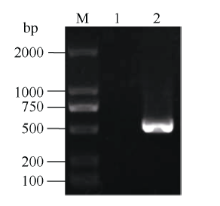
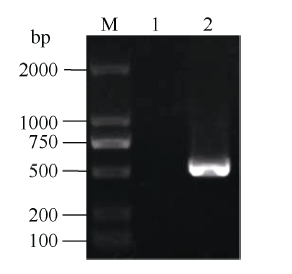
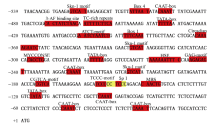
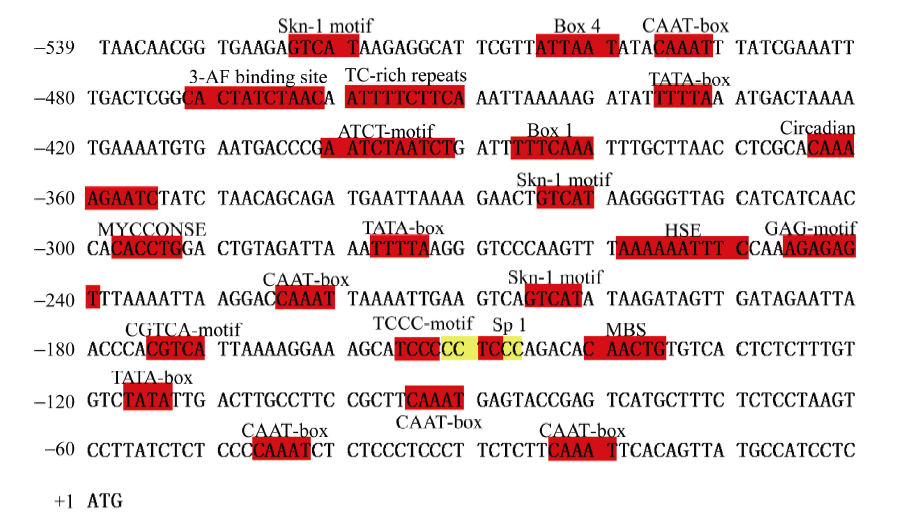
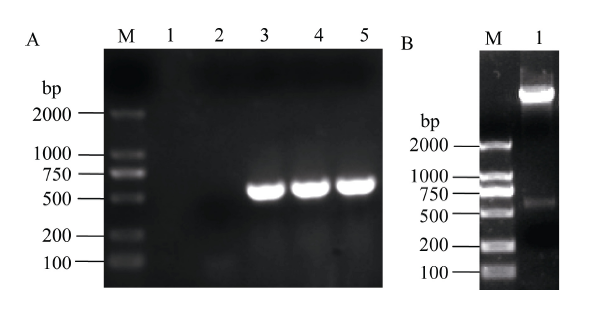
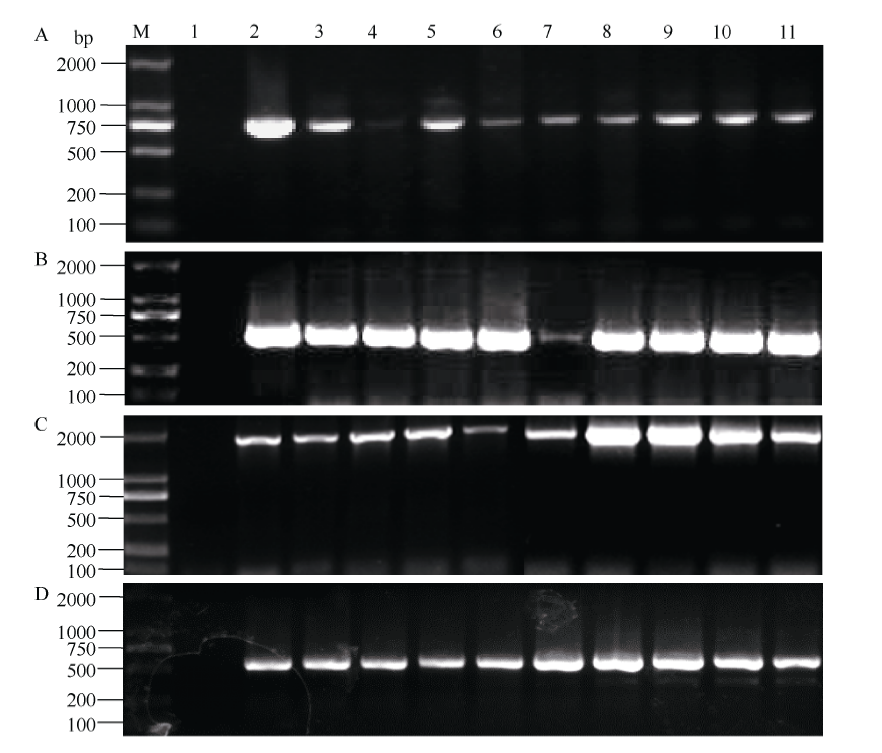
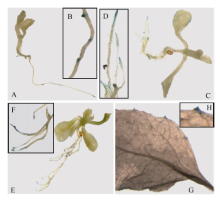
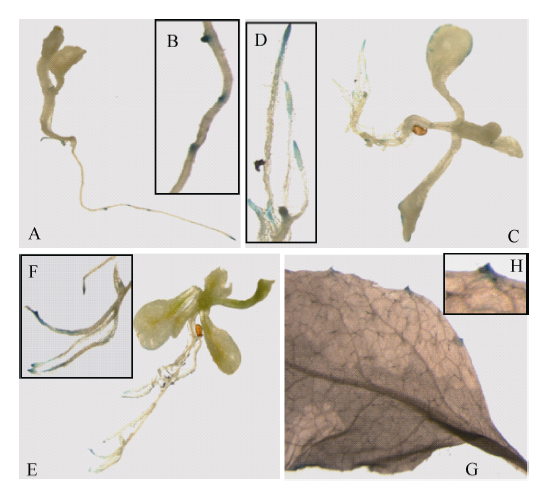
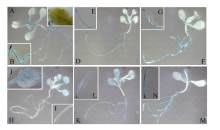
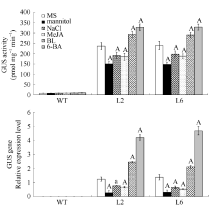
糖基转移酶(glycosytransferase, GT)是催化活化的供体糖基转移到特异受体生成糖苷键的酶类, 在应答多种生物和非生物胁迫中起重要作用。本研究利用PCR技术从陆地棉品种Coker 312基因组中分离克隆了GhGalT1基因的启动子, 序列长度为539 bp, 命名为pGhGalT1。启动子分析软件PlantCARE分析表明pGhGalT1含有CAAT-box、TATA-box核心元件, 以及响应干旱、热、脱水、防御与胁迫应答的顺式作用元件MBS、HSE、MYCCONSE、TC-rich repeats和CGTCA-motif等。因此将pGhGalT1构建到启动子检测载体pBI101-GUS上, 形成pBI101-pGhGalT1-GUS融合表达载体, 以检测其启动子活性。通过农杆菌介导的浸花法转化拟南芥, 经卡那霉素抗性筛选及PCR检测成功获得阳性转基因植株。对T3代转基因拟南芥进行组织化学染色分析显示该启动子主要在生长5~15 d的幼苗主根及侧根根尖表达, 在子叶及莲座叶边缘也有微弱表达。非生物胁迫和激素处理后的组织化学染色、GUS酶活性及GUS基因定量分析结果显示GhGalT1基因的启动子受盐、渗透胁迫和激素(6-BA、MeJA、BL)的诱导, 该结果为合理选用启动子改良作物提供理论依据。
| [1] | Campbell J A, Davies G J, Bulone V V, Henrissat B.A classification of nucleotide-diphospho-sugar glycosyltransferases based on amino acid sequence similarities.Biochem J, 1997, 326: 929-939 |
| [2] | Lao J, Oikawa A, Bromley J R, McInerney P, Suttangkakul A, Smith-Moritz A M, Plahar H, Chiu T Y, Gonzalez Fernandez-Nino S M, Ebert B, Yang F, Christiansen K M, Hansen S F, Stonebloom S, Adams P D, Ronald P C, Hillson N J, Hadi M Z, Vega-Sanchez M E, Loque D, Scheller H V, Heazlewood J L. The plant glycosyltransferase clone collection for functional genomics.Plant J, 2014, 79: 517-529 |
| [3] | Coutinho P M, Deleury E, Davies G J, Henrissat B.An evolving hierarchical family classification for glycosyltransferases.J Mol Biol, 2003, 328: 307-317 |
| [4] | Jackson R G, Kowalczyk M, Li Y, Higgins G, Ross J, Saiidberg G, Bowles D J.Overexpression of anArabidopsis gene encoding a glucosyltransferase of indole-3-acetic acid: phenotypic characterisation of transgenic lines. Plant J, 2002, 32: 573-583 |
| [5] | Jackson R Q, Lim E K, Li Y, Kowalczyk M, Saiidberg G, Hoggett J, Ashford D A, Bowles D J.Identification and biochemical characterization of anArabidopsis indole-3-acetic acid glucosyltransferase. J Biol Chem, 2001, 276: 4350-4356 |
| [6] | Tognetti V B, Van Aken O, Morreel K, Vandenbroucke K, van de Cotte B, De Clercq I, Chiwocha S, Fenske R, Prinsen E, Boerjan W, Genty B, Stubbs K A, Inze D, Van-Breusegem F. Perturbation of indole-3-butyric acid homeostasis by the UDP-glucosyltransferase UGT74E2 modulatesArabidopsis architecture and water stress tolerance. Plant Cell, 2010, 22: 2660-2679 |
| [7] | Martin R C, Mok D W, Sniels R, Van Oiickelen H A, Mok M C. Development of transgenic tobacco harboring a zeatin O-glucosyltransferase gene fromPhaseolus. In Vitro Cell Dev Biol Plant, 2001, 37: 354-360 |
| [8] | Wang J, Ma X M, Kojima M, Sakakibara H, Hou B K.N-glucosyltransferase UGT76C2 is involved in cytokinin homeostasis and cytokinin response inArabidopsis thaliana. Plant Cell Physiol, 2011, 52: 2200-2213 |
| [9] | Wang J, Ma X M, Kojima M, Sakakibara H, Hon B K.Glucosyltransferase UGT76C1 finely modulates cytokinin responses via cytokinin N-glucosylation inArabidopsis thahana. Plant Physiol Biochem, 2013, 65: 9-16 |
| [10] | Poppenberger B, Fujioka S, Soeno K, George G L, Vaistij F E, Hiranuma S, Seto H, Takatsuto S, Adam G, Yoshida S, Bowles D J.The UGT73C5 ofArabidopsis thaliana glucosylates brassinosteroids. Proc Natl Acad Sci USA, 2005, 102: 15253-15258 |
| [11] | Suzuki H, Fujioka S, Takatsuto S, Yokota T, Murofushi N, Sakurai A.Biosynthesis of brassinolide from teasterone via typhasterol and castaserone in cultured cells ofCatharanthus roseus. J Plant Growth Regul, 1993, 13: 21-26 |
| [12] | Husar S, Berthiller F, Fujioka S, Rozhon W, Khan M, Kalaivanan F, Elias L, Higgins G S, Li Y, Schuhmacher R, Krska R, Seto H, Vaistij F E, Bowles D, Poppenberger B.Overexpression of the UGT73C6 alters brassinosteroid glucoside formation inArabidopsis thaliana. BMC Plant Biol, 2011, 11: 51 |
| [13] | Glauser G, Boccard J, Rudaz S, Wolfender J L.Mass spectrometry-based metabolomics oriented by correlation analysis for wound-induced molecule discovery: identification of a novel jasmonate glucoside.Phytochem Anal, 2010, 21: 95-101 |
| [14] | Lim C E, Ahn J H, Lim J.Molecular genetic analysis of tandemly located glycosyltransferase genes, UGT73BI, UGT73B2, and UG17383, inArabidopsis thaliana. J Plant Biol, 2006, 49: 309-314 |
| [15] | Lim C E, Choi N J, Kim A, Lee S A, Huang Y S, Lee C H, Lim J.Improved resistance to oxidative stress by a loss-of-function mutation in theArabidopsis UGT71C1 gene. Mol Cells, 2008, 25: 368-375 |
| [16] | Kim A, Heo J O, Chang K S, Lee S A, Lee M H, Lim C E, Lim J.Overexpression and inactivation of UGT73B2 modulate tolerance to oxidative stress inArabidopsis. J Plant Biol, 2010, 53: 233-239 |
| [17] | Song J T, Koo Y J, Seo H S, Kim M C, Choi Y D, Kim J H.Overexpression ofAtSGTl, an Arabidopsis salicylic acid glucosyltransferase, leads to increased susceptibility to Pseudomonas syringae. Phytochemistry, 2008, 69: 1128-1134 |
| [18] | 李田, 孙景宽, 刘京涛. 植物启动子研究进展. 生物技术通报, 2015, 31(02): 18-25 |
| Li T, Sun J K, Liu J T.Research advances on plant promoter.Biotechnol Bull, 2015, 31(02): 18-25 (in Chinese with English abstract) | |
| [19] | Li F, Han Y Y, Feng Y N, Xing S C, Zhao M R, Chen Y H, Wang W.Expression of wheat expansin driven by the RD29 promoter in tobacco confers water-stress tolerance without impacting growth and development.J Biotechnol, 2013, 163: 281-291 |
| [20] | Pino M T, Skinner J S, Park E J, Jeknic Z, Hayes P M, Thomashow M F, Chen T H.Use of a stress inducible promoter to drive ectopic AtCBF expression improves potato freezing tolerance while minimizing negative effects on tuber yield.Plant Biotechnol J, 2007, 5: 591-604 |
| [21] | Qin L X, Rao Y, Li L, Huang J F, Xu W L, Li X B.CottonGalT1 encoding a putative glycosyltransferase is involved in regulation of cell wall pectin biosynthesis during plant development. PLoS One, 2013, 8: e59115 |
| [22] | Li X B, Lin C, Cheng N H, Liu J W.Molecular characterization of the cotton GhTUB1 gene that is preferentially expressed in fibers.Plant Physiol, 2002, 130: 666-674 |
| [23] | Clough S J, Bent A F.Floral dip: a simplified method forAgrobacterium mediated transformation of Arabidopsis thaliana. Plant J, 1998, 16: 735-743 |
| [24] | Qin L X, Li Y, Li D D, Xu W L, Zheng Y, Li X B.Arabidopsis drought-induced protein Di19-3 participates in plant response to drought and high salinity stresses.Plant Mol Biol, 2014, 86: 609-625 |
| [25] | Jefferson R A.Assaying chimeric genes in plants: theGus gene fusion system. Plant Mol Biol Rep, 1987, 5: 387-405 |
| [26] | Li X B, Fan X P, Wang X L, Cai L, Yang W C.The cottonActin1 gene is functionally expressed in fibers and participates in fiber elongation. Plant Cell, 2005, 17: 859-875 |
| [27] | Wang X, Tan Y P, Zhou J, Wang C T, Liu X Q.Expression of a tobacco glycosyltransferase gene driving promoter in transgenic tobacco.Agric Sci Technol, 2010, 11: 83-85 |
| [28] | Luo K, Zhang G, Deng W, Luo F, Qiu K, Pei Y.Functional characterization of a cotton late embryogenesis-abundant D113 gene promoter in transgenic tobacco.Plant Cell Rep, 2008, 27: 707-717 |
| [29] | Singh H, Sen R, Baltimore D, Sharp P A.A nuclear factor that binds to a conserved sequence motif in transcriptional control elements of immunoglobulin genes.Nature, 1986, 319: 154-158 |
| [30] | Li J J, Herskowitz I.Isolation of ORC6, a component of the yeast origin recognition complex by a one-hybrid system.Science, 1993, 262: 1870-1874 |
| [31] | 贾笑英, 向云, 张金文, 王蒂. 马铃薯损伤诱导型启动子Wun1基因的克隆及其GFP表达活性. 分子植物育种, 2006, 4: 333-338 |
| Jia X Y, Xiang Y, Zhang J W, Wang D.Cloning of potato wound-inducible promoterWun1 and its GFP express activity. Mol Plant Breed, 2006, 4: 333-338 (in Chinese with English abstract) | |
| [32] | 周潇, 姜航, 屈汉金, 邓子牛, Gentile A, 龙桂友. 柑橘冷诱导基因及其启动子表达载体构建与瞬时表达分析. 果树学报, 2015, 32: 353-358 |
| Zhou X, Jiang H, Qu H J, Deng Z N, Gentile A, Long G Y.Construction of plant vectors with promoter and cold-induced genes in citrus and transient expression verification. J Fruit Sci, 2015, 32: 353-358 (in Chinese with English abstract) | |
| [33] | 魏桂民, 张金文, 王蒂, 张俊莲, 陆艳梅, 高宜峰. 马铃薯Sgt1基因启动子的结构及功能分析. 中国生物化学与分子生物学报, 2013, 29: 969-977 |
| Wei G M, Zhang J W, Wang D, Zhang J L, Lu Y M, Gao Y F.Promoter analysis of potatoSgt1 gene. J Biochem Mol Biol, 2013, 29: 969-977 (in Chinese with English abstract) | |
| [34] | 郭新勇, 程晨, 张选, 祝建波. 拟南芥冷诱导型启动子CBF3驱动IPT基因在烟草中的表达. 西北农业学报, 2012, 21: 123-131 |
| Guo X Y, Cheng C, Zhang X, Zhu J B.Expression ofIPT gene linked with cold-induced promoter CBF3 from Arabidopsis thaliana in tobacco. Acta Agric Boreali-Occident Sin, 2012, 21: 123-131 (in Chinese with English abstract) | |
| [35] | 杨春霞, 陈英, 黄敏仁, 李火根. 拟南芥逆境诱导型启动子rd29A的克隆及活性检测. 南京林业大学学报(自然科学版), 2008, 32: 6-10 |
| Yang C X, Chen Y, Huang M R, Li H G.Cloning of stress-inducible promoter rd29A from Arabidopsis thaliana and its activity detection in transgenic tobacco.J Nanjing For Univ (Nat Sci Edn), 2008, 32: 6-10 (in Chinese with English abstract) | |
| [36] | 杜皓, 丁林云, 何曼林, 蔡彩平, 郭旺珍. 受多逆境诱导表达的GhWRKY64基因启动子克隆与功能分析. 作物学报, 2015, 41: 593-600 |
| Du H, Ding L Y, He M L, Cai C P, Guo W Z.Cloning and functional identification of promoter region ofGhWRKY64 induced by multi-stresses in cotton(Gossypium hirsutum). Acta Agron Sin, 2015, 41: 593-600 (in Chinese with English abstract) | |
| [37] | 扆珩, 李昂, 刘惠民, 景蕊莲. 小麦蛋白磷酸酶2A基因TaPP2AbB″-α启动子的克隆及表达分析. 作物学报, 2016, 42: 1282-1290 |
| Yi H, Li A, Liu H M, Jing R L.Cloning and expression analysis of protein phosphatase 2A geneTaPP2AbB″-α promoter in wheat. Acta Agron Sin, 2016, 42: 1282-1290 (in Chinese with English abstract) |
| [1] | 周静远, 孔祥强, 张艳军, 李雪源, 张冬梅, 董合忠. 基于种子萌发出苗过程中弯钩建成和下胚轴生长的棉花出苗壮苗机制与技术[J]. 作物学报, 2022, 48(5): 1051-1058. |
| [2] | 孙思敏, 韩贝, 陈林, 孙伟男, 张献龙, 杨细燕. 棉花苗期根系分型及根系性状的关联分析[J]. 作物学报, 2022, 48(5): 1081-1090. |
| [3] | 闫晓宇, 郭文君, 秦都林, 王双磊, 聂军军, 赵娜, 祁杰, 宋宪亮, 毛丽丽, 孙学振. 滨海盐碱地棉花秸秆还田和深松对棉花干物质积累、养分吸收及产量的影响[J]. 作物学报, 2022, 48(5): 1235-1247. |
| [4] | 郑曙峰, 刘小玲, 王维, 徐道青, 阚画春, 陈敏, 李淑英. 论两熟制棉花绿色化轻简化机械化栽培[J]. 作物学报, 2022, 48(3): 541-552. |
| [5] | 周悦, 赵志华, 张宏宁, 孔佑宾. 大豆紫色酸性磷酸酶基因GmPAP14启动子克隆与功能分析[J]. 作物学报, 2022, 48(3): 590-596. |
| [6] | 张艳波, 王袁, 冯甘雨, 段慧蓉, 刘海英. 棉籽油分和3种主要脂肪酸含量QTL分析[J]. 作物学报, 2022, 48(2): 380-395. |
| [7] | 张特, 王蜜蜂, 赵强. 滴施缩节胺与氮肥对棉花生长发育及产量的影响[J]. 作物学报, 2022, 48(2): 396-409. |
| [8] | 赵文青, 徐文正, 杨锍琰, 刘玉, 周治国, 王友华. 棉花叶片响应高温的差异与夜间淀粉降解密切相关[J]. 作物学报, 2021, 47(9): 1680-1689. |
| [9] | 石磊, 苗利娟, 黄冰艳, 高伟, 张忠信, 齐飞艳, 刘娟, 董文召, 张新友. 花生AhFAD2-1基因启动子及5'-UTR内含子功能验证及其低温胁迫应答[J]. 作物学报, 2021, 47(9): 1703-1711. |
| [10] | 岳丹丹, 韩贝, Abid Ullah, 张献龙, 杨细燕. 干旱条件下棉花根际真菌多样性分析[J]. 作物学报, 2021, 47(9): 1806-1815. |
| [11] | 曾紫君, 曾钰, 闫磊, 程锦, 姜存仓. 低硼及高硼胁迫对棉花幼苗生长与脯氨酸代谢的影响[J]. 作物学报, 2021, 47(8): 1616-1623. |
| [12] | 马欢欢, 方启迪, 丁元昊, 池华斌, 张献龙, 闵玲. 棉花GhMADS7基因正调控棉花花瓣发育[J]. 作物学报, 2021, 47(5): 814-826. |
| [13] | 许乃银, 赵素琴, 张芳, 付小琼, 杨晓妮, 乔银桃, 孙世贤. 基于GYT双标图对西北内陆棉区国审棉花品种的分类评价[J]. 作物学报, 2021, 47(4): 660-671. |
| [14] | 王小纯, 王露露, 张志勇, 秦步坛, 于美琴, 韦一昊, 马新明. 小麦谷氨酰胺合成酶同工酶转录特点及其启动子序列分析[J]. 作物学报, 2021, 47(4): 761-769. |
| [15] | 周冠彤, 雷建峰, 代培红, 刘超, 李月, 刘晓东. 棉花CRISPR/Cas9基因编辑有效sgRNA高效筛选体系的研究[J]. 作物学报, 2021, 47(3): 427-437. |
|
||