欢迎访问作物学报,今天是
作物学报 ›› 2026, Vol. 52 ›› Issue (1): 131-147.doi: 10.3724/SP.J.1006.2026.53032
所属专题: 玉米:遗传育种·种质资源·分子遗传学
董丽华( ), 董成艳, 李正楠, 余静, 叶靓, 刘芳, 谭静*()
Dong Li-Hua(), Dong Cheng-Yan, Li Zheng-Nan, Yu Jing, Ye Liang, Liu Fang, Tan Jing*()
摘要:
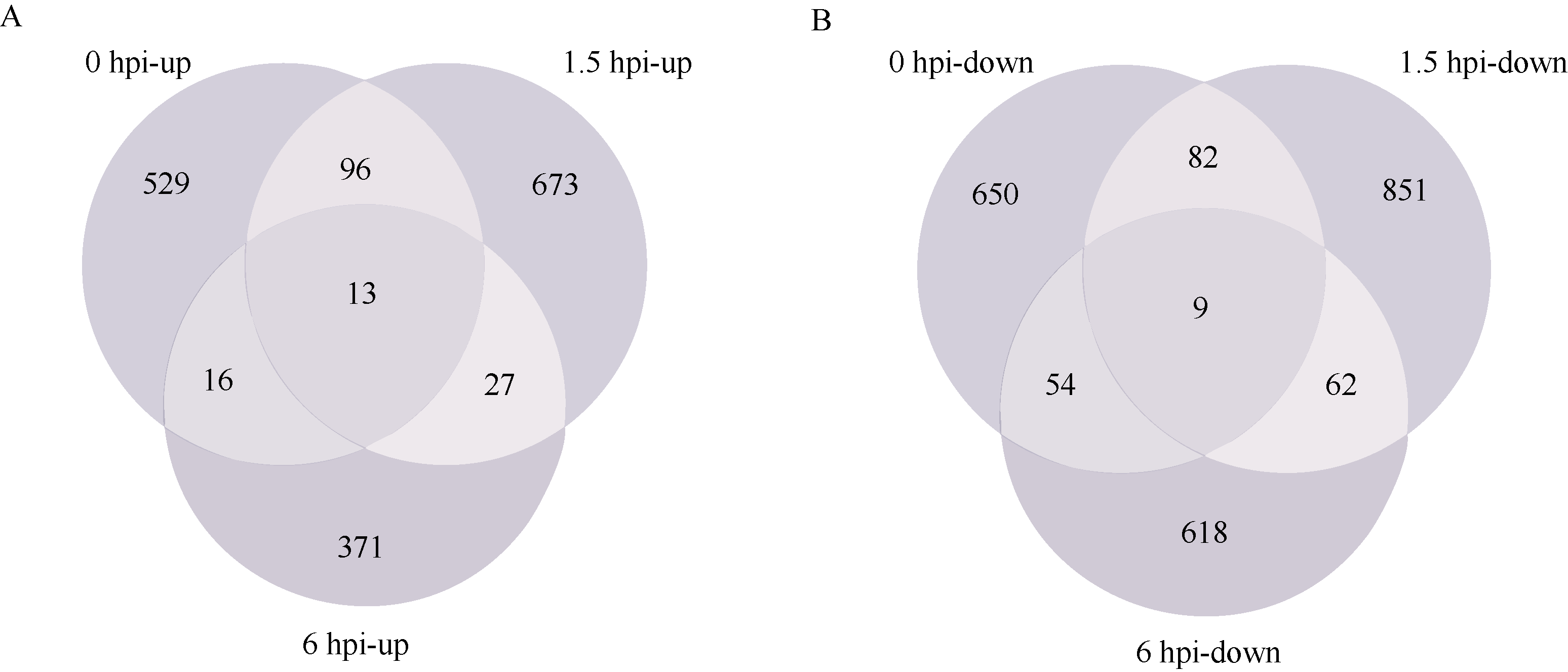
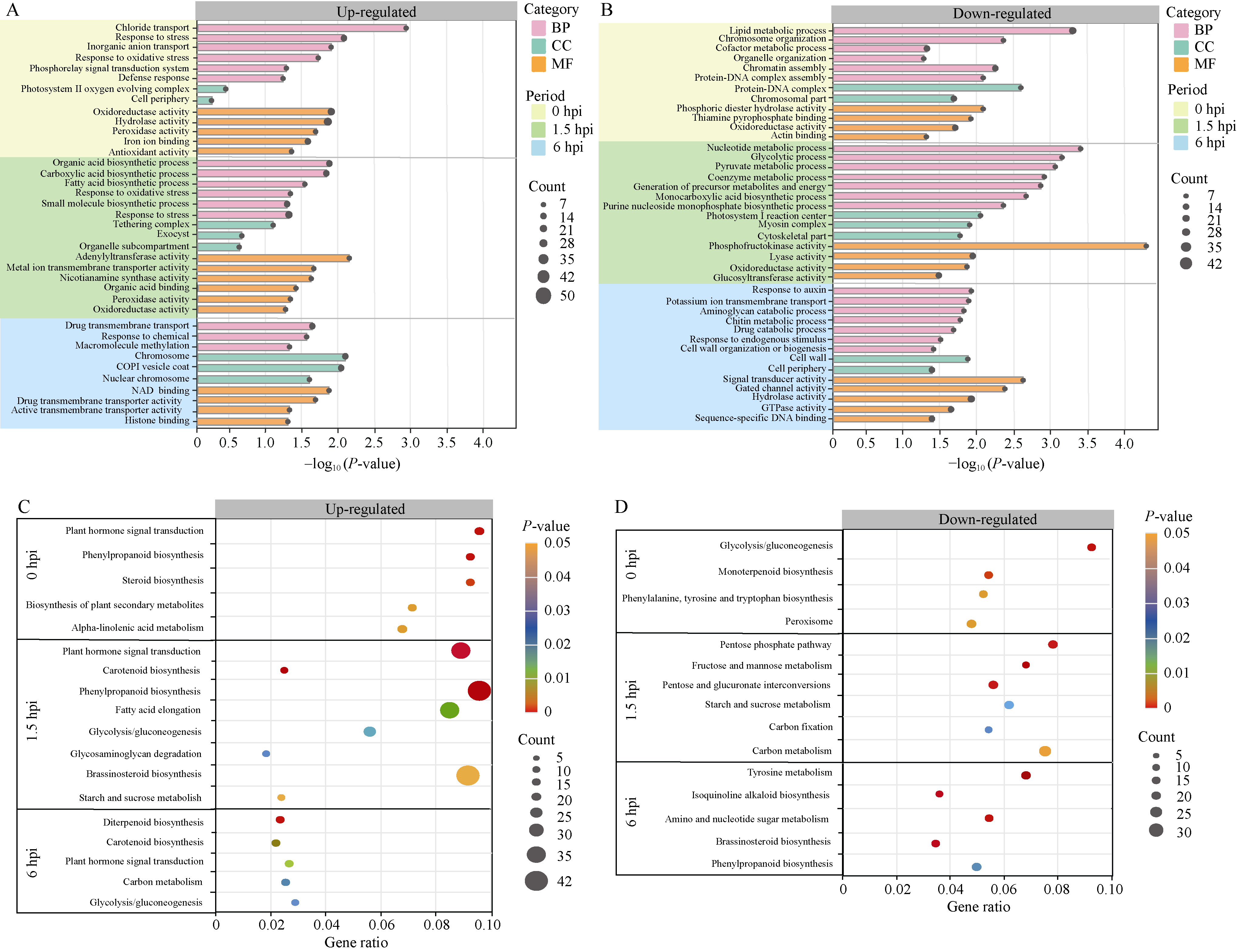
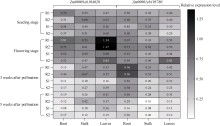
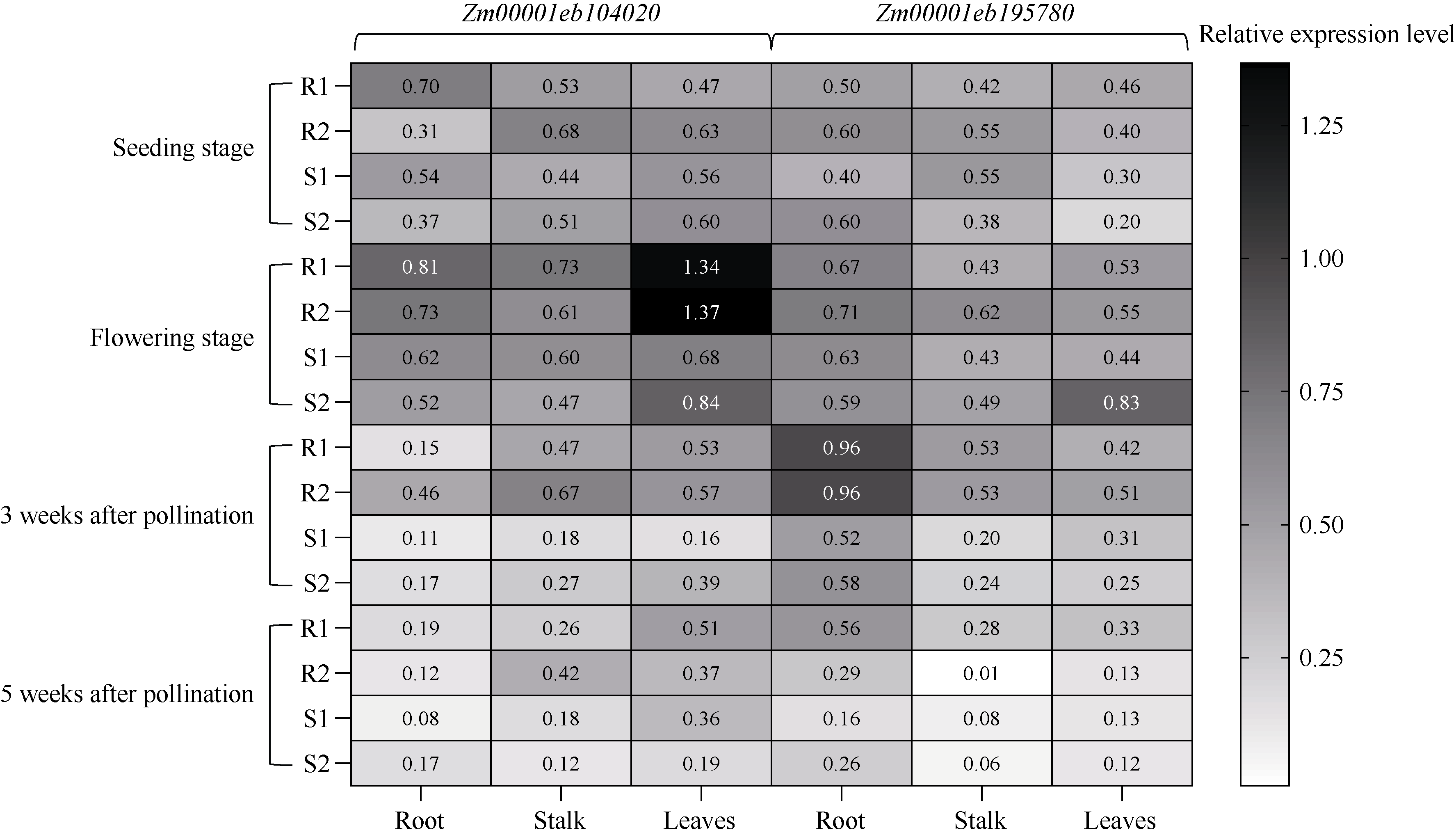
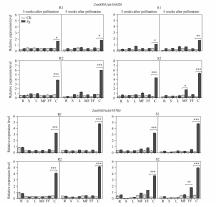
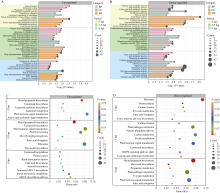
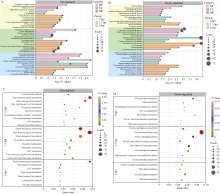
禾谷镰孢(Fusarium graminearum, Fg)穗腐病是造成我国西南地区玉米减产的主要因素之一。本研究选取对禾谷镰孢穗腐病表现高抗和高感的玉米自交系各2个(高抗系4019和NMJT, 高感系黄早四和GEMS61), 对授粉后15 d的籽粒接种禾谷镰孢, 设置3个侵染时间点进行取样和转录组测序, 通过差异表达基因(differentially expressed genes, DEG)分析并结合前期全基因组关联分析(genome-wide association study, GWAS)共定位、qRT-PCR验证、克隆及其序列比对和表达模式研究, 对玉米抗禾谷镰孢穗腐病候选基因进行筛选、克隆和初步验证。主要研究结果如下: (1) 转录组分析结果表明, 禾谷镰孢侵染3个时间点抗感材料之间均存在大量的DEG; 2个抗病材料间存在共同的响应机制, DEG主要富集于植物次生代谢产物、植物激素信号转导、钙信号通路和抗氧化系统等通路; 同时, 2个抗病材料间也存在特异的响应机制, 通过调控各自特异的基因表达增强其抗病性。(2) 结合转录组DEG与GWAS共定位到24个基因, 根据基因功能注释和文献报道, 从中预测了12个可能与禾谷镰孢穗腐病抗性相关的候选基因; 经qRT-PCR验证并进行克隆, 成功克隆出2个基因Zm00001eb104020和Zm00001eb195780。(3) 对2个候选基因进行序列比对和时空表达模式分析表明, 2个基因编码的蛋白序列在抗感材料间存在共同的位点突变和缺失; 2个候选基因的时空表达特征存在明显差异, 但其表达量在抗病材料中均较感病材料高, 且均表现为接种禾谷镰孢后在籽粒中被诱导显著上调。研究结果为后续玉米抗禾谷镰孢穗腐病候选基因的分子机制解析、功能验证及抗病种质的选育提供了理论依据。
| [1] | Ullstrup A J. An undescribed ear rot of corn caused by physalospora zeae. Phytopathol, 1946, 36: 201-212. |
| [2] |
Atanasova-Penichon V, Pons S, Pinson-Gadais L, et al. Chlorogenic acid and maize ear rot resistance: a dynamic study investigating Fusarium graminearum development, deoxynivalenol production, and phenolic acid accumulation. Mol Plant Microbe Interact, 2012, 25: 1605-1616.
doi: 10.1094/MPMI-06-12-0153-R |
| [3] |
Beukes I, Rose L J, van Coller G J, et al. Disease development and mycotoxin production by the Fusarium graminearum species complex associated with South African maize and wheat. Eur J Plant Pathol, 2018, 150: 893-910.
doi: 10.1007/s10658-017-1331-5 |
| [4] |
Tran T N, Lanubile A, Marocco A, et al. Transcriptome profiling of eight Zea mays lines identifies genes responsible for the resistance to Fusarium verticillioides. BMC Plant Biol, 2024, 24: 1107.
doi: 10.1186/s12870-024-05697-y |
| [5] | 陈晓娟, 文成敬. 四川省玉米穗腐病研究初报. 西南农业大学学报(自然科学版), 2002, 24(1): 21-23. |
| Chen X J, Wen C J. Preliminary study of maize ear rot in Sichuan. J Southwest Agric Univ (Nat Sci Edn), 2002, 24(1): 21-23 (in Chinese with English abstract). | |
| [6] | 李辉, 向葵, 张志明, 等. 玉米穗腐病抗性机制及抗病育种研究进展. 玉米科学, 2019, 27(4): 167-174. |
| Li H, Xiang K, Zhang Z M, et al. Research progress on ear rot resistant mechanism and resistant breeding in maize. J Maize Sci, 2019, 27(4): 167-174 (in Chinese with English abstract). | |
| [7] | 张帆, 万雪琴, 潘光堂. 玉米抗穗粒腐病QTL定位. 作物学报, 2007, 33: 491-496. |
| Zhang F, Wan X Q, Pan G T. Molecular mapping of QTL for resistance to maize ear rot caused by Fusarium moniliforme. Acta Agron Sin, 2007, 33: 491-496 (in Chinese with English abstract). | |
| [8] | 张艳, 谭静. 玉米穗粒腐病的研究进展. 现代农业科技, 2014(21): 121-122. |
| Zhang Y, Tan J. Research progress on ear rot in maize. Mod Agric Sci Technol, 2014(21): 121-122 (in Chinese with English abstract). | |
| [9] |
Folcher L, Jarry M, Weissenberger A, et al. Comparative activity of agrochemical treatments on mycotoxin levels with regard to corn borers and Fusarium mycoflora in maize (Zea mays L.) fields. Crop Prot, 2009, 28: 302-308.
doi: 10.1016/j.cropro.2008.11.007 |
| [10] |
Lanubile A, Maschietto V, Borrelli V M, et al. Molecular basis of resistance to Fusarium ear rot in maize. Front Plant Sci, 2017, 8: 1774.
doi: 10.3389/fpls.2017.01774 |
| [11] |
段灿星, 王晓鸣, 宋凤景, 等. 玉米抗穗腐病研究进展. 中国农业科学, 2015, 48: 2152-2164.
doi: 10.3864/j.issn.0578-1752.2015.11.007 |
| Duan C X, Wang X M, Song F J, et al. Advances in research on maize resistance to ear rot. Sci Agric Sin, 2015, 48: 2152-2164 (in Chinese with English abstract). | |
| [12] | 席靖豪. 黄淮海夏玉米穗腐病病原多样性分析及玉米新品种抗病性鉴定. 河南农业大学硕士学位论文, 河南郑州, 2018. |
| Xi J H. Pathogen Diversity of Summer Maize Ear Rot in Huang-Huai-Hai Region and Resistance Identification of New Maize Cultivars. MS Thesis of Henan Agricultural University, Zhengzhou, Henan, China, 2018 (in Chinese with English abstract). | |
| [13] | 程璐, 陈家斌, 张艺璇, 等. 两种优势病原菌玉米穗腐病的研究比较. 云南大学学报(自然科学版), 2022, 44: 647-654. |
| Cheng L, Chen J B, Zhang Y X, et al. Research comparison of two dominant pathogens on maize ear rot. J Yunnan Univ (Nat Sci Edn), 2022, 44: 647-654 (in Chinese with English abstract). | |
| [14] | 秦子惠, 任旭, 江凯, 等. 我国玉米穗腐病致病镰孢种群及禾谷镰孢复合种的鉴定. 植物保护学报, 2014, 41: 589-596. |
| Qin Z H, Ren X, Jiang K, et al. Identification of Fusarium species and F. graminearum species complex causing maize ear rot in China. J Plant Prot, 2014, 41 589-596 (in Chinese with English abstract). | |
| [15] | 张小飞, 邹成佳, 崔丽娜, 等. 西南地区玉米穗腐病病原分离鉴定及接种方法研究. 西南农业学报, 2012, 25: 2078-2082. |
| Zhang X F, Zou C J, Cui L N, et al. Identification of pathogen causing maize ear rot and inoculation technique in southwest China. Southwest China J Agric Sci, 2012, 25: 2078-2082 (in Chinese with English abstract). | |
| [16] |
苏爱国, 王帅帅, 段赛茹, 等. 玉米抗禾谷镰孢菌穗粒腐病种质资源鉴定. 植物遗传资源学报, 2021, 22: 971-978.
doi: 10.13430/j.cnki.jpgr.20210201004 |
| Su A G, Wang S S, Duan S R, et al. Identification for ear rot resistance against Fusarium graminearum in maize germplasm. J Plant Genet Resour, 2021, 22: 971-978 (in Chinese with English abstract). | |
| [17] |
Mesterházy Á, Lemmens M, Reid L M. Breeding for resistance to ear rots caused by Fusarium spp. in maize-a review. Plant Breed, 2012, 131: 1-19.
doi: 10.1111/pbr.2011.131.issue-1 |
| [18] | 宋立秋, 魏利民, 王振营, 等. 亚洲玉米螟与串珠镰孢菌复合侵染对玉米产量损失的影响. 植物保护学报, 2009, 36: 487-490. |
| Song L Q, Wei L M, Wang Z Y, et al. Effect of infestation by the Asian corn borer together with Fusarium verticillioides on corn yield loss. J Plant Prot, 2009, 36: 487-490 (in Chinese with English abstract). | |
| [19] | 王宝宝. 玉米穗腐病致病镰孢菌鉴定与寄主抗性. 中国农业科学院硕士学位论文, 北京, 2020. |
| Wang B B. Identification of Pathogenic Fusarium Species Causing Maize Ear Rot and Study on Host Resistance. MS Thesis of Chinese Academy of Agricultural Sciences, Beijing, China, 2020 (in Chinese with English abstract). | |
| [20] |
Gauthier L, Bonnin-Verdal M N, Marchegay G, et al. Fungal biotransformation of chlorogenic and caffeic acids by Fusarium graminearum: new insights in the contribution of phenolic acids to resistance to deoxynivalenol accumulation in cereals. Int J Food Microbiol, 2016, 221: 61-68.
doi: S0168-1605(16)30006-X pmid: 26812586 |
| [21] |
Yuan G S, Shi J H, Zeng C, et al. Integrated analysis of transcriptomics and defense-related phytohormones to discover hub genes conferring maize Gibberella ear rot caused by Fusarium graminearum. BMC Genomics, 2024, 25: 733.
doi: 10.1186/s12864-024-10656-w |
| [22] | 杨俊伟, 王建军, 赵变平, 等. 玉米新品种抗禾谷镰孢菌穗腐病鉴定与评价. 河北农业科学, 2020, 24(4): 47-49. |
| Yang J W, Wang J J, Zhao B P, et al. Identification and evaluation of resistance of maize hybrids to Fusarium graminearum ear rot. J Hebei Agric Sci, 2020, 24(4): 47-49 (in Chinese with English abstract). | |
| [23] | 夏玉生, 郭成, 温胜慧, 等. 玉米种质抗拟轮枝镰孢与禾谷镰孢穗腐病鉴定及抗性多样性分析. 植物遗传资源学报, 2022, 23: 61-71. |
| Xia Y S, Guo C, Wen S H, et al. Identification of maize germplasm resistant to Fusarium ear rot and Gibberella ear rot and genetic diversity analysis of resistant lines. J Plant Genet Resour, 2022, 23: 61-71 (in Chinese with English abstract). | |
| [24] |
段灿星, 崔丽娜, 夏玉生, 等. 玉米种质资源对拟轮枝镰孢与禾谷镰孢穗腐病的抗性精准鉴定与分析. 作物学报, 2022, 48: 2155-2167.
doi: 10.3724/SP.J.1006.2022.13055 |
|
Duan C X, Cui L N, Xia Y S, et al. Precise characterization and analysis of maize germplasm resources for resistance to Fusarium ear rot and Gibberella ear rot. Acta Agron Sin, 2022, 48: 2155-2167 (in Chinese with English abstract).
doi: 10.3724/SP.J.1006.2022.13055 |
|
| [25] | 何玥, 郭爽, 王栋, 等. 玉米地方种质资源对禾谷镰孢菌穗腐病的抗性评价. 耕作与栽培, 2023, 43(5): 1-5. |
| He Y, Guo S, Wang D, et al. Identification for ear rot resistance against Fusarium graminearum in maize Landrace germplasm. Tillage Cult, 2023, 43(5): 1-5 (in Chinese with English abstract). | |
| [26] | 陈鸽, 王敏, 周德龙, 等. 523份玉米自交系对禾谷镰孢穗腐病和灰斑病的抗性鉴定. 中国农业大学学报, 2025, 30(1): 27-37. |
| Chen G, Wang M, Zhou D L, et al. Resistance evaluation of 523 maize inbred lines to Gibberella ear rot and gray leaf spot. J China Agric Univ, 2025, 30(1): 27-37 (in Chinese with English abstract). | |
| [27] |
Butrón A, Reid L M, Santiago R, et al. Inheritance of maize resistance to Gibberella and Fusarium ear rots and kernel contamination with deoxynivalenol and fumonisins. Plant Pathol, 2015, 64: 1053-1060.
doi: 10.1111/ppa.2015.64.issue-5 |
| [28] |
Martin M, Dhillon B S, Miedaner T, et al. Inheritance of resistance to Gibberella ear rot and deoxynivalenol contamination in five flint maize crosses. Plant Breed, 2012, 131: 28-32.
doi: 10.1111/pbr.2011.131.issue-1 |
| [29] |
Xia Y S, Wang B B, Zhu L H, et al. Identification of a Fusarium ear rot resistance gene in maize by QTL mapping and RNA sequencing. Front Plant Sci, 2022, 13: 954546.
doi: 10.3389/fpls.2022.954546 |
| [30] |
Reinprecht Y, Wu X G, Yan S, et al. A microarray-based approach for identifying genes for resistance to Fusarium graminearum in maize (Zea mays L.). Cereal Res Commun, 2008, 36: 253-259.
doi: 10.1556/CRC.36.2008.Suppl.B.23 |
| [31] |
Yuan G S, Chen B F, Peng H, et al. QTL mapping for resistance to ear rot caused by Fusarium graminearum using an IBM Syn 10 DH population in maize. Mol Breed, 2020, 40: 91.
doi: 10.1007/s11032-020-01158-0 |
| [32] |
Akohoue F, Miedaner T. Meta-analysis and co-expression analysis revealed stable QTL and candidate genes conferring resistances to Fusarium and Gibberella ear rots while reducing mycotoxin contamination in maize. Front Plant Sci, 2022, 13: 1050891.
doi: 10.3389/fpls.2022.1050891 |
| [33] | 王梓钰, 李世界, 闻竞, 等. 玉米禾谷镰孢穗腐病抗性的QTL定位. 玉米科学, 2022, 30(4): 31-39. |
| Wang Z Y, Li S J, Wen J, et al. QTL mapping of resistance to Gibberella ear rot in maize. J Maize Sci, 2022, 30(4): 31-39 (in Chinese with English abstract). | |
| [34] |
周帆, 杨喆, 崔婷茹, 等. 玉米ZmBT2b基因在抵抗禾谷镰孢侵染中的功能研究. 河北农业大学学报, 2024, 47(1): 19-28.
doi: 10.13320/j.cnki.jauh.2024.0003 |
| Zhou F, Yang Z, Cui T R, et al. Function of ZmBT2b gene in maize resistance to Fusarium graminearum. J Hebei Agric Univ, 2024, 47(1): 19-28 (in Chinese with English abstract). | |
| [35] | 闻竞, 邢跃先, 沈彦岐, 等. 玉米禾谷镰孢穗腐病抗性基因的挖掘. 分子植物育种, 网络首发[2025-01-14], https://kns.cnki.net/KCMS/detail/detail.aspx?filename=FZZW20250113007&dbname=CJFD&dbcode=CJFQ. |
| Wen J, Xing Y X, Shen Y Q, et al. Exploration of specific gene(s) for ear rot resistance to Fusarium graminearum in maize. Mol Plant Breed, Published online [2025-01-14], https://kns.cnki.net/KCMS/detail/detail.aspx?filename=FZZW20250113007&dbname=CJFD&dbcode=CJFQ (in Chinese with English abstract). | |
| [36] | 高佳琪. 玉米穗腐病抗性与花期性状的全基因组关联分析. 云南大学硕士学位论文, 云南昆明, 2022. |
| Gao J Q. Genome-wide Association Study of Ear Rot Resistance and Flowering Traits of Maize. MS Thesis of Yunnan University, Kunming, Yunnan, China, 2022 (in Chinese with English abstract). | |
| [37] |
Yao L S, Li Y M, Ma C Y, et al. Combined genome-wide association study and transcriptome analysis reveal candidate genes for resistance to Fusarium ear rot in maize. J Integr Plant Biol, 2020, 62: 1535-1551.
doi: 10.1111/jipb.v62.10 |
| [38] |
Zhang Y, Peng Y X, Liu J, et al. Tetratricopeptide repeat protein SlREC2 positively regulates cold tolerance in tomato. Plant Physiol, 2023, 192: 648-665.
doi: 10.1093/plphys/kiad085 pmid: 36760172 |
| [39] |
Guo J, Yao Q, Dong J, et al. Immunophilin FKB20-2 participates in oligomerization of photosystem I in Chlamydomonas. Plant Physiol, 2024, 194: 1631-1645.
doi: 10.1093/plphys/kiad645 |
| [40] | 段明. 低温胁迫下番茄类囊体膜抗坏血酸过氧化物酶基因的表达和功能研究. 山东农业大学博士学位论文, 山东泰安, 2012. |
| Duan M. Expression and Functional Analysis of the LetAPX in Tomato under Chilling Stress. PhD Dissertation of Shandong Agricultural University, Tai’an, Shandong, China, 2012 (in Chinese with English abstract). | |
| [41] |
Yin W C, Xiao Y H, Niu M, et al. ARGONAUTE 2 enhances grain length and salt tolerance by activating BIG GRAIN3 to modulate cytokinin distribution in rice. Plant Cell, 2020, 32: 2292-2306.
doi: 10.1105/tpc.19.00542 |
| [42] | 查笑君, 马伯军, 潘建伟, 等. 植物富亮氨酸重复类受体蛋白激酶的研究进展. 浙江师范大学学报(自然科学版), 2010, 33(1): 7-12. |
| Zha X J, Ma B J, Pan J W, et al. Research advances in leucine-rich repeat receptor-like protein kinases in plants. J Zhejiang Norm Univ (Nat Sci), 2010, 33(1): 7-12 (in Chinese with English abstract). | |
| [43] | 安炎黄. 磷脂酶参与冬凌草甲素对拟南芥的化感潜能作用. 西北师范大学硕士学位论文, 甘肃兰州, 2019. |
| An Y H. Phospholipase is Involved in the Allelopathy of Oridonin in Arabidopsis thaliana. MS Thesis of Northwest Normal University, Lanzhou, Gansu, China, 2019 (in Chinese with English abstract). | |
| [44] | 王秀娟, 高山, 王国泽. 磷脂酶D的抗逆特性及其活性检测研究. 湖北农业科学, 2014, 53: 998-1000. |
| Wang X J, Gao S, Wang G Z. Characteristics of stress tolerance and activity detection of phospholipase D. Hubei Agric Sci, 2014, 53: 998-1000 (in Chinese with English abstract). | |
| [45] |
Walley J W, Sartor R C, Shen Z X, et al. Integration of omic networks in a developmental atlas of maize. Science, 2016, 353: 814-818.
doi: 10.1126/science.aag1125 pmid: 27540173 |
| [46] | 陈道波, 王教瑜, 肖琛闻, 等. ABC转运蛋白结构及在植物病原真菌中的功能研究进展. 生物化学与生物物理进展, 2021, 48: 309-316. |
| Chen D B, Wang J Y, Xiao C W, et al. Research progress in structure of ABC transporters and their function in pathogenic fungi. Prog Biochem Biophys, 2021, 48: 309-316 (in Chinese with English abstract). | |
| [47] |
Kovalchuk A, Driessen A J M. Phylogenetic analysis of fungal ABC transporters. BMC Genomics, 2010, 11: 177.
doi: 10.1186/1471-2164-11-177 pmid: 20233411 |
| [48] |
Aryal B, Xia J, Hu Z H, et al. An LRR receptor kinase controls ABC transporter substrate preferences during plant growth- defense decisions. Curr Biol, 2023, 33: 2008-2023.e8.
doi: 10.1016/j.cub.2023.04.029 |
| [49] |
位欣欣, 兰海燕. 植物MYB转录因子调控次生代谢及逆境响应的研究进展. 生物技术通报, 2022, 38(8): 12-23.
doi: 10.13560/j.cnki.biotech.bull.1985.2021-1350 |
| Wei X X, Lan H Y. Advances in the regulation of plant MYB transcription factors in secondary metabolism and stress response. Biotechnol Bull, 2022, 38(8): 12-23 (in Chinese with English abstract). | |
| [50] | 蒋滔. 玉米抗灰斑病主效QTL-qGLS8候选基因的功能鉴定与分析. 贵州大学硕士学位论文, 贵州贵阳, 2023. |
| Jiang T. Functional Identification and Analysis of Candidate Gene QTL-qGLS8 for Resistance to Gray Leaf Spot in Maize. MS Thesis of Guizhou University, Guiyang, Guizhou, China, 2023 (in Chinese with English abstract). | |
| [51] |
Armijo G, Salinas P, Monteoliva M I, et al. A salicylic acid-induced lectin-like protein plays a positive role in the effector-triggered immunity response of Arabidopsis thaliana to Pseudomonas syringae Avr-Rpm1. Mol Plant Microbe Interact, 2013, 26: 1395-1406.
doi: 10.1094/MPMI-02-13-0044-R |
| [52] |
Nie Y B, Ji W Q. Cloning and characterization of disease resistance protein RPM1 genes against powdery mildew in wheat line N9134. Cereal Res Commun, 2019, 47: 473-483.
doi: 10.1556/0806.47.2019.27 |
| [53] |
Wang A J, Shu X Y, Jing X, et al. Identification of rice (Oryza sativa L.) genes involved in sheath blight resistance via a genome- wide association study. Plant Biotechnol J, 2021, 19: 1553-1566.
doi: 10.1111/pbi.v19.8 |
| [54] | 陈雷. 玉米磷脂酶D基因家族的克隆及功能分析. 四川农业大学硕士学位论文, 四川雅安, 2019. |
| Chen L. Cloning and Functional Analysis of Maize Phospholipase D Gene Family. MS Thesis of Sichuan Agricultural University, Ya’an, Sichuan, China, 2019 (in Chinese with English abstract). | |
| [55] |
Li J X, Yu F, Guo H, et al. Crystal structure of plant PLDα1 reveals catalytic and regulatory mechanisms of eukaryotic phospholipase D. Cell Res, 2020, 30: 61-69.
doi: 10.1038/s41422-019-0244-6 pmid: 31619765 |
| [1] | 刘恩波, 陈静, 李红星, 于宁宁, 任佰朝, 赵斌, 刘鹏, 张吉旺. 遮阴改变源-库平衡和调节碳水化合物代谢进而抑制夏玉米幼穗发育[J]. 作物学报, 2026, 52(6): 1891-1901. |
| [2] | 梁进宇, 尹嘉德, 王红丽, 张国平, 侯慧芝, 董博, 马明生. 基于无人机高光谱和机器学习的旱地饲用玉米叶片氮含量估测[J]. 作物学报, 2026, 52(6): 1788-1801. |
| [3] | 孙淑凤, 许振南, 黄嘉鑫, 翁建峰, 李新海. 玉米MAPK家族全基因组鉴定及其对拟轮枝镰孢菌感染的响应[J]. 作物学报, 2026, 52(5): 1291-1308. |
| [4] | 张宁宁, 滕雨菲, 任娜娜, 魏兴卓, 闫书豪, 樊可心, 王永宏, 陈文康, 张兴华, 朱万超, 徐淑兔, 薛吉全. 201份玉米自交系抗旱表型评价及可塑性分析[J]. 作物学报, 2026, 52(5): 1309-1325. |
| [5] | 张鸿蓉, 王菲儿, 李盼, 仇海龙, 朱静, 赵连豪, 南运有, 何蔚, 樊志龙, 胡发龙, 柴强, 殷文. 减量20%灌水与25%有机肥替代化肥提高青贮玉米产量的光合特性[J]. 作物学报, 2026, 52(5): 1487-1500. |
| [6] | 杨欣雨, 崔文涛, 迪力尼格尔·阿力木, 汪凯翔, 吴鹏昊, 任姣姣. 玉米穗上叶片数全基因组关联分析和全基因组选择[J]. 作物学报, 2026, 52(5): 1573-1590. |
| [7] | 韩亚鑫, 何冠华, 张小琼, 张登峰, 李永祥, 刘旭洋, 王天宇, 黎裕, 邹华文, 李春辉. 基于RNA-Seq和BSA-Seq联合分析挖掘玉米侧根密度基因资源[J]. 作物学报, 2026, 52(5): 1341-1352. |
| [8] | 杨扬, 常诗惠, 田红丽, 易红梅, 王璐, 任洁, 范亚明, 刘亚维, 王凤格, 赵久然. 不同生态区国审玉米品种的遗传多样性分析[J]. 作物学报, 2026, 52(5): 1352-1364. |
| [9] | 蔡宏玮, 于爱忠, 姜科强, 王鹏飞, 王玉珑, 霍建喆, 庞小能, 尹波, 尚永盼. 干旱灌区有机肥替代部分化肥促进甜玉米产量提升的关键机制[J]. 作物学报, 2026, 52(4): 1166-1180. |
| [10] | 田红丽, 杨扬, 范亚明, 易红梅, 郭丹丹, 王凤格, 赵久然. 适于玉米品种鉴定的一套三等位变异SNP新型标记组合[J]. 作物学报, 2026, 52(4): 993-1005. |
| [11] | 杨亚莉, 徐明睿, 马越飞, 海艺蕊, 刘凯栋, 刘万茂, 孙颖. 玉米根尖及整根响应缺铁的转录组比较研究[J]. 作物学报, 2026, 52(4): 1006-1021. |
| [12] | 马亮, 马璐, 张舒钰, 章慧敏, 王仁明, 宋旭东, 张振良, 冒宇翔, 陆虎华, 陈国清, 郝德荣, 周广飞. 玉米苞叶数目转录组分析及候选基因鉴定[J]. 作物学报, 2026, 52(3): 790-801. |
| [13] | 孟成, 王哲. 玉米ZmPFK基因家族全基因组鉴定及响应胁迫表达分析[J]. 作物学报, 2026, 52(3): 764-779. |
| [14] | 李新浩, 邢梦柯, 周梓惠, 李思烨, 任昊, 王洪章, 赖华江. 外源褪黑素通过协调光反应与暗反应增强玉米苗期的耐热性[J]. 作物学报, 2026, 52(3): 839-856. |
| [15] | 张超, 郭欢, 李忠玲, 岳淑宁, 赵娜. 基于BSA-seq技术定位玉米籽粒花青素关联基因[J]. 作物学报, 2026, 52(3): 780-789. |
|
||