欢迎访问作物学报,今天是
作物学报 ›› 2020, Vol. 46 ›› Issue (7): 1052-1062.doi: 10.3724/SP.J.1006.2020.94144
贾小平1,*( ),袁玺垒1,李剑峰1,王永芳2,张小梅1,张博1,全建章2,董志平2,*()
JIA Xiao-Ping1,*(),YUAN Xi-Lei1,LI Jian-Feng1,WANG Yong-Fang2,ZHANG Xiao-Mei1,ZHANG Bo1,QUAN Jian-Zhang2,DONG Zhi-Ping2,*()
摘要:
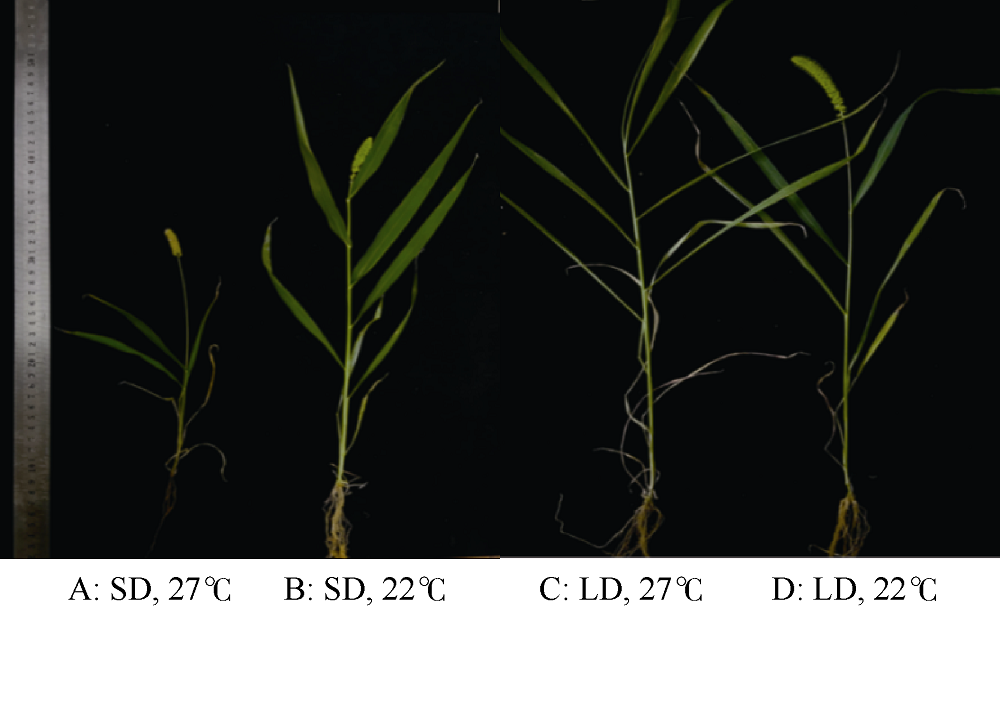
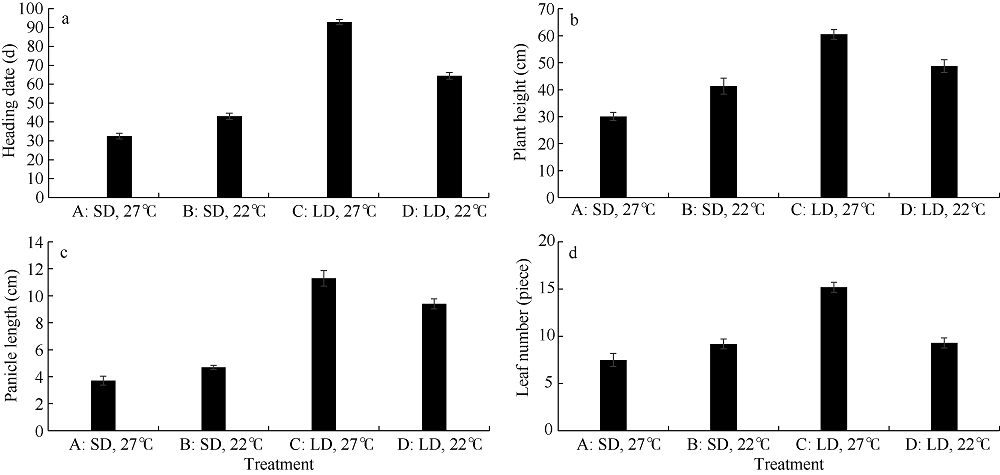
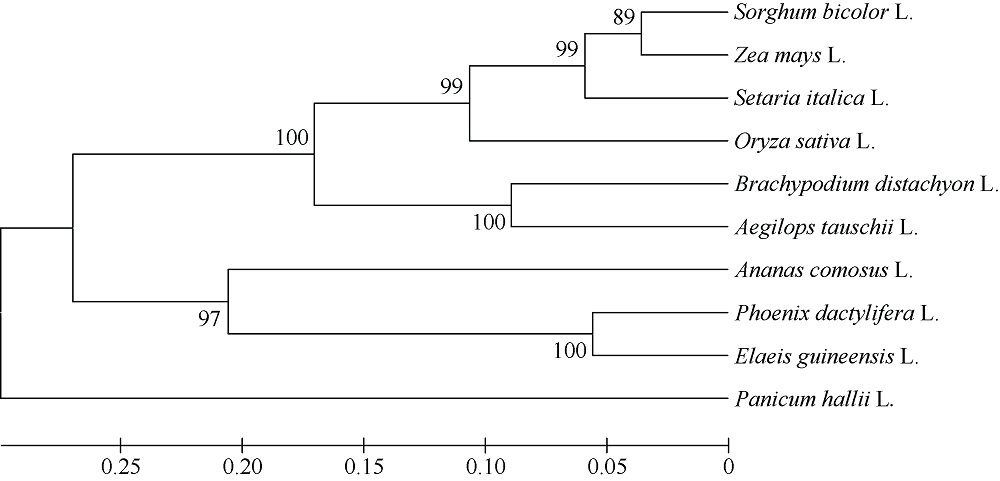
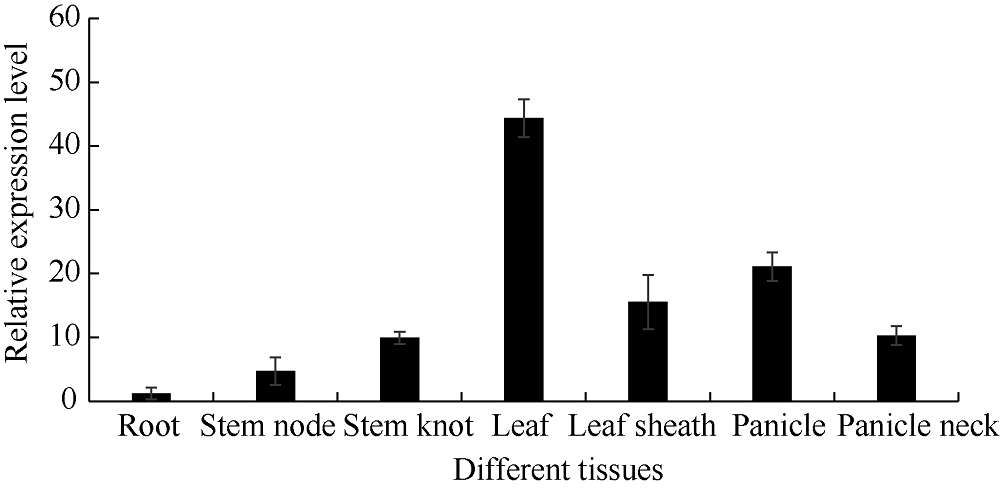
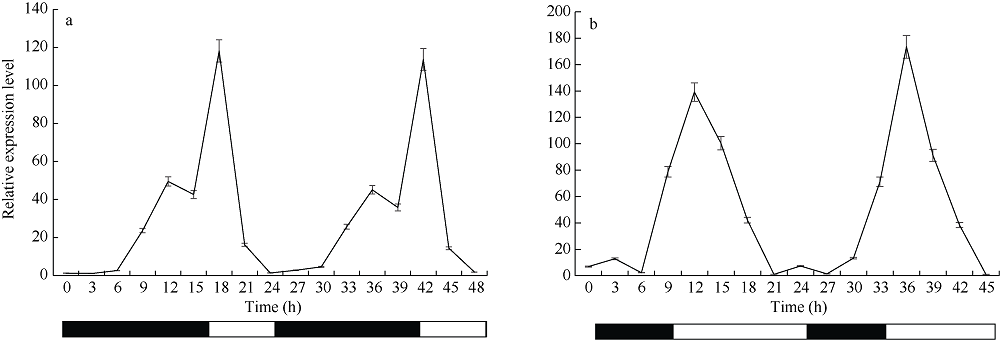
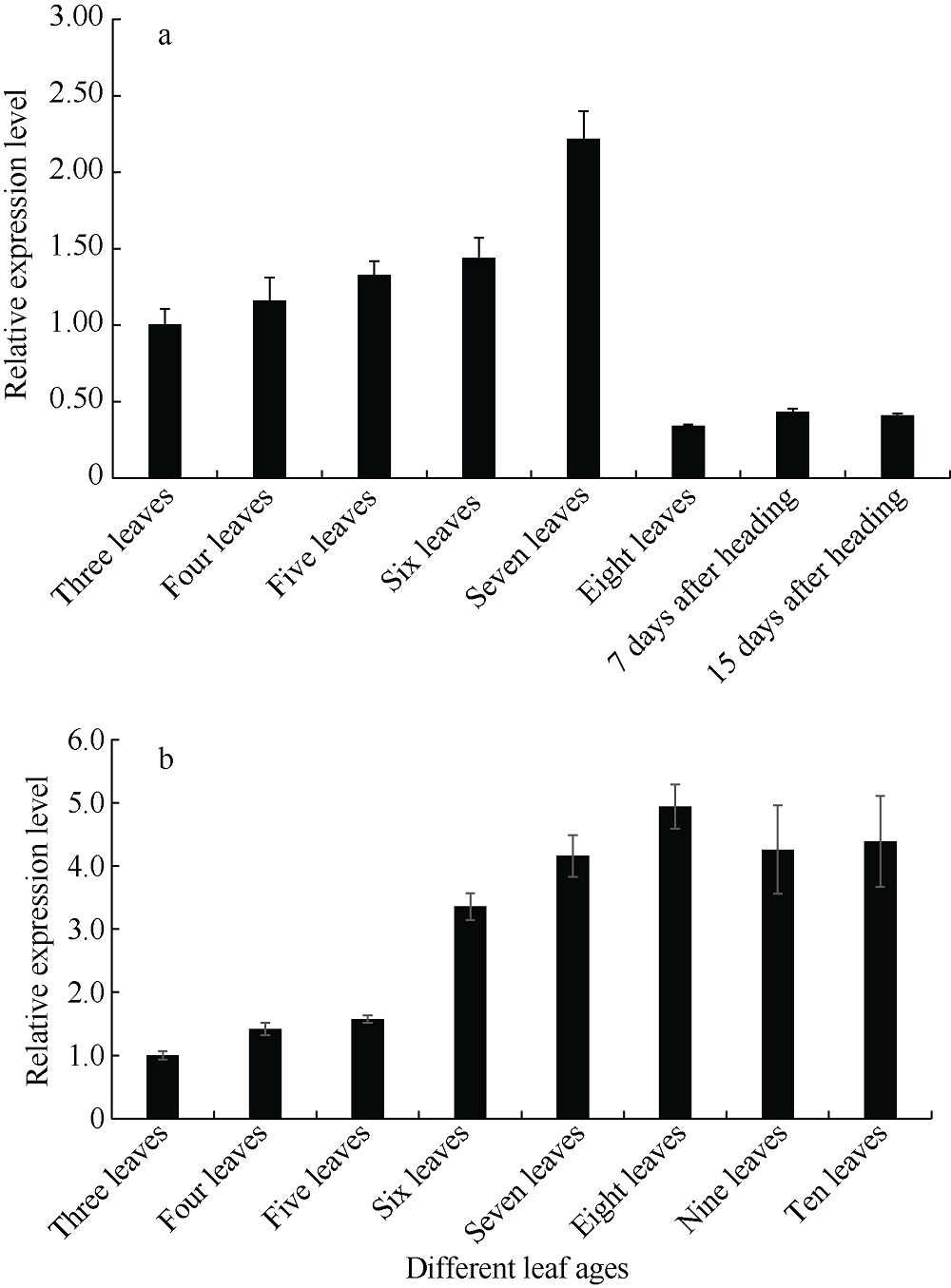
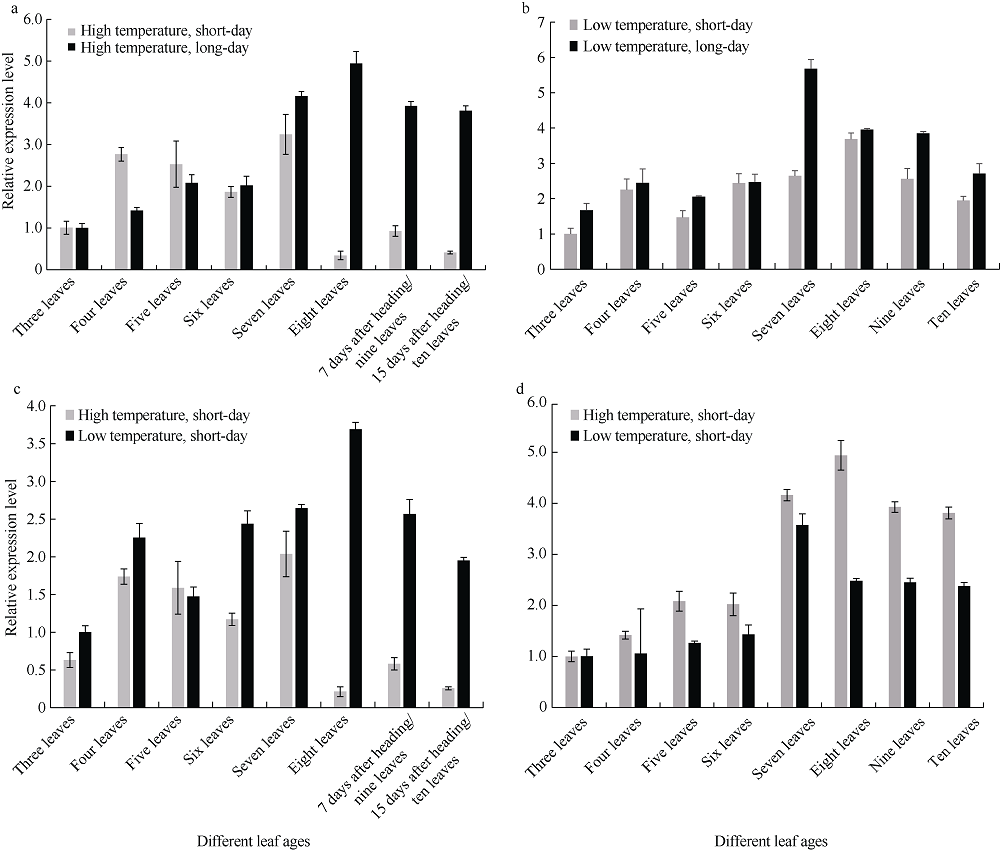
光周期和温度是影响作物生长发育、生态适应性和产量的2个重要环境因素, 揭示光温互作对作物生长发育的效应及其分子机制对育种实践和理论研究具有重要意义。本研究设置长日照高温、长日照低温、短日照高温、短日照低温4个光温处理, 调查‘黄毛谷’抽穗期、株高、叶片数和穗长。结果表明, 光周期对谷子的发育起关键作用, 温度的改变不影响长日照比短日照延迟谷子生殖生长的效应, 温度的作用随光周期的不同而异, 短日照条件下, 高温缩短谷子营养生长期而低温延长营养生长期, 长日照条件下则相反; 对谷子生殖生长的促进作用是短日照高温>短日照低温>长日照低温>长日照高温。利用RT-PCR技术从‘黄毛谷’叶片克隆了一个CCT结构域基因(SiCCT), 该基因编码286个氨基酸, 属于CMF亚家族成员, 基于CCT域基因氨基酸序列的系统进化分析, 谷子与高粱、玉米亲缘关系较近。实时荧光定量PCR分析发现, SiCCT基因在‘黄毛谷’叶片中高表达, 其次为幼穗和叶鞘; 长日照、短日照处理SiCCT基因均表现24 h昼夜节律性特点, 短日照七叶期表达水平最高, 八叶期(抽穗)及穗后表达迅速降低, 长日照七叶至十叶期‘黄毛谷’处于营养生长期, SiCCT基因维持较高表达水平; 无论高温低温, 长日照条件下SiCCT基因在各叶期表达量整体高于短日照处理, 长日照条件下低温处理SiCCT基因的相对表达量明显低于高温处理, SiCCT基因的总体表达量与‘黄毛谷’营养生长期存在正相关。总之SiCCT基因受光周期调控, 同时也受温度调控, 因而推测SiCCT基因参与了光周期途径和感温性途径, 并通过二者互作调控谷子营养生长和生殖生长的全过程。
| [1] |
Song Y H, Ito S, Imaizumi T. Flowering time regulation: photoperiod- and temperature-sensing in leaves. Trends Plant Sci, 2013,18:575-583.
doi: 10.1016/j.tplants.2013.05.003 pmid: 23790253 |
| [2] |
Balasubramanian S, Sureshkumar S, Lempe J, Weigel D. Potent induction of Arabidopsis thaliana flowering by elevated growth temperature. PLoS Genet, 2006,2:e106. doi: 10.1371/journal. pgen.0020106.
doi: 10.1371/journal.pgen.0020106 pmid: 16839183 |
| [3] |
Hemming M N, Walford S A, Fieg S, Dennis E S, Trevaskis B. Identification of high-temperature-responsive genes in cereals. Plant Physiol, 2012,158:1439-1450.
doi: 10.1104/pp.111.192013 |
| [4] |
Cober E R, Stewart D W, Voldeng H D. Crop physiology & metabolism: photoperiod and temperature responses in early- maturing, near-isogenic soybean lines. Crop Sci, 2001,41:721-727.
doi: 10.2135/cropsci2001.413721x |
| [5] | 孙洪波. 大豆光温互作新模式的验证及PEBP家族基因的克隆和功能分析. 中国农业科学院博士后出站报告, 北京, 2008. |
| Sun H B. Verification of A New Light-Temperature Interaction Model and Clone, Function Analysis of PEBP Family Genes in Soybean. Postdoctoral outbound Report of Chinese Academy of Agricultural Sciences, Beijing, China, 2008 (in Chinese with English abstract). | |
| [6] | 刘易科. 大豆光温互作新模型的验证和FT家族基因的克隆. 西北农林科技大学硕士学位论文, 陕西杨凌, 2006. |
| Liu Y K. Verification of A New Light-Temperature Interaction Model and Clone of FT Family Genes in Soybean. MS Thesis of Northwest A&F University, Yangling, Shaanxi, China, 2006 (in Chinese with English abstract). | |
| [7] | 张艺能, 周玉萍, 陈琼华, 黄小玲, 田长恩. 拟南芥开花时间调控的分子基础. 植物学报, 2014,49:469-482. |
| Zhang Y N, Zhou Y P, Chen Q H, Huang X L, Tian C E. Molecular basis of flowering time regulation in Arabidopsis. Acta Bot Sin, 2014,49:469-482(in Chinese with English abstract). | |
| [8] | 孔德艳, 陈守俊, 周立国, 高欢, 罗利军, 刘灶长. 水稻开花光周期调控相关基因研究进展. 遗传, 2016,38:532-542. |
| Kong D Y, Chen S J, Zhou L G, Gao H, Luo L J, Liu Z C. Research progress of photoperiod regulated genes on flowering time in rice. Hereditas, 2016,38:532-542 (in Chinese with English abstract). | |
| [9] |
Capovilla G, Schmid M, Pose D. Control of flowering by ambient temperature. J Exp Bot, 2015,66:59-69.
doi: 10.1093/jxb/eru416 pmid: 25326628 |
| [10] |
Kinmonth-Schultz H A, Tong X, Lee J, Song Y H, Ito S, Kim S H, Imaizumi T. Cool night-time temperatures induce the expression of CONSTANS and FLOWERING LOCUS T to regulate flowering in Arabidopsis. New Phytol, 2016,211:208-224.
doi: 10.1111/nph.13883 pmid: 26856528 |
| [11] |
Cockram J, Jones H, Leigh F J, O’Sullivan D, Powell W, Laurie D A, Greenland A J. Control of flowering time in temperate cereals: genes, domestication, and sustainable productivity. J Exp Bot, 2007,58:1231-1244.
doi: 10.1093/jxb/erm042 pmid: 17420173 |
| [12] |
Salome P A, McClung C R. PSEUDO-RESPONSE REGULATOR 7 and 9 are partially redundant genes essential for the temperature responsiveness of theArabidopsis circadian clock. Plant Cell, 2005,17:791-803.
doi: 10.1105/tpc.104.029504 pmid: 15705949 |
| [13] |
陈华夏, 申国境, 王磊, 邢永忠. 4个物种CCT结构域基因家族的序列进化分析. 华中农业大学学报, 2010,29:669-676.
doi: 1000-2421(2010)06-0669-08 |
|
Chen H X, Shen G J, Wang L, Xing Y Z. Sequence evolution analysis of CCT domain gene family in rice, Arabidopsis, maize and sorghum. J Huazhong Agric Univ, 2010,29:669-676 (in Chinese with English abstract).
doi: 1000-2421(2010)06-0669-08 |
|
| [14] |
Yano M, Katayose Y, Ashikari M, Yamanouchi U, Monna L, Fuse T, Baba T, Yamamoto K, Umehara Y, Nagamura Y, Sasaki T. Hd1, a major photoperiod sensitivity quantitative trait locus in rice, is closely related to the Arabidopsis flowering time gene CONSTANS. Plant Cell, 2000,12:2473-2483.
doi: 10.1105/tpc.12.12.2473 pmid: 11148291 |
| [15] |
Hayama R, Yokoi S, Tamaki S, Yano M, Shimamoto K. Adaptation of photoperiodic control pathways produces short-day flowering in rice. Nature, 2003,422:719-722.
doi: 10.1038/nature01549 pmid: 12700762 |
| [16] |
Campoli C, Drosse B, Searle I, Coupland G, von Korff M. Functional characterization of HvCO1, the barley (Hordeum vulgare) flowering time ortholog of CONSTANS. Plant J, 2012,69:868-880.
doi: 10.1111/j.1365-313X.2011.04839.x |
| [17] |
Yang S S, Wers B D, Morishige D T, Mullet J E. CONSTANS is a photoperiod regulated activator of flowering in sorghum. BMC Plant Biol, 2014,14:1-15.
doi: 10.1186/1471-2229-14-1 pmid: 24387633 |
| [18] | 薛为亚. 水稻产量相关基因Ghd7的分离与鉴定. 华中农业大学博士学位论文, 湖北武汉, 2008. |
| Xue W Y. Isolation and Identification of Rice Yield Related Gene Ghd7. PhD Dissertation of Huazhong Agricultural University, Wuhan, Hubei, China, 2008 (in Chinese with English abstract). | |
| [19] | 刘海洋. 水稻多效性基因Ghd7.1的克隆与功能分析. 华中农业大学博士学位论文, 湖北武汉, 2016. |
| Liu H Y. Cloning and Functional Analysis of Rice Multiplexing Gene Ghd7.1. PhD Dissertation of Huazhong Agricultural University, Wuhan, Hubei, China, 2016 (in Chinese with English abstract). | |
| [20] | Murphy R L, Morishige D T, Brady J A, Rooney W L, Yang S, Klein P E. Ghd7 (Ma6) represses sorghum flowering in long days: alleles enhance biomass accumulation and grain production. Plant Genome, 2014,7:1-10. |
| [21] |
Huang C, Sun H Y, Xu D Y, Chen Q Y, Liang Y M, Wang X F, Xu G H, Tian J G, Wang C L, Li D, Wu L S, Yang X H, Jin W W, Doebley J F, Tian F. ZmCCT9 enhances maize adaptation to higher latitudes. Proc Natl Acad Sci USA, 2018,115:e334-e341.
doi: 10.1073/pnas.1718058115 pmid: 29279404 |
| [22] |
Li Y P, Tong L X, Deng L L, Liu Q Y, Xing Y X, Wang C, Liu B S, Yang X H, Xu M L. Evaluation ofZmCCT haplotypes for genetic improvement of maize hybrids. Theor Appl Genet, 2017,130:2587-2600.
doi: 10.1007/s00122-017-2978-1 pmid: 28916922 |
| [23] |
Wu W X, Zheng X M, Lu G W, Zhong Z Z, Gao H, Chen L P, Wu C Y, Wang H J, Wang Q, Zhou K N, Wang J L, Wu F Q, Zhang X, Guo X P, Cheng Z J, Lei C L, Lin Q B, Jiang L, Wang H Y, Ge S, Wan J M. Association of functional nucleotide polymorphisms at DTH2 with the northward expansion of rice cultivation in Asia. Proc Natl Acad Sci USA, 2013,110:2775-2780.
doi: 10.1073/pnas.1213962110 pmid: 23388640 |
| [24] | 谭俊杰. 水稻CONSTANS-like基因OsCOL10作用于光周期开花途径的分子遗传与生化分析. 湖南大学博士学位论文, 湖南长沙, 2015. |
| Tan J J. Molecular Genetic and Biochemical Analysis of the Effect of OsCOL10 on Photoperiod Flowering Pathway in Rice. PhD Dissertation of Hunan University, Changsha, Hunan, China, 2015 (in Chinese with English abstract). | |
| [25] |
Liu J H, Shen J Q, Xu Y, Li X H, Xiao J H, Xiong L Z. Ghd2, a CONSTANS-like gene, confers drought sensitivity through regulation of senescence in rice. J Exp Bot, 2016,67:5785-5798.
doi: 10.1093/jxb/erw344 pmid: 27638689 |
| [26] |
Bennetzen J L, Schmutz J, Wang H, Percifield R, Hawkins J, Pontaroli A C, Estep M, Feng L, Vaughn J N, Grimwood J, Jenkins J, Barry K, Lindquist E, Hellsten U, Deshpande S, Wang X W, Wu X M, Therese Mitros T, Triplett J, Yang X H, Ye C Y, Mauro-Herrera M, Wang L, Li P H, Sharma M, Sharma R, Ronald P C, Panaud O, Kellogg E A, Brutnell T P, Doust A N, Tuskan G A, Rokhsar D, Devos K M. Reference genome sequence of the model plant setaria. Nat Biotechnol, 2012,30:555-564.
doi: 10.1038/nbt.2196 pmid: 22580951 |
| [27] |
Zhang G Y, Liu X, Quan Z W, Cheng S F, Xu X, Pan S K, Xie M, Zeng P, Yue Z, Wang W L, Tao Y, Bian C, Han C L, Xia Q J, Peng X H, Cao R, Yang X H, Zhan D L, Hu J C, Zhang Y X, Li H N, Li H, Li N, Wang J Y, Wang C C, Wang R Y, Guo T, Cai Y J, Liu C Z, Xiang H T, Shi Q X, Huang P, Chen Q C, Li Y R, Wang J, Zhao Z H, Wang J. Genome sequence of foxtail millet (Setaria italica) provides insights into grass evolution and biofuel potential. Nat Biotechnol, 2012,30:549-556.
doi: 10.1038/nbt.2195 pmid: 22580950 |
| [28] |
Brutnell T P, Lin W, Swartwood K, Goldschmidt A, Jackson D, Zhu X G, Kellogg E, Van Eck J. Setaria viridis: a model for C4 photosynthesis. Plant Cell, 2010,22:2537-2544.
doi: 10.1105/tpc.110.075309 pmid: 20693355 |
| [29] |
Lata C, Gupta S, Prasad M. Foxtail millet: a model crop for genetic and genomic studies in bioenergy grasses. Crit Rev Biotechnol, 2013,33:328-343.
doi: 10.3109/07388551.2012.716809 |
| [30] |
贾小平, 全建章, 王永芳, 董志平, 袁玺垒, 张博, 李剑峰. 不同光周期环境对谷子农艺性状的影响. 作物学报, 2019, 45:1119-1127.
doi: 10.3724/SP.J.1006.2019.84128 |
|
Jia X P, Quan J Z, Wang Y F, Dong Z P, Yuan X L, Zhang B, Li J F. Effects of different photoperiod conditions on agronomic traits of foxtail millet. Acta Agron Sin, 2019,45:1119-1127 (in Chinese with English abstract).
doi: 10.3724/SP.J.1006.2019.84128 |
|
| [31] | 杨希文, 胡银岗. 谷子DREB转录因子基因的克隆及其在干旱胁迫下的表达模式分析. 干旱地区农业研究, 2011,29(5):69-74. |
| Yang X W, Hu Y G. Cloning of a DREB gene from foxtail millet (Setaria italica L.) and its expression during drought stress. Agric Res Arid Areas, 2011,29(5):69-74 (in Chinese with English abstract). | |
| [32] |
Zhang Y, Zhang G, Xiao N, Wang L, Fu Y, Sun Z, Fang R, Chen X. The rice ‘nutrition response and root growth’ (NRR) gene regulates heading date. Mol Plant, 2013,6:585-588.
doi: 10.1093/mp/sss157 pmid: 23253602 |
| [33] |
Zhang L, Li Q P, Dong H J, He Q, Liang L W, Tan C, Han Z M, Yao W, Li G W, Zhao H, Xie W B, Xing Y Z. Three CCT domain-containing genes were identified to regulate heading date by candidate gene-based association mapping and transformation in rice. Sci Rep, 2015,5:7663.
doi: 10.1038/srep07663 pmid: 25563494 |
| [34] | 金敏亮. 玉米泛转录组的构建及玉米开花抑制因子ZmCOL3的功能解析. 华中农业大学博士学位论文, 湖北武汉, 2018. |
| Jin M L. Maize Pan-transcriptome Construction and Functional Analysis of Maize Flowering Repressor ZmCOL3. PhD Dissertation of Huazhong Agricultural University, Wuhan, Hubei, China, 2018 (in Chinese with English abstract). | |
| [35] | 章佳. 水稻CCT家族基因的功能研究和Hd1的重新克隆. 华中农业大学博士学位论文, 湖北武汉, 2017. |
| Zhang J. The Functional Analysis of Rice CCT Family Genes and the Recloning of Hd1. PhD Dissertation of Huazhong Agricultural University, Wuhan, Hebei, China, 2017 (in Chinese with English abstract). | |
| [36] | 宋远丽, 高志超, 栾维江. 温度和光周期对水稻抽穗期调控的交互作用. 中国科学: 生命科学, 2012,42:316-325. |
| Song Y L, Gao Z C, Luan W J. The interaction of temperature and photoperiod on regulating of heading date in rice. Sci China Life Sci, 2012,42:316-325 (in Chinese with English abstract). |
| [1] | 马小倩, 秦娜, 代书桃, 秦家范, 李小艳, 王淑婷, 刘忠玲, 李君霞. 175份谷子种质在2种环境下的表型变异分析[J]. 作物学报, 2026, 52(6): 1757-1773. |
| [2] | 王若楠, 张颖星, 于筱菡, 刘少雄, 王跃, 薛亚鹏, 辛旭霞, 张莉, 刘敏轩. 基于近红外快速检测技术的谷子淀粉多样性分析及模型构建[J]. 作物学报, 2025, 51(7): 1757-1768. |
| [3] | 沈傲, 刘敏, 倪迪安, 刘炜. 谷子m6A甲基转移酶基因SiMTA1的启动子序列特征和基因表达模式分析[J]. 作物学报, 2025, 51(7): 1969-1978. |
| [4] | 梁红凯, 赵苏蒙, 陆琼, 周鹏, 智慧, 刁现民, 贺强. 谷子微核心种质的构建[J]. 作物学报, 2025, 51(6): 1435-1444. |
| [5] | 郭冰, 秦家范, 李娜, 宋梦瑶, 王黎明, 李君霞, 马小倩. 谷子SHMT基因家族全基因组鉴定与表达分析[J]. 作物学报, 2025, 51(3): 586-5897. |
| [6] | 杨芳萍, 郭莹, 田媛媛, 徐玉凤, 王兰兰, 白斌, 展宗冰, 张雪婷, 徐银萍, 刘金栋. 甘肃省小麦地方品种春化光周期基因效应及抗寒性评价[J]. 作物学报, 2025, 51(2): 370-382. |
| [7] | 朱灿灿, 李君霞, 景雅, 付森杰, 秦娜, 王春义, 代书桃, 魏昕, 张程炀. 不同耐荫性谷子对遮阴的生理响应及转录组分析[J]. 作物学报, 2025, 51(12): 3211-3223. |
| [8] | 王媛, 许佳茵, 董二伟, 王劲松, 刘秋霞, 黄晓磊, 焦晓燕. 有机肥替代化肥氮对谷子氮素累积、产量及品质的影响[J]. 作物学报, 2025, 51(1): 149-160. |
| [9] | 孟凡花, 刘敏, 沈傲, 刘炜. 脂质转移蛋白SiLTP1基因参与谷子耐盐响应初探[J]. 作物学报, 2025, 51(1): 58-67. |
| [10] | 闫锋, 董扬, 李清泉, 赵富阳, 侯晓敏, 刘洋, 李青超, 赵蕾, 范国权, 刘凯. 谷子育成品种萌芽期耐冷性综合评价[J]. 作物学报, 2024, 50(9): 2207-2218. |
| [11] | 秦娜, 叶珍言, 朱灿灿, 付森杰, 代书桃, 宋迎辉, 景雅, 王春义, 李君霞. 谷子籽粒类黄酮含量和粒色的QTL定位[J]. 作物学报, 2024, 50(7): 1719-1727. |
| [12] | 李博洋, 叶茵, 楚睿雯, 井苗, 张岁岐, 严加坤. 施加生物炭对谷子干物质积累、转运、分配和土壤理化性质的影响[J]. 作物学报, 2024, 50(3): 695-708. |
| [13] | 刁现民, 王立伟, 智慧, 张俊, 李顺国, 程汝宏. 谷子中矮秆资源创制、遗传解析和育种利用[J]. 作物学报, 2024, 50(2): 265-279. |
| [14] | 阳世杰, 王华智, 潘怡敏, 黄蕊, 侯森, 秦慧彬, 穆志新, 王海岗. 山西谷子种质资源株高全基因组关联分析[J]. 作物学报, 2024, 50(12): 2984-2997. |
| [15] | 薛亚鹏, 辛旭霞, 王若楠, 于筱菡, 刘少雄, 王瑞云, 刘敏轩. 国内外谷子资源农艺、品质性状差异分析以及遗传多样性研究[J]. 作物学报, 2024, 50(10): 2468-2482. |
|
||