欢迎访问作物学报,今天是

作物学报 ›› 2026, Vol. 52 ›› Issue (10): 2939-2960.doi: 10.3724/SP.J.1006.2026.64051

• 作物遗传育种·种质资源·分子遗传学 • 上一篇    下一篇

小豆芽期耐盐种质资源筛选与耐盐机制分析

王金燕1,2(), 石琨1,2(), 吕青啡1,2, 袁政1,2, 李晨浩1,2, 张泽燕1,2, 闫建俊1,2, 闫虎斌1,2, 朱慧珺1,2, 郝青婷1,2, 赵雪英1,2, 张耀文1,2, 高伟1,2,*(), 王茜1,2,*()   

  1. 1 山西农业大学农学院 / 山西省后稷实验室(杂粮生物育种山西省实验室), 山西太原 030031
    2 农业农村部种质创新与分子育种重点实验室(部省共建), 山西太原 030031
  • 收稿日期:2026-04-20 接受日期:2026-07-15 出版日期:2026-10-12 网络出版日期:2026-07-24
  • 通讯作者: 王茜, E-mail: 15101537964@163.com;高伟, E-mail: gw3789@126.com
  • 作者简介:王金燕, E-mail: 2969933154@qq.com;
    石琨, E-mail: 1593901538@qq.com** 同等贡献
  • 基金资助:
    山西农业大学校科技创新提升工程项目(CXGC202430);财政部和农业农村部国家现代农业产业技术体系建设专项(食用豆);财政部和农业农村部国家现代农业产业技术体系建设专项(CARS-08-G10);国家自然科学基金青年基金项目(32301928);山西省后稷实验室(杂粮生物育种山西省实验室)自主立项课题(202404010930003-Y02)

Screening of salt-tolerant germplasm resources and analysis of salt tolerance mechanisms in adzuki bean (Vigna angularis) during germination

Wang Jin-Yan1,2(), Shi Kun1,2(), Lyu Qing-Fei1,2, Yuan Zheng1,2, Li Chen-Hao1,2, Zhang Ze-Yan1,2, Yan Jian-Jun1,2, Yan Hu-Bin1,2, Zhu Hui-Jun1,2, Hao Qing-Ting1,2, Zhao Xue-Ying1,2, Zhang Yao-Wen1,2, Gao Wei1,2,*(), Wang Qian1,2,*()   

  1. 1 College of Agronomy, Shanxi Agricultural University / Houji Laboratory in Shanxi Province (Minor Crops Bio-breeding Laboratory in Shanxi Province), Taiyuan 030031, Shanxi, China
    2 Key Laboratory of Minor Crop Germplasm Innovation and Molecular Breeding (Co-construction by Ministry and Province), Ministry of Agriculture and Rural Affairs, Taiyuan 030031, Shanxi, China
  • Received:2026-04-20 Accepted:2026-07-15 Published:2026-10-12 Published online:2026-07-24
  • Contact: Wang Qian, E-mail: 15101537964@163.com;Gao Wei, E-mail: gw3789@126.com
  • About author:** Contributed equally to this work
  • Supported by:
    Science and Technology Innovation Enhancement Project of Shanxi Agricultural University(CXGC202430);China Agriculture Research System of MOF and MARA (Edible Bean);China Agriculture Research System of MOF and MARA(CARS-08-G10);Young Scientists Fund of the National Natural Science Foundation of China(32301928);Self-funded Project of Houji Laboratory in Shanxi Province (Minor Crops Bio-breeding Laboratory in Shanxi Province)(202404010930003-Y02)

摘要:

盐碱地面积的不断扩大对作物生产构成严峻挑战, 挖掘小豆耐盐种质并解析其耐盐分子机制, 对扩大小豆适种区域、保障粮食安全具有重要意义。本研究以110份小豆种质资源为研究对象, 利用隶属函数和主成分分析, 将11个生长指标简化为3个综合指标, 并筛选出耐盐品种东掌小红豆和盐敏感品种特红3号。生理生化指标测定显示, 东掌小红豆在抗氧化和渗透调节能力方面显著优于特红3号。转录组分析发现, 相比对照组, 在盐处理组的东掌小红豆和特红3号中分别鉴定出3801个和7811个差异表达基因。经GO和KEGG分析表明, 这些基因主要参与代谢过程、细胞过程等生物学途径; 结合转录组和qRT-PCR鉴定到3个可能与耐盐相关的基因(LOC108343245、LOC108346293、LOC108331871), 这3个基因主要参与淀粉和糖代谢途径。本研究筛选出小豆耐盐种质, 并推测鉴定到的耐盐基因可能通过参与淀粉和糖代谢途径来调控小豆耐盐, 为培育小豆耐盐新品种和盐碱地利用提供了理论依据。

关键词: 小豆, 盐处理, 耐盐性评价, 转录组分析, 淀粉和蔗糖代谢

Abstract:

The continuous expansion of saline-alkali land poses a serious challenge to crop production. Exploring salt-tolerant germplasm resources in adzuki bean and elucidating the underlying molecular mechanisms of salt tolerance are of great significance for expanding the suitable planting area of adzuki bean and ensuring food security. In this study, 110 adzuki bean germplasm resources were used as experimental materials. Based on membership function analysis and principal component analysis (PCA), 11 growth indices were reduced to three comprehensive indices. Accordingly, the salt-tolerant cultivar Dongzhangxiaohongdou and the salt-sensitive cultivar Tehong 3 were identified. Physiological and biochemical analyses showed that Dongzhangxiaohongdou exhibited significantly stronger antioxidant capacity and osmotic adjustment ability than Tehong 3. Transcriptome analysis identified 3801 and 7811 differentially expressed genes (DEGs) in salt-treated Dongzhangxiaohongdou and Tehong 3, respectively, compared with their corresponding control groups. Gene ontology (GO) and kyoto encyclopedia of genes and genomes (KEGG) enrichment analyses showed that these DEGs were mainly involved in biological processes such as metabolic pathways and cellular processes. Integrated transcriptomic analysis and quantitative real-time PCR (qRT-PCR) validation further identified three putative salt tolerance-associated genes, LOC108343245, LOC108346293, and LOC108331871, which were primarily involved in starch and sucrose metabolism pathways. This study successfully identified salt-tolerant adzuki bean germplasm resources and suggests that the identified salt-responsive genes may regulate salt tolerance in adzuki bean through starch and sucrose metabolism. These findings provide a theoretical foundation for breeding new salt-tolerant adzuki bean varieties and promoting the rational utilization of saline-alkali soils.

Key words: adzuki bean, salt treatment, salt tolerance assessment, transcriptome analysis, starch and sucrose metabolism

附表1

110份小豆种质资源来源信息"

编号
No.
名称
Name
来源
Source
XD001 赤豆 Chidou 中国甘肃 Gansu, China
XD002 红豆 Hongdou 中国河南 Henan, China
XD003 陕州红小豆Shaanzhouhongxiaodou 中国河南 Henan, China
XD004 石门红豆 Shimenhongdou 中国河南 Henan, China
XD005 东掌小红豆Dongzhangxiaohongdou 中国河南 Henan, China
XD006 油城红小豆Youchenghongxiaodou 中国河南 Henan, China
XD007 东齐红小豆Dongqihongxiaodou 中国河南 Henan, China
XD008 大籽绿小豆Dazilyuxiaodou 中国陕西 Shaanxi, China
XD009 鹤壁白小豆Hebibaixiaodou 中国河南 Henan, China
XD010 长垣红小豆Changyuanhongxiaodou 中国河南 Henan, China
XD011 东吴老家小豆 Dongwulaojiaxiaodou 中国河南 Henan, China
XD012 东关红小豆Dongguanhongxiaodou 中国河南 Henan, China
XD013 子洲红小豆-1 Zizhouhongxiaodou-1 中国陕西 Shaanxi, China
XD014 子洲红小豆-2 Zizhouhongxiaodou-2 中国陕西 Shaanxi, China
XD015 子洲红小豆-3 Zizhouhongxiaodou-3 中国陕西 Shaanxi, China
XD016 子洲小粒红豆Zizhouxiaolihongdou 中国陕西 Shaanxi, China
XD017 子洲红小豆-4 Zizhouhongxiaodou-4 中国陕西 Shaanxi, China
XD018 响水红小豆Xiangshuihongxiaodou 中国陕西 Shaanxi, China
XD019 关镇红小豆Guanzhenhongxiaodou 中国陕西 Shaanxi, China
XD020 洛川老红小豆Luochuanlaohongxiaodou 中国陕西 Shaanxi, China
XD021 宜君红小豆Yijunhongxiaodou 中国陕西 Shaanxi, China
XD022 红小豆 Hongxiaodou 中国陕西 Shaanxi, China
XD023 同红8号 Tonghong 8 中国山西 Shanxi, China
XD024 汾小豆9号 Fenxiaodou 9 中国山西 Shanxi, China
XD025 晋小豆9号 Jinxiaodou 9 中国山西 Shanxi, China
XD026 冀红12512 Jihong 12512 中国河北 Hebei, China
XD027 冀红04096 Jihong 04096 中国河北 Hebei, China
XD028 唐红73-9 Tanghong 73-9 中国河北 Hebei, China
XD029 保红201449-1 Baohong 201449-1 中国河北 Hebei, China
XD030 保红201221-6 Baohong 201221-6 中国河北 Hebei, China
XD031 BH2013-1253-2 中国河北 Hebei, China
XD032 202002-1 中国山西 Shanxi, China
XD033 202002-2 中国山西 Shanxi, China
XD034 冀红0015 Jihong 0015 中国河北 Hebei, China
XD035 特红3号 Tehong 3 中国山西 Shanxi, China
XD036 晋小豆10号 Jinxiaodou 10 中国山西 Shanxi, China
XD037 红饭豆 Hongfandou 中国甘肃 Gansu, China
XD038 环县黄小豆Huanxianhuangxiaodou 中国甘肃 Gansu, China
XD039 环县麻小豆Huanxianmaxiaodou 中国甘肃 Gansu, China
XD040 汝阳白小豆Ruyangbaixiaodou 中国河南 Henan, China
XD041 林州红小豆Linzhouhongxiaodou 中国河南 Henan, China
XD042 湖滨红小豆Hubinhongxiaodou 中国河南 Henan, China
XD043 湖滨绿小豆Hubinlyuxiaodou 中国河南 Henan, China
XD044 陕州绿小豆Shaanzhoulyuxiaodou 中国河南 Henan, China
XD045 陕州红小豆Shaanzhouhongxiaodou 中国河南 Henan, China
XD046 渑池红小豆Mianchihongxiaodou 中国河南 Henan, China
XD047 渑池白小豆Mianchibaixiaodou 中国河南 Henan, China
XD048 灵宝绿小豆Lingbaolyuxiaodou 中国河南 Henan, China
XD049 卢氏绿小豆Lushilyuxiaodou 中国河南 Henan, China
XD050 卢氏县红小豆Lushixianhongxiaodou 中国河南 Henan, China
XD051 肥泉小红豆Feiquanxiaohongdou 中国河南 Henan, China
XD052 禹州小豇豆 Yuzhouxiaojiangdou 中国河南 Henan, China
XD053 朱阳白小豆Zhuyangbaixiaodou 中国河南 Henan, China
XD054 安阳白小豆Anyangbaixiaodou 中国河南 Henan, China
XD055 小豆 Xiaodou 中国河南 Henan, China
XD056 许昌白小豆 Xuchangbaixiaodou 中国河南 Henan, China
XD057 汝州红小豆 Ruzhouhongxiaodou 中国河南 Henan, China
XD058 槲漫村小红豆 Humancunxiaohongdou 中国河南 Henan, China
XD059 新乡红小豆 Xinxianghongxiaodou 中国河南 Henan, China
XD060 闫凹红小豆 Yan’aohongxiaodou 中国河南 Henan, China
XD061 珍珠红小豆 Zhenzhuhongxiaodou 中国河南 Henan, China
XD062 青要山笨小豆Qingyaoshanbenxiaodou 中国河南 Henan, China
XD063 飞王红小豆 Feiwanghongxiaodou 中国河南 Henan, China
XD064 东岭红小豆Donglinghongxiaodou 中国河南 Henan, China
XD065 卫辉红小豆 Weihuihongxiaodou 中国河南 Henan, China
XD066 同山红小豆 Tongshanhongxiaodou 中国河南 Henan, China
XD067 子洲红小豆-5 Zizhouhongxiaodou-5 中国陕西 Shaanxi, China
XD068 岚皋红小豆-1 Langaohongxiaodou-1 中国陕西 Shaanxi, China
XD069 商南红小豆-1 Shangnanhongxiaodou-1 中国陕西 Shaanxi, China
XD070 胡家咀红小豆 Hujiazuihongxiaodou 中国陕西 Shaanxi, China
XD071 六郎红小豆 Liulanghongxiaodou 中国陕西 Shaanxi, China
XD072 铜川绿小豆Tongchuanlyuxiaodou 中国陕西 Shaanxi, China
XD073 宣化红小豆 Xuanhuahongxiaodou 中国河北 Hebei, China
XD074 高唐白小豆 Gaotangbaixiaodou 中国山东 Shandong, China
XD075 菏泽绿小豆 Hezelyuxiaodou 中国山东 Shandong, China
XD076 汝南红小豆 Runanhongxiaodou 中国河南 Henan, China
XD077 方城红小豆 Fangchenghongxiaodou 中国河南 Henan, China
XD078 郸城白小豆Danchengbaixiaodou 中国河南 Henan, China
XD079 三门峡红小豆 Sanmenxiahongxiaodou 中国河南 Henan, China
XD080 义马红小豆 Yimahongxiaodou 中国河南 Henan, China
XD081 平陆红小豆 Pingluhongxiaodou 中国山西 Shanxi, China
XD082 大宁园小豆 Daningyuanxiaodou 中国山西 Shanxi, China
XD083 襄垣麻小豆Xiangyuanmaxiaodou 中国山西 Shanxi, China
XD084 菏泽红小豆 Hezehongxiaodou 中国山东 Shandong, China
XD085 呼和浩特红小豆 Huhehaotehongxiaodou 中国内蒙古 Inner Mongolia, China
XD086 保9326-16 Bao 9326-16 中国河北 Hebei, China
XD087 冀红12号 Jihong 12 中国河北 Hebei, China
XD088 冀红18号 Jihong 18 中国河北 Hebei, China
XD089 TS-3 中国河北 Hebei, China
XD090 TS-4 中国河北 Hebei, China
XD091 TS-7 中国河北 Hebei, China
XD092 TS-8 中国河北 Hebei, China
XD093 TS-9 中国河北 Hebei, China
XD094 TS-10 中国河北 Hebei, China
XD095 TS-11 中国河北 Hebei, China
XD096 TS-12 中国河北 Hebei, China
XD097 TS-13 中国河北 Hebei, China
XD098 TS-15 中国河北 Hebei, China
XD099 TS-16 中国河北 Hebei, China
XD100 TS-20 中国河北 Hebei, China
XD101 TS-23 中国河北 Hebei, China
XD102 TS-24 中国河北 Hebei, China
XD103 TS-26 中国河北 Hebei, China
XD104 佛光红小豆 Foguanghongxiaodou 中国山西 Shanxi, China
XD105 日本茶壳早生红小豆 Ribenchakezaoshenghongxiaodou 日本 Japan
XD106 京农3号 Jingnong 3 中国北京 Beijing, China
XD107 冀红28 Jihong 28 中国河北 Hebei, China
XD108 保M951-12 Bao M951-12 中国河北 Hebei, China
XD109 刘家铺特早熟小豆Liujiaputezaoshuxiaodou 中国河北 Hebei, China
XD110 日本红小豆(涿州) Ribenhongxiaodou (Zhuozhou) 日本 Japan

表1

qRT-PCR所用引物序列"

引物名称
Primer name
正向引物序列
Forward primer sequence (5′-3′)
反向引物序列
Reverse primer sequence (5′-3′)
gene-LOC108343245 GACTTGTGGGTTGCCAACAT CTTGTCCCAGTGAGATGGGT
gene-LOC108346293 TTGCAAATGCGGGAATCACT GCAGCAATCAGGGACTTCAG
gene-LOC108331871 ATTTGCCCGACAACTACAGC AAACGACGTCGGATGGAGTA
Actin CAGTGTCTGGATTGGAGGCT GTCCTCGACCACTTGATG

表2

110份小豆种质资源盐处理组和对照组生长指标的描述性统计分析"

指标
Indicator
处理
Treatment
最小值
Min.
最大值
Max.
平均值
Average
标准差
SD
变异系数
CV (%)
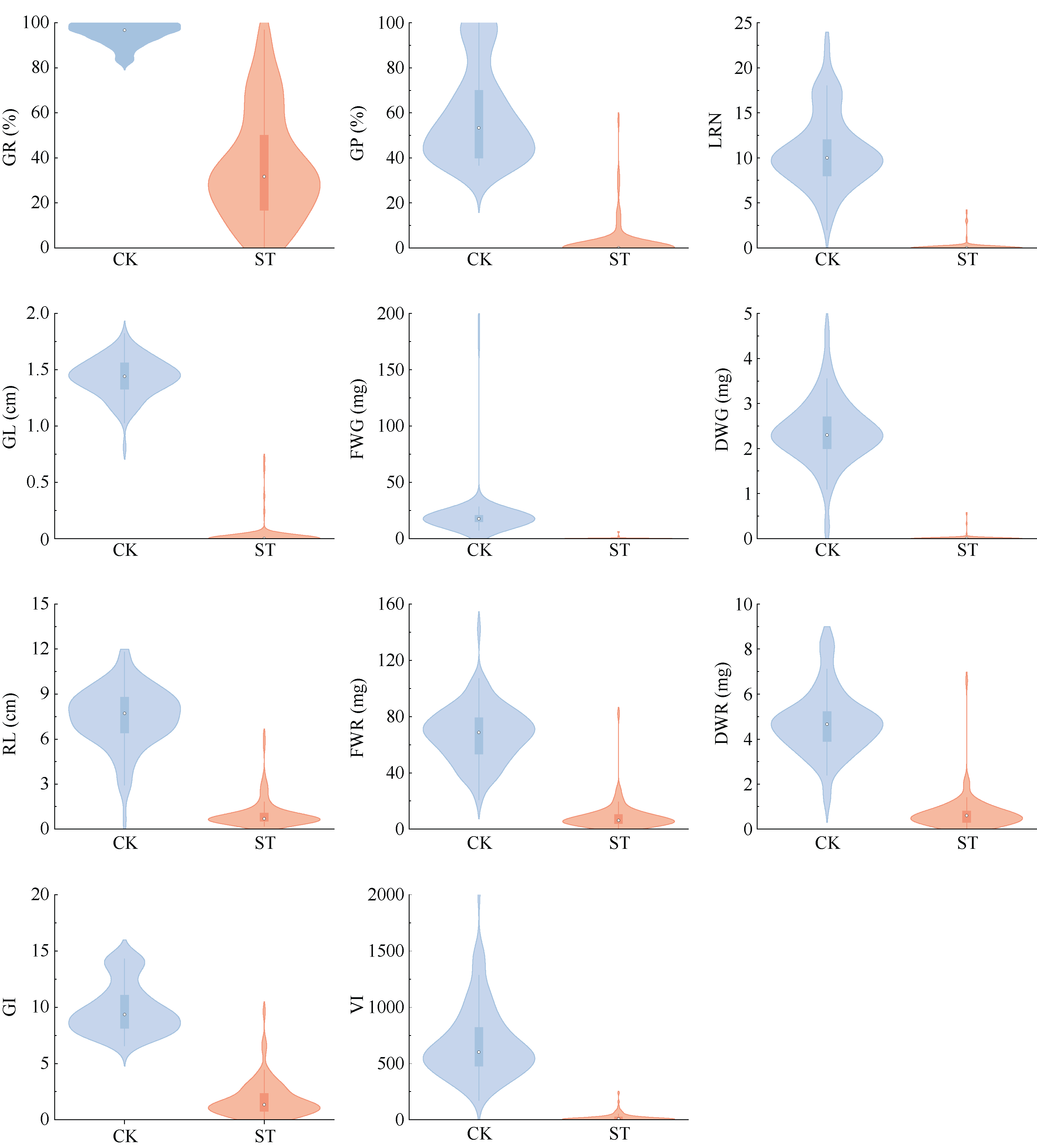
GP (%) CK 36.70 100.00 58.67 20.43 34.81
ST 0 56.70 2.33 7.76 —
GR (%) CK 83.30 100.00 95.22 4.73 4.97
ST 0 96.70 35.69 23.69 66.38
LRN CK 2.00 23.00 10.76 4.01 37.27
ST 0 4.00 0.10 0.56 0.58
GL (cm) CK 0.81 1.82 1.43 0.17 0.12
ST 0 0.71 0.02 0.10 —
RL (cm) CK 0.58 11.80 7.49 1.95 0.26
ST 0.20 6.22 1.00 0.93 0.93
FWG (mg) CK 7.60 194.00 20.61 22.68 1.10
ST 0 82.00 0.14 0.81 5.79
FWR (mg) CK 21.00 142.22 67.60 19.64 0.29
ST 0 82.00 8.43 9.05 1.07
DWG (mg) CK 0.20 4.70 2.37 0.71 0.30
ST 0 0.56 0.01 0.06 6.91
DWR (mg) CK 1.30 8.80 4.73 1.41 0.30
ST 0 6.60 0.66 0.72 1.08
GI CK 6.57 14.29 9.84 2.24 0.23
ST 0 9.62 1.74 1.54 0.88
VI CK 281.90 1087.26 682.23 316.31 0.46
ST 0 239.32 19.76 33.19 1.68

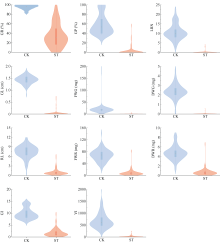
图1

110份小豆种质资源盐处理前后生长指标分布特征 缩写同表2。CK: 对照; ST: 盐处理。"

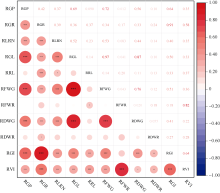
图2

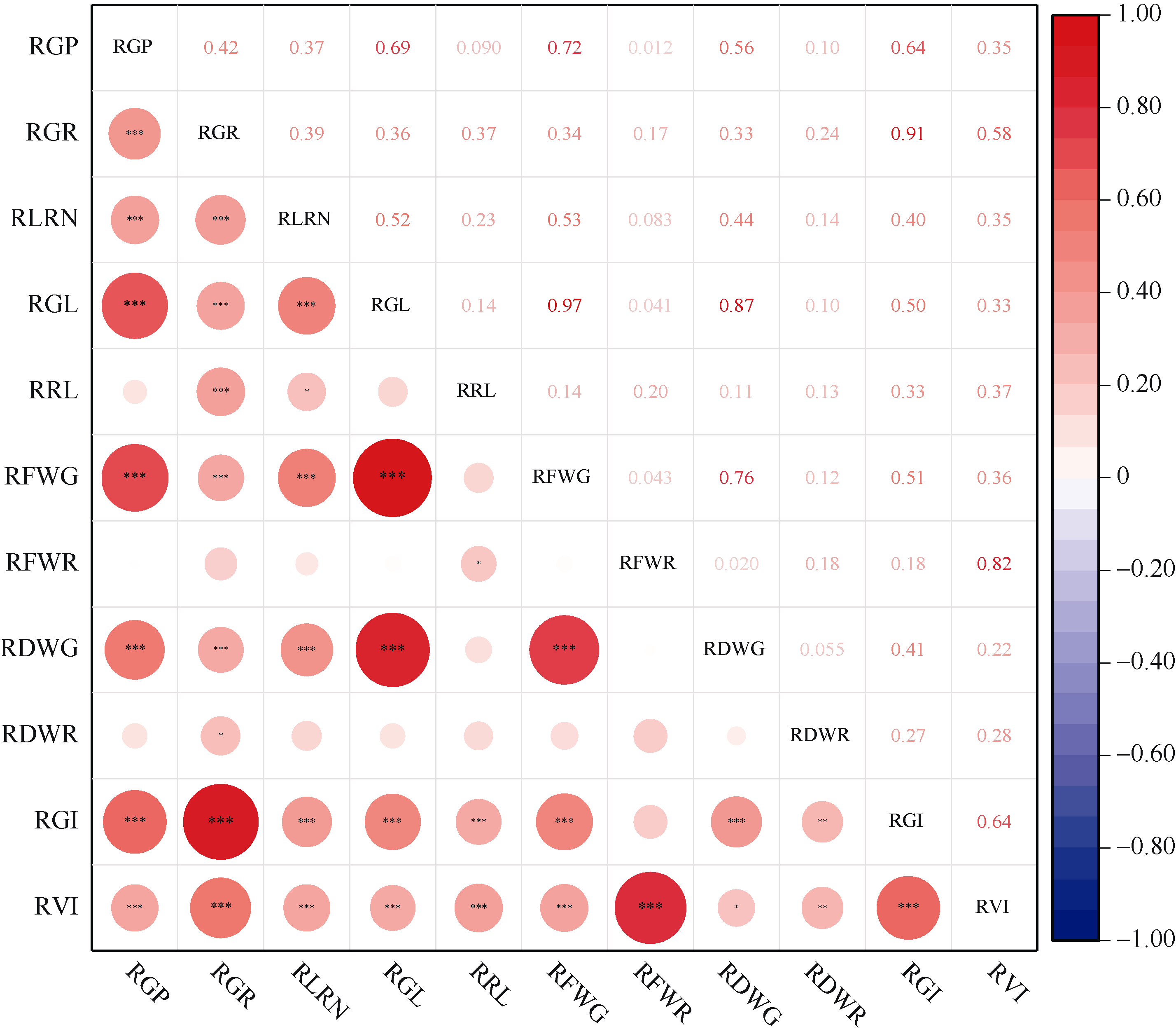
盐处理下小豆各指标的相关性分析 RGP: 相对发芽势; RGR: 相对发芽率; RLRN: 相对侧根数; RGL: 相对胚芽长; RRL: 相对胚根长; RFWG: 相对胚芽鲜重; RFWR: 相对胚根鲜重; RDWG: 相对胚芽干重; RDWR: 相对胚根干重; RGI: 相对发芽指数; RVI: 相对活力指数。*、**和***分别表示在0.05、0.01和0.001水平相关性显著。"

表3

前3个主成分因子的特征值、对原始指标的载荷矩阵和对表型的贡献率"

相对生长指标
Relative growth rate
主成分1
PC1
主成分2
PC2
主成分3
PC3
相对发芽势Relative germination potential (RGP, %) 0.76 -0.28 -0.04
相对发芽率Relative germination rate (RGR, %) 0.72 0.40 -0.48
相对侧根数Relative lateral root number (RLRN) 0.64 -0.09 -0.01
相对胚芽长Relative germ length (RGL, %) 0.85 -0.44 0.19
相对胚根长Relative radicle length (RRL, %) 0.36 0.41 -0.27
相对胚芽鲜重Relative fresh weight of germ (RFWG, %) 0.84 -0.41 0.19
相对胚根鲜重Relative fresh weight of radicle (RFWR, %) 0.28 0.70 0.63
相对胚芽干重Relative dry weight of germ (RDWG, %) 0.74 -0.48 0.17
相对胚根干重Relative dry weight of radicle (RDWR, %) 0.28 0.34 -0.13
相对发芽指数Relative germination index (RGI, %) 0.83 0.24 -0.38
相对活力指数Relative vigor index (RVI, %) 0.67 0.64 0.30
特征值Eigenvalue 4.90 2.01 1.06
贡献率 Contribution rate (%) 44.54 18.30 9.61
累计贡献率 Accumulative contribution rate (%) 44.54 62.84 72.46

表4

110份小豆种质资源的综合指标值(CI)、隶属函数值U(x)和综合评价值(D)以及耐盐水平排序"

编号
No.
综合指标值
Composite index value
隶属函数值
Membership function value
D-value 排序
Rank
CI(1) CI(2) CI(3) U(2) U(2) U(3)
XD005 5.943 -1.842 1.035 1.000 0.212 0.292 0.707 1
XD003 5.428 -3.768 1.730 0.924 0.000 0.368 0.617 2
XD073 1.103 5.301 7.522 0.288 1.000 1.000 0.563 3
XD002 3.514 -2.186 0.361 0.643 0.174 0.218 0.468 4
XD106 2.116 1.789 -1.414 0.437 0.613 0.024 0.427 5
XD025 0.475 2.261 1.682 0.196 0.665 0.362 0.337 6
XD056 1.010 1.670 -1.261 0.275 0.600 0.041 0.326 7
XD052 0.791 1.746 -0.435 0.242 0.608 0.131 0.320 8
XD053 0.911 1.630 -1.292 0.260 0.595 0.038 0.315 9
XD089 0.849 1.966 -1.637 0.251 0.632 0.000 0.314 10
XD095 0.561 1.600 0.225 0.209 0.592 0.203 0.305 11
XD090 0.702 1.370 -0.446 0.229 0.567 0.130 0.301 12
XD092 0.538 1.512 -0.473 0.205 0.582 0.127 0.290 13
XD093 0.538 1.521 -0.602 0.205 0.583 0.113 0.289 14
XD055 0.618 1.325 -0.960 0.217 0.562 0.074 0.285 15
XD094 0.453 1.799 -1.233 0.193 0.614 0.044 0.280 16
XD029 0.856 -0.419 0.371 0.252 0.369 0.219 0.277 17
XD008 0.901 0.005 -1.611 0.258 0.416 0.003 0.264 18
XD085 0.788 -0.058 -0.842 0.242 0.409 0.087 0.264 19
XD057 0.455 1.008 -0.935 0.193 0.527 0.077 0.262 20
XD026 0.051 1.177 0.411 0.134 0.545 0.224 0.250 21
XD058 0.403 0.789 -1.147 0.185 0.503 0.054 0.248 22
XD099 0.301 0.791 -0.969 0.170 0.503 0.073 0.241 23
XD051 0.274 0.707 -0.832 0.166 0.493 0.088 0.239 24
XD004 0.487 0.121 -1.126 0.198 0.429 0.056 0.237 25
XD091 0.183 0.457 -0.234 0.153 0.466 0.153 0.232 26
XD109 0.298 0.550 -1.234 0.170 0.476 0.044 0.231 27
XD009 0.385 -0.040 -0.813 0.183 0.411 0.090 0.228 28
XD096 -0.053 0.520 0.257 0.118 0.473 0.207 0.220 29
XD028 0.110 0.429 -0.611 0.142 0.463 0.112 0.219 30
XD047 0.042 0.428 -0.423 0.132 0.463 0.133 0.216 31
XD050 0.082 0.467 -0.828 0.138 0.467 0.088 0.215 32
XD007 0.207 0.041 -0.814 0.156 0.420 0.090 0.214 33
XD086 0.024 0.345 -0.446 0.130 0.453 0.130 0.212 34
XD083 0.215 -0.278 -0.635 0.158 0.385 0.109 0.209 35
XD084 0.208 -0.542 -0.260 0.157 0.356 0.150 0.206 36
XD042 -0.038 0.762 -1.473 0.121 0.499 0.018 0.203 37
XD022 -0.088 0.295 -0.324 0.113 0.448 0.143 0.202 38
XD108 -0.153 0.252 -0.027 0.104 0.443 0.176 0.199 39
XD012 -0.105 0.180 -0.299 0.111 0.435 0.146 0.197 40
XD100 -0.140 0.147 -0.090 0.105 0.432 0.169 0.196 41
XD060 -0.055 0.082 -0.585 0.118 0.425 0.115 0.195 42
XD062 -0.041 0.068 -0.724 0.120 0.423 0.100 0.194 43
XD097 -0.170 0.091 0.005 0.101 0.425 0.179 0.194 44
XD013 -0.149 0.501 -0.930 0.104 0.471 0.077 0.193 45
XD110 -0.129 0.189 -0.511 0.107 0.436 0.123 0.193 46
XD081 -0.051 0.040 -1.041 0.119 0.420 0.065 0.188 47
XD021 -0.355 0.087 0.704 0.074 0.425 0.256 0.187 48
XD038 -0.194 0.330 -0.826 0.098 0.452 0.089 0.186 49
XD103 -0.215 -0.050 -0.114 0.095 0.410 0.166 0.184 50
XD010 -0.088 -0.270 -0.488 0.113 0.386 0.125 0.184 51
XD034 -0.288 -0.003 0.217 0.084 0.415 0.202 0.183 52
XD030 -0.257 -0.056 0.098 0.088 0.409 0.189 0.183 53
XD088 -0.333 0.041 0.386 0.077 0.420 0.221 0.183 54
XD019 -0.146 -0.081 -0.578 0.105 0.407 0.116 0.182 55
XD098 -0.242 -0.025 -0.128 0.090 0.413 0.165 0.182 56
XD077 -0.178 -0.098 -0.663 0.100 0.405 0.106 0.178 57
XD040 -0.290 -0.156 0.027 0.083 0.398 0.182 0.176 58
XD041 -0.321 -0.120 0.069 0.079 0.402 0.186 0.175 59
XD049 -0.278 -0.175 -0.096 0.085 0.396 0.168 0.175 60
XD063 -0.306 -0.168 0.018 0.081 0.397 0.181 0.174 61
XD024 -0.321 -0.103 -0.019 0.079 0.404 0.177 0.174 62
XD018 -0.234 -0.223 -0.336 0.092 0.391 0.142 0.174 63
XD102 -0.399 -0.167 0.349 0.067 0.397 0.217 0.171 64
XD023 -0.307 -0.207 -0.233 0.081 0.393 0.153 0.169 65
XD039 -0.314 -0.299 -0.246 0.080 0.382 0.152 0.166 66
XD101 -0.433 -0.236 0.364 0.062 0.389 0.218 0.166 67
XD036 -0.312 -0.317 -0.297 0.080 0.381 0.146 0.165 68
XD104 -0.356 -0.295 -0.069 0.074 0.383 0.171 0.165 69
XD076 -0.312 -0.340 -0.473 0.080 0.378 0.127 0.162 70
XD044 -0.379 -0.377 -0.069 0.070 0.374 0.171 0.161 71
XD061 -0.380 -0.380 -0.091 0.070 0.374 0.169 0.160 72
XD015 -0.400 -0.365 -0.056 0.067 0.375 0.173 0.159 73
XD020 -0.435 -0.388 0.194 0.062 0.373 0.200 0.159 74
XD105 -0.364 -0.413 -0.223 0.073 0.370 0.154 0.159 75
XD068 -0.457 -0.366 0.219 0.059 0.375 0.203 0.158 76
XD070 -0.454 -0.388 0.232 0.059 0.373 0.204 0.158 77
XD107 -0.536 -0.341 0.535 0.047 0.378 0.237 0.156 78
XD037 -0.507 -0.437 0.346 0.052 0.367 0.217 0.153 79
XD087 -0.599 -0.354 0.710 0.038 0.376 0.256 0.153 80
XD043 -0.552 -0.318 0.344 0.045 0.380 0.216 0.152 81
XD079 -0.536 -0.453 0.354 0.047 0.365 0.217 0.150 82
XD059 -0.498 -0.545 0.138 0.053 0.355 0.194 0.148 83
XD045 -0.573 -0.503 0.486 0.042 0.360 0.232 0.147 84
XD082 -0.547 -0.505 0.315 0.046 0.360 0.213 0.147 85
XD027 -0.595 -0.499 0.591 0.039 0.360 0.243 0.147 86
XD074 -0.536 -0.546 0.194 0.047 0.355 0.200 0.145 87
XD054 -0.587 -0.658 0.713 0.040 0.343 0.257 0.145 88
XD065 -0.566 -0.548 0.359 0.043 0.355 0.218 0.145 89
XD075 -0.571 -0.558 0.362 0.042 0.354 0.218 0.144 90
XD014 -0.536 -0.590 0.182 0.047 0.350 0.199 0.144 91
XD048 -0.596 -0.586 0.503 0.038 0.351 0.234 0.143 92
XD011 -0.576 -0.606 0.359 0.041 0.349 0.218 0.142 93
XD067 -0.627 -0.638 0.487 0.034 0.345 0.232 0.139 94
XD064 -0.636 -0.645 0.517 0.033 0.344 0.235 0.138 95
XD017 -0.610 -0.696 0.417 0.036 0.339 0.224 0.138 96
XD001 -0.599 -0.679 0.317 0.038 0.341 0.213 0.138 97
XD046 -0.696 -0.651 0.813 0.024 0.344 0.267 0.137 98
XD078 -0.701 -0.619 0.644 0.023 0.347 0.249 0.135 99
XD033 -0.637 -0.718 0.397 0.032 0.336 0.222 0.134 100
XD080 -0.695 -0.699 0.565 0.024 0.338 0.240 0.132 101
XD071 -0.725 -0.724 0.749 0.020 0.336 0.260 0.131 102
XD072 -0.769 -0.753 0.851 0.013 0.332 0.272 0.128 103
XD069 -0.781 -0.804 0.842 0.011 0.327 0.271 0.125 104
XD006 -0.784 -0.822 0.765 0.011 0.325 0.262 0.124 105
XD032 -0.802 -0.887 0.795 0.008 0.318 0.266 0.121 106
XD066 -0.819 -0.875 0.873 0.006 0.319 0.274 0.121 107
XD031 -0.826 -0.924 0.915 0.005 0.314 0.279 0.119 108
XD016 -0.826 -0.992 0.761 0.005 0.306 0.262 0.115 109
XD035 -0.857 -1.020 0.846 0.000 0.303 0.271 0.113 110

图3

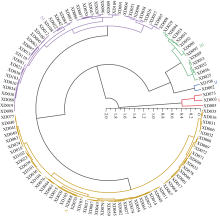
110份小豆种质资源耐盐性的聚类分析 编号对应品种同附表1。"

图4

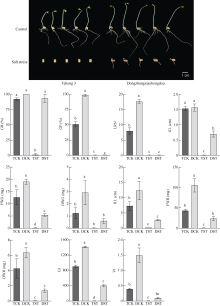
盐胁迫下特红3号和东掌小红豆发芽表型差异 缩写同表2。TCK: 特红3号对照组; DCK: 东掌小红豆对照组; TST: 特红3号盐处理组; DST: 东掌小红豆盐处理组。不同小写字母表示组间差异显著(P < 0.05) (n = 3)。比例尺为1 cm。"

图5

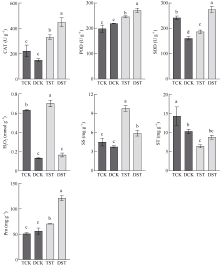
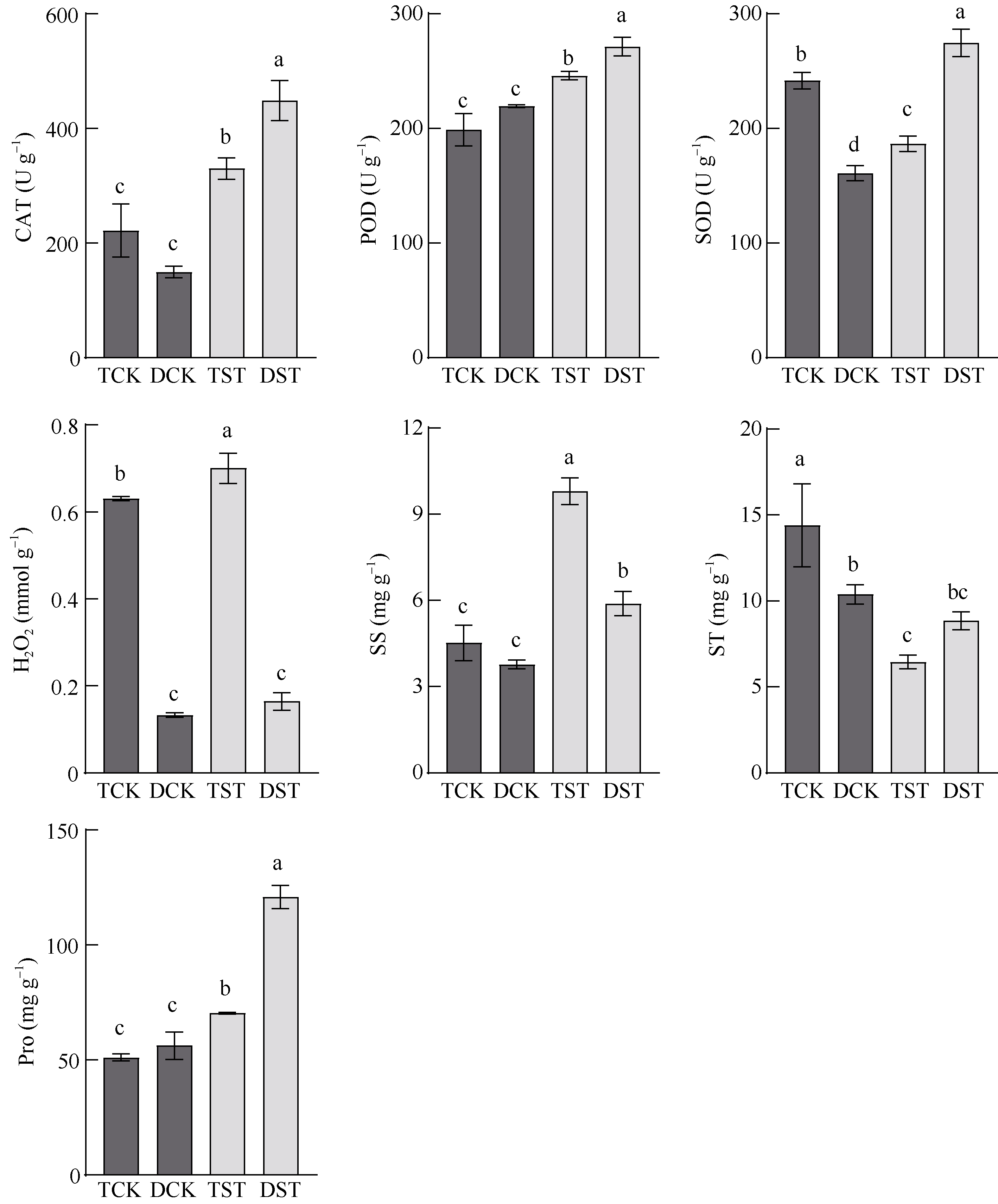
盐处理对特红3号和东掌小红豆生理指标的影响 处理同图4。CAT: 过氧化氢酶; POD: 过氧化物酶; SOD: 超氧化物歧化酶; H2O2: 过氧化氢; SS: 可溶性糖; ST: 淀粉; Pro: 脯氨酸。不同小写字母表示组间差异显著(P < 0.05) (n = 3)。"

图6

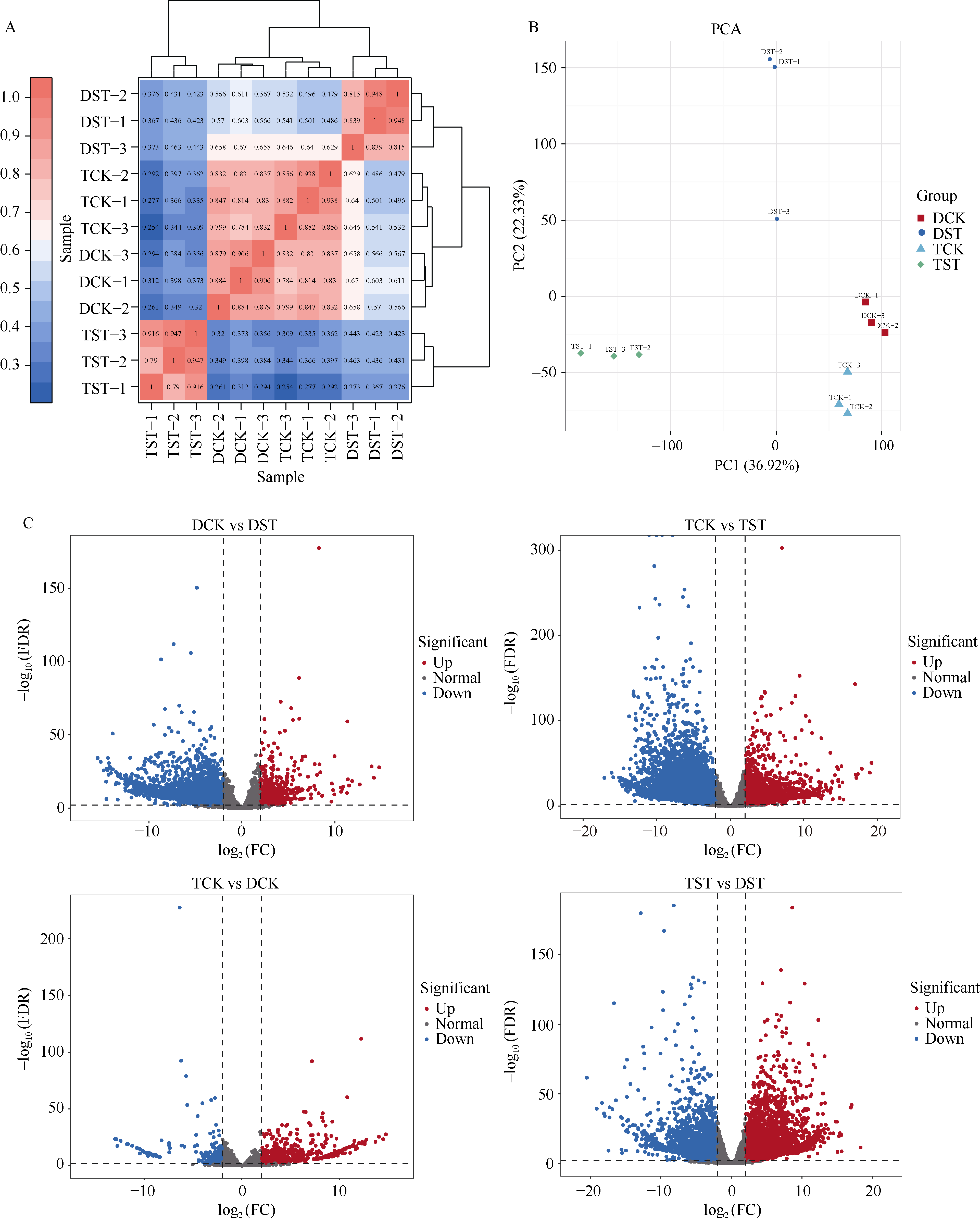
东掌小红豆与特红3号在盐胁迫下的转录组分析 A: 样本间聚类热图; B: 主成分分析图; C: 差异表达基因火山图。处理同图4。"

附图1

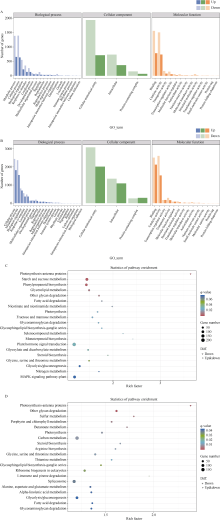
盐胁迫下东掌小红豆与特红3号差异表达基因的GO与KEGG富集分析 A: DCK vs DST的GO富集分析; B: TCK vs TST的GO富集分析; C: DCK vs DST的KEGG富集气泡图; D: TCK vs TST的KEGG富集气泡图。处理同图4。"

图7

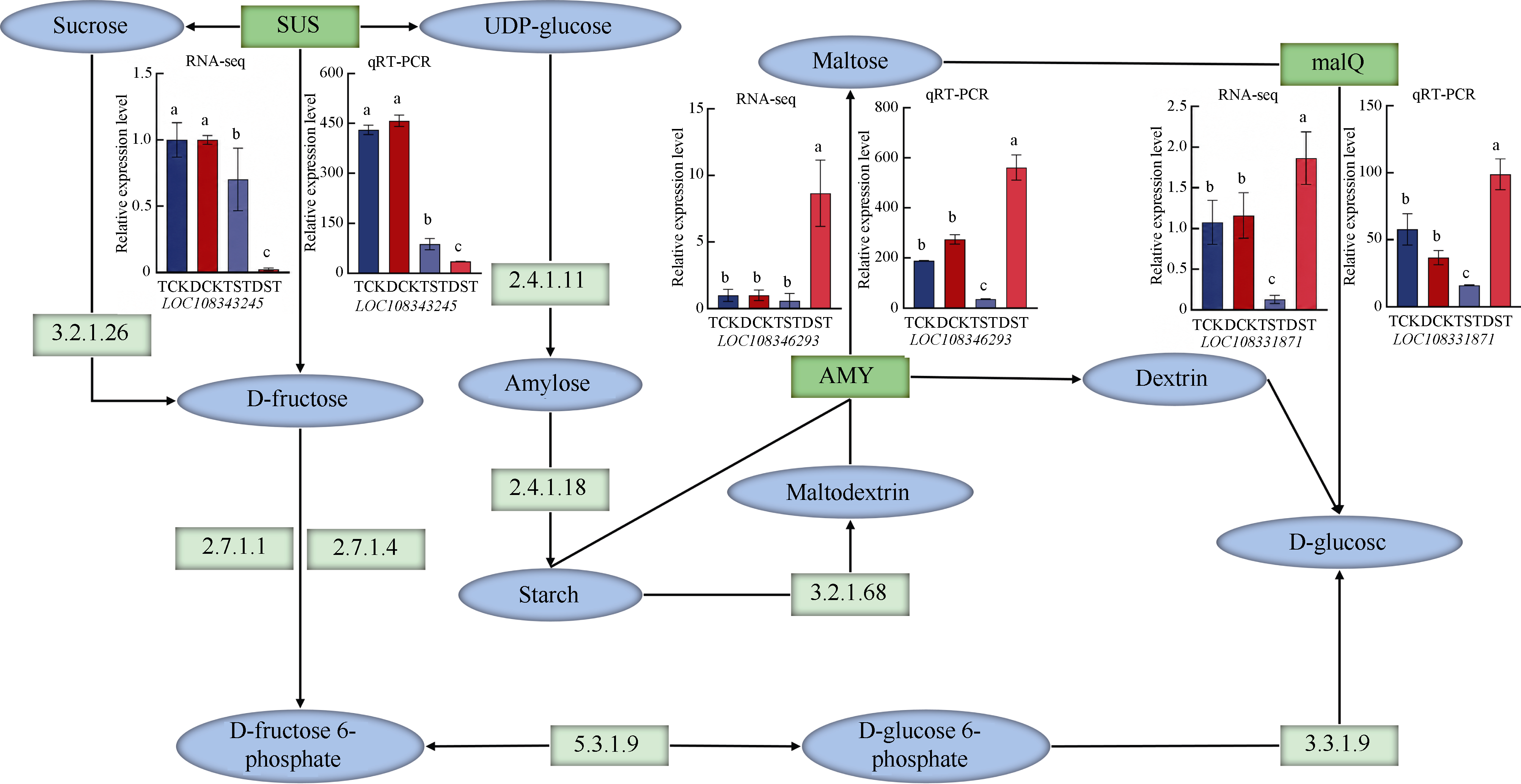
3个差异表达基因参与淀粉与蔗糖代谢通路 处理同图4。淀粉和蔗糖代谢通路局部图, 展示了蔗糖合酶(SUS)、α-淀粉酶(AMY)、4-α-葡聚糖转移酶(malQ)在通路中的位置及催化关系。每个酶左侧为转录组相对表达量柱状图, 右侧为qRT-PCR相对表达量柱状图。不同小写字母表示组间差异显著(P < 0.05); n = 3。矩形代表基因, 椭圆形代表代谢物。"

[1] 世界盐渍土壤分布图发布. 中国农业综合开发, 2021(10): 64.
Distribution map of saline soil in the world released. Agric Comp Dev China, 2021(10): 64 (in Chinese).
[2] 刘小京, 郭凯, 封晓辉, 等. 农业高效利用盐碱地资源探讨. 中国生态农业学报(中英文), 2023, 31: 345-353.
Liu X J, Guo K, Feng X H, et al. Discussion on the agricultural efficient utilization of saline-alkali land resources. Chin J Eco-Agric, 2023, 31: 345-353 (in Chinese with English abstract).
[3] Mishra A K, Das R, George Kerry R, et al. Promising management strategies to improve crop sustainability and to amend soil salinity. Front Environ Sci, 2023, 10: 962581.
doi: 10.3389/fenvs.2022.962581
[4] Jaiswal B, Singh S, Agrawal S B, et al. Improvements in soil physical, chemical and biological properties at natural saline and non-saline sites under different management practices. Environ Manag, 2022, 69: 1005-1019.
doi: 10.1007/s00267-022-01612-z
[5] Raiesi F, Sadeghi E. Interactive effect of salinity and cadmium toxicity on soil microbial properties and enzyme activities. Ecotoxicol Environ Saf, 2019, 168: 221-229.
doi: 10.1016/j.ecoenv.2018.10.079
[6] Chu L W, Yang K, Chen C H, et al. Chromosome-level reference genome and resequencing of 322 accessions reveal evolution, genomic imprint and key agronomic traits in adzuki bean. Plant Biotechnol J, 2024, 22: 2173-2185.
doi: 10.1111/pbi.14337 pmid: 38497586
[7] Liu L, Bestel S, Shi J M, et al. Paleolithic human exploitation of plant foods during the last glacial maximum in North China. Proc Natl Acad Sci USA, 2013, 110: 5380-5385.
doi: 10.1073/pnas.1217864110 pmid: 23509257
[8] Yang K, Tian Z X, Chen C H, et al. Genome sequencing of adzuki bean (Vigna angularis) provides insight into high starch and low-fat accumulation and domestication. Proc Natl Acad Sci USA, 2015, 112: 13213-13218.
doi: 10.1073/pnas.1420949112 pmid: 26460024
[9] Lee M B, Kim T, Kim D Y, et al. Transcriptome analysis of wild soybean (Glycine soja) under salt stress and identification of salt-responsive genes. Genes Genom, 2025, 47: 351-365.
doi: 10.1007/s13258-024-01599-3
[10] Zhang R, Hussain S, Wang Y, et al. Comprehensive evaluation of salt tolerance in rice (Oryza sativa L.) germplasm at the germination stage. Agronomy, 2021, 11: 1569.
[11] 李媛媛, 陈博, 姚立蓉, 等. 283份小麦品种(系)萌发期耐盐碱性评价及种质筛选. 中国农业科技导报, 2021, 23(3): 25-33.
doi: 10.13304/j.nykjdb.2020.0203
Li Y Y, Chen B, Yao L R, et al. Evaluation of salt and alkali tolerance and germplasm screening of 283 wheat varieties (lines) during germination. J Agric Sci Technol, 2021, 23(3): 25-33 (in Chinese with English abstract).
[12] 胡亮亮, 王素华, 王丽侠, 等. 绿豆种质资源苗期耐盐性鉴定及耐盐种质筛选. 作物学报, 2022, 48: 367-379.
doi: 10.3724/SP.J.1006.2022.04283
Hu L L, Wang S H, Wang L X, et al. Identification of salt tolerance and screening of salt tolerant germplasm of mungbean (Vigna radiate L.) at seedling stage. Acta Agron Sin, 2022, 48: 367-379 (in Chinese with English abstract).
doi: 10.3724/SP.J.1006.2022.04283
[13] Chourasia K N, Lal M K, Tiwari R K, et al. Salinity stress in potato: understanding physiological, biochemical and molecular responses. Life, 2021, 11: 545.
doi: 10.3390/life11060545
[14] Xu Y M, Bu W C, Xu Y C, et al. Effects of salt stress on physiological and agronomic traits of rice genotypes with contrasting salt tolerance. Plants, 2024, 13: 1157.
doi: 10.3390/plants13081157
[15] Han X, Wu Z H, Liu F B, et al. Transcriptomic analysis and salt-tolerance gene mining during rice germination. Genes, 2023, 14: 1556.
doi: 10.3390/genes14081556
[16] Zhang T, Sun K L, Chang X K, et al. Comparative physiological and transcriptomic analyses of two contrasting pepper genotypes under salt stress reveal complex salt tolerance mechanisms in seedlings. Int J Mol Sci, 2022, 23: 9701.
doi: 10.3390/ijms23179701
[17] Zhou Y X, Feng C, Wang Y N, et al. Understanding of plant salt tolerance mechanisms and application to molecular breeding. Int J Mol Sci, 2024, 25: 10940.
doi: 10.3390/ijms252010940
[18] Tian R, Han D, Shi X L, et al. Mining genetic loci and candidate genes related to salt tolerance traits in soybean. Sci Rep, 2025, 15: 26826.
doi: 10.1038/s41598-025-08702-y
[19] Zhao C Z, Zayed O, Yu Z P, et al. Leucine-rich repeat extensin proteins regulate plant salt tolerance in Arabidopsis. Proc Natl Acad Sci USA, 2018, 115: 13123-13128.
doi: 10.1073/pnas.1816991115
[20] Atta K, Mondal S, Gorai S, et al. Impacts of salinity stress on crop plants: improving salt tolerance through genetic and molecular dissection. Front Plant Sci, 2023, 14: 1241736.
doi: 10.3389/fpls.2023.1241736
[21] Kesawat M S, Satheesh N, Kherawat B S, et al. Regulation of reactive oxygen species during salt stress in plants and their crosstalk with other signaling molecules: current perspectives and future directions. Plants, 2023, 12: 864.
doi: 10.3390/plants12040864
[22] Wu L M, Du J G, Zhang Y D, et al. Identification and evaluation of celery germplasm resources for salt tolerance. Agronomy, 2024, 14: 1048.
doi: 10.3390/agronomy14051048
[23] Xu Y J, Weng X L, Jiang L Q, et al. Screening and evaluation of salt-tolerant wheat germplasm based on the main morphological indices at the germination and seedling stages. Plants, 2024, 13: 3201.
doi: 10.3390/plants13223201
[24] Li X W, Rehman A, Wang Z Z, et al. Evaluation of salt-tolerant germplasms and identification of salt tolerance-related proteins in upland cotton at the seedling stage. Int J Mol Sci, 2025, 26: 1982.
doi: 10.3390/ijms26051982
[25] Traye I D, Oli N M, Weng X L, et al. Salinity tolerance in wheat: mechanisms and breeding approaches. Plants, 2025, 14: 1641.
doi: 10.3390/plants14111641
[26] Xiong X, Liu N, Wei Y Q, et al. Effects of non-uniform root zone salinity on growth, ion regulation, and antioxidant defense system in two alfalfa cultivars. Plant Physiol Biochem, 2018, 132: 434-444.
doi: 10.1016/j.plaphy.2018.09.028
[27] Yang S, Xu Y Q, Tang Z Z, et al. The impact of alkaline stress on plant growth and its alkaline resistance mechanisms. Int J Mol Sci, 2024, 25: 13719.
doi: 10.3390/ijms252413719
[28] Zhao S S, Zhang Q K, Liu M Y, et al. Regulation of plant responses to salt stress. Int J Mol Sci, 2021, 22: 4609.
doi: 10.3390/ijms22094609
[29] Jiang S Q, Lan Z W, Zhang Y K, et al. Mechanisms by which exogenous substances enhance plant salt tolerance through the modulation of ion membrane transport and reactive oxygen species metabolism. Antioxidants, 2024, 13: 1050.
doi: 10.3390/antiox13091050
[30] Singh P, Singh S, Maurya P, et al. Bioaccumulation of selenium in halotolerant microalga Dunaliella salina and its impact on photosynthesis, reactive oxygen species, antioxidative enzymes, and neutral lipids. Mar Pollut Bull, 2023, 190: 114842.
doi: 10.1016/j.marpolbul.2023.114842
[31] Rao M J, Duan M Z, Zhou C X, et al. Antioxidant defense system in plants: reactive oxygen species production, signaling, and scavenging during abiotic stress-induced oxidative damage. Horticulturae, 2025, 11: 477.
doi: 10.3390/horticulturae11050477
[32] Fu H Q, Yang Y Q. How plants tolerate salt stress? Curr Issues Mol Biol, 2023, 45: 5914-5934.
doi: 10.3390/cimb45070374 pmid: 37504290
[33] Negi N P, Shrivastava D, Shekhar S, et al. Simultaneous overexpression of CuZnSOD and cAPX from Arachis hypogaea leads to salinity stress tolerance in tobacco. Vitro Cell Dev Biol Plant, 2016, 52: 484-491.
doi: 10.1007/s11627-016-9764-7
[34] Aycan M, Baslam M, Mitsui T, et al. Assessing contrasting wheat (Triticum aestivum L.) cultivars responsiveness to salinity at the seedling stage and screening of tolerance marker traits. J Plant Growth Regul, 2024, 43: 2646-2666.
doi: 10.1007/s00344-024-11295-x
[35] Khanna K, Ohri P, Bhardwaj R. Decoding sugar regulation and homeostasis in plants: cracking functional roles under stresses. J Plant Growth Regul, 2023, 42: 4797-4817.
doi: 10.1007/s00344-022-10727-w
[36] Jia X M, Zhu Y F, Hu Y, et al. Integrated physiologic, proteomic, and metabolomic analyses of Malus halliana adaptation to saline-alkali stress. Hortic Res, 2019, 6: 91.
doi: 10.1038/s41438-019-0172-0
[37] Huang J S, Xie B, Xian F J, et al. Gibberellin signalling mediates nucleocytoplasmic trafficking of sucrose synthase 1 to regulate the drought tolerance in rice. Plant Biotechnol J, 2025, 23: 1909-1926.
doi: 10.1111/pbi.70020 pmid: 40011385
[38] Avonce N, Leyman B, Mascorro-Gallardo J O, et al. The Arabidopsis trehalose-6-P synthase AtTPS1 gene is a regulator of glucose, abscisic acid, and stress signaling. Plant Physiol, 2004, 136: 3649-3659.
doi: 10.1104/pp.104.052084
[39] Wu J Y, Chen M, Yao Y L, et al. Identification, characterisation, and expression profile analysis of the sucrose phosphate synthase gene family in pineapple (Ananas comosus). J Hortic Sci Biotechnol, 2022, 97: 201-210.
doi: 10.1080/14620316.2021.1981778
[40] Liang Y J, Zhang M Y, Wang M, et al. Freshwater cyanobacterium Synechococcus elongatus PCC 7942 adapts to an environment with salt stress via ion-induced enzymatic balance of compatible solutes. Appl Environ Microbiol, 2020, 86: e02904-e02919.
[41] Nair G R, Raja S S S. Characterization and phylogenetic analysis of alkaline α-amylase producing Brevibacillus laterosporus from mountain climatic zone of India. J Drug Delivery Ther, 2019, 9: 125-129.
[42] Janeček Š, Gabriško M. Remarkable evolutionary relatedness among the enzymes and proteins from the α-amylase family. Cell Mol Life Sci, 2016, 73: 2707-2725.
doi: 10.1007/s00018-016-2246-6 pmid: 27154042
[43] Paul C J, Leemhuis H, Dobruchowska J M, et al. A GH57 4-α-glucanotransferase of hyperthermophilic origin with potential for alkyl glycoside production. Appl Microbiol Biotechnol, 2015, 99: 7101-7113.
doi: 10.1007/s00253-015-6435-2 pmid: 25693671
[44] Chen Y H, McClements D J, Peng X W, et al. Research progresses on enzymatic modification of starch with 4-α-glucanotransferase. Trends Food Sci Technol, 2023, 131: 164-174.
doi: 10.1016/j.tifs.2022.11.025
[45] Zhu Y X, Guo J, Feng R, et al. The regulatory role of silicon on carbohydrate metabolism in Cucumis sativus L. under salt stress. Plant Soil, 2016, 406: 231-249.
[1] 韩亚鑫, 何冠华, 张小琼, 张登峰, 李永祥, 刘旭洋, 王天宇, 黎裕, 邹华文, 李春辉. 基于RNA-Seq和BSA-Seq联合分析挖掘玉米侧根密度基因资源[J]. 作物学报, 2026, 52(5): 1341-1352.
[2] 杨亚莉, 徐明睿, 马越飞, 海艺蕊, 刘凯栋, 刘万茂, 孙颖. 玉米根尖及整根响应缺铁的转录组比较研究[J]. 作物学报, 2026, 52(4): 1006-1021.
[3] 刘长友, 王珅, 时会影, 沈颖超, 孙蕾, 王彦, 张志肖, 苏秋竹, 田静, 范保杰. 基于饭豆基因资源的小豆远缘杂交群体抗豆象QTL定位[J]. 作物学报, 2026, 52(3): 936-944.
[4] 张力岚, 杨军, 王让剑. 基于WGCNA发掘茶树糖苷类香气前体含量性状相关的候选基因[J]. 作物学报, 2026, 52(2): 494-513.
[5] 黄丽霞, 张卫卫, 甄一越, 王秋宝, 田洪岭, 李国栋, 刘龙龙, 张丽君. 盐胁迫下苦荞萌发期耐盐碱性评价及种质筛选[J]. 作物学报, 2026, 52(2): 459-479.
[6] 王晓琳, 刘忠松, 康雷, 杨柳. 甘蓝型油菜角果长度和每角粒数基因定位以及角果皮转录组动态分析[J]. 作物学报, 2025, 51(4): 888-899.
[7] 蒋优, 马雪融, 张博, 李陈建. 苏丹草种子萌发期耐盐性评价及耐盐种质筛选[J]. 作物学报, 2025, 51(3): 835-844.
[8] 张金泽, 周庆国, 杨旭, 王倩, 肖莉晶, 金海润, 欧阳青静, 余坤江, 田恩堂. 芥菜型油菜响应菌核病侵染表达特性与高抗性关联基因分析[J]. 作物学报, 2025, 51(3): 621-631.
[9] 魏琦, 何冠华, 张登峰, 李永祥, 刘旭洋, 唐怀君, 刘成, 王天宇, 黎裕, 路运才, 李春辉. 基于抗旱玉米自交系SL001的抗旱优异基因资源挖掘[J]. 作物学报, 2025, 51(12): 3171-3183.
[10] 赵慧霞, 郭彦丽, 郑渝泠, 何棱, 陈锐, 王珊珊, 曾长立, 邹珺, 沈金雄, 傅廷栋, 刘小云, 万何平. 甘蓝型油菜响应碱胁迫的基因表达差异分析[J]. 作物学报, 2025, 51(11): 3105-3118.
[11] 胡亮亮, 周洪妹, 王晓磊, 王素华, 李彩菊, 魏云山, 王丽侠, 程须珍, 陈红霖. 小豆产量相关性状的基因型与环境互作效应及稳定性分析[J]. 作物学报, 2025, 51(10): 2581-2594.
[12] 王晨, 贺丹, 姚敏, 邱萍, 何昕, 熊兴华, 康雷, 刘忠松, 钱论文. 基于转录组分析鉴定甘蓝型油菜开花候选基因以及BnaCOR27功能验证[J]. 作物学报, 2025, 51(10): 2693-2704.
[13] 叶靓, 朱叶琳, 裴琳婧, 张思颖, 左雪倩, 李正真, 刘芳, 谭静. 联合全基因组关联和转录组分析筛选玉米拟轮枝镰孢穗腐病的抗性候选基因[J]. 作物学报, 2024, 50(9): 2279-2296.
[14] 肖明昆, 严炜, 宋记明, 张林辉, 刘倩, 段春芳, 李月仙, 姜太玲, 沈绍斌, 周迎春, 沈正松, 熊贤坤, 罗鑫, 白丽娜, 刘光华. 卷叶木薯及其突变体叶片的比较转录组分析[J]. 作物学报, 2024, 50(8): 2143-2156.
[15] 刘爽, 李珅, 王东梅, 沙小茜, 何冠华, 张登峰, 李永祥, 刘旭洋, 王天宇, 黎裕, 李春辉. 基于大刍草渗入系的玉米抗旱优异等位基因挖掘[J]. 作物学报, 2024, 50(8): 1896-1906.
Viewed
Full text


Abstract

Cited

  Shared   
  Discussed   
No Suggested Reading articles found!