欢迎访问作物学报,今天是
作物学报 ›› 2024, Vol. 50 ›› Issue (3): 656-668.doi: 10.3724/SP.J.1006.2024.34069
代洪苇( ), 刘洁强, 张丽, 童华荣(), 袁连玉()
DAI Hong-Wei(), LIU Jie-Qiang, ZHANG Li, TONG Hua-Rong(), YUAN Lian-Yu()
摘要:
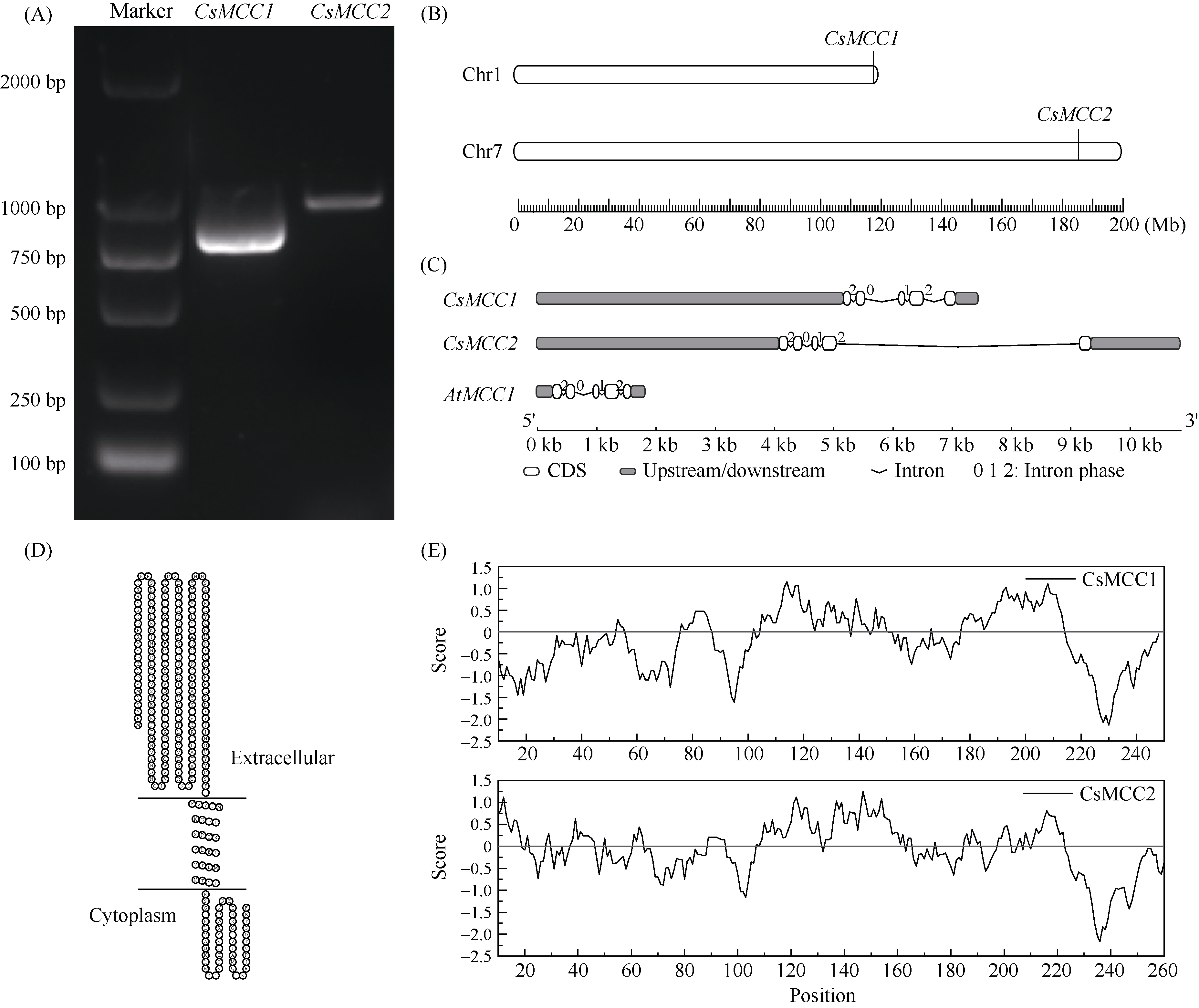
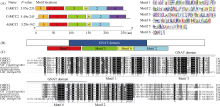
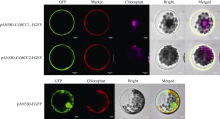
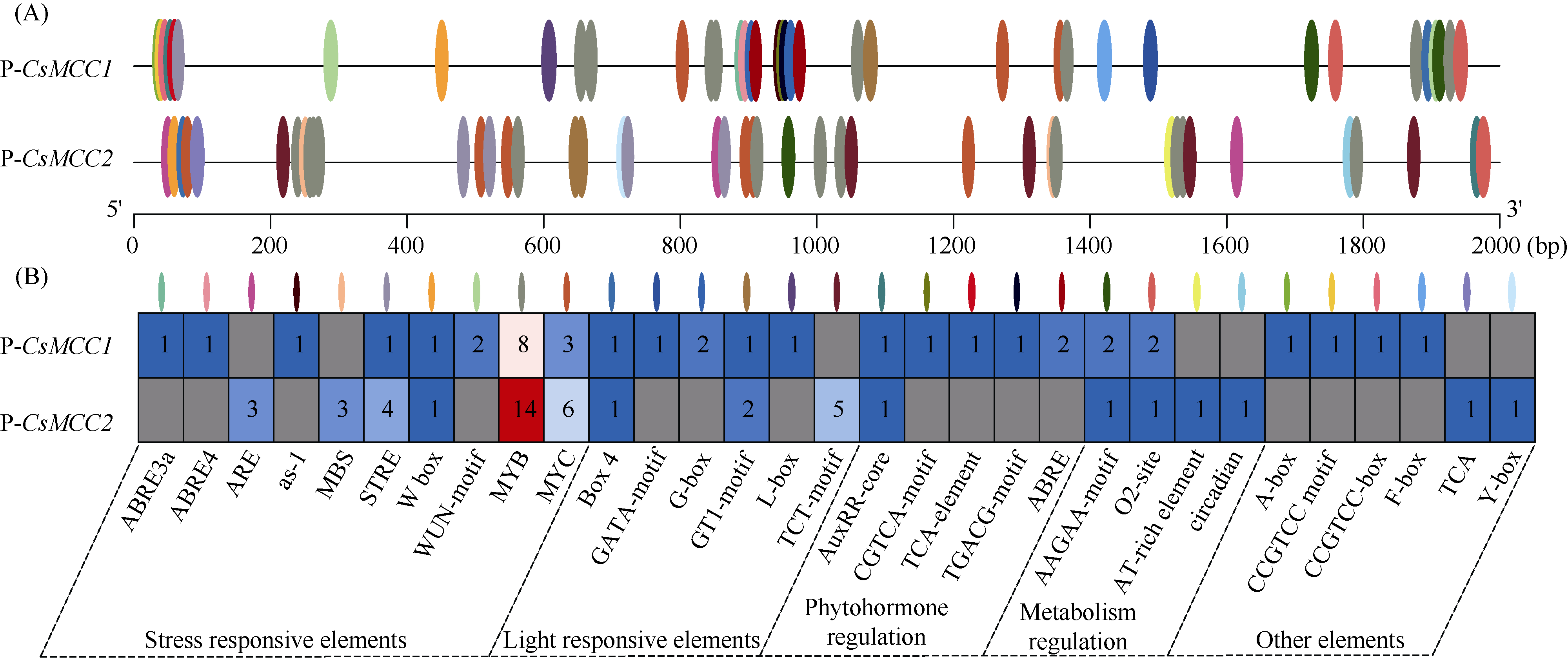
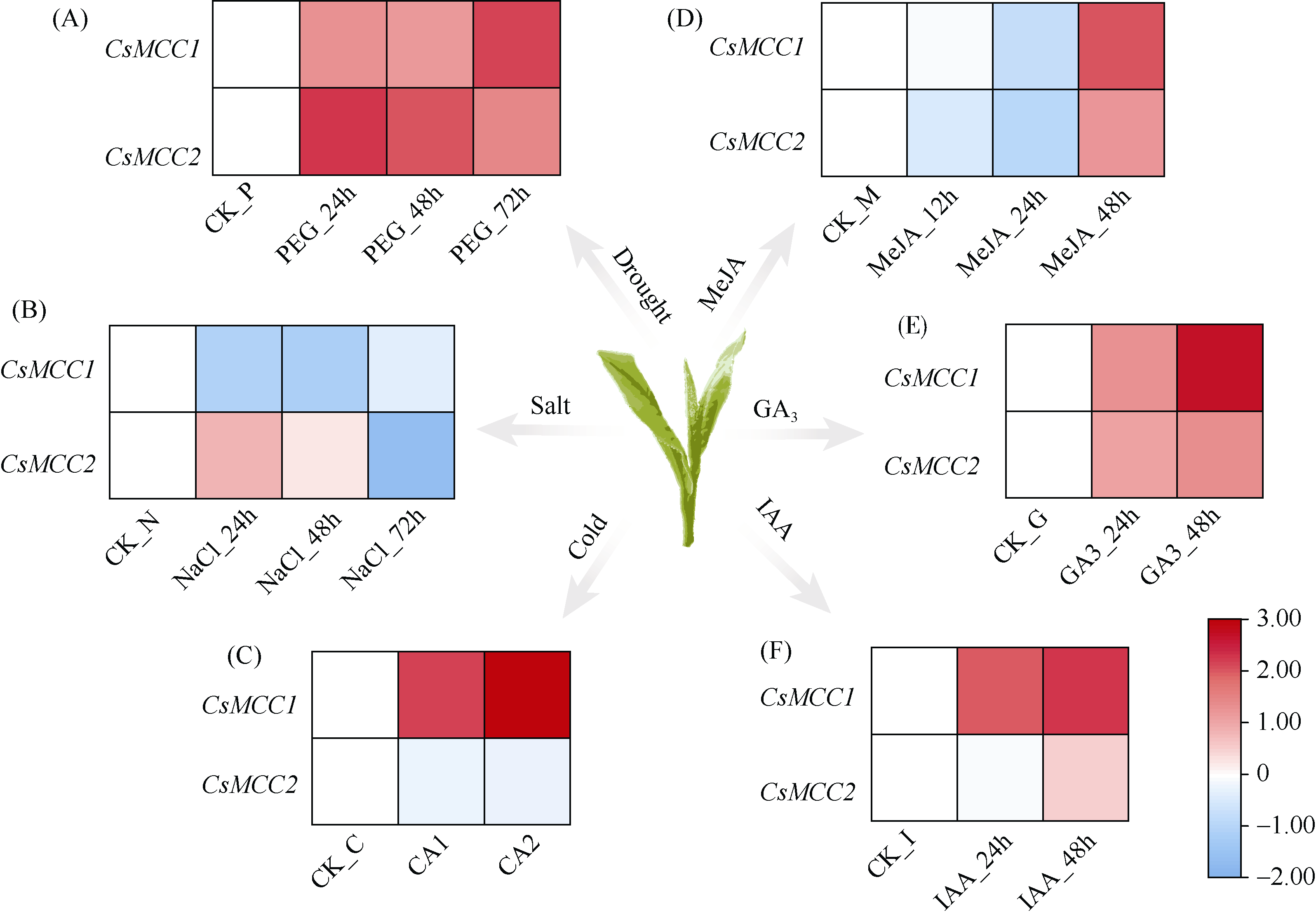
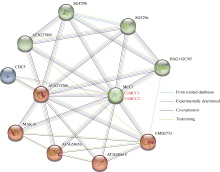
组蛋白乙酰化修饰由组蛋白乙酰化酶(histone acetyltransferases, HATs)和脱乙酰化酶(histone deacetylase, HDACs)共同催化完成, 是重要的表观遗传调控方式之一, 在植物生长发育、逆境胁迫响应和激素响应的调控过程中均具有重要意义, 但对茶树(Camellia sinensis)组蛋白乙酰化修饰的研究还比较少。本研究从‘福鼎大白茶’茶树中克隆获得了2个HATs家族的MCC (MEIOTIC CONTROL OF CROSSOVERS)基因: CsMCC1和CsMCC2, 通过生物信息学分析、实时荧光定量PCR技术 (Real-time quantitative PCR, qRT-PCR)和亚细胞定位试验对其功能进行解析。结果显示, CsMCC1和CsMCC2基因分别位于茶树1号和7号染色体, 分别编码257 aa和269 aa, 均属于碱性不稳定亲水性蛋白, 与拟南芥AtMCC1具有高度相似的基因结构和蛋白空间结构。系统进化树和保守结构域分析表明, CsMCC蛋白与葡萄、番茄的同源蛋白有较近的亲缘关系, MCC蛋白序列高度保守, 均含有GNAT保守结构, 属于HAT蛋白的GNAT (GCN5-related N-terminal acetyltransferases)亚家族。拟南芥原生质体亚细胞定位结果显示, CsMCC1和CsMCC2蛋白均定位于细胞质膜。启动子分析显示, 在CsMCC1和CsMCC2基因启动子中包含多个与胁迫、光和植物激素调节响应相关的元件。转录组数据和表达分析发现, CsMCC1基因在叶、花和根发育早期的表达量明显高于后期; CsMCC2基因在茶树根部有最高表达, 并在根部发育的较长阶段均有较高水平的表达量; 2个CsMCC基因均能够被多种非生物胁迫(干旱、盐和冷)和外源激素(MeJA、GA3和IAA)诱导表达。蛋白相互作用预测分析显示, CsMCC蛋白与多个乙酰化转移酶相关蛋白具有关联性。综上所述, CsMCC1和CsMCC2基因具有通过组蛋白乙酰化修饰作用广泛参与茶树的生长发育和环境响应过程的潜能, 可为进一步研究CsMCC基因在茶树中的功能提供理论参考。
| [1] |
Wang Z, Hong C, Chen F Y, Liu Y X. The roles of histone acetylation in seed performance and plant development. Plant Physiol Biochem, 2014, 84: 125-133.
doi: 10.1016/j.plaphy.2014.09.010 |
| [2] |
Hollender C, Liu Z C. Histone deacetylase genes in Arabidopsis development. J Integr Plant Biol, 2008, 50: 875-885.
doi: 10.1111/j.1744-7909.2008.00704.x |
| [3] |
Struhl K. Histone acetylation and transcriptional regulatory mechanisms. Gene Dev, 1998, 12: 599-606.
doi: 10.1101/gad.12.5.599 pmid: 9499396 |
| [4] |
Jenuwein T, Allis C D. Translating the histone code. Science, 2001, 293: 1074-1080.
doi: 10.1126/science.1063127 pmid: 11498575 |
| [5] | Millán-Zambrano G, Burton A, Bannister A J, Schneider R. Histone post-translational modifications-cause and consequence of genome function. Nat Rev Genet, 2022, 23: 563-580. |
| [6] |
Kuo M H, Allis C D. Roles of histone acetyltransferases and deacetylases in gene regulation. Bioessays, 1998, 20: 615-626.
doi: 10.1002/(SICI)1521-1878(199808)20:8<615::AID-BIES4>3.0.CO;2-H pmid: 9780836 |
| [7] |
Cosgrove M S, Boeke J D, Wolberger C. Regulated nucleosome mobility and the histone code. Nat Struct Mol Biol, 2004, 11: 1037-1043.
pmid: 15523479 |
| [8] |
Chen Z J, Tian L. Roles of dynamic and reversible histone acetylation in plant development and polyploidy. Biochim Biophys Acta, 2007, 1769: 295-307.
doi: 10.1016/j.bbaexp.2007.04.007 pmid: 17556080 |
| [9] |
Liu X, Yang S, Yu C W, Chen C Y, Wu K. Histone acetylation and plant development. Enzymes, 2016, 40: 173-199.
doi: S1874-6047(16)30023-3 pmid: 27776781 |
| [10] |
Lu Y, Xu Q, Liu Y, Yu Y, Cheng Z Y, Zhao Y, Zhou D X. Dynamics and functional interplay of histone lysine butyrylation, crotonylation, and acetylation in rice under starvation and submergence. Genome Biol, 2018, 19: 144.
doi: 10.1186/s13059-018-1533-y pmid: 30253806 |
| [11] |
Aquea F, Timmermann T, Arce-Johnson P. Analysis of histone acetyltransferase and deacetylase families of Vitis vinifera. Plant Physiol Biochem, 2010, 48: 194-199.
doi: 10.1016/j.plaphy.2009.12.009 |
| [12] |
Liu X, Luo M, Zhang W, Zhao J H, Zhang J X, Wu K Q, Tian L N, Duan J. Histone acetyltransferases in rice (Oryza sativa L.): phylogenetic analysis, subcellular localization and expression. BMC Plant Biol, 2012, 12: 145.
doi: 10.1186/1471-2229-12-145 |
| [13] |
Aiese Cigliano R, Sanseverino W, Cremona G, Ercolano M R, Conicella C, Consiglio F M. Genome-wide analysis of histone modifiers in tomato: gaining an insight into their developmental roles. BMC Genomics, 2013, 14: 57.
doi: 10.1186/1471-2164-14-57 pmid: 23356725 |
| [14] |
Peng M J, Ying P Y, Liu X C, Li C Q, Xia R, Li J G, Zhao M L. Genome-wide identification of histone modifiers and their expression patterns during fruit abscission in Litchi. Front Plant Sci, 2017, 8: 639.
doi: 10.3389/fpls.2017.00639 pmid: 28496451 |
| [15] |
Gao S Q, Li L Z, Han X L, Liu T T, Jin P, Cai L N, Xu M Z, Zhang T Y, Zhang F, Chen J P, Yang J, Zhong K L. Genome-wide identification of the histone acetyltransferase gene family in Triticum aestivum. BMC Genomics, 2021, 22: 49.
doi: 10.1186/s12864-020-07348-6 |
| [16] |
Cheng Y F, Ning K, Chen Y Z, Hou C, Yu H B, Yu H T, Chen S L, Guo X T, Dong L L. Identification of histone acetyltransferase genes responsible for cannabinoid synthesis in hemp. Chin Med, 2023, 18: 16.
doi: 10.1186/s13020-023-00720-0 |
| [17] |
Chu J S, Chen Z. Molecular identification of histone acetyltransferases and deacetylases in lower plant Marchantia polymorpha. Plant Physiol Biochem, 2018, 132: 612-622.
doi: 10.1016/j.plaphy.2018.10.012 |
| [18] |
Patrick R M, Huang X Q, Dudareva N, Li Y. Dynamic histone acetylation in floral volatile synthesis and emission in petunia flowers. J Exp Bot, 2021, 72: 3704-3722.
doi: 10.1093/jxb/erab072 pmid: 33606881 |
| [19] |
Papaefthimiou D, Likotrafiti E, Kapazoglou A, Bladenopoulos K, Tsaftaris A. Epigenetic chromatin modifiers in barley: III. Isolation and characterization of the barley GNAT-MYST family of histone acetyltransferases and responses to exogenous ABA. Plant Physiol Biochem, 2010, 48: 98-107.
doi: 10.1016/j.plaphy.2010.01.002 |
| [20] |
Latrasse D, Benhamed M, Henry Y, Domenichini S, Kim W, Zhou D X, Delarue M. The MYST histone acetyltransferases are essential for gametophyte development in Arabidopsis. BMC Plant Biol, 2008, 8: 121.
doi: 10.1186/1471-2229-8-121 pmid: 19040736 |
| [21] |
Deng W W, Liu C Y, Pei Y X, Deng X, Niu L F, Cao X F. Involvement of the histone acetyltransferase AtHAC1 in the regulation of flowering time via repression of FLOWERING LOCUS C in Arabidopsis. Plant Physiol, 2007, 143: 1660-1668.
doi: 10.1104/pp.107.095521 |
| [22] |
Han S K, Song J D, Noh Y S, Noh B. Role of plant CBP/p300-like genes in the regulation of flowering time. Plant J, 2007, 49: 103-114.
doi: 10.1111/tpj.2007.49.issue-1 |
| [23] |
Benhamed M, Bertrand C, Servet C, Zhou D X. Arabidopsis GCN5, HD1, and TAF1/HAF2 interact to regulate histone acetylation required for light-responsive gene expression. Plant Cell, 2006, 18: 2893-2903.
doi: 10.1105/tpc.106.043489 pmid: 17085686 |
| [24] |
Dunphy E L, Johnson T, Auerbach S S, Wang E H. Requirement for TAFII250 acetyltransferase activity in cell cycle progression. Mol Cell Biol, 2000, 20: 1134-1139.
doi: 10.1128/MCB.20.4.1134-1139.2000 pmid: 10648598 |
| [25] |
Stockinger E J, Mao Y P, Regier M K, Triezenberg S J, Thomashow M F. Transcriptional adaptor and histone acetyltransferase proteins in Arabidopsis and their interactions with CBF1, a transcriptional activator involved in cold-regulated gene expression. Nucleic Acids Res, 2001, 29: 1524-1533.
doi: 10.1093/nar/29.7.1524 pmid: 11266554 |
| [26] |
Kornet N, Scheres B. Members of the GCN5 histone acetyltransferase complex regulate PLETHORA-mediated root stem cell niche maintenance and transit amplifying cell proliferation in Arabidopsis. Plant Cell, 2009, 21: 1070-1079.
doi: 10.1105/tpc.108.065300 |
| [27] |
Li H, Yan S H, Zhao L, Tan J J, Zhang Q, Gao F, Wang P, Hou H L, Li L J. Histone acetylation associated up-regulation of the cell wall related genes is involved in salt stress induced maize root swelling. BMC Plant Biol, 2014, 14: 105.
doi: 10.1186/1471-2229-14-105 pmid: 24758373 |
| [28] |
Perrella G, Consiglio M F, Aiese-Cigliano R, Cremona G, Sanchez-Moran E, Barra L, Errico A, Bressan R A, Franklin F C, Conicella C. Histone hyperacetylation affects meiotic recombination and chromosome segregation in Arabidopsis. Plant J, 2010, 62: 796-806.
doi: 10.1111/tpj.2010.62.issue-5 |
| [29] |
Barra L, Aiese-Cigliano R, Cremona G, De Luca P, Zoppoli P, Bressan R A, Consiglio F M, Conicella C. Transcription profiling of laser microdissected microsporocytes in an Arabidopsis mutant (Atmcc1) with enhanced histone acetylation. J Plant Biol, 2012, 55: 281-289.
doi: 10.1007/s12374-011-0268-z |
| [30] |
Yuan L Y, Dai H W, Zheng S T, Huang R, Tong H R. Genome-wide identification of the HDAC family proteins and functional characterization of CsHD2C, a HD2-type histone deacetylase gene in tea plant (Camellia sinensis L. O. Kuntze). Plant Physiol Biochem, 2020, 155: 898-913.
doi: 10.1016/j.plaphy.2020.07.047 |
| [31] |
Gu D C, Wu S H, Yu Z M, Zeng L T, Qian J J, Zhou X C, Yang Z Y. Involvement of histone deacetylase CsHDA2 in regulating (E)-nerolidol formation in tea (Camellia sinensis) exposed to tea green leafhopper infestation. Hortic Res, 2022, 9: uhac158.
doi: 10.1093/hr/uhac158 |
| [32] |
Zhang S P, Guo Y, Chen S Q, Li H. The histone acetyltransferase CfGcn5 regulates growth, development, and pathogenicity in the anthracnose fungus Colletotrichum fructicola on the tea-oil tree. Front Microbiol, 2021, 12: 680415.
doi: 10.3389/fmicb.2021.680415 |
| [33] |
Wu Z J, Tian C, Jiang Q, Li X H, Zhuang J. Selection of suitable reference genes for qRT-PCR normalization during leaf development and hormonal stimuli in tea plant (Camellia sinensis). Sci Rep, 2016, 6: 19748.
doi: 10.1038/srep19748 |
| [34] |
Xing G F, Jin M S, Qu R F, Zhang J W, Han Y H, Han Y Q, Wang X C, Li X K, Ma F F, Zhao X W. Genome-wide investigation of histone acetyltransferase gene family and its responses to biotic and abiotic stress in foxtail millet (Setaria italica [L.] P. Beauv). BMC Plant Biol, 2022, 22: 292.
doi: 10.1186/s12870-022-03676-9 |
| [35] |
Sterner D E, Berger S L. Acetylation of histones and transcription-related factors. Microbiol Mol Biol Rev, 2000, 64: 435-459.
doi: 10.1128/MMBR.64.2.435-459.2000 |
| [36] |
Ogryzko V. Mammalian histone acetyltransferases and their complexes. Cell Mol Life Sci, 2001, 58: 683-692.
pmid: 11437230 |
| [37] |
Salah Ud-Din A I M, Tikhomirova A, Roujeinikova A. Structure and functional diversity of GCN5-related N-acetyltransferases (GNAT). Int J Mol Sci, 2016, 17: 1018.
doi: 10.3390/ijms17071018 |
| [38] |
Imran M, Shafiq S, Farooq M A, Naeem M K, Widemann E, Bakhsh A, Jensen K B, Wang R R C. Comparative genome-wide analysis and expression profiling of histone acetyltransferase (HAT) gene family in response to hormonal applications, metal and abiotic stresses in cotton. Int J Mol Sci, 2019, 20: 5311.
doi: 10.3390/ijms20215311 |
| [1] | 左同鸿, 张贺翠, 曾静, 朱利泉. 甘蓝自交不亲和相关基因BoPUB3L的克隆与表达分析[J]. 作物学报, 2026, 52(6): 1698-1710. |
| [2] | 胡赵, 钱润, 谢丰璞, 应素平. 水稻SPX基因家族鉴定及响应磷处理的表达分析[J]. 作物学报, 2026, 52(6): 1902-1912. |
| [3] | 徐苗苗, 邸太妹, 王洁, 吴叶蝶, 刘恩贝, 王玉春, 王新超, 王璐. 外源槲皮素增强茶树抗寒性的分子机制[J]. 作物学报, 2026, 52(5): 1418-1429. |
| [4] | 田立涛, 丁宁, 王树林, 齐恩芳, 张荣, 王蕊蕊, 马利雯, 李建武, 杨江伟. 马铃薯Argonaute基因家族鉴定及晚疫病诱导表达分析[J]. 作物学报, 2026, 52(4): 1116-1126. |
| [5] | 杨影, 郝豫皖, 张学宁, 方佳璐, 马月华, 杨伟龙, 孙文清, 王新超, 王玉春, 黄建燕. 乙烯响应因子CsERF9调控茶树炭疽病抗性的分子机制研究[J]. 作物学报, 2026, 52(4): 1103-1115. |
| [6] | 杨宗桃, 杨婷, 王禹童, 艾静, 李燕烨, 刘家勇, 邓军, 赵勇, 张跃彬. 甘蔗CLC基因家族鉴定与表达分析[J]. 作物学报, 2026, 52(3): 722-734. |
| [7] | 孟成, 王哲. 玉米ZmPFK基因家族全基因组鉴定及响应胁迫表达分析[J]. 作物学报, 2026, 52(3): 764-779. |
| [8] | 张力岚, 杨军, 王让剑. 基于WGCNA发掘茶树糖苷类香气前体含量性状相关的候选基因[J]. 作物学报, 2026, 52(2): 494-513. |
| [9] | 梅飘, 刘丁丁, 叶圆圆, 张晨禹, 丁诗琦, 李亚奇, 王培鑫, 梅菊芬, 马春雷. 基于茶树液相功能芯片的白化茶树资源遗传多样性分析[J]. 作物学报, 2025, 51(9): 2358-2370. |
| [10] | 王彬, 蒙姜宇, 邱浩良, 贺亚军, 钱伟. 甘蓝型油菜BnaDUF579基因家族的鉴定与表达模式分析[J]. 作物学报, 2025, 51(8): 2100-2110. |
| [11] | 郭腾达, 崔梦杰, 陈琳杰, 韩锁义, 郭敬坤, 吴晨迪, 付留洋, 黄冰艳, 董文召, 张新友. 花生磷脂酰肌醇转运蛋白基因AhSFH的克隆及其响应黄曲霉菌侵染的表达特征分析[J]. 作物学报, 2025, 51(6): 1489-1500. |
| [12] | 潘炬忠, 韦萍, 朱德平, 邵胜雪, 陈珊珊, 韦雅倩, 高维维. 水稻转录因子OsERF104的克隆和功能研究[J]. 作物学报, 2025, 51(4): 900-913. |
| [13] | 祁稼民, 许春苗, 肖斌. 马铃薯TIFY基因家族的全基因组鉴定及表达分析[J]. 作物学报, 2024, 50(9): 2297-2309. |
| [14] | 刘震, 陈丽敏, 李志涛, 朱金勇, 王玮璐, 齐喆颖, 姚攀锋, 毕真真, 孙超, 白江平, 刘玉汇. 马铃薯ARM基因家族的全基因组鉴定及表达分析[J]. 作物学报, 2024, 50(6): 1451-1466. |
| [15] | 曹松, 姚敏, 任睿, 贾元, 向星汝, 李文, 何昕, 刘忠松, 官春云, 钱论文, 熊兴华. 转录组结合区域关联分析挖掘油菜含油量积累的候选基因[J]. 作物学报, 2024, 50(5): 1136-1146. |
|
||