欢迎访问作物学报,今天是
作物学报 ›› 2025, Vol. 51 ›› Issue (9): 2295-2306.doi: 10.3724/SP.J.1006.2025.53016
所属专题: 玉米:遗传育种·种质资源·分子遗传学
蒋环琪1,2( ), 段奥1, 郭超1, 黄晓梦1, 艾德骏1, 刘小雪1, 谭静怡1, 彭成林2, 李曼菲1,*(), 杜何为1,*()
JIANG Huan-Qi1,2(), DUAN Ao1, GUO Chao1, HUANG Xiao-Meng1, AI De-Jun1, LIU Xiao-Xue1, TAN Jing-Yi1, PENG Cheng-Lin2, LI Man-Fei1,*(), DU He-Wei1,*()
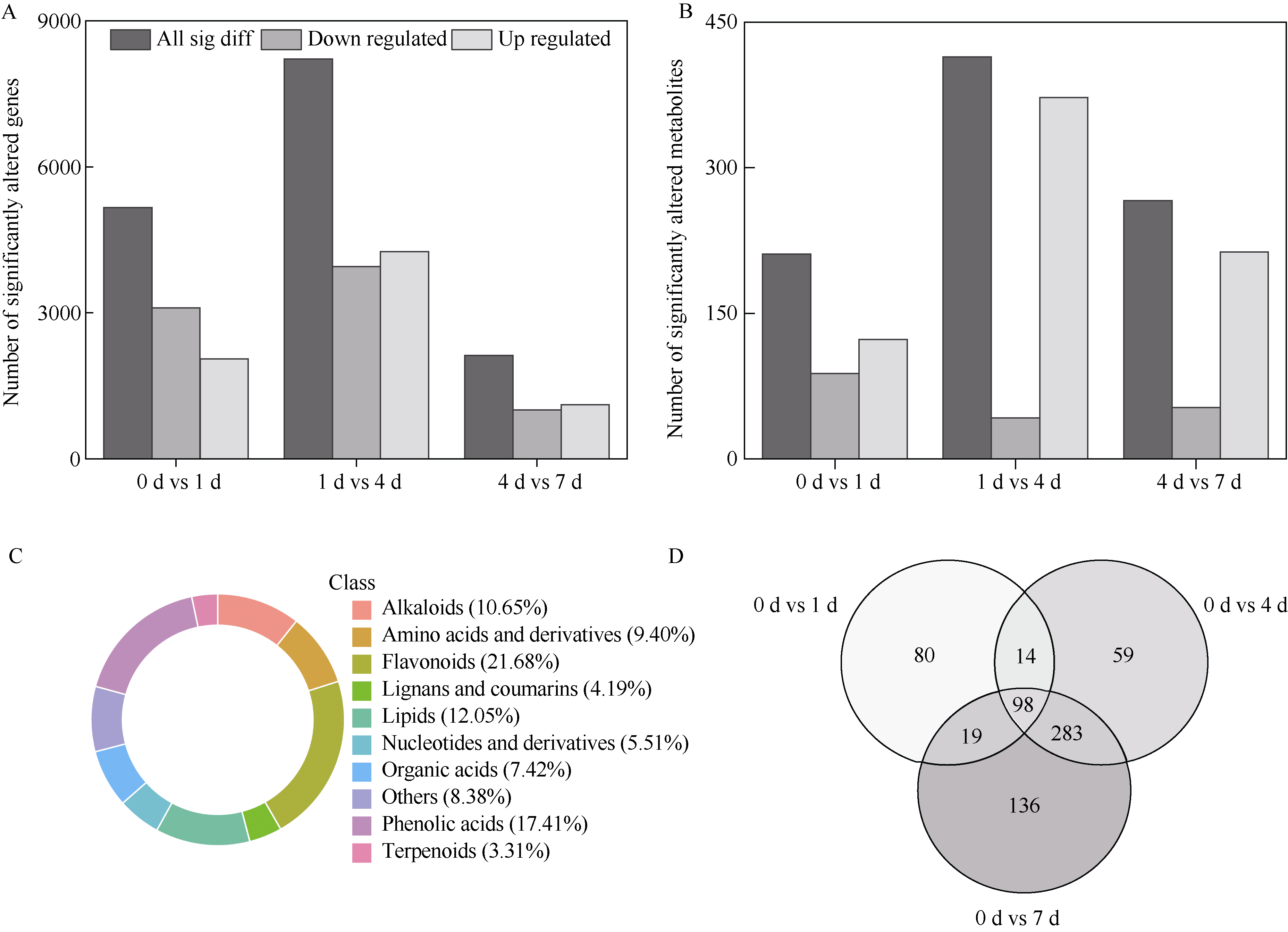
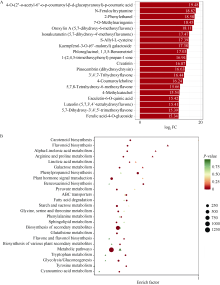
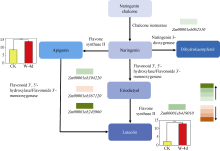
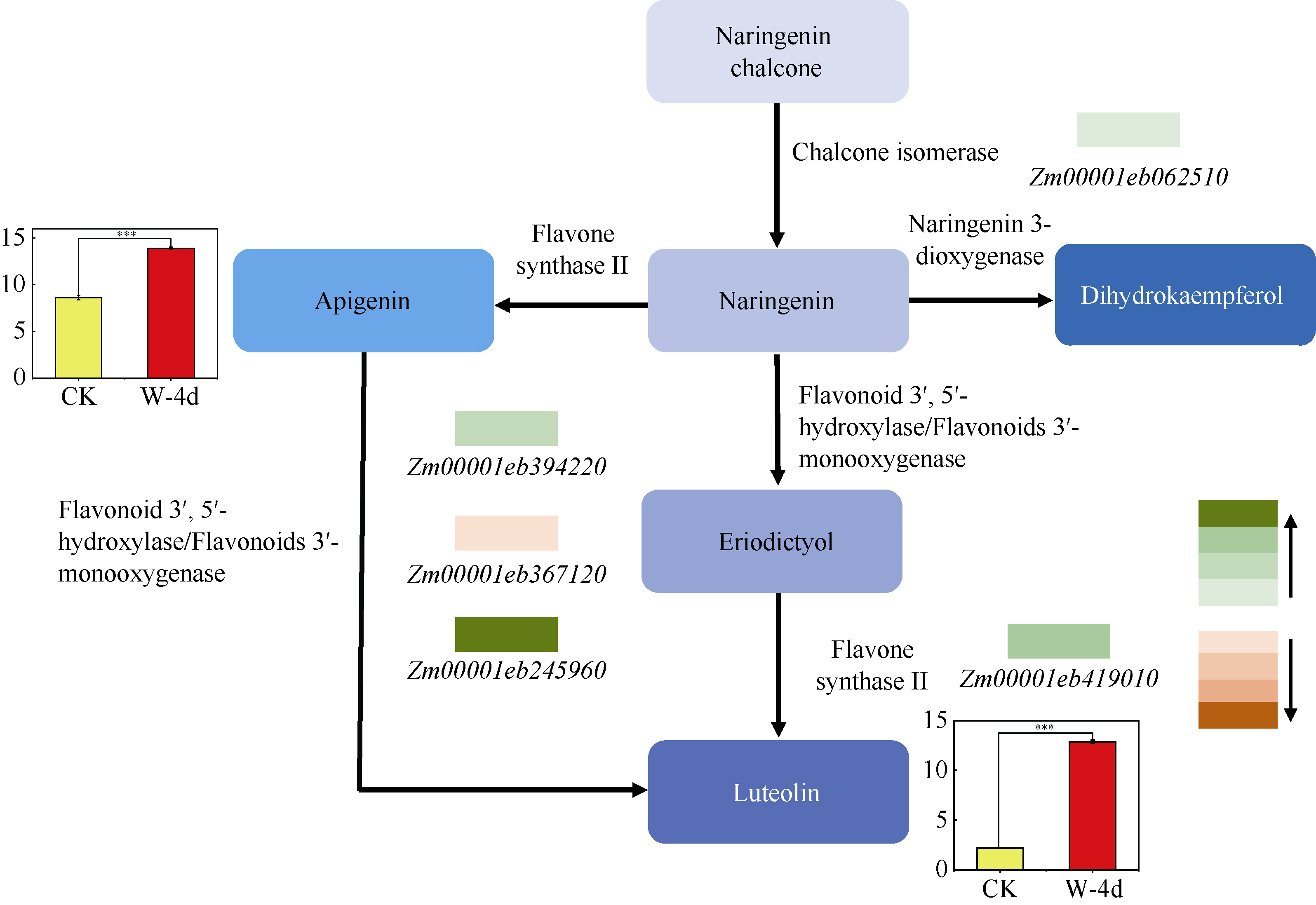
摘要: 为探究玉米(Zea mays L.)幼苗根系在渍水胁迫下关键代谢物以及代谢途径的变化, 阐明与渍水胁迫相关的代谢通路, 对玉米幼苗进行0、1、4和7 d共4个渍水胁迫时间梯度处理, 采用转录组学测序(RNA sequencing, RNA-seq)和超高效液相色谱质谱联用技术(ultra performance liquid chromatography tandem mass spectrometry, UPLC-MS/MS), 筛选与渍水胁迫相关的关键代谢物, 并通过KEGG富集分析探究相关代谢通路。结果显示, 代谢组共标注和定量了1361种差异代谢物, 渍水4 d时根系代谢物变化最为显著, 共有414种代谢物发生变化, 其中372种代谢物含量上升, 42种代谢物含量下降; 代谢物差异倍数排名前20的代谢物均呈现上调趋势, 包括阿魏酸-4-O-葡萄糖苷、2-苯乙醇、7-甲基柚皮素和S-烯丙基-L-半胱氨酸等; 差异显著代谢物的KEGG富集分析结果显示, 黄酮类化合物生物合成、类胡萝卜素生物合成、苯丙素生物合成、植物激素信号转导、ABC转运蛋白、脂肪酸降解、淀粉和蔗糖代谢、甘氨酸、丝氨酸和苏氨酸代谢、色氨酸代谢以及糖酵解/糖异生等代谢途径中, 差异基因与差异代谢物较为显著富集。类黄酮生物合成代谢通路与渍水胁迫密切相关, 柚皮素与木犀草素等黄酮类物质, 查尔酮异构酶、黄酮合成酶II与黄酮3',5'-羟化酶/黄酮3'-单氧化酶可能起关键作用。研究结果为探究玉米耐渍胁迫分子机制提供科学支撑与理论依据, 为玉米耐渍育种等相关研究提供理论基础。
| [1] |
谢伶俐, 李永铃, 许本波, 张学昆. 油菜耐渍机理解析及遗传改良研究进展. 作物学报, 2025, 51: 287-300.
doi: 10.3724/SP.J.1006.2025.44121 |
| Xie L L, Li Y L, Xu B B, Zhang X K. Mechanisms of waterlogging tolerance and genetic improvement in rapeseed (Brassica napus L.): a review. Acta Agron Sin, 2025, 51: 287-300 (in Chinese with English abstract). | |
| [2] |
Karlova R, Boer D M, Hayes S, Testerink C. Root plasticity under abiotic stress. Plant Physiol, 2021, 187: 1057-1070.
doi: 10.1093/plphys/kiab392 pmid: 34734279 |
| [3] | Milroy S P, Bange M P, Thongbai P. Cotton leaf nutrient concentrations in response to waterlogging under field conditions. Field Crops Res, 2009, 113: 246-255. |
| [4] | Yang M, Yang J, Su L, Sun K, Li D X, Liu Y Z, Wang H, Chen Z Q, Guo T. Metabolic profile analysis and identification of key metabolites during rice seed germination under low-temperature stress. Plant Sci, 2019, 289: 110282. |
| [5] | Song J Y, Chen Y T, Jiang G S, Zhao J Y, Wang W J, Hong X F. Integrated analysis of transcriptome and metabolome reveals insights for low-temperature germination in hybrid rapeseeds (Brassica napus L.). J Plant Physiol, 2023, 291: 154120. |
| [6] | Luo Y, Wang Y, Xie Y Y, Gao Y M, Li W Q, Lang S P. Transcriptomic and metabolomic analyses of the effects of exogenous trehalose on heat tolerance in wheat. Int J Mol Sci, 2022, 23: 5194. |
| [7] | 吾木提汗. 豆科植物骆驼刺盐胁迫适应性研究. 新疆农业大学硕士学位论文, 新疆乌鲁木齐, 2011. |
| Wu M T H. Study on the Salt Stress Adaptaion of Leguminous Plant Alhagi pseudoalhagi. MS Thesis of Xinjiang Agricultural University, Urumqi, Xinjiang, China, 2011 (in Chinese with English abstract). | |
| [8] | Hasegawa P M, Bressan R A, Zhu J K, Bohnert H J. Plant cellular and molecular responses to high salinity. Annu Rev Plant Physiol Plant Mol Biol, 2000, 51: 463-499. |
| [9] | Yu Y A, Wu Y X, He L Y. A wheat WRKY transcription factor TaWRKY17 enhances tolerance to salt stress in transgenic Arabidopsis and wheat plant. Plant Mol Biol, 2023, 113: 171-191. |
| [10] | Khalid M, Rehman H M, Ahmed N, Nawaz S, Saleem F, Ahmad S, Uzair M, Rana I A, Atif R M, Zaman Q U, et al. Using exogenous melatonin, glutathione, proline, and glycine betaine treatments to combat abiotic stresses in crops. Int J Mol Sci, 2022, 23: 12913. |
| [11] | Hasanuzzaman M, Bhuyan M H M B, Zulfiqar F, Raza A, Mohsin S M, Mahmud J A, Fujita M, Fotopoulos V. Reactive oxygen species and antioxidant defense in plants under abiotic stress: revisiting the crucial role of a universal defense regulator. Antioxidants, 2020, 9: 681. |
| [12] | Xu K N, Xu X, Fukao T, Canlas P, Maghirang-Rodriguez R, Heuer S, Ismail A M, Bailey-Serres J, Ronald P C, MacKill D J. Sub1A is an ethylene-response-factor-like gene that confers submergence tolerance to rice. Nature, 2006, 442: 705-708. |
| [13] | Qi H H, Wang J, Wang X, Liang K, Ke M C, Zheng X Q, Tang W B, Chen Z Y, Ke Y G, Yang P F, et al. ZmEREB180 modulates waterlogging tolerance in maize by regulating root development and antioxidant gene expression. Plant Biotechnol J, 2025, 23: 2062-2064. |
| [14] | Li C, Wang L, Su J, Li W, Tang Y, Zhao N, Lou L, Ou X, Jia D, Jiang J, et al. A group VIIIa ethylene-responsive factor, CmERF4, negatively regulates waterlogging tolerance in Chrysanthemum. J Exp Bot, 2024, 75: 1479-1492. |
| [15] |
Wang F, Zhou Z, Liu X, Zhu L, Guo B, Lyu C, Zhu J, Chen Z H, Xu R. Transcriptome and metabolome analyses reveal molecular insights into waterlogging tolerance in Barley. BMC Plant Biol, 2024, 24: 385.
doi: 10.1186/s12870-024-05091-8 pmid: 38724918 |
| [16] |
Chen Y H, Zhang R P, Song Y M, He J M, Sun J H, Bai J F, An Z L, Dong L J, Zhan Q M, Abliz Z. RRLC-MS/MS-based metabonomics combined with in-depth analysis of metabolic correlation network: finding potential biomarkers for breast cancer. Analyst, 2009, 134: 2003-2011.
doi: 10.1039/b907243h pmid: 19768207 |
| [17] |
Kanehisa M, Goto S. KEGG: Kyoto encyclopedia of genes and genomes. Nucleic Acids Res, 2000, 28: 27-30.
doi: 10.1093/nar/28.1.27 pmid: 10592173 |
| [18] |
Kim D, Langmead B, Salzberg S L. HISAT: a fast spliced aligner with low memory requirements. Nat Methods, 2015, 12: 357-360.
doi: 10.1038/nmeth.3317 pmid: 25751142 |
| [19] |
Liao Y, Smyth G K, Shi W. featureCounts: an efficient general purpose program for assigning sequence reads to genomic features. Bioinformatics, 2014, 30: 923-930.
doi: 10.1093/bioinformatics/btt656 pmid: 24227677 |
| [20] |
Dennis E S, Dolferus R, Ellis M, Rahman M, Wu Y, Hoeren F U, Grover A, Ismond K P, Good A G, Peacock W J. Molecular strategies for improving waterlogging tolerance in plants. J Exp Bot, 2000, 51: 89-97.
pmid: 10938799 |
| [21] | Linić I, Mlinarić S, Brkljačić L, Pavlović I, Smolko A, Salopek-Sondi B. Ferulic acid and salicylic acid foliar treatments reduce short-term salt stress in Chinese cabbage by increasing phenolic compounds accumulation and photosynthetic performance. Plants, 2021, 10: 2346. |
| [22] | Ozfidan-Konakci C, Yildiztugay E, Alp F N, Kucukoduk M, Turkan I. Naringenin induces tolerance to salt/osmotic stress through the regulation of nitrogen metabolism, cellular redox and ROS scavenging capacity in bean plants. Plant Physiol Biochem, 2020, 157: 264-275. |
| [23] | Shah A, Smith D L. Flavonoids in agriculture: chemistry and roles in biotic and abiotic stress responses, and microbial associations. Agronomy, 2020, 10: 1209. |
| [24] | Wang M, Zhang Y, Zhu C Y, Yao X Y, Zheng Z, Tian Z N, Cai X. EkFLS overexpression promotes flavonoid accumulation and abiotic stress tolerance in plant. Physiol Plant, 2021, 172: 1966-1982. |
| [25] | Liang S M, Hashem A, Abd-Allah E F, Wu Q S. Root-associated symbiotic fungi enhance waterlogging tolerance of peach seedlings by increasing flavonoids and activities and gene expression of antioxidant enzymes. Chem Biol Technol Agric, 2023, 10: 124. |
| [26] |
程六龙, 黄永春, 王常荣, 刘仲齐, 黄益宗, 张长波, 王晓丽. S-烯丙基-L-半胱氨酸缓解水稻种子幼根和幼芽镉胁迫机制. 环境科学, 2021, 42: 3037-3045.
pmid: 34032104 |
|
Cheng L L, Huang Y C, Wang C R, Liu Z Q, Huang Y Z, Zhang C B, Wang X L. Mechanism of S-allyl-L-cysteine in alleviating cadmium stress in rice seedling roots and shoots. Environ Sci, 2021, 42: 3037-3045 (in Chinese with English abstract).
doi: 10.13227/j.hjkx.202010061 pmid: 34032104 |
|
| [27] | Shomali A, Das S, Arif N, Sarraf M, Zahra N, Yadav V, Aliniaeifard S, Chauhan D K, Hasanuzzaman M. Diverse physiological roles of flavonoids in plant environmental stress responses and tolerance. Plants, 2022, 11: 3158. |
| [28] | Li S X, Yang W Y, Guo J H, Li X N, Lin J X, Zhu X C. Changes in photosynthesis and respiratory metabolism of maize seedlings growing under low temperature stress may be regulated by arbuscular mycorrhizal fungi. Plant Physiol Biochem, 2020, 154: 1-10. |
| [29] |
Hartman S, Liu Z G, van Veen H, Vicente J, Reinen E, Martopawiro S, Zhang H T, van Dongen N, Bosman F, Bassel G W, et al. Ethylene-mediated nitric oxide depletion pre-adapts plants to hypoxia stress. Nat Commun, 2019, 10: 4020.
doi: 10.1038/s41467-019-12045-4 pmid: 31488841 |
| [30] | 丁宁, 海燕, 王晓晖, 屠鹏飞, 高博文, 史社坡. 白木香查尔酮异构酶基因的克隆鉴定与表达分析. 药学学报, 2021, 56: 630-638. |
| Ding N, Hai Y, Wang X H, Tu P F, Gao B W, Shi S P. Cloning and expression analysis of Chalcone isomerase from Aquilaria sinensis. Acta Pharm Sin, 2021, 56: 630-638 (in Chinese with English abstract). | |
| [31] | Pan J W, Sharif R, Xu X W, Chen X H. Mechanisms of waterlogging tolerance in plants: research progress and prospects. Front Plant Sci, 2021, 11: 627331. |
| [32] |
Zou X L, Jiang Y Y, Liu L, Zhang Z X, Zheng Y L. Identification of transcriptome induced in roots of maize seedlings at the late stage of waterlogging. BMC Plant Biol, 2010, 10: 189.
doi: 10.1186/1471-2229-10-189 pmid: 20738849 |
| [33] | Gibbs D J, Lee S C, Isa N M, Gramuglia S, Fukao T, Bassel G W, Correia C S, Corbineau F, Theodoulou F L, Bailey-Serres J, et al. Homeostatic response to hypoxia is regulated by the N-end rule pathway in plants. Nature, 2011, 479: 415-418. |
| [34] | 闫雅如, 杨洪芸, 齐博文, 徐溪平, 刘雨雨, 王晓晖, 赵云芳, 史社坡, 刘晓, 屠鹏飞. 干旱胁迫对管花肉苁蓉组织培养体系中苯乙醇苷类成分含量的影响. 中草药, 2019, 50: 2452-2460. |
| Yan Y R, Yang H Y, Qi B W, Xu X P, Liu Y Y, Wang X H, Zhao Y F, Shi S P, Liu X, Tu P F. Effect of drought stress on accumulation of two respective phenylethanoid glycosides in tissue culture of Cistanche tubulosa. Chin Tradit Herb Drugs, 2019, 50: 2452-2460 (in Chinese with English abstract). | |
| [35] | Zou X R, Wei Y Y, Jiang S, Xu F, Wang H F, Zhan P P, Shao X F. ROS stress and cell membrane disruption are the main antifungal mechanisms of 2-phenylethanol against Botrytis cinerea. J Agric Food Chem, 2022, 70: 14468-14479. |
| [36] | 刘美玲, 刘玉冰, 曹波. 液质联用法测定干旱胁迫下红砂(Reaumuria soongorica)叶片F3H、DFR酶活性. 生态学杂志, 2012, 31: 2158-2162. |
| Liu M L, Liu Y B, Cao B. Determination of Reaumuria soongorica leaf F3H and DFR activities under drought stress by using RP-HPLC-MS. Chin J Ecol, 2012, 31: 2158-2162 (in Chinese with English abstract). | |
| [37] | 火兴宇, 张宇, 王常荣, 齐麟, 刘斌, 黄雁飞, 黄永春. 硫化氢信号分子介导S-烯丙基-L-半胱氨酸调控水稻镉胁迫. 农业环境科学学报, 2025, 44: 1160-1168. |
| Huo X Y, Zhang Y, Wang C R, Qi L, Liu B, Huang Y F, Huang Y C. Hydrogen sulfide signaling molecule mediates the regulation of cadmium stress in rice by S-allyl-L-cysteine. J Agro-Environ Sci, 2025, 44: 1160-1168 (in Chinese with English abstract). | |
| [38] | Huo X Y, Wang C R, Huang Y C, Kong W Y, Wang X L. Effect of s-allyl-L-cysteine on nitric oxide and cadmium processes in rice (Oryza sativa L. sp. Zhongzao 35) seedlings. Toxics, 2024, 12: 805. |
| [39] | Zhou J L, Tian L, Wang S X, Li H P, Zhao Y L, Zhang M B, Wang X L, An P P, Li C H. Ovary abortion induced by combined waterlogging and shading stress at the flowering stage involves amino acids and flavonoid metabolism in maize. Front Plant Sci, 2021, 12: 778717. |
| [40] | Song Z H, Yang Q, Dong B Y, Li N, Wang M Y, Du T T, Liu N, Niu L L, Jin H J, Meng D, et al. Melatonin enhances stress tolerance in pigeon pea by promoting flavonoid enrichment, particularly luteolin in response to salt stress. J Exp Bot, 2022, 73: 5992-6008. |
| [41] | Wang H H, Liang X L, Wan Q, Wang X M, Bi Y R. Ethylene and nitric oxide are involved in maintaining ion homeostasis in Arabidopsis callus under salt stress. Planta, 2009, 230: 293-307. |
| [42] | Wang M Y, Dong B Y, Song Z H, Qi M, Chen T, Du T T, Cao H Y, Liu N, Meng D, Yang Q, et al. Molecular mechanism of naringenin regulation on flavonoid biosynthesis to improve the salt tolerance in pigeon pea (Cajanus cajan (Linn.) Millsp). Plant Physiol Biochem, 2023, 196: 381-392. |
| [43] | Yu F, Tan Z D, Fang T, Tang K Y, Liang K, Qiu F Z. A comprehensive transcriptomics analysis reveals long non-coding RNA to be involved in the key metabolic pathway in response to waterlogging stress in maize. Genes, 2020, 11: 267. |
| [44] | Jackson M, Armstrong W. Formation of aerenchyma and the processes of plant ventilation in relation to soil flooding and submergence. Plant Biol (Stuttg), 1999, 1: 274-287. |
| [45] | Ashraf M, Harris P J C. Photosynthesis under stressful environments: an overview. Photosynthetica, 2013, 51: 163-190. |
| [46] | Drew M C. Oxygen deficiency and root metabolism: injury and acclimation under hypoxia and anoxia. Annu Rev Plant Physiol Plant Mol Biol, 1997, 48: 223-250. |
| [47] | Sairam R K, Kumutha D, Ezhilmathi K, Deshmukh P S, Srivastava G C. Physiology and biochemistry of waterlogging tolerance in plants. Biol Plant, 2008, 52: 401-412. |
| [48] | Yordanova R Y, Popova L P. Flooding-induced changes in photosynthesis and oxidative status in maize plants. Acta Physiol Plant, 2007, 29: 535-541. |
| [49] | Zhao Z X, Qin T, Zheng H J, Guan Y, Gu W, Wang H, Yu D S, Qu J T, Wei J H, Xu W. Mutation of ZmDIR5 reduces maize tolerance to waterlogging, salinity, and drought. Plants, 2025, 14: 785. |
| [50] | Kreuzwieser J, Rennenberg H. Molecular and physiological responses of trees to waterlogging stress. Plant Cell Environ, 2014, 37: 2245-2259. |
| [51] |
Loreti E, van Veen H, Perata P. Plant responses to flooding stress. Curr Opin Plant Biol, 2016, 33: 64-71.
doi: S1369-5266(16)30088-7 pmid: 27322538 |
| [52] | Licausi F, Kosmacz M, Weits D A, Giuntoli B, Giorgi F M, Voesenek L A C J, Perata P, van Dongen J T. Oxygen sensing in plants is mediated by an N-end rule pathway for protein destabilization. Nature, 2011, 479: 419-422. |
| [53] | Zeng R E, Chen T T, Wang X Y, Cao J, Li X, Xu X Y, Chen L, Xia Q, Dong Y L, Huang L P, et al. Physiological and expressional regulation on photosynthesis, starch and sucrose metabolism response to waterlogging stress in peanut. Front Plant Sci, 2021, 12: 601771. |
| [54] |
王暄, 陈海霞. 植物ABCB转运蛋白研究进展. 生物技术通报, 2020, 36: 223-229.
doi: 10.13560/j.cnki.biotech.bull.1985.2019-0899 |
|
Wang X, Chen H X. Research progress on plant ABCB transporter. Biotechnol Bull, 2020, 36: 223-229 (in Chinese with English abstract).
doi: 10.13560/j.cnki.biotech.bull.1985.2019-0899 |
|
| [55] | 刘文献, 刘志鹏, 谢文刚, 王彦荣. 脂肪酸及其衍生物对植物逆境胁迫的响应. 草业科学, 2014, 31: 1556-1565. |
| Liu W X, Liu Z P, Xie W G, Wang Y R. Responses of fatty acid and its derivatives to stress in plants. Pratac Sci, 2014, 31: 1556-1565 (in Chinese with English abstract). | |
| [56] | Shu S, Tang Y Y, Yuan Y H, Sun J, Zhong M, Guo S R. The role of 24-epibrassinolide in the regulation of photosynthetic characteristics and nitrogen metabolism of tomato seedlings under a combined low temperature and weak light stress. Plant Physiol Biochem, 2016, 107: 344-353. |
| [57] | Liu W C, Song R F, Zheng S Q, Li T T, Zhang B L, Gao X, Lu Y T. Coordination of plant growth and abiotic stress responses by tryptophan synthase β subunit 1 through modulation of tryptophan and ABA homeostasis in Arabidopsis. Mol Plant, 2022, 15: 973-990. |
| [58] | Kumari A, Fatnani D, Seth C S, Parida A K. Unravelling the metabolic signatures and associated pathways underlying saline-alkali stress resilience in the halophyte Salvadora persica. Physiol Plant, 2025, 177: e70114. |
| [1] | 王亚, 赵宜婷, 王宙, 杨俊芳, 张宏斌, 曹越. 转录组-代谢组联合分析蓖麻蜡质合成相关基因[J]. 作物学报, 2026, 52(6): 1774-1787. |
| [2] | 刘恩波, 陈静, 李红星, 于宁宁, 任佰朝, 赵斌, 刘鹏, 张吉旺. 遮阴改变源-库平衡和调节碳水化合物代谢进而抑制夏玉米幼穗发育[J]. 作物学报, 2026, 52(6): 1891-1901. |
| [3] | 梁进宇, 尹嘉德, 王红丽, 张国平, 侯慧芝, 董博, 马明生. 基于无人机高光谱和机器学习的旱地饲用玉米叶片氮含量估测[J]. 作物学报, 2026, 52(6): 1788-1801. |
| [4] | 孙淑凤, 许振南, 黄嘉鑫, 翁建峰, 李新海. 玉米MAPK家族全基因组鉴定及其对拟轮枝镰孢菌感染的响应[J]. 作物学报, 2026, 52(5): 1291-1308. |
| [5] | 张宁宁, 滕雨菲, 任娜娜, 魏兴卓, 闫书豪, 樊可心, 王永宏, 陈文康, 张兴华, 朱万超, 徐淑兔, 薛吉全. 201份玉米自交系抗旱表型评价及可塑性分析[J]. 作物学报, 2026, 52(5): 1309-1325. |
| [6] | 张鸿蓉, 王菲儿, 李盼, 仇海龙, 朱静, 赵连豪, 南运有, 何蔚, 樊志龙, 胡发龙, 柴强, 殷文. 减量20%灌水与25%有机肥替代化肥提高青贮玉米产量的光合特性[J]. 作物学报, 2026, 52(5): 1487-1500. |
| [7] | 杨欣雨, 崔文涛, 迪力尼格尔·阿力木, 汪凯翔, 吴鹏昊, 任姣姣. 玉米穗上叶片数全基因组关联分析和全基因组选择[J]. 作物学报, 2026, 52(5): 1573-1590. |
| [8] | 韩亚鑫, 何冠华, 张小琼, 张登峰, 李永祥, 刘旭洋, 王天宇, 黎裕, 邹华文, 李春辉. 基于RNA-Seq和BSA-Seq联合分析挖掘玉米侧根密度基因资源[J]. 作物学报, 2026, 52(5): 1341-1352. |
| [9] | 杨扬, 常诗惠, 田红丽, 易红梅, 王璐, 任洁, 范亚明, 刘亚维, 王凤格, 赵久然. 不同生态区国审玉米品种的遗传多样性分析[J]. 作物学报, 2026, 52(5): 1352-1364. |
| [10] | 蔡宏玮, 于爱忠, 姜科强, 王鹏飞, 王玉珑, 霍建喆, 庞小能, 尹波, 尚永盼. 干旱灌区有机肥替代部分化肥促进甜玉米产量提升的关键机制[J]. 作物学报, 2026, 52(4): 1166-1180. |
| [11] | 田红丽, 杨扬, 范亚明, 易红梅, 郭丹丹, 王凤格, 赵久然. 适于玉米品种鉴定的一套三等位变异SNP新型标记组合[J]. 作物学报, 2026, 52(4): 993-1005. |
| [12] | 杨亚莉, 徐明睿, 马越飞, 海艺蕊, 刘凯栋, 刘万茂, 孙颖. 玉米根尖及整根响应缺铁的转录组比较研究[J]. 作物学报, 2026, 52(4): 1006-1021. |
| [13] | 马亮, 马璐, 张舒钰, 章慧敏, 王仁明, 宋旭东, 张振良, 冒宇翔, 陆虎华, 陈国清, 郝德荣, 周广飞. 玉米苞叶数目转录组分析及候选基因鉴定[J]. 作物学报, 2026, 52(3): 790-801. |
| [14] | 孟成, 王哲. 玉米ZmPFK基因家族全基因组鉴定及响应胁迫表达分析[J]. 作物学报, 2026, 52(3): 764-779. |
| [15] | 李新浩, 邢梦柯, 周梓惠, 李思烨, 任昊, 王洪章, 赖华江. 外源褪黑素通过协调光反应与暗反应增强玉米苗期的耐热性[J]. 作物学报, 2026, 52(3): 839-856. |
|
||