欢迎访问作物学报,今天是
作物学报 ›› 2026, Vol. 52 ›› Issue (4): 1127-1139.doi: 10.3724/SP.J.1006.2026.54118
宋裕祯1( ), Bheel Chander Kumar1, 王跃1, 张颖星1, 郭娟1, Khound Rituraj2, Santra Dipak Kumar2, 曹晓宁1,3,4,*(), 王瑞云1,4,*()
Song Yu-Zhen1(), Bheel Chander Kumar1, Wang Yue1, Zhang Ying-Xing1, Guo Juan1, Khound Rituraj2, Santra Dipak Kumar2, Cao Xiao-Ning1,3,4,*(), Wang Rui-Yun1,4,*()
摘要:
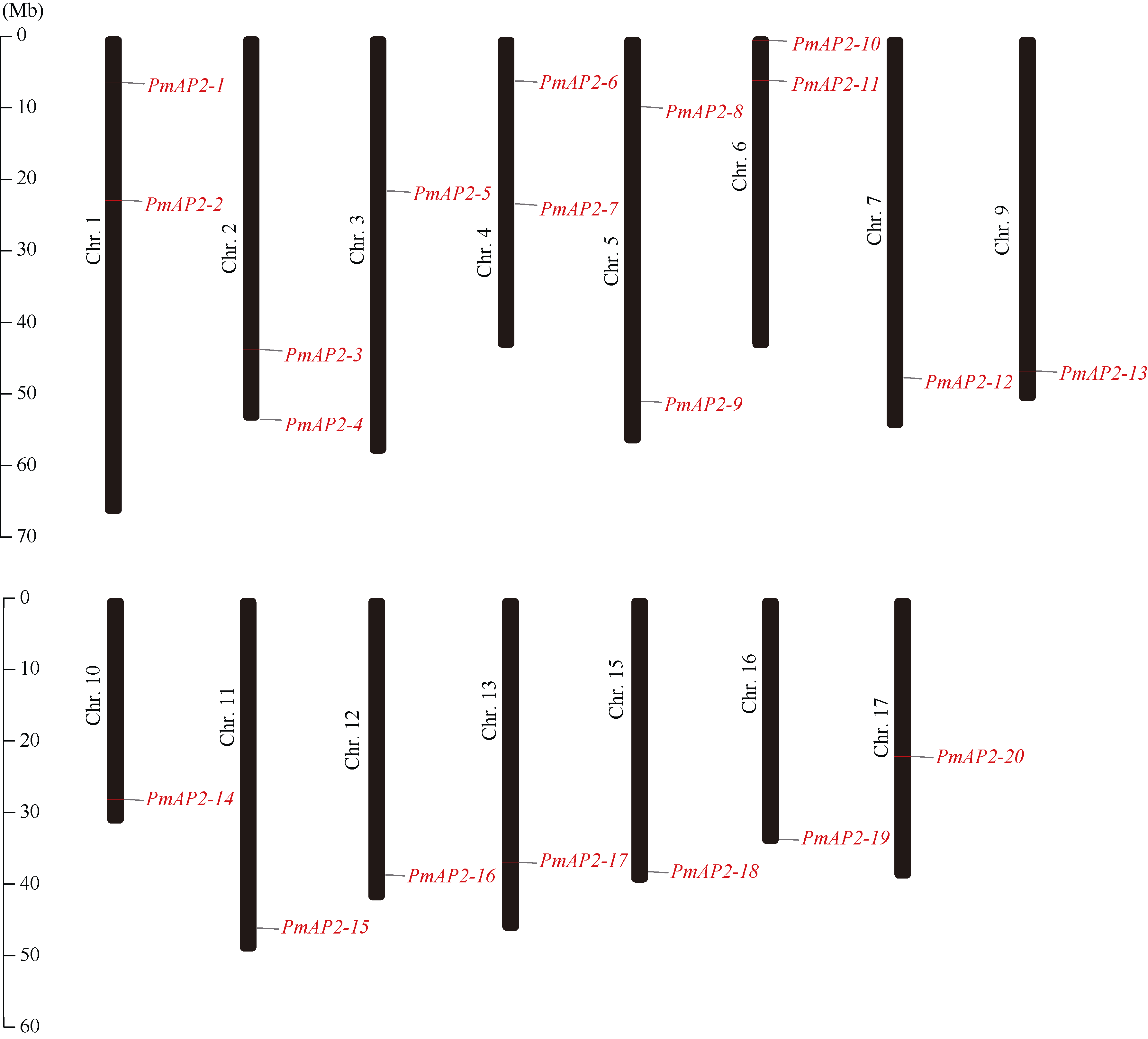
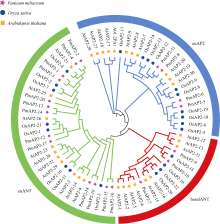
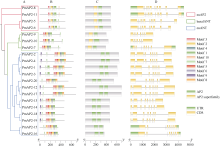
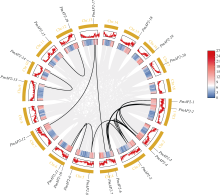
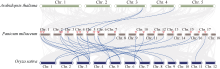
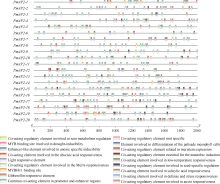
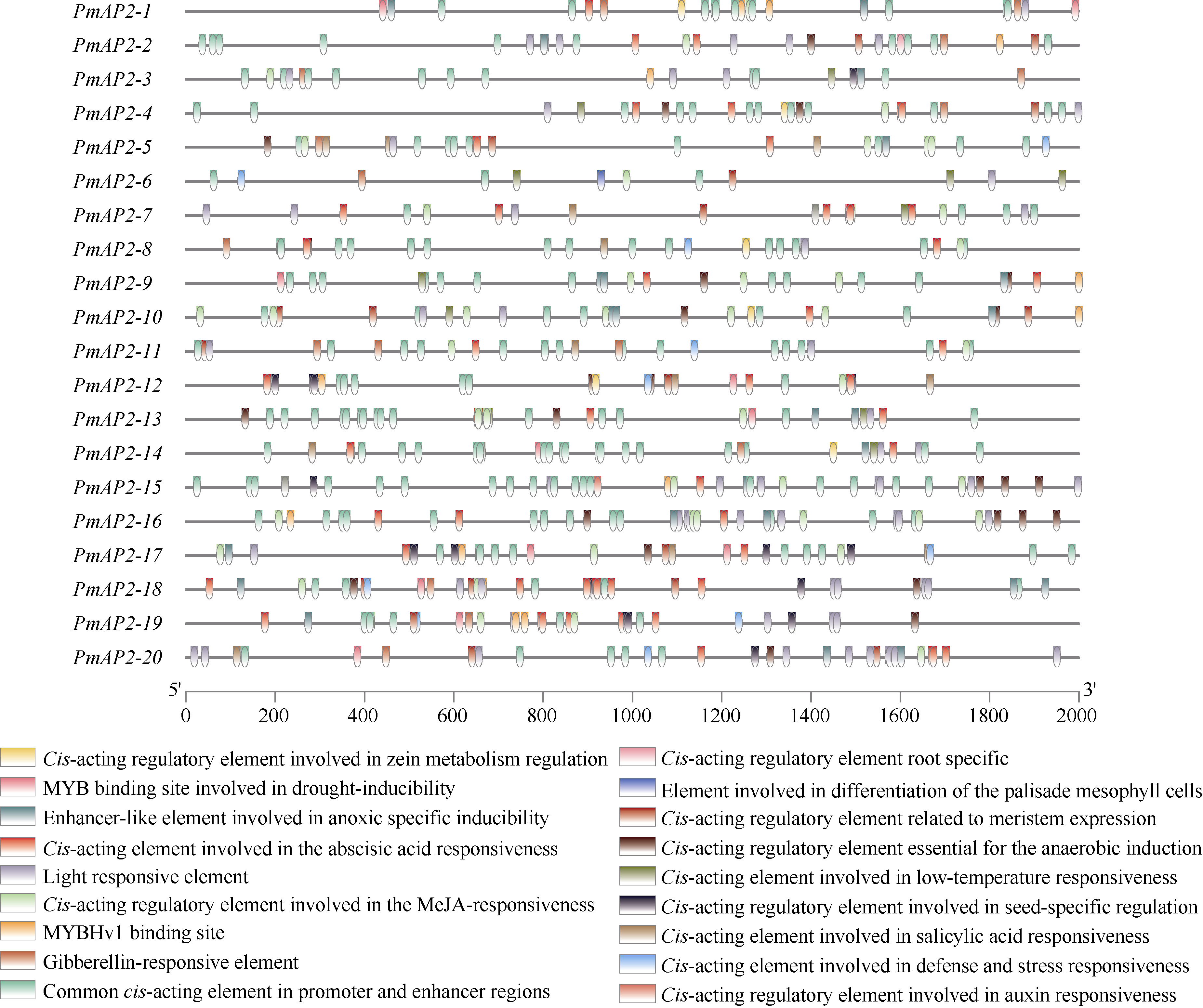
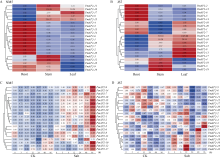
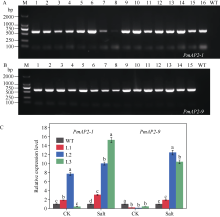
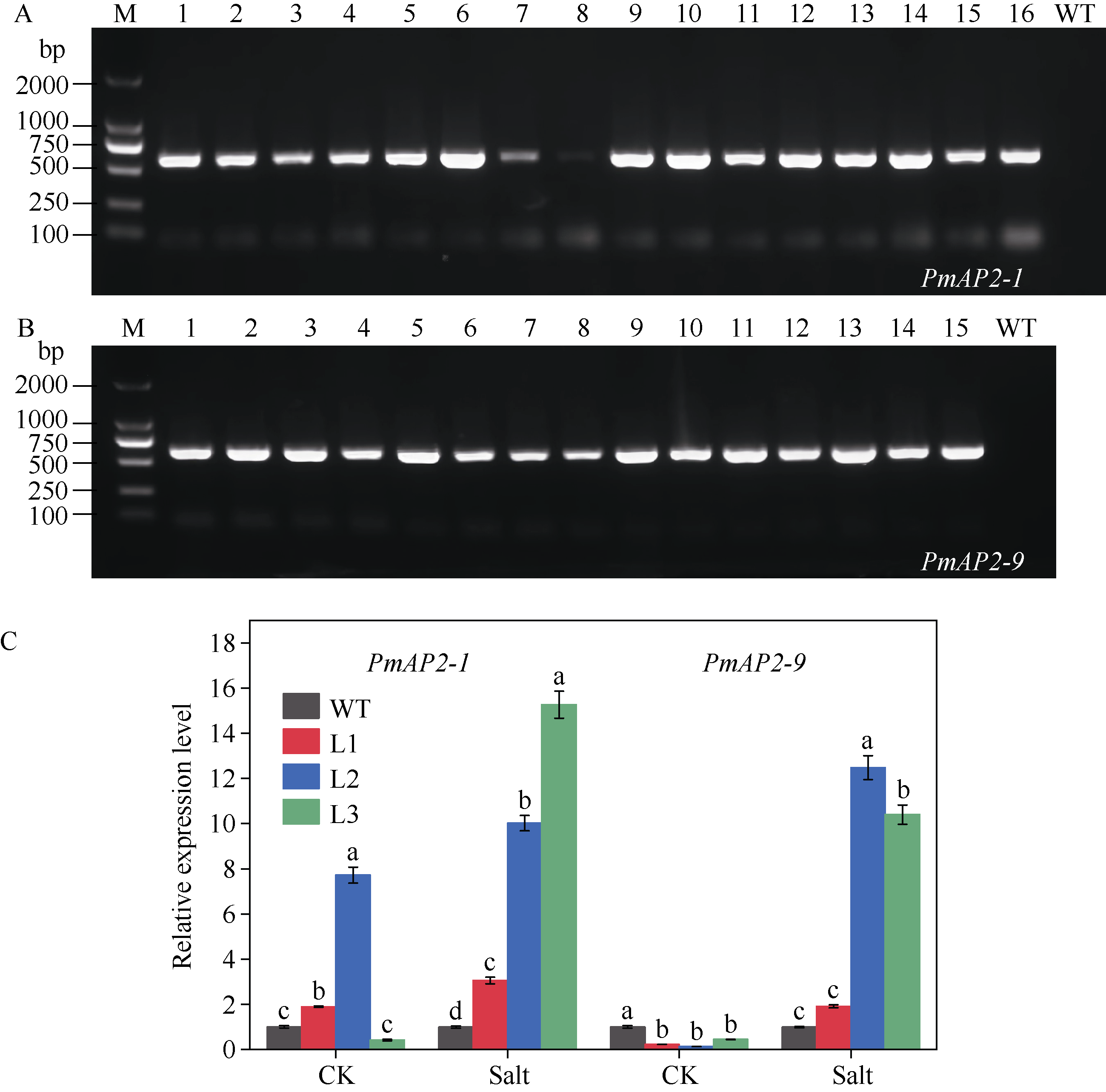
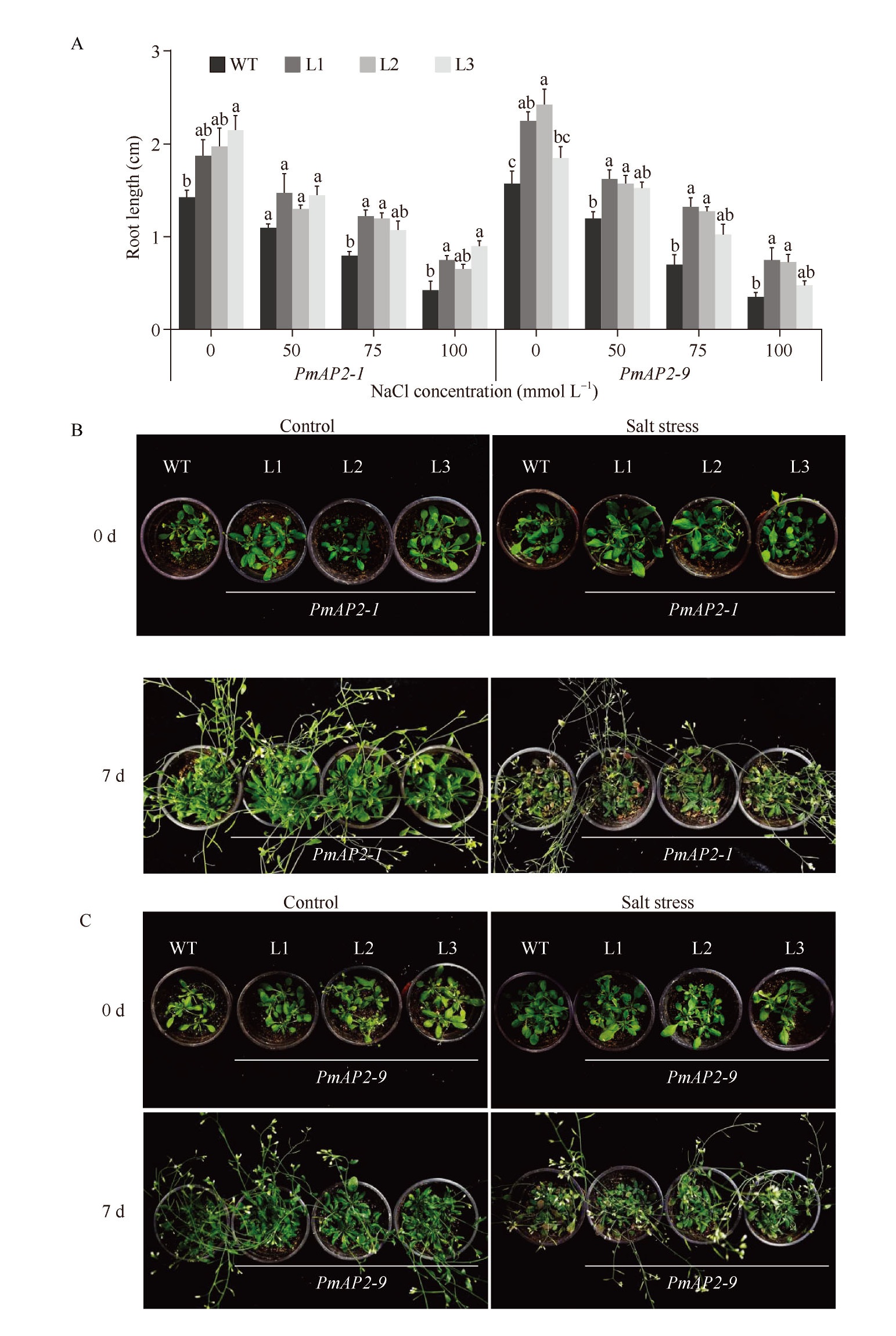
糜子是中国起源的古老粟类, 是华夏农耕文明的载体作物。AP2亚家族成员在调控植物生长发育和非生物胁迫响应中起重要作用, 但其在糜子中的成员数量和功能尚不明确。本研究基于糜子基因组数据, 利用生物信息学方法, 全基因组鉴定AP2亚家族成员, 解析其基因结构以及盐胁迫后的基因表达模式。结果表明, 在全基因组水平鉴定到20个PmAP2亚家族成员(PmAP2-1~PmAP2-20), 分布于糜子15条染色体。系统进化分析表明, 全部PmAP2编码蛋白聚为3个亚组(euANT、basalANT和euAP2)。启动子顺式作用元件分析表明, PmAP2亚家族基因参与了植物激素和非生物胁迫响应、生长发育、光信号等过程。物种间共线性分析在糜子与拟南芥和水稻之间分别发现3个和27个共线性对。PmAP2基因的表达存在品种和组织特异性, 且20个成员的表达均受盐胁迫诱导。通过遗传转化, 将来自糜子中的盐胁迫诱导上调表达基因PmAP2-1和PmAP2-9转化至拟南芥并获得稳定遗传转化株系。进一步分析发现, 盐胁迫影响转基因拟南芥的根系生长, 随着盐胁迫浓度的增加根长减少, 在75 mmol L-1和100 mmol L-1重度盐胁迫下, 转基因植株根长与对照相比差异显著。PmAP2-1和PmAP2-9可以为其他粮食作物耐盐性遗传改良提供靶标基因。
| [1] |
悦曼芳, 张春, 吴忠义. 植物转录因子AP2/ERF家族蛋白结构和功能的研究进展. 生物技术通报, 2022, 38(12): 11-26.
doi: 10.13560/j.cnki.biotech.bull.1985.2022-0432 |
| Yue M F, Zhang C, Wu Z Y. Research progress in the structural and functional analysis of plant transcription factor AP2/ERF protein family. Biotechnol Bull, 2022, 38(12): 11-26 (in Chinese with English abstract). | |
| [2] |
Nakano T, Suzuki K, Fujimura T, et al. Genome-wide analysis of the ERF gene family in Arabidopsis and rice. Plant Physiol, 2006, 140: 411-432.
doi: 10.1104/pp.105.073783 |
| [3] |
Sakuma Y, Liu Q, Dubouzet J G, et al. DNA-binding specificity of the ERF/AP2 domain of Arabidopsis DREBs, transcription factors involved in dehydration- and cold-inducible gene expression. Biochem Biophys Res Commun, 2002, 290: 998-1009.
doi: 10.1006/bbrc.2001.6299 |
| [4] |
Jofuku K D, den Boer B G, Van Montagu M, et al. Control of Arabidopsis flower and seed development by the homeotic gene APETALA2. Plant Cell, 1994, 6: 1211-1225.
doi: 10.1105/tpc.6.9.1211 pmid: 7919989 |
| [5] |
Feng K, Hou X L, Xing G M, et al. Advances in AP2/ERF super-family transcription factors in plant. Crit Rev Biotechnol, 2020, 40: 750-776.
doi: 10.1080/07388551.2020.1768509 pmid: 32522044 |
| [6] |
Guo Z H, He L S, Sun X B, et al. Genome-wide analysis of the Rhododendron AP2/ERF gene family: identification and expression profiles in response to cold, salt and drought stress. Plants, 2023, 12: 994.
doi: 10.3390/plants12050994 |
| [7] |
Ohme-Takagi M, Shinshi H. Ethylene-inducible DNA binding proteins that interact with an ethylene-responsive element. Plant Cell, 1995, 7: 173-182.
doi: 10.1105/tpc.7.2.173 pmid: 7756828 |
| [8] | Xu L, Yang L J, Li A P, et al. An AP2/ERF transcription factor confers chilling tolerance in rice. Sci Adv, 2024, 10: eado4788. |
| [9] |
Wang Y G, Du F, Wang J, et al. Improving bread wheat yield through modulating an unselected AP2/ERF gene. Nat Plants, 2022, 8: 930-939.
doi: 10.1038/s41477-022-01197-9 |
| [10] |
Zhuang J, Deng D X, Yao Q H, et al. Discovery, phylogeny and expression patterns of AP2-like genes in maize. Plant Growth Regul, 2010, 62: 51-58.
doi: 10.1007/s10725-010-9484-7 |
| [11] |
Li D D, Liu X T, Shu L Z, et al. Global analysis of the AP2/ERF gene family in rose (Rosa chinensis) genome unveils the role of RcERF099 in Botrytis resistance. BMC Plant Biol, 2020, 20: 533.
doi: 10.1186/s12870-020-02740-6 |
| [12] |
Cao X N, Hu Y L, Song J, et al. Transcriptome sequencing and metabolome analysis reveals the molecular mechanism of drought stress in millet. Int J Mol Sci, 2022, 23: 10792.
doi: 10.3390/ijms231810792 |
| [13] |
Wang R Y, Hunt H V, Qiao Z J, et al. Diversity and cultivation of broomcorn millet (Panicum miliaceum L.) in China: a review. Econ Bot, 2016, 70: 332-342.
doi: 10.1007/s12231-016-9357-8 |
| [14] |
Rajput S G, Santra D K, Schnable J. Mapping QTLs for morpho-agronomic traits in proso millet (Panicum miliaceum L.). Mol Breed, 2016, 36: 37.
doi: 10.1007/s11032-016-0460-4 |
| [15] | Kalinova J, Moudry J. Content and quality of protein in proso millet (Panicum miliaceum L.) varieties. Plant Foods Hum Nutr, 2006, 61: 45-49. |
| [16] | 赵志军, 赵朝洪, 郁金城, 等. 北京东胡林遗址植物遗存浮选结果及分析. 考古, 2020(7): 99-106. |
| Zhao Z J, Zhao C H, Yu J C, et al. Results of floatation and analysis of floral remains from donghulin site, Beijing. Archaeology, 2020(7): 99-106 (in Chinese with English abstract). | |
| [17] | 甘肃省文物考古研究所. 秦安大地湾:新石器时代遗址发掘报告. 北京: 文物出版社, 2006. |
| Gansu Provincial Institute of Cultural Relics and Archaeology. Excavation report of the dadiwan neolithic site in qin'an. Beijing: Wenwu Press, 2006 (in Chinese). | |
| [18] | 赵志军. 有关农业起源和文明起源的植物考古学研究. 社会科学管理与评论, 2005(2): 82-91. |
| Zhao Z J. Plant archaeological research on the origin of agriculture and civilization. Manag Rev Soc Sci, 2005(2): 82-91 (in Chinese with English abstract). | |
| [19] | 蒋宇超, 王晓毅. 兴县碧村遗址小玉梁台地的浮选结果及分析. 文物季刊, 2024(2): 115-123. |
| Jiang Y C, Wang X Y. Flotation results and analysis of Xiaoyuliang terrace at Bicun site, Xing county, Shanxi. J Chin Antiq, 2024(2): 115-123 (in Chinese with English abstract). | |
| [20] |
Shi J P, Ma X X, Zhang J H, et al. Chromosome conformation capture resolved near complete genome assembly of broomcorn millet. Nat Commun, 2019, 10: 464.
doi: 10.1038/s41467-018-07876-6 pmid: 30683940 |
| [21] |
Zou C S, Li L T, Miki D, et al. The genome of broomcorn millet. Nat Commun, 2019, 10: 436.
doi: 10.1038/s41467-019-08409-5 pmid: 30683860 |
| [22] |
Chen J F, Liu Y, Liu M X, et al. Pangenome analysis reveals genomic variations associated with domestication traits in broomcorn millet. Nat Genet, 2023, 55: 2243-2254.
doi: 10.1038/s41588-023-01571-z |
| [23] |
王瑞云, 杨阳, 王海岗, 等. 糜子PmNCED1的克隆及其对PEG胁迫的响应. 核农学报, 2018, 32: 244-256.
doi: 10.11869/j.issn.100-8551.2018.02.0244 |
| Wang R Y, Yang Y, Wang H G, et al. Cloning of gene PmNCED1 and its response to PEG stress in common millet. J Nucl Agric Sci, 2018, 32: 244-256 (in Chinese with English abstract). | |
| [24] |
段政勇, 丁敏, 王宇卓, 等. 糜子SBP基因家族全基因组鉴定及表达分析. 植物学报, 2024, 59: 231-244.
doi: 10.11983/CBB23065 |
| Duan Z Y, Ding M, Wang Y Z, et al. Genome-wide identification and expression analysis of SBP genes in Panicum miliaceum. Chin Bull Bot, 2024, 59: 231-244 (in Chinese with English abstract). | |
| [25] |
林凡云, 王士强, 胡银岗, 等. 糜子SAMS基因的克隆及其在干旱复水中的表达模式分析. 作物学报, 2008, 34: 777-782.
doi: 10.3724/SP.J.1006.2008.00777 |
|
Lin F Y, Wang S Q, Hu Y G, et al. Cloning of a S-adenosylmethionine synthetase gene from broomcorn millet (Panicum miliaceum L.) and its expression during drought and re-watering. Acta Agron Sin, 2008, 34: 777-782 (in Chinese with English abstract).
doi: 10.3724/SP.J.1006.2008.00777 |
|
| [26] | 胡银岗, 林凡云, 王士强, 等. 糜子抗旱节水相关基因PmMYB的克隆及表达分析. 遗传, 2008, 30: 373-379. |
|
Hu Y G, Lin F Y, Wang S Q, et al. Cloning and expression analysis of drought-tolerant and water-saving related gene PmMYB in broomcorn millet. Hereditas (Beijing), 2008, 30: 373-379 (in Chinese with English abstract).
doi: 10.3724/SP.J.1005.2008.00373 |
|
| [27] |
Yue H, Wang M, Liu S Y, et al. Transcriptome-wide identification and expression profiles of the WRKY transcription factor family in broomcorn millet (Panicum miliaceum L.). BMC Genomics, 2016, 17: 343.
doi: 10.1186/s12864-016-2677-3 |
| [28] |
许圆梦, 毛娇, 王梦瑶, 等. 糜子PmDEP1和PmEP3基因的克隆与表达特征分析. 生物技术通报, 2025, 41(2): 150-162.
doi: 10.13560/j.cnki.biotech.bull.1985.2024-0689 |
| Xu Y M, Mao J, Wang M Y, et al. Cloning and expression characteristics analysis of millet genes PmDEP1 and PmEP3. Biotechnol Bull, 2025, 41(2): 150-162 (in Chinese with English abstract). | |
| [29] |
Zhao Y, Ma R Y, Xu D L, et al. Genome-wide identification and analysis of the AP2 transcription factor gene family in wheat (Triticum aestivum L.). Front Plant Sci, 2019, 10: 1286.
doi: 10.3389/fpls.2019.01286 pmid: 31681381 |
| [30] |
Cheng C, An L K, Li F Z, et al. Wide-range portrayal of AP2/ERF transcription factor family in maize (Zea mays L.) development and stress responses. Genes, 2023, 14: 194.
doi: 10.3390/genes14010194 |
| [31] |
Xie Z L, Nolan T, Jiang H, et al. The AP2/ERF transcription factor TINY modulates brassinosteroid-regulated plant growth and drought responses in Arabidopsis. Plant Cell, 2019, 31: 1788-1806.
doi: 10.1105/tpc.18.00918 |
| [32] | Rashid M, He G Y, Yang G X, et al. AP2/ERF transcription factor in rice: genome-wide canvas and syntenic relationships between monocots and eudicots. Evol Bioinform, 2012, 8: 321-355. |
| [33] |
Zhang J, Liao J Y, Ling Q Q, et al. Genome-wide identification and expression profiling analysis of maize AP2/ERF superfamily genes reveal essential roles in abiotic stress tolerance. BMC Genomics, 2022, 23: 125.
doi: 10.1186/s12864-022-08345-7 pmid: 35151253 |
| [34] | Lata C, Mishra A K, Muthamilarasan M, et al. Genome-wide investigation and expression profiling of AP2/ERF transcription factor superfamily in foxtail millet (Setaria italica L.). PLoS One, 2014, 9: e113092. |
| [35] |
Zhang G Y, Chen M, Chen X P, et al. Phylogeny, gene structures, and expression patterns of the ERF gene family in soybean (Glycine max L.). J Exp Bot, 2008, 59: 4095-4107.
doi: 10.1093/jxb/ern248 |
| [36] | 刘涛, 曹启彬, 卫科旭, 等. 野生二粒小麦AP2家族基因鉴定与表达模式分析. 麦类作物学报, 2025, 45: 24-36. |
| Liu T, Cao Q B, Wei K X, et al. Identification and expression pattern analysis of AP2 family genes in wild emmer wheat. J Triticeae Crops, 2025, 45: 24-36 (in Chinese with English abstract). | |
| [37] |
许朵朵, 杜倩倩, 赵理想, 等. 牡丹AP2/ERF转录因子的全基因组分析. 中国农业科学, 2025, 58: 5031-5045.
doi: 10.3864/j.issn.0578-1752.2025.23.017 |
|
Xu D D, Du Q Q, Zhao L X, et al. Genome-wide analysis of AP2/ERF transcription factors in peony. Sci Agric Sin, 2025, 58: 5031-5045 (in Chinese with English abstract).
doi: 10.3864/j.issn.0578-1752.2025.23.017 |
|
| [38] | 姜好, 杨陈玉, 王亚男, 等. 月季AP2/ERF基因家族鉴定分析. 山东林业科技, 2025, 55(4): 8-18. |
| Jiang H, Yang C Y, Wang Y N, et al. Identification of the AP2/ERF gene family in Rosa chinensis. J Shandong For Sci Technol, 2025, 55(4): 8-18 (in Chinese with English abstract). | |
| [39] | 邓薪瑜, 倪龙杰, 向鹏, 等. 海滨木槿AP2/ERF基因家族鉴定及盐胁迫响应模式. 福建农林大学学报(自然科学版), 2025, 54: 618-629. |
| Deng X Y, Ni L J, Xiang P, et al. Identification of AP2/ERF gene family and salt stress response pattern in Hibiscus hamabo. J Fujian Agric For Univ (Nat Sci Edn), 2025, 54: 618-629 (in Chinese with English abstract). | |
| [40] |
Shukla R K, Raha S, Tripathi V, et al. Expression of CAP2, an APETALA2-family transcription factor from chickpea, enhances growth and tolerance to dehydration and salt stress in transgenic tobacco. Plant Physiol, 2006, 142: 113-123.
doi: 10.1104/pp.106.081752 |
| [41] |
Zhou L X, Cao H X, Zeng X H, et al. Oil palm AP2 subfamily gene EgAP2.25 improves salt stress tolerance in transgenic tobacco plants. Int J Mol Sci, 2024, 25: 5621.
doi: 10.3390/ijms25115621 |
| [42] |
Zhai Y, Ni Y R, Wang H, et al. Comprehensive genome-wide identification and characterization of the AP2 subfamily in Beta vulgaris L. in response to exogenous abscisic acid. Agriculture, 2024, 14: 1273.
doi: 10.3390/agriculture14081273 |
| [43] |
Wang Z B, Liang X L, Hao Z Y, et al. Genome-wide investigation and expression analysis of AP2 gene subfamily reveals its evolution and regulatory role under salt stress in Populus. Forests, 2025, 16: 94.
doi: 10.3390/f16010094 |
| [1] | 胡赵, 钱润, 谢丰璞, 应素平. 水稻SPX基因家族鉴定及响应磷处理的表达分析[J]. 作物学报, 2026, 52(6): 1902-1912. |
| [2] | 邹仪妹, 徐敏, 汪海洋, 姚辉, 王加峰, 刘浩, 任代胜. 两系不育系水稻幼苗根系响应盐胁迫的转录因子调控网络鉴定[J]. 作物学报, 2026, 52(6): 1728-1742. |
| [3] | 张献丰, 郭利建, 李康春, 孔斌雪, 刘玉芳, 车卓, 杨德龙. 小麦ABHD6基因家族鉴定与粒重功能标记开发[J]. 作物学报, 2026, 52(6): 1711-1727. |
| [4] | 孙淑凤, 许振南, 黄嘉鑫, 翁建峰, 李新海. 玉米MAPK家族全基因组鉴定及其对拟轮枝镰孢菌感染的响应[J]. 作物学报, 2026, 52(5): 1291-1308. |
| [5] | 覃奕琰, 付瑶, 苏畅, 李娜, 徐静茹, 程笑然, 张琪, 赵明辉. OsST41调控水稻苗期耐盐性的功能分析[J]. 作物学报, 2026, 52(3): 802-812. |
| [6] | 牛丽, 王勇胜, 王长杰, 张宏, 孟亚雄, 李葆春, 杨轲, 马小乐, 姚立蓉, 司二静, 王化俊, 汪军成. 大麦NAC基因家族鉴定分析及HvNAC38的耐盐功能验证[J]. 作物学报, 2026, 52(3): 688-707. |
| [7] | 汪玲, 胡好, 宋家凤, 程洁蓝, 陈颖, 郑婷婷, 吕钊彦, 朱晓彪, 侯华兰. 马铃薯UDP-糖基转移酶基因StUGT52的克隆及功能验证[J]. 作物学报, 2026, 52(3): 665-676. |
| [8] | 杨宗桃, 杨婷, 王禹童, 艾静, 李燕烨, 刘家勇, 邓军, 赵勇, 张跃彬. 甘蔗CLC基因家族鉴定与表达分析[J]. 作物学报, 2026, 52(3): 722-734. |
| [9] | 孟成, 王哲. 玉米ZmPFK基因家族全基因组鉴定及响应胁迫表达分析[J]. 作物学报, 2026, 52(3): 764-779. |
| [10] | 刘吉昌, 李思烨, 李雪婷, 王洪章, 刘鹏, 张吉旺, 赵斌, 任佰朝, 任昊. 盐胁迫对不同耐盐型夏玉米品种根系生长及养分吸收效率的影响[J]. 作物学报, 2026, 52(2): 565-577. |
| [11] | 张晴, 杨昱, 郭茜, 岳霈尧, 殷丛丛, 牛景萍, 赵晋忠, 杜维俊, 岳爱琴. 大豆GmARA6a的克隆及响应盐胁迫的功能分析[J]. 作物学报, 2026, 52(2): 480-493. |
| [12] | 胡城祯, 高维东, 孔斌雪, 王建飞, 车卓, 杨德龙, 陈涛. 小麦TaAPC11基因家族鉴定及TaAPC11-5B参与干旱胁迫的生物学功能研究[J]. 作物学报, 2026, 52(1): 148-164. |
| [13] | 王彬, 蒙姜宇, 邱浩良, 贺亚军, 钱伟. 甘蓝型油菜BnaDUF579基因家族的鉴定与表达模式分析[J]. 作物学报, 2025, 51(8): 2100-2110. |
| [14] | 杨海洋, 吴林宣, 李博纹, 石翰峰, 袁禧龙, 刘金朝, 蔡海荣, 陈诗怡, 郭涛, 王慧. 基于QTL定位发现的OsWRI3调控水稻种子的落粒性[J]. 作物学报, 2025, 51(7): 1712-1724. |
| [15] | 陆雯佳, 汪军成, 姚立蓉, 张宏, 司二静, 杨轲, 孟亚雄, 李葆春, 马小乐, 王化俊. 大麦PRX基因家族全基因组鉴定及其干旱胁迫下的表达分析[J]. 作物学报, 2025, 51(5): 1198-1214. |
|
||