欢迎访问作物学报,今天是
作物学报 ›› 2018, Vol. 44 ›› Issue (12): 1764-1773.doi: 10.3724/SP.J.1006.2018.01764
李璐璐,明博,谢瑞芝,王克如,侯鹏,李少昆( )
)
Lu-Lu LI,Bo MING,Rui-Zhi XIE,Ke-Ru WANG,Peng HOU,Shao-Kun LI()
摘要:
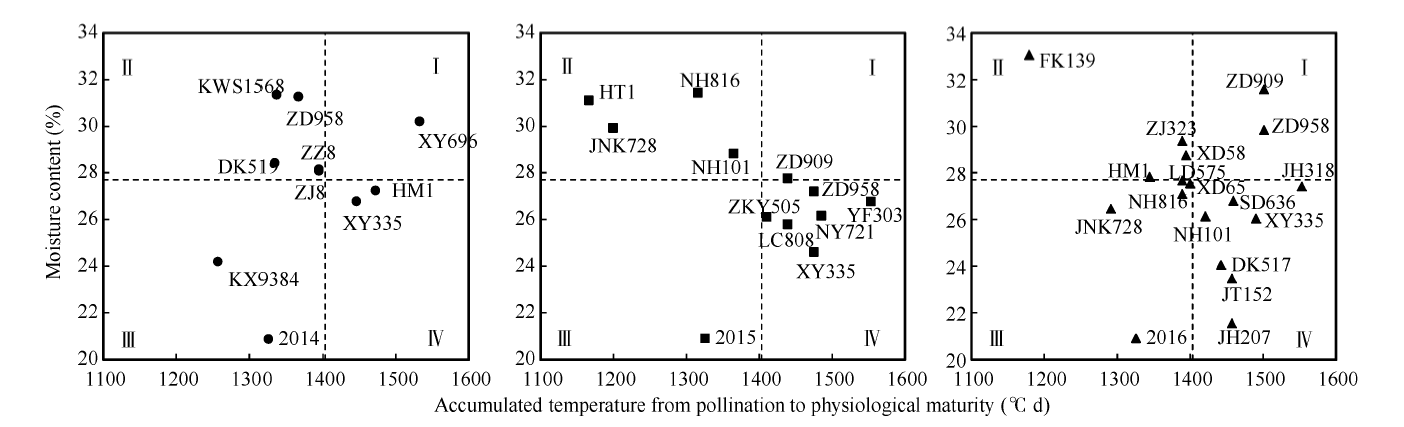
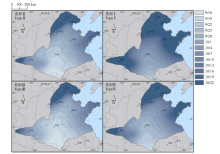
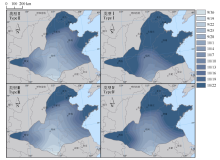
黄淮海一年两熟模式下玉米成熟和熟后籽粒脱水的热量资源紧缺, 是制约机械粒收在该区域发展的关键因素。本文尝试建立黄淮海一年两熟制地区玉米机械粒收适宜品种筛选和以授粉至生理成熟积温和生理成熟期籽粒含水率为指标, 运用双向平均法将参试品种划分为晚熟高含水率(I)、早熟高含水率(II)、早熟低含水率(III)和晚熟低含水率(IV)4种类型。基于玉米生长进程及籽粒含水率动态测试, 估算不同品种播种至适宜机械粒收含水率(28%、25%)所需活动积温, 以黄淮海区夏玉米常年播种日期为起点, 结合历史气象资料的累积计算, 利用地统计分析技术明确不同类型品种适宜机械粒收的时空分布规律, 建立适宜机械粒收时期的预测方法, 为机械粒收在黄淮海区域推广提供指导。选择27个主推品种, 播种至籽粒含水率下降到28%、25%所需要积温分别为, 类型I 2982°C d、3118°C d, 类型II 2770°C d、2873°C d, 类型III 2729°C d、2845°C d, 类型IV 2860°C d、2980°C d。类型III品种降至28%、25%含水率时间分别较类型II品种早2~3 d、约2 d, 较类型IV品种早7~9 d、7~10 d, 较类型I品种早13~17 d、16~17 d。各类型品种籽粒由28%含水率降至25%水平, 所需时间约6~8 d。在当前玉米种植模式及下茬小麦适期播种条件下, 黄淮海南部的豫南、皖北地区, 各类玉米品种均能满足籽粒脱水至适宜机械粒收含水率的要求, 而在黄淮海北部、关中西部以及山东半岛地区, 现有品种很难降至适宜含水率, 需通过选择早熟和籽粒脱水快的适宜品种加以实现。本研究建立的以积温预测籽粒含水率动态变化及其适宜机械粒收时间的预测方法, 为各地合理配置玉米粒收品种、确定适宜机械粒收时间提供了可行的技术方法。
| [1] | 柳枫贺, 王克如, 李健, 王喜梅, 孙亚玲, 陈永生, 王玉华, 韩冬生, 李少昆 . 影响玉米机械收粒质量因素的分析. 作物杂志, 2013, ( 4):116-119 |
| Liu F H, Wang K R, Li J, Wang X M, Sun Y L, Chen Y S, Wang Y H, Han D S, Li S K . Factors affecting corn mechanically harvesting grain quality. Crops, 2013, ( 4):116-119 (in Chinese with English abstract) | |
| [2] | 谢瑞芝, 雷晓鹏, 王克如, 郭银巧, 柴宗文, 侯鹏, 李少昆 . 黄淮海夏玉米籽粒机械收获研究初报. 作物杂志, 2014, ( 2):76-79 |
| Xie R Z, Lei X P, Wang K R, Guo Y Q, Chai Z W, Hou P, Li S K . Research on corn mechanically harvesting grain quality in Huang-Huai-Hai plain. Crops, 2014, ( 2):76-79 (in Chinese with English abstract) | |
| [3] |
王克如, 李少昆 . 玉米机械粒收破碎率研究进展. 中国农业科学, 2017,50:2018-2026
doi: 10.3864/j.issn.0578-1752.2017.11.007 |
|
Wang K R, Li S K . Progresses in research on grain broken rate by mechanical grain harvesting. Sci Agric Sin, 2017,50:2018-2026 (in Chinese with English abstract)
doi: 10.3864/j.issn.0578-1752.2017.11.007 |
|
| [4] |
王克如, 李少昆 . 玉米籽粒脱水速率影响因素分析. 中国农业科学, 2017,50:2027-2035
doi: 10.3864/j.issn.0578-1752.2017.11.008 |
|
Wang K R, Li S K . Analysis of influencing factors on kernel dehydration rate of maize hybrids. Sci Agric Sin, 2017,50:2027-2035 (in Chinese with English abstract)
doi: 10.3864/j.issn.0578-1752.2017.11.008 |
|
| [5] | 任佰朝, 高飞, 魏玉君, 董树亭, 赵斌, 刘鹏, 张吉旺 . 冬小麦-夏玉米周年生产条件下夏玉米的适宜熟期与积温需求特性. 作物学报, 2018,44:137-143 |
| Ren B Z, Gao F, Wei Y J, Dong S T, Zhao B, Liu P, Zhang J W . Suitable maturity period and accumulated temperature of summer maize in wheat-maize double cropping system. Acta Agron Sin, 2018,44:137-143 (in Chinese with English abstract) | |
| [6] |
杨国航, 张春原, 孙世贤, 刘春阁, 王卫红, 赵久然 . 夏玉米子粒收获期判定方法研究. 作物杂志, 2006, ( 5):11-13
doi: 10.3969/j.issn.1001-7283.2006.05.004 |
|
Yang G H, Zhang C Y, Sun S X, Liu C G, Wang W H, Zhao J R . Study on the method of judging the harvest time of summer maize. Crops, 2006, ( 5):11-13 (in Chinese)
doi: 10.3969/j.issn.1001-7283.2006.05.004 |
|
| [7] |
周进宝, 杨国航, 孙世贤, 赵久然 . 黄淮海夏播玉米区玉米生产现状和发展趋势. 作物杂志, 2008, ( 2):4-7
doi: 10.3969/j.issn.1001-7283.2008.02.002 |
|
Zhou J B, Yang G H, Sun S X, Zhao J R . Current situation and prospect of maize production in the Huang-Huai-Hai summer maize region. Crops, 2008, ( 2):4-7 (in Chinese with English abstract)
doi: 10.3969/j.issn.1001-7283.2008.02.002 |
|
| [8] | 刘京宝, 房志勇, 赵霞, 黄璐, 夏来坤, 冯保荣, 刘麦囤 . 河南省夏玉米最佳收获期研究. 河南农业科学, 2011,40(6):46-48 |
| Liu J B, Fang Z Q, Zhao X, Huang L, Xia L K, Feng B R, Liu M T . Study on optimum harvest date of summer maize in Henan province. J Henan Agric Sci, 2011,40(6):46-48 (in Chinese with English abstract) | |
| [9] | 杨茜, 相姝楠 . 一年两熟地区玉米生产机械化中的农机农艺适应性问题初探. 中国农机化学报, 2013,34(2):59-61 |
| Yang Q, Xiang S N . The agricultural machinery & agronomic adaptability solution of the corn production mechanization in the area of two seasoned crops. J Chin Agric Mechanization, 2013,34(2):59-61 (in Chinese with English abstract) | |
| [10] |
李璐璐, 谢瑞芝, 王克如, 明博, 侯鹏, 李少昆 . 黄淮海夏玉米生理成熟期子粒含水率研究. 作物杂志, 2017, ( 2):88-92
doi: 10.16035/j.issn.1001-7283.2017.02.015 |
|
Li L L, Xie R Z, Wang K R, Ming B, Hou P, Li S K . Kernel moisture content of summer maize at physiological maturity in Huanghuaihai region. Crops, 2017, ( 2):88-92 (in Chinese with English abstract)
doi: 10.16035/j.issn.1001-7283.2017.02.015 |
|
| [11] |
郭庆辰, 康浩冉, 王丽娥, 刘洪泉, 陈艳花, 白光红, 窦秉德 . 黄淮区籽粒机收玉米标准及育种模式探讨. 农业科技通讯, 2016, ( 1):159-162
doi: 10.3969/j.issn.1000-6400.2016.01.053 |
|
Guo Q C, Kang H R, Wang L E, Liu H Q, Chen Y H, Bai G H, Dou B D . The standard of corn grain mechanical harvest and breeding mode in Huang-Huai Region. Bull Agric Sci Technol, 2016, ( 1):159-162 (in Chinese)
doi: 10.3969/j.issn.1000-6400.2016.01.053 |
|
| [12] | 李璐璐, 雷晓鹏, 谢瑞芝, 王克如, 侯鹏, 张凤路, 李少昆 . 夏玉米机械粒收质量影响因素分析. 中国农业科学, 2017,50:2044-2051 |
| Li L L, Lei X P, Xie R Z, Wang K R, Hou P, Zhang F L, Li S K . Analysis of influential factors on mechanical grain harvesting quality of summer maize. Sci Agric Sin, 2017,50:2044-2051 (in Chinese with English abstract) | |
| [13] | 柴宗文, 王克如, 郭银巧, 谢瑞芝, 李璐璐, 侯鹏, 刘朝巍, 初振东, 张万旭, 张国强, 刘广周, 李少昆 . 玉米机械籽粒收获质量现状及其与水分含量的关系. 中国农业科学, 2017,50:2036-2043 |
| Chai Z W, Wang K R, Guo Y Q, Xie R Z, Li L L, Hou P, Liu C W, Chu Z D, Zhang W X, Zhang G Q, Liu G Z, Li S K . Current status of maize mechanical grain harvesting and its relationship with grain moisture content. Sci Agric Sin, 2017,50:2036-2043 (in Chinese with English abstract) | |
| [14] | 李璐璐, 薛军, 谢瑞芝, 王克如, 明博, 侯鹏, 高尚, 李少昆 . 夏玉米籽粒含水率对机械粒收质量的影响. 作物学报, 2018,44:1747-1754 |
| Li L L, Xue J, Xie R Z, Wang K R, Ming B, Hou P, Gao S, Li S K . Effects of grain moisture content on mechanical grain harvesting quality of summer maize. Acta Agron Sin, 2018,44:1747-1754 (in Chinese with English abstract) | |
| [15] |
李少昆, 王克如, 谢瑞芝, 李璐璐, 明博, 侯鹏, 初振东, 张万旭, 刘朝巍 . 玉米子粒机械收获破碎率研究. 作物杂志, 2017, ( 2):76-80
doi: 10.16035/j.issn.1001-7283.2017.02.013 |
|
Li S K, Wang K R, Xie R Z, Li L L, Ming B, Hou P, Chu Z D, Zhang W X, Liu C W . Grain breakage rate of maize by mechanical harvesting in China. Crops, 2017, ( 2):76-80 (in Chinese with English abstract)
doi: 10.16035/j.issn.1001-7283.2017.02.013 |
|
| [16] | 赵明, 李少昆, 董树亭, 张东兴, 王璞, 薛吉全, 高聚林, 孙士明, 张吉旺, 刘鹏, 刘永红, 王永军 . 美国玉米生产关键技术与中国现代玉米生产发展的思考: 赴美国考察报告. 作物杂志, 2011, ( 5):1-3 |
| Zhao M, Li S K, Dong S T, Zhang D X, Wang P, Xue J Q, Gao J L, Sun S M, Zhang J W, Liu P, Liu Y H, Wang Y J . The key technology of American maize production and the development of modern maize production in China: a study report after visiting the United States. Crops, 2011, ( 5):1-3 (in Chinese with English abstract) | |
| [17] |
李少昆 . 美国玉米生产技术特点与启示. 玉米科学, 2013,21(3):1-5
doi: 10.3969/j.issn.1005-0906.2013.03.001 |
|
Li S K . Characteristics and enlightenment of corn production technologies in the U.S. J Maize Sci, 2013,21(3):1-5 (in Chinese with English abstract)
doi: 10.3969/j.issn.1005-0906.2013.03.001 |
|
| [18] | 李璐璐, 谢瑞芝, 范盼盼, 雷晓鹏, 王克如, 侯鹏, 李少昆 . 郑单958与先玉335子粒脱水特征研究. 玉米科学, 2016,24(2):57-61 |
| Li L L, Xie R Z, Fan P P, Lei X P, Wang K R, Hou P, Li S K . Study on dehydration in kernel between Zhengdan 958 and Xianyu 335. J Maize Sci, 2016,24(2):57-61 (in Chinese with English abstract) | |
| [19] | 李璐璐, 明博, 谢瑞芝, 王克如, 侯鹏, 李少昆 . 玉米品种穗部性状差异及其对籽粒脱水的影响. 中国农业科学, 2018,51:1855-1867 |
| Li L L, Ming B, Xie R Z, Wang K R, Hou P, Li S K . Differences of ear characters in maize and their effects on grain dehydration. Sci Agric Sin, 2018,51:1855-1867 (in Chinese with English abstract) | |
| [20] | 李璐璐, 明博, 高尚, 谢瑞芝, 侯鹏, 王克如, 李少昆 . 夏玉米籽粒脱水特性及与灌浆特性关系的研究. 中国农业科学, 2018,51:1878-1889 |
| Li L L, Ming B, Gao S, Xie R Z, Hou P, Wang K R, Li S K . Study on grain dehydration characteristics of maize and its relationship with grain filling. Sci Agric Sin, 2018,51:1878-1889 (in Chinese with English abstract) | |
| [21] | China Meteorological Data Sharing Service System. National Meteorological Information Center. Beijing[ 2017-3-15]. |
| [22] | 李军, 游松财, 黄敬峰 . 中国1961-2000年月平均气温空间插值方法与空间分布. 生态环境, 2006,15(1):109-114 |
| Li J, You S C, Huang J F . Spatial interpolation method and spatial distribution characteristics of monthly mean temperature in China during 1961-2000. Ecol Environ, 2006,15(1):109-114 (in Chinese with English abstract) | |
| [23] |
杨扬, 杨建宇, 李绍明, 张晓东, 朱德海 . 玉米生育期空间插值方法比较. 农业工程学报, 2009,25(9):163-167
doi: 10.3969/j.issn.1002-6819.2009.09.029 |
|
Yang Y, Yang J Y, Li S M, Zhang X D, Zhu D H . Comparison of spatial interpolation methods for maize growth period. Trans CSAE, 2009,25(9):163-167 (in Chinese with English abstract)
doi: 10.3969/j.issn.1002-6819.2009.09.029 |
|
| [24] | 刘勤, 严昌荣, 梅旭荣, 杨建莹, 翟治芬 . 基于地理和气象要素的春玉米生育期栅格化方法. 生态学报, 2011,31:4056-4061 |
| Liu Q, Yan C R, Mei X R, Yang J Y, Zhai Z F . Integrating geographic features and weather data for methodology of rasterizing spring maize growth stages. Acta Ecol Sin, 2011,31:4056-4061 (in Chinese with English abstract) | |
| [25] | 佟屏亚 . 中国玉米种植区划. 北京: 中国农业科技出版社, 1992. pp 6-16 |
| Tong P Y. Maize Plant District in China. Beijing: Chinese Agricultural Science and Technology Press, 1992. pp 6-16(in Chinese) | |
| [26] | 李萌, 申双和, 吕厚荃, 韩艳, 褚荣浩, 沙修竹 . 气候变化情景下黄淮海区域热量资源及夏玉米温度适宜度. 大气科学学报, 2016,39:391-399 |
| Li M, Shen S H, Lyu H Q, Han Y, Chu R H, Sha X Z . Thermal resources and summer maize temperature suitability in the Huang-Huai-Hai region under future climate change. Trans Atmos Sci, 2016,39:391-399 (in Chinese with English abstract) | |
| [27] |
田宏伟 . 黄淮海地区玉米生育期农业气候资源分析. 气象与环境科学, 2016,39(4):56-61
doi: 10.16765/j.cnki.1673-7148.2016.04.009 |
|
Tian H W . Study on agricultural climate resources in Huang-Huai-Hai area during summer maize growing season. Meteorol Environ Sci, 2016,39(4):56-61 (in Chinese with English abstract)
doi: 10.16765/j.cnki.1673-7148.2016.04.009 |
|
| [28] | 李新平, 黄进勇 . 黄淮海平原麦玉玉三熟高效种植模式复合群体生态效应研究. 植物生态学报, 2001,25:476-482 |
| Li X P, Huang J Y . Micro-environmental effects and productivity of complex crop communities in the wheat/corn/corn crop patterns in Huang-Huai-Hai plain. Acta Phytoecol Sin, 2001,25:476-482 (in Chinese with English abstract) | |
| [29] | 赵秉强, 张福锁, 李增嘉, 李凤超, 劳秀荣, 史春余, 董庆裕, 张骏, 刘嘉军, 杨恩学 . 黄淮海农区集约种植制度的超高产特性研究. 中国农业科学, 2001,34:649-655 |
| Zhao B Q, Zhang F S, Li Z J, Li F C, Lao X R, Shi C Y, Dong Q Y, Zhang J, Liu J J, Yang E X . Studies on the super-high yield characteristics of three intensive multiple cropping systems in Huang-Huai-Hai area. Sci Agric Sin, 2001,34:649-655 (in Chinese with English abstract) | |
| [30] | 王海霞 . 黄淮海北部平原区资源节约型种植制度研究. 中国农业科学院硕士学位论文,北京, 2011 |
| Wang H X . Study on Resource-saving Cropping Systems in Northern Region of Huang-Huai-Hai Plain. MS Thesis of Chinese Academy of Agricultural Sciences, Beijing,China, 2011 (in Chinese with English abstract) |
| [1] | 肖颖妮, 于永涛, 谢利华, 祁喜涛, 李春艳, 文天祥, 李高科, 胡建广. 基于SNP标记揭示中国鲜食玉米品种的遗传多样性[J]. 作物学报, 2022, 48(6): 1301-1311. |
| [2] | 崔连花, 詹为民, 杨陆浩, 王少瓷, 马文奇, 姜良良, 张艳培, 杨建平, 杨青华. 2个玉米ZmCOP1基因的克隆及其转录丰度对不同光质处理的响应[J]. 作物学报, 2022, 48(6): 1312-1324. |
| [3] | 王丹, 周宝元, 马玮, 葛均筑, 丁在松, 李从锋, 赵明. 长江中游双季玉米种植模式周年气候资源分配与利用特征[J]. 作物学报, 2022, 48(6): 1437-1450. |
| [4] | 杨欢, 周颖, 陈平, 杜青, 郑本川, 蒲甜, 温晶, 杨文钰, 雍太文. 玉米-豆科作物带状间套作对养分吸收利用及产量优势的影响[J]. 作物学报, 2022, 48(6): 1476-1487. |
| [5] | 陈静, 任佰朝, 赵斌, 刘鹏, 张吉旺. 叶面喷施甜菜碱对不同播期夏玉米产量形成及抗氧化能力的调控[J]. 作物学报, 2022, 48(6): 1502-1515. |
| [6] | 徐田军, 张勇, 赵久然, 王荣焕, 吕天放, 刘月娥, 蔡万涛, 刘宏伟, 陈传永, 王元东. 宜机收籽粒玉米品种冠层结构、光合及灌浆脱水特性[J]. 作物学报, 2022, 48(6): 1526-1536. |
| [7] | 单露英, 李俊, 李亮, 张丽, 王颢潜, 高佳琪, 吴刚, 武玉花, 张秀杰. 转基因玉米NK603基体标准物质研制[J]. 作物学报, 2022, 48(5): 1059-1070. |
| [8] | 许静, 高景阳, 李程成, 宋云霞, 董朝沛, 王昭, 李云梦, 栾一凡, 陈甲法, 周子键, 吴建宇. 过表达ZmCIPKHT基因增强植物耐热性[J]. 作物学报, 2022, 48(4): 851-859. |
| [9] | 刘磊, 詹为民, 丁武思, 刘通, 崔连花, 姜良良, 张艳培, 杨建平. 玉米矮化突变体gad39的遗传分析与分子鉴定[J]. 作物学报, 2022, 48(4): 886-895. |
| [10] | 闫宇婷, 宋秋来, 闫超, 刘爽, 张宇辉, 田静芬, 邓钰璇, 马春梅. 连作秸秆还田下玉米氮素积累与氮肥替代效应研究[J]. 作物学报, 2022, 48(4): 962-974. |
| [11] | 徐宁坤, 李冰, 陈晓艳, 魏亚康, 刘子龙, 薛永康, 陈洪宇, 王桂凤. 一个新的玉米Bt2基因突变体的遗传分析和分子鉴定[J]. 作物学报, 2022, 48(3): 572-579. |
| [12] | 宋仕勤, 杨清龙, 王丹, 吕艳杰, 徐文华, 魏雯雯, 刘小丹, 姚凡云, 曹玉军, 王永军, 王立春. 东北主推玉米品种种子形态及贮藏物质与萌发期耐冷性的关系[J]. 作物学报, 2022, 48(3): 726-738. |
| [13] | 渠建洲, 冯文豪, 张兴华, 徐淑兔, 薛吉全. 基于全基因组关联分析解析玉米籽粒大小的遗传结构[J]. 作物学报, 2022, 48(2): 304-319. |
| [14] | 张倩, 韩本高, 张博, 盛开, 李岚涛, 王宜伦. 控失尿素减施及不同配比对夏玉米产量及氮肥效率的影响[J]. 作物学报, 2022, 48(1): 180-192. |
| [15] | 苏达, 颜晓军, 蔡远扬, 梁恬, 吴良泉, MUHAMMAD AtifMuneer, 叶德练. 磷肥对甜玉米籽粒植酸和锌有效性的影响[J]. 作物学报, 2022, 48(1): 203-214. |
|
||