欢迎访问作物学报,今天是

作物学报 ›› 2018, Vol. 44 ›› Issue (02): 297-305.doi: 10.3724/SP.J.1006.2018.00297

• • 上一篇    下一篇

甘蓝型油菜BnGS3和BnGhd7的同源克隆及其与油菜产量相关性状的关系

薛志飞, 王夏, 李付鹏, 马朝芝*()   

  1. 华中农业大学植物科学技术学院 / 作物遗传改良国家重点实验室 / 国家油菜工程技术研究中心, 湖北武汉 430070;
  • 收稿日期:2017-04-19 接受日期:2017-11-21 出版日期:2018-02-12 网络出版日期:2017-12-04
  • 通讯作者: 马朝芝
  • 作者简介:

    zfxue@webmail.hzau.edu.cn, Tel: 027-87281807

  • 基金资助:
    本研究由国家重点研发计划专项(2016YFD0100803)资助

Homologous Cloning of BnGS3 and BnGhd7 Genes in Brassica napus and Their Relationship with Rapeseed Yield-related Traits

Zhi-Fei XUE, Xia WANG, Fu-Peng LI, Chao-Zhi MA*()   

  1. College of Plant Science and Technology of Huazhong Agricultural University / National Key Laboratory of Crop Genetic Improvement / National Research Center of Rapeseed Engineering and Technology, Wuhan 430070, Hubei, China;
  • Received:2017-04-19 Accepted:2017-11-21 Published:2018-02-12 Published online:2017-12-04
  • Contact: Chao-Zhi MA
  • Supported by:
    This study was supported by the National Key Research and Development Program of China (2016YFD0100803).

摘要:

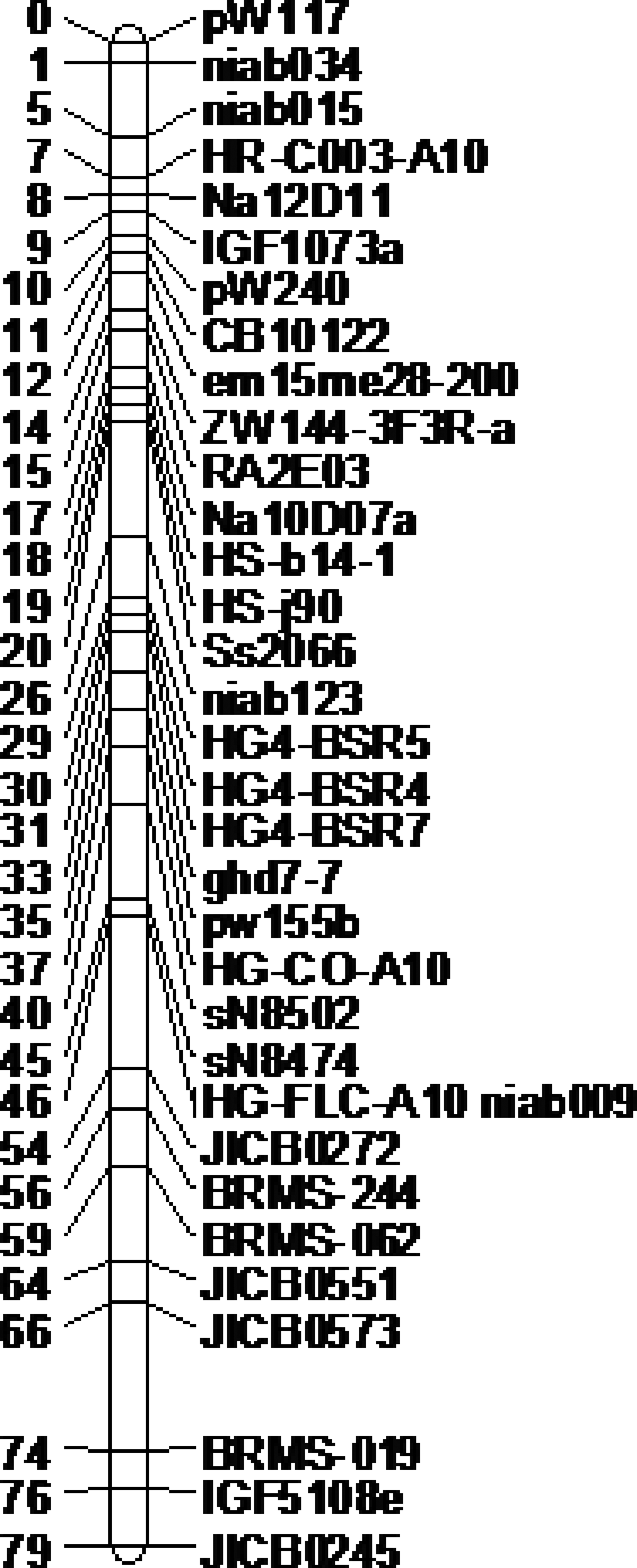
甘蓝型油菜为异源四倍体, 基因组结构复杂, 而水稻基因组与油菜基因组具有一定的共线性。本研究利用水稻产量相关基因GS3和Ghd7序列信息, 通过同源克隆方法, 获得了甘蓝型油菜的同源基因BnGS3和BnGhd7。BnGS3有6个外显子, ORF全长666 bp, 编码222个氨基酸。BnGS3蛋白具有水稻GS3四个保守结构域中的VWF结构, 属于A型。BnGhd7含有1个外显子, ORF全长1014 bp, 编码337个氨基酸。BnGhd7蛋白具有N端的B-Box和C端的CCT两个重要的结构域。BnGS3和BnGhd7分别位于A2和A10连锁群, 比较测序得到BnGS3的多态性标记brgs-16及BnGhd7的多态性标记brghd-3和ghd7-7, 其中brghd-3与千粒重(P < 0.05)、ghd7-7与株高(P < 0.01)正相关, ghd7-7与开花期负相关(P < 0.05)。上述结果表明, 利用水稻功能基因序列信息克隆甘蓝型油菜的同源基因是可行的, 为油菜功能基因研究提供了一种有效途径。

关键词: 甘蓝型油菜, 同源克隆, 产量, 比较测序, 相关性分析

Abstract:

Brassica napus is an allotetraploid with complex genomic structure, but Brassica genome has a collinearity with that of rice. In this study, the homologous genes BnGS3 and BnGhd7 of Brassica napus were obtained by homologous cloning of the yield related genes GS3 and Ghd7 of rice. BnGS3 has six exons with a 666 bp of ORF and encodes 222 amino acids. BnGS3 protein has VWF structure, one of the four conserved domains of rice GS3, and belongs to type A. BnGhd7 contains one exon having ORF with a full-length of 1014 bp and encoding 337 amino acids. BnGhd7 protein has two important domains, the N-terminal B-Box and the C-terminal CCT. BnGS3 and BnGhd7 were located in linkage groups A2 and A10, respectively. Polymorphism markers brgs-16 of BnGS3 and polymorphism markers brghd-3 and ghd7-7 of BnGhd7 were obtained by comparative sequencing, among which brghd-3 with thousand kernel weight (P < 0.05) and ghd7-7 with plant height (P <0.01) were positively correlated, and ghd7-7 was negatively correlated with flowering stage (P < 0.05). The results indicate that it is feasible to clone the homologous genes of Brassica napus using rice functional gene sequence information, which provides an effective way in Brassica napus functional gene research.

Key words: Brassica napus, homologous cloning, yield, comparative sequencing, correlation analysis

附表1

同源克隆BnGS3和BnGhd7的引物"

引物
Primer
正向序列
Forward sequence (5'-3')
反向序列
Reverse sequence (5'-3')
退火温度
Tm (°C)
bngs-1-1 TACTCATCCTCCTCCTCC CGCTCATCATCGAGAACT 55
bngs-1-2 GCGTAATGCCTCAGCTAC GACCCATCATCATCGAGA 55
bngs-1-3 GCATGATGCTTTCACCAC CGATCATCATCGAGAACT 55
gs3-1 TGTTAGGGTTTCTGTTGGTGG CCAGATGCTGCAAAGAGTAAG 59
gs3-2 GGGTTTCTGTTGGTGGGCTT CCCATGAGGTATGTCAGCAT 59
gs3-3 TTCTAGACAATGAATGGCAGG ACGAAAGAGTCGACGACACTG 58
gs3-4 TTCTAGACAATGAATGGCAG TGCAACTGCAAGATCAAATG 59
gs3-5 CCGCAGCGGAAAAGGTATGT GTCCAGATGCTGCAAAGAGT 59
ghd7-2-4 CCAAAAGCCAACGTCACCAT GCGATCAGCGACCATTAAAG 56
ghd7-2-5 CCAAAAGCCAACGTCACCAT GGAGCGACCGAAAACTACAT 54
ghd7-2-6 TCCCTCACCAACAACAAACC ATCCTTGGTCTTTTCTCTGC 55
ghd7-1 CAAAAGCCAACGTCACCATC CGACCATTAAAGAACAGGCT 58
ghd7-2 TTCGGATTCGGTTCTGGTTC GCTCACATGATTGACAGACT 59
ghd7-3 AGCAGAGGCGGCTTCTTGGT GCGATCAGCGACCATTAAAG 59
ghd7-4 CCAAAAGCCAACGTCACCAT GCGATCAGCGACCATTAAAG 58
ghd7-5 CCAAAAGCCAACGTCACCAT GGAGCGACCGAAAACTACAT 59
ghd7-6 TCCCTCACCAACAACAAACC ATCCTTGGTCTTTTCTCTGC 59
ghd7-7 GGGTTGTTCCACTTCAGGTT ACCCATGGAAAGTGGTAGAT 59
ghd7-8 CAAAAGCCAACGTCACCATC CATCCGATATTTTTGTCTCC 60
ghd7-9 GATCCATCACGGGCCATAAC GGGTTTGAAACTGTTGTCTC 59

图1

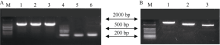
根据同源序列设计引物的扩增结果 A: 由水稻GS3序列设计的引物在水稻(1~3泳道)和甘蓝型油菜(4~6泳道)中的扩增结果。M: DL2000 marker; 1和4泳道: 引物bngs-1-1; 2和5泳道: 引物bngs-1-2; 3和6泳道: 引物bngs-1-3。B: 由白菜型油菜AC189411.2基因序列设计的引物在甘蓝型油菜SI-1300中的扩增结果。M: DL2000 marker; 1: 引物gs3-2; 2: 引物gs3-3; 3: 引物gs3-5。"

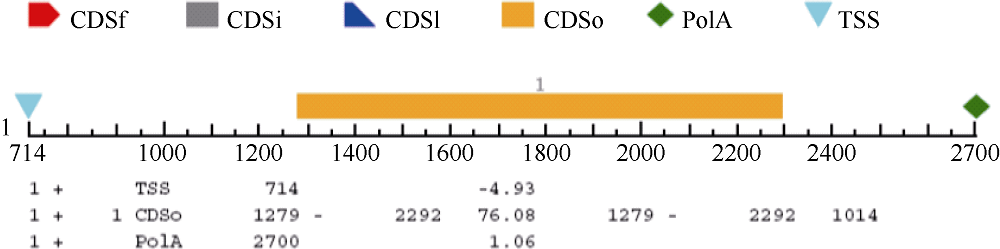
图2

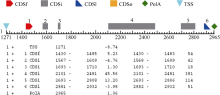
BnGS3基因结构预测 TSS: 转录起始位点; CDSf: 第1个外显子翻译起始位置; CDSi: 具有多个外显子; CDSo: 只有1个外显子; CDSI: 最后1个外显子翻译终止位置; Poly A: 转录终止位置; 数字表示碱基的位置。"

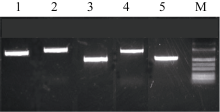
图3

引物ghd7-2、ghd7-5、ghd7-6、ghd7-7和ghd7-9在甘蓝型油菜SI-1300中的扩增泳道M: DNA ladder DL2000; 泳道1: ghd7-2; 泳道2: ghd7-5; 泳道3: ghd7-6; 泳道4: ghd7-7; 泳道5: ghd7-9。"

图4

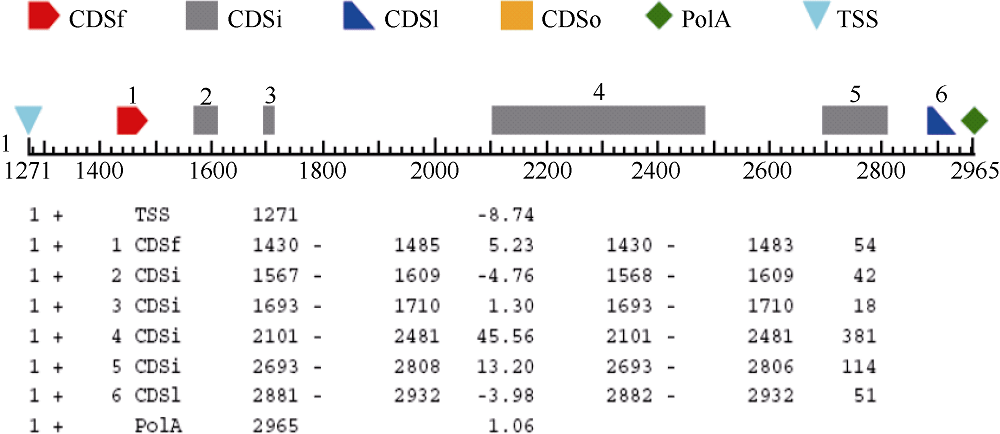
BnGhd7基因结构预测 TSS: 转录起始位点; CDSf: 第1个外显子翻译起始位置; CDSi: 具有多个外显子; CDSo: 只有1个外显子; CDSI: 最后1个外显子翻译终止位置; Poly A: 转录终止位置; 数字表示碱基的位置。"

附表2

检测预测基因BnGS3、BnGhd7变异位点所用引物"

引物
Primer
正向序列
Forward sequence (5'-3')
反向序列
Reverse sequence (5'-3')
退火温度
Tm (°C)
gs3-2 GGGTTTCTGTTGGTGGGCTT CCCATGAGGTATGTCAGCAT 59
gs3-5 CCGCAGCGGAAAAGGTATGT GTCCAGATGCTGCAAAGAGT 59
gs3-3 TTCTAGACAATGAATGGCAGG ACGAAAGAGTCGACGACACTG 58
brgs-1 TAGTTTGGTGCTCACTCCTG TCCTGCCATTCATTGTCTAG 57
brgs-2 TAGACAATGAATGGCAGGAT CTACCTTCGACCACAACCAG 58
brgs-3 CGCCTCAACGAAGACTGGTT ACGTCTGAGATGATCAAATG 59
brgs-4 ATGTTGCCGTTGACCACGAT CTGCAAGATCAAATGGTCAT 60
brgs-5 TCGACTGCAACTGCGGAAAC GGCGAGTTTCTGCTGTTGTT 60
brgs-6 CACGCTCAAACACGGGAAAC CCCAATGATACCTGCGTAAG 61
brgs-7 TTGCCTCGCCGTCGGTTAGT CCTCGCTTCGAATCAACACG 59
brgs-8 CGAAGCCTCGTGGGTGTTAG GGATCCAACTTGGTGATCAG 60
brgs-9 GTTGGATCCGTACCGTACAT AGCAATGATATCGGTTTGGT 58
brgs-10 TCTCAAATTTGATGGGAAGC CCCATGAGGTATGTCAGCAT 59
brgs-11 GCTGACATACCTCATGGGAG GTTGCTGTTGTTCTTGTCCG 58
brgs-12 CTTTCGTTGTCTGCCCGGAT GGACCATATACATGTTCACC 58
brgs-13 TCTATGAAAGCAACATGACG GCACCGTTGTGTTATGTTTG 60
引物
Primer
正向序列
Forward sequence (5'-3')
反向序列
Reverse sequence (5'-3')
退火温度
Tm (°C)
brgs-14 TTCTAGACAATGAATGGCAG AGAACACAAAAACGTACGTC 60
brgs-15 TAAAGCTGAGAGCAGACTTG GTCGACCATCATGTCTTAAT 58
brgs-16 CAACAAAGTCGTAGCTTAGG ATTCTGACCCAATGATACCT 59
brgs-17 CTTTCGTTGTCTGCCCGGAT GGTGTTAGTTCGTGCATGTG 59
brgs-18 GTATATGGTCCTTTCAAACG TTGCCCACTCAAATTAATTG 58
ghd7-2 TTCGGATTCGGTTCTGGTTC GCTCACATGATTGACAGACT 59
ghd7-5 CCAAAAGCCAACGTCACCAT GGAGCGACCGAAAACTACAT 59
ghd7-6 TCCCTCACCAACAACAAACC ATCCTTGGTCTTTTCTCTGC 59
ghd7-7 GGGTTGTTCCACTTCAGGTT ACCCATGGAAAGTGGTAGAT 59
ghd7-9 GATCCATCACGGGCCATAAC GGGTTTGAAACTGTTGTCTC 59
brghd-1 TTATGTCGGGTTCGAATCGT ATGGTTGGTCAAACGTGTAT 60
brghd-2 TTGATGCAGAGGAGGCAGAC TTCACCAAGAAAGCAATCAC 60
brghd-3 TTATGTCGGGTTCGAATCGT ATGGTTGGTCAAACGTGTAT 58
brghd-7 ACTTTATGTTGCCGTTGACC GCAACTGCAAGATCAAATGG 60
brghd-8 CATGATGGTCGACTGCAACT GCGAGTTTCTGCTGTTGTTG 57

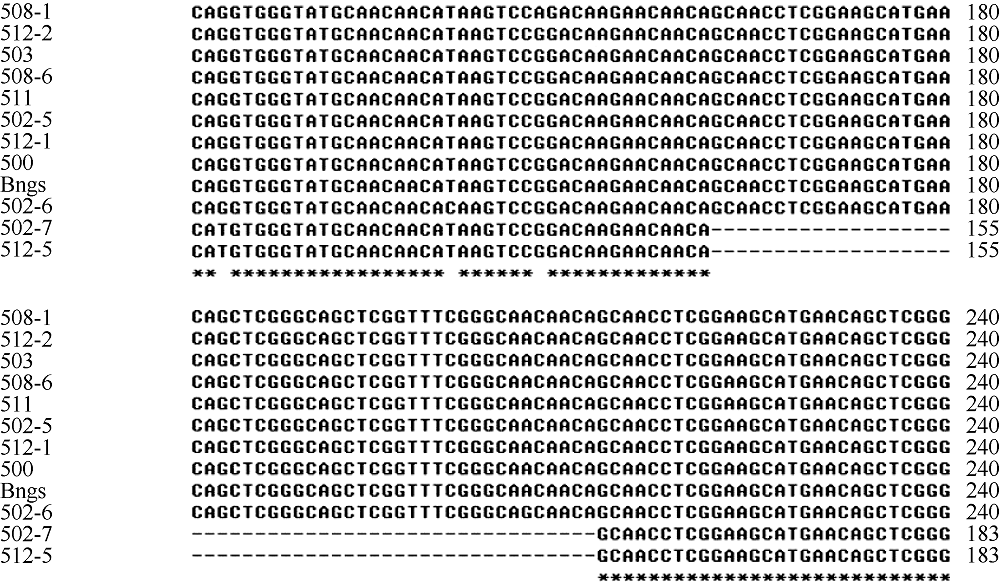
图5

BnGS3比较测序结果示意图*: 点突变; -: 小片段缺失; ^: 点突变密集区。"

图6

引物brgs-16扩增片段序列比较"

图7

BnGhd7比较测序结果示意图*: 点突变; —: 长片段的缺失。"

图8

不同材料中brghd-3测序结果的比较"

表1

57份甘蓝型油菜自交系9个产量相关性状的变异"

性状
Trait
平均数
Average
标准差
SD
变异区间
Variation interval
变异系数
CV (%)
武汉点 Wuhan location
株高 Plant height (cm) 146.66 13.70 93.53-169.60 9.34
一次有效分枝 Number of primary branch 6.19 1.08 4.40-9.67 17.37
单株角果数 Number of siliques per plant 206.60 45.76 134.60-312.20 22.15
角果粒数 Number of seeds per silique 19.51 3.89 10.30-28.11 19.91
单株产量 Yield per plant (g) 10.91 2.34 5.25-16.36 21.42
小区产量 Plot yield (g) 452.69 94.12 209.31-694.48 20.79
千粒重 Thousand-seed weight (g) 3.62 0.58 2.28-5.07 16.08
播种-初花期天数 Days from sowing to initial bloom 159.19 4.87 151.00-168.00 3.06
初花期-终花期天数 Days from initial bloom to end flowering 17.19 4.53 9.00-26.00 26.37
黄冈点 Huanggang location
株高 Plant height (cm) 162.26 14.60 89.73-191.53 9.00
一次有效分枝 Number of primary branch 6.49 1.18 3.47-9.67 18.18
单株角果数 Number of siliques per plant 206.25 39.89 116.60-308.93 19.34
角果粒数 Number of seeds per silique 20.60 4.00 12.81-32.49 19.45
单株产量 Yield per plant (g) 13.40 2.14 9.72-18.02 15.95
小区产量 Plot yield (g) 558.95 102.46 311.37-842.05 18.33
千粒重 Thousand-seed weight (g) 3.77 0.62 2.25-5.43 16.46
播种-初花期天数 Days from sowing to initial bloom 158.13 8.88 135.00-171.67 5.61
初花期-终花期天数 Days from initial bloom to end flowering 27.04 7.09 17.00-49.00 26.21

表2

标记与产量等相关性状之间的相关分析结果(黄冈)"

性状 Trait brgs-16 brghd-3 ghd7-7
株高 Plant height 0.01 -0.05 0.34**
一次有效分枝 Number of first branches 0.10 0.08 0.17
单株角果数 Number of siliques per plant 0.06 -0.01 0.12
角果粒数 Number of seeds per silique -0.11 -0.20 -0.05
单株产量 Yield per plant 0.00 -0.13 -0.06
小区产量 Plot yield 0.18 -0.05 0.21
千粒重 Thousand-seed weight 0.12 0.30* 0.14
播种-初花期天数 Days from sowing to initial bloom -0.06 -0.13 0.25
初花期-终花期天数 Days from initial bloom to end flowering 0.10 0.16 -0.32*

附图1

brgs-15被定位在A2连锁群"

附图2

ghd7-7被定位于A10连锁群"

[1] Chalhoub B, Denoeud F, Liu S, Parkin I A, Tang H, Wang X, Chiquet J, Belcram H, Tong C, Samans B, Corréa M.Early allopolyploid evolution in the post-neolithicBrassica napus oilseed genome. Science, 2014, 345: 950-953
[2] Nagaharu U.Genome analysis in Brassica with special reference to the experimental formation ofB. napus and peculiar mode of fertilization. Jpn J Bot, 1935, 7: 389-452
[3] Devos K M, Gale M D.Genome relationships: the grass model in current research.Plant Cell, 2000, 12: 637-646
[4] Fan C, Xing Y, Mao H, Lu T, Han B, Xu C, Li X, Zhang Q.GS3, a major QTL for grain length and weight and minor QTL for grain width and thickness in rice, encodes a putative transmembrane protein. Theor Appl Genet, 2006, 112: 1164-1171
[5] Xue W, Xing Y, Weng X, Zhao Y, Tang W, Wang L, Zhou H, Yu S, Xu C, Li X, Zhang Q.Natural variation inGhd7 is an important regulator of heading date and yield potential in rice. Nat Genet, 2008, 40: 761-767
[6] Mao H, Sun S, Yao J, Wang C, Yu S, Xu C, Li X, Zhang Q.Linking differential domain functions of theGS3 protein to natural variation of grain size in rice. Proc Natl Acad Sci USA, 2010, 107: 19579-19584
[7] Wang C, Chen S, Yu S.Functional markers developed from multiple loci inGS3 for fine marker-assisted selection of grain length in rice. Theor Appl Genet, 2011, 122: 905-913
[8] Trick M, Long Y, Meng J, Bancroft I.Single nucleotide polymorphism (SNP) discovery in the polyploidBrassica napus using Solexa transcriptome sequencing. Plant Biotechnol J, 2009, 7: 334-346
[9] 李媛媛, 陈庆芳, 傅廷栋, 马朝芝. 利用SSCP技术分析甘蓝型油菜10个功能基因序列差异. 作物学报, 2012, 38: 43-49
Li Y Y, Chen Q F, Fu T D, Ma C Z.Polymorphism analysis of ten functional genes inBrassica napus using SSCP method. Acta Agron Sin, 2012, 38: 43-49 (in Chinese with English abstract)
[10] Thompson J D, Gibson T, Higgins D G.Multiple sequence alignment using ClustalW and ClustalX. In: Current Protocols in Bioinformatics, John Wiley and Sons, 2002. pp 2-3
[11] Shahmuradov I A, Gammerman A J, Hancock J M, Bramley P M, Solovyev V V.PlantProm: a database of plant promoter sequences.Nucl Acids Res, 2003, 31: 114-117
[12] Zdobnov E M, Apweiler R.InterProScan: an integration platform for the signature-recognition methods in InterPro.Bioinformatics, 2001, 17: 847-848
[13] Quevillon E, Silventoinen V, Pillai S, Harte N, Mulder N, Apweiler R, Lopez R.InterProScan: protein domains identifier.Nucleic Acids Res, 2005, 33: W116-W120
[14] Lander E S, Green P, Abrahamson J, Barlow A, Daly M J, Lincoln S E, Newburg L.MAPMAKER: an interactive computer package for constructing primary genetic linkage maps of experimental and natural populations.Genomics, 1987, 1: 174-181
[15] Lincoln S E, Daly M J, Lander E S.Constructing genetic linkage maps with MAPMAKER/EXP Version 3.0: a tutorial and reference manual. In: A Whitehead Institute for Biomedical Research Technical Report, 1993. pp 78-79
[16] Arabidopsis Genome Initiative.Analysis of the genome sequence of the flowering plantArabidopsis thaliana. Nature, 2000, 408:796
[17] Meyerowitz E M.Prehistory and history of Arabidopsis research.Plant Physiol, 2001, 125: 15-19
[18] Zhang Q, Li J, Xue Y, Han B, Deng X W.Rice 2020: a call for an international coordinated effort in rice functional genomics.Mol Plant, 2008, 1: 715-719
[19] Mao H, Sun S, Yao J, Wang C, Yu S, Xu C, Li X, Zhang Q.Linking differential domain functions of theGS3 protein to natural variation of grain size in rice. Proc Natl Acad Sci USA, 2010, 107: 19579-19584
[20] Wang C, Chen S, Yu S.Functional markers developed from multiple loci inGS3 for fine marker-assisted selection of grain length in rice. Theor Appl Genet, 2011, 122: 905-913
[21] Abreu J G, Coffinier C, Larraın J, Oelgeschläger M, De Robertis E M. Chordin-like CR domains and the regulation of evolutionarily conserved extracellular signaling systems.Gene, 2002, 287: 39-47
[22] O’Leary J M, Hamilton J M, Deane C M, Valeyev N V, Sandell L J, Downing A K. Solution structure and dynamics of a prototypical chordin-like cysteine-rich repeat (von Willebrand Factor type C module) from collagen IIA.J Biol Chem, 2004, 279: 53857-53866
[23] Nemoto Y, Kisaka M, Fuse T, Yano M, Ogihara Y.Characterization and functional analysis of three wheat genes with homology to the CONSTANS flowering time gene in transgenic rice.Plant J, 2003, 36: 82-93
[24] Miller T A, Muslin E H, Dorweiler J E.A maize CONSTANS- like gene,conz1, exhibits distinct diurnal expression patterns in varied photoperiods. Planta, 2008, 227: 1377-1388
[25] Li Y, Shen J, Wang T, Chen Q, Zhang X, Fu T, Meng J, Tu J, Ma C.QTL analysis of yield-related traits and their association with functional markers in Brassica napus L. Aust J Agric Res, 2007, 58: 759-766
[26] Shi J, Li R, Qiu D, Jiang C, Long Y, Morgan C, Bancroft I, Zhao J, Meng J.Unraveling the complex trait of crop yield with quantitative trait loci mapping inBrassica napus. Genetics, 2009, 182: 851-861
[27] Qiu D, Morgan C, Shi J, Long Y, Liu J, Li R, Zhuang X, Wang Y, Tan X, Dietrich E, Weihmann T.A comparative linkage map of oilseed rape and its use for QTL analysis of seed oil and erucic acid content.Theor Appl Genet, 2006, 114: 67-80
[1] 胡川, 赵凯男, 黄修利, 吴金芝, 任开明, 王贺正, 付国占, 黄明, 李友军. 一次灌溉下耕作方式和氮肥用量对旱地小麦产量和品质的影响[J]. 作物学报, 2026, 52(6): 1830-1846.
[2] 马胜乾, 王志平, 陈浩天, 窦淑贤, 张燕, 邓艾兴, 张卫建, 原向阳, 宋振伟. 秸秆还田下耕作方式与氮肥施用量对东北玉米产量及土壤团聚体的影响[J]. 作物学报, 2026, 52(6): 1802-1816.
[3] 张思思, 赵向辉, 周洋, 姚云凤, 朱荣昱, 董元杰, 胡国庆, 徐通, 刘兆新. 冬闲期翻耕和绿肥还田对连作花生田土壤理化性质和产量的影响[J]. 作物学报, 2026, 52(5): 1472-1486.
[4] 张宁宁, 滕雨菲, 任娜娜, 魏兴卓, 闫书豪, 樊可心, 王永宏, 陈文康, 张兴华, 朱万超, 徐淑兔, 薛吉全. 201份玉米自交系抗旱表型评价及可塑性分析[J]. 作物学报, 2026, 52(5): 1309-1325.
[5] 张振, 冯连杰, 石玉, 于振文, 张永丽. 节水补灌下不同穗型小麦产量形成差异研究[J]. 作物学报, 2026, 52(5): 1522-1535.
[6] 闫安, 蒋昆炜, 王蓉圆, 田林, 张璐, 王韵, 徐建龙. 水稻剑叶小维管束数基因SVN7的鉴定与克隆[J]. 作物学报, 2026, 52(5): 1364-1372.
[7] 刘昕萌, 任昊, 张继波, 张吉旺, 赵斌, 任佰朝, 刘鹏, 王洪章. 茉莉酸甲酯(MeJA)缓解高温影响玉米雌穗分化的生理机制[J]. 作物学报, 2026, 52(5): 1561-1572.
[8] 王壮壮, 武紫君, 张永新, 张芯源, 袁丽雪, 陈如雪, 刘世举, 段剑钊, 冯伟, 王同朝, 王永华. 豫东南黏壤潮土区水氮优化协同提高冬小麦产量和氮素利用效率[J]. 作物学报, 2026, 52(5): 1501-1521.
[9] 张鸿蓉, 王菲儿, 李盼, 仇海龙, 朱静, 赵连豪, 南运有, 何蔚, 樊志龙, 胡发龙, 柴强, 殷文. 减量20%灌水与25%有机肥替代化肥提高青贮玉米产量的光合特性[J]. 作物学报, 2026, 52(5): 1487-1500.
[10] 王宇诚, 张露, 刘阿康, 黄见良, 彭少兵, 袁珅. 基于产量差的作物大面积单产提升策略与展望[J]. 作物学报, 2026, 52(5): 1279-1290.
[11] 赵佳雪, 周龙昊, 郭岂源, 尚伦霄, 王涵, 刘志涛, 陈曦, 张晓佩, 宋宪亮, 毛丽丽. 长期秸秆还田与深松通过改善土壤环境与棉花光合特性提高滨海盐碱地棉花产量[J]. 作物学报, 2026, 52(5): 1548-1560.
[12] 郭星宇, 胡丹, 林苏期, 王梦凯, 谭文峰, 黄传琴. 生物炭配施化肥提高玉米‖大豆下玉米产量和土壤生态系统多功能性[J]. 作物学报, 2026, 52(5): 1536-1547.
[13] 蔡宏玮, 于爱忠, 姜科强, 王鹏飞, 王玉珑, 霍建喆, 庞小能, 尹波, 尚永盼. 干旱灌区有机肥替代部分化肥促进甜玉米产量提升的关键机制[J]. 作物学报, 2026, 52(4): 1166-1180.
[14] 崔雪梅, 柳妍娣, 刘景辉, 米俊珍, 武俊英, 赵宝平. 不同基因型燕麦强弱势粒生理特性与产量关系研究[J]. 作物学报, 2026, 52(4): 1220-1235.
[15] 杨锐, 陈敬东, 黄郢, 张学昆, 周登文, 刘清云, 徐劲松, 谢伶俐, 许本波. 长江下游冬油菜区应对气候变化的育种和栽培策略研究[J]. 作物学报, 2026, 52(4): 1153-1165.
Viewed
Full text


Abstract

Cited

  Shared   
  Discussed   
No Suggested Reading articles found!