欢迎访问作物学报,今天是
作物学报 ›› 2021, Vol. 47 ›› Issue (8): 1491-1510.doi: 10.3724/SP.J.1006.2021.04175
王艳花1,2( ), 刘景森1,2, 李加纳1,2,*()
WANG Yan-Hua1,2(), LIU Jing-Sen1,2, LI Jia-Na1,2,*()
摘要:
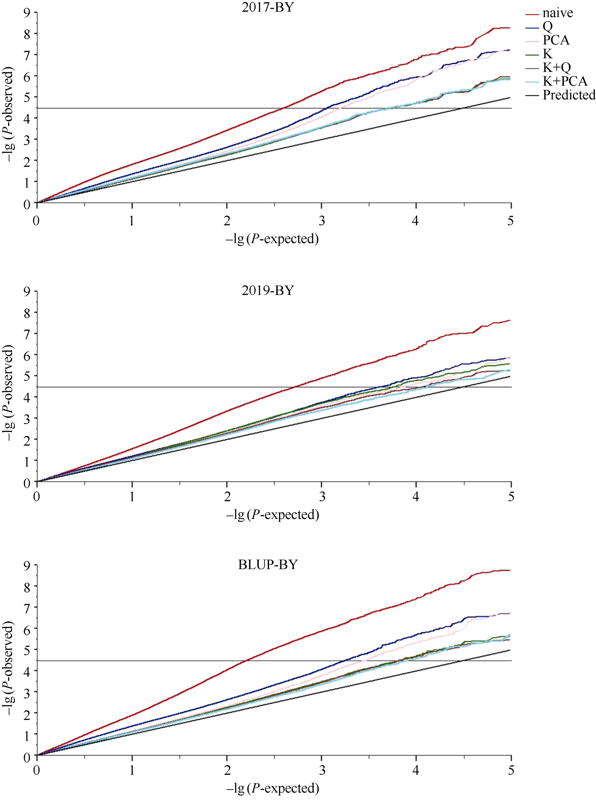
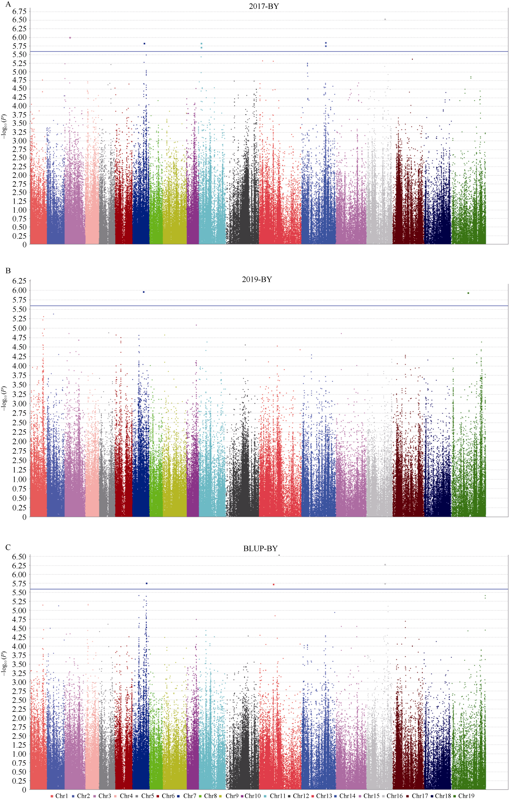
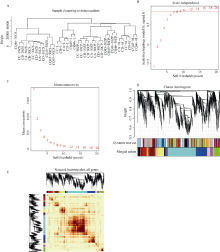
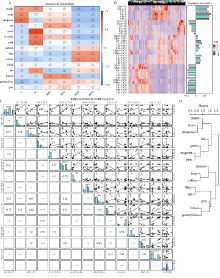
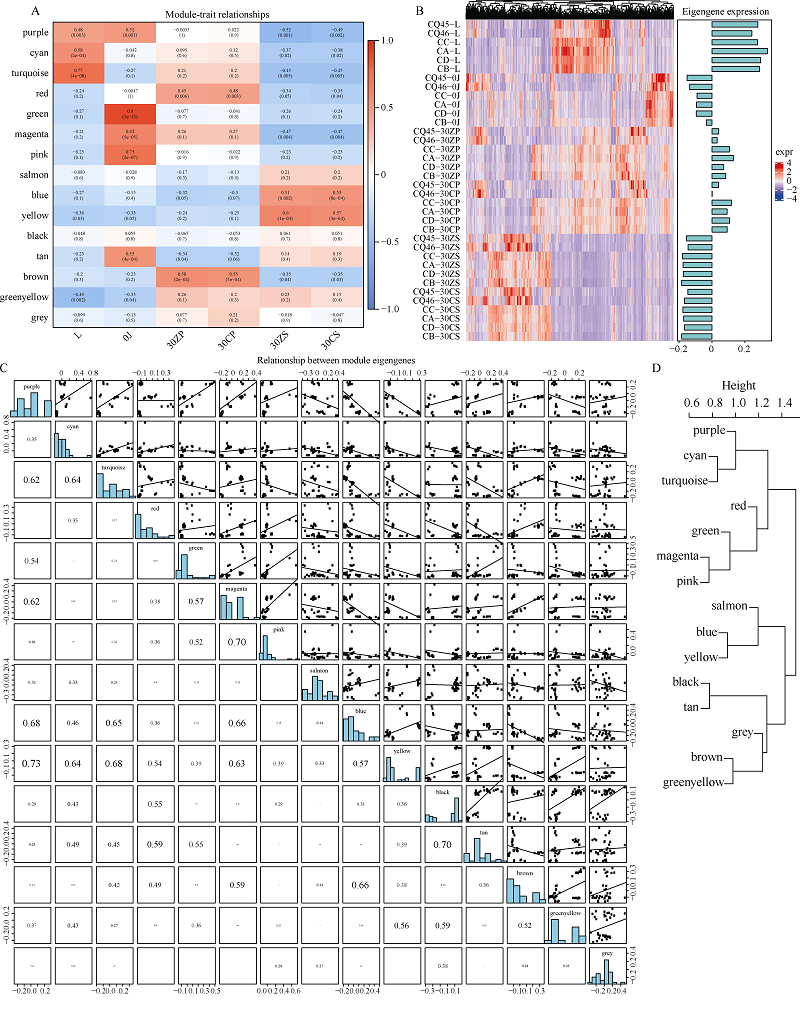
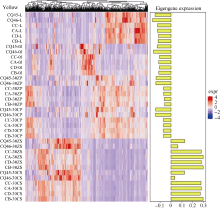
生物产量是作物获得高产的重要基础, 对于甘蓝型油菜(Brassica napus L.)尤其重要。本研究利用588份甘蓝型油菜材料构成的自然群体2年生物产量表型数据的全基因组关联分析, 再结合高生物产量材料‘CQ45’和低生物产量材料‘CQ46’的转录组测序(RNA-seq)结果, 整合了6个甘蓝型油菜材料6个部位(茎秆、叶片、花后30 d主轴与侧枝种子、花后30 d主轴与侧枝角果皮)的转录组数据构建的加权共表达网络分析(WGCNA), 筛选出与生物产量相关的候选基因。通过相关分析发现, 2年间甘蓝型油菜自然群体中生物产量对大多数产量相关性状都具有正向效应; 自然群体2年生物产量分析的最佳模型均为K+PCA模型, 共检测到9个显著位点(P < 1/385691或P < 0.05/385691); 根据CQ45和CQ46共36组转录组数据, 选择MAD值为前5%的基因共计5052个用于构建WGCNA, 通过筛选合并共得到了15个模块, 其中5个基因共表达模块分别与叶片、茎秆和花后30 d种子显著性相关; 整合了WGCNA中关键模块的hub gene、GWAS分析得到的显著SNP位点和极端表型差异基因确定候选基因, 它们的拟南芥同源基因为HCEF1、HOG1、SBPASE、ACT2, 这些基因在光合作用的卡尔文循环、碳同化、物质积累等方面发挥重要作用。
| [1] | 金森森, 罗帅. 全球视角下的南美大豆贸易发展趋势. 中国粮食经济, 2014, (4):30-32. |
| Jin S S, Luo S. The development trend of South American soybean trade from a global perspective. China Food Econ, 2014, (4):30-32 (in Chinese with English abstract). | |
| [2] | 陶伯玉. 甘蓝型油菜主要农艺、品质性状的遗传分析和QTL定位. 南京农业大学硕士学位论文, 江苏南京, 2015. |
| Tao B Y. Genetic Analysis and QTL Mapping of Main Agronomic and Quality Traits in Brassica napus. MS Thesis of Nanjing Agricultural University, Nanjing, Jiangsu, China, 2015 (in Chinese with English abstract). | |
| [3] | 张卫. 明确大宗油料作物发展规划提升国内大宗油料作物自给力. 中国食品, 2016, (19):82-89. |
| Zhang W. Clarify the development plan of bulk oil crops to enhance the self-sufficiency of domestic bulk oil crops. China Food, 2016, (19):82-89 (in Chinese with English abstract). | |
| [4] | 徐露萍. 浅谈油菜种植技术的应用与推广. 南方农业, 2015,9(3):17-18. |
| Xu L P. Talking about the application and extension of rape planting technology. Southern Agric, 2015,9(3):17-18 (in Chinese with English abstract). | |
| [5] | 李培武, 丁小霞, 张文, 谢立华, 周海燕. 中加双低油菜质量标准体系比较及我国发展对策探讨. 农产品质量与安全, 2006, (6):23-26. |
| Li P W, Ding X X, Zhang W, Xie L H, Zhou H Y. Comparison of quality standard systems for double-low rapeseed between China and Canada and discussion on my country’s development countermeasures. Agric Prod Quality Safety, 2006, (6):23-26 (in Chinese with English abstract). | |
| [6] | Mirza H, Karim F M. Rapeseed (Brassica campestris) cultivation in dry season. Vdm Verlag Dr Müller, 2010,12:27-80. |
| [7] | 傅廷栋. 油菜的品种改良. 作物研究, 2007,21(3):159-162. |
| Fu T D. Rapeseed variety improvement. Crop Res, 2007,21(3):159-162 (in Chinese with English abstract). | |
| [8] | Liersch A, Bocianowski J, Henryk W, Laurencja S. Assessment of genetic relationships in breeding lines and cultivars of Brassica napus and their implications for breeding winter oilseed rape. Crop Sci, 2016,56:15-40. |
| [9] |
Zhao J, Meng J. Genetic analysis of loci associated with partial resistance to Sclerotinia sclerotiorum in rapeseed (Brassica napus L.). Theor Appl Genet, 2003,106:759-764.
doi: 10.1007/s00122-002-1171-2 |
| [10] | Wen Y C, Fu T D, Tu J X, MA C Z, Shen J X, Wen J, Zhang S F. Factors analysis of silique shatter resistance in rapeseed (Brassica napus L.). Chin J Oil Crop Sci, 2010,32:25-29. |
| [11] | Chen S, Qian T. Analysis on technical efficiency and influencing factors of rapeseed production. Asian Agric Res, 2016,8:1-7. |
| [12] | Jiang H D, Zhou Q, Li N, Sun X F. Effect of Cd on the growth and physiological characteristics of rape seedlings. Chin J Oil Crop Sci, 2006,28:39-43. |
| [13] | 张哲, 殷艳, 刘芳, 王积军, 傅廷栋. 我国油菜多功能开发利用现状及发展对策. 中国油料作物学报, 2018,40:618-623. |
| Zhang Z, Yin Y, Liu F, Wang J J, Fu T D. The current status and development countermeasures of multifunctional development and utilization of rapeseed in my country. Chin J Oil Crop Sci, 2018,40:618-623 (in Chinese with English abstract). | |
| [14] |
Chen H, He H, Zou Y J, Chen W, Yu R B, Liu X, Yang Y, Gao Y M, Xu J L, Fan L M, Li Y, Li Z K, Deng X W. Development and application of a set of breeder-friendly SNP markers for genetic analyses and molecular breeding of rice (Oryza sativa L.). Theor Appl Genet, 2011,123:869-879.
doi: 10.1007/s00122-011-1633-5 |
| [15] | Ma T Q, Lin L B. Application of molecular marker technologies in rape breeding. Mol Plant Breed, 2004,2:728-732. |
| [16] | Xiong Q F, Wen J, Li X H, Shen J X. Technological innovation and industrial development of rapeseed in China. J Agric Sci Technol, 2014,16:14-22. |
| [17] |
Beecher H G, Dunn B W, Thompson J A, Humphreys E, Mathews S K, Timsina J. Effect of raised beds, irrigation and nitrogen management on growth, water use and yield of rice in south- eastern Australia. Aust J Exp Agric, 2006,46:1363-1372.
doi: 10.1071/EA04136 |
| [18] |
Xu Z, Yu Z, Zhao J. Theory and application for the promotion of wheat production in China: past, present and future. J Sci Food Agric, 2013,93:2339-2350.
doi: 10.1002/jsfa.2013.93.issue-10 |
| [19] |
Cheng L, Li H P, Qu B, Huang T, Tu J X, Fu T D, Liao Y C. Chloroplast transformation of rapeseed (Brassica napus) by particle bombardment of cotyledons. Plant Cell Rep, 2010,29:371-381.
doi: 10.1007/s00299-010-0828-6 |
| [20] | Wang G C, Liu Z, Yang G S. Development of high oil content lines of Brassica napus through isolated microspore culture. Chin J Oil Crop Sci, 2007,29:382-386. |
| [21] | Liao X, Wang H Z. Present status of rapeseed science and technology innovation system in China and suggestion for further development. J Agric Sci Technol, 2007,6:28-34. |
| [22] |
Cheng L, Li H P, Qu B. Chloroplast transformation of rapeseed (Brassica napus) by particle bombardment of cotyledons. Plant Cell Rep, 2010,29:371-381.
doi: 10.1007/s00299-010-0828-6 |
| [23] |
Zhang X K, Chen J, Chen L, Wang H Z, Li J N. Imbibition behavior and flooding tolerance of rapeseed seed ( Brassica napus L.) with different testa color. Genet Resour Crop Evol, 2008,55:1175-1184.
doi: 10.1007/s10722-008-9318-x |
| [24] | Palmieri S, Leoni O. Industrial prospectives of rapeseed oil. Physiologic technological and qualitative aspects. Agric Rice, 1992,14:63-70. |
| [25] | Weilenmann M E, Lúquez J, Suárez W. Variability of biological yield, economic yield and harvest index in soybean cultivars grown in irrigated and rainfed environments in Argentina. Tests Agrochem Cult, 2000,21:39-40. |
| [26] |
Li S Y, Zhu R K, Varshney J, Zhan X, Zheng J, Shi X, Wang G, Wang H. A systematic dissection of the mechanisms underlying the natural variation of silique number in rapeseed (Brassica napus L.) germplasm. Plant Biotechnol J, 2020,18:568-580.
doi: 10.1111/pbi.v18.2 |
| [27] |
Luo X, Ma C Z, Yue Y, Hu K N, Li Y Y, Duan Z Q, Wu M, Tu J X, Shen J X, Yi B, Fu T D. Unravelling the complex trait of harvest index in rapeseed (Brassica napus L.) with association mapping. BMC Genomics, 2015,16:379-388.
doi: 10.1186/s12864-015-1607-0 |
| [28] | 姚东和, 杨民胜, 李志辉. 林分密度对巨尾桉生物产量及生产力的影响. 中南林业科技大学学报, 2000,20(3):20-23. |
| Yao D H, Yang M S, Li Z H. The effect of stand density on the biological yield and productivity of Eucalyptus grandis. J Central South Univ For Technol, 2000,20(3):20-23(in Chinese with English abstract). | |
| [29] | 李跃建, 宋荷仙, 朱华忠. 小麦收获指数、生物产量和籽粒产量的稳定性分析. 西南农业学报, 1998, (1):25-30. |
| Li Y J, Song H X, Zhu H Z. Analysis of stability of wheat harvest index, biological yield and grain yield. Southwest Agric J, 1998, (1):25-30 (in Chinese with English abstract). | |
| [30] | Dai X L, Zhao J X, Xiang Y, Zhang T, Ren T B, Cheng G P. Correlation analysis of harvest index and plant traits of hybrid Brassica napus. Chin Agric Sci Bull, 2018,2:47-58. |
| [31] |
Tian J, Ma K, Saaem I. Advancing high-throughput gene synthesis technology. Mol Biosyst, 2009,5:714-722.
doi: 10.1039/b822268c |
| [32] |
Dillies M, Rau A, Aubert J, Hennequet C, Jeanmougin M, Servant A, Keime C, Marot G, Castel D, Estelle J, Guernec G, Jagla B, Jouneau L, Laloë C, Gall L, Schaëffer B, Le C, Guedj M, Jaffrézic F, Consortium. A comprehensive evaluation of normalization methods for Illumina high-throughput RNA sequencing data analysis. Brief Bioinf, 2013,14:671-683.
doi: 10.1093/bib/bbs046 |
| [33] |
Wang J X, Zhang X Q, Shi M L, Gao L J, Niu X F, Te R, Chen L, Zhang W W. Metabolomic analysis of the salt-sensitive mutants reveals changes in amino acid and fatty acid composition important to long-term salt stress in Synechocystis sp. PCC 6803. Funct Integr Genomics, 2014,14:431-440.
doi: 10.1007/s10142-014-0370-7 |
| [34] | 秦天元, 孙超, 毕真真, 梁文君, 李鹏程, 张俊莲, 白江平. 基于WGCNA的马铃薯根系抗旱相关共表达模块鉴定和核心基因发掘. 作物学报, 2020,46:1033-1051. |
| Qin T Y, Sun C, Bi Z Z, Liang W J, Li P C, Zhang J L, Bai J P. Identification of drought-related co-expression modules and hub genes in potato roots based on WGCNA. Acta Agron Sin, 2020,46:1033-1051 (in Chinese with English abstract). | |
| [35] | 宋长新, 雷萍, 王婷. 基于WGCNA算法的基因共表达网络构建理论及其R软件实现. 基因组学与应用生物学, 2013,32:135-141. |
| Song C X, Lei P, Wang T. Gene co-expression network construction theory based on WGCNA algorithm and its R software implementation. Genomics Appl Biol, 2013,32:135-141 (in Chinese with English abstract). | |
| [36] |
Lu K, Wei L J, Li X L, Wang Y T, Wu J, Liu M, Zhang C, Chen Z Y, Xiao Z C, Jian H J, Cheng F, Zhang K, Du H, Cheng X C, Qu C M, Qian W, Liu L Z, Wang R, Zou Q Y, Ying J M, Xu X F, Mei J Q, Liang Y, Chai Y R, Tang Z L, Wan H F, Ni Y, He Y J, Lin N, Fan Y H, Sun W, Li N N, Zhou G, Zheng H K, Wang X W, Andrew H P, Li J N. Whole-genome resequencing reveals Brassica napus origin and genetic loci involved in its improvement. Nat Commun, 2019,10:1154-1165.
doi: 10.1038/s41467-019-09134-9 |
| [37] |
Bradbury P J, Zhang Z, Kroon D E, Casstevens T M, Ramdoss Y, Buckler E S. TASSEL: software for association mapping of complex traits in diverse samples. Bioinformatics, 2007,23:2633-2635.
pmid: 17586829 |
| [38] |
Barrett J C, Fry B, Maller J, Daly M J. Haploview: analysis and visualization of LD and haplotype maps. Bioinformatics, 2005,21:263-265.
pmid: 15297300 |
| [39] | Kohl M, Wiese S, Warscheid B. Cytoscape: software for visualization and analysis of biological networks. Methods Mol Biol, 2011,696:291-303. |
| [40] |
Livingston A K, Cruz J A, Kohzuma K, Dhingra A. An Arabidopsis mutant with high cyclic electron flow around photosystem I (hcef) involving the NADPH dehydrogenase complex. Plant Cell, 2010,22:221-233.
doi: 10.1105/tpc.109.071084 |
| [41] |
Mariam S. Increased sucrose level and altered nitrogen metabolism in Arabidopsis thaliana transgenic plants expressing antisense chloroplastic fructose-1,6-bisphosphatase. J Exp Bot, 2004,55:2495-2503.
doi: 10.1093/jxb/erh257 |
| [42] |
Mull L, Ebbs M L, Bender J. A histone methylation-dependent DNA methylation pathway is uniquely impaired by deficiency in Arabidopsis S-adenosylhomocysteine hydrolase. Genetics, 2005,174:1161-1171.
doi: 10.1534/genetics.106.063974 |
| [43] |
Ouyang B, Joung J G, Kolenovsky A, Koh C, Nowak J, Caplan A, Keller W A, Cui Y, Cutler A J, Tsang E W. Transcriptome profiling and methyl homeostasis of an Arabidopsis mutant deficient in S-adenosylhomocysteine hydrolase1 (SAHH1). Plant Mol Biol, 2012,79:315-331.
doi: 10.1007/s11103-012-9914-1 |
| [44] |
Godge M R, Kumar D, Kumar P P. Arabidopsis HOG1 gene and its petunia homolog PETCBP act as key regulators of yield parameters. Plant Cell Rep, 2008,27:1497-1507.
doi: 10.1007/s00299-008-0576-z |
| [45] |
Pedro S C F R, Mazhar S, Rosalba M, Mathilde F, Stéphanie B, Rebecca L, Barbara M, Conrad W, Hervé V, Ian F. The Arabidopsis H OMOLOGY-DEPENDENT GENE SILENCING1 gene codes for an S-adenosyl-L-homocysteine hydrolase required for DNA methylation-dependent gene silencing. Plant Cell, 2005,17:404-417.
pmid: 15659630 |
| [46] |
López C, Abuzaid O, Lawson T, Raines C A. Arabidopsis CP12 mutants have reduced levels of phosphoribulokinase and impaired function of the calvin-benson cycle. J Exp Bot, 2017,68:2285-2298.
doi: 10.1093/jxb/erx084 |
| [47] |
Fermani S, Trivelli X, Sparla F, Thumiger A, Calvaresi M, Marri L, Falini G, Zerbetto F, Trost P. Conformational selection and folding-upon-binding of intrinsically disordered protein CP12 regulate photosynthetic enzymes assembly. J Biol Chem, 2012,287:21372-21383.
doi: 10.1074/jbc.M112.350355 |
| [48] |
Singh P, Kaloudas D, Raines C A. Expression analysis of the Arabidopsis CP12 gene family suggests novel roles for these proteins in roots and floral tissues. J Exp Bot, 2008,59:3975-3985.
doi: 10.1093/jxb/ern236 |
| [49] |
Marri L, Thieulin P G, Lebrun R, Puppo R, Zaffagnini M, Trost P, Gontero B, Sparla F. CP12-mediated protection of Calvin-Benson cycle enzymes from oxidative stress. Biochimie, 2014,97:228-237.
doi: 10.1016/j.biochi.2013.10.018 |
| [50] | Ferro M, Salvi D, Seigneurin B D, Court M, Moyet L, Ramus C, Miras S, Mellal M, Le G S, KiefferJ S, Bruley C, Garin J, Joyard J, Masselon C, Rolland N. AT_CHLORO, a comprehensive chloroplast proteome database with subplastidial localization and curated information on envelope proteins. Mol Biol Prot, 2010,9:1063-1084. |
| [51] |
Henry E, Fung J, Liu G, Drakakak G, Coaker G. Beyond glycolysis: GAPDHs are multi-functional enzymes involved in regulation of ROS, autophagy, and plant immune responses. PLoS Genet, 2015,11:e1005199.
doi: 10.1371/journal.pgen.1005199 |
| [52] |
Ringli C, Baumberger N, Diet A, Frey B, Keller B. ACTIN2 is essential for bulge site selection and tip growth during root hair development of Arabidopsis. Plant Physiol, 2002,129:1464-1472.
doi: 10.1104/pp.005777 |
| [53] | Lu K, Liu P, Zhang C, Lu J H, Yang B, Xiao Z C, Liang Y, Xu X F, Qu C M, Zhang K, Liu L Z, Zhu Q L, Fu M L, Yuan X Y, Li J N. Genome-wide association and transcriptome analyses reveal candidate genes underlying yield-determining traits in Brassica napus. Front Plant Sci, 2017,8:206-220. |
| [54] |
Lu K, Xiao Z C, Jian H J, Liu P, Qu C M, Fu M L, He B, Tie L M, Liang Y, Xu X F, Li J N. A combination of genome-wide association and transcriptome analysis reveals candidate genes controlling harvest index-related traits in Brassica napus. Sci Rep, 2016,6:36452.
doi: 10.1038/srep36452 |
| [55] | Sun Y Y, Liu T T, Yang H Y, Zuo Q S, Zhou G S, Wu J S. The correlation between the growth characteristics of rapeseed stalk and its yield and the lodging resistance. Hubei Agric Sci, 2014,53:30-35. |
| [56] | 柳寒. 油菜灌浆期种子和角果皮基因表达差异及相关基因的功能分析. 华中农业大学博士学位论文, 湖北武汉, 2015. |
| Liu H. Gene Expression and Functional Analysis in Seeds and Siliques of Rapeseed during the Filling Stage. PhD Dissertation of Huazhong Agricultural University, Wuhan, Hubei, China, 2015 (in Chinese with English abstract). |
| [1] | 马毅娜, 吴晓明玉, 李藕琪, 王圆, 陈丽, 张盈川, 赵伦, 文静, 傅廷栋, 沈金雄. Bna-miR1040-EIF3A模块调控油菜开花时间的功能研究[J]. 作物学报, 2026, 52(2): 349-362. |
| [2] | 王彬, 蒙姜宇, 邱浩良, 贺亚军, 钱伟. 甘蓝型油菜BnaDUF579基因家族的鉴定与表达模式分析[J]. 作物学报, 2025, 51(8): 2100-2110. |
| [3] | 夏琦, 郭滢, 王坤美, 王思忆, 巨建业, 彭雅雯, 刘忠松, 夏石头. 甘蓝型油菜种子和种皮中水杨酸含量与原花色素积累的关系研究[J]. 作物学报, 2025, 51(5): 1189-1197. |
| [4] | 王晓琳, 刘忠松, 康雷, 杨柳. 甘蓝型油菜角果长度和每角粒数基因定位以及角果皮转录组动态分析[J]. 作物学报, 2025, 51(4): 888-899. |
| [5] | 张琴, 戴成, 马朝芝. 生长素响应报告基因转化甘蓝型油菜及各组织GUS动态信号分析[J]. 作物学报, 2025, 51(3): 667-675. |
| [6] | 徐建霞, 丁延庆, 曹宁, 程斌, 高旭, 李文贞, 张立异. 中国高粱株高和节间数全基因组关联分析及候选基因预测[J]. 作物学报, 2025, 51(3): 568-585. |
| [7] | 孙程明, 周晓婴, 陈锋, 张维, 王晓东, 彭琦, 郭月, 高建芹, 胡茂龙, 付三雄, 张洁夫. 长链非编码RNA (lncRNA)在甘蓝型油菜分枝角度调控中的功能分析与预测[J]. 作物学报, 2025, 51(3): 559-567. |
| [8] | 黄绒, 周渠晨, 陈楚铭, 罗倩, 易东, 杜常欢, 黄祥宇, 盛锋, 杜雪竹. 过表达BnNRT2.3-like对油菜氮素吸收利用及产量的影响[J]. 作物学报, 2025, 51(12): 3184-3197. |
| [9] | 巨建业, 杨柳, 陈浩, 康雷, 夏石头, 刘忠松. 单细胞核转录组分析揭示油菜种皮分化过程和种子颜色差异原因[J]. 作物学报, 2025, 51(11): 2860-2874. |
| [10] | 张雯, 李玉, 王创, 石磊, 丁广大. 甘蓝型油菜磷转运蛋白BnaPT48的功能研究[J]. 作物学报, 2025, 51(11): 2983-2995. |
| [11] | 胡志康, 舒雨, 王会, 杨莹莹, 廖俊宇, 刘佳, 成洪涛, 郭晨, 张园园, 刘胜毅, 胡琼, 梅德圣, 李超. 甘蓝型油菜苗期耐碱性种质综合鉴定与评价[J]. 作物学报, 2025, 51(10): 2681-2692. |
| [12] | 王晨, 贺丹, 姚敏, 邱萍, 何昕, 熊兴华, 康雷, 刘忠松, 钱论文. 基于转录组分析鉴定甘蓝型油菜开花候选基因以及BnaCOR27功能验证[J]. 作物学报, 2025, 51(10): 2693-2704. |
| [13] | 徐林珊, 郜耿东, 王宇, 王家星, 杨吉招, 武亚瑞, 张宵寒, 常影, 李真, 谢雄泽, 龚德平, 王晶, 葛贤宏. 甘蓝型油菜漆酶基因家族成员表达模式及与茎秆抗折力的关联分析[J]. 作物学报, 2025, 51(1): 134-148. |
| [14] | 李嘉欣, 黄莹, 吴潞梅, 赵伦, 易斌, 马朝芝, 涂金星, 沈金雄, 傅廷栋, 文静. 甘蓝型油菜BnaSLY1基因进化分析及功能研究[J]. 作物学报, 2025, 51(1): 44-57. |
| [15] | 钟元, 朱天宇, 戴成, 马朝芝. 耐亚磷酸盐除草剂转基因油菜的创建和抗性评价[J]. 作物学报, 2024, 50(5): 1158-1171. |
|
||