欢迎访问作物学报,今天是
作物学报 ›› 2025, Vol. 51 ›› Issue (6): 1514-1525.doi: 10.3724/SP.J.1006.2025.41076
所属专题: 小麦:遗传育种·种质资源·分子遗传学
吴美娟1,2( ), 张寅辉2, 李元昊2, 刘海霞2, 黄以琳2, 李甜2, 刘红霞2, 张学勇2, 郝晨阳1,2,*(), 郭杰1,*(), 侯健2,*()
WU Mei-Juan1,2(), ZHANG Yin-Hui2, LI Yuan-Hao2, LIU Hai-Xia2, HUANG Yi-Lin2, LI Tian2, LIU Hong-Xia2, ZHANG Xue-Yong2, HAO Chen-Yang1,2,*(), GUO Jie1,*(), HOU Jian2,*()
摘要:
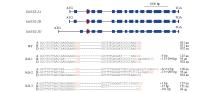
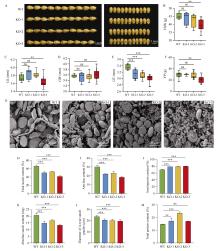
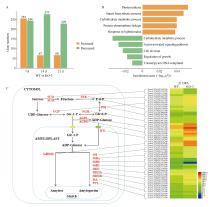
小麦是重要的粮食作物之一, 持续提升其产量是育种的重要目标。提高粒重可以有效提高小麦单产, 而小麦籽粒的主要成分是淀粉。为全面解析淀粉合成通路关键酶基因TaSUS2对籽粒淀粉合成的作用, 本研究从小麦基因组中扩增了TaSUS2的全长cDNA序列, 并在科农199中对TaSUS2进行基因编辑, 获得2种纯合二突材料(KO-1、KO-2)和1种纯合的三突材料(KO-3)。转基因材料表型鉴定发现, 与野生型相比, TaSUS2的种子出现明显的皱缩, 粒重显著下降, 且籽粒胚乳中总淀粉含量、直链淀粉含量、绝对淀粉含量和A型淀粉的粒径也显著降低, 表明TaSUS2影响粒重和籽粒中的淀粉合成。转录组分析发现, TaSUS2-KO-3花后21 d的籽粒中淀粉合成通路上的多个主要合成酶基因上调表达。开发TaSUS2-2A-CAPS标记并鉴定了145份重测序材料, 发现TaSUS2影响淀粉含量、湿面筋含量、蛋白质含量及沉降值等品质性状, TaSUS2-2A-Hap-G是影响品质性状的优异单倍型。研究结果为阐析TaSUS2的生物学功能奠定了基础, 也为未来小麦的高产优质分子育种提供了基因资源。
| [1] | Gao Y J, Li Y S, Xia W Y, Dai M Q, Dai Y, Wang Y G, Ma H G, Ma H X. The regulation of grain weight in wheat. Seed Biol, 2023, 2: 17. |
| [2] | Yang J, Zhou Y J, Wu Q H, Chen Y X, Zhang P P, Zhang Y E, Hu W G, Wang X C, Zhao H, Dong L L, et al. Molecular characterization of a novel TaGL3-5A allele and its association with grain length in wheat (Triticum aestivum L.). Theor Appl Genet, 2019, 132: 1799-1814. |
| [3] | Housley T L, Kirleis A W, Ohm H W, Patterson F L. An evaluation of seed growth in soft red winter wheat. Can J Plant Sci, 1981, 61: 525-534. |
| [4] |
Dale E M, Housley T L. Sucrose synthase activity in developing wheat endosperms differing in maximum weight. Plant Physiol, 1986, 82: 7-10.
doi: 10.1104/pp.82.1.7 pmid: 16665025 |
| [5] |
Lu H F, Hu Y Y, Wang C Y, Liu W X, Ma G, Han Q X, Ma D Y. Effects of high temperature and drought stress on the expression of gene encoding enzymes and the activity of key enzymes involved in starch biosynthesis in wheat grains. Front Plant Sci, 2019, 10: 1414.
doi: 10.3389/fpls.2019.01414 pmid: 31798603 |
| [6] | Barron C, Surget A, Rouau X. Relative amounts of tissues in mature wheat (Triticum aestivum L.) grain and their carbohydrate and phenolic acid composition. J Cereal Sci, 2007, 45: 88-96. |
| [7] | Zuo J R, Li J Y. Molecular dissection of complex agronomic traits of rice: a team effort by Chinese scientists in recent years. Natl Sci Rev, 2014, 1: 253-276. |
| [8] | International Wheat Genome Sequencing Consortium (IWGSC). A chromosome-based draft sequence of the hexaploid bread wheat (Triticum aestivum) genome. Science, 2014, 345: 1251788. |
| [9] |
Kumar R, Mukherjee S, Ayele B T. Molecular aspects of sucrose transport and its metabolism to starch during seed development in wheat: a comprehensive review. Biotechnol Adv, 2018, 36: 954-967.
doi: S0734-9750(18)30036-3 pmid: 29499342 |
| [10] | Deol K K, Mukherjee S, Gao F, Brûlé-Babel A, Stasolla C, Ayele B T. Identification and characterization of the three homeologues of a new sucrose transporter in hexaploid wheat (Triticum aestivum L.). BMC Plant Biol, 2013, 13: 181. |
| [11] |
Beckles D M, Smith A M, Rees T A. A cytosolic ADP-glucose pyrophosphorylase is a feature of graminaceous endosperms, but not of other starch-storing organs. Plant Physiol, 2001, 125: 818-827.
doi: 10.1104/pp.125.2.818 pmid: 11161039 |
| [12] |
Coutinho P M, Deleury E, Davies G J, Henrissat B. An evolving hierarchical family classification for glycosyltransferases. J Mol Biol, 2003, 328: 307-317.
doi: 10.1016/s0022-2836(03)00307-3 pmid: 12691742 |
| [13] | Kato T. Change of sucrose synthase activity in developing endosperm of rice cultivars. Crop Sci, 1995, 35: 827-831. |
| [14] |
Sun J, Loboda T, Sung S J, Black C C. Sucrose synthase in wild tomato, Lycopersicon chmielewskii, and tomato fruit sink strength. Plant Physiol, 1992, 98: 1163-1169.
doi: 10.1104/pp.98.3.1163 pmid: 16668741 |
| [15] |
Zrenner R, Salanoubat M, Willmitzer L, Sonnewald U. Evidence of the crucial role of sucrose synthase for sink strength using transgenic potato plants (Solanum tuberosum L.). Plant J, 1995, 7: 97-107.
doi: 10.1046/j.1365-313x.1995.07010097.x pmid: 7894514 |
| [16] | Chevalier P, Lingle S E. Sugar metabolism in developing kernels of wheat and barley. Crop Sci, 1983, 23: 272-277. |
| [17] |
Chourey P S, Nelson O E. The enzymatic deficiency conditioned by the shrunken-1 mutations in maize. Biochem Genet, 1976, 14: 1041-1055.
doi: 10.1007/BF00485135 pmid: 1016220 |
| [18] |
Tang G Q, Sturm A.A Antisense repression of sucrose synthase in carrot (Daucus carota L.) affects growth rather than sucrose partitioning. Plant Mol Biol, 1999, 41: 465-479.
doi: 10.1023/a:1006327606696 pmid: 10608657 |
| [19] | Fan C F, Wang G Y, Wang Y M, Zhang R, Wang Y T, Feng S Q, Luo K M, Peng L C. Sucrose synthase enhances hull size and grain weight by regulating cell division and starch accumulation in transgenic rice. Int J Mol Sci, 2019, 20: 4971. |
| [20] | Yao D Y, Gonzales-Vigil E, Mansfield S D. Arabidopsis sucrose synthase localization indicates a primary role in sucrose translocation in phloem J Exp Bot, 2020, 71: 1858-1869. |
| [21] |
Chandran D, Sharopova N, VandenBosch K A, Garvin D F, Samac D A. Physiological and molecular characterization of aluminum resistance in Medicago truncatula. BMC Plant Biol, 2008, 8: 89.
doi: 10.1186/1471-2229-8-89 pmid: 18713465 |
| [22] |
Ahmed I M, Nadira U A, Cao F B, He X Y, Zhang G P, Wu F B. Physiological and molecular analysis on root growth associated with the tolerance to aluminum and drought individual and combined in Tibetan wild and cultivated barley. Planta, 2016, 243: 973-985.
doi: 10.1007/s00425-015-2442-x pmid: 26748913 |
| [23] | Jiang Q Y, Hou J, Hao C Y, Wang L F, Ge H M, Dong Y S, Zhang X Y. The wheat (T. aestivum) sucrose synthase 2 gene (TaSus2) active in endosperm development is associated with yield traits. Funct Integr Genomics, 2011, 11: 49-61. |
| [24] | Shen L P, Zhang L L, Yin C B, Xu X W, Liu Y Y, Shen K C, Wu H, Sun Z W, Wang K, He Z H, et al. The wheat sucrose synthase gene TaSus1 is a determinant of grain number per spike. Crop J, 2024, 12: 295-300. |
| [25] |
Hou J, Jiang Q Y, Hao C Y, Wang Y Q, Zhang H N, Zhang X Y. Global selection on sucrose synthase haplotypes during a century of wheat breeding. Plant Physiol, 2014, 164: 1918-1929.
doi: 10.1104/pp.113.232454 pmid: 24402050 |
| [26] |
Hao C Y, Jiao C Z, Hou J, Li T, Liu H X, Wang Y Q, Zheng J, Liu H, Bi Z H, Xu F F, et al. Resequencing of 145 landmark cultivars reveals asymmetric sub-genome selection and strong founder genotype effects on wheat breeding in China. Mol Plant, 2020, 13: 1733-1751.
doi: 10.1016/j.molp.2020.09.001 pmid: 32896642 |
| [27] |
Hawkins E, Chen J, Watson-Lazowski A, Ahn-Jarvis J, Elaine Barclay J, Fahy B, Hartley M, Warren F J, Seung D. STARCH SYNTHASE 4 is required for normal starch granule initiation in amyloplasts of wheat endosperm. New Phytol, 2021, 230: 2371-2386.
doi: 10.1111/nph.17342 pmid: 33714222 |
| [28] | Zhang Z F, Tan J X, Chen Y T, Sun Z, Yan X, Ouyang J X, Li S B, Wang X. New fructokinase, OsFRK3, regulates starch accumulation and grain filling in rice. J Agric Food Chem, 2023, 71: 1056-1066. |
| [29] |
Fahy B, Gonzalez O, Savva G M, Ahn-Jarvis J H, Warren F J, Dunn J, Lovegrove A, Hazard B A. Loss of starch synthase IIIa changes starch molecular structure and granule morphology in grains of hexaploid bread wheat. Sci Rep, 2022, 12: 10806.
doi: 10.1038/s41598-022-14995-0 pmid: 35752653 |
| [30] |
Wang Y M, Hou J, Liu H, Li T, Wang K, Hao C Y, Liu H X, Zhang X Y. TaBT1, affecting starch synthesis and thousand kernel weight, underwent strong selection during wheat improvement. J Exp Bot, 2019, 70: 1497-1511.
doi: 10.1093/jxb/erz032 pmid: 30753656 |
| [31] | Deng Y T, Wang J C, Zhang Z Y, Wu Y R. Transactivation of Sus1 and Sus2 by Opaque2 is an essential supplement to sucrose synthase-mediated endosperm filling in maize. Plant Biotechnol J, 2020, 18: 1897-1907. |
| [32] |
Duncan K A, Hardin S C, Huber S C. The three maize sucrose synthase isoforms differ in distribution, localization, and phosphorylation. Plant Cell Physiol, 2006, 47: 959-971.
pmid: 16760218 |
| [33] |
Pellny T K, Lovegrove A, Freeman J, Tosi P, Love C G, Paul Knox J, Shewry P R, Mitchell R A C. Cell walls of developing wheat starchy endosperm: comparison of composition and RNA-Seq transcriptome. Plant Physiol, 2012, 158: 612-627.
doi: 10.1104/pp.111.189191 pmid: 22123899 |
| [34] |
Enders T A, Strader L C. Auxin activity: past, present, and future. Am J Bot, 2015, 102: 180-196.
doi: 10.3732/ajb.1400285 pmid: 25667071 |
| [35] | 于永超.生长素-糖调控水稻弱势粒灌浆的生理机制研究. 南京农业大学硕士学位论文, 江苏南京, 2022. |
| Yu Y C. Mechanisms of Indole-3-acetic Acid (IAA) and Sugar Effects on the Inferior Spikelets Filling in Rice. MS Thesis of Nanjing Agricultural University, Nanjing, Jiangsu, China, 2022 (in Chinese with English abstract). | |
| [36] |
Ishimaru K, Hirotsu N, Madoka Y, Murakami N, Hara N, Onodera H, Kashiwagi T, Ujiie K, Shimizu B I, Onishi A, et al. Loss of function of the IAA-glucose hydrolase gene TGW6 enhances rice grain weight and increases yield. Nat Genet, 2013, 45: 707-711.
doi: 10.1038/ng.2612 pmid: 23583977 |
| [37] | Liu L C, Tong H N, Xiao Y H, Che R H, Xu F, Hu B, Liang C Z, Chu J F, Li J Y, Chu C C. Activation of Big Grain1 significantly improves grain size by regulating auxin transport in rice. Proc Natl Acad Sci USA, 2015, 112: 11102-11107. |
| [38] |
Zhao Z G, Zhang Y H, Liu X, Zhang X, Liu S C, Yu X W, Ren Y L, Zheng X M, Zhou K N, Jiang L, et al. A role for a dioxygenase in auxin metabolism and reproductive development in rice. Dev Cell, 2013, 27: 113-122.
doi: 10.1016/j.devcel.2013.09.005 pmid: 24094741 |
| [39] | Zhao Z G, Wang C L, Yu X W, Tian Y L, Wang W X, Zhang Y H, Bai W T, Yang N, Zhang T, Zheng H, et al. Auxin regulates source-sink carbohydrate partitioning and reproductive organ development in rice. Proc Natl Acad Sci USA, 2022, 119: e2121671119. |
| [40] |
Grover A, Sharma P C. Development and use of molecular markers: past and present. Crit Rev Biotechnol, 2016, 36: 290-302.
doi: 10.3109/07388551.2014.959891 pmid: 25430893 |
| [41] |
Garrido-Cardenas J A, Mesa-Valle C, Manzano-Agugliaro F. Trends in plant research using molecular markers. Planta, 2018, 247: 543-557.
doi: 10.1007/s00425-017-2829-y pmid: 29243155 |
| [42] |
Liu Y N, He Z H, Appels R, Xia X C. Functional markers in wheat: current status and future prospects. Theor Appl Genet, 2012, 125: 1-10.
doi: 10.1007/s00122-012-1829-3 pmid: 22366867 |
| [43] | Su Z Q, Hao C Y, Wang L F, Dong Y C, Zhang X Y. Identification and development of a functional marker of TaGW2associated with grain weight in bread wheat (Triticum aestivum L.). Theor Appl Genet, 2011, 122: 211-223. |
| [44] | Liu H, Li H F, Hao C Y, Wang K, Wang Y M, Qin L, An D G, Li T, Zhang X Y. TaDA1, a conserved negative regulator of kernel size, has an additive effect with TaGW2 in common wheat (Triticum aestivum L.). Plant Biotechnol J, 2020, 18: 1330-1342. |
| [45] | Zhang Y J, Liu J D, Xia X C, He Z H. TaGS-D1, an ortholog of rice OsGS3, is associated with grain weight and grain length in common wheat. Mol Breed, 2014, 34: 1097-1107. |
| [46] | 李辛丽.小麦品质性状的QTL定位及优质资源筛选. 四川农业大学硕士学位论文, 四川成都, 2024. |
| Li X L. QTL for Wheat Quality Traits and Screening of High-quality Resources. MS Thesis of Sichuan Agricultural University, Chengdu, Sichuan, China, 2024 (in Chinese with English abstract). | |
| [47] | 安悦.湖北省小麦的HMW-GS组成及其与品质性状的相关分析. 华中农业大学硕士学位论文. 湖北武汉, 2023. |
| An Y. HMW-GS Composition and Its Correlation with Quality Characters of Wheat in Hubei. MS Thesis of Huazhong Agricultural University, Wuhan, Hubei, China, 2023 (in Chinese with English abstract). | |
| [48] | 关智仁.小麦品种群体品质性状评价及GWAS分析. 山东农业大学硕士学位论文, 山东泰安, 2022. |
| Guan Z R. Evaluation of Quality Traits and Genome-wide Association Study (GWAS) Using Variety Population in Wheat. MS Thesis of Shandong Agricultural University, Tai’an, Shandong, China, 2022 (in Chinese with English abstract). |
| [1] | 毛嘉琦, 黄朋雨, 赵佳佳, 郑兴卫, 武棒棒, 郝宇琼, 屈非, 刘成, 马朋涛, 郑军. 山西小麦品种白粉病抗性评价及抗病基因分子检测[J]. 作物学报, 2026, 52(6): 1669-1681. |
| [2] | 胡川, 赵凯男, 黄修利, 吴金芝, 任开明, 王贺正, 付国占, 黄明, 李友军. 一次灌溉下耕作方式和氮肥用量对旱地小麦产量和品质的影响[J]. 作物学报, 2026, 52(6): 1830-1846. |
| [3] | 陈雪燕, 何华川, 李政嘉, 董新盼, 李藕琪, 刘小云, 李丹萍, 陈志伟, 刘国霞, 吕胜源, 吴印莹, 赵振东, 曹新有, 万何平. 水培盐碱复合胁迫下‘济麦60’苗期根系有机酸分泌动态变化及其转录调控机制[J]. 作物学报, 2026, 52(6): 1859-1875. |
| [4] | 高沛阳, 李瑾璇, 董宇奎, 石玉, 张振, 张永丽. 测墒补灌下小麦分蘖发生和成穗对施氮量的响应[J]. 作物学报, 2026, 52(6): 1847-1858. |
| [5] | 张献丰, 郭利建, 李康春, 孔斌雪, 刘玉芳, 车卓, 杨德龙. 小麦ABHD6基因家族鉴定与粒重功能标记开发[J]. 作物学报, 2026, 52(6): 1711-1727. |
| [6] | 翟胜男, 曹新有, 李豪圣, 李吉虎, 李法计, 刘金栋, 夏先春, 吕莹莹, 马瑞峰, 王颖, 耿洪伟, 刘建军. 小麦Pod-A1、Pod-D1和Pod-2D位点等位变异对籽粒过氧化物酶活性的遗传效应分析[J]. 作物学报, 2026, 52(6): 1593-1603. |
| [7] | 习千辉, 徐梓瑗, 刘梦梦, 王宏艺, 郎凯琳, 井震海, 陈锋, 赵磊. 小麦籽粒铜含量的全基因组关联分析及候选基因预测[J]. 作物学报, 2026, 52(6): 1604-1617. |
| [8] | 王壮壮, 武紫君, 张永新, 张芯源, 袁丽雪, 陈如雪, 刘世举, 段剑钊, 冯伟, 王同朝, 王永华. 豫东南黏壤潮土区水氮优化协同提高冬小麦产量和氮素利用效率[J]. 作物学报, 2026, 52(5): 1501-1521. |
| [9] | 张振, 冯连杰, 石玉, 于振文, 张永丽. 节水补灌下不同穗型小麦产量形成差异研究[J]. 作物学报, 2026, 52(5): 1522-1535. |
| [10] | 何万龙, 耿洪伟, 张飞飞, 米克热阿依·阿巴白克热, 罗紫洋, 李鹏程, 周钊宇, 程宇坤. 基于深度学习的小麦重要病害图像识别系统的研究[J]. 作物学报, 2026, 52(5): 1401-1417. |
| [11] | 蒋嘉卉, 江炳志, 刘冠明, 王章英, 唐朝臣. 紫肉甘薯品质性状的近红外光谱预测模型构建与优化[J]. 作物学报, 2026, 52(4): 1088-1102. |
| [12] | 乔宇馨, 李程越, 康晓玉, 张鑫琪, 贾绍辉, 刘倩, 曹亚丽, 史鑫蕊, 郝兴宇, 李萍. 基于APSIM模型的长期免耕秸秆覆盖对旱地小麦增产效应研究[J]. 作物学报, 2026, 52(4): 1181-1192. |
| [13] | 侯思宇, 王国璀, 韦金贵, 谢玮欣, 殷文, 樊志龙, 柴强, 胡发龙. 绿肥配施化学氮肥对西北干旱灌区小麦干物质积累及产量形成的影响[J]. 作物学报, 2026, 52(4): 1208-1219. |
| [14] | 尚云秋, 赵竹, 陈欢, 丁永刚, 乔玉强, 李玮, 张向前, 曹承富, 杜世州. 长期定位耕作方式对雨养小麦籽粒灌浆和产量形成的影响[J]. 作物学报, 2026, 52(4): 1236-1250. |
| [15] | 于天一, 王春晓, 肖丽, 钟召迪, 王宣仓, 赵勇, 路亚, 吴月, 吴正锋. 不同结瘤特性花生品种氮素累积、产量及品质特性对氮肥用量的响应[J]. 作物学报, 2026, 52(3): 881-894. |
|
||