欢迎访问作物学报,今天是
作物学报 ›› 2026, Vol. 52 ›› Issue (2): 590-602.doi: 10.3724/SP.J.1006.2026.54092
周琦翔( ), 朱艳, 汪楚博, 朱柏林, 李俊博, 宋利兵()
Zhou Qi-Xiang(), Zhu Yan, Wang Chu-Bo, Zhu Bo-Lin, Li Jun-Bo, Song Li-Bing()
摘要:
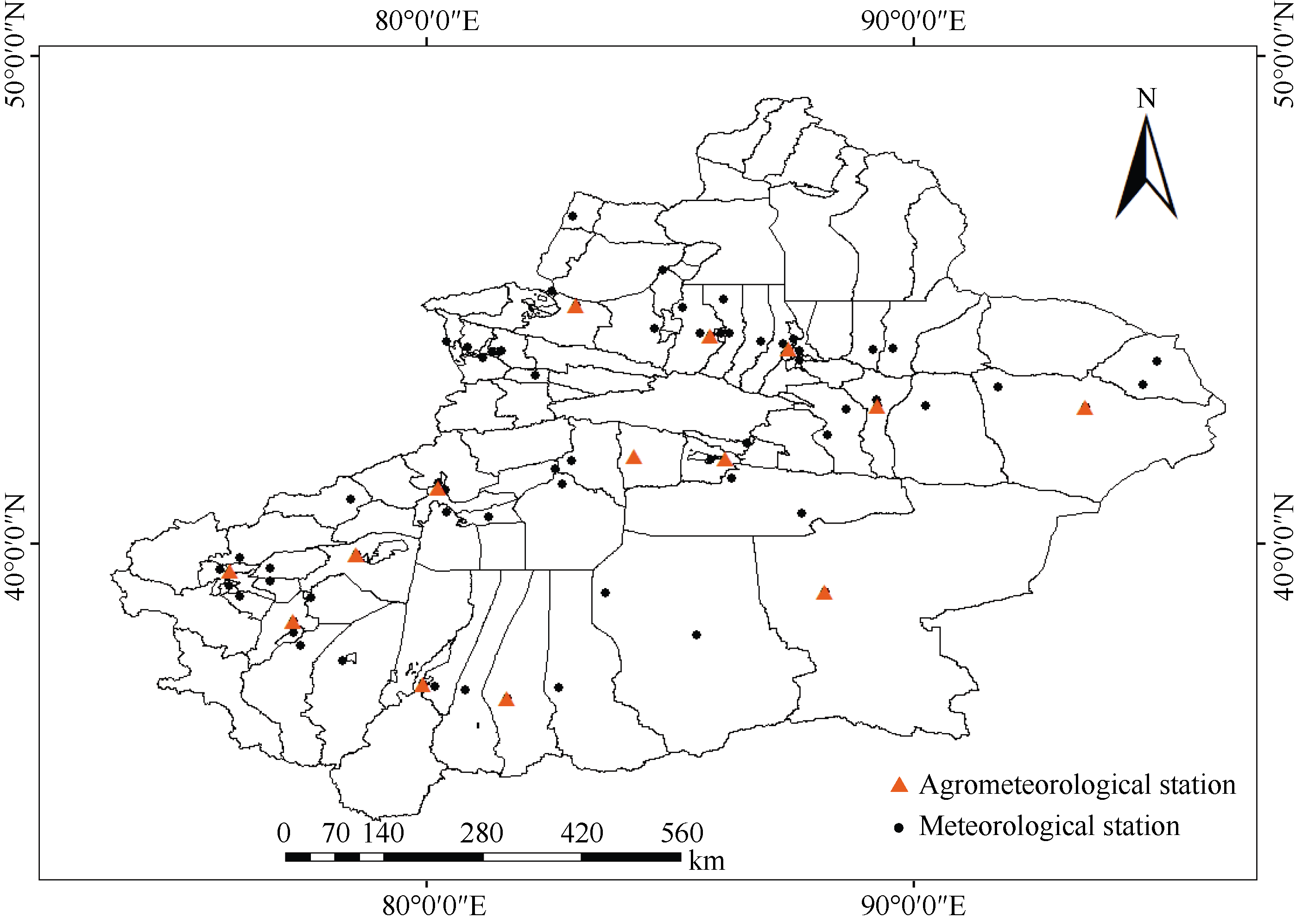
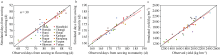
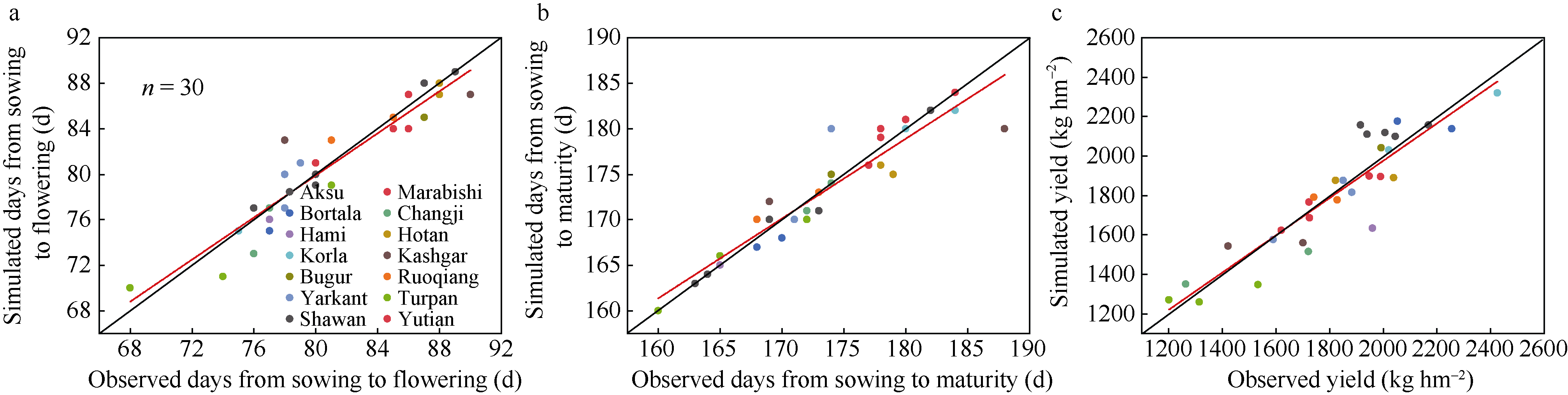
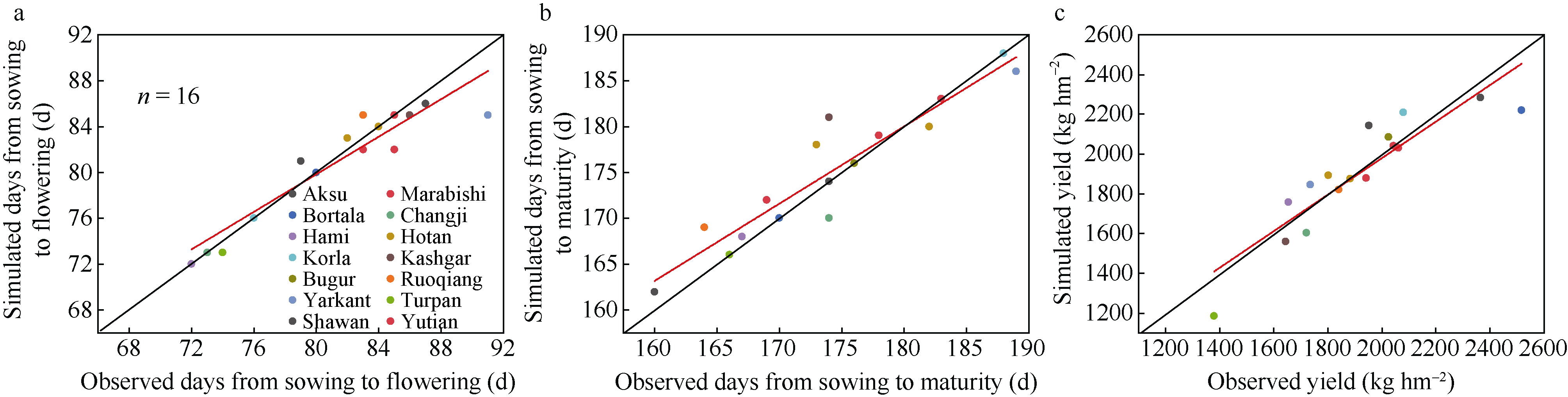
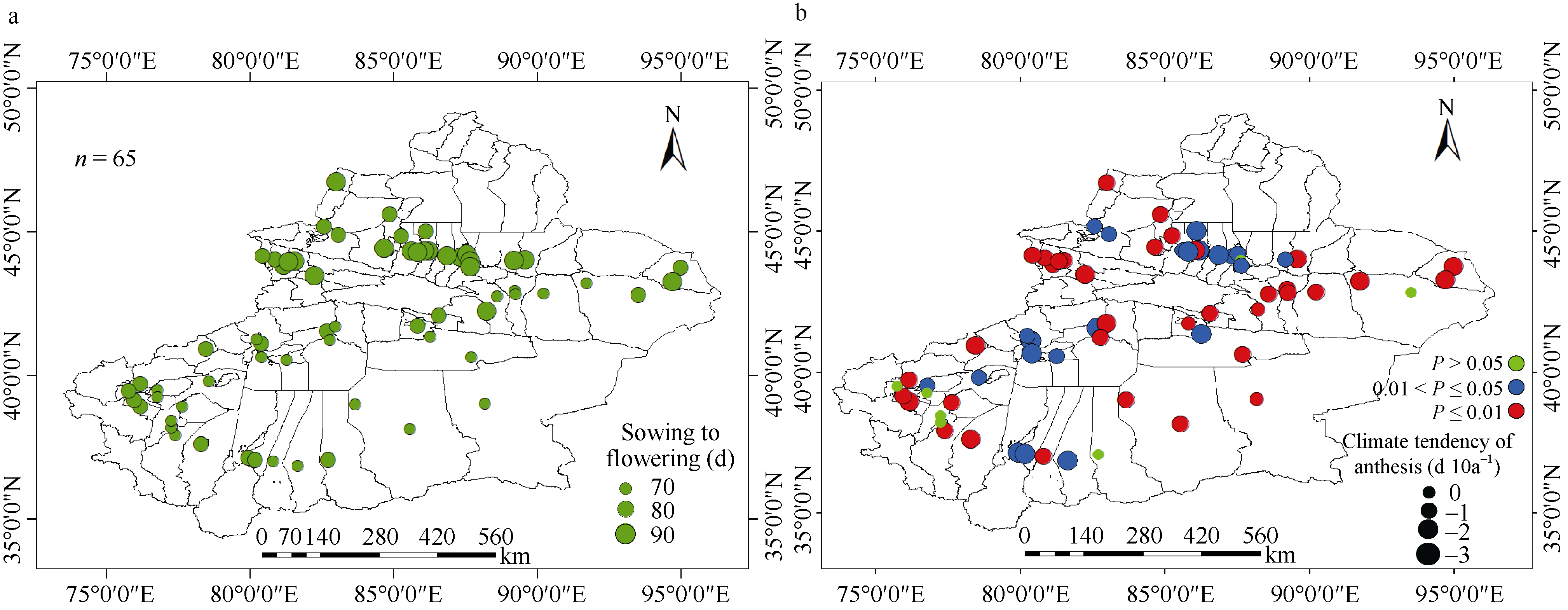
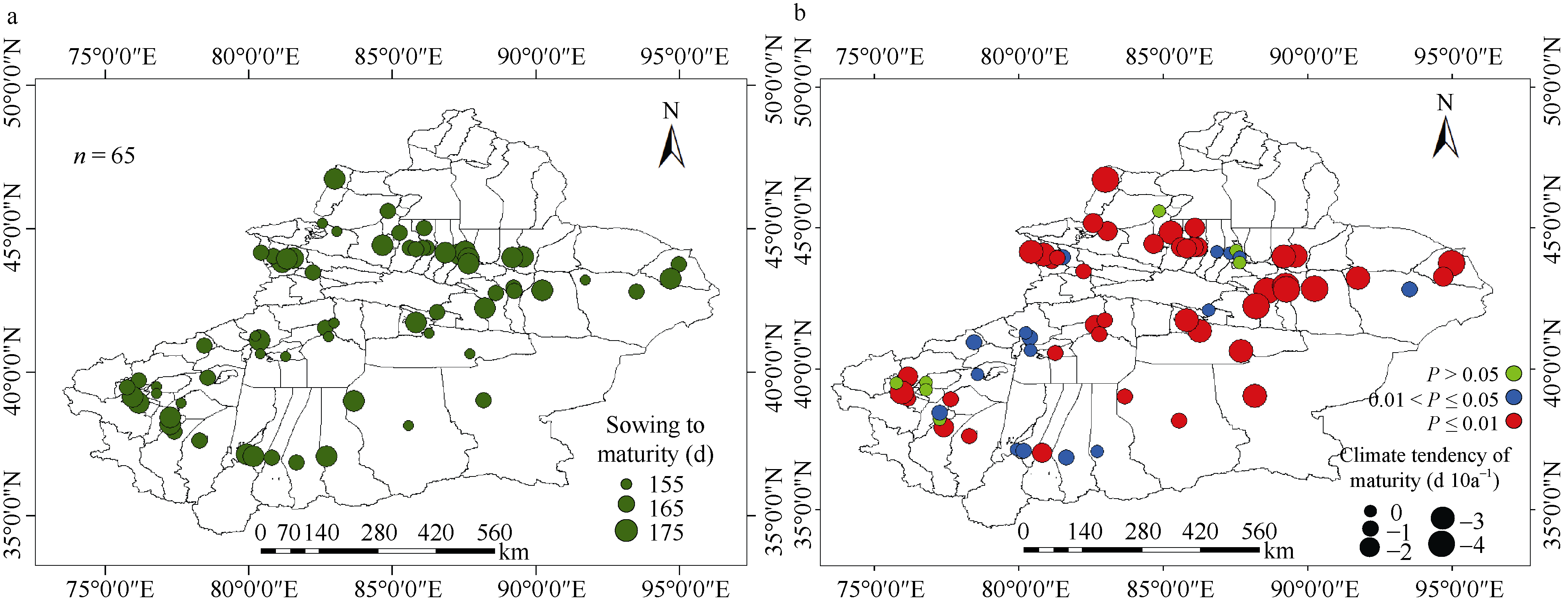
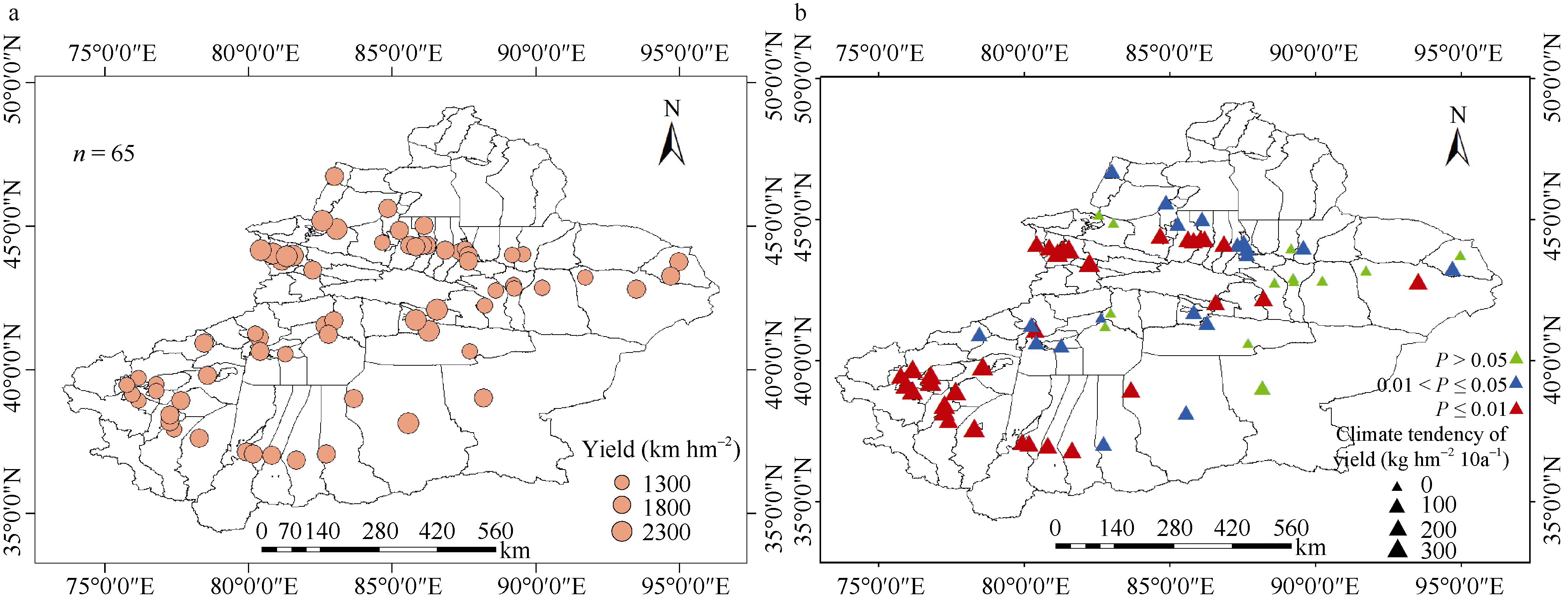
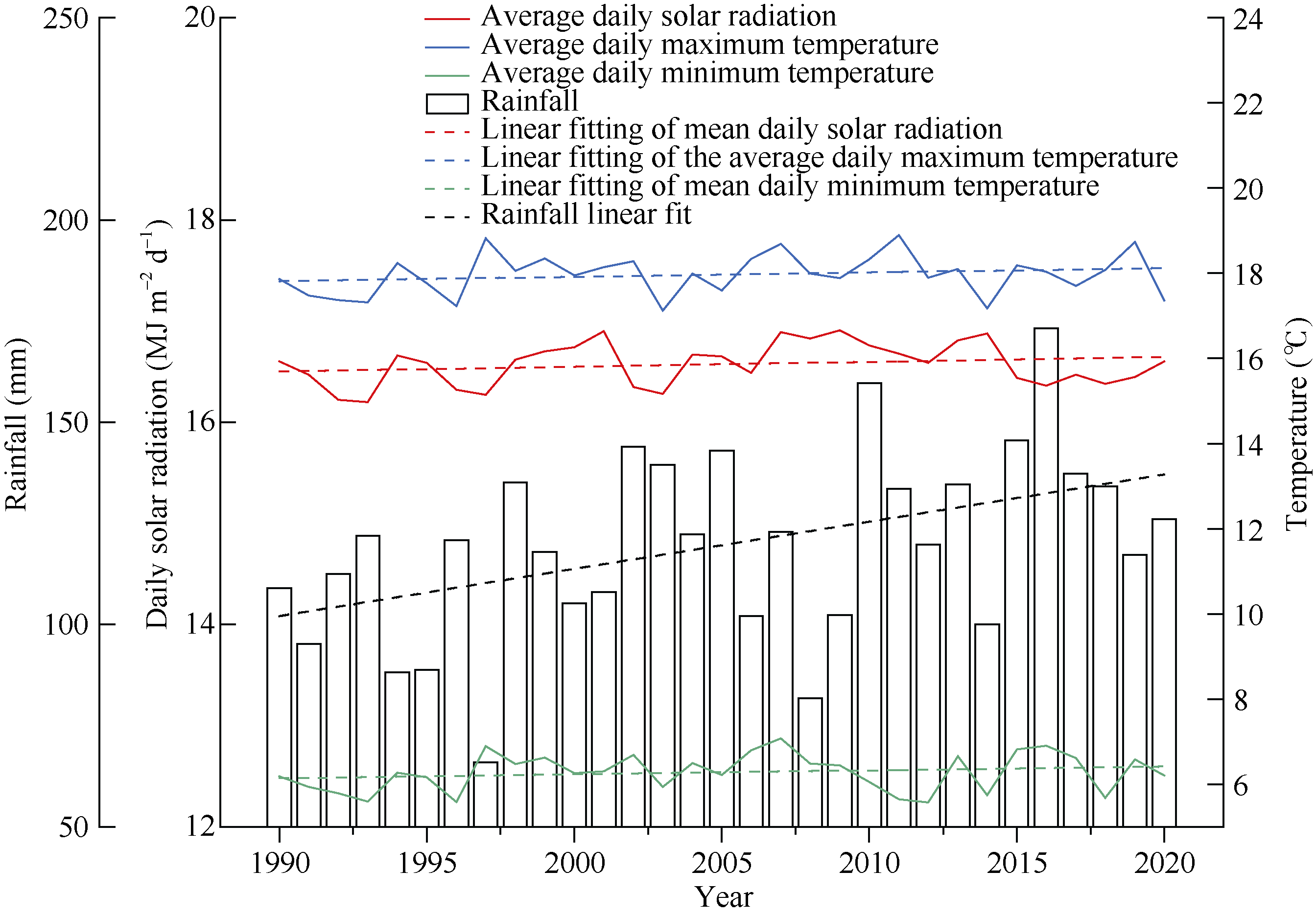
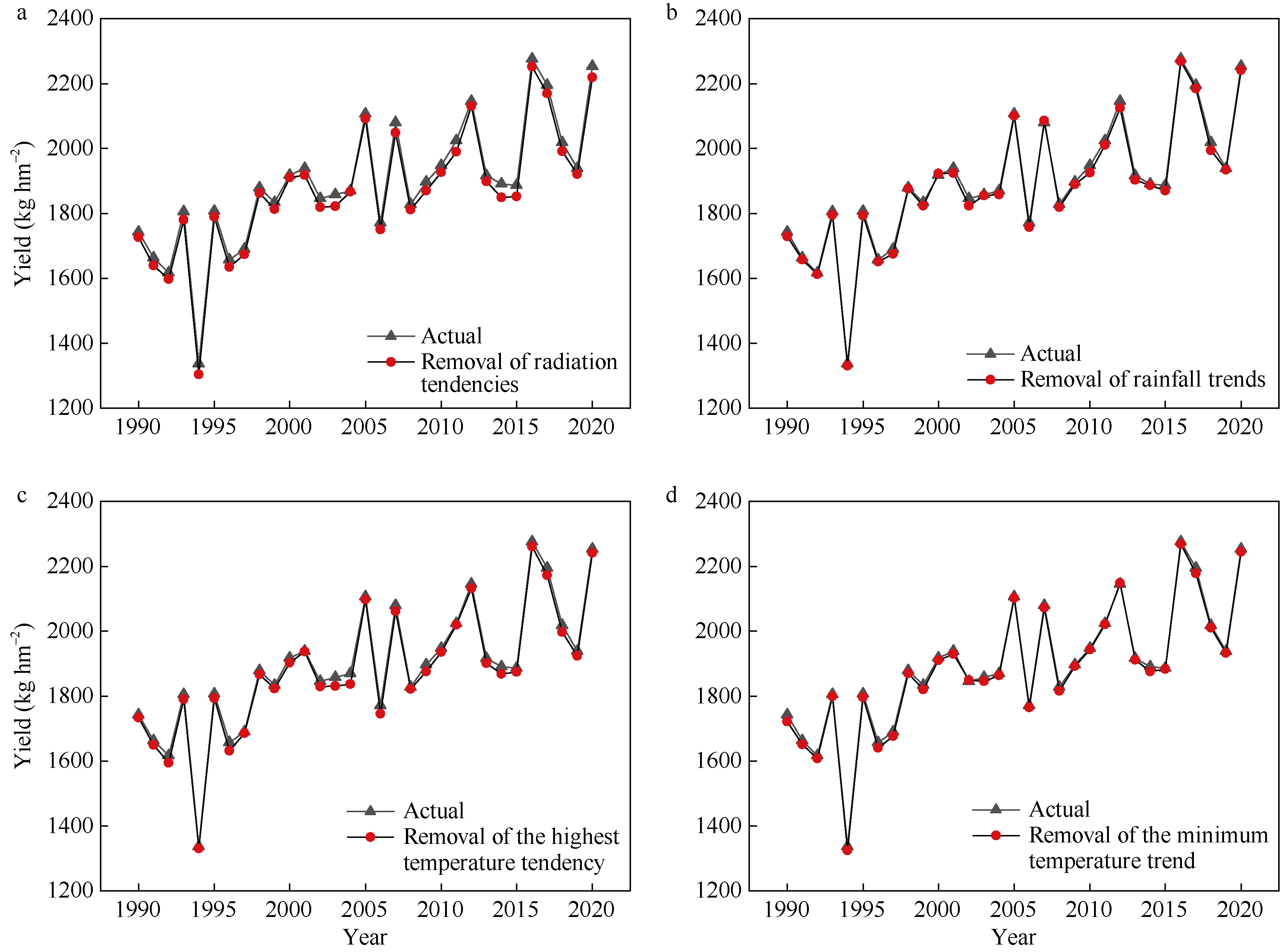
新疆作为中国最重要的棉花生产基地, 其生产安全对保障国家农业经济具有重要意义。为定量评估气候变化对新疆棉花生长的影响, 本研究基于新疆14个农业气象观测站和65个气象观测站点1990—2020年的逐日气象资料和棉花生长观测数据, 对DSSAT作物模型进行调参和验证; 利用模型分析新疆棉花物候期和潜在产量的时空演变特征; 并通过Mann-Kendall检验和去趋势分析方法解析关键气候因子的贡献率。结果表明: (1) 新疆棉花播种—开花期天数、播种—成熟期天数和产量模拟值与观测值调参(验证)的绝对相对误差分别为1.80% (1.51%)、0.85% (1.18%)、5.38% (5.44%), 归一化均方根误差分别为9.56% (14.06%)、9.71% (11.50%)、11.30% (11.34%), DSSAT模型表现出良好的模拟性能。(2) 在棉花播期和品种保持不变的条件下, 1990—2020年新疆棉花播种—开花期天数和播种—成熟期天数分别以1.26 d 10a-1和2.54 d 10a-1的速率显著缩短(P < 0.05), 而潜在产量则以159.61 kg hm-2 10a-1的速率显著增加; (3) 空间分析显示, 各站点棉花物候期及产量变化均达到显著水平(P < 0.05), 其中播种—开花期、播种—成熟期和潜在产量达到显著(极显著)水平的站点分别占33.8% (55.4%)、24.76% (64.6%)和29.2% (50.8%); 各气象因子对棉花潜在产量的影响效应从大到小表现为每日太阳辐射>日最高气温>降雨>日最低温度。DSSAT模型可较好地模拟新疆棉花生长发育和产量, 气候变化明显影响新疆棉花物候期和棉花潜在产量。本研究可为新疆乃至其他地区棉花作物模型研究、产量预报和气候变化评估提供数据支撑和理论依据。
| [1] | 蒙继华, 王亚楠, 林圳鑫, 等. 作物生长模型研究现状与展望. 农业机械学报, 2024, 55(2): 1-15. |
| Meng J H, Wang Y N, Lin Z X, et al. Progress and perspective of crop growth models. Trans CSAM, 2024, 55(2): 1-15 (in Chinese with English abstract). | |
| [2] | 彭慧文, 赵俊芳, 谢鸿飞, 等. 作物模型应用与遥感信息集成技术研究进展. 中国农业气象, 2022, 43: 644-656. |
|
Peng H W, Zhao J F, Xie H F, et al. Progresses of crop model application and its integration with remote sensing technology. Chin J Agrometeorol, 2022, 43: 644-656 (in Chinese with English abstract).
doi: 10.3969/j.issn.1000-6362.2022.08.005 |
|
| [3] |
郭建平. 作物生长模型发展及应用中的问题探讨. 应用生态学报, 2025, 36: 1579-1589.
doi: 10.13287/j.1001-9332.202505.012 |
|
Guo J P. Discussion on problems in the development and application of crop growth model. Chin J Appl Ecol, 2025, 36: 1579-1589 (in Chinese with English abstract).
doi: 10.13287/j.1001-9332.202505.012 |
|
| [4] | 王兴鹏, 辛朗, 杜江涛, 等. 基于DSSAT模型的南疆膜下滴灌棉花生长与产量模拟. 农业机械学报, 2022, 53(9): 314-321. |
| Wang X P, Xin L, Du J T, et al. Simulation of cotton growth and yield under film drip irrigation condition based on DSSAT model in southern Xinjiang. Trans CSAM, 2022, 53(9): 314-321 (in Chinese with English abstract). | |
| [5] |
谭红, 吕新, 张泽, 等. 基于DSSAT模型模拟的气候变化对棉花生产潜力影响研究. 棉花学报, 2020, 32(2): 113-120.
doi: 10.11963/1002-7807.thlx.20200312 |
|
Tan H, Lyu X, Zhang Z, et al. Influence of climate change on cotton production potential based on DSSAT model simulation. Cotton Sci, 2020, 32(2): 113-120 (in Chinese with English abstract).
doi: 10.11963/1002-7807.thlx.20200312 |
|
| [6] | 王昱, 高浚. DSSAT作物模型对南疆地区棉花生长的模拟研究. 农业与技术, 2022, 42(19): 42-45. |
| Wang Y, Gao J. Simulation study on cotton growth in southern Xinjiang by DSSAT crop model. Agric Technol, 2022, 42(19): 42-45 (in Chinese with English abstract). | |
| [7] | 高浚, 周保平, 王昱, 等. 基于EFAST的DSSAT模型对南疆地区棉花参数敏感性分析及适用性评价. 江苏农业科学, 2022, 50(5): 185-191. |
| Gao J, Zhou B P, Wang Y, et al. Sensitivity analysis and applicability evaluation of DSSAT model based on EFAST for cotton parameters in southern Xinjiang. Jiangsu Agric Sci, 2022, 50(5): 185-191 (in Chinese with English abstract). | |
| [8] |
Deng Z Y, Zhang Q, Pu J Y, et al. Impact of climate warming on crop planting and production in Northwest China. Acta Ecol Sin, 2008, 28: 3760-3768.
doi: 10.1016/S1872-2032(08)60076-1 |
| [9] |
McMichael B L, Hesketh J D. Field investigations of the response of cotton to water deficits. Field Crops Res, 1982, 5: 319-333.
doi: 10.1016/0378-4290(82)90034-X |
| [10] | Bange Michael. Effects of climate change on cotton growth and development. Australian Cottongrower, 2007, 28: 41-45. |
| [11] | 唐湘玲, 吕新. 石河子垦区气候变化与棉花产量的关系. 湖北农业科学, 2011, 50: 1533-1536. |
| Tang X L, Lyu X. The relationship between climate change and yield of cotton in Shihezi region. Hubei Agric Sci, 2011, 50: 1533-1536 (in Chinese with English abstract). | |
| [12] |
Chen C, Pang Y M, Pan X B, et al. Impacts of climate change on cotton yield in China from 1961 to 2010 based on provincial data J Meteor Res, 2015, 29: 515-524.
doi: 10.1007/s13351-014-4082-7 |
| [13] |
Huang J, Ji F. Effects of climate change on phenological trends and seed cotton yields in oasis of arid regions. Int J Biometeorol, 2015, 59: 877-888.
doi: 10.1007/s00484-014-0904-7 pmid: 25240389 |
| [14] |
Li N, Lin H X, Wang T X, et al. Impact of climate change on cotton growth and yields in Xinjiang, China. Field Crops Res, 2020, 247: 107590.
doi: 10.1016/j.fcr.2019.107590 |
| [15] | 陈超, 潘学标, 张立祯, 等. 气候变化对石羊河流域棉花生产和耗水的影响. 农业工程学报, 2011, 27(1): 57-65. |
| Chen C, Pan X B, Zhang L Z, et al. Impact of climate change on cotton production and water consumption in Shiyang River Basin. Trans CSAE, 2011, 27(1): 57-65 (in Chinese with English abstract). | |
| [16] | 陈柏青, 张悦, 王科, 等. 基于APSIM的新疆棉花生长与产量动态预测方法. 农业机械学报, 2025, 56(5): 82-90. |
| Chen B Q, Zhang Y, Wang K, et al. Dynamic predictions of cotton growth and yield in Xinjiang based on APSIM model. Trans CSAE, 2025, 56(5): 82-90 (in Chinese with English abstract). | |
| [17] |
高婧, 李茂春, 毛荣, 等. 1991-2022年新疆塔城地区植棉区气候变化对棉花生育期的影响. 中国棉花, 2024, 51(2): 16-23.
doi: 10.11963/cc20230157 |
|
Gao J, Li M C, Mao R, et al. Effects of climate change on the growth period of cotton in main cotton areas of Tacheng Prefecture, Xinjiang. China Cotton, 2024, 51(2): 16-23 (in Chinese with English abstract).
doi: 10.11963/cc20230157 |
|
| [18] |
Li Y, Li N, Javed T, et al. Cotton yield responses to climate change and adaptability of sowing date simulated by AquaCrop model. Ind Crops Prod, 2024, 212: 118319.
doi: 10.1016/j.indcrop.2024.118319 |
| [19] |
郭燕云, 王雪姣, 王森, 等. 新疆棉花物候期对气候变化的响应及敏感性分析. 中国农学通报, 2022, 38(18): 113-121.
doi: 10.11924/j.issn.1000-6850.casb2021-0812 |
|
Guo Y Y, Wang X J, Wang S, et al. Cotton phenology in Xinjiang: the response to climate change and sensitivity analysis. Chin Agric Sci Bull, 2022, 38(18): 113-121 (in Chinese with English abstract).
doi: 10.11924/j.issn.1000-6850.casb2021-0812 |
|
| [20] |
张泓, 吐尔逊江·买买提, 张少民, 等. 新疆棉花生产时空格局演变特征分析. 新疆农业科学, 2023, 60: 766-780.
doi: 10.6048/j.issn.1001-4330.2023.03.029 |
|
Zhang H Tuerxunjiang·Maimaiti, Zhang S M, et al. Analysis on the spatial and temporal pattern of cotton production in Xinjiang and its influencing factors. Xinjiang Agric Sci, 2023, 60: 766-780 (in Chinese with English abstract).
doi: 10.6048/j.issn.1001-4330.2023.03.029 |
|
| [21] | 张志高, 李艳敏, 袁征, 等. 1988-2020年新疆棉花生产格局与贡献因素. 农业资源与环境学报, 2024, 41: 1192-1200. |
| Zhang Z G, Li Y M, Yuan Z, et al.Cotton production pattern and contribution factors in Xinjiang from 1988 to 2020. J Agric Resour Environ, 2024, 41: 1192-1200 (in Chinese with English abstract). | |
| [22] | Hoogenboom G, Wilkens P W, Tsuji G Y. DSSAT v3, Volume 1. Honolulu, Hawaii: University of Hawaii, 1999. pp 1-15. |
| [23] |
Jones J W, Hoogenboom G, Porter C H, et al. The DSSAT cropping system model. Eur J Agron, 2003, 18: 235-265.
doi: 10.1016/S1161-0301(02)00107-7 |
| [24] | Jones J W, Hoogenboom G, Wilkens P W, et al. Decision Support System for Agrotechnology Transfer Version 4.0. Volume 4. dssat v4.5: Crop Model Documentation. Honolulu: University of Hawaii, 2010. pp 1-9. |
| [25] |
Ghimire B, Adedeji O, Ritchie G L, et al. Simulating crop yields and water productivity for three cotton-based cropping systems in the Texas High Plains. Crop Environ, 2025, 4: 83-96.
doi: 10.1016/j.crope.2025.03.001 |
| [26] |
Li Z, Menefee D, Yang X, et al. Simulating productivity of dryland cotton using APSIM, climate scenario analysis, and remote sensing. Agric For Meteor, 2022, 325: 109148.
doi: 10.1016/j.agrformet.2022.109148 |
| [27] |
Yang J M, Yang J Y, Liu S, et al. An evaluation of the statistical methods for testing the performance of crop models with observed data. Agric Syst, 2014, 127: 81-89.
doi: 10.1016/j.agsy.2014.01.008 |
| [28] |
Jiang R, He W T, He L, et al. Modelling adaptation strategies to reduce adverse impacts of climate change on maize cropping system in Northeast China. Sci Rep, 2021, 11: 810.
doi: 10.1038/s41598-020-79988-3 pmid: 33436721 |
| [29] | 魏凤英.现代气候统计诊断与预测技术(第2版). 北京: 气象出版社, 2007. |
| Wei F Y. Modern Climate Statistical Diagnosis and Prediction Technology. 2nd edn. Beijing: China Meteorological Press, 2007 (in Chinese). | |
| [30] |
Pourebrahimi Foumani M, Yin X H, Fu J S, et al. Impact of future climate from different general circulation models on cotton yield predictions in north Cotton Belt through crop simulation with DSSAT. Field Crops Res, 2025, 322: 109719.
doi: 10.1016/j.fcr.2024.109719 |
| [31] |
Wang X P, Wang H B, Si Z Y, et al. Modelling responses of cotton growth and yield to pre-planting soil moisture with the CROPGRO-Cotton model for a mulched drip irrigation system in the Tarim Basin. Agric Water Manag, 2020, 241: 106378.
doi: 10.1016/j.agwat.2020.106378 |
| [32] | 程珍, 牛建龙, 马玉婷, 等. 1990-2020年南疆阿拉尔垦区棉花物候期的动态变化. 中国农业科技导报, 2024, 26(10): 206-214. |
| Cheng Z, Niu J L, Ma Y T, et al. Dynamic changes of cotton phenological stages in alar reclamation area of southern Xinjiang from 1990 to 2020. J Agric Sci Technol, 2024, 26(10): 206-214 (in Chinese with English abstract). | |
| [33] | 阿布都克日木·阿巴司, 胡素琴, 努尔帕提曼·买买提热依木. 新疆喀什气候变化对棉花发育期及产量的影响分析. 中国生态农业学报, 2015, 23: 919-930. |
| Abudukerimu ABASI, Hu S Q, Nu’erpatiman MAIMAITIREYIMU. Effect of climate change on cotton growth period and yield in Kashgar City, Xinjiang Uygur Autonomous Region. Chin J Eco-Agric, 2015, 23: 919-930 (in Chinese with English abstract). | |
| [34] | 董海波, 陈小平, 冯绍元, 等. 模拟气候变化对极端干旱区棉花产量和水分利用效率的影响. 灌溉排水学报, 2022, 41(9): 23-32. |
| Dong H B, Chen X P, Feng S Y, et al. Effects of climate change on seed yield and water use efficiency of cotton in arid regions: a simulation study. J Irrig Drain, 2022, 41(9): 23-32 (in Chinese with English abstract). | |
| [35] |
Li N, Li Y, Yang Q L, et al. Simulating climate change impacts on cotton using AquaCrop model in China. Agric Syst, 2024, 216: 103897.
doi: 10.1016/j.agsy.2024.103897 |
| [36] |
Han W R, Liu S L, Wang J, et al. Climate variation explains more than half of cotton yield variability in China. Ind Crops Prod, 2022, 190: 115905.
doi: 10.1016/j.indcrop.2022.115905 |
| [37] | 王海江, 高嵩, 李瑞春, 等. 气候变化对我国棉花生长的影响及适应措施分析. 园艺与种苗, 2023, 43(6): 72-75. |
| Wang H J, Gao S, Li R C, et al. Analysis of climate change on cotton growth and adaptive measures in China. Hortic Seed, 2023, 43(6): 72-75 (in Chinese with English abstract). | |
| [38] |
Mi Y D, Wang Y R, Wu F Q, et al. Yield variation in early-maturing cotton in response to sowing dates and growing seasons is associated with differential resource utilization. Eur J Agron, 2025, 168: 127637.
doi: 10.1016/j.eja.2025.127637 |
| [39] |
Feng L, Wan S M, Zhang Y L, et al. Xinjiang cotton: achieving super-high yield through efficient utilization of light, heat, water, and fertilizer by three generations of cultivation technology systems. Field Crops Res, 2024, 312: 109401.
doi: 10.1016/j.fcr.2024.109401 |
| [40] |
白岩, 毛树春, 田立文, 等. 新疆棉花高产简化栽培技术评述与展望. 中国农业科学, 2017, 50: 38-50.
doi: 10.3864/j.issn.0578-1752.2017.01.004 |
|
Bai Y, Mao S C, Tian L W, et al. Advances and prospects of high-yielding and simplified cotton cultivation technology in Xinjiang cotton-growing area. Sci Agric Sin, 2017, 50: 38-50 (in Chinese with English abstract).
doi: 10.3864/j.issn.0578-1752.2017.01.004 |
| [1] | 胡川, 赵凯男, 黄修利, 吴金芝, 任开明, 王贺正, 付国占, 黄明, 李友军. 一次灌溉下耕作方式和氮肥用量对旱地小麦产量和品质的影响[J]. 作物学报, 2026, 52(6): 1830-1846. |
| [2] | 马胜乾, 王志平, 陈浩天, 窦淑贤, 张燕, 邓艾兴, 张卫建, 原向阳, 宋振伟. 秸秆还田下耕作方式与氮肥施用量对东北玉米产量及土壤团聚体的影响[J]. 作物学报, 2026, 52(6): 1802-1816. |
| [3] | 张思思, 赵向辉, 周洋, 姚云凤, 朱荣昱, 董元杰, 胡国庆, 徐通, 刘兆新. 冬闲期翻耕和绿肥还田对连作花生田土壤理化性质和产量的影响[J]. 作物学报, 2026, 52(5): 1472-1486. |
| [4] | 张宁宁, 滕雨菲, 任娜娜, 魏兴卓, 闫书豪, 樊可心, 王永宏, 陈文康, 张兴华, 朱万超, 徐淑兔, 薛吉全. 201份玉米自交系抗旱表型评价及可塑性分析[J]. 作物学报, 2026, 52(5): 1309-1325. |
| [5] | 王宇诚, 张露, 刘阿康, 黄见良, 彭少兵, 袁珅. 基于产量差的作物大面积单产提升策略与展望[J]. 作物学报, 2026, 52(5): 1279-1290. |
| [6] | 赵佳雪, 周龙昊, 郭岂源, 尚伦霄, 王涵, 刘志涛, 陈曦, 张晓佩, 宋宪亮, 毛丽丽. 长期秸秆还田与深松通过改善土壤环境与棉花光合特性提高滨海盐碱地棉花产量[J]. 作物学报, 2026, 52(5): 1548-1560. |
| [7] | 张振, 冯连杰, 石玉, 于振文, 张永丽. 节水补灌下不同穗型小麦产量形成差异研究[J]. 作物学报, 2026, 52(5): 1522-1535. |
| [8] | 闫安, 蒋昆炜, 王蓉圆, 田林, 张璐, 王韵, 徐建龙. 水稻剑叶小维管束数基因SVN7的鉴定与克隆[J]. 作物学报, 2026, 52(5): 1364-1372. |
| [9] | 刘昕萌, 任昊, 张继波, 张吉旺, 赵斌, 任佰朝, 刘鹏, 王洪章. 茉莉酸甲酯(MeJA)缓解高温影响玉米雌穗分化的生理机制[J]. 作物学报, 2026, 52(5): 1561-1572. |
| [10] | 王壮壮, 武紫君, 张永新, 张芯源, 袁丽雪, 陈如雪, 刘世举, 段剑钊, 冯伟, 王同朝, 王永华. 豫东南黏壤潮土区水氮优化协同提高冬小麦产量和氮素利用效率[J]. 作物学报, 2026, 52(5): 1501-1521. |
| [11] | 张鸿蓉, 王菲儿, 李盼, 仇海龙, 朱静, 赵连豪, 南运有, 何蔚, 樊志龙, 胡发龙, 柴强, 殷文. 减量20%灌水与25%有机肥替代化肥提高青贮玉米产量的光合特性[J]. 作物学报, 2026, 52(5): 1487-1500. |
| [12] | 郭星宇, 胡丹, 林苏期, 王梦凯, 谭文峰, 黄传琴. 生物炭配施化肥提高玉米‖大豆下玉米产量和土壤生态系统多功能性[J]. 作物学报, 2026, 52(5): 1536-1547. |
| [13] | 蔡宏玮, 于爱忠, 姜科强, 王鹏飞, 王玉珑, 霍建喆, 庞小能, 尹波, 尚永盼. 干旱灌区有机肥替代部分化肥促进甜玉米产量提升的关键机制[J]. 作物学报, 2026, 52(4): 1166-1180. |
| [14] | 崔雪梅, 柳妍娣, 刘景辉, 米俊珍, 武俊英, 赵宝平. 不同基因型燕麦强弱势粒生理特性与产量关系研究[J]. 作物学报, 2026, 52(4): 1220-1235. |
| [15] | 杨锐, 陈敬东, 黄郢, 张学昆, 周登文, 刘清云, 徐劲松, 谢伶俐, 许本波. 长江下游冬油菜区应对气候变化的育种和栽培策略研究[J]. 作物学报, 2026, 52(4): 1153-1165. |
|
||