欢迎访问作物学报,今天是
作物学报 ›› 2024, Vol. 50 ›› Issue (9): 2297-2309.doi: 10.3724/SP.J.1006.2024.34193
祁稼民1,*( ), 许春苗2, 肖斌2
QI Jia-Min1,*(), XU Chun-Miao2, XIAO Bin2
摘要:
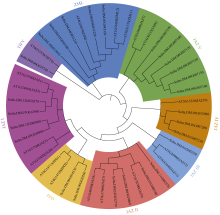
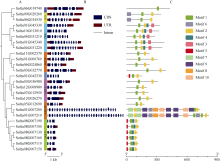
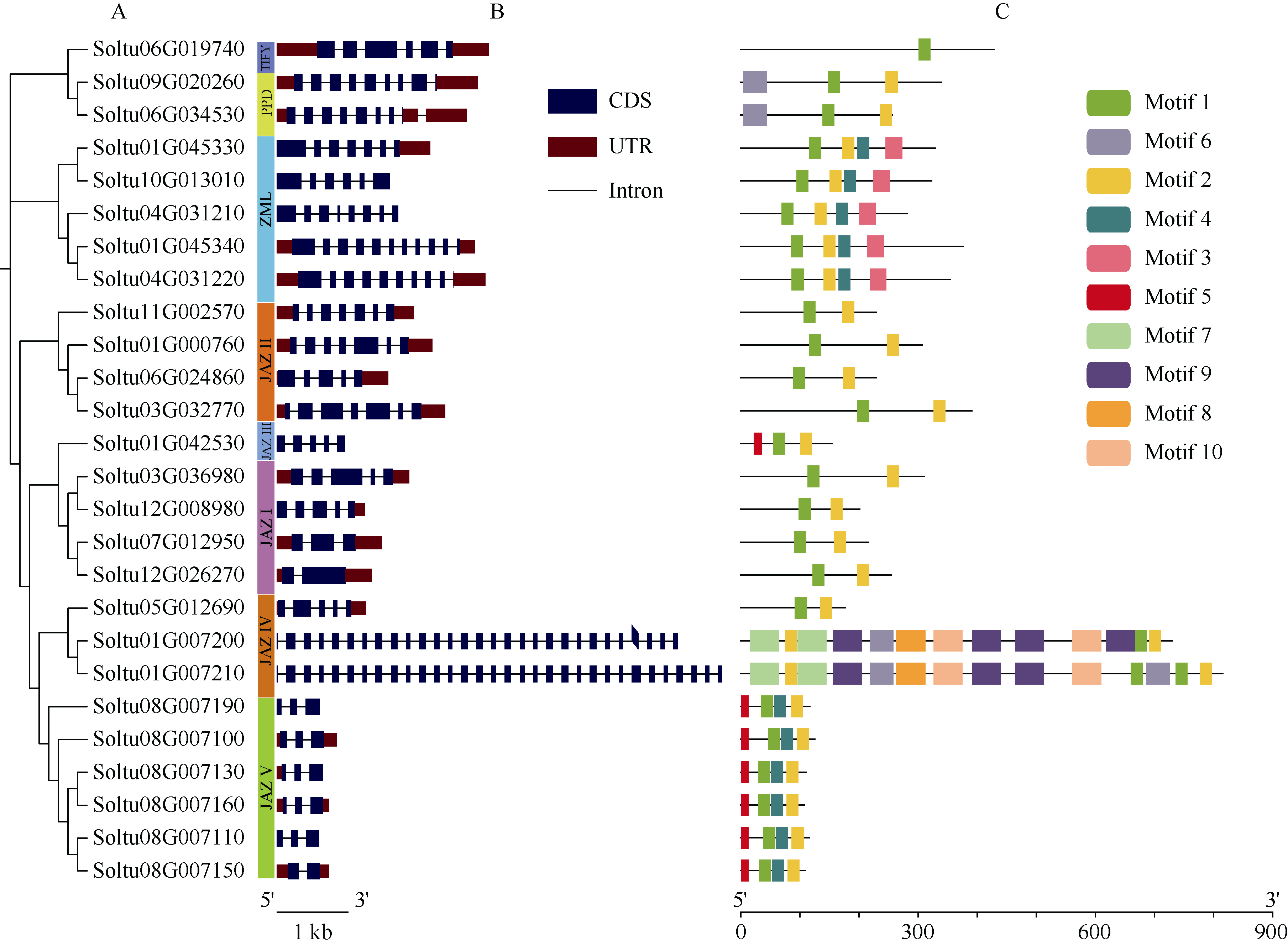
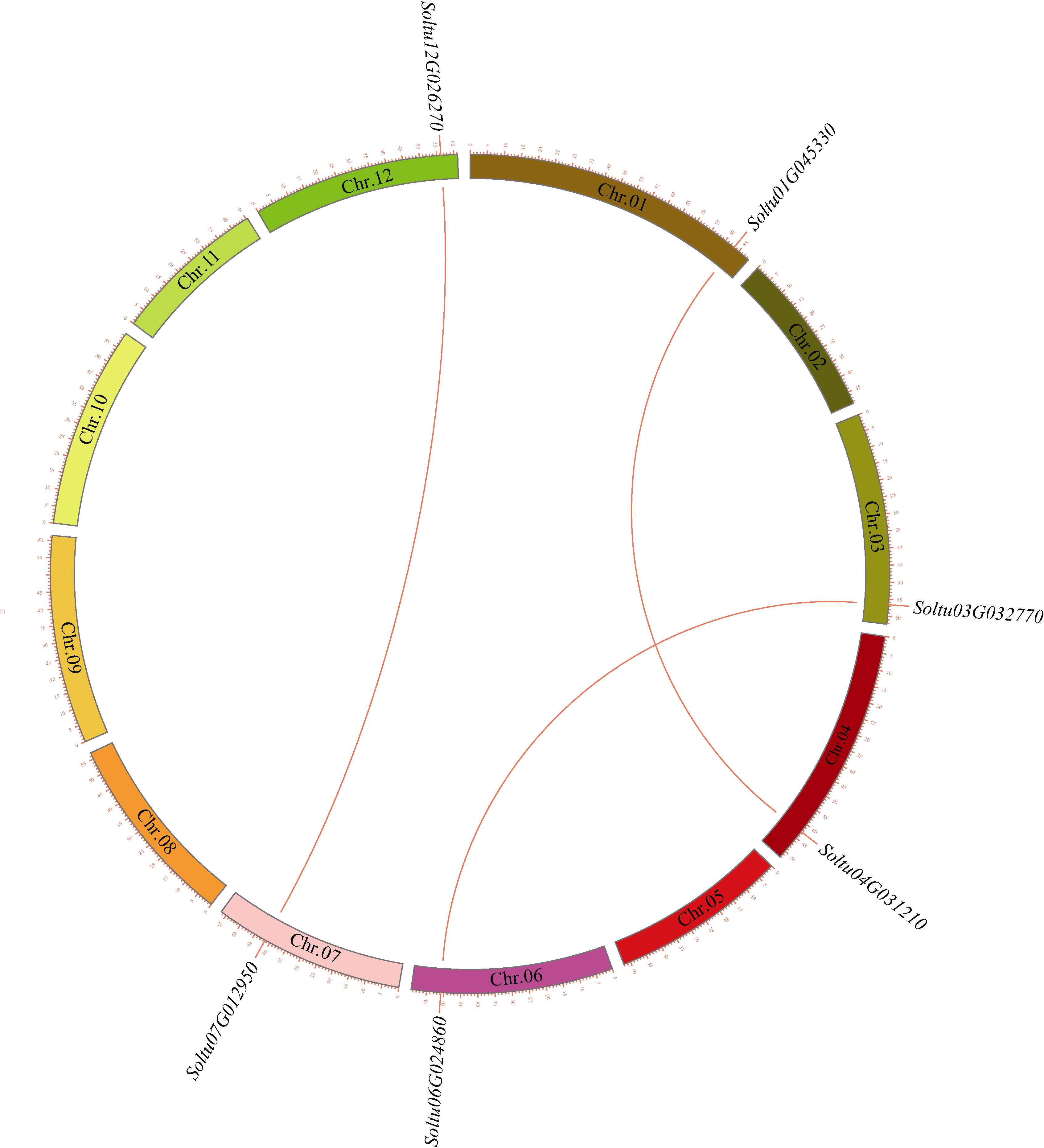
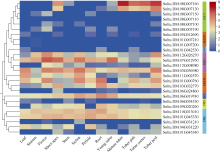
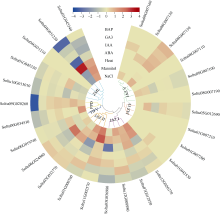
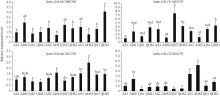
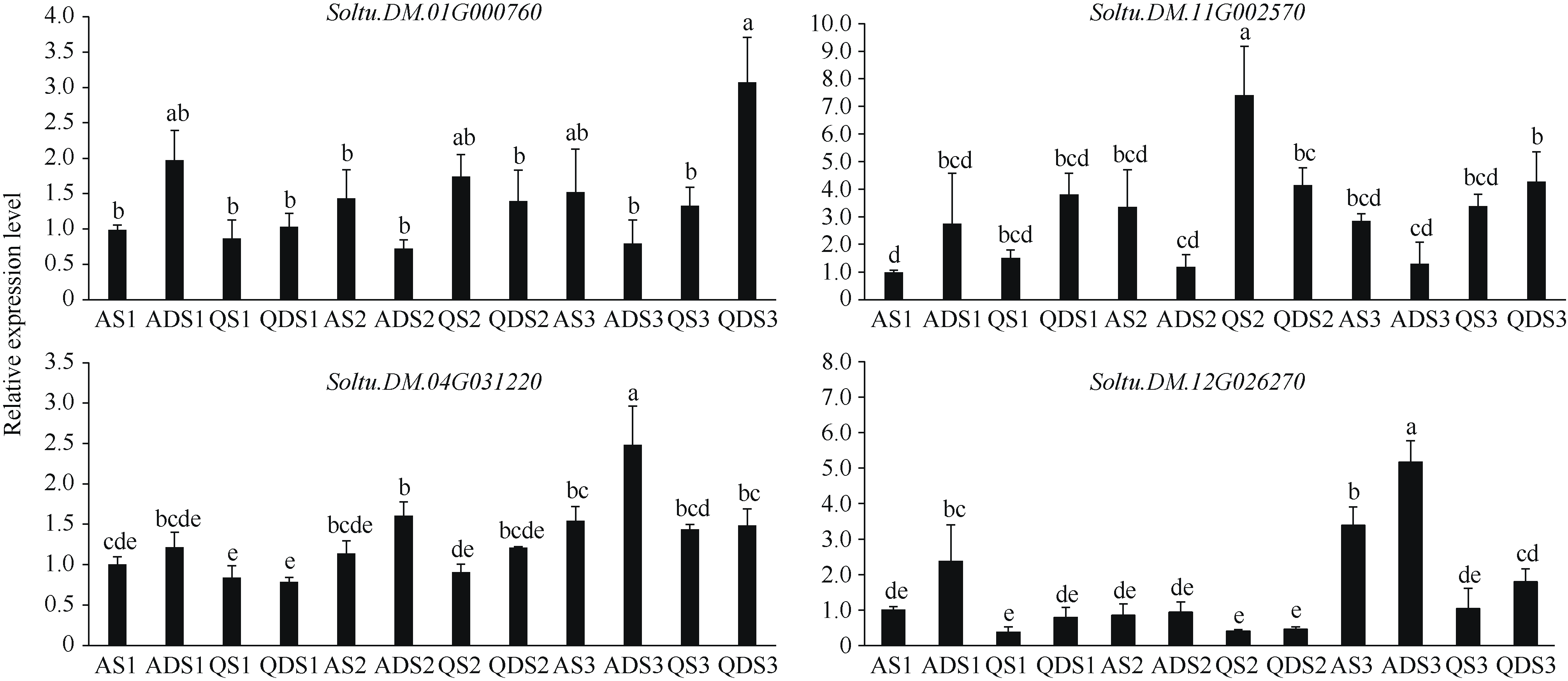
TIFY家族是植物所特有的包含保守TIFY结构域(TIF [F/Y]XG)的转录因子基因家族, 在调节植物发育、响应非生物胁迫和植物激素方面具有重要作用。本研究在马铃薯(Solanum tuberosum L.)全基因组水平共鉴定出了26个StTIFY家族成员, 根据系统发育特征和蛋白结构将StTIFY分为4大亚家族, 其中JAZ亚家族分为了5个亚组。串联重复和片段重复事件在马铃薯TIFY基因家族的扩张中起主要作用。通过共线性分析发现, StTIFY与双子叶植物番茄(Solanum lycopersicum)、拟南芥(Arabidopsis)、甘蓝(Brassica oleracea)分别有21对、5对和6对直系同源基因, 而和单子叶植物水稻(Oryza sativa)、玉米(Zea mays)则分别只有1对和3对直系同源基因, 这些基因均在纯化选择下进化。RNA-seq数据分析发现, TIFY基因和ZML亚家族的2个基因在13个组织部位均有较高的表达量, 而其余成员则呈现组织表达特异性。同时我们进一步分析了StTIFY基因对非生物胁迫以及激素处理的响应, 发现有19个基因响应非生物胁迫(干旱/盐/热), 其中分别有3个和2个基因同时响应3种和2种非生物胁迫; 有5个基因在BAP、ABA、IAA和GA3处理下差异表达。利用qPCR进一步检测了在干旱胁迫条件下抗旱品种和水分敏感品种中4个候选基因的表达量, 结果发现这4个基因在2个品种的落花期显著差异表达。本研究为了解StTIFY基因家族的特征, 深入分析StTIFY家族成员在马铃薯响应激素信号和抵御非生物胁迫的功能提供了理论依据。
| [1] |
Vanholme B, Grunewald W, Bateman A, Kohchi T, Gheysen G. The tify family previously known as ZIM. Trends Plant Sci, 2007, 12: 239-244.
doi: 10.1016/j.tplants.2007.04.004 pmid: 17499004 |
| [2] |
Bai Y, Meng Y, Huang D, Qi Y, Chen M. Origin and evolutionary analysis of the plant-specific TIFY transcription factor family. Genomics, 2011, 98: 128-136.
doi: 10.1016/j.ygeno.2011.05.002 pmid: 21616136 |
| [3] |
Chung H S, Niu Y, Browse J, Howe G A. Top hits in contemporary JAZ: an update on jasmonate signaling. Phytochemistry, 2009, 70: 1547-1559.
doi: 10.1016/j.phytochem.2009.08.022 pmid: 19800644 |
| [4] |
Staswick P E. JAZing up jasmonate signaling. Trends Plant Sci, 2008, 13: 66-71.
doi: 10.1016/j.tplants.2007.11.011 pmid: 18261950 |
| [5] | Gupta A, Bhardwaj M, Tran P L-S. JASMONATE ZIM-DOMAIN family proteins: important nodes in jasmonic acid-abscisic acid crosstalk for regulating plant response to drought. Curr Protein Pept Sci, 2021, 22: 759-766. |
| [6] | Hu S, Yu K, Yan J, Shan X, Xie D. Jasmonate perception: ligand- receptor interaction, regulation and evolution. Mol Plant, 2023, 16: 23-42. |
| [7] |
Chini A, Boter M, Solano R. Plant oxylipins: COI1/JAZs/MYC2 as the core jasmonic acid-signalling module. FEBS J, 2009, 276: 4682-4692.
doi: 10.1111/j.1742-4658.2009.07194.x pmid: 19663905 |
| [8] | Pan J, Hu Y, Wang H, Guo Q, Chen Y, Howe G A, Yu D. Molecular mechanism underlying the synergetic effect of jasmonate on abscisic acid signaling during seed germination in Arabidopsis. Plant Cell, 2020, 32: 3846-3865. |
| [9] |
Liu S, Zhang P, Li C, Xia G. The moss jasmonate ZIM-domain protein PnJAZ1 confers salinity tolerance via crosstalk with the abscisic acid signalling pathway. Plant Sci, 2019, 280: 1-11.
doi: S0168-9452(18)31122-1 pmid: 30823987 |
| [10] | Shikata M, Matsuda Y, Ando K, Nishii A, Takemura M, Yokota A, Kohchi T. Characterization of Arabidopsis ZIM, a member of a novel plant-specific GATA factor gene family. J Exp Bot, 2004, 55: 631-639. |
| [11] |
White D W R. PEAPOD regulates lamina size and curvature in Arabidopsis. Proc Natl Acad Sci USA, 2006, 103: 13238-13243.
doi: 10.1073/pnas.0604349103 pmid: 16916932 |
| [12] | Alexandra B, Laurens P, Zhibiao W, Na L, Liesbeth D M, Annelore N, Mattias V, Yunhai L, Alain G, Dirk I. Arabidopsis leaf flatness is regulated by PPD2 and NINJA through repression of CYCLIN D3 genes. Plant Physiol, 2018, 178: 217-232. |
| [13] | Zhu Y, Luo X, Liu X, Cui X, He Y, Huang J. Arabidopsis PEAPODs function with LIKE HETEROCHROMATIN PROTEIN1 to regulate lateral organ growth. J Integr Plant Biol, 2020, 62: 812-831. |
| [14] | Hakata M, Kuroda M, Ohsumi A, Hirose T, Nakamura H, Muramatsu M, Ichikawa H, Yamakawa H. Overexpression of a rice TIFY gene increases grain size through enhanced accumulation of carbohydrates in the stem. Biosci Biotechnol Biochem, 2012, 76: 2129-2134. |
| [15] | Ebel C, BenFeki A, Hanin M, Solano R, Chini A. Characterization of wheat (Triticum aestivum) TIFY family and role of Triticum durum TdTIFY11a in salt stress tolerance. PLoS One, 2018, 13: e0200566. |
| [16] |
Ye H, Du H, Tang N, Li X, Xiong L. Identification and expression profiling analysis of TIFY family genes involved in stress and phytohormone responses in rice. Plant Mol Biol, 2009, 71: 291-305.
doi: 10.1007/s11103-009-9524-8 pmid: 19618278 |
| [17] | Zhang C, Yang R J, Zhang T T, Zheng D Y, Li X L, Zhang Z B, Li L G, Wu Z Y. ZmTIFY16, a novel maize TIFY transcription factor gene, promotes root growth and development and enhances drought and salt tolerance in Arabidopsis and Zea mays. Plant Growth Regul, 2023, 100: 149-160. |
| [18] |
Kumar S, Stecher G, Tamura K. MEGA7: Molecular Evolutionary Genetics Analysis version 7.0 for bigger datasets. Mol Biol Evol, 2016, 33: 1870-1874.
doi: 10.1093/molbev/msw054 pmid: 27004904 |
| [19] |
Hu B, Jin J P, Guo A Y, Zhang H, Luo J C, Gao G. GSDS 2.0: an upgraded gene feature visualization server. Bioinformatics, 2015, 31: 1296-1297.
doi: 10.1093/bioinformatics/btu817 pmid: 25504850 |
| [20] | Wang Y, Tang H, Debarry J D, Tan X, Li J, Wang X, Lee T-H, Jin H, Marler B, Guo H. MCScanX: a toolkit for detection and evolutionary analysis of gene synteny and collinearity. Nucleic Acids Res, 2012, 40: e49. |
| [21] |
Wang D, Zhang Y, Zhang Z, Zhu J, Yu J. KaKs_Calculator 2.0: a toolkit incorporating gamma-series methods and sliding window strategies. Genom Proteom Bioinf, 2010, 8: 77-80.
doi: 10.1016/S1672-0229(10)60008-3 pmid: 20451164 |
| [22] | Potato Genome Sequencing Consortium. Genome sequence and analysis of the tuber crop potato. Nature, 2011, 475: 189-195. |
| [23] | Heidari P, Faraji S, Ahmadizadeh M, Ahmar S, Mora-Poblete F. New insights into structure and function of TIFY genes in Zea mays and Solanum lycopersicum: a genome-wide comprehensive analysis. Front Genet, 2021, 12: 657970. |
| [24] | Zhang L, You J, Chan Z. Identification and characterization of TIFY family genes in Brachypodium distachyon. J Plant Res, 2015, 128: 995-1005. |
| [25] | Ferguson N M, Galvani A P, Bush R M. Ecological and immunological determinants of influenza evolution. Nature, 2003, 422: 428-433. |
| [26] |
Zhang Z, Li X, Yu R, Han M, Wu Z. Isolation, structural analysis, and expression characteristics of the maize TIFY gene family. Mol Genet Genomics, 2015, 290: 1849-1858.
doi: 10.1007/s00438-015-1042-6 pmid: 25862669 |
| [27] |
Zhu D, Bai X, Chen C, Chen Q, Cai H, Li Y, Ji W, Zhai H, Lyu D, Luo X, Zhu Y. GsTIFY10, a novel positive regulator of plant tolerance to bicarbonate stress and a repressor of jasmonate signaling. Plant Mol Biol, 2011, 77: 285-297.
doi: 10.1007/s11103-011-9810-0 pmid: 21805375 |
| [28] | Liu Y L, Zheng L, Jin L G, Liu Y X, Kong Y N, Wang Y X, Yu T F, Chen J, Zhou Y B, Chen M, Wang F Z, Ma Y Z, Xu Z S, Lan J H. Genome-wide analysis of the soybean TIFY family and identification of GmTIFY10e and GmTIFY10g response to salt stress. Front Plant Sci, 2022, 13: 845314. |
| [29] | Wang X D, Li N, Zan T X, Xu K, Gao S H, Yin Y X, Yao M H, Wang F. Genome-wide analysis of the TIFY family and function of CaTIFY7 and CaTIFY10b under cold stress in pepper (Capsicum annuum L.). Front Plant Sci, 2023, 14: 1308721 |
| [30] |
Liu F, Sun T T, Wang L, Su W H, Gao S W, Su Y C, Xu L P, Que Y X. Plant jasmonate ZIM domain genes: shedding light on structure and expression patterns of JAZ gene family in sugarcane. BMC Genomics, 2017, 18: 771
doi: 10.1186/s12864-017-4142-3 pmid: 29020924 |
| [31] | Zheng L L, Wan Q, Wang H G, Guo C L, Niu X L, Zhang X F, Zhang R, Chen Y H, Luo K. Genome-wide identification and expression of TIFY family in cassava (Manihot esculenta Crantz). Front Plant Sci, 2022, 13: 1017840. |
| [1] | 陈国欢, 张锐, 李艳迪, 赵佳琪, 任湧涛, 张天赐, 郭华春, 李俊, 杨芳. 外源硒叶面喷施对浅紫色马铃薯块茎花青素合成的影响[J]. 作物学报, 2026, 52(6): 1876-1890. |
| [2] | 左同鸿, 张贺翠, 曾静, 朱利泉. 甘蓝自交不亲和相关基因BoPUB3L的克隆与表达分析[J]. 作物学报, 2026, 52(6): 1698-1710. |
| [3] | 王文辕, 燕雪嘉, 刘玉霖, 孙晓彤, 李亚楠, 唐鑫华, 石瑛. 耐弱光马铃薯品种筛选及转录因子编码基因StPIF3的克隆与功能分析[J]. 作物学报, 2026, 52(6): 1631-1645. |
| [4] | 胡赵, 钱润, 谢丰璞, 应素平. 水稻SPX基因家族鉴定及响应磷处理的表达分析[J]. 作物学报, 2026, 52(6): 1902-1912. |
| [5] | 田立涛, 丁宁, 王树林, 齐恩芳, 张荣, 王蕊蕊, 马利雯, 李建武, 杨江伟. 马铃薯Argonaute基因家族鉴定及晚疫病诱导表达分析[J]. 作物学报, 2026, 52(4): 1116-1126. |
| [6] | 汪玲, 胡好, 宋家凤, 程洁蓝, 陈颖, 郑婷婷, 吕钊彦, 朱晓彪, 侯华兰. 马铃薯UDP-糖基转移酶基因StUGT52的克隆及功能验证[J]. 作物学报, 2026, 52(3): 665-676. |
| [7] | 杨宗桃, 杨婷, 王禹童, 艾静, 李燕烨, 刘家勇, 邓军, 赵勇, 张跃彬. 甘蔗CLC基因家族鉴定与表达分析[J]. 作物学报, 2026, 52(3): 722-734. |
| [8] | 孟成, 王哲. 玉米ZmPFK基因家族全基因组鉴定及响应胁迫表达分析[J]. 作物学报, 2026, 52(3): 764-779. |
| [9] | 张宇, 刘芳, 蔡诚诚, 杨小华, 吉阿么石扎, 杨元军, 王西瑶. 溴乙烷与赤霉素协同处理破除马铃薯块茎休眠的机理初探[J]. 作物学报, 2026, 52(3): 825-838. |
| [10] | 徐强, 谢奎忠, 胡新元, 岳云, 董博, 罗爱花. 连作对马铃薯根际土壤线虫群落结构与功能的影响[J]. 作物学报, 2026, 52(2): 527-538. |
| [11] | 张力岚, 杨军, 王让剑. 基于WGCNA发掘茶树糖苷类香气前体含量性状相关的候选基因[J]. 作物学报, 2026, 52(2): 494-513. |
| [12] | 杨飚, 杜帅康, 张继旺, 石瑛, 张丽莉. 马铃薯III类POD基因家族的全基因组鉴定及其表达谱分析[J]. 作物学报, 2026, 52(2): 405-420. |
| [13] | 田甲春, 葛霞, 李守强, 李梅, 田世龙, 张亚倩, 程建新, 李玉梅. 低O2高CO2贮藏环境延缓马铃薯块茎衰老的作用机制[J]. 作物学报, 2026, 52(1): 262-278. |
| [14] | 王雅致, 杨飚, 季香林, 石瑛, 张丽莉. 二倍体马铃薯抗旱资源鉴定及抗旱基因初步筛选[J]. 作物学报, 2026, 52(1): 72-84. |
| [15] | 景秀清, 蔡永朵, 邓宁, 赵晓东, 翟飞红, 曾群. 藜麦RopGEF家族基因的鉴定及表达模式分析[J]. 作物学报, 2026, 52(1): 28-43. |
|
||