欢迎访问作物学报,今天是
作物学报 ›› 2026, Vol. 52 ›› Issue (2): 433-445.doi: 10.3724/SP.J.1006.2026.51060
王粤生( ), 葛冬冬, 程兰斐, 陈春环, 王长有, 刘新伦, 李停栋, 邓平川, 吉万全(), 赵继新()
Wang Yue-Sheng(), Ge Dong-Dong, Cheng Lan-Fei, Chen Chun-Huan, Wang Chang-You, Liu Xin-Lun, Li Ting-Dong, Deng Ping-Chuan, Ji Wan-Quan(), Zhao Ji-Xin()
摘要:
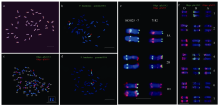
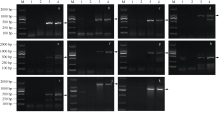
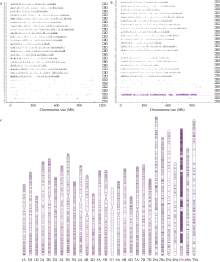
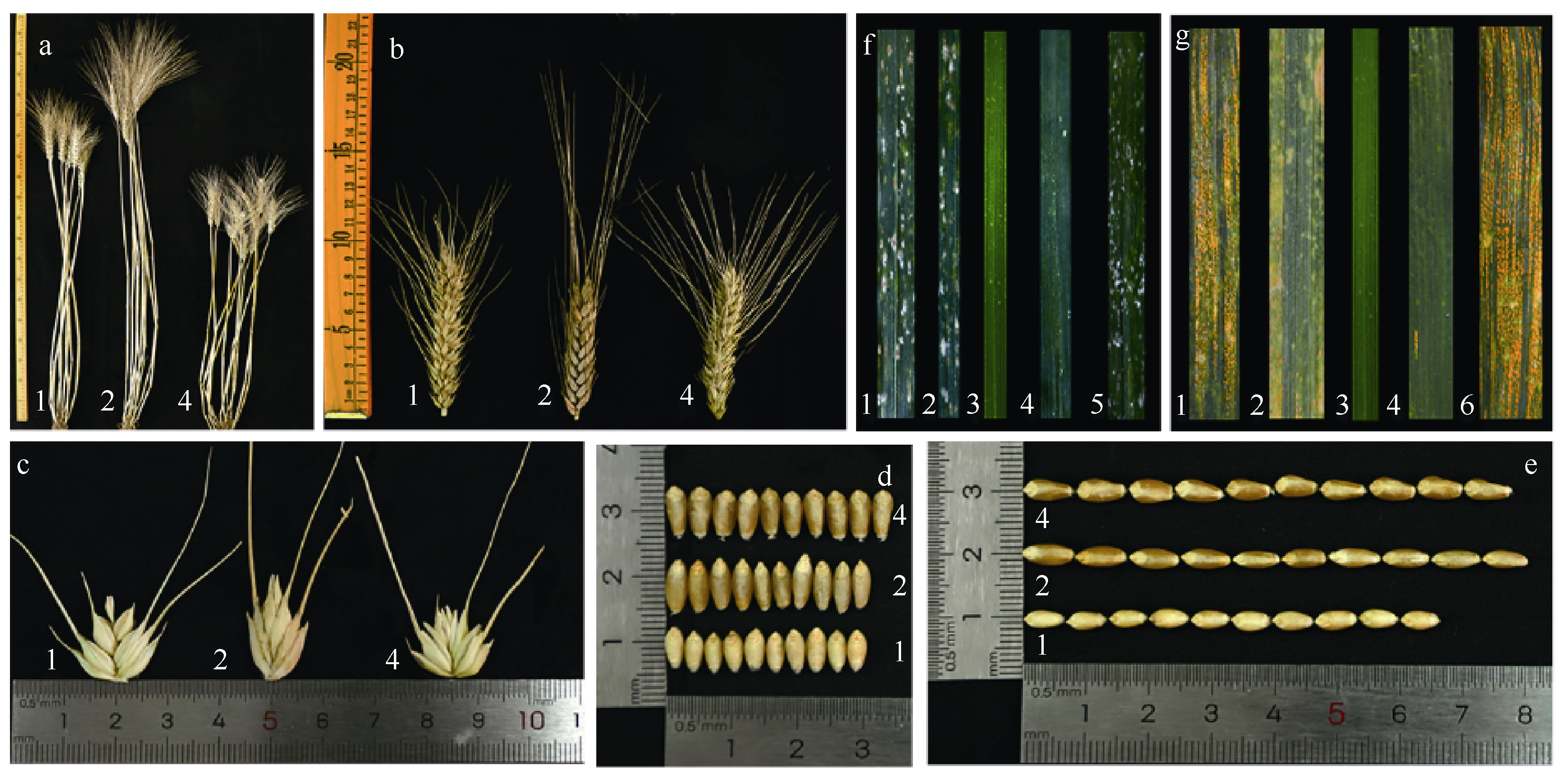
华山新麦草(Psathyrostachys huashanica Keng; 2n = 2x = 14, NsNs)作为小麦三级基因库的重要野生资源, 对白粉病和条锈病等生物胁迫表现出明显抗性, 在小麦遗传改良中具有重要应用价值。本研究在小麦-华山新麦草七倍体材料H8911与硬粒小麦D4286的杂交后代中筛选获得兼抗小麦白粉病和条锈病的衍生系16DH25-7。为解析该材料的遗传特性, 运用细胞遗传学分析、荧光原位杂交(FISH)、液相芯片技术及分子标记方法, 对其染色体组成进行了鉴定, 并对其农艺性状与抗病表型进行了系统评价。细胞遗传学分析表明, 16DH25-7的染色体数目为2n = 42。FISH检测显示, 该材料携带2条华山新麦草Ns染色体, 同时缺失2条小麦5D染色体。分子标记与SNP芯片联合分析证实, 缺失的5D染色体被华山新麦草5Ns染色体替代, 表明16DH25-7为小麦-华山新麦草5Ns (5D)二体异代换系。农艺性状调查表明, 16DH25-7表现出株高降低、分蘖数增多等优良特性; 抗病性鉴定显示其高抗小麦条锈病和白粉病。16DH25-7作为优异抗病种质资源, 为小麦抗病育种及遗传改良提供了新的候选种质。
| [1] | 唐秀丽.气候变化对我国小麦白粉病流行的影响. 中国农业大学博士学位论文,北京, 2017. |
| Tang X L.Impacts of Climate Change on Epidemic of Wheat Powdery Mildew in China. PhD Dissertation of China Agricultural University,Beijing, China, 2017 (in Chinese with English abstract). | |
| [2] | Bhavani S, Singh P K, Qureshi N, et al. Globally important wheat diseases:status, challenges, breeding and genomic tools to enhance resistance durability. Genomic Designing for Biotic Stress Resistant Cereal Crops. Switzerland: Springer International Publishing, 2021. pp 59-128. |
| [3] |
康振生, 王晓杰, 赵杰, 等. 小麦条锈菌致病性及其变异研究进展. 中国农业科学, 2015, 48: 3439-3453.
doi: 10.3864/j.issn.0578-1752.2015.17.011 |
| Kang Z S, Wang X J, Zhao J, et al. Advances in research of pathogenicity and virulence variation of the wheat stripe rust Fungus Puccinia striiformis f. sp. tritici. Sci Agric Sin, 2015, 48: 3439-3453 (in Chinese with English abstract). | |
| [4] | 曹世勤, 黄瑾, 孙振宇, 等.2007-2015年小麦品种(系)抗白粉病性鉴定及评价. 江苏农业科学, 2018, 46(8): 89-92 |
| Cao S Q, Huang J, Sun Z Y, et al. Identification and evaluation of powdery mildew resistance in wheat varieties (lines) from 2007 to 2015. Jiangsu Agric Sci, 2018, 46(8): 89-92 (in Chinese with English abstract). | |
| [5] |
陈万权, 康振生, 马占鸿, 等. 中国小麦条锈病综合治理理论与实践. 中国农业科学, 2013, 46: 4254-4262.
doi: 10.3864/j.issn.0578-1752.2013.20.008 |
| Chen W Q, Kang Z S, Ma Z H, et al. Integrated management of wheat stripe rust caused by Puccinia striiformis f. sp. tritici in China. Sci Agric Sin, 2013, 46: 4254-4262 (in Chinese with English abstract). | |
| [6] | 李滨, 李振声. 中国小麦远缘杂交育种奠基人. 麦类作物学报, 2022, 42: 518-649. |
| Li B, Li Z S. Founders of distant hybridization breeding in Chinese wheat. J Triticeae Crops, 2022, 42: 518-649 (in Chinese with English abstract). | |
| [7] | 李振声. 我国小麦育种的回顾与展望. 中国农业科技导报, 2010, 12(2): 1-4. |
| Li Z S. Retrospect and prospect of wheat breeding in China. J Agric Sci Technol, 2010, 12(2): 1-4 (in Chinese with English abstract). | |
| [8] | 董玉琛. 小麦的近缘植物. 作物品种资源, 1982(1): 18-26. |
| Dong Y C. Relatives of wheat. Crop Germplasm Resour, 1982(1): 18-26 (in Chinese with English abstract). | |
| [9] | 陈漱阳, 张安静, 傅杰. 普通小麦与华山新麦草的杂交. 遗传学报, 1991, 18: 508-512. |
| Chen S Y, Zhang A J, Fu J. Hybridization between common wheat and Psathyrostachys huashanica. Acta Genet Sin, 1991, 18: 508-512 (in Chinese with English abstract). | |
| [10] | 冯艳, 任淑敏, 庞玉辉, 等. 小麦-华山新麦草染色体导入系研究进展. 农业生物技术学报, 2025, 33: 1611-1625. |
| Feng Y, Ren S M, Pang Y H, et al. Research progress of wheat-Psathyrostachys huashanica chromosome introgression line. J Agric Biotechnol, 2025, 33: 1611-1625 (in Chinese with English abstract). | |
| [11] |
Bai S S, Zhang H B, Han J, et al. Identification of genetic locus with resistance to take-all in the wheat-Psathyrostachys huashanica Keng introgression line H148. J Integr Agric, 2021, 20: 3101-3113.
doi: 10.1016/S2095-3119(20)63340-8 |
| [12] |
Li J C, Li J J, Cheng X N, et al. Molecular cytogenetic and agronomic characterization of the similarities and differences between wheat-Leymus mollis trin. and wheat-Psathyrostachys huashanica Keng 3Ns (3D) substitution lines. Front Plant Sci, 2021, 12: 644896.
doi: 10.3389/fpls.2021.644896 |
| [13] | 张德时, 王斯文, 王长有, 等. 小麦-华山新麦草异附加系的细胞遗传学和分子标记辅助鉴定. 麦类作物学报, 2020, 40: 12-20. |
| Zhang D S, Wang S W, Wang C Y, et al. cytogenetics and marker assisted identification of wheat-Psathyrostachys huashanica alien addition lines. J Triticeae Crops, 2020, 40: 12-20 (in Chinese with English abstract). | |
| [14] |
Han F P, Lamb J C, Birchler J A. High frequency of centromere inactivation resulting in stable dicentric chromosomes of maize. Proc Natl Acad Sci USA, 2006, 103: 3238-3243.
doi: 10.1073/pnas.0509650103 pmid: 16492777 |
| [15] |
Tang Z X, Yang Z J, Fu S L. Oligonucleotides replacing the roles of repetitive sequences pAs1, pSc119.2, pTa-535, pTa71, CCS1, and pAWRC.1 for FISH analysis. J Appl Genet, 2014, 55: 313-318.
doi: 10.1007/s13353-014-0215-z pmid: 24782110 |
| [16] |
Feng X B, Du X, Wang S W, et al. Identification and DNA marker development for a wheat-Leymus mollis 2Ns (2D) disomic chromosome substitution. Int J Mol Sci, 2022, 23: 2676.
doi: 10.3390/ijms23052676 |
| [17] |
Tiwari V K, Wang S C, Sehgal S, et al. SNP discovery for mapping alien introgressions in wheat. BMC Genom, 2014, 15: 273.
doi: 10.1186/1471-2164-15-273 |
| [18] |
Liu L Q, Luo Q L, Teng W, et al. Development of Thinopyrum ponticum-specific molecular markers and FISH probes based on SLAF-seq technology. Planta, 2018, 247: 1099-1108.
doi: 10.1007/s00425-018-2845-6 |
| [19] |
Tan B W, Zhao L, Li L Y, et al. Identification of a wheat-Psathyrostachys huashanica 7Ns ditelosomic addition line conferring early maturation by cytological analysis and newly developed molecular and FISH markers. Front Plant Sci, 2021, 12: 784001.
doi: 10.3389/fpls.2021.784001 |
| [20] |
Guo Z F, Wang H W, Tao J J, et al. Development of multiple SNP marker panels affordable to breeders through genotyping by target sequencing (GBTS) in maize. Mol Breed, 2019, 39: 37.
doi: 10.1007/s11032-019-0940-4 |
| [21] |
Guo Z F, Yang Q N, Huang F F, et al. Development of high-resolution multiple-SNP arrays for genetic analyses and molecular breeding through genotyping by target sequencing and liquid chip. Plant Commun, 2021, 2: 100230.
doi: 10.1016/j.xplc.2021.100230 |
| [22] |
Li H. Exploring single-sample SNP and INDEL calling with whole-genome de novo assembly. Bioinformatics, 2012, 28: 1838-1844.
doi: 10.1093/bioinformatics/bts280 |
| [23] |
Li H, Durbin R. Fast and accurate long-read alignment with Burrows-Wheeler transform. Bioinformatics, 2010, 26: 589-595.
doi: 10.1093/bioinformatics/btp698 pmid: 20080505 |
| [24] | Kang Z S, Huang L L, Buchenauer H. Ultrastructural changes and localization of lignin and callose in compatible and incompatible interactions between wheat and Puccinia striiformis. J Plant Diseases Protect, 2002, 13: 25-37. |
| [25] | 侯富, 金银禹, 张婷, 等. 一个成株抗白粉病小麦-簇毛麦T2DS•2V#6L易位系的选育. 麦类作物学报, 2024, 44: 827-834. |
| Hou F, Jin Y Y, Zhang T, et al. Development of a wheat- Dasypyrum villosum T2DS•2V#6L translocation line with adult- plant resistance to powdery mildew. J Triticeae Crops, 2024, 44: 827-834 (in Chinese with English abstract). | |
| [26] |
Qu X J, Zhang D S, Zhang X Y, et al. Cytogenetic and marker assisted identification of a wheat-Psathyrostachys huashanica Keng f. ex P.C. Kuo alien substitution line conferring processing quality and resistance to stripe rust. Genet Resour Crop Evol, 2022, 69: 687-698.
doi: 10.1007/s10722-021-01253-x |
| [27] |
王秀娟, 陈新宏, 庞玉辉, 等. 小麦-华山新麦草异代换系DH2322的分子细胞遗传学鉴定. 作物学报, 2015, 41: 207-213.
doi: 10.3724/SP.J.1006.2015.00207 |
|
Wang X J, Chen X H, Pang Y H, et al. Molecular cytogenetics identification of wheat-Psathyrostachys huashanica substitution line DH2322. Acta Agron Sin, 2015, 41: 207c213 (in Chinese with English abstract).
doi: 10.3724/SP.J.1006.2015.00207 |
|
| [28] |
Li J C, Yao X N, Yang Z J, et al. Molecular cytogenetic characterization of a novel wheat-Psathyrostachys huashanica Keng 5Ns (5D) disomic substitution line with stripe rust resistance. Mol Breed, 2019, 39: 109.
doi: 10.1007/s11032-019-1014-3 |
| [29] |
Metzlaff M, Troebner W, Baldauf F, et al. Wheat specific repetitive DNA sequences: construction and characterization of four different genomic clones. Theor Appl Genet, 1986, 72: 207-210.
doi: 10.1007/BF00266993 pmid: 24247835 |
| [30] |
Patino T. Imaging DNA origami by fluorescence in situ hybridization. Nat Nanotechnol, 2024, 19: 1-2.
doi: 10.1038/s41565-023-01556-3 pmid: 38135717 |
| [31] |
Li J C, Zhao L, Cheng X N, et al. Molecular cytogenetic characterization of a novel wheat-Psathyrostachys huashanica Keng T3DS-5NsL•5NsS and T5DL-3DS•3DL dual translocation line with powdery mildew resistance. BMC Plant Biol, 2020, 20: 163.
doi: 10.1186/s12870-020-02366-8 |
| [32] |
Pang J Y, Huang C X, Wang Y S, et al. Molecular cytological analysis and specific marker development in wheat-Psathyrostachys huashanica Keng 3Ns additional line with elongated glume. Int J Mol Sci, 2023, 24: 6726.
doi: 10.3390/ijms24076726 |
| [33] | 谢中艺, 党江波, 温国, 等. 植物外源基因组成分鉴定方法的研究进展. 生物工程学报, 2021, 37: 2703-2718. |
| Xie Z Y, Dang J B, Wen G, et al. Advances in identification methods of alien genomic components in plants. Chin J Biotechnol, 2021, 37: 2703-2718 (in Chinese with English abstract). | |
| [34] |
Yang X F, Wang C Y, Chen C H, et al. Development and characterization of a wheat-Leymus mollis Lm#7Ns disomic addition line with resistance to stripe rust. Cereal Res Commun, 2020, 48: 467-476.
doi: 10.1007/s42976-020-00058-5 |
| [35] | 李欢, 张文洋, 田志强, 等. 高通量分子标记检测方法的研究进展. 玉米科学, 2022, 30(3): 1-9. |
| Li H, Zhang W Y, Tian Z Q, et al. Research progress of high-throughput molecular marker detection methods. J Maize Sci, 2022, 30(3): 1-9 (in Chinese with English abstract). | |
| [36] |
李洪杰, 王晓鸣, 宋凤景, 等. 中国小麦品种对白粉病的抗性反应与抗病基因检测. 作物学报, 2011, 37: 943-954.
doi: 10.3724/SP.J.1006.2011.00943 |
| Li H J, Wang X M, Song F J, et al. Response to powdery mildew and detection of resistance genes in wheat cultivars from China. Acta Agron Sin, 2011, 37: 943-954 (in Chinese with English abstract). | |
| [37] |
McDonald B A, Linde C. Pathogen population genetics, evolutionary potential, and durable resistance. Annu Rev Phytopathol, 2002, 40: 349-379.
pmid: 12147764 |
| [38] | 贾子苗, 邱玉亮, 林志珊, 等. 利用近缘种属优良基因改良小麦研究进展. 作物杂志, 2021(2): 1-14. |
| Jiia Z M, Qiu Y L, Lin Z S, et al. Research progress on wheat improvement by using desirable genes from its relative species. Crops, 2021(2): 1-14 (in Chinese with English abstract). | |
| [39] |
曹亚萍, 武银玉, 刘博, 等. 小麦异源易位系诱致方法及应用研究进展. 植物遗传资源学报, 2022, 23: 943-953.
doi: 10.13430/j.cnki.jpgr.20220114001 |
| Cao Y P, Wu Y Y, Liu B, et al. Progress on induction and application of wheat alien chromosome translocation lines. J Plant Genet Resour, 2022, 23: 943-953 (in Chinese with English abstract). |
| [1] | 翟胜男, 曹新有, 李豪圣, 李吉虎, 李法计, 刘金栋, 夏先春, 吕莹莹, 马瑞峰, 王颖, 耿洪伟, 刘建军. 小麦Pod-A1、Pod-D1和Pod-2D位点等位变异对籽粒过氧化物酶活性的遗传效应分析[J]. 作物学报, 2026, 52(6): 1593-1603. |
| [2] | 习千辉, 徐梓瑗, 刘梦梦, 王宏艺, 郎凯琳, 井震海, 陈锋, 赵磊. 小麦籽粒铜含量的全基因组关联分析及候选基因预测[J]. 作物学报, 2026, 52(6): 1604-1617. |
| [3] | 毛嘉琦, 黄朋雨, 赵佳佳, 郑兴卫, 武棒棒, 郝宇琼, 屈非, 刘成, 马朋涛, 郑军. 山西小麦品种白粉病抗性评价及抗病基因分子检测[J]. 作物学报, 2026, 52(6): 1669-1681. |
| [4] | 胡川, 赵凯男, 黄修利, 吴金芝, 任开明, 王贺正, 付国占, 黄明, 李友军. 一次灌溉下耕作方式和氮肥用量对旱地小麦产量和品质的影响[J]. 作物学报, 2026, 52(6): 1830-1846. |
| [5] | 陈雪燕, 何华川, 李政嘉, 董新盼, 李藕琪, 刘小云, 李丹萍, 陈志伟, 刘国霞, 吕胜源, 吴印莹, 赵振东, 曹新有, 万何平. 水培盐碱复合胁迫下‘济麦60’苗期根系有机酸分泌动态变化及其转录调控机制[J]. 作物学报, 2026, 52(6): 1859-1875. |
| [6] | 彭佳泺, 李颖, 李丹丹, 杨军宁, 郭学峰, 张文姣, 俞晓雪, 周亚荣, 王振玉, 王彩香, 马雄风, 宿俊吉. 陆地棉I类LBD家族成员鉴定及GhLBD6调控开花期的功能和单倍型分析[J]. 作物学报, 2026, 52(6): 1682-1697. |
| [7] | 高沛阳, 李瑾璇, 董宇奎, 石玉, 张振, 张永丽. 测墒补灌下小麦分蘖发生和成穗对施氮量的响应[J]. 作物学报, 2026, 52(6): 1847-1858. |
| [8] | 张献丰, 郭利建, 李康春, 孔斌雪, 刘玉芳, 车卓, 杨德龙. 小麦ABHD6基因家族鉴定与粒重功能标记开发[J]. 作物学报, 2026, 52(6): 1711-1727. |
| [9] | 王壮壮, 武紫君, 张永新, 张芯源, 袁丽雪, 陈如雪, 刘世举, 段剑钊, 冯伟, 王同朝, 王永华. 豫东南黏壤潮土区水氮优化协同提高冬小麦产量和氮素利用效率[J]. 作物学报, 2026, 52(5): 1501-1521. |
| [10] | 何万龙, 耿洪伟, 张飞飞, 米克热阿依·阿巴白克热, 罗紫洋, 李鹏程, 周钊宇, 程宇坤. 基于深度学习的小麦重要病害图像识别系统的研究[J]. 作物学报, 2026, 52(5): 1401-1417. |
| [11] | 张振, 冯连杰, 石玉, 于振文, 张永丽. 节水补灌下不同穗型小麦产量形成差异研究[J]. 作物学报, 2026, 52(5): 1522-1535. |
| [12] | 侯思宇, 王国璀, 韦金贵, 谢玮欣, 殷文, 樊志龙, 柴强, 胡发龙. 绿肥配施化学氮肥对西北干旱灌区小麦干物质积累及产量形成的影响[J]. 作物学报, 2026, 52(4): 1208-1219. |
| [13] | 尚云秋, 赵竹, 陈欢, 丁永刚, 乔玉强, 李玮, 张向前, 曹承富, 杜世州. 长期定位耕作方式对雨养小麦籽粒灌浆和产量形成的影响[J]. 作物学报, 2026, 52(4): 1236-1250. |
| [14] | 乔宇馨, 李程越, 康晓玉, 张鑫琪, 贾绍辉, 刘倩, 曹亚丽, 史鑫蕊, 郝兴宇, 李萍. 基于APSIM模型的长期免耕秸秆覆盖对旱地小麦增产效应研究[J]. 作物学报, 2026, 52(4): 1181-1192. |
| [15] | 王楚锐, 李开祥, 赵志, 肖麓, 唐国永, 赵志刚, 徐亮, 杜德志, 柳海东. 甘蓝型春油菜早花基因BnCRY2功能位点KASP标记的开发及应用[J]. 作物学报, 2026, 52(3): 708-721. |
|
||