欢迎访问作物学报,今天是
作物学报 ›› 2025, Vol. 51 ›› Issue (10): 2738-2749.doi: 10.3724/SP.J.1006.2025.55025
李威1( ), 朱玉鹏1(), 孙宾成2, 温有祥3, 吴宗声1, 徐一帆1, 宋雯雯1,*(), 徐彩龙1,*(), 吴存祥1,*()
LI Wei1(), ZHU Yu-Peng1(), SUN Bin-Cheng2, WEN You-Xiang3, WU Zong-Sheng1, XU Yi-Fan1, SONG Wen-Wen1,*(), XU Cai-Long1,*(), WU Cun-Xiang1,*()
摘要:
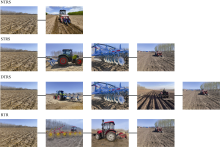
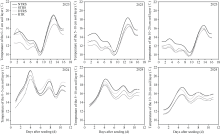
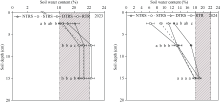
单产低、成本高、比较效益差是造成我国大豆产能不足的重要原因。东北地区是我国大豆生产的重要产区, 面积全国占比在60%以上, 优化该地区生产模式对于提高我国大豆产量和效益具有重要意义。本研究基于耐草甘膦转基因大豆品种, 设置了免耕秸秆还田(NTRS)、隔年深松秸秆还田(STRS)、垄作秸秆还田(DTRS)和旋耕秸秆不还田(RTR) 4个处理, 探究不同生产模式对耐草甘膦转基因大豆产量形成、杂草防控和经济效益的影响。结果表明, NTRS处理会提高大豆出苗期的土壤温度和土壤含水量, 适度增加耕层的土壤紧实度, 改善播种期间土壤墒情, 提高大豆出苗率和出苗速度, 相较于STRS、DTRS和RTR 3个处理, 出苗率分别提高了3.63%、2.72%和4.66%; NTRS处理显著降低了杂草数量和杂草优势度指数, 提高了杂草多样性指数, 杂草发生时间主要集中在大豆V2—V3期, 便于除草剂喷施和杂草防控, 显著降低了大豆R8期杂草干物重; 相较于RTR处理, NTRS、STRS和DTRS 3个处理降低了大豆底荚高度, 其中NTRS处理可显著增加大豆单株荚数和单株粒数, 提高大豆产量, 达到3603 kg hm-2, 有效提升5.12%~9.22%; 在经济效益方面, 通过优化生产模式, NTRS处理可以有效减少耕种环节, 降低人力投入, 生产成本投入明显减少, 实现经济效益的大幅提升。综上, 免耕平作栽培技术结合转基因大豆品种具有较好的增温保墒效果, 会显著提高大豆出苗率, 杂草易防控, 减少投入成本, 提高大豆产量, 促进大豆轻简化生产, 这种轻简化生产是实现东北地区大豆种植节本增效的重要途径之一。
| [1] | Kong W S, Wei M, Khan N, Liang J, Han D Q, Zhang H J. Assessing sustainable future of import-independent domestic soybean production in China: policy implications and projections for 2030. Front Sustain Food Syst, 2024, 8: 1387609. |
| [2] | Li B G, Liu Z, Huang F, Yang X G, Liu Z J, Wan W, Wang J K, Xu Y D, Li Z Z, Ren T S. Ensuring national food security by strengthening high-productivity black soil granary in Northeast China. BCAS, 2021, 36: 1184-1193. |
| [3] |
Zhao J, Li N, Yang X G, Sun Z X. For the protection of black soils. Nat Food, 2025, 6: 119-120.
doi: 10.1038/s43016-025-01126-x pmid: 39948395 |
| [4] | Triplett G B Jr, Dick W A. No-tillage crop production: a revolution in agriculture! Agron J, 2008, 100: 153-165. |
| [5] | Six J, Bossuyt H, Degryze S, Denef K. A history of research on the link between (micro) aggregates, soil biota, and soil organic matter dynamics. Soil Tillage Res, 2004, 79: 7-31. |
| [6] | Hansen N C, Allen B L, Baumhardt R L, Lyon D J. Research achievements and adoption of no-till, dryland cropping in the semi-arid U.S. Great Plains. Field Crops Res, 2012, 132: 196-203. |
| [7] | de Freitas Seben G Jr, Corá J E, Lal R. The effects of land use and soil management on the physical properties of an Oxisol in Southeast Brazil. Rev Bras Ciênc Solo, 2014, 38: 1245-1255. |
| [8] | Jacobs A A, Evans R S, Allison J K, Garner E R, Kingery W L, McCulley R L. Cover crops and no-tillage reduce crop production costs and soil loss, compensating for lack of short-term soil quality improvement in a maize and soybean production system. Soil Tillage Res, 2022, 218: 105310. |
| [9] | Derpsch R, Friedrich T, Kassam A, Li H W. Current status of adoption of no-till farming in the world and some of its main benefits. Int J Agric Biol Eng, 2010, 3: 1-25. |
| [10] | Reddy C. A study on crop weed competition in field crops. J Pharm Phytochem, 2018, 7: 3235-3240. |
| [11] |
Duke S O, Powles S B. Glyphosate: a once-in-a-century herbicide. Pest Manag Sci, 2008, 64: 319-325.
doi: 10.1002/ps.1518 pmid: 18273882 |
| [12] | Hungria M, Mendes I C, Nakatani A S, dos Reis-Junior F B, Morais J Z, de Oliveira M C N, Fernandes M F. Effects of the glyphosate-resistance gene and herbicides on soybean: field trials monitoring biological nitrogen fixation and yield. Field Crops Res, 2014, 158: 43-54. |
| [13] | Sun M, Li S Z, Yang W Z, Zhao B W, Wang Y H, Liu X Q. Commercial genetically modified corn and soybean are poised following pilot planting in China. Mol Plant, 2024, 17: 519-521. |
| [14] | Calado J M G, Basch G, de Carvalho M. Weed management in no-till winter wheat (Triticum aestivum L.). Crop Prot, 2010, 29: 1-6. |
| [15] | Clements D R, Benoit D L, Murphy S D, Swanton C J. Tillage effects on weed seed return and seedbank composition. Weed Sci, 1996, 44: 314-322. |
| [16] |
Ranaldo M, Carlesi S, Costanzo A, Bàrberi P. Functional diversity of cover crop mixtures enhances biomass yield and weed suppression in a Mediterranean agroecosystem. Weed Res, 2020, 60: 96-108.
doi: 10.1111/wre.12388 |
| [17] | Colbach N, Busset H, Roger-Estrade J, Caneill J. Predictive modelling of weed seed movement in response to superficial tillage tools. Soil Tillage Res, 2014, 138: 1-8. |
| [18] | Zamljen S A, Rovanšek A, Leskovšek R. Weed seed bank response during the early conversion period to less intensive tillage systems. Soil Tillage Res, 2024, 242: 106164. |
| [19] | Bomfim N C P, Silva M S, Camargos L S, Martins A R. Ultrastructural and histochemical changes in glyphosate-tolerant soybean leaves exposed to glyphosate. J Agric Sci, 2019, 11: 243. |
| [20] | Acharya B S, Dodla S, Gaston L A, Darapuneni M, Wang J J, Sepat S, Bohara H. Winter cover crops effect on soil moisture and soybean growth and yield under different tillage systems. Soil Tillage Res, 2019, 195: 104430. |
| [21] | Wang H F, Wang L, Ren T S. Long-term no tillage alleviates subsoil compaction and drought-induced mechanical impedance. Int Agrophys, 2022, 36: 297-308. |
| [22] | Cui X J, Wang Z W, Zhuang T F, Sun J Q, Song Y H. Improving wheat seedling quality through deep ploughing and soil compaction at sowing in lime concretion black soil. PLoS One, 2023, 18: e0288459. |
| [23] | De Vita P, Di Paolo E, Fecondo G, Di Fonzo N, Pisante M. No-tillage and conventional tillage effects on durum wheat yield, grain quality and soil moisture content in Southern Italy. Soil Tillage Res, 2007, 92: 69-78. |
| [24] | Alsajri F A, Wijewardana C, Bheemanahalli R, Irby J T, Krutz J, Golden B, Reddy V R, Reddy K R. Morpho-physiological, yield, and transgenerational seed germination responses of soybean to temperature. Front Plant Sci, 2022, 13: 839270. |
| [25] | Li F J, Zhang X B, Xu D Y, Ma Q, Le T, Zhu M, Li C Y, Zhu X K, Guo W S, Ding J F. No-tillage promotes wheat seedling growth and grain yield compared with plow-rotary tillage in a rice-wheat rotation in the high rainfall region in China. Agronomy, 2022, 12: 865. |
| [26] | dos Santos H P, Fontaneli R S, Silva S R, Santi A, Verdi A C, Vargas A M. Long-term effects of four tillage systems and weather conditions on soybean yield and agronomic characteristics in Brazil. Crop Sci, 2015, 9: 445-452. |
| [27] | Jamil C, de Oliveira Rubem S E R, Eliezer A G, Denis F B, Guilherme B P B, Fernanda W, Hudson K T. Prevention of yield losses caused by glyphosate in soybeans with biostimulant. Afr J Agric Res, 2016, 11: 1601-1607. |
| [28] | Panneerselvam S, Lourduraj A C. Weed spectrum and effect of crop weed competition in soybean [Glycine max (L.) Merrill]-a review. Agric Rev, 2000, 21: 121-124. |
| [29] | Nail E, Young D, Schillinger W. Diesel and glyphosate price changes benefit the economics of conservation tillage versus traditional tillage. Soil Tillage Res, 2007, 94: 321-327. |
| [30] | Calcante A, Oberti R. A technical-economic comparison between conventional tillage and conservative techniques in paddy-rice production practice in northern Italy. Agronomy, 2019, 9: 886. |
| [31] | Vincent-Caboud L, Peigné J, Casagrande M, Silva E. Overview of organic cover crop-based No-tillage technique in Europe: farmers' practices and research challenges. Agriculture, 2017, 7: 42. |
| [1] | 胡川, 赵凯男, 黄修利, 吴金芝, 任开明, 王贺正, 付国占, 黄明, 李友军. 一次灌溉下耕作方式和氮肥用量对旱地小麦产量和品质的影响[J]. 作物学报, 2026, 52(6): 1830-1846. |
| [2] | 马胜乾, 王志平, 陈浩天, 窦淑贤, 张燕, 邓艾兴, 张卫建, 原向阳, 宋振伟. 秸秆还田下耕作方式与氮肥施用量对东北玉米产量及土壤团聚体的影响[J]. 作物学报, 2026, 52(6): 1802-1816. |
| [3] | 张思思, 赵向辉, 周洋, 姚云凤, 朱荣昱, 董元杰, 胡国庆, 徐通, 刘兆新. 冬闲期翻耕和绿肥还田对连作花生田土壤理化性质和产量的影响[J]. 作物学报, 2026, 52(5): 1472-1486. |
| [4] | 张宁宁, 滕雨菲, 任娜娜, 魏兴卓, 闫书豪, 樊可心, 王永宏, 陈文康, 张兴华, 朱万超, 徐淑兔, 薛吉全. 201份玉米自交系抗旱表型评价及可塑性分析[J]. 作物学报, 2026, 52(5): 1309-1325. |
| [5] | 王宇诚, 张露, 刘阿康, 黄见良, 彭少兵, 袁珅. 基于产量差的作物大面积单产提升策略与展望[J]. 作物学报, 2026, 52(5): 1279-1290. |
| [6] | 赵佳雪, 周龙昊, 郭岂源, 尚伦霄, 王涵, 刘志涛, 陈曦, 张晓佩, 宋宪亮, 毛丽丽. 长期秸秆还田与深松通过改善土壤环境与棉花光合特性提高滨海盐碱地棉花产量[J]. 作物学报, 2026, 52(5): 1548-1560. |
| [7] | 郭星宇, 胡丹, 林苏期, 王梦凯, 谭文峰, 黄传琴. 生物炭配施化肥提高玉米‖大豆下玉米产量和土壤生态系统多功能性[J]. 作物学报, 2026, 52(5): 1536-1547. |
| [8] | 张振, 冯连杰, 石玉, 于振文, 张永丽. 节水补灌下不同穗型小麦产量形成差异研究[J]. 作物学报, 2026, 52(5): 1522-1535. |
| [9] | 闫安, 蒋昆炜, 王蓉圆, 田林, 张璐, 王韵, 徐建龙. 水稻剑叶小维管束数基因SVN7的鉴定与克隆[J]. 作物学报, 2026, 52(5): 1364-1372. |
| [10] | 刘昕萌, 任昊, 张继波, 张吉旺, 赵斌, 任佰朝, 刘鹏, 王洪章. 茉莉酸甲酯(MeJA)缓解高温影响玉米雌穗分化的生理机制[J]. 作物学报, 2026, 52(5): 1561-1572. |
| [11] | 王壮壮, 武紫君, 张永新, 张芯源, 袁丽雪, 陈如雪, 刘世举, 段剑钊, 冯伟, 王同朝, 王永华. 豫东南黏壤潮土区水氮优化协同提高冬小麦产量和氮素利用效率[J]. 作物学报, 2026, 52(5): 1501-1521. |
| [12] | 张鸿蓉, 王菲儿, 李盼, 仇海龙, 朱静, 赵连豪, 南运有, 何蔚, 樊志龙, 胡发龙, 柴强, 殷文. 减量20%灌水与25%有机肥替代化肥提高青贮玉米产量的光合特性[J]. 作物学报, 2026, 52(5): 1487-1500. |
| [13] | 蔡宏玮, 于爱忠, 姜科强, 王鹏飞, 王玉珑, 霍建喆, 庞小能, 尹波, 尚永盼. 干旱灌区有机肥替代部分化肥促进甜玉米产量提升的关键机制[J]. 作物学报, 2026, 52(4): 1166-1180. |
| [14] | 崔雪梅, 柳妍娣, 刘景辉, 米俊珍, 武俊英, 赵宝平. 不同基因型燕麦强弱势粒生理特性与产量关系研究[J]. 作物学报, 2026, 52(4): 1220-1235. |
| [15] | 杨锐, 陈敬东, 黄郢, 张学昆, 周登文, 刘清云, 徐劲松, 谢伶俐, 许本波. 长江下游冬油菜区应对气候变化的育种和栽培策略研究[J]. 作物学报, 2026, 52(4): 1153-1165. |
|
||