欢迎访问作物学报,今天是
作物学报 ›› 2024, Vol. 50 ›› Issue (12): 3144-3154.doi: 10.3724/SP.J.1006.2024.43017
所属专题: 玉米:遗传育种·种质资源·分子遗传学
张锦辉1( ), 肖姿仪1, 李旭华3, 张明3, 贾春兰3, 潘振远2,*(), 邱法展1,*()
ZHANG Jin-Hui1(), XIAO Zi-Yi1, LI Xu-Hua3, ZHANG Ming3, JIA Chun-Lan3, PAN Zhen-Yuan2,*(), QIU Fa-Zhan1,*()
摘要:
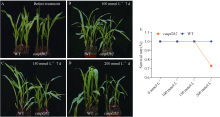
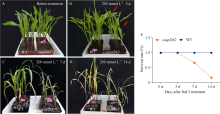
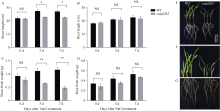
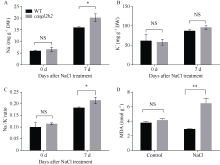
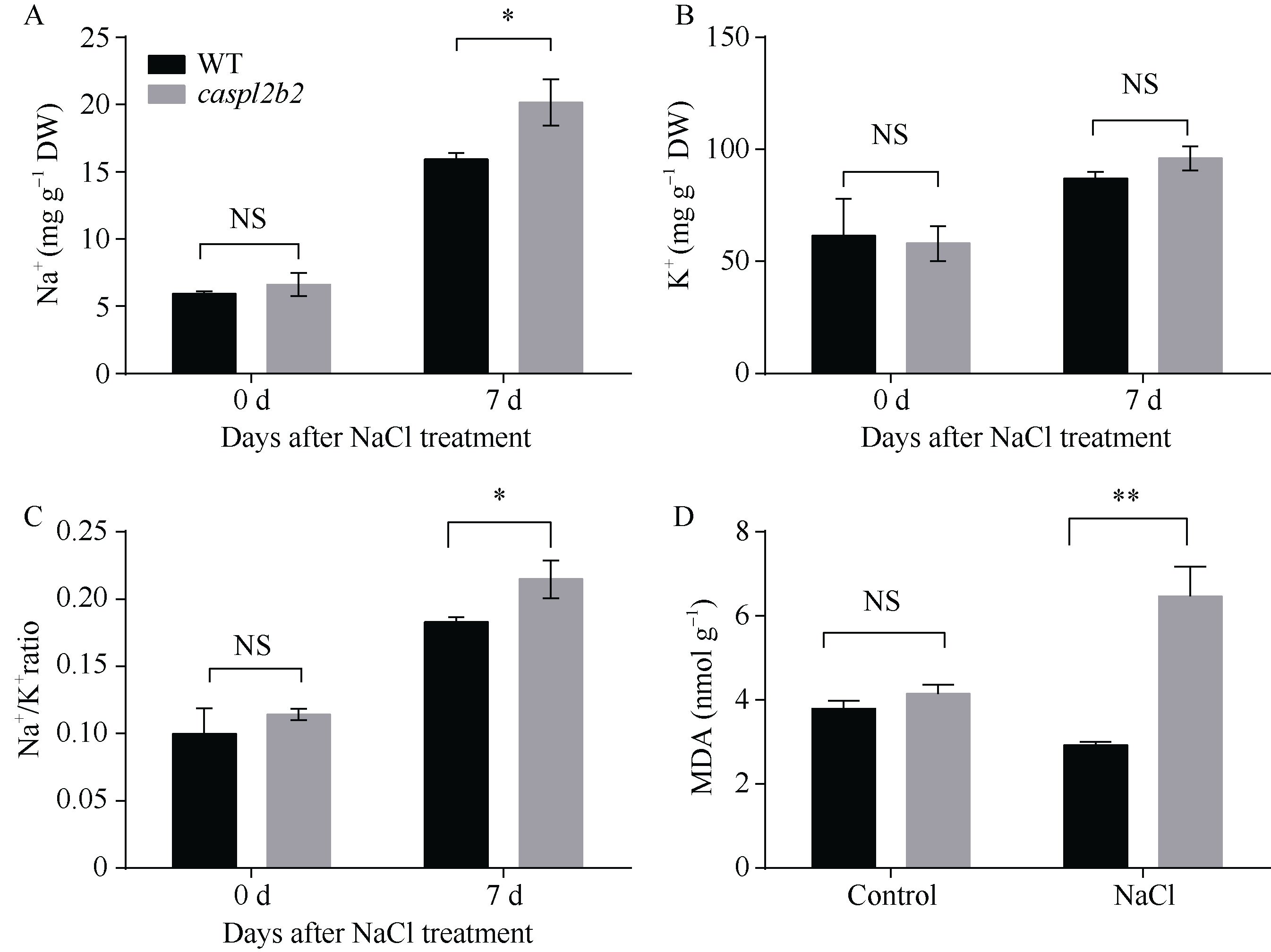
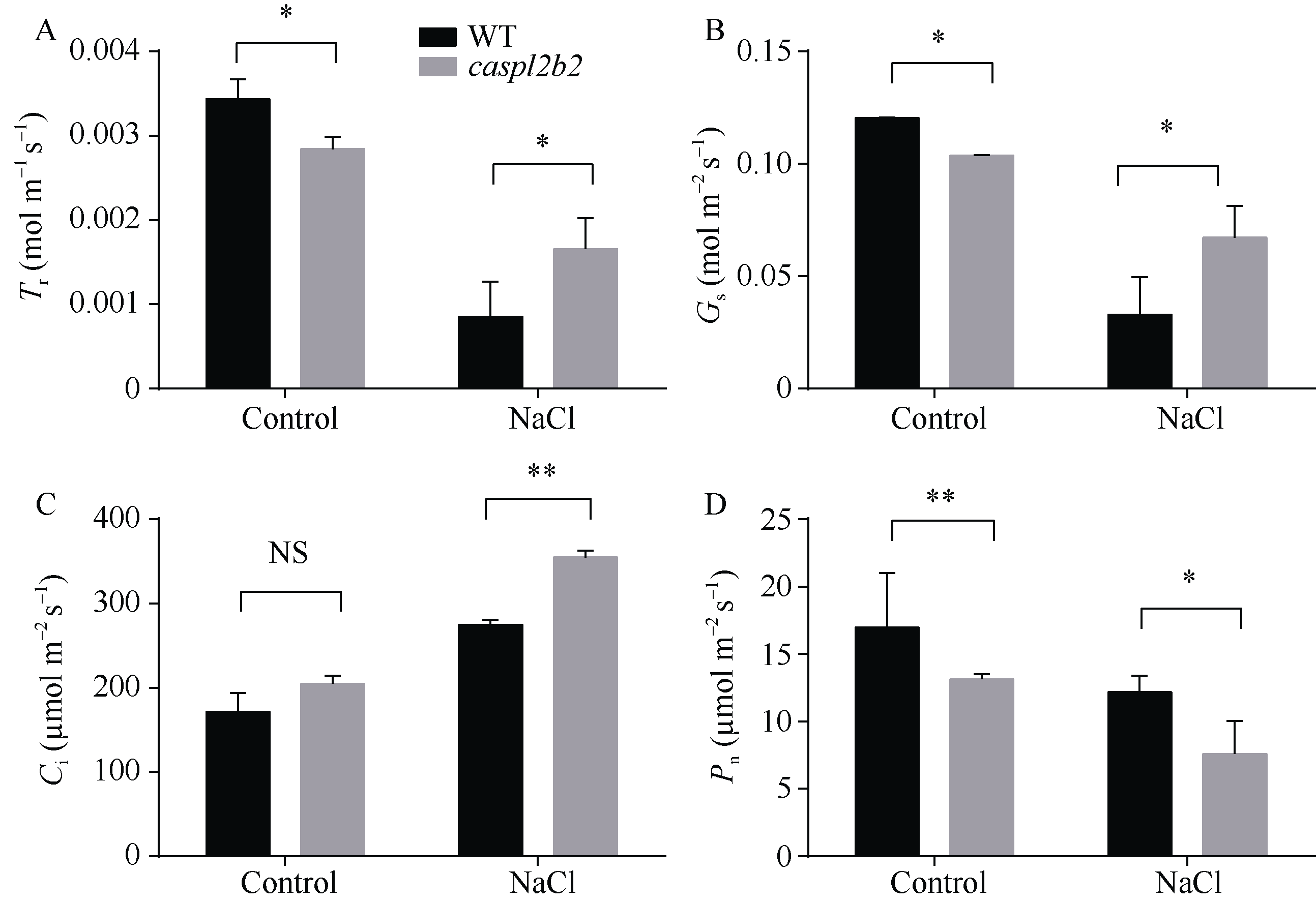
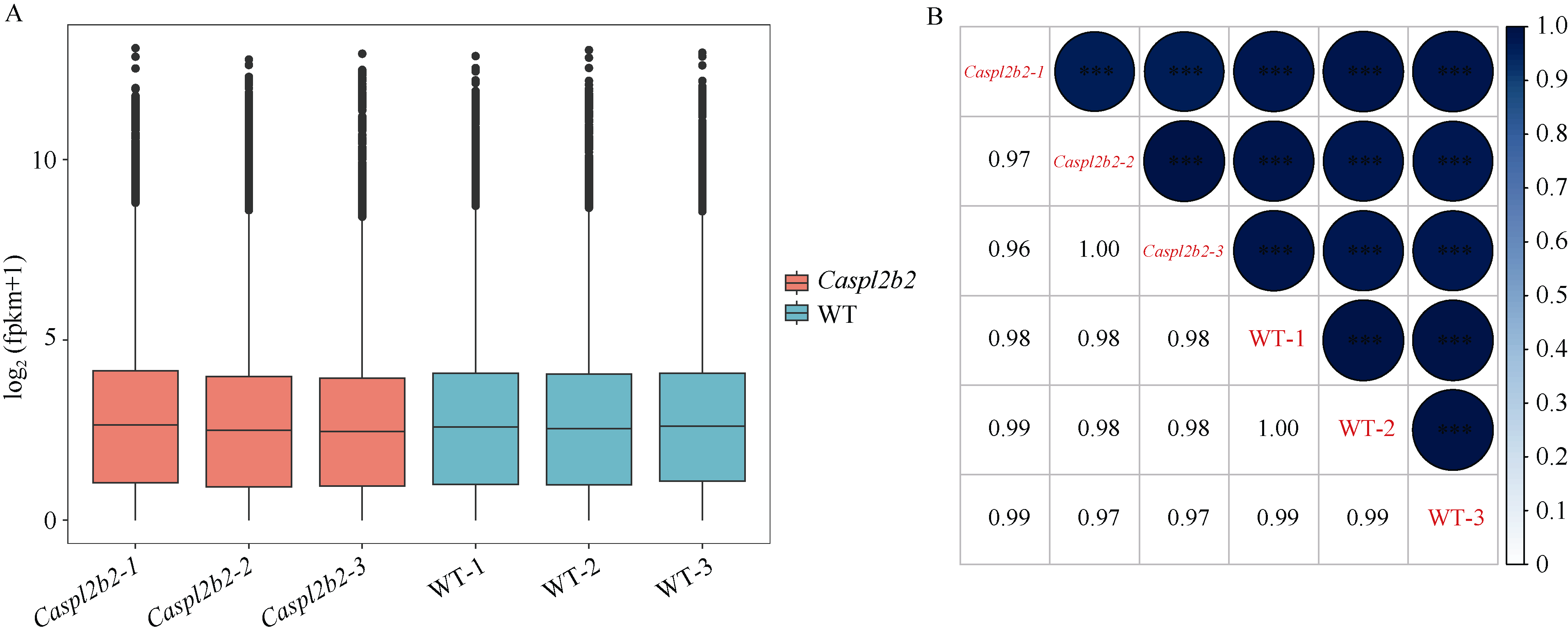
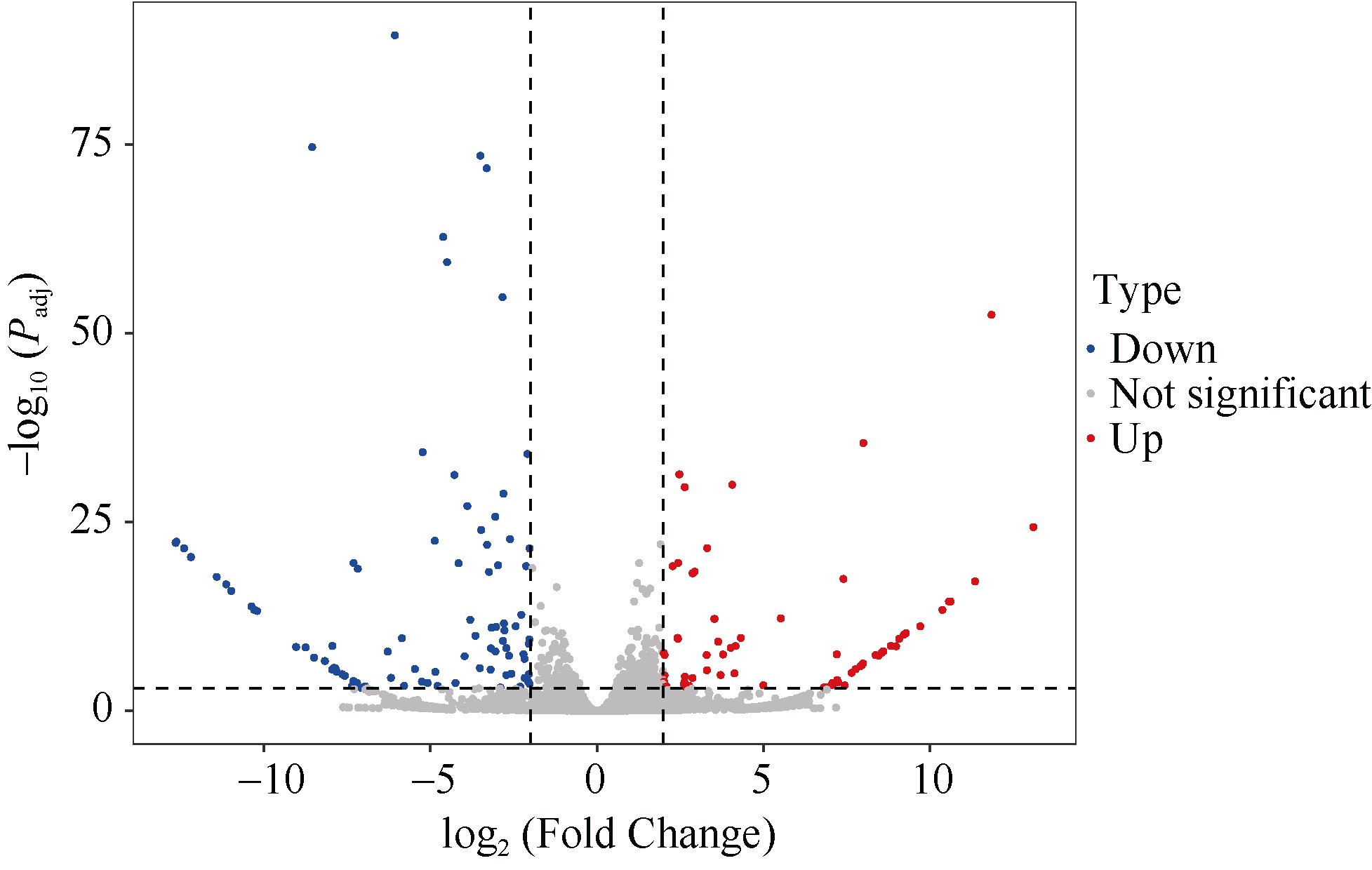
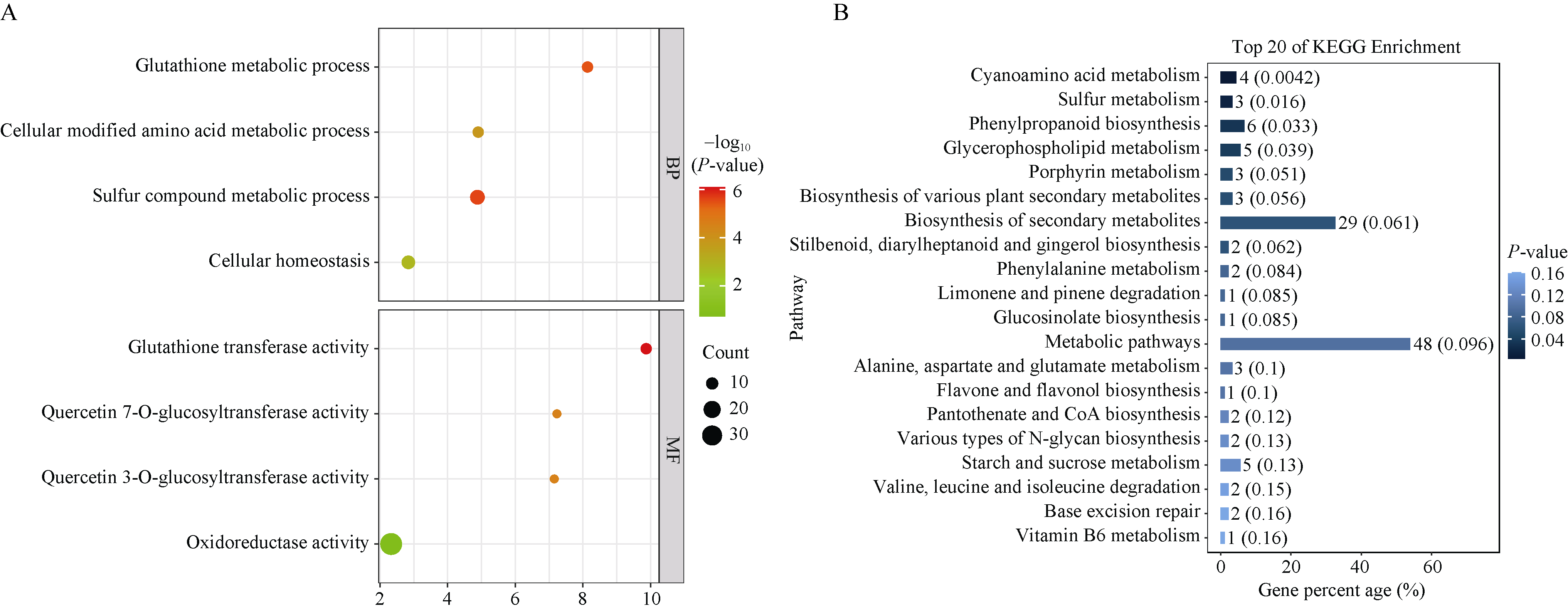
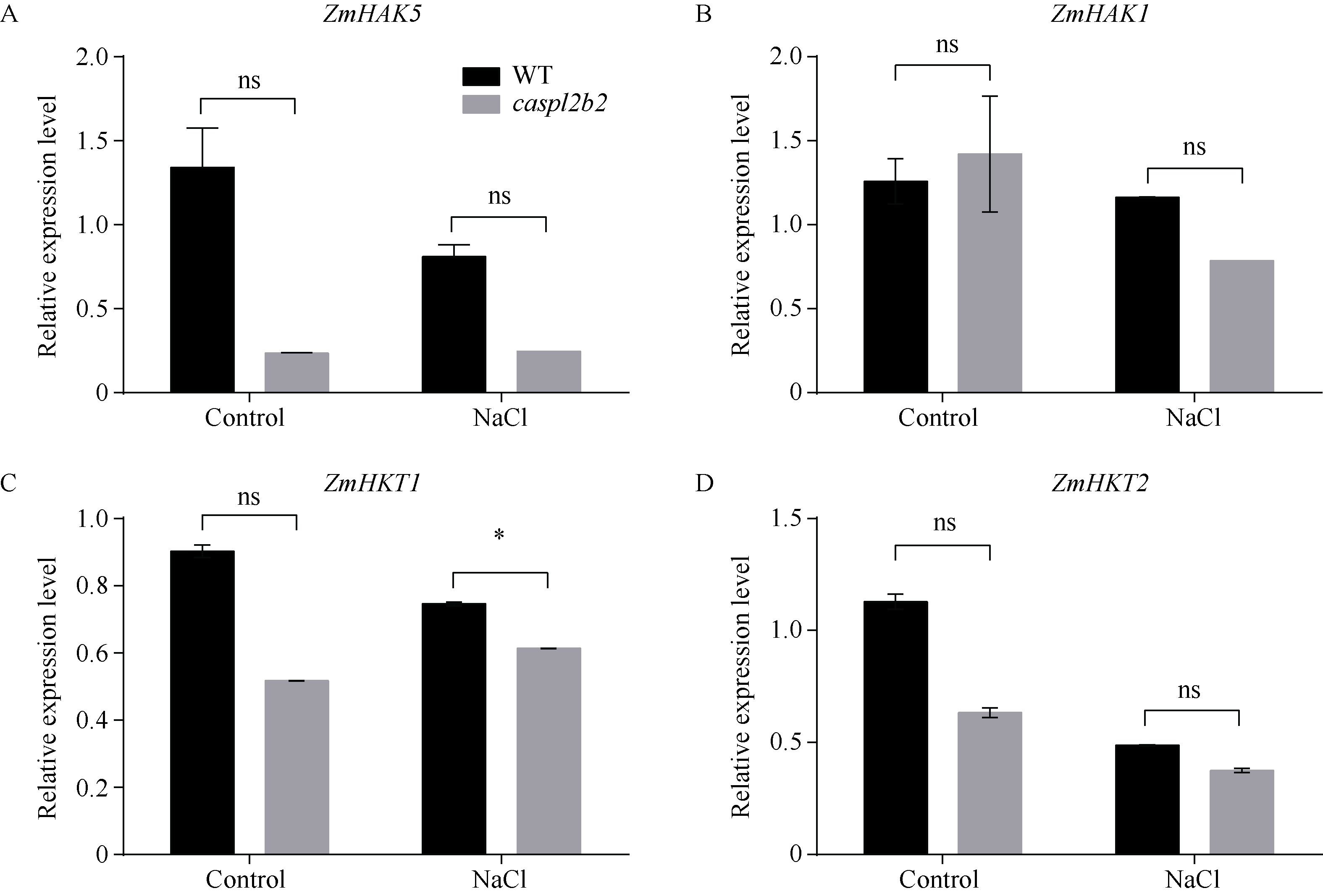
盐胁迫敏感突变体是研究作物耐盐遗传基础和分子机制的重要遗传材料。本研究以自交系LY8405和突变体caspl2b2为材料, 开展正常生长、盐胁迫条件下苗期表型鉴定和生理生化指标测定分析。结果表明,与LY8405相比, 盐胁迫下caspl2b2存活率显著降低, 地上部分生长显著受到抑制; 地上部Na+离子含量显著升高, 丙二醛(MDA)含量显著升高; 蒸腾速率、气孔导度及胞间CO2浓度显著升高, 净光合速率显著下降。为揭示其盐胁迫下表型差异的分子基础, 对LY8405和caspl2b2突变体材料在正常生长和盐胁迫条件下叶片组织进行转录组分析。结果表明,差异表达基因主要富集到谷胱甘肽转移酶活性、谷胱甘肽代谢过程、氧化还原酶活性和细胞稳态等相关途径, 其中谷胱甘肽代谢过程最为显著。本研究不仅为作物耐盐遗传基础解析提供了重要的种质资源, 也为耐盐基因的挖掘及其遗传调控网络分析奠定了基础。
| [1] |
Fedoroff N V, Battisti D S, Beachy R N, Cooper P J M, Fischhoff D A, Hodges C N, Knauf V C, Lobell D, Mazur B J, Molden D, Reynolds M P, Ronald P C, Rosegrant M W, Sanchez P A, Vonshak A, Zhu J K. Radically rethinking agriculture for the 21st century. Science, 2010, 327: 833-834.
doi: 10.1126/science.1186834 pmid: 20150494 |
| [2] | 胡一, 韩霁昌, 张扬. 盐碱地改良技术研究综述. 陕西农业科学, 2015, 61: 67-71. |
| Hu Y, Han J C, Zhang Y. Research overview of saline-alkali soil improvement techniques. Shaanxi J Agric Sci, 2015, 61: 67-71 (in Chinese). | |
| [3] |
姜佩弦, 张凯, 王艺桥, 张鸣, 曹一博, 蒋才富. 玉米耐盐分子机制研究进展. 植物遗传资源学报, 2022, 23: 49-60.
doi: 10.13430/j.cnki.jpgr.20210812004 |
| Jiang P X, Zhang K, Wang Y Q, Zhang M, Cao Y B, Jiang C F. Recent advance of molecular understanding of salt tolerance in maize. J Plant Genet Resour, 2022, 23: 49-60 (in Chinese with English abstract). | |
| [4] |
Zhang F, Zhu G Z, Du L, Shang X G, Cheng C Z, Yang B, Hu Y, Cai C P, Guo W Z. Genetic regulation of salt stress tolerance revealed by RNA-Seq in cotton diploid wild species, Gossypium davidsonii. Sci Rep, 2016, 6: 20582.
doi: 10.1038/srep20582 pmid: 26838812 |
| [5] | Kim C K, Lim H M, Na J K, Choi J W, Sohn S H, Park S C, Kim Y H, Kim Y K, Kim D Y. A multistep screening method to identify genes using evolutionary transcriptome of plants. Evol Bioinform Online, 2014, 10: 69-78. |
| [6] | Xu T T, Meng S, Zhu X P, Di J C, Zhu Y, Yang X, Yan W. Integrated GWAS and transcriptomic analysis reveal the candidate salt-responding genes regulating Na+/K+ balance in barley (Hordeum vulgare L.). Front Plant Sci, 2023, 13: 1004477. |
| [7] | Qin Y J, Wu W H, Wang Y. ZmHAK5 and ZmHAK1 function in K+ uptake and distribution in maize under low K+conditions. J Integr Plant Biol, 2019, 61: 691-705. |
| [8] |
Zhang M, Liang X Y, Wang L M, Cao Y B, Song W B, Shi J P, Lai J S, Jiang C F. A HAK family Na+ transporter confers natural variation of salt tolerance in maize. Nat Plants, 2019, 5: 1297-1308.
doi: 10.1038/s41477-019-0565-y pmid: 31819228 |
| [9] | Zhang M, Li Y D, Liang X Y, Lu M H, Lai J S, Song W B, Jiang C F. A teosinte-derived allele of an HKT1 family sodium transporter improves salt tolerance in maize. Plant Biotechnol J, 2023, 21: 97-108. |
| [10] |
Luo M J, Zhao Y X, Zhang R Y, Xing J F, Duan M X, Li J N, Wang N S, Wang W G, Zhang S S, Chen Z H, Zhang H S, Shi Z, Song W, Zhao J R. Mapping of a major QTL for salt tolerance of mature field-grown maize plants based on SNP markers. BMC Plant Biol, 2017, 17: 140.
doi: 10.1186/s12870-017-1090-7 pmid: 28806927 |
| [11] | Cao Y B, Zhang M, Liang X Y, Li F R, Shi Y L, Yang X H, Jiang C F. Natural variation of an EF-hand Ca2+-binding-protein coding gene confers saline-alkaline tolerance in maize. Nat Commun, 2020, 11: 186. |
| [12] | Wen Z Y, Tyerman S D, Dechorgnat J, Ovchinnikova E, Dhugga K S, Kaiser B N. Maize NPF6 proteins are homologs of Arabidopsis CHL1 that are selective for both nitrate and chloride. Plant Cell, 2017, 29: 2581-2596. |
| [13] | Wang Z G, Yamaji N, Huang S, Zhang X, Shi M X, Fu S, Yang G Z, Ma J F, Xia J X. OsCASP1 is required for casparian strip formation at endodermal cells of rice roots for selective uptake of mineral elements. Plant Cell, 2019, 31: 2636-2648. |
| [14] | Yang J H, Ding C Q, Xu B C, Chen C T, Narsai R, Whelan J, Hu Z Y, Zhang M F. A Casparian strip domain-like gene, CASPL negatively alters growth and cold tolerance. Sci Rep, 2015, 5: 14299. |
| [15] |
Wang Y Y, Cao Y B, Liang X Y, Zhuang J H, Wang X F, Qin F, Jiang C F. A dirigent family protein confers variation of Casparian strip thickness and salt tolerance in maize. Nat Commun, 2022, 13: 2222.
doi: 10.1038/s41467-022-29809-0 pmid: 35468878 |
| [16] | Landi S, Hausman J F, Guerriero G, Esposito S. Poaceae vs. abiotic stress: focus on drought and salt stress, recent insights and perspectives. Front Plant Sci, 2017, 8: 1214. |
| [17] | Cui P, Liu H B, Islam F, Li L, Farooq M A, Ruan S L, Zhou W J. OsPEX11, a peroxisomal biogenesis factor 11, contributes to salt stress tolerance in Oryza sativa. Front Plant Sci, 2016, 7: 1357. |
| [18] |
Bo C, Chen H W, Luo G W, Li W, Zhang X G, Ma Q, Cheng B J, Cai R H. Maize WRKY114 gene negatively regulates salt-stress tolerance in transgenic rice. Plant Cell Rep, 2020, 39: 135-148.
doi: 10.1007/s00299-019-02481-3 pmid: 31659429 |
| [19] | Ming Q, Wang K, Wang J J, Liu J X, Li X H, Wei P P, Guo H L, Chen J B, Zong J Q. The combination of RNA-seq transcriptomics and data-independent acquisition proteomics reveals the mechanisms underlying enhanced salt tolerance by the ZmPDI gene in Zoysia matrella [L.] Merr. Front Plant Sci, 2022, 13: 970651. |
| [20] | 邓肖, 徐学欣, 孙芹, 张玉璐, 朱紫鑫, 郝天佳, 高国龙, 贺小彦, 王秀琳, 赵长星. 不同盐浓度胁迫下冬小麦幼苗光合特性及转录组分析. 植物生理学报, 2023, 59: 1819-1829. |
| Deng X, Xu X X, Sun Q, Zhang Y L, Zhu Z X, Hao T J, Gao G L, He X Y, Wang X L, Zhao C X. Photosynthetic characteristics and transcriptome analysis of winter wheat seedlings under different salt concentration stress. Plant Physiol J, 2023, 59: 1819-1829 (in Chinese with English abstract). | |
| [21] | Wei X C, Liu L L, Lu C X, Yuan F, Han G L, Wang B S. SbCASP4 improves salt exclusion by enhancing the root apoplastic barrier. Planta, 2021, 254: 81. |
| [1] | 刘恩波, 陈静, 李红星, 于宁宁, 任佰朝, 赵斌, 刘鹏, 张吉旺. 遮阴改变源-库平衡和调节碳水化合物代谢进而抑制夏玉米幼穗发育[J]. 作物学报, 2026, 52(6): 1891-1901. |
| [2] | 梁进宇, 尹嘉德, 王红丽, 张国平, 侯慧芝, 董博, 马明生. 基于无人机高光谱和机器学习的旱地饲用玉米叶片氮含量估测[J]. 作物学报, 2026, 52(6): 1788-1801. |
| [3] | 邹仪妹, 徐敏, 汪海洋, 姚辉, 王加峰, 刘浩, 任代胜. 两系不育系水稻幼苗根系响应盐胁迫的转录因子调控网络鉴定[J]. 作物学报, 2026, 52(6): 1728-1742. |
| [4] | 杨欣雨, 崔文涛, 迪力尼格尔·阿力木, 汪凯翔, 吴鹏昊, 任姣姣. 玉米穗上叶片数全基因组关联分析和全基因组选择[J]. 作物学报, 2026, 52(5): 1573-1590. |
| [5] | 韩亚鑫, 何冠华, 张小琼, 张登峰, 李永祥, 刘旭洋, 王天宇, 黎裕, 邹华文, 李春辉. 基于RNA-Seq和BSA-Seq联合分析挖掘玉米侧根密度基因资源[J]. 作物学报, 2026, 52(5): 1341-1352. |
| [6] | 孙淑凤, 许振南, 黄嘉鑫, 翁建峰, 李新海. 玉米MAPK家族全基因组鉴定及其对拟轮枝镰孢菌感染的响应[J]. 作物学报, 2026, 52(5): 1291-1308. |
| [7] | 张宁宁, 滕雨菲, 任娜娜, 魏兴卓, 闫书豪, 樊可心, 王永宏, 陈文康, 张兴华, 朱万超, 徐淑兔, 薛吉全. 201份玉米自交系抗旱表型评价及可塑性分析[J]. 作物学报, 2026, 52(5): 1309-1325. |
| [8] | 张颖星, 宋裕祯, 王跃, 曹越, 曹晓宁, 王瑞云. EMS诱导糜子优异性状突变体的筛选及表型分析[J]. 作物学报, 2026, 52(5): 1388-1400. |
| [9] | 张鸿蓉, 王菲儿, 李盼, 仇海龙, 朱静, 赵连豪, 南运有, 何蔚, 樊志龙, 胡发龙, 柴强, 殷文. 减量20%灌水与25%有机肥替代化肥提高青贮玉米产量的光合特性[J]. 作物学报, 2026, 52(5): 1487-1500. |
| [10] | 杨扬, 常诗惠, 田红丽, 易红梅, 王璐, 任洁, 范亚明, 刘亚维, 王凤格, 赵久然. 不同生态区国审玉米品种的遗传多样性分析[J]. 作物学报, 2026, 52(5): 1352-1364. |
| [11] | 蔡宏玮, 于爱忠, 姜科强, 王鹏飞, 王玉珑, 霍建喆, 庞小能, 尹波, 尚永盼. 干旱灌区有机肥替代部分化肥促进甜玉米产量提升的关键机制[J]. 作物学报, 2026, 52(4): 1166-1180. |
| [12] | 田红丽, 杨扬, 范亚明, 易红梅, 郭丹丹, 王凤格, 赵久然. 适于玉米品种鉴定的一套三等位变异SNP新型标记组合[J]. 作物学报, 2026, 52(4): 993-1005. |
| [13] | 杨亚莉, 徐明睿, 马越飞, 海艺蕊, 刘凯栋, 刘万茂, 孙颖. 玉米根尖及整根响应缺铁的转录组比较研究[J]. 作物学报, 2026, 52(4): 1006-1021. |
| [14] | 宋裕祯, Bheel Chander Kumar, 王跃, 张颖星, 郭娟, Khound Rituraj, Santra Dipak Kumar, 曹晓宁, 王瑞云. 糜子AP2亚家族全基因组鉴定及PmAP2-1和PmAP2-9耐盐功能分析[J]. 作物学报, 2026, 52(4): 1127-1139. |
| [15] | 张超, 郭欢, 李忠玲, 岳淑宁, 赵娜. 基于BSA-seq技术定位玉米籽粒花青素关联基因[J]. 作物学报, 2026, 52(3): 780-789. |
|
||