欢迎访问作物学报,今天是
作物学报 ›› 2025, Vol. 51 ›› Issue (10): 2788-2804.doi: 10.3724/SP.J.1006.2025.55002
杨书婷1( ), 何盛浩2, 赵碧云2, 贺嘉2, 刘晶1, 杨梦瑶1, 陈爱武3, 王晶1, 赵杰1, 蒯婕1, 汪波1, 徐正华1,*(), 周广生1
YANG Shu-Ting1(), HE Sheng-Hao2, ZHAO Bi-Yun2, HE Jia2, LIU Jing1, YANG Meng-Yao1, CHEN Ai-Wu3, WANG Jing1, ZHAO Jie1, KUAI Jie1, WANG Bo1, XU Zheng-Hua1,*(), ZHOU Guang-Sheng1
摘要:
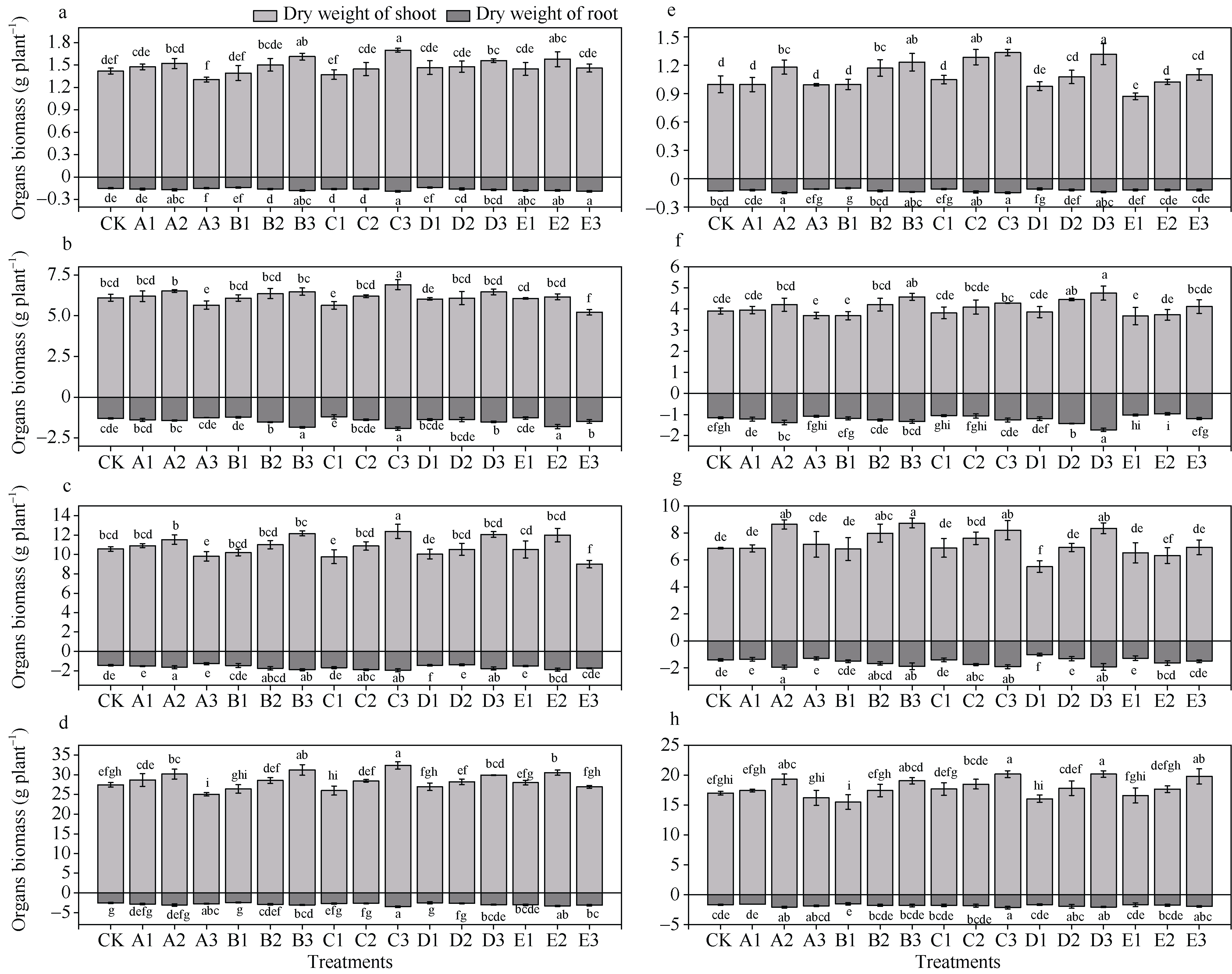
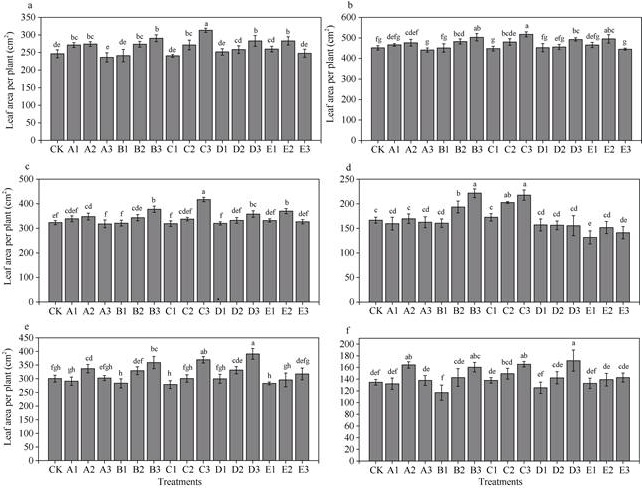
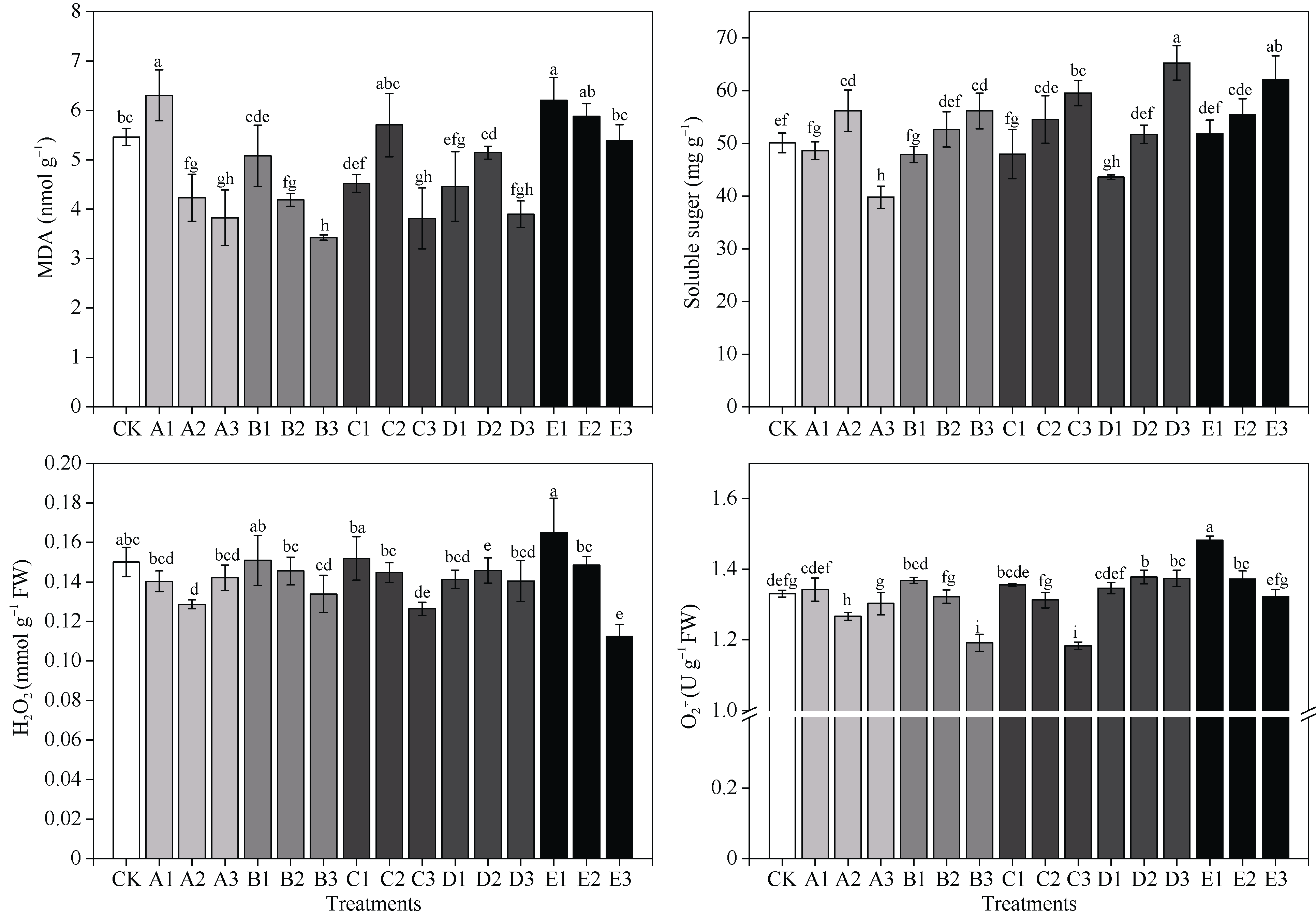
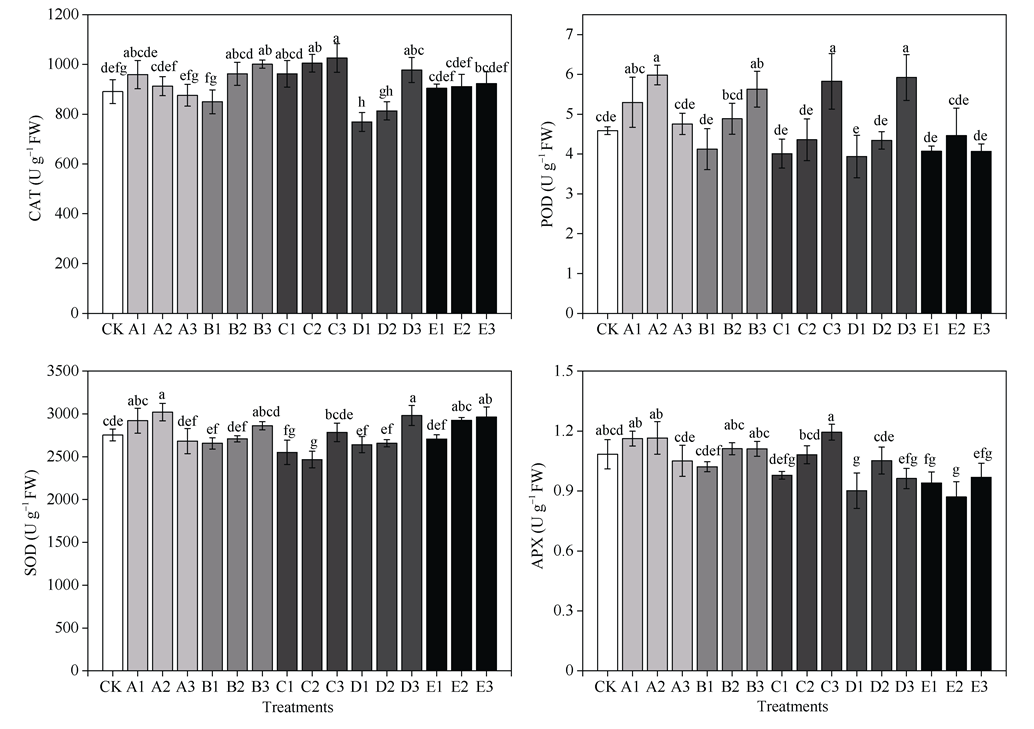
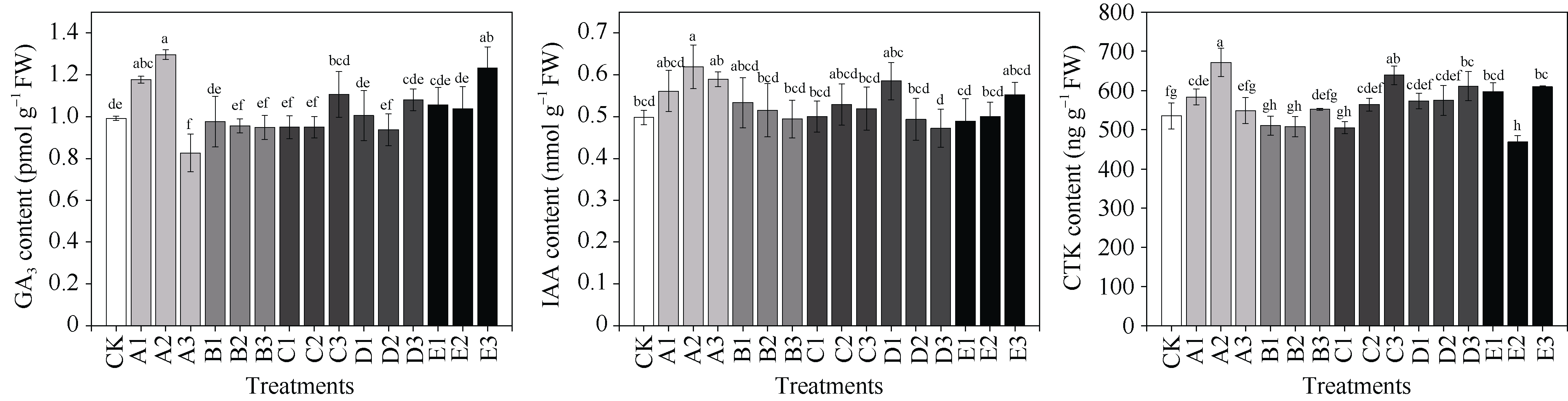
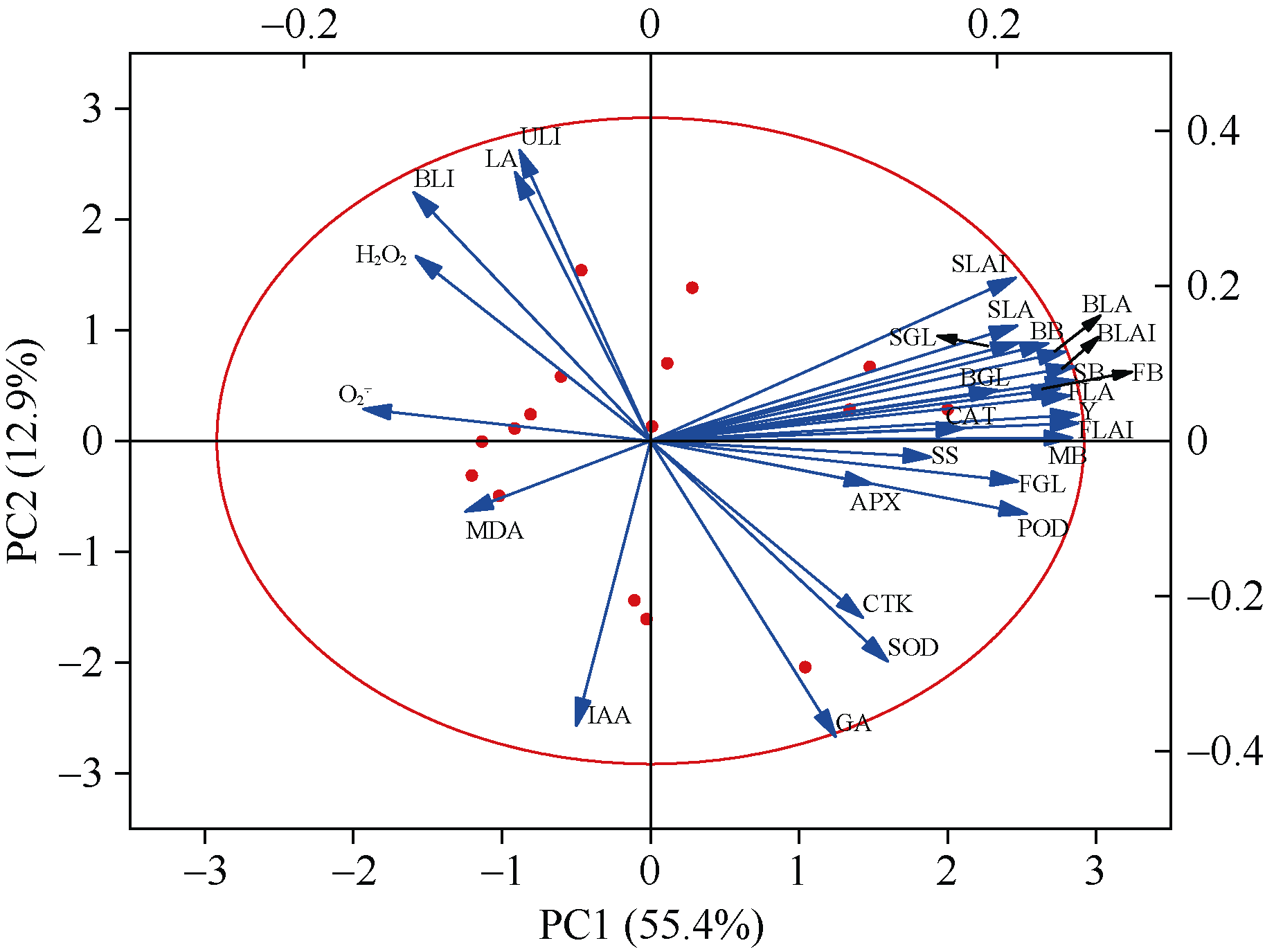
稻-稻-油是长江流域主要种植模式之一, 但晚稻、再生稻与油菜茬口矛盾突出, 导致油菜播种期推迟。迟播条件下, 油菜常因冬前有效积温下降、叶片数少、干物质积累量不足、抗倒伏能力下降, 导致籽粒产量低而不稳。喷施外源物质是一种快速高效、省工节本的调控技术, 可以提高油菜的抗倒伏性及产量。本研究以华油杂137为试验材料, 于苗期分别喷施5种不同浓度的外源物质: 0.5、1.0、1.5 mg L-1的三十烷醇(A1、A2、A3), 10、20、40 mg L-1的赤霉素(B1、B2、B3), 10、20、30 mg L-1的复硝酚钠(C1、C2、C3), 10、20、30 mg L-1的6-苄基腺嘌呤(D1、D2、D3)及12.5、25、50 mg L-1的烯效唑(E1、E2、E3), 以清水处理(CK)作为对照, 研究苗期喷施外源物质对迟播油菜抗寒性及产量的影响。结果表明: (1) 综合2年的产量、农艺性状及抗寒相关指标等得出, 对迟播油菜抗寒性、抗倒伏能力及产量具有显著促进作用的外源物质及浓度为: 30 mg L-1的复硝酚钠、30 mg L-1的6-苄基腺嘌呤、40 mg L-1的赤霉素和1.0 mg L-1的三十烷醇。与对照相比, 30 mg L-1的复硝酚钠处理的2年产量均最高, 分别比CK增产14.4%、12.9%。30 mg L-1的复硝酚钠、30 mg L-1的6-苄基腺嘌呤和40 mg L-1的赤霉素处理均可显著提高迟播油菜苗期、蕾薹期、花期的单株叶面积, 增加各生育期的干物质积累量。(2) 1.0 mg L-1的三十烷醇和30 mg L-1的6-苄基腺嘌呤处理显著增加了茎秆抗折力, 降低了倒伏角度, 提高了迟播油菜的抗倒伏能力。(3) 1.0 mg L-1的三十烷醇、40 mg L-1的赤霉素、30 mg L-1的复硝酚钠处理可显著增加越冬期油菜叶片中可溶性糖含量, 提高抗氧化酶活性, 减少活性氧积累和丙二醛含量, 提高越冬期的抗寒性。本研究可为长江流域迟播油菜抗逆稳产提供技术支撑。
| [1] | 王瑞元. 2022年我国粮油产销和进出口情况. 中国油脂, 2023, 48(6): 1-7. |
| Wang R Y. Production, marketing, import and export of grain and oil in China in 2022. China Oils Fats, 2023, 48(6): 1-7 (in Chinese). | |
| [2] |
王汉中. 以新需求为导向的油菜产业发展战略. 中国油料作物学报, 2018, 40: 613-617.
doi: 10.7505/j.issn.1007-9084.2018.05.001 |
| Wang H Z. New-demand oriented oilseed rape industry developing strategy. Chin J Oil Crop Sci, 2018, 40: 613-617 (in Chinese with English abstract). | |
| [3] |
蒯婕, 李真, 汪波, 刘芳, 叶俊, 周广生. 密度和行距配置对油菜苗期性状及产量形成的影响. 中国农业科学, 2021, 54: 2319-2332.
doi: 10.3864/j.issn.0578-1752.2021.11.006 |
|
Kuai J, Li Z, Wang B, Liu F, Ye J, Zhou G S. Effects of density and row spacing on seedling traits of rapeseed and seed yield. Sci Agric Sin, 2021, 54: 2319-2332 (in Chinese with English abstract).
doi: 10.3864/j.issn.0578-1752.2021.11.006 |
|
| [4] | 张树杰, 王汉中. 我国油菜生产应对气候变化的对策和措施分析. 中国油料作物学报, 2012, 34: 114-122. |
| Zhang S J, Wang H Z. Policies and strategies analyses of rapeseed production response to climate change in China. Chin J Oil Crop Sci, 2012, 34: 114-122 (in Chinese with English abstract). | |
| [5] | Wang C C, Chen A W, Wang J J, Zhang D X, Tang S, Zhou G S, Hu L Y, Wu J S, Fu T D. Growth and yield formation of direct-seeding rapeseed under no-tillage cultivation in double rice cropping area in Hubei province. Acta Agron Sin, 2011, 37: 694-702. |
| [6] | Li X Y, Wu L T, Qiu G L, Wang T, Liu C H, Yang Y M, Feng B, Chen C, Zhang W, Liu Z B. Effects of sowing season on agronomic traits and fatty acid metabolic profiling in three Brassica napus L.cultivars. Metabolites, 2019, 9: 37. |
| [7] |
汪波, 宋丽君, 王宗凯, 王积军, 熊明清, 甘丽, 刘芳, 张哲, 蒯婕, 傅廷栋, 等. 我国饲料油菜种植及应用技术研究进展. 中国油料作物学报, 2018, 40: 695-701.
doi: 10.7505/j.issn.1007-9084.2018.05.012 |
| Wang B, Song L J, Wang Z K, Wang J J, Xiong M Q, Gan L, Liu F, Zhang Z, Kuai J, Fu T D, et al. Production and feeding technology of fodder-rapeseed in China. Chin J Oil Crop Sci, 2018, 40: 695-701 (in Chinese with English abstract). | |
| [8] |
杨阳, 蒯婕, 吴莲蓉, 刘婷婷, 孙盈盈, 左青松, 周广生, 吴江生. 多效唑处理对直播油菜机械收获相关性状及产量的影响. 作物学报, 2015, 41: 938-945.
doi: 10.3724/SP.J.1006.2015.00938 |
|
Yang Y, Kuai J, Wu L R, Liu T T, Sun Y Y, Zuo Q S, Zhou G S, Wu J S. Effects of paclobutrazol on yield and mechanical harvest characteristics of winter rapeseed with direct seeding treatment. Acta Agron Sin, 2015, 41: 938-945 (in Chinese with English abstract).
doi: 10.3724/SP.J.1006.2015.00938 |
|
| [9] | Kuai J, Sun Y Y, Guo C, Zhao L, Zuo Q S, Wu J S, Zhou G S. Root-applied silicon in the early bud stage increases the rapeseed yield and optimizes the mechanical harvesting characteristics. Field Crops Res, 2017, 200: 88-97. |
| [10] | Islam S, Mohammad F. Triacontanol as a dynamic growth regulator for plants under diverse environmental conditions. Physiol Mol Biol Plants, 2020, 26: 871-883. |
| [11] |
郭茂畅, 陈杜娟, 袁金展, 张哲, 蒋博, 杨书婷, 陈敏, 郭安达, 王琪, 蒯婕, 等. 叶面喷施调节剂对迟播油菜越冬期氮素利用和产量的影响. 作物学报, 2024, 50: 2870-2882.
doi: 10.3724/SP.J.1006.2024.44027 |
| Guo M C, Chen D J, Yuan J Z, Zhang Z, Jiang B, Yang S T, Chen M, Guo A D, Wang Q, Kuai J, et al. Effect of foliar spraying regulators on nitrogen utilization during the overwintering stage and yield of late-sowing rapeseed. Acta Agron Sin, 2024, 50: 2870-2882 (in Chinese with English abstract). | |
| [12] | Raza A, Su W, Jia Z Q, Luo D, Zhang Y, Gao A, Hussain M A, Mehmood S S, Cheng Y, Lyu Y, et al. Mechanistic insights into trehalose-mediated cold stress tolerance in rapeseed (Brassica napus L.) seedlings. Front Plant Sci, 2022, 13: 857980. |
| [13] |
王先领, 姜岳, 雷贻忠, 肖胜男, 厍惠洁, 段圣省, 黄铭, 蒯婕, 汪波, 王晶, 等. 外源物质浸种对迟播油菜越冬期抗寒性及产量的影响. 作物学报, 2024, 50: 1271-1286.
doi: 10.3724/SP.J.1006.2024.34134 |
| Wang X L, Jiang Y, Lei Y Z, Xiao S N, She H J, Duan S X, Huang M, Kuai J, Wang B, Wang J, et al. Effects of seed soaking with exogenous substances on late-seeded rapeseed cold resistance of during overwintering period and yield. Acta Agron Sin, 2024, 50: 1271-1286 (in Chinese with English abstract). | |
| [14] | Batool M, El-Badri A M, Wang Z K, Mohamed I A A, Yang H Y, Ai X Y, Salah A, Hassan M U, Sami R, Kuai J, et al. Rapeseed morpho-physio-biochemical responses to drought stress induced by PEG-6000. Agronomy, 2022, 12: 579. |
| [15] |
朱亚迪, 王慧琴, 王洪章, 任昊, 吕建华, 赵斌, 张吉旺, 任佰朝, 殷复伟, 刘鹏. 不同夏玉米品种大喇叭口期耐热性评价和鉴定指标筛选. 作物学报, 2022, 48: 3130-3143.
doi: 10.3724/SP.J.1006.2022.13079 |
| Zhu Y D, Wang H Q, Wang H Z, Ren H, Lyu J H, Zhao B, Zhang J W, Ren B Z, Yin F W, Liu P. Evaluation and identification index of heat tolerance in different summer maize varieties at V12 stage. Acta Agron Sin, 2022, 48: 3130-3143 (in Chinese with English abstract). | |
| [16] | 叶宗裕. 关于多指标综合评价中指标正向化和无量纲化方法的选择. 浙江统计, 2003, (4): 25-26. |
| Ye Z Y. On the selection of index positive and dimensionless methods in multi-index comprehensive evaluation. Zhejiang Stat, 2003, (4): 25-26 (in Chinese). | |
| [17] | Özer H, Oral E, Doğru Ü. Relationships between yield and yield components on currently improved spring rapeseed cultivars. Turk J Agric For, 1999, 23: 603-608. |
| [18] | Shi J Q, Zhan J P, Yang Y H, Ye J, Huang S M, Li R Y, Wang X F, Liu G H, Wang H Z. Linkage and regional association analysis reveal two new tightly-linked major-QTLs for pod number and seed number per pod in rapeseed (Brassica napus L.). Sci Rep, 2015, 5: 14481. |
| [19] | 杜雪.油菜生殖生长阶段赤霉素对产油量与籽粒品质的影响及机制. 浙江大学博士学位论文, 浙江杭州, 2015. |
| Du X.Effect of Gibberellin at Reproductive Stage on Oil Production and Seed Metabolites in Oilseed Rape (Brassica napus L.). PhD Dissertation of Zhejiang University, Hangzhou, Zhejiang, China, 2015 (in Chinese with English abstract). | |
| [20] |
Karp A, Shield I. Bioenergy from plants and the sustainable yield challenge. New Phytol, 2008, 179: 15-32.
doi: 10.1111/j.1469-8137.2008.02432.x pmid: 18422906 |
| [21] | Agüera E, De la Haba P. Leaf senescence in response to elevated atmospheric CO2 concentration and low nitrogen supply. Biol Plant, 2018, 62: 401-408. |
| [22] | Waqas M A, Khan I, Akhter M J, Ali Noor M, Ashraf U. Exogenous application of plant growth regulators (PGRs) induces chilling tolerance in short-duration hybrid maize. Environ Sci Pollut Res Int, 2017, 24: 11459-11471. |
| [23] | Luo K, Xie C, Wang J, Du Q, Cheng P, Wang T, Wu Y C, Yang W Y, Yong T W. Uniconazole, 6-benzyladenine, and diethyl aminoethyl hexanoate increase the yield of soybean by improving the photosynthetic efficiency and increasing grain filling in maize- soybean relay strip intercropping system. J Plant Growth Regul, 2021, 40: 1869-1880. |
| [24] | He Y L, Liu Y L, Cao W X, Huai M F, Xu B G, Huang B R. Effects of salicylic acid on heat tolerance associated with antioxidant metabolism in Kentucky bluegrass. Crop Sci, 2005, 45: 988-995. |
| [25] | Li Z G, Xie L R, Li X J. Hydrogen sulfide acts as a downstream signal molecule in salicylic acid-induced heat tolerance in maize (Zea mays L.) seedlings. J Plant Physiol, 2015, 177: 121-127. |
| [26] |
郑伟, 叶川, 肖国滨, 陈明, 李亚贞, 黄天宝, 肖小军, 刘小三, 朱昌兰. 油-稻共生期对谷林套播油菜苗期性状及产量形成的影响. 中国农业科学, 2015, 48: 4254-4263.
doi: 10.3864/j.issn.0578-1752.2015.21.006 |
|
Zheng W, Ye C, Xiao G B, Chen M, Li Y Z, Huang T B, Xiao X J, Liu X S, Zhu C L. Effects of symbiotic period on seedling traits and yield components of interplanting rapeseed in rice. Sci Agric Sin, 2015, 48: 4254-4263 (in Chinese with English abstract).
doi: 10.3864/j.issn.0578-1752.2015.21.006 |
|
| [27] | Anwar S, Lei H X, Kuai J, Khan S, Fahad S, Zhou G S. Soaking seeds of winter rapeseed with Quizalofop-P-Ethyl alters plant growth and improves yield in a rice-rapeseed cropping system. Field Crops Res, 2017, 208: 11-17. |
| [28] | Wang W L, Wang X, Huang M, Cai J, Zhou Q, Dai T B, Jiang D. Alleviation of field low-temperature stress in winter wheat by exogenous application of salicylic acid. J Plant Growth Regul, 2021, 40: 811-823. |
| [29] | Turk H, Erdal S. Melatonin alleviates cold-induced oxidative damage in maize seedlings by up-regulating mineral elements and enhancing antioxidant activity. J Plant Nutr Soil Sci, 2015, 178: 433-439. |
| [30] |
Ozfidan-Konakci C, Yildiztugay E, Yildiztugay A, Kucukoduk M. Cold stress in soybean (Glycine max L.) roots: exogenous gallic acid promotes water status and increases antioxidant activities. Bot Serb, 2019, 43: 59-71.
doi: 10.2298/BOTSERB1901059O |
| [31] | Shi X L, Sun Z Q, Xue X, Xu H M, Wu Y, Zhang Y, Yang Y Q, Han S Y, Zhao R F, Zhang M Y, et al. Amelioration of hypothermia-induced damage on peanut by exogenous application of chitooligosaccharide. Agriculture, 2023, 13: 217. |
| [32] |
Maruyama K, Urano K, Yoshiwara K, Morishita Y, Sakurai N, Suzuki H, Kojima M, Sakakibara H, Shibata D, Saito K, et al. Integrated analysis of the effects of cold and dehydration on rice metabolites, phytohormones, and gene transcripts. Plant Physiol, 2014, 164: 1759-1771.
doi: 10.1104/pp.113.231720 pmid: 24515831 |
| [33] | Wu Z G, Jiang W, Chen S L, Mantri N, Tao Z M, Jiang C X. Insights from the cold transcriptome and metabolome of Dendrobium officinale: global reprogramming of metabolic and gene regulation networks during cold acclimation. Front Plant Sci, 2016, 7: 1653. |
| [34] |
李凌雨, 周琦锐, 李洋, 张安民, 王贝贝, 马尚宇, 樊永惠, 黄正来, 张文静. 外源6-BA调控孕穗期低温后小麦幼穗发育的转录组分析. 作物学报, 2023, 49: 1808-1817.
doi: 10.3724/SP.J.1006.2023.21050 |
| Li L Y, Zhou Q R, Li Y, Zhang A M, Wang B B, Ma S Y, Fan Y H, Huang Z L, Zhang W J. Transcriptome analysis of exogenous 6-BA in regulating young spike development of wheat after low temperature at booting stage. Acta Agron Sin, 2023, 49: 1808-1817 (in Chinese with English abstract). | |
| [35] |
Verma V, Ravindran P, Kumar P P. Plant hormone-mediated regulation of stress responses. BMC Plant Biol, 2016, 16: 86.
doi: 10.1186/s12870-016-0771-y pmid: 27079791 |
| [36] | Sun Y J, He Y H, Irfan A R, Liu X M, Yu Q Q, Zhang Q, Yang D G. Exogenous brassinolide enhances the growth and cold resistance of maize (Zea mays L.) seedlings under chilling stress. Agronomy, 2020, 10: 488. |
| [37] | Belintani N G, Guerzoni J T S, Moreira R M P, Vieira L G E. Improving low-temperature tolerance in sugarcane by expressing the ipt gene under a cold inducible promoter. Biol Plant, 2012, 56: 71-77. |
| [38] |
Jeon J, Kim J. Arabidopsis response regulator1 and Arabidopsis histidine phosphotransfer protein 2 (AHP2), AHP3, and AHP5 function in cold signaling. Plant Physiol, 2013, 161: 408-424.
doi: 10.1104/pp.112.207621 pmid: 23124324 |
| [39] | Lu J Z, Guan P X, Gu J M, Yang X L, Wang F, Qi M F, Li T L, Liu Y F. Exogenous DA-6 improves the low night temperature tolerance of tomato through regulating cytokinin. Front Plant Sci, 2021, 11: 599111. |
| [40] |
Liu D X, Yan G B, Wang S B, Yu L Q, Lin W, Lu S P, Guo L, Yang Q Y, Dai C. Comparative transcriptome profiling reveals the multiple levels of crosstalk in phytohormone networks in Brassica napus. Plant Biotechnol J, 2023, 21: 1611-1627.
doi: 10.1111/pbi.14063 pmid: 37154465 |
| [41] |
Tiwari M, Kumar R, Subramanian S, Doherty C J, Krishna Jagadish S V. Auxin-cytokinin interplay shapes root functionality under low-temperature stress. Trends Plant Sci, 2023, 28: 447-459.
doi: 10.1016/j.tplants.2022.12.004 pmid: 36599768 |
| [1] | 胡川, 赵凯男, 黄修利, 吴金芝, 任开明, 王贺正, 付国占, 黄明, 李友军. 一次灌溉下耕作方式和氮肥用量对旱地小麦产量和品质的影响[J]. 作物学报, 2026, 52(6): 1830-1846. |
| [2] | 马胜乾, 王志平, 陈浩天, 窦淑贤, 张燕, 邓艾兴, 张卫建, 原向阳, 宋振伟. 秸秆还田下耕作方式与氮肥施用量对东北玉米产量及土壤团聚体的影响[J]. 作物学报, 2026, 52(6): 1802-1816. |
| [3] | 张思思, 赵向辉, 周洋, 姚云凤, 朱荣昱, 董元杰, 胡国庆, 徐通, 刘兆新. 冬闲期翻耕和绿肥还田对连作花生田土壤理化性质和产量的影响[J]. 作物学报, 2026, 52(5): 1472-1486. |
| [4] | 任依涵, 赵曼利, 代晶, 李银水, 顾炽明, 杨璐, 杜雪竹, 胡文诗, 秦璐. 油菜叶片功能氮动态变化对光合速率及光合氮利用效率的影响[J]. 作物学报, 2026, 52(5): 1459-1471. |
| [5] | 张宁宁, 滕雨菲, 任娜娜, 魏兴卓, 闫书豪, 樊可心, 王永宏, 陈文康, 张兴华, 朱万超, 徐淑兔, 薛吉全. 201份玉米自交系抗旱表型评价及可塑性分析[J]. 作物学报, 2026, 52(5): 1309-1325. |
| [6] | 张振, 冯连杰, 石玉, 于振文, 张永丽. 节水补灌下不同穗型小麦产量形成差异研究[J]. 作物学报, 2026, 52(5): 1522-1535. |
| [7] | 闫安, 蒋昆炜, 王蓉圆, 田林, 张璐, 王韵, 徐建龙. 水稻剑叶小维管束数基因SVN7的鉴定与克隆[J]. 作物学报, 2026, 52(5): 1364-1372. |
| [8] | 刘昕萌, 任昊, 张继波, 张吉旺, 赵斌, 任佰朝, 刘鹏, 王洪章. 茉莉酸甲酯(MeJA)缓解高温影响玉米雌穗分化的生理机制[J]. 作物学报, 2026, 52(5): 1561-1572. |
| [9] | 王壮壮, 武紫君, 张永新, 张芯源, 袁丽雪, 陈如雪, 刘世举, 段剑钊, 冯伟, 王同朝, 王永华. 豫东南黏壤潮土区水氮优化协同提高冬小麦产量和氮素利用效率[J]. 作物学报, 2026, 52(5): 1501-1521. |
| [10] | 张鸿蓉, 王菲儿, 李盼, 仇海龙, 朱静, 赵连豪, 南运有, 何蔚, 樊志龙, 胡发龙, 柴强, 殷文. 减量20%灌水与25%有机肥替代化肥提高青贮玉米产量的光合特性[J]. 作物学报, 2026, 52(5): 1487-1500. |
| [11] | 王宇诚, 张露, 刘阿康, 黄见良, 彭少兵, 袁珅. 基于产量差的作物大面积单产提升策略与展望[J]. 作物学报, 2026, 52(5): 1279-1290. |
| [12] | 赵佳雪, 周龙昊, 郭岂源, 尚伦霄, 王涵, 刘志涛, 陈曦, 张晓佩, 宋宪亮, 毛丽丽. 长期秸秆还田与深松通过改善土壤环境与棉花光合特性提高滨海盐碱地棉花产量[J]. 作物学报, 2026, 52(5): 1548-1560. |
| [13] | 郭星宇, 胡丹, 林苏期, 王梦凯, 谭文峰, 黄传琴. 生物炭配施化肥提高玉米‖大豆下玉米产量和土壤生态系统多功能性[J]. 作物学报, 2026, 52(5): 1536-1547. |
| [14] | 蔡宏玮, 于爱忠, 姜科强, 王鹏飞, 王玉珑, 霍建喆, 庞小能, 尹波, 尚永盼. 干旱灌区有机肥替代部分化肥促进甜玉米产量提升的关键机制[J]. 作物学报, 2026, 52(4): 1166-1180. |
| [15] | 崔雪梅, 柳妍娣, 刘景辉, 米俊珍, 武俊英, 赵宝平. 不同基因型燕麦强弱势粒生理特性与产量关系研究[J]. 作物学报, 2026, 52(4): 1220-1235. |
|
||