欢迎访问作物学报,今天是
作物学报 ›› 2020, Vol. 46 ›› Issue (11): 1659-1666.doi: 10.3724/SP.J.1006.2020.04073
董建科( ), 涂卫, 王海波, 应静文, 杜鹃, 赵喜娟, 赵庆浩, 黄维, 蔡兴奎*(), 宋波涛*()
DONG Jian-Ke(), TU Wei, WANG Hai-Bo, YING Jing-Wen, DU Juan, ZHAO Xi-Juan, ZHAO Qing-Hao, HUANG Wei, CAI Xing-Kui*(), SONG Bo-Tao*()
摘要:
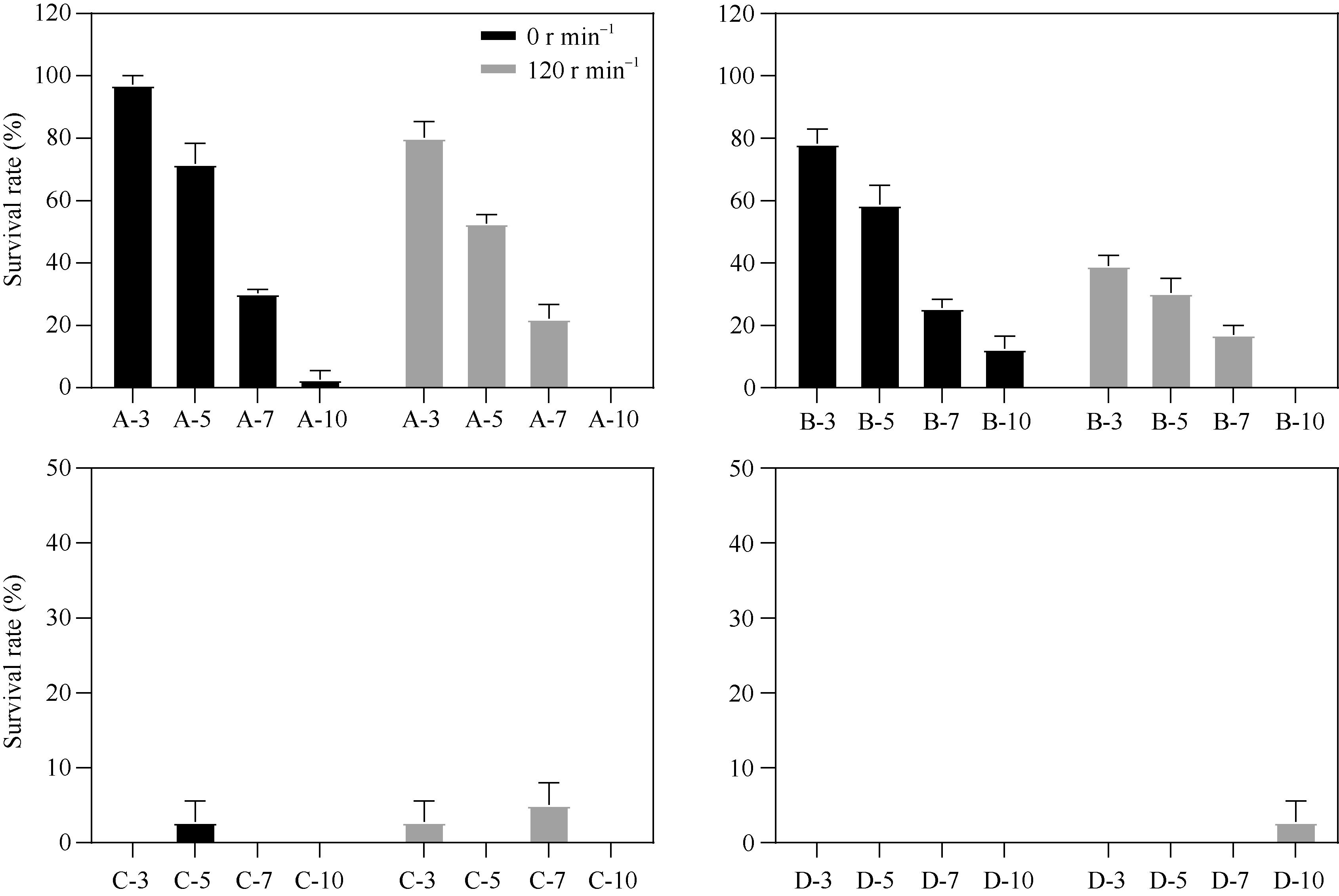
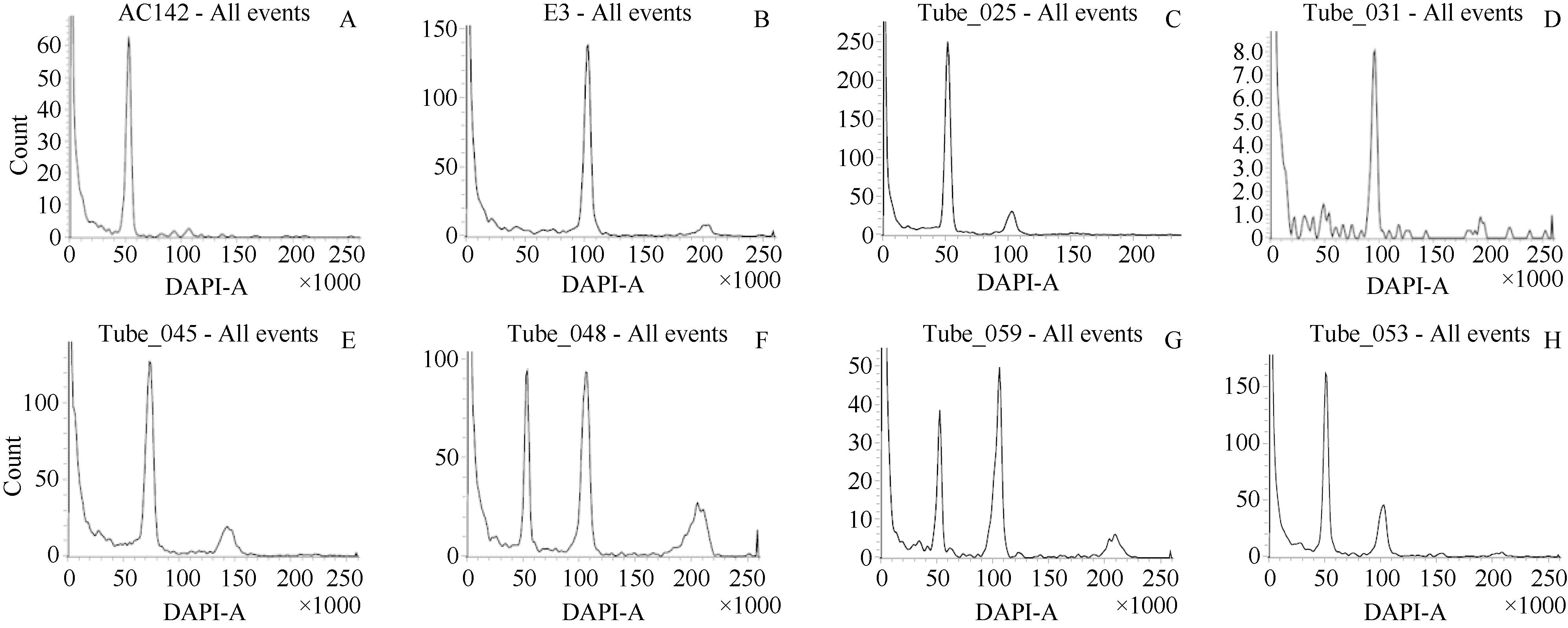
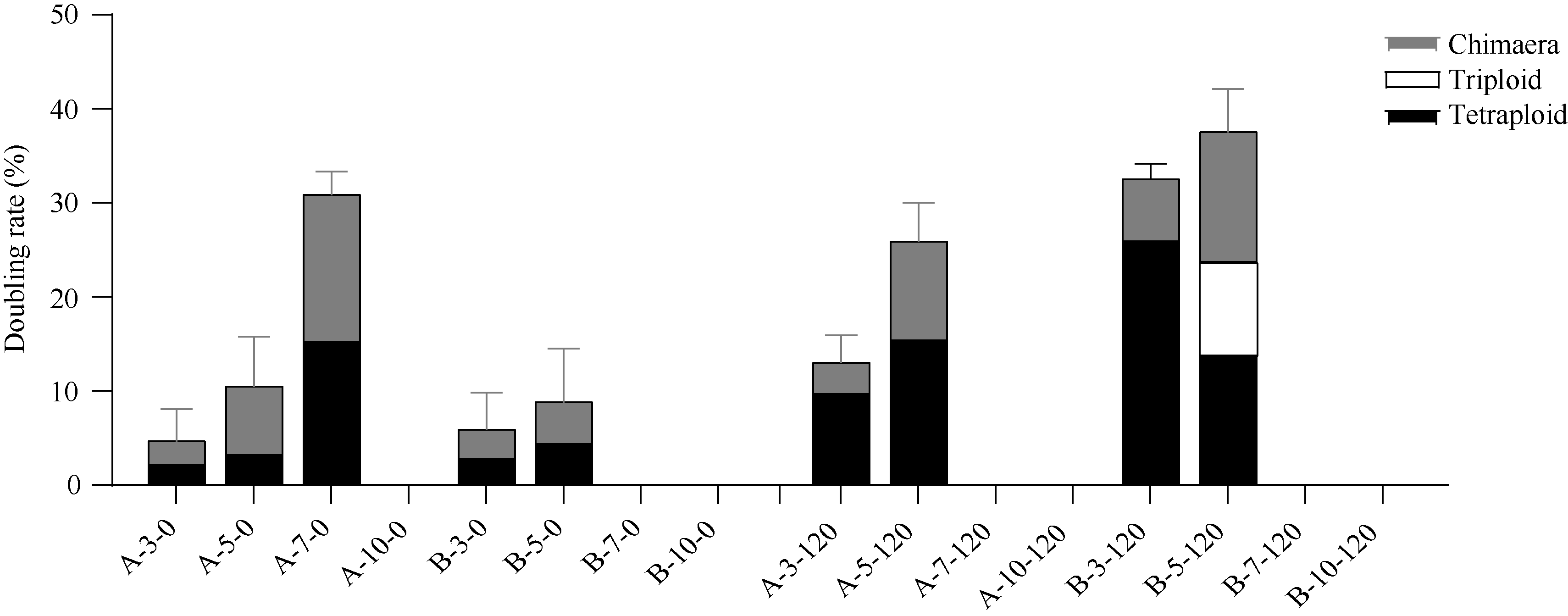
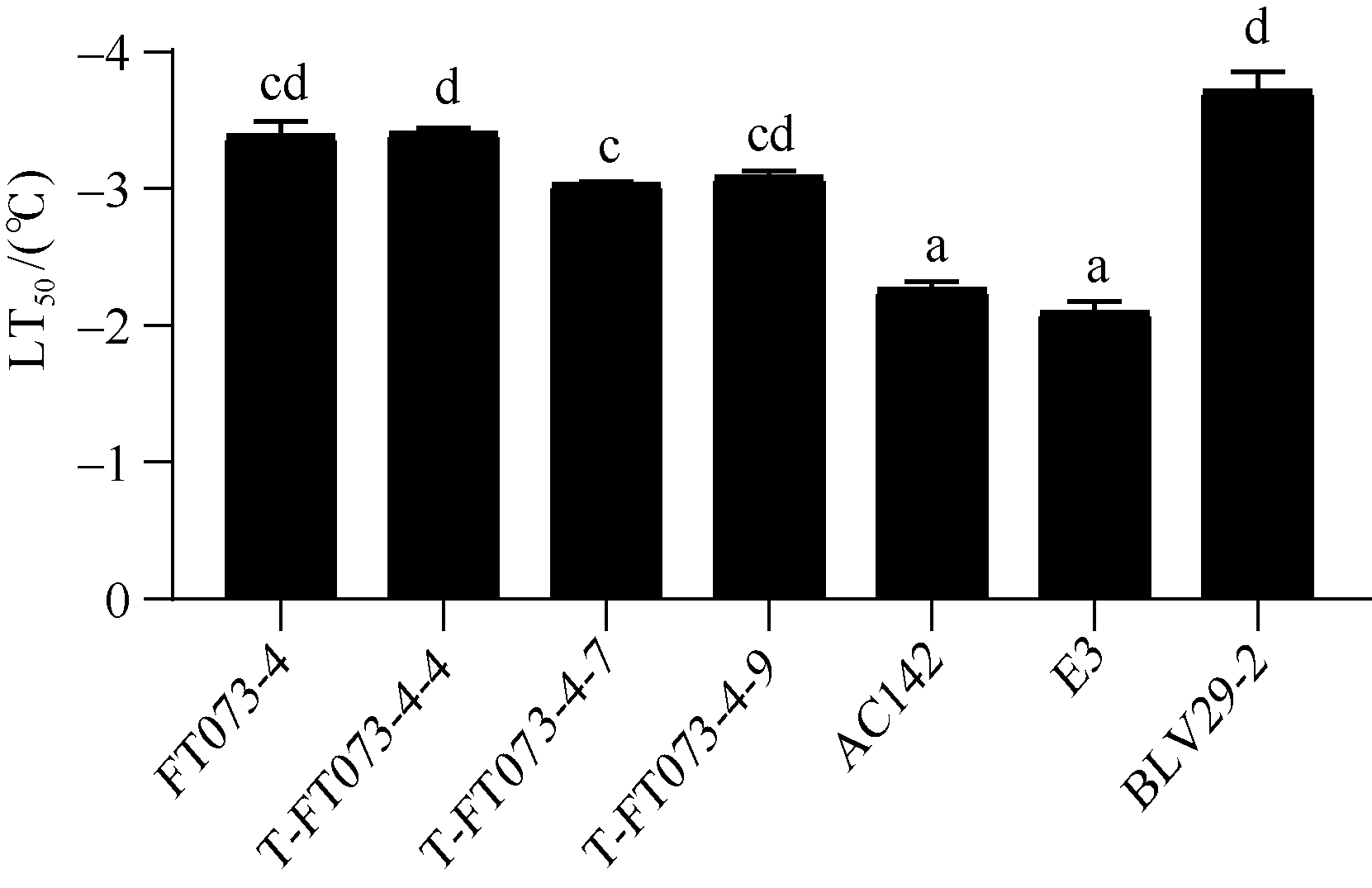
利用不同秋水仙素处理浓度、处理方式、处理时间对马铃薯试管苗茎段进行处理,研究了不同处理组合对试管苗成活率和加倍效率的影响, 筛选获得了马铃薯染色体加倍优化处理组合。结果表明, 0.1%秋水仙素浓度在120转 min-1的条件下处理马铃薯试管苗茎段3d的加倍效率最高,该处理方法结合摇床转动处理,使秋水仙素与处理茎段接触更充分,较其他马铃薯染色体加倍技术具有加倍率更高、加倍时间更短且操作简便等优点, 为马铃薯倍性操作提供了高效方法。同时, 加倍的种间杂种材料农艺性状与原始二倍体相比,加倍获得的四倍体材料在植株株高、茎粗、花瓣大小及花粉粒大小等方面均有明显增强,且抗寒能力和二倍体种间杂种相当,较普通马铃薯栽培种显著增强,可为马铃薯栽培种的抗寒遗传改良提供良好的材料基础。
| [1] |
Vega S E, Bamberg J B. Screening the US potato collection for frost hardiness. Am Potato J, 1995,72:13-21.
doi: 10.1007/BF02874375 |
| [2] | Luthra S K, Gopal J, Manivel P, Kumar V, Singh B P, Pandey S K. A frost tolerant clone (SS 2040) of cultivated tetraploid potato species Solanum tuberosum ssp. andigena. Ind J Genet Plant Breed, 2010,70:103. |
| [3] | Hawkes J G. The Potato: Evolution, Biodiversity and Genetic Resources. London: Belhaven Press, 1990. pp 1-259. |
| [4] |
Bradshaw J E, Bryan G J, Ramsay G. Genetic resources (including wild and cultivated Solanum species) and progress in their utilisation in potato breeding. Potato Res, 2006,49:49-65.
doi: 10.1007/s11540-006-9002-5 |
| [5] |
Spooner D M, Ghislain M, Simon R, Jansky S H, Gavrilenko T. Systematics, diversity, genetics, and evolution of wild and cultivated potatoes. Bot Rev, 2014,80:283-383.
doi: 10.1007/s12229-014-9146-y |
| [6] |
Carputo D, Barone A. Ploidy level manipulations in potato through sexual hybridisation. Ann Appl Biol, 2005,146:71-79.
doi: 10.1111/aab.2005.146.issue-1 |
| [7] |
Johnstone F E. Chromosome doubling in potatoes induced by colchicine treatment. Am Potato J, 1939,16:288-304.
doi: 10.1007/BF02861918 |
| [8] |
Karp A, Risiott R, Jones M G K, Bright S W. Chromosome doubling in monohaploid and dihaploid potatoes by regeneration from cultured leaf explants. Plant Cell Tissue Organ Cult, 1984,3:363-373.
doi: 10.1007/BF00043089 |
| [9] | 张艳萍, 蒲秀琴. 秋水仙素诱导马铃薯野生种S. acaule多倍体的初步研究. 中国种业, 2018, (6):66-68. |
| Zhang Y P, Pu X Q. A preliminary study on colchicine induced S. acaule polyploid in wild potato species. China Seed Ind, 2018, (6):66-68 (in Chinese with English abstract). | |
| [10] |
Dpooležel J, Binarová P, Lcretti S. Analysis of nuclear DNA content in plant cells by flow cytometry. Biol Plant, 1989,31:113-120.
doi: 10.1007/BF02907241 |
| [11] | Zhao Z F, Wang Y H, Huang S P. Plant chromosome count. For Res, 1990,5:503-508. |
| [12] |
Ugborogho R E, Oyelana O A. Meiosis, pollen morphology and perianth stomata of some taxa of Amaranthus L.(Amaranthaceae) in Nigeria. Feddes Rep, 1992,103:363-373.
doi: 10.1002/fedr.v103:5/6 |
| [13] | Steffen K L, Arora R, Palta J P. Relative sensitivity of photosynthesis and respiration to freeze-thaw stress in herbaceous species: importance of realistic freeze-thaw protocols. Plant Physiol, 1989,4:1372-1379. |
| [14] |
Levin D A. Polyploidy and novelty in flowering plants. Am Nat, 1983,122:1-25.
doi: 10.1086/284115 |
| [15] |
De Maine M J. Comparisons of cell characters in leaves of dihaploid potatoes, their chromosome-doubled derivatives and parthenogenetic tetraploid parents. Potato Res, 1987,30:253-266.
doi: 10.1007/BF02357667 |
| [16] |
Sattler M C, Carvalho C R, Clarindo W R. The polyploidy and its key role in plant breeding. Planta, 2016,243:281-296.
pmid: 26715561 |
| [17] |
Yang J, Wang J, Liu Z, Xiong T, Lan J, Han Q, Kang X. Megaspore chromosome doubling in Eucalyptus urophylla S. T. Blake induced by colchicine treatment to produce triploids. Forests, 2018,9:728.
doi: 10.3390/f9110728 |
| [18] |
De Maine M J, Fantes J A. The results of colchicine treatment of dihaploids and their implications regarding efficiency of chromosome doubling and potato histogeny. Potato Res, 1983,26:289-294.
doi: 10.1007/BF02356150 |
| [19] | 王清, 王蒂, 司怀军, 戴朝曦. 马铃薯体细胞染色体加倍的研究. 中国马铃薯, 2001, (6):343-349. |
| Wang Q, Wang D, Si H J, Dai Z X. Study on chromosome doubling in potato somatic cells. Chin Potato J, 2001, (6):343-349 (in Chinese with English abstract). | |
| [20] | 刘磊. 秋水仙素对马铃薯多倍体诱导的初步研究. 农业科技通讯, 2019, (3):113-116. |
| Liu L. Preliminary study of colchicine induced polyploid in potato. Bull Agric Sci Technol, 2019, (3):113-116 (in Chinese with English abstract). | |
| [21] | 吴青青, 胡小京, 崔嵬, 杨澜, 石乐娟, 许红娟, 班甜甜, 夏景烽. 秋水仙素诱导百合黄精灵多倍体研究. 种子, 2019,38(11):96-100. |
| Wu Q Q, Hu X J, Cui W, Yang L, Shi L J, Xu H J, Ban T T, Xia J F. Study on polyploid induction of lily yelloween by colchicine. Seed, 2019,38(11):96-100 (in Chinese with English abstract). | |
| [22] | Preiszner J, Feher A, Veisz O, Sutka J, Dudits D. Characterization of morphological variation and cold resistance in interspecific somatic hybrids between potato (Solanum tuberosum L.) and S. brevidens Phil. Euphytica, 1991,57:37-46. |
| [23] |
Cardi T, D'Ambrosio E, Consoli D, Puite K J, Ramulu K S. Production of somatic hybrids between frost-tolerant Solanum
pmid: 24190212 |
|
commersonii and S. tuberosum: characterization of hybrid plants. Theor Appl Genet, 1993,87:193-200.
doi: 10.1007/BF00223764 pmid: 24190212 |
|
| [24] | 邹莹. 马铃薯抗寒资源和抗寒群体创制. 华中农业大学硕士学位论文,湖北武汉, 2016. |
| Zou Y. Development of New Germplasms and Segregating Population to Cold Resistance in Potato . MS Thesis of Huazhong Agricultural University, Wuhan, Hubei, China, 2016 (in Chinese with English abstract). | |
| [25] | 徐志君. 马铃薯多倍体的诱导及其快速鉴定方法的建立. 内蒙古大学硕士学位论文, 内蒙古呼和浩特, 2016. |
| Xu Z J. Induction of Polyploid Potato and Establishment of Rapid Identification Method. MS Thesis of Inner Mongolia University, Huhhot, Inner Mongolia, China, 2016 (in Chinese with English abstract). | |
| [26] |
Nirula K K, Nayar N M, Bassi K K, Singh G. Reaction of tuber-bearing Solanum species to root knot nematode, meloidogyne incognita. Am Potato J, 1967,44:66-69.
doi: 10.1007/BF02893240 |
| [27] |
De Galarreta J I R, Carrasco A, Salazar A, Barrena I, Iturritxa E, Marquinez R, Legorburu F J, Ritter E. Wild Solanum species as resistance sources against different pathogens of potato. Potato Res, 1998,41:57-68.
doi: 10.1007/BF02360262 |
| [28] |
Bains P S, Bisht V S, Lynch D R, Kawchuk L M, Helgeson J P. Identification of stem soft rot (Erwinia carotovora subspecies atroseptica) resistance in potato. Am J Potato Res, 1999,76:137-141.
doi: 10.1007/BF02853578 |
| [1] | 陈国欢, 张锐, 李艳迪, 赵佳琪, 任湧涛, 张天赐, 郭华春, 李俊, 杨芳. 外源硒叶面喷施对浅紫色马铃薯块茎花青素合成的影响[J]. 作物学报, 2026, 52(6): 1876-1890. |
| [2] | 王文辕, 燕雪嘉, 刘玉霖, 孙晓彤, 李亚楠, 唐鑫华, 石瑛. 耐弱光马铃薯品种筛选及转录因子编码基因StPIF3的克隆与功能分析[J]. 作物学报, 2026, 52(6): 1631-1645. |
| [3] | 田立涛, 丁宁, 王树林, 齐恩芳, 张荣, 王蕊蕊, 马利雯, 李建武, 杨江伟. 马铃薯Argonaute基因家族鉴定及晚疫病诱导表达分析[J]. 作物学报, 2026, 52(4): 1116-1126. |
| [4] | 张宇, 刘芳, 蔡诚诚, 杨小华, 吉阿么石扎, 杨元军, 王西瑶. 溴乙烷与赤霉素协同处理破除马铃薯块茎休眠的机理初探[J]. 作物学报, 2026, 52(3): 825-838. |
| [5] | 汪玲, 胡好, 宋家凤, 程洁蓝, 陈颖, 郑婷婷, 吕钊彦, 朱晓彪, 侯华兰. 马铃薯UDP-糖基转移酶基因StUGT52的克隆及功能验证[J]. 作物学报, 2026, 52(3): 665-676. |
| [6] | 徐强, 谢奎忠, 胡新元, 岳云, 董博, 罗爱花. 连作对马铃薯根际土壤线虫群落结构与功能的影响[J]. 作物学报, 2026, 52(2): 527-538. |
| [7] | 杨飚, 杜帅康, 张继旺, 石瑛, 张丽莉. 马铃薯III类POD基因家族的全基因组鉴定及其表达谱分析[J]. 作物学报, 2026, 52(2): 405-420. |
| [8] | 姬炫彤, 卞春松, 金黎平, 李森, 秦军红, 李广存. 不同耐旱型马铃薯根际微生物对干旱的响应[J]. 作物学报, 2026, 52(1): 165-177. |
| [9] | 田甲春, 葛霞, 李守强, 李梅, 田世龙, 张亚倩, 程建新, 李玉梅. 低O2高CO2贮藏环境延缓马铃薯块茎衰老的作用机制[J]. 作物学报, 2026, 52(1): 262-278. |
| [10] | 王雅致, 杨飚, 季香林, 石瑛, 张丽莉. 二倍体马铃薯抗旱资源鉴定及抗旱基因初步筛选[J]. 作物学报, 2026, 52(1): 72-84. |
| [11] | 卓峰琦, 唐振三, 雷雨俊, 程李香, 赵甜甜, 吕汰, 杨晨, 张峰. 基于烹饪方式及回生温度筛选低升糖马铃薯品种(系)[J]. 作物学报, 2025, 51(9): 2538-2546. |
| [12] | 朱锦程, 杨秋华, 程李香, 李文丽, 石明明, 李惠霞, 张峰. 马铃薯抗南方根结线虫种质资源筛选及相关生理反应分析[J]. 作物学报, 2025, 51(9): 2307-2317. |
| [13] | 尹丽娜, 张锐, 陈国欢, 白磊, 李俊, 郭华春, 杨芳. 不同马铃薯品种块茎创伤愈合能力的比较[J]. 作物学报, 2025, 51(9): 2399-2411. |
| [14] | 贾小霞, 齐恩芳, 文国宏, 马胜, 黄伟, 吕和平, 李建武, 曲亚英, 丁宁. 中早熟马铃薯‘陇薯20号’高效再生体系建立及抗草铵膦种质创制[J]. 作物学报, 2025, 51(9): 2285-2294. |
| [15] | 李秋云, 李世贵, 范军亮, 刘昊天, 赵晓斌, 吕硕, 王艳浩, 岳云, 张宁, 司怀军. 离子锌和纳米锌对马铃薯生理特性、产量及品质的影响[J]. 作物学报, 2025, 51(7): 1838-1849. |
|
||