欢迎访问作物学报,今天是
作物学报 ›› 2025, Vol. 51 ›› Issue (10): 2595-2604.doi: 10.3724/SP.J.1006.2025.53023
所属专题: 玉米:遗传育种·种质资源·分子遗传学
赵志文( ), 陈慧(), 连玉杰, 陆涵, 曹旭东, 王帆, 喻梦璠, 张战辉, 汤继华, 陈晓阳()
ZHAO Zhi-Wen(), CHEN Hui(), LIAN Yu-Jie, LU Han, CAO Xu-Dong, WANG Fan, YU Meng-Fan, ZHANG Zhan-Hui, TANG Ji-Hua, CHEN Xiao-Yang()
摘要:
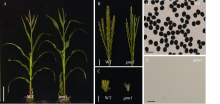
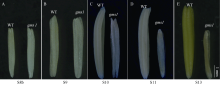
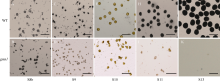
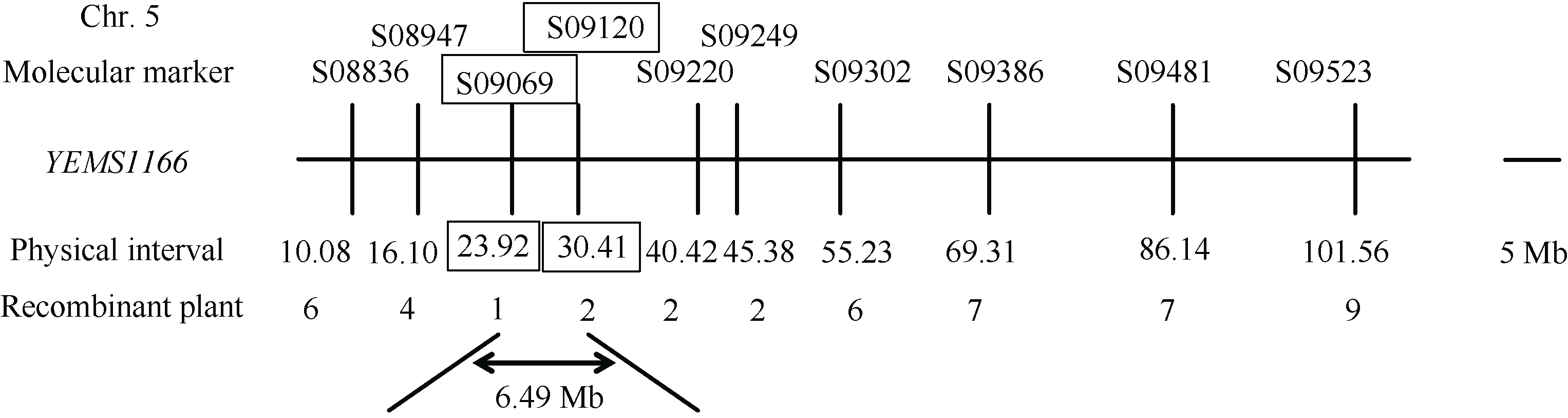
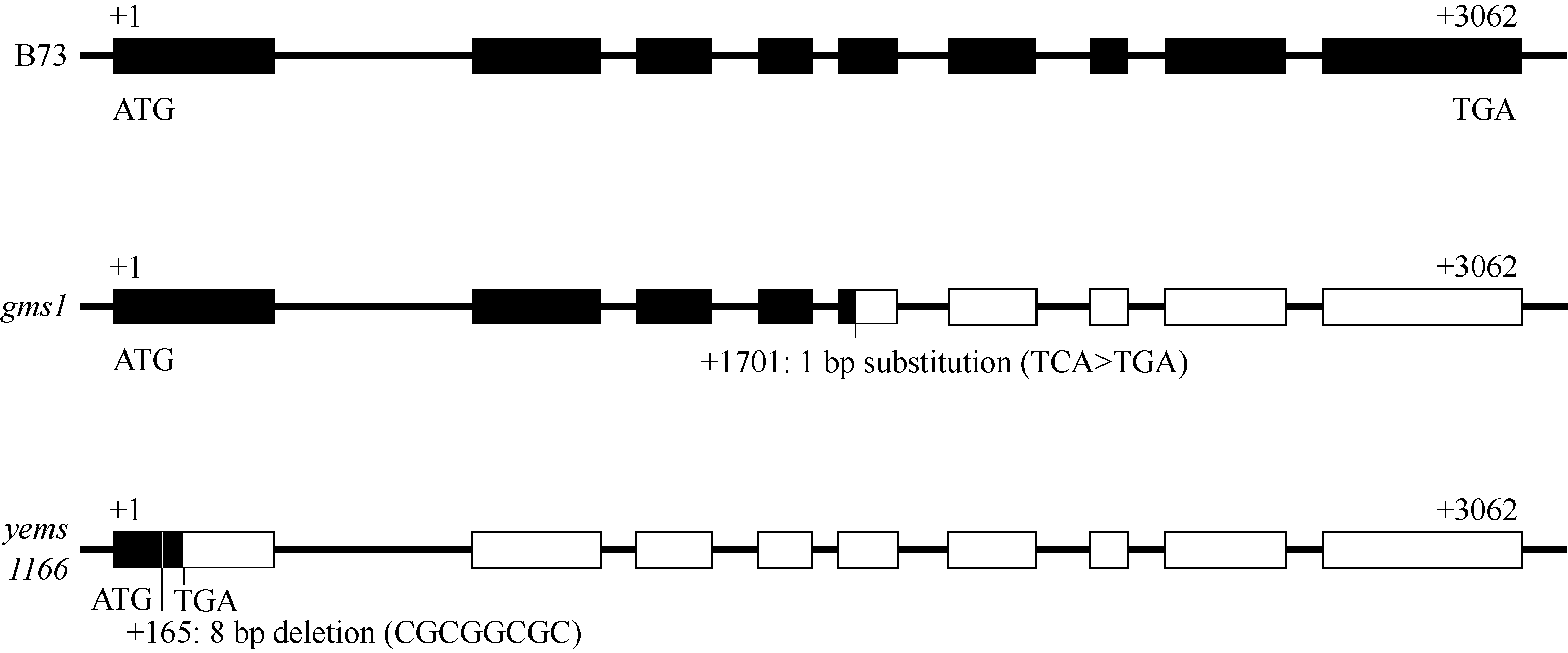
玉米雄性不育系的创制与应用是降低玉米杂交种制种成本、提高种子纯度的有效途径。本研究鉴定到2个玉米雄性核不育突变体gms1和yems1166, 表型分析表明突变体花药角质层结构异常, 小孢子在单核后期开始降解, 成熟期突变体无花粉粒形成。遗传分析表明2个突变体不育性状受细胞核隐性单基因控制。通过图位克隆的策略将GMS1和YEMS1166基因分别定位于第5染色体23.52~26.09 Mb和24.86~30.95 Mb区间, 该区间包含已报道的脂类转运蛋白基因ZmMS13, 编码ABCG转运蛋白ZmABCG2a。基因测序结果显示gms1在ZmMS13基因第5外显子上有1个碱基的替换(TCA>TGA), 导致其翻译提前终止; 突变体yems1166在ZmMS13基因的第1外显子上有8个碱基的缺失, 导致其翻译提前终止。等位性测验进一步证明gms1和yems1166为ZmMS13的新等位突变体。本研究鉴定到2个新的ZmMS13基因等位突变体, 为玉米雄性不育化杂交制种提供了新的种质资源。
| [1] | Luo N, Meng Q F, Feng P Y, Qu Z R, Yu Y H, Liu D L, Müller C, Wang P. China can be self-sufficient in maize production by 2030 with optimal crop management. Nat Commun, 2023, 14: 2637. |
| [2] |
Xiao Y J, Jiang S Q, Cheng Q, Wang X Q, Yan J, Zhang R Y, Qiao F, Ma C, Luo J Y, Li W Q, et al. The genetic mechanism of heterosis utilization in maize improvement. Genome Biol, 2021, 22: 148.
doi: 10.1186/s13059-021-02370-7 pmid: 33971930 |
| [3] |
郭瑶晴, 孙晓靖, 连玉杰, 陈慧, 孙华越, 张雪海, 汤继华, 陈晓阳. 玉米雄性不育突变体x50的基因定位与遗传分析. 华北农学报, 2023, 38(1): 17-22.
doi: 10.7668/hbnxb.20193481 |
| Guo Y Q, Sun X J, Lian Y J, Chen H, Sun H Y, Zhang X H, Tang J H, Chen X Y. Gene mapping and genetic analysis of male sterile mutant x50 in maize. Acta Agric Boreali-Sin, 2023, 38(1): 17-22 (in Chinese with English abstract). | |
| [4] |
Wan X Y, Wu S W, Li X. Breeding with dominant genic male-sterility genes to boost crop grain yield in the post-heterosis utilization era. Mol Plant, 2021, 14: 531-534.
doi: 10.1016/j.molp.2021.02.004 pmid: 33582376 |
| [5] | 付志远, 秦永田, 汤继华. 主要作物光温敏核雄性不育基因的研究进展与应用. 中国生物工程杂志, 2018, 38(1): 115-125. |
| Fu Z Y, Qin Y T, Tang J H. Reviews of photo-or/and thermo- sensitive genic male sterile gene in major crops. China Biotechnol, 2018, 38(1): 115-125 (in Chinese with English abstract). | |
| [6] | 闫米格, 武岩军, 任丽萍, 李素玲. 利用雄性不育系培育玉米新品种. 山西农业科学, 2011, 39: 519-521. |
| Yan M G, Wu Y J, Ren L P, Li S L. Study on corn hybrid selection with male sterile line. J Shanxi Agric Sci, 2011, 39: 519-521 (in Chinese with English abstract). | |
| [7] |
Liu X Z, Jiang Y L, Wu S W, Wang J, Fang C W, Zhang S W, Xie R R, Zhao L N, An X L, Wan X Y. The ZmMYB84-ZmPKSB regulatory module controls male fertility through modulating anther cuticle-pollen exine trade-off in maize anthers. Plant Biotechnol J, 2022, 20: 2342-2356.
doi: 10.1111/pbi.13911 pmid: 36070225 |
| [8] | 王梦龙, 翁灵灵, 吴淑英, 许泽芬, 戴天佑, 彭小群. ABCG转运蛋白参与植物雄性育性调控的研究进展. 植物科学学报, 2024, 42: 387-394. |
| Wang M L, Weng L L, Wu S Y, Xu Z F, Dai T Y, Peng X Q. Research progress on the involvement of ABCG transporters in the regulation of plant male fertility. Plant Sci J, 2024, 42: 387-394 (in Chinese with English abstract). | |
| [9] |
Jiang Y L, An X L, Li Z W, Yan T W, Zhu T T, Xie K, Liu S S, Hou Q C, Zhao L N, Wu S W, et al. CRISPR/Cas9-based discovery of maize transcription factors regulating male sterility and their functional conservation in plants. Plant Biotechnol J, 2021, 19: 1769-1784.
doi: 10.1111/pbi.13590 pmid: 33772993 |
| [10] | Hou Q C, An X L, Ma B, Wu S W, Wei X, Yan T W, Zhou Y, Zhu T T, Xie K, Zhang D F, et al. ZmMS1/ZmLBD30-orchestrated transcriptional regulatory networks precisely control pollen exine development. Mol Plant, 2023, 16: 1321-1338. |
| [11] | Zhang S M, Wu S W, Niu C F, Liu D C, Yan T W, Tian Y H, Liu S S, Xie K, Li Z W, Wang Y B, et al. ZmMs25 encoding a plastid-localized fatty acyl reductase is critical for anther and pollen development in maize. J Exp Bot, 2021, 72: 4298-4318. |
| [12] | Somaratne Y, Tian Y H, Zhang H, Wang M M, Huo Y Q, Cao F G, Zhao L, Chen H B. ABNORMAL POLLEN VACUOLATION1 (APV1) is required for male fertility by contributing to anther cuticle and pollen exine formation in maize. Plant J, 2017, 90: 96-110. |
| [13] | Djukanovic V, Smith J, Lowe K, Yang M Z, Gao H R, Jones S, Nicholson M G, West A, Lape J, Bidney D, et al. Male-sterile maize plants produced by targeted mutagenesis of the cytochrome P450-like gene (MS26) using a re-designed I-CreI homing endonuclease. Plant J, 2013, 76: 888-899. |
| [14] |
Chen X Y, Zhang H, Sun H Y, Luo H B, Zhao L, Dong Z B, Yan S S, Zhao C, Liu R Y, Xu C Y, et al. IRREGULAR POLLEN EXINE1 is a novel factor in anther cuticle and pollen exine formation. Plant Physiol, 2017, 173: 307-325.
doi: 10.1104/pp.16.00629 pmid: 28049856 |
| [15] |
Zhu T T, Li Z W, An X L, Long Y, Xue X F, Xie K, Ma B, Zhang D F, Guan Y J, Niu C F, et al. Normal structure and function of Endothecium chloroplasts maintained by ZmMs33-mediated lipid biosynthesis in tapetal cells are critical for anther development in maize. Mol Plant, 2020, 13: 1624-1643.
doi: 10.1016/j.molp.2020.09.013 pmid: 32956899 |
| [16] | An X L, Dong Z Y, Tian Y H, Xie K, Wu S W, Zhu T T, Zhang D F, Zhou Y, Niu C F, Ma B, et al. ZmMs30 encoding a novel GDSL lipase is essential for male fertility and valuable for hybrid breeding in maize. Mol Plant, 2019, 12: 343-359. |
| [17] | Huo Y Q, Pei Y R, Tian Y H, Zhang Z G, Li K, Liu J, Xiao S L, Chen H B, Liu J. IRREGULAR POLLEN EXINE2 encodes a GDSL lipase essential for male fertility in maize. Plant Physiol, 2020, 184: 1438-1454. |
| [18] | Xu Q L, Yang L, Kang D, Ren Z J, Liu Y J. Maize MS2 encodes an ATP-binding cassette transporter that is essential for anther development. Crop J, 2021, 9: 1301-1308. |
| [19] | Fang C W, Wu S W, Niu C F, Hou Q C, An X L, Wei X, Zhao L N, Jiang Y L, Liu X Z, Wan X Y. Triphasic regulation of ZmMs13 encoding an ABCG transporter is sequentially required for callose dissolution, pollen exine and anther cuticle formation in maize. J Adv Res, 2023, 49: 15-30. |
| [20] | Niu Q K, Shi Z W, Zhang P, Su S, Jiang B, Liu X W, Zhao Z F, Zhang S Z, Huang Q, Li C, et al. ZmMS39 encodes a callose synthase essential for male fertility in maize (Zea mays L.). Crop J, 2023, 11: 394-404. |
| [21] | Hu M J, Li Y F, Zhang X B, Song W B, Jin W W, Huang W, Zhao H M. Maize sterility gene DRP1 encodes a desiccation-related protein that is critical for Ubisch bodies and pollen exine development. J Exp Bot, 2022, 73: 6800-6815. |
| [22] | An X L, Zhang S W, Jiang Y L, Liu X Z, Fang C W, Wang J, Zhao L N, Hou Q C, Zhang J, Wan X Y. CRISPR/Cas9-based genome editing of 14 lipid metabolic genes reveals a sporopollenin metabolon ZmPKSB-ZmTKPR1-1/-2 required for pollen exine formation in maize. Plant Biotechnol J, 2024, 22: 216-232. |
| [23] | Zhang D F, Wu S W, An X L, Xie K, Dong Z Y, Zhou Y, Xu L W, Fang W, Liu S S, Liu S S, et al. Construction of a multicontrol sterility system for a maize male-sterile line and hybrid seed production based on the ZmMs7 gene encoding a PHD-finger transcription factor. Plant Biotechnol J, 2018, 16: 459-471. |
| [24] | Chen X Y, Li Y F, Sun H Y, An X L, Tang J H. Molecular mechanisms of male sterility in maize. Plant Mol Biol Rep, 2024, 42: 483-491. |
| [25] | 田有辉, 万向元. 玉米花药发育的细胞生物学与分子遗传学的研究方法. 中国生物工程杂志, 2018, 38(1): 88-99. |
| Tian Y H, Wan X Y. Cytobiology and molecular genetics research methods on maize anther development. China Biotechnol, 2018, 38(1): 88-99 (in Chinese with English abstract). | |
| [26] | Fox T, DeBruin J, Haug Collet K, Trimnell M, Clapp J, Leonard A, Li B L, Scolaro E, Collinson S, Glassman K, et al. A single point mutation in Ms44 results in dominant male sterility and improves nitrogen use efficiency in maize. Plant Biotechnol J, 2017, 15: 942-952. |
| [27] | Jiang Y L, Li Z W, Liu X Z, Zhu T T, Xie K, Hou Q C, Yan T W, Niu C F, Zhang S W, Yang M B, et al. ZmFAR1 and ZmABCG26 regulated by microRNA are essential for lipid metabolism in maize anther. Int J Mol Sci, 2021, 22: 7916. |
| [28] | 吴锁伟, 方才臣, 邓联武, 万向元. 玉米隐性核雄性不育基因研究进展及其育种应用途径分析. 分子植物育种, 2012, 10: 1001-1011. |
| Wu S W, Fang C C, Deng L W, Wan X Y. Research progress on maize recessive genic male sterility gene and its utilization strategies in maize breeding program. Mol Plant Breed, 2012, 10: 1001-1011 (in Chinese with English abstract). | |
| [29] | Zhao G C, Shi J X, Liang W Q, Zhang D B. ATP binding cassette G transporters and plant male reproduction. Plant Signal Behav, 2016, 11: e1136764. |
| [30] |
汪邑晨, 朱本顺, 周磊, 朱骏, 杨仲南. 光/温敏核不育系的不育机理及两系杂交稻的发展与展望. 中国水稻科学, 2024, 38: 463-474.
doi: 10.16819/j.1001-7216.2024.231008 |
|
Wang Y C, Zhu B S, Zhou L, Zhu J, Yang Z N. Sterility mechanism of photoperiod/thermo-sensitive genic male sterile lines and development and prospects of two-line hybrid rice. Chin J Rice Sci, 2024, 38: 463-474 (in Chinese with English abstract).
doi: 10.16819/j.1001-7216.2024.231008 |
|
| [31] | 马萌. 玉米细胞核雄性不育基因定位及克隆的研究进展. 农业科学, 2020, 10: 332-341. |
| Ma M. Advances in research on the location and cloning of maize nuclear male sterility gene. Hans J Agric Sci, 2020, 10: 332-341 (in Chinese with English abstract). | |
| [32] | Kirschner G K. Another piece in the puzzle of pollen development. Plant J, 2022, 111: 1507-1508. |
| [33] |
Wan X Y, Wu S W, Li Z W, Dong Z Y, An X L, Ma B, Tian Y H, Li J P. Maize genic male-sterility genes and their applications in hybrid breeding: progress and perspectives. Mol Plant, 2019, 12: 321-342.
doi: S1674-2052(19)30020-6 pmid: 30690174 |
| [34] | Zhu T T, Wu S W, Zhang D F, Li Z W, Xie K, An X L, Ma B, Hou Q C, Dong Z Y, Tian Y H, et al. Genome-wide analysis of maize GPAT gene family and cytological characterization and breeding application of ZmMs33/ZmGPAT6 gene. Theor Appl Genet, 2019, 132: 2137-2154. |
| [35] | An X L, Ma B, Duan M J, Dong Z Y, Liu R G, Yuan D Y, Hou Q C, Wu S W, Zhang D F, Liu D C, et al. Molecular regulation of ZmMs7 required for maize male fertility and development of a dominant male-sterility system in multiple species. Proc Natl Acad Sci USA, 2020, 117: 23499-23509. |
| [1] | 刘恩波, 陈静, 李红星, 于宁宁, 任佰朝, 赵斌, 刘鹏, 张吉旺. 遮阴改变源-库平衡和调节碳水化合物代谢进而抑制夏玉米幼穗发育[J]. 作物学报, 2026, 52(6): 1891-1901. |
| [2] | 梁进宇, 尹嘉德, 王红丽, 张国平, 侯慧芝, 董博, 马明生. 基于无人机高光谱和机器学习的旱地饲用玉米叶片氮含量估测[J]. 作物学报, 2026, 52(6): 1788-1801. |
| [3] | 孙淑凤, 许振南, 黄嘉鑫, 翁建峰, 李新海. 玉米MAPK家族全基因组鉴定及其对拟轮枝镰孢菌感染的响应[J]. 作物学报, 2026, 52(5): 1291-1308. |
| [4] | 张宁宁, 滕雨菲, 任娜娜, 魏兴卓, 闫书豪, 樊可心, 王永宏, 陈文康, 张兴华, 朱万超, 徐淑兔, 薛吉全. 201份玉米自交系抗旱表型评价及可塑性分析[J]. 作物学报, 2026, 52(5): 1309-1325. |
| [5] | 杨欣雨, 崔文涛, 迪力尼格尔·阿力木, 汪凯翔, 吴鹏昊, 任姣姣. 玉米穗上叶片数全基因组关联分析和全基因组选择[J]. 作物学报, 2026, 52(5): 1573-1590. |
| [6] | 韩亚鑫, 何冠华, 张小琼, 张登峰, 李永祥, 刘旭洋, 王天宇, 黎裕, 邹华文, 李春辉. 基于RNA-Seq和BSA-Seq联合分析挖掘玉米侧根密度基因资源[J]. 作物学报, 2026, 52(5): 1341-1352. |
| [7] | 张鸿蓉, 王菲儿, 李盼, 仇海龙, 朱静, 赵连豪, 南运有, 何蔚, 樊志龙, 胡发龙, 柴强, 殷文. 减量20%灌水与25%有机肥替代化肥提高青贮玉米产量的光合特性[J]. 作物学报, 2026, 52(5): 1487-1500. |
| [8] | 杨扬, 常诗惠, 田红丽, 易红梅, 王璐, 任洁, 范亚明, 刘亚维, 王凤格, 赵久然. 不同生态区国审玉米品种的遗传多样性分析[J]. 作物学报, 2026, 52(5): 1352-1364. |
| [9] | 蔡宏玮, 于爱忠, 姜科强, 王鹏飞, 王玉珑, 霍建喆, 庞小能, 尹波, 尚永盼. 干旱灌区有机肥替代部分化肥促进甜玉米产量提升的关键机制[J]. 作物学报, 2026, 52(4): 1166-1180. |
| [10] | 田红丽, 杨扬, 范亚明, 易红梅, 郭丹丹, 王凤格, 赵久然. 适于玉米品种鉴定的一套三等位变异SNP新型标记组合[J]. 作物学报, 2026, 52(4): 993-1005. |
| [11] | 杨亚莉, 徐明睿, 马越飞, 海艺蕊, 刘凯栋, 刘万茂, 孙颖. 玉米根尖及整根响应缺铁的转录组比较研究[J]. 作物学报, 2026, 52(4): 1006-1021. |
| [12] | 张超, 郭欢, 李忠玲, 岳淑宁, 赵娜. 基于BSA-seq技术定位玉米籽粒花青素关联基因[J]. 作物学报, 2026, 52(3): 780-789. |
| [13] | 郭向阳, 涂亮, 王栋, 刘鹏飞, 王安贵, 易强, 任洪, 李刚, 祝云芳, 吴迅, 蒋喻林, 田丰, 陈泽辉. 热带Suwan种质在我国玉米种质改良中的创新与利用[J]. 作物学报, 2026, 52(3): 655-664. |
| [14] | 孟成, 王哲. 玉米ZmPFK基因家族全基因组鉴定及响应胁迫表达分析[J]. 作物学报, 2026, 52(3): 764-779. |
| [15] | 李新浩, 邢梦柯, 周梓惠, 李思烨, 任昊, 王洪章, 赖华江. 外源褪黑素通过协调光反应与暗反应增强玉米苗期的耐热性[J]. 作物学报, 2026, 52(3): 839-856. |
|
||