欢迎访问作物学报,今天是
作物学报 ›› 2026, Vol. 52 ›› Issue (2): 405-420.doi: 10.3724/SP.J.1006.2026.54094
杨飚( ), 杜帅康, 张继旺, 石瑛(), 张丽莉()
Yang Biao(), Du Shuai-Kang, Zhang Ji-Wang, Shi Ying(), Zhang Li-Li()
摘要:
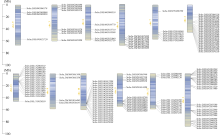
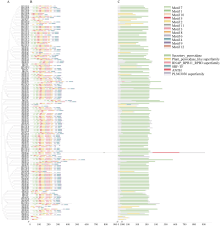
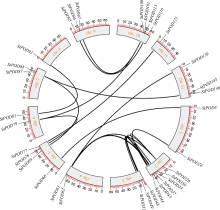
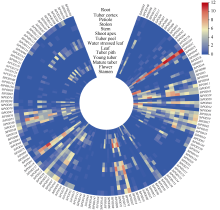
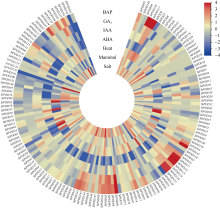
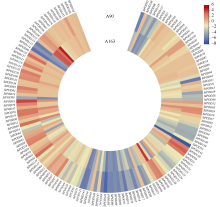
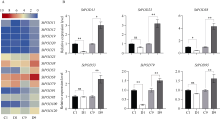
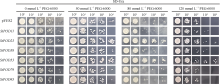
III类过氧化物酶(EC 1.11.1.7)是植物特异性氧化还原酶, 广泛分布于生物体内, 催化作为电子受体的过氧化氢(H2O2)与多种电子供体之间的氧化还原反应, 是植物在胁迫条件下酶防御系统的关键酶之一。马铃薯(Solanum tuberosum L.)是茄科茄属的一年生草本植物, 目前关于马铃薯POD基因家族(StPODs)的功能研究鲜有报道。本研究通过生物信息学的方法对StPODs基因家族成员进行了分析, 探究其在多种非生物胁迫下的表达模式。马铃薯全基因组中共鉴定出148个StPODs基因家族成员, 并根据基因在染色体上的位置顺序依次命名为StPOD1~StPOD148。148个StPODs蛋白的长度为76~914个氨基酸不等, 分子质量在83.64~101.32 kD之间; 通过保守基序和结构域分析148个StPODs基因结构发现, 所有StPODs基因均具有5个高度保守的Motifs (Motif 1、Motif 2、Motif 3、Motif 4和Motif 5)和2个保守结构域(secretory_peroxidase和PLN03030 superfamily)。微阵列数据用于进一步的表达谱分析, 多个StPODs基因受盐胁迫、干旱胁迫和高温胁迫后表达量显著增加, 其中响应盐胁迫的差异表达基因数量最多(64个); 经脱落酸(ABA)、生长素(IAA)、赤霉素(GA3)和苄氨基嘌呤(BAP)处理后分别诱导了多个StPODs差异表达基因, 其中85个StPODs基因受ABA诱导后差异表达。此外, 本试验通过分析耐旱型马铃薯材料“A90”和干旱敏感型材料“A163”的表达谱, 筛选出14个StPODs耐旱候选基因, 它们在耐旱型材料和干旱敏感型材料之间的表达量表现出相反的趋势, 将表达量趋势相差最大的6个候选基因在酒酿酵母中异源表达, 证实了StPOD23和StPOD53基因参与酵母细胞的渗透调节反应。研究结果可为StPODs基因后续功能研究提供理论基础。
| [1] |
Lee C J, Park S U, Kim S E, et al. Overexpression of IbLfp in sweetpotato enhances the low-temperature storage ability of tuberous roots. Plant Physiol Biochem, 2021, 167: 577-585.
doi: 10.1016/j.plaphy.2021.08.041 |
| [2] |
Passardi F, Cosio C, Penel C, et al. Peroxidases have more functions than a Swiss army knife. Plant Cell Rep, 2005, 24: 255-265.
doi: 10.1007/s00299-005-0972-6 pmid: 15856234 |
| [3] |
Kawano T. Roles of the reactive oxygen species-generating peroxidase reactions in plant defense and growth induction. Plant Cell Rep, 2003, 21: 829-837.
doi: 10.1007/s00299-003-0591-z pmid: 12789499 |
| [4] |
Foyer C H, Descourvières P, Kunert K J. Protection against oxygen radicals: an important defence mechanism studied in transgenic plants. Plant Cell Environ, 1994, 17: 507-523.
doi: 10.1111/pce.1994.17.issue-5 |
| [5] |
Almagro L, Gómez Ros L V, Belchi-Navarro S, et al. Class III peroxidases in plant defence reactions. J Exp Bot, 2009, 60: 377-390.
doi: 10.1093/jxb/ern277 pmid: 19073963 |
| [6] |
Welinder K G. Superfamily of plant, fungal and bacterial peroxidases. Curr Opin Struct Biol, 1992, 2: 388-393.
doi: 10.1016/0959-440X(92)90230-5 |
| [7] |
Mathé C, Barre A, Jourda C, et al. Evolution and expression of class III peroxidases. Arch Biochem Biophys, 2010, 500: 58-65.
doi: 10.1016/j.abb.2010.04.007 pmid: 20398621 |
| [8] |
Hiraga S, Sasaki K, Ito H, et al. A large family of class III plant peroxidases. Plant Cell Physiol, 2001, 42: 462-468.
doi: 10.1093/pcp/pce061 pmid: 11382811 |
| [9] |
Wu Y S, Yang Z L, How J, et al. Overexpression of a peroxidase gene (AtPrx64) of Arabidopsis thaliana in tobacco improves plant’s tolerance to aluminum stress. Plant Mol Biol, 2017, 95: 157-168.
doi: 10.1007/s11103-017-0644-2 |
| [10] |
Wally O, Punja Z K. Enhanced disease resistance in transgenic carrot (Daucus carota L.) plants over-expressing a rice cationic peroxidase. Planta, 2010, 232: 1229-1239.
doi: 10.1007/s00425-010-1252-4 pmid: 20730544 |
| [11] |
Coego A, Ramirez V, Ellul P, et al. The H2O2-regulated Ep5C gene encodes a peroxidase required for bacterial speck susceptibility in tomato. Plant J, 2005, 42: 283-293.
doi: 10.1111/tpj.2005.42.issue-2 |
| [12] |
Choi H W, Kim Y J, Lee S C, et al. Hydrogen peroxide generation by the pepper extracellular peroxidase CaPO2 activates local and systemic cell death and defense response to bacterial pathogens. Plant Physiol, 2007, 145: 890-904.
doi: 10.1104/pp.107.103325 pmid: 17905862 |
| [13] |
Valério L, De Meyer M, Penel C, et al. Expression analysis of the Arabidopsis peroxidase multigenic family. Phytochemistry, 2004, 65: 1331-1342.
pmid: 15231406 |
| [14] |
Passardi F, Longet D, Penel C, et al. The class III peroxidase multigenic family in rice and its evolution in land plants. Phytochemistry, 2004, 65: 1879-1893.
doi: 10.1016/j.phytochem.2004.06.023 pmid: 15279994 |
| [15] |
Wang Y, Wang Q Q, Zhao Y, et al. Systematic analysis of maize class III peroxidase gene family reveals a conserved subfamily involved in abiotic stress response. Gene, 2015, 566: 95-108.
doi: 10.1016/j.gene.2015.04.041 pmid: 25895479 |
| [16] |
Li G H, Manzoor M A, Wang G Y, et al. Comparative analysis of POD genes and their expression under multiple hormones in Pyrus bretschenedri. BMC Genom Data, 2024, 25: 41.
doi: 10.1186/s12863-024-01229-7 |
| [17] |
Ren L L, Liu Y J, Liu H J, et al. Subcellular relocalization and positive selection play key roles in the retention of duplicate genes of Populus class III peroxidase family. Plant Cell, 2014, 26: 2404-2419.
doi: 10.1105/tpc.114.124750 |
| [18] |
Behr M, Legay S, Hausman J F, et al. Analysis of cell wall-related genes in organs of Medicago sativa L. under different abiotic stresses. Int J Mol Sci, 2015, 16: 16104-16124.
doi: 10.3390/ijms160716104 |
| [19] |
Cheng L T, Ma L X, Meng L J, et al. Genome-wide identification and analysis of the class III peroxidase gene family in tobacco (Nicotiana tabacum). Front Genet, 2022, 13: 916867.
doi: 10.3389/fgene.2022.916867 |
| [20] |
Romero A P, Alarcón A, Valbuena R I, et al. Physiological assessment of water stress in potato using spectral information. Front Plant Sci, 2017, 8: 1608.
doi: 10.3389/fpls.2017.01608 pmid: 28979277 |
| [21] |
Wang X X, Shi M F, Zhang R Y, et al. Dynamics of physiological and biochemical effects of heat, drought and combined stress on potato seedlings. Chem Biol Technol Agric, 2024, 11: 109.
doi: 10.1186/s40538-024-00639-0 |
| [22] |
Wang K T, Zhang H H, Yang L, et al. StMAPKK1 enhances drought and salt tolerance in potato via ROS scavenging and stomatal closure. Plant Physiol Biochem, 2025, 229: 110383.
doi: 10.1016/j.plaphy.2025.110383 |
| [23] | Letunic I, Khedkar S, Bork P.SMART: recent updates, new developments and status in 2020. Nucleic Acids Res, 2021, 49: 458-460. |
| [24] | Wang J Y, Chitsaz F, Derbyshire M K, et al.The conserved domain database in 2023. Nucleic Acids Res, 2023, 51: 384-388. |
| [25] | 季香林.二倍体马铃薯种质资源抗旱性评价及抗旱基因的初步挖掘. 东北农业大学硕士学位论文, 黑龙江哈尔滨, 2022. |
| Ji X L.Drought Resistance Evaluation and Related Gene Perliminary Mining of Diploid Potato Germplasm Resources. MS Thesis of Northeast Agricultural University, Harbin, Heilongjiang, China, 2022 (in Chinese with English abstract). | |
| [26] |
Tang X, Zhang N, Si H J, et al. Selection and validation of reference genes for RT-qPCR analysis in potato under abiotic stress. Plant Methods, 2017, 13: 85.
doi: 10.1186/s13007-017-0238-7 pmid: 29075311 |
| [27] |
Livak K J, Schmittgen T D. Analysis of relative gene expression data using real-time quantitative PCR and the 2-ΔΔCt method. Methods, 2001, 25: 402-408.
doi: 10.1006/meth.2001.1262 pmid: 11846609 |
| [28] |
Hamilton A J, Bouzayen M, Grierson D. Identification of a tomato gene for the ethylene-forming enzyme by expression in yeast. Proc Natl Acad Sci USA, 1991, 88: 7434-7437.
pmid: 1714605 |
| [29] |
Zhang C, Zhu P H, Zhang M Y, et al. Identification, classification and characterization of LBD transcription factor family genes in Pinus massoniana. Int J Mol Sci, 2022, 23: 13215.
doi: 10.3390/ijms232113215 |
| [30] |
Xiao H L, Wang C P, Khan N, et al. Genome-wide identification of the class III POD gene family and their expression profiling in grapevine (Vitis vinifera L.). BMC Genomics, 2020, 21: 444.
doi: 10.1186/s12864-020-06828-z |
| [31] |
Wu C L, Ding X P, Ding Z H, et al. The class III peroxidase (POD) gene family in cassava: identification, phylogeny, duplication, and expression. Int J Mol Sci, 2019, 20: 2730.
doi: 10.3390/ijms20112730 |
| [32] | Gao C Q, Wang Y C, Liu G F, et al. Cloning of ten peroxidase (POD) genes from Tamarix hispida and characterization of their responses to abiotic stress. Plant Mol Biol Report, 2010, 28: 77-89. |
| [33] |
Xiang X W, Song K K, Li Y Y, et al. Screening and expression analysis of POD gene in POD-H2O2 pathway on bud dormancy of pear (Pyrus pyrifolia). Forests, 2024, 15: 434.
doi: 10.3390/f15030434 |
| [34] |
Zareen S, Ali A, Yun D J. Significance of ABA biosynthesis in plant adaptation to drought stress. J Plant Biol, 2024, 67: 175-184.
doi: 10.1007/s12374-024-09425-9 |
| [35] |
Aleem M, Riaz A, Raza Q, et al. Genome-wide characterization and functional analysis of class III peroxidase gene family in soybean reveal regulatory roles of GsPOD40 in drought tolerance. Genomics, 2022, 114: 45-60.
doi: 10.1016/j.ygeno.2021.11.016 |
| [36] |
陆雯佳, 汪军成, 姚立蓉, 等. 大麦PRX基因家族全基因组鉴定及其干旱胁迫下的表达分析. 作物学报, 2025, 51: 1198-1214.
doi: 10.3724/SP.J.1006.2025.41053 |
|
Lu W J, Wang J C, Yao L R, et al. Genome-wide identification of PRX gene family and analysis of their expressions under drought stress in barley. Acta Agron Sin, 2025, 51: 1198-1214 (in Chinese with English abstract).
doi: 10.3724/SP.J.1006.2025.41053 |
|
| [37] |
Llorente F, López-Cobollo R M, Catalá R, et al. Arabidopsis, RCI3 encodes a peroxidase that constitutes a component for stress tolerance. Plant J, 2002, 32: 13-24.
doi: 10.1046/j.1365-313X.2002.01398.x |
| [38] |
Kumar S, Jaggi M, Sinha A K. Ectopic overexpression of vacuolar and apoplastic Catharanthus roseus peroxidases confers differential tolerance to salt and dehydration stress in transgenic tobacco. Protoplasma, 2012, 249: 423-432.
doi: 10.1007/s00709-011-0294-1 |
| [39] |
Zhu J Y, Chen L M, Li Z T, et al. Genome-wide identification of LOX gene family and its expression analysis under abiotic stress in potato (Solanum tuberosum L.). Int J Mol Sci, 2024, 25: 3487.
doi: 10.3390/ijms25063487 |
| [1] | 陈国欢, 张锐, 李艳迪, 赵佳琪, 任湧涛, 张天赐, 郭华春, 李俊, 杨芳. 外源硒叶面喷施对浅紫色马铃薯块茎花青素合成的影响[J]. 作物学报, 2026, 52(6): 1876-1890. |
| [2] | 翟胜男, 曹新有, 李豪圣, 李吉虎, 李法计, 刘金栋, 夏先春, 吕莹莹, 马瑞峰, 王颖, 耿洪伟, 刘建军. 小麦Pod-A1、Pod-D1和Pod-2D位点等位变异对籽粒过氧化物酶活性的遗传效应分析[J]. 作物学报, 2026, 52(6): 1593-1603. |
| [3] | 王文辕, 燕雪嘉, 刘玉霖, 孙晓彤, 李亚楠, 唐鑫华, 石瑛. 耐弱光马铃薯品种筛选及转录因子编码基因StPIF3的克隆与功能分析[J]. 作物学报, 2026, 52(6): 1631-1645. |
| [4] | 田立涛, 丁宁, 王树林, 齐恩芳, 张荣, 王蕊蕊, 马利雯, 李建武, 杨江伟. 马铃薯Argonaute基因家族鉴定及晚疫病诱导表达分析[J]. 作物学报, 2026, 52(4): 1116-1126. |
| [5] | 张宇, 刘芳, 蔡诚诚, 杨小华, 吉阿么石扎, 杨元军, 王西瑶. 溴乙烷与赤霉素协同处理破除马铃薯块茎休眠的机理初探[J]. 作物学报, 2026, 52(3): 825-838. |
| [6] | 汪玲, 胡好, 宋家凤, 程洁蓝, 陈颖, 郑婷婷, 吕钊彦, 朱晓彪, 侯华兰. 马铃薯UDP-糖基转移酶基因StUGT52的克隆及功能验证[J]. 作物学报, 2026, 52(3): 665-676. |
| [7] | 徐强, 谢奎忠, 胡新元, 岳云, 董博, 罗爱花. 连作对马铃薯根际土壤线虫群落结构与功能的影响[J]. 作物学报, 2026, 52(2): 527-538. |
| [8] | 孔娜, 刘涛, 刘文婷, 陈刚, 文利超, 邓智超, 郭梅, 李伟, 郭永峰. 烟草NtCEP7基因克隆及其编码小肽在苗期抗旱中的作用分析[J]. 作物学报, 2026, 52(1): 249-261. |
| [9] | 刘海波, 张蕾, 王立琦, 石晓丽, 周文莹, 崔国贤, 佘玮. 苎麻BnGCL1基因响应干旱胁迫的功能研究[J]. 作物学报, 2026, 52(1): 14-27. |
| [10] | 景秀清, 蔡永朵, 邓宁, 赵晓东, 翟飞红, 曾群. 藜麦RopGEF家族基因的鉴定及表达模式分析[J]. 作物学报, 2026, 52(1): 28-43. |
| [11] | 姬炫彤, 卞春松, 金黎平, 李森, 秦军红, 李广存. 不同耐旱型马铃薯根际微生物对干旱的响应[J]. 作物学报, 2026, 52(1): 165-177. |
| [12] | 胡城祯, 高维东, 孔斌雪, 王建飞, 车卓, 杨德龙, 陈涛. 小麦TaAPC11基因家族鉴定及TaAPC11-5B参与干旱胁迫的生物学功能研究[J]. 作物学报, 2026, 52(1): 148-164. |
| [13] | 田甲春, 葛霞, 李守强, 李梅, 田世龙, 张亚倩, 程建新, 李玉梅. 低O2高CO2贮藏环境延缓马铃薯块茎衰老的作用机制[J]. 作物学报, 2026, 52(1): 262-278. |
| [14] | 王雅致, 杨飚, 季香林, 石瑛, 张丽莉. 二倍体马铃薯抗旱资源鉴定及抗旱基因初步筛选[J]. 作物学报, 2026, 52(1): 72-84. |
| [15] | 卓峰琦, 唐振三, 雷雨俊, 程李香, 赵甜甜, 吕汰, 杨晨, 张峰. 基于烹饪方式及回生温度筛选低升糖马铃薯品种(系)[J]. 作物学报, 2025, 51(9): 2538-2546. |
|
||